

Carreau d'angle en céramique polychrome, époque Rattanakosin, Thaïlande | Vers le XVIIIe siècle

Historique de provenance et de propriété

Auparavant dans une collection privée à Armadale, Victoria, Australie.

Prix habituel
$1,000.00
Prix soldé
$1,000.00
Prix habituel
Frais de port calculés à la caisse.

This is a one-of-a-kind historical object. Once sold, this exact piece will not be restocked.

Questions before acquiring? Additional photographs, condition details, documentation, shipping information or a private viewing are available upon request.
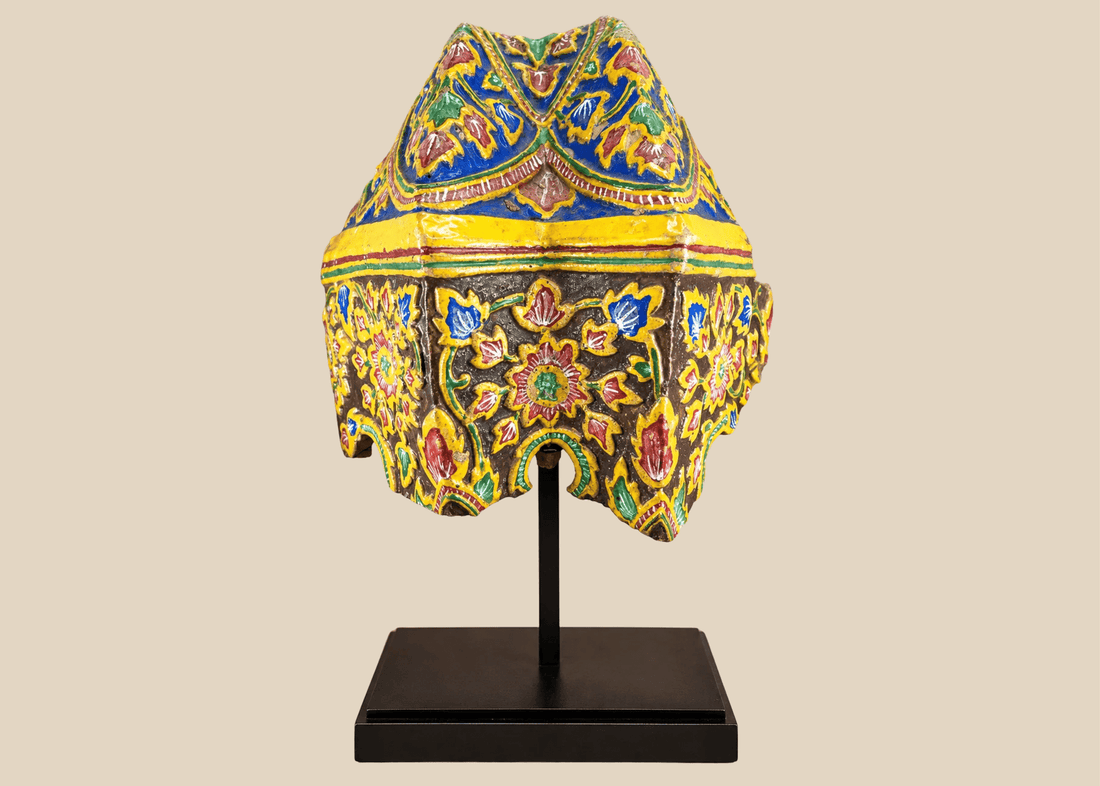
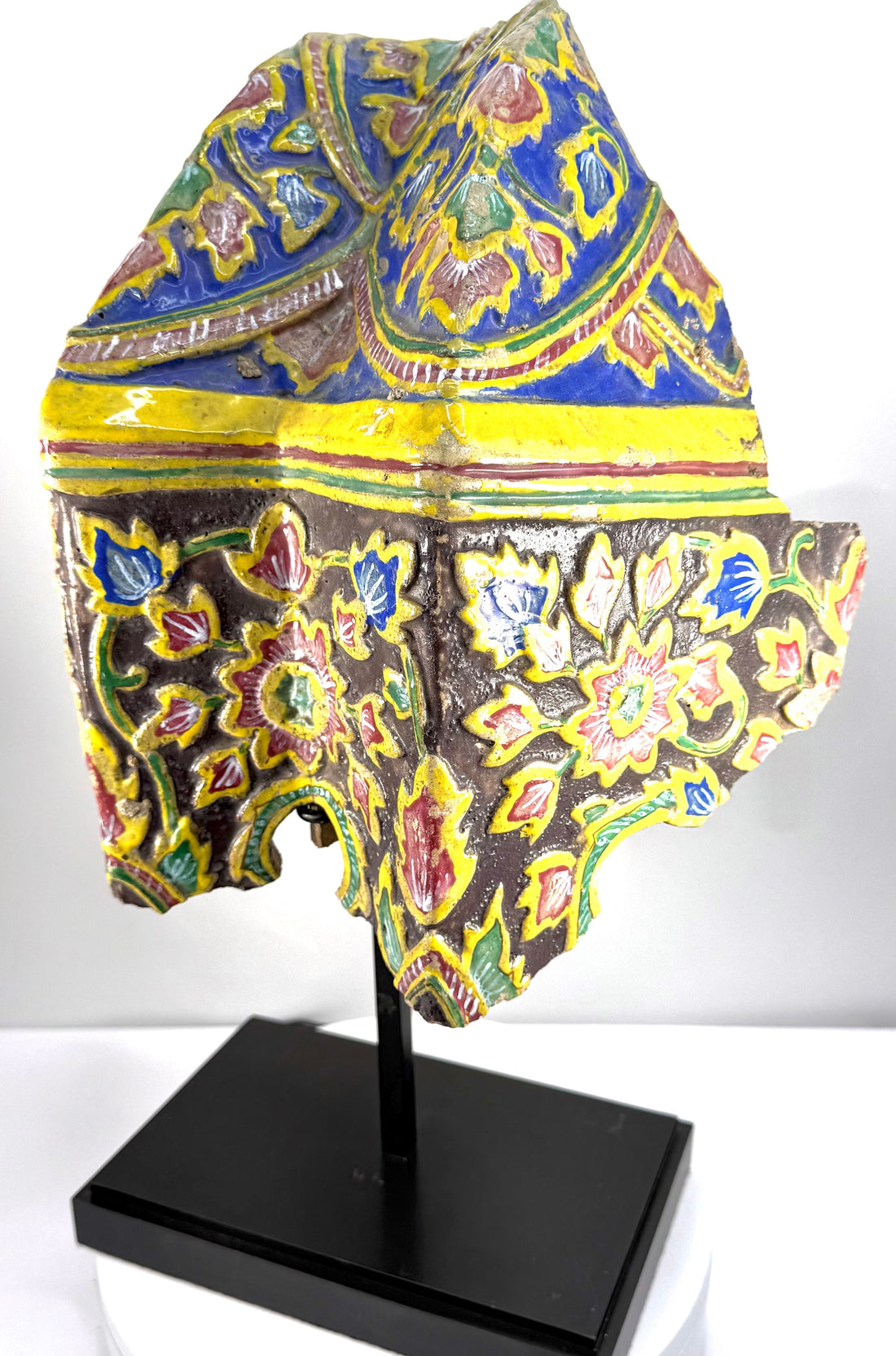
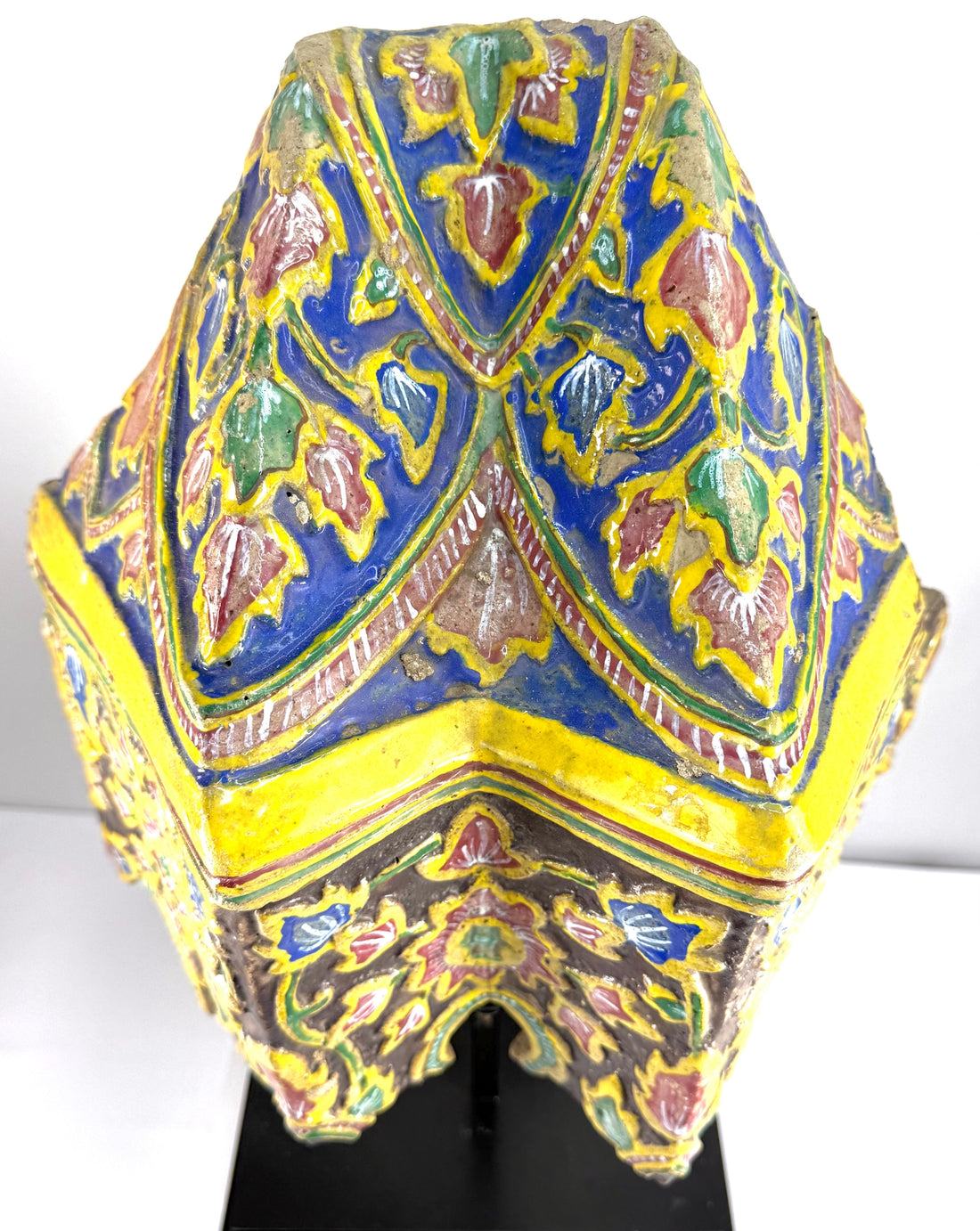
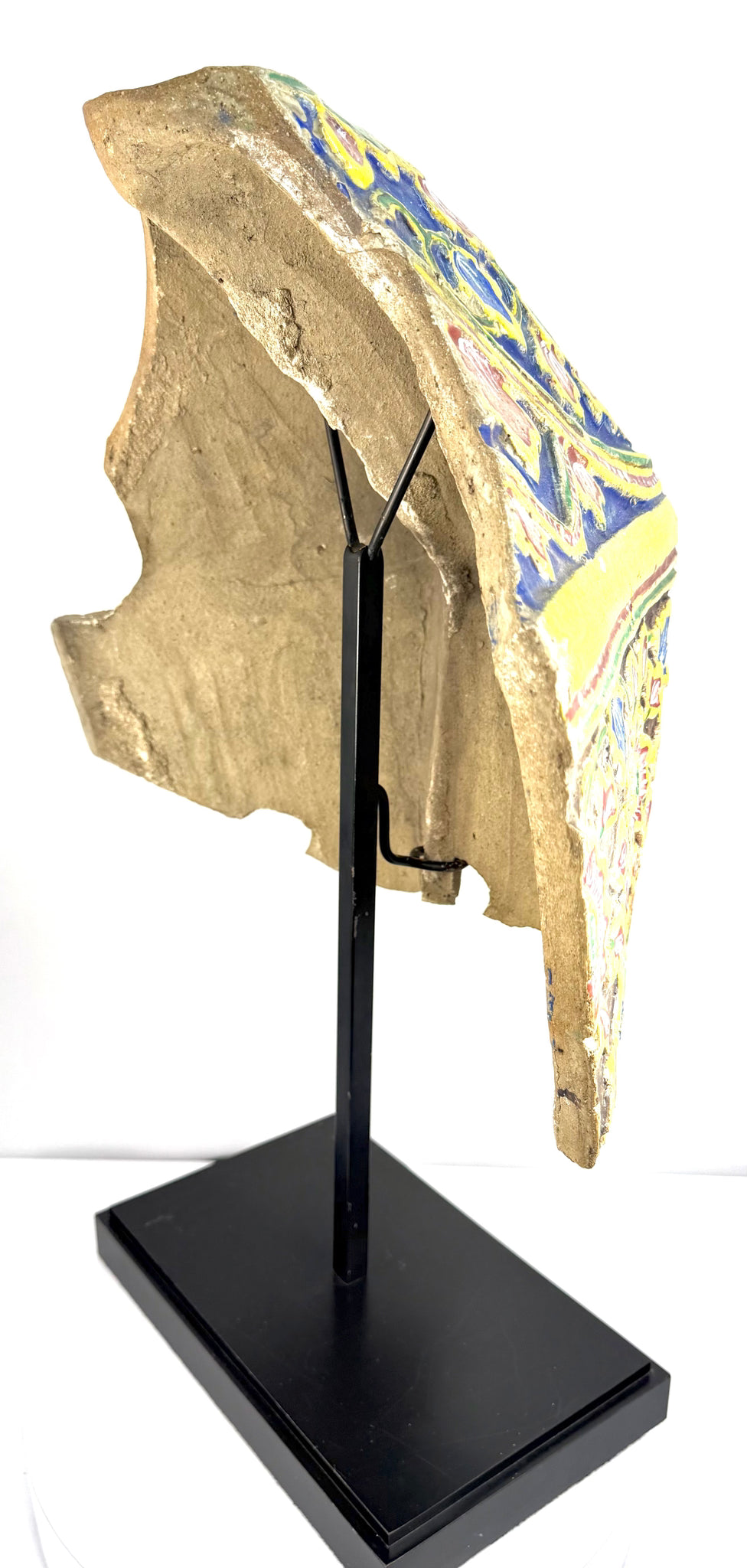
Antique Thai Rattanakosin period polychrome ceramic corner tile featuring elaborate raised floral motifs, vibrant cobalt blue, yellow, green, and red glazed decoration, and ornate architectural detailing. Front-facing museum-style photograph against a warm light-brown background, showcasing the tile's intricate craftsmanship and aged surface.
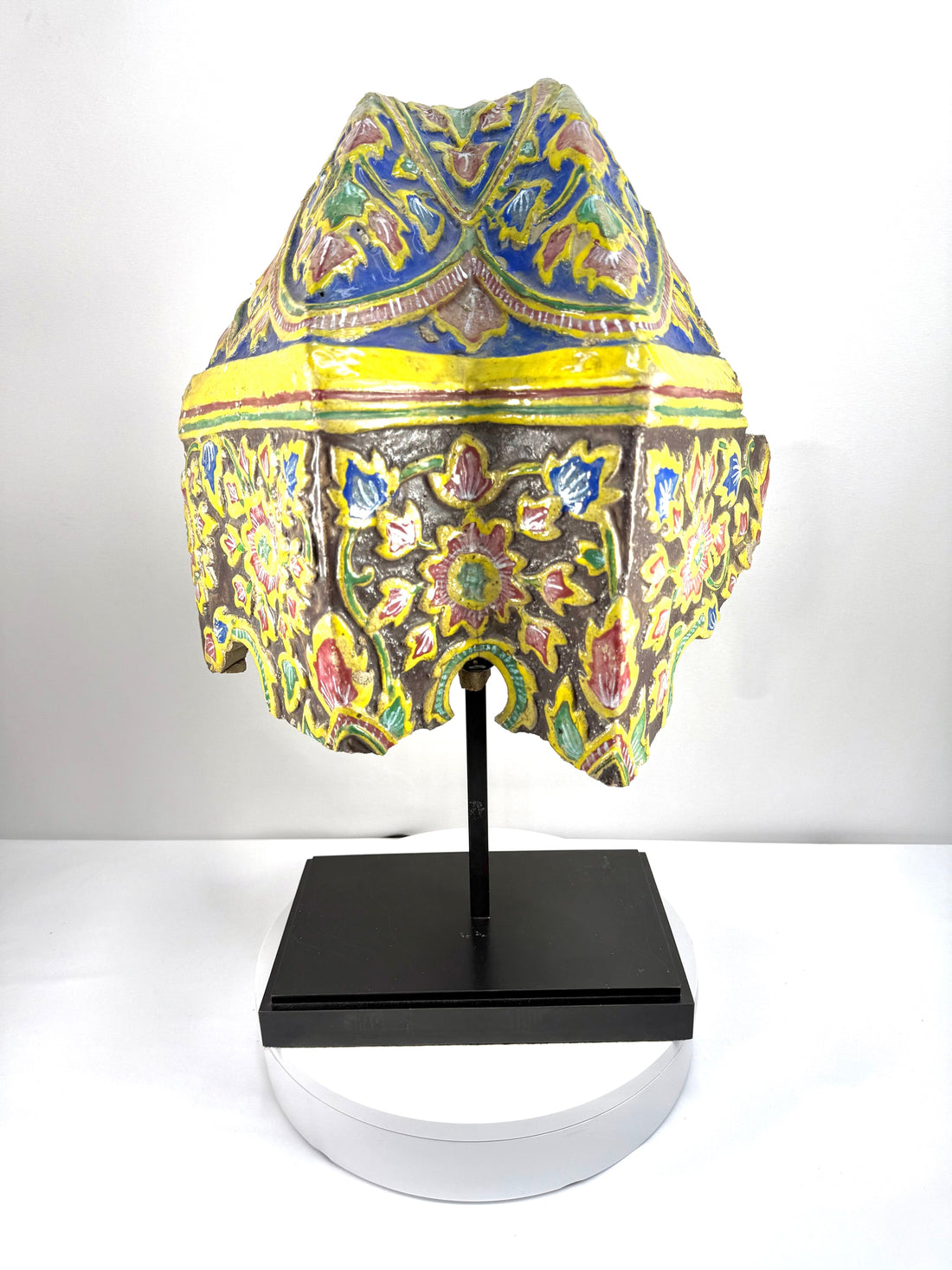
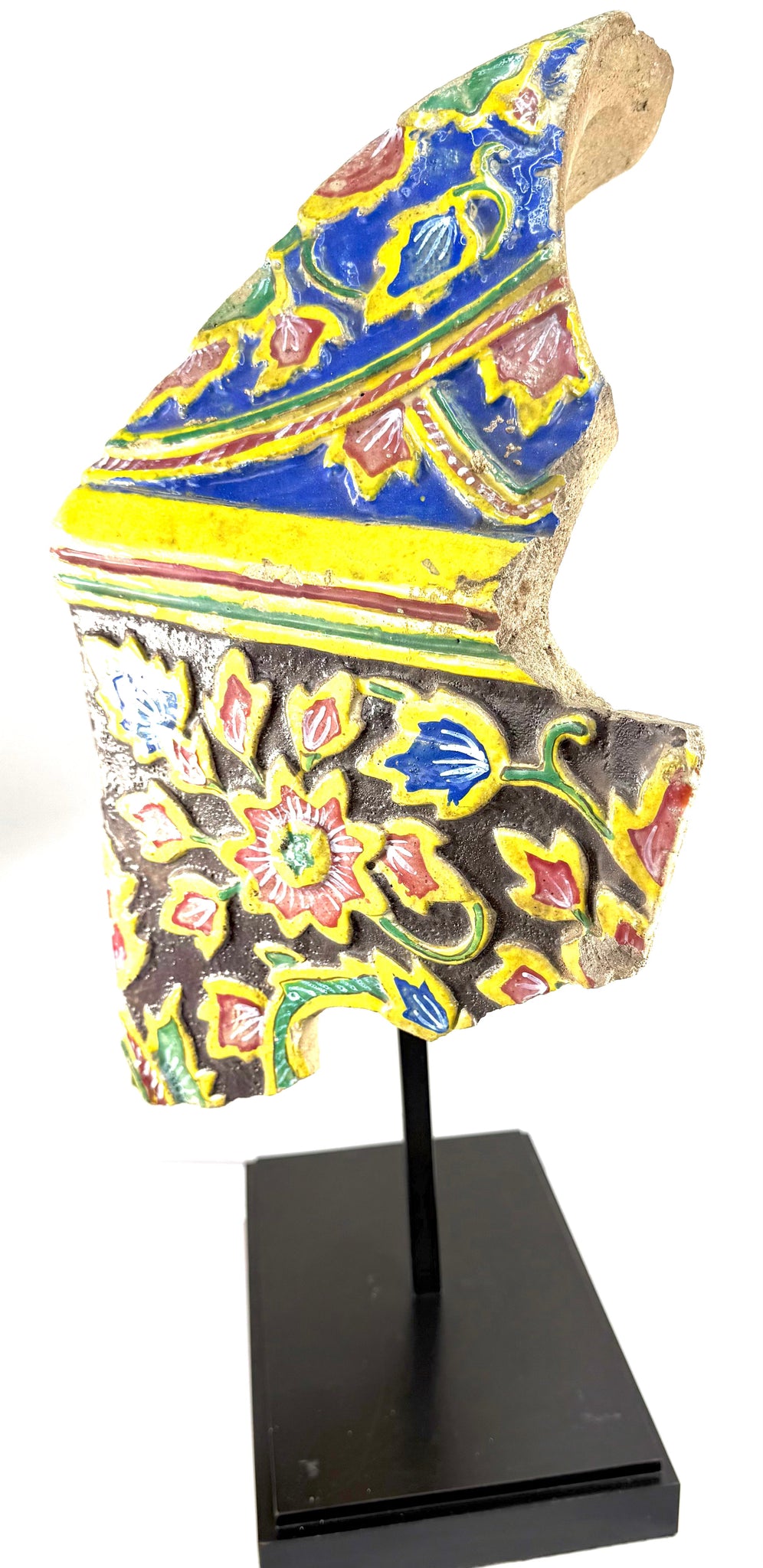
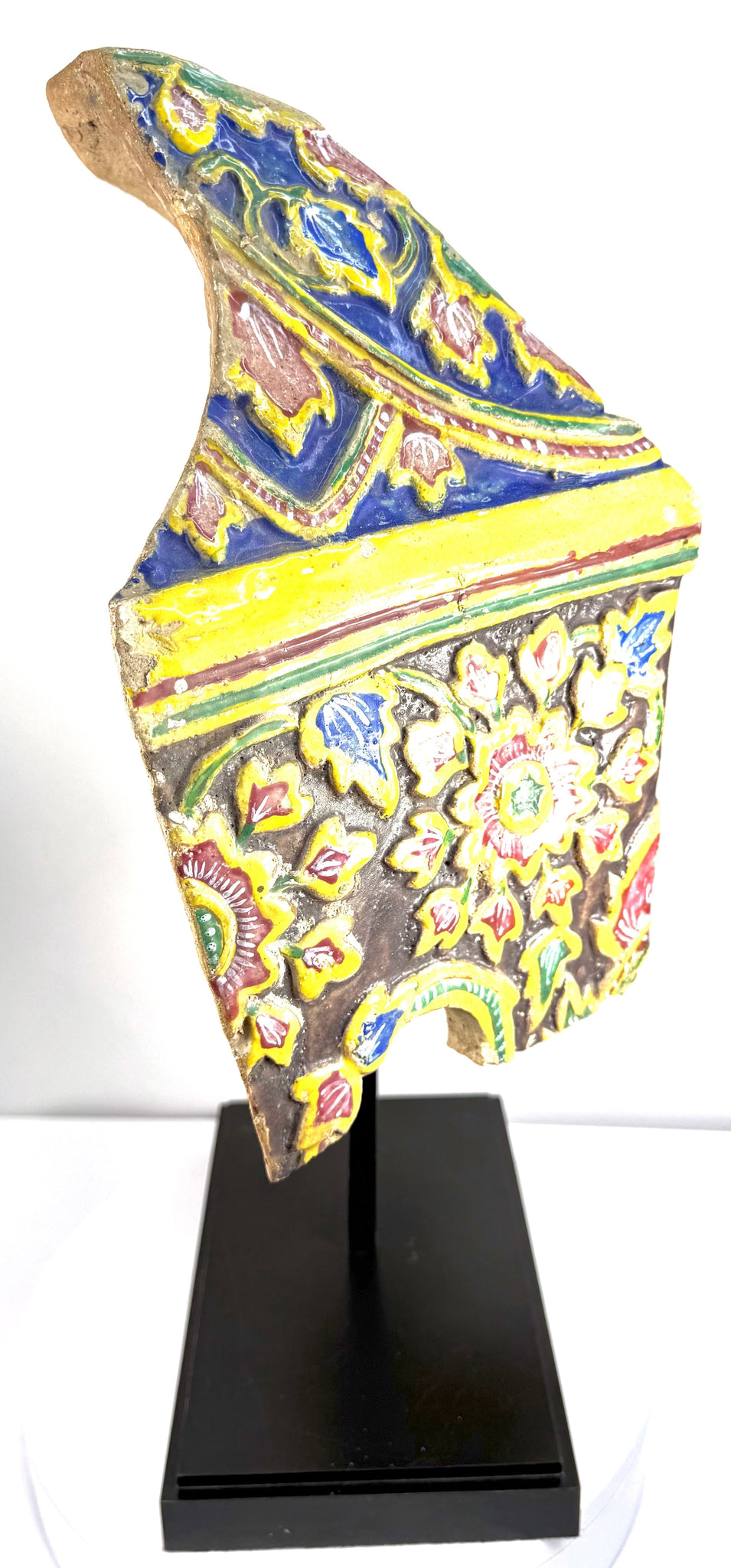
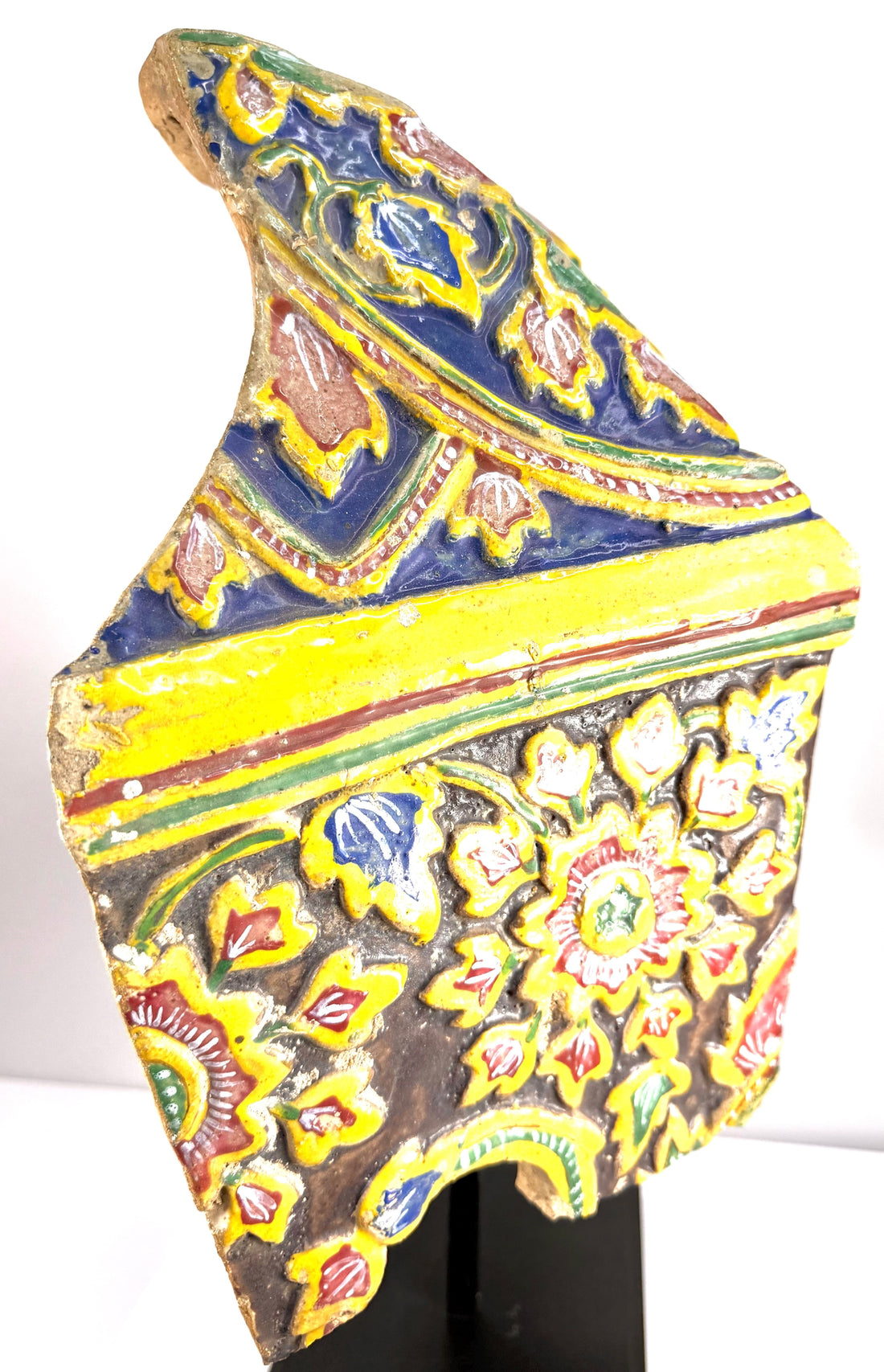
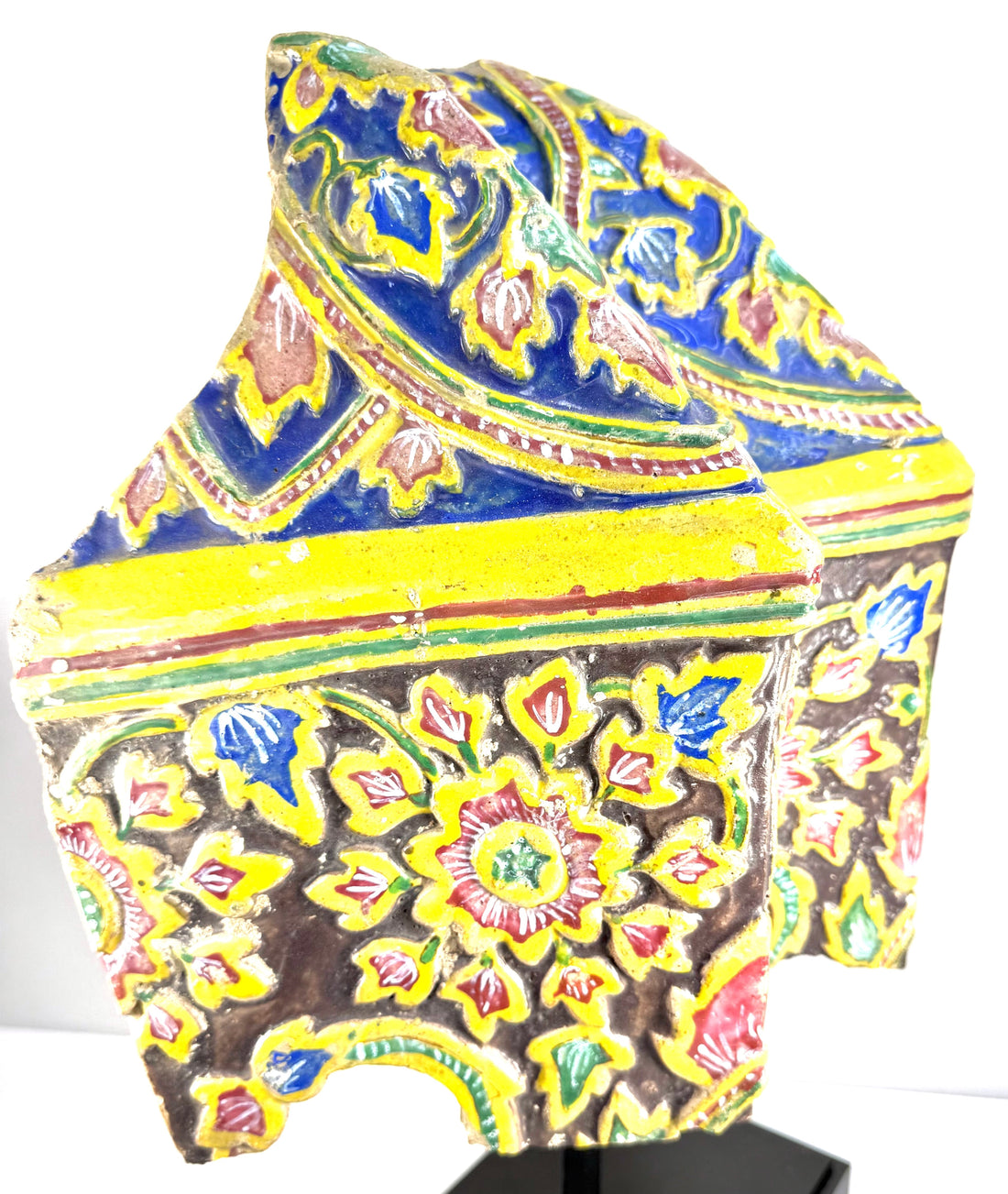
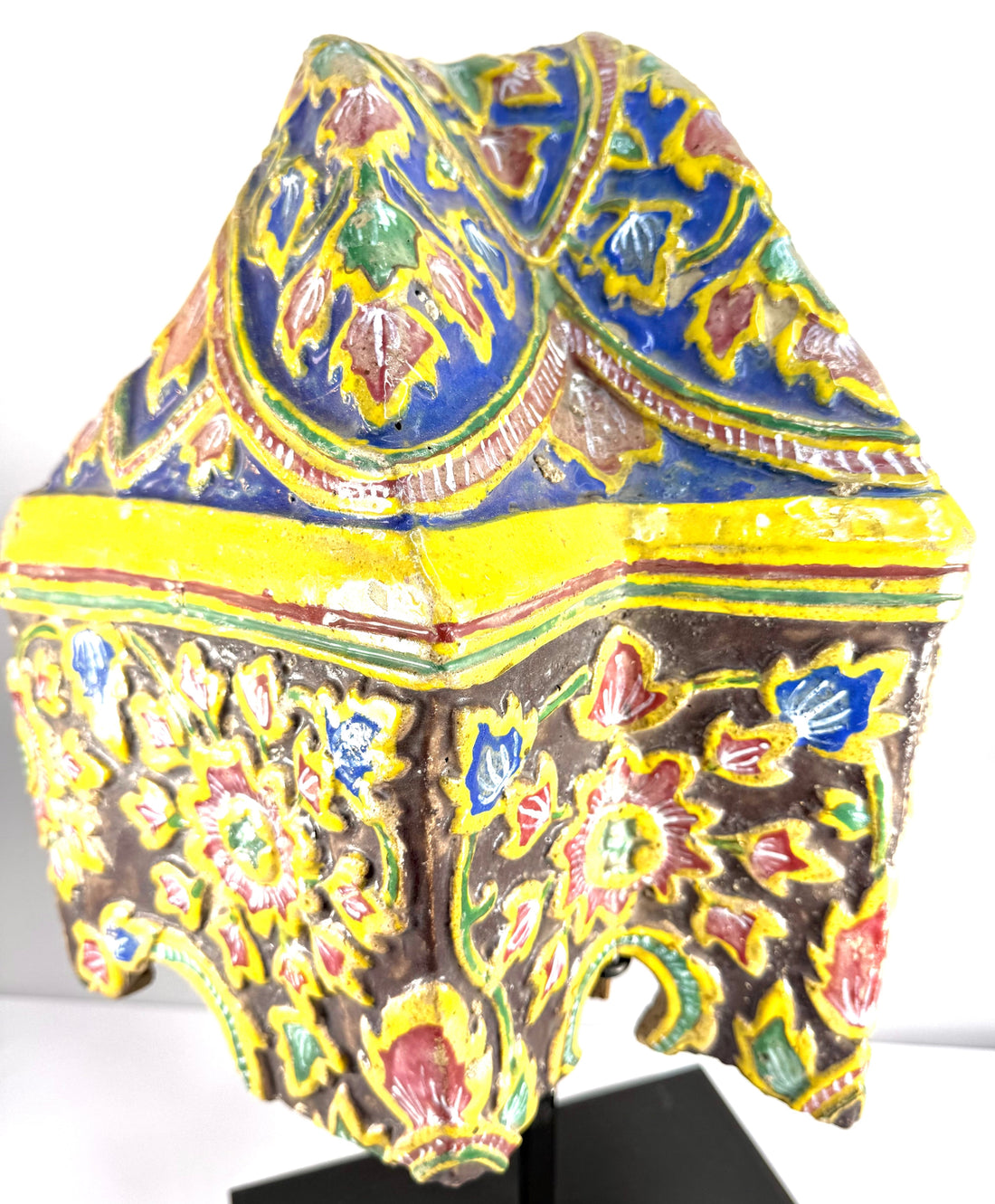
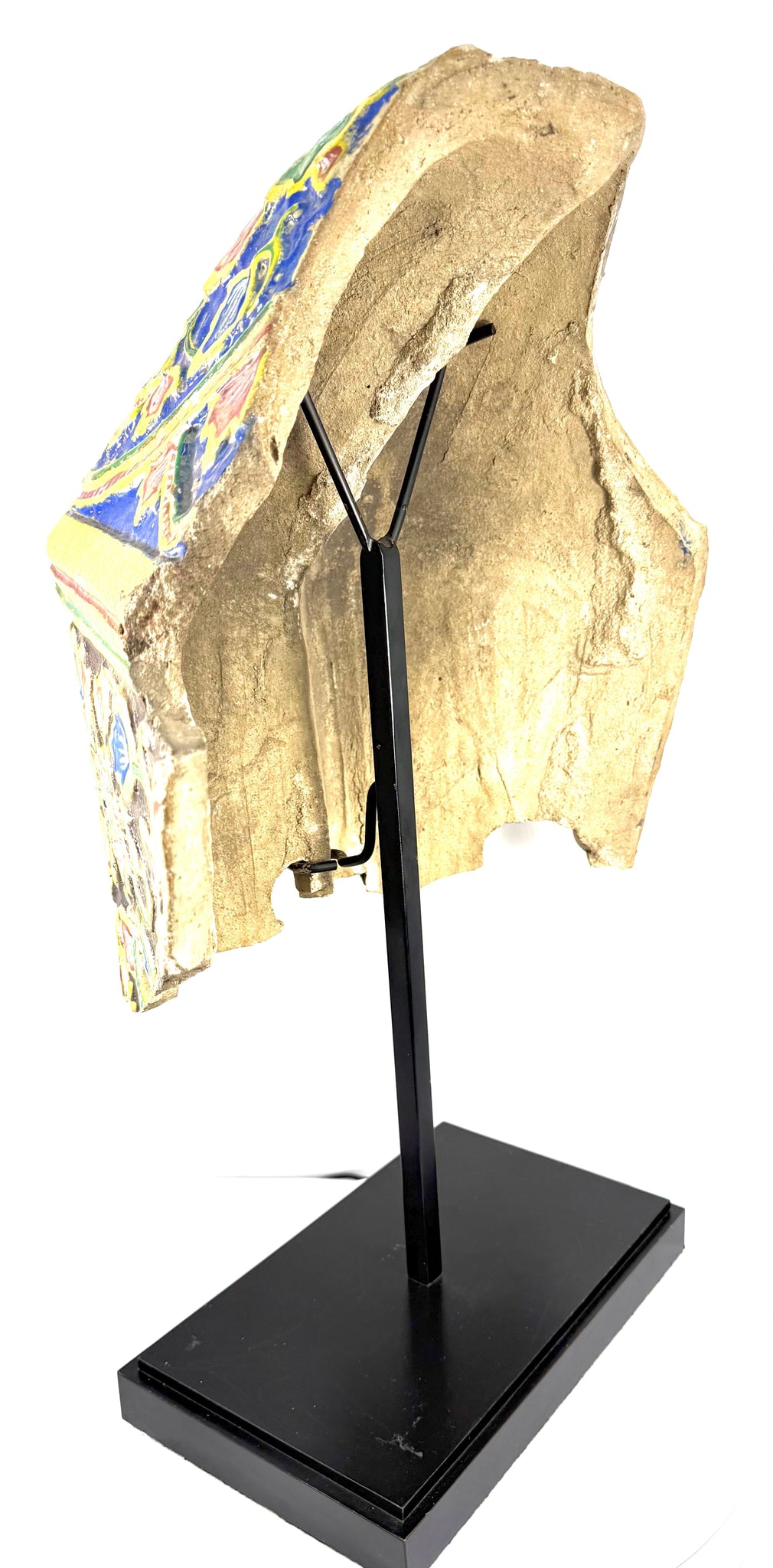
360-degree rotating view of an antique Thai Rattanakosin period polychrome ceramic corner tile featuring intricate raised floral motifs, ornate architectural detailing, and vibrant yellow, green, blue, and pink glazed decoration. The decorative tile is displayed on a black metal stand, showcasing its angular form, elaborate craftsmanship, and colourful surface from multiple angles.
Antique Thai Rattanakosin polychrome ceramic corner tile with vibrant floral patterns, circa late 18th century
Traditional Thai architectural corner tile featuring yellow, blue, green, and pink glazed decoration over a black ground
Late 18th-century Rattanakosin ceramic tile with intricate floral motifs and symmetrical geometric ornamentation
Antique Thailand polychrome architectural tile displaying elaborate hand-painted floral designs and raised decorative ridges
Thai Rattanakosin Kingdom ceramic corner tile featuring colourful botanical patterns and traditional ornamental detailing
Historic Thai decorative ceramic tile with vibrant multicoloured glazing and intricate raised floral embellishments
18th-century Thai polychrome corner tile reflecting the architectural and decorative traditions of the Rattanakosin period
Antique Rattanakosin architectural ceramic with bold black background, colourful floral ornamentation, and geometric patterns
Traditional Thailand hand-painted ceramic corner tile featuring intricate yellow, blue, green, and pink decorative elements
Thai Buddhist architectural-style corner tile with symmetrical floral compositions and richly coloured polychrome glaze
Antique Thai Rattanakosin ceramic ornament featuring raised geometric ridges and carefully arranged botanical motifs
Late 18th-century Thailand decorative corner tile showcasing vibrant glazed colours and traditional Thai floral artistry
Historic Rattanakosin polychrome ceramic corner tile with elaborate architectural ornamentation and preserved multicoloured glaze
  • Antique Thai Rattanakosin period polychrome ceramic corner tile featuring elaborate raised floral motifs, vibrant cobalt blue, yellow, green, and red glazed decoration, and ornate architectural detailing. Front-facing museum-style photograph against a warm light-brown background, showcasing the tile's intricate craftsmanship and aged surface.
  • 360-degree rotating view of an antique Thai Rattanakosin period polychrome ceramic corner tile featuring intricate raised floral motifs, ornate architectural detailing, and vibrant yellow, green, blue, and pink glazed decoration. The decorative tile is displayed on a black metal stand, showcasing its angular form, elaborate craftsmanship, and colourful surface from multiple angles.
  • Antique Thai Rattanakosin polychrome ceramic corner tile with vibrant floral patterns, circa late 18th century
  • Traditional Thai architectural corner tile featuring yellow, blue, green, and pink glazed decoration over a black ground
  • Late 18th-century Rattanakosin ceramic tile with intricate floral motifs and symmetrical geometric ornamentation
  • Antique Thailand polychrome architectural tile displaying elaborate hand-painted floral designs and raised decorative ridges
  • Thai Rattanakosin Kingdom ceramic corner tile featuring colourful botanical patterns and traditional ornamental detailing
  • Historic Thai decorative ceramic tile with vibrant multicoloured glazing and intricate raised floral embellishments
  • 18th-century Thai polychrome corner tile reflecting the architectural and decorative traditions of the Rattanakosin period
  • Antique Rattanakosin architectural ceramic with bold black background, colourful floral ornamentation, and geometric patterns
  • Traditional Thailand hand-painted ceramic corner tile featuring intricate yellow, blue, green, and pink decorative elements
  • Thai Buddhist architectural-style corner tile with symmetrical floral compositions and richly coloured polychrome glaze
  • Antique Thai Rattanakosin ceramic ornament featuring raised geometric ridges and carefully arranged botanical motifs
  • Late 18th-century Thailand decorative corner tile showcasing vibrant glazed colours and traditional Thai floral artistry
  • Historic Rattanakosin polychrome ceramic corner tile with elaborate architectural ornamentation and preserved multicoloured glaze
Antique Thai Rattanakosin period polychrome ceramic corner tile featuring elaborate raised floral motifs, vibrant cobalt blue, yellow, green, and red glazed decoration, and ornate architectural detailing. Front-facing museum-style photograph against a warm light-brown background, showcasing the tile's intricate craftsmanship and aged surface.
360-degree rotating view of an antique Thai Rattanakosin period polychrome ceramic corner tile featuring intricate raised floral motifs, ornate architectural detailing, and vibrant yellow, green, blue, and pink glazed decoration. The decorative tile is displayed on a black metal stand, showcasing its angular form, elaborate craftsmanship, and colourful surface from multiple angles.
Antique Thai Rattanakosin polychrome ceramic corner tile with vibrant floral patterns, circa late 18th century
Traditional Thai architectural corner tile featuring yellow, blue, green, and pink glazed decoration over a black ground
Late 18th-century Rattanakosin ceramic tile with intricate floral motifs and symmetrical geometric ornamentation
Antique Thailand polychrome architectural tile displaying elaborate hand-painted floral designs and raised decorative ridges
Thai Rattanakosin Kingdom ceramic corner tile featuring colourful botanical patterns and traditional ornamental detailing
Historic Thai decorative ceramic tile with vibrant multicoloured glazing and intricate raised floral embellishments
18th-century Thai polychrome corner tile reflecting the architectural and decorative traditions of the Rattanakosin period
Antique Rattanakosin architectural ceramic with bold black background, colourful floral ornamentation, and geometric patterns
Traditional Thailand hand-painted ceramic corner tile featuring intricate yellow, blue, green, and pink decorative elements
Thai Buddhist architectural-style corner tile with symmetrical floral compositions and richly coloured polychrome glaze
Antique Thai Rattanakosin ceramic ornament featuring raised geometric ridges and carefully arranged botanical motifs
Late 18th-century Thailand decorative corner tile showcasing vibrant glazed colours and traditional Thai floral artistry
Historic Rattanakosin polychrome ceramic corner tile with elaborate architectural ornamentation and preserved multicoloured glaze
Authenticity and secure checkout guarantee

Carreau d'angle en céramique polychrome, époque Rattanakosin, Thaïlande | Vers le XVIIIe siècle

Description

Contexte historique et origine

Région : Thaïlande (Royaume de Rattanakosin)
Matériau : Céramique peinte à la main avec glaçure polychrome
Période : Fin du XVIIIe siècle, Période de Rattanakosin

Description

Ce remarquable carreau d'angle polychrome provient de la période de Rattanakosin (établie en 1782 sous le roi Rama Ier), une époque célébrée pour l'épanouissement de l'art, de l'architecture et des traditions décoratives bouddhistes thaïlandais. Probablement produit pour être utilisé dans des temples ou des structures royales, le carreau met en valeur l'élégance raffinée et l'harmonie visuelle caractéristiques de l'artisanat thaïlandais durant cet âge d'or.

Caractéristiques

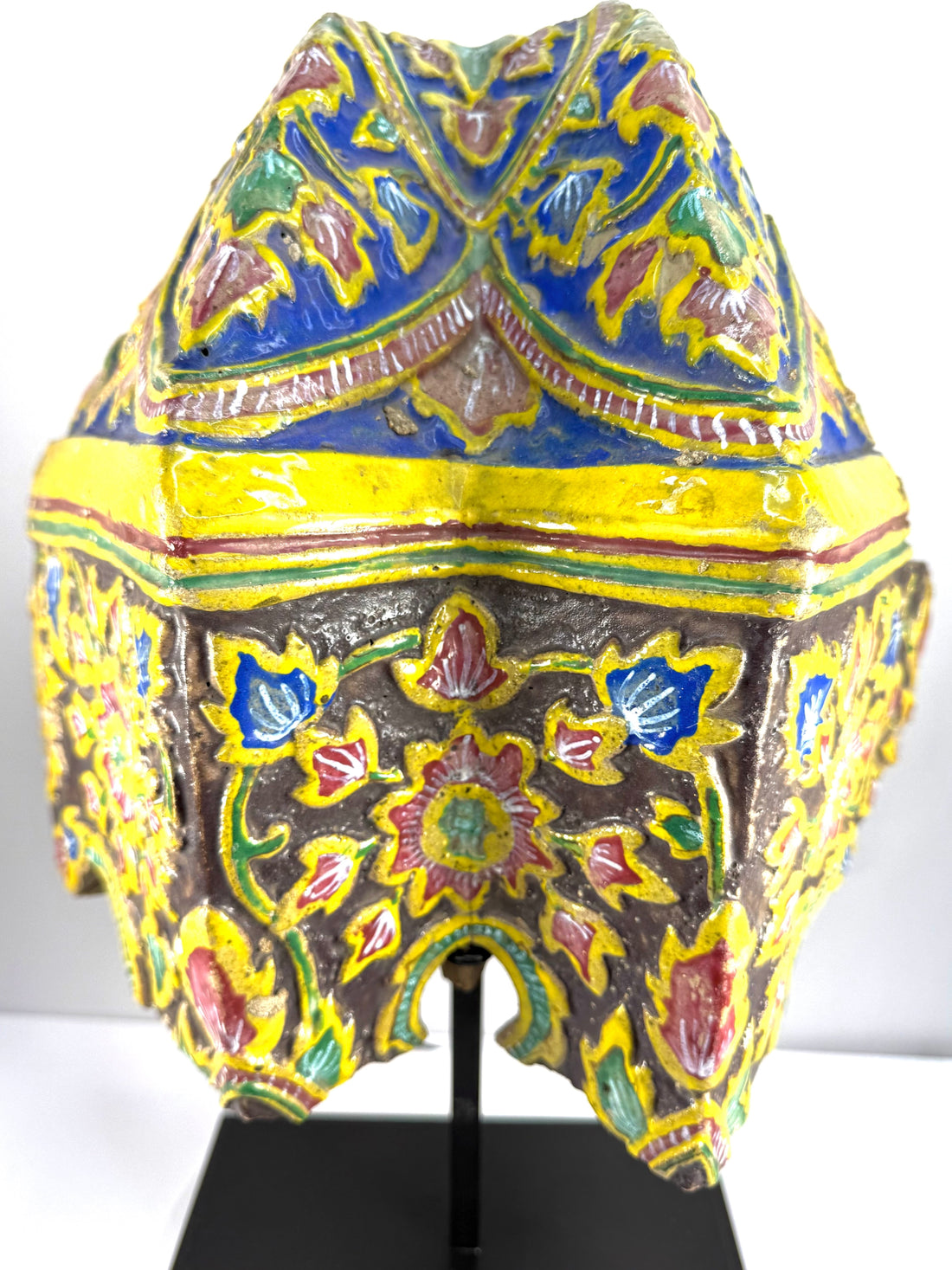
- Glaçure polychrome audacieuse avec des pigments vibrants jaunes, bleus, verts et roses sur fond noir

- Motifs floraux et géométriques symétriques exécutés avec une précision méticuleuse

- Crêtes en relief et embellissements floraux, suggérant une utilisation comme accent architectural dans des lieux sacrés ou royaux

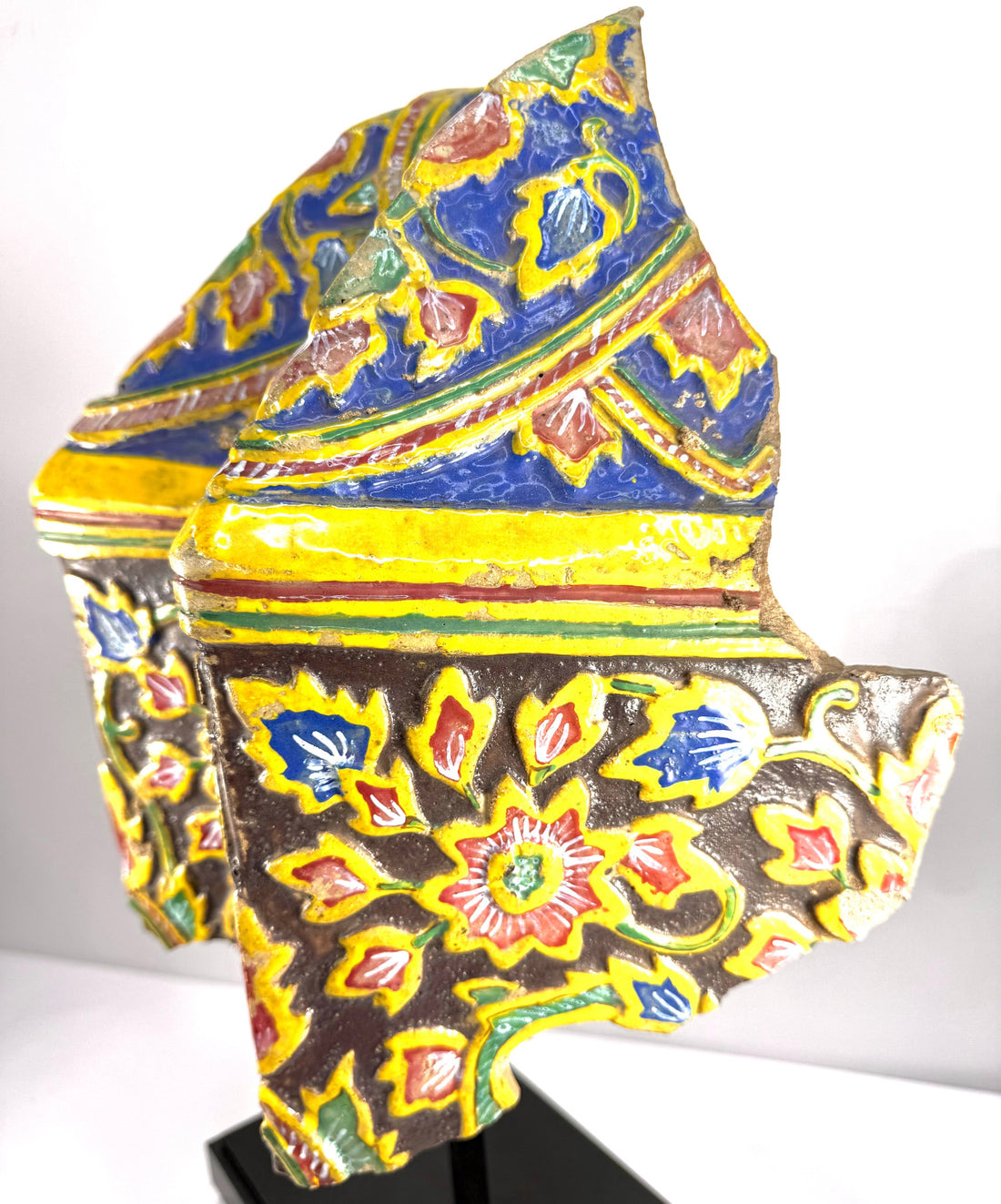
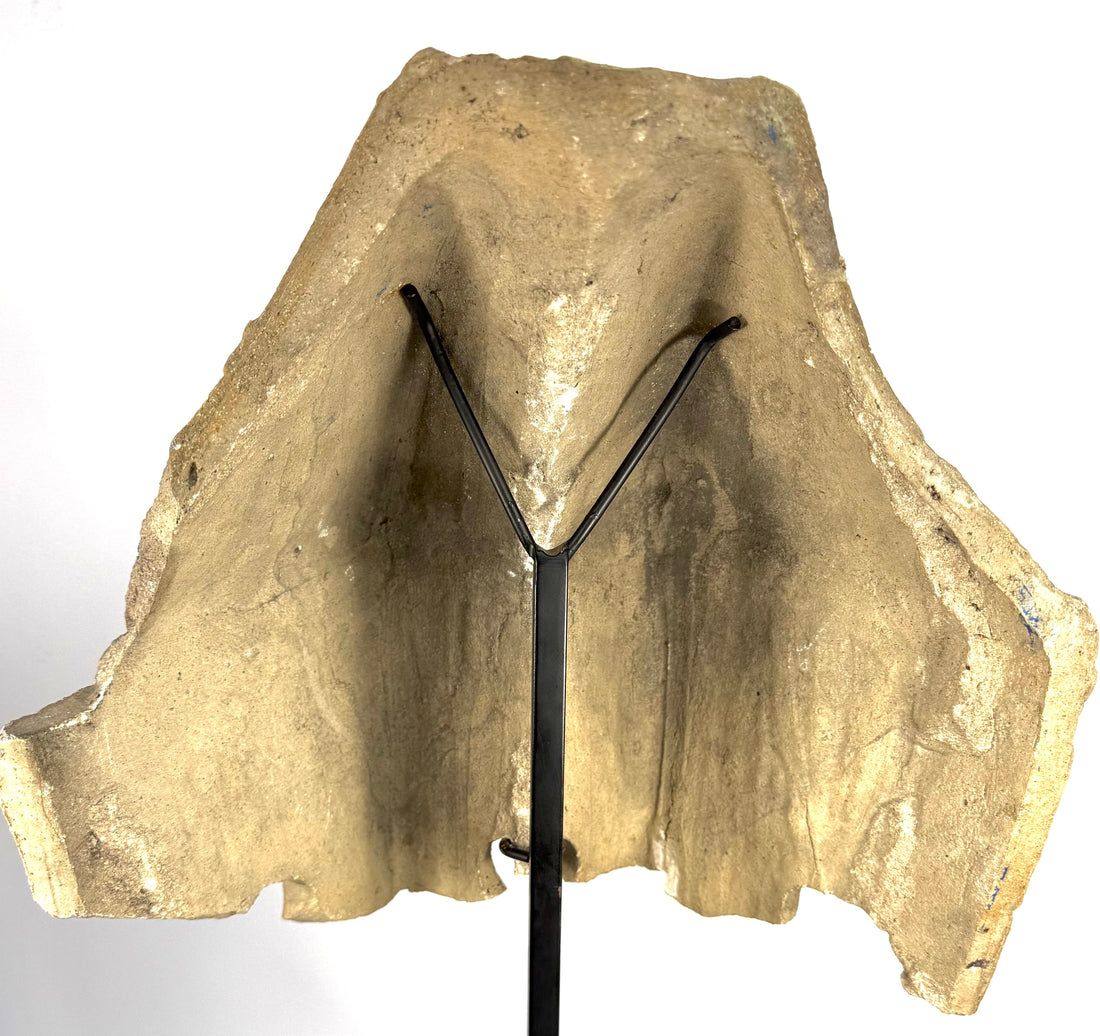
- Construction en céramique robuste avec glaçure préservée, conservant à la fois la vivacité des couleurs et les détails complexes

Signification culturelle

Des carreaux comme celui-ci avaient une signification à la fois décorative et spirituelle, reflétant l'influence artistique bouddhiste et hindoue pendant la période de Rattanakosin. Leur intégration dans les temples et les palais a élevé l'architecture en une expérience visuelle sacrée, incarnant l'harmonie, la protection et la grandeur recherchées dans l'art religieux thaïlandais.

État

Le carreau reste en excellent état avec des couleurs de glaçure vibrantes, une patine naturelle et une usure mineure conforme à son âge. Le revers révèle la solidité du corps en céramique, confirmant les méthodes de production traditionnelles et l'authenticité. Son état de conservation exceptionnel en fait un artefact rare et de collection.

Dimensions (approximatives)

Hauteur : 48,9 cm
Largeur : 35,5 cm
Profondeur : 33 cm

Âge (approximatif)

220–240 ans

Provenance

Anciennement détenu dans une collection privée à Armadale, Victoria, Australie.

En savoir plus

Explorez la Période de Rattanakosin au Musée national de Bangkok

Parcourez notre collection d'artefacts culturels thaïlandais

Description

Contexte historique et origine

Région : Thaïlande (Royaume de Rattanakosin)
Matériau : Céramique peinte à la main avec glaçure polychrome
Période : Fin du XVIIIe siècle, Période de Rattanakosin

Description

Ce remarquable carreau d'angle polychrome provient de la période de Rattanakosin (établie en 1782 sous le roi Rama Ier), une époque célébrée pour l'épanouissement de l'art, de l'architecture et des traditions décoratives bouddhistes thaïlandais. Probablement produit pour être utilisé dans des temples ou des structures royales, le carreau met en valeur l'élégance raffinée et l'harmonie visuelle caractéristiques de l'artisanat thaïlandais durant cet âge d'or.

Caractéristiques

- Glaçure polychrome audacieuse avec des pigments vibrants jaunes, bleus, verts et roses sur fond noir

- Motifs floraux et géométriques symétriques exécutés avec une précision méticuleuse

- Crêtes en relief et embellissements floraux, suggérant une utilisation comme accent architectural dans des lieux sacrés ou royaux

- Construction en céramique robuste avec glaçure préservée, conservant à la fois la vivacité des couleurs et les détails complexes

Signification culturelle

Des carreaux comme celui-ci avaient une signification à la fois décorative et spirituelle, reflétant l'influence artistique bouddhiste et hindoue pendant la période de Rattanakosin. Leur intégration dans les temples et les palais a élevé l'architecture en une expérience visuelle sacrée, incarnant l'harmonie, la protection et la grandeur recherchées dans l'art religieux thaïlandais.

État

Le carreau reste en excellent état avec des couleurs de glaçure vibrantes, une patine naturelle et une usure mineure conforme à son âge. Le revers révèle la solidité du corps en céramique, confirmant les méthodes de production traditionnelles et l'authenticité. Son état de conservation exceptionnel en fait un artefact rare et de collection.

Dimensions (approximatives)

Hauteur : 48,9 cm
Largeur : 35,5 cm
Profondeur : 33 cm

Âge (approximatif)

220–240 ans

Provenance

Anciennement détenu dans une collection privée à Armadale, Victoria, Australie.

En savoir plus

Explorez la Période de Rattanakosin au Musée national de Bangkok

Parcourez notre collection d'artefacts culturels thaïlandais

Vous aimerez peut-être aussi