

Figurine en céramique précolombienne | Personnage assis en terre cuite avec coiffe rituelle | Vers 200-800 ap. J.-C.
- Prix habituel
- $450.00
- Prix soldé
- $450.00
- Prix habituel
Impossible de charger la disponibilité du service de retrait


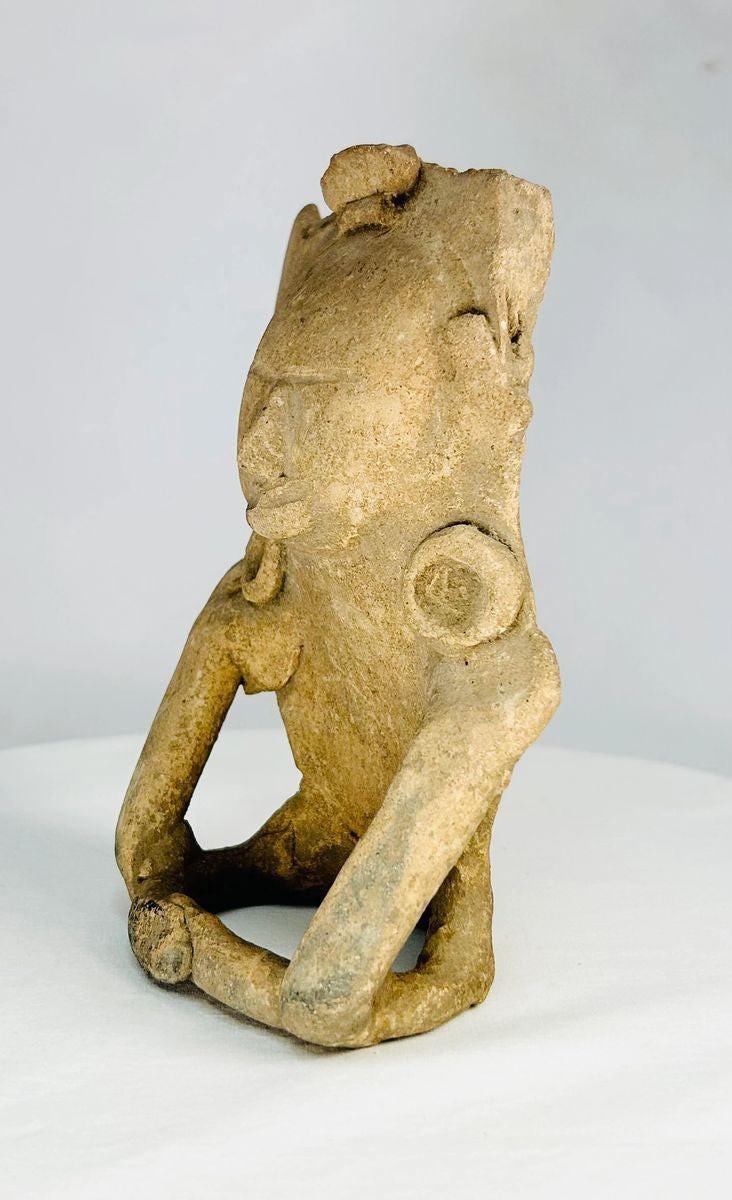
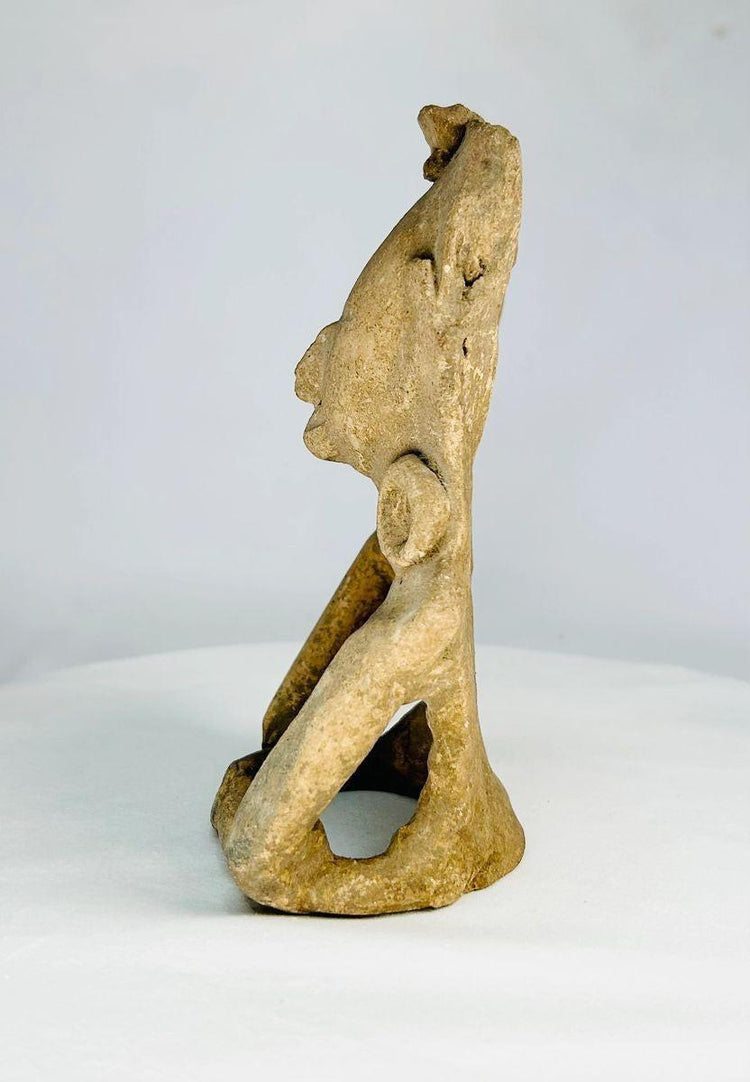

Figurine en céramique précolombienne | Personnage assis en terre cuite avec coiffe rituelle | Vers 200-800 ap. J.-C.
Description
Plus
Moins
Contexte historique et origine
Région : Mésoamérique (probablement influence zapotèque ou olmèque)
Matériau : Terre cuite (céramique)
Période : Période classique, 200-800 apr. J.-C.
Description
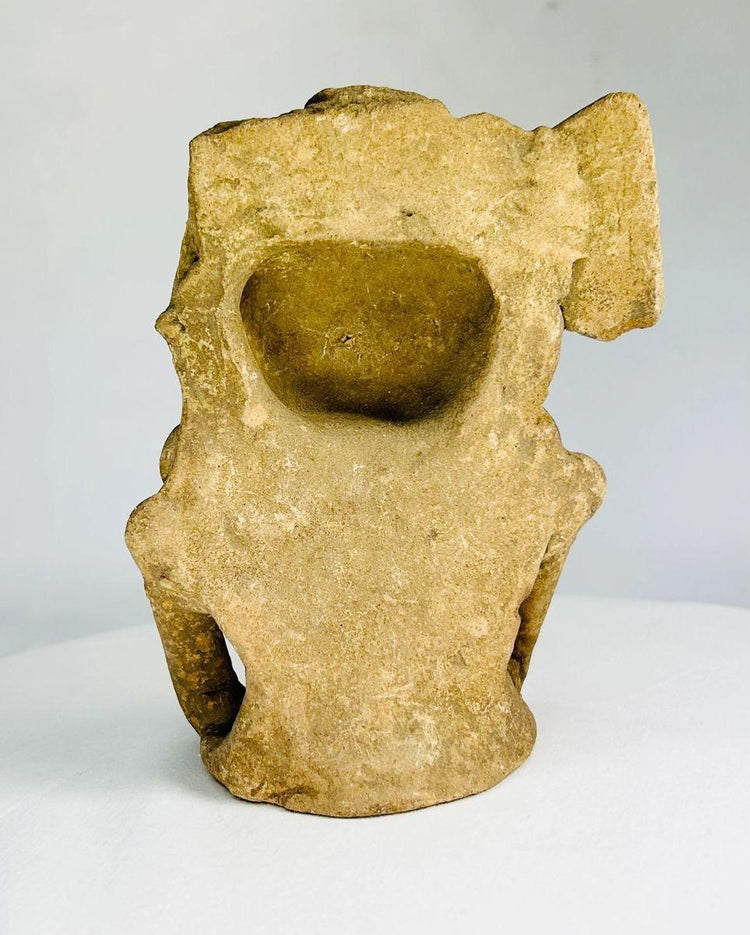
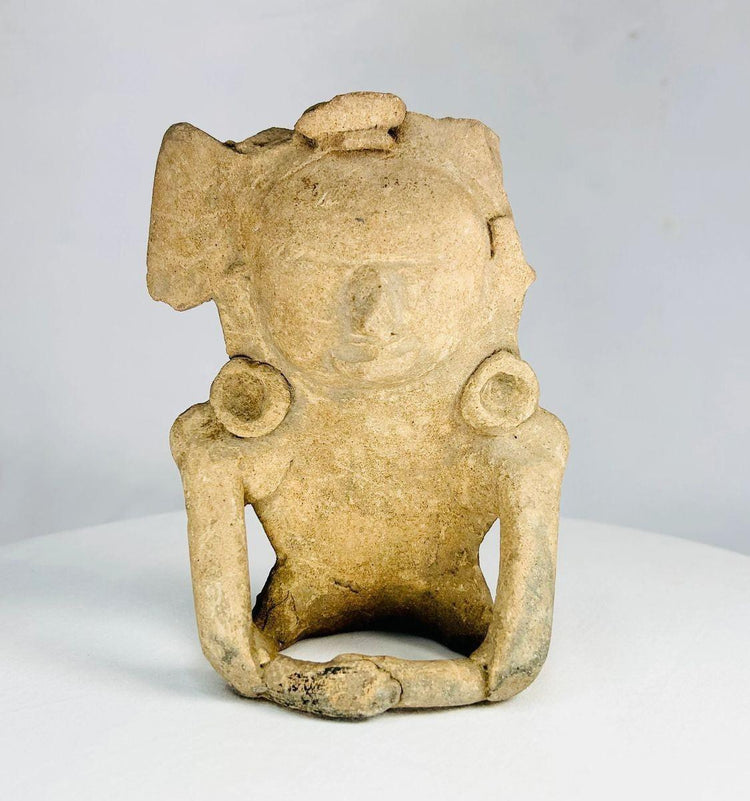
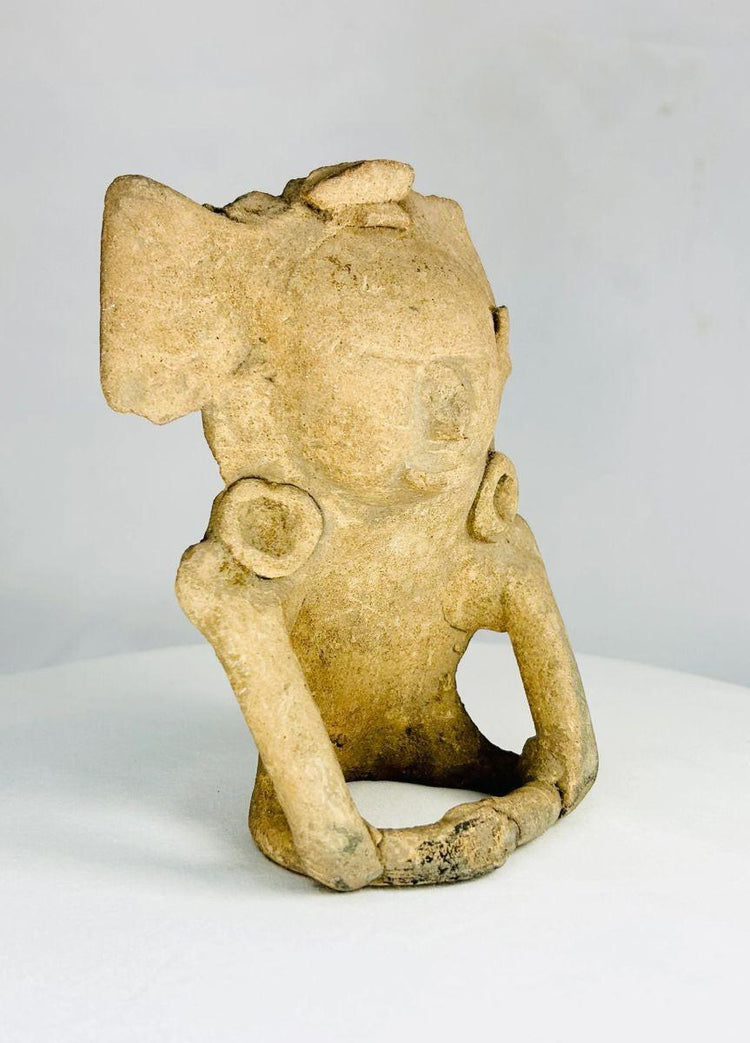
Cette fascinante figurine en céramique précolombienne représente une forme humaine stylisée, assise, les bras reposant sur les genoux pliés dans une posture qui évoque la spiritualité et la révérence. Le visage présente des traits arrondis et sereins avec de grands ornements d'oreilles circulaires, indiquant un statut élevé ou une signification cérémonielle. Une coiffe en forme de casque couronne la figurine, un motif couramment associé à l'art rituel mésoaméricain. Une cavité creuse à l'arrière suggère que la figurine a pu avoir une fonction cérémonielle, peut-être comme récipient pour des offrandes.
Caractéristiques
- Figurine humaine assise avec pose stylisée
- Traits faciaux arrondis et expression sereine
- Grands ornements d'oreilles circulaires dénotant le statut ou le rôle rituel
- Coiffe en forme de casque typique des figures cérémonielles
- Cavité creuse à l'arrière, suggérant une utilisation rituelle
Signification culturelle
Ces figurines étaient centrales aux pratiques spirituelles des civilisations mésoaméricaines. Leurs poses et ornements symboliques reflètent à la fois la hiérarchie sociale et la dévotion religieuse. Probablement utilisées dans des rituels ou comme offrandes funéraires, elles incarnaient la croyance en la connexion divine et la continuité entre la vie et l'au-delà.
État
Bien conservé avec une patine naturelle et une usure cohérentes avec son ancienneté. Les détails fins restent visibles, tandis que la surface conserve son caractère lisse et artisanal, rehaussant son authenticité.
Dimensions (approximatives)
Hauteur : 17,15 cm
Largeur : 12,07 cm
Âge (approximatif)
1 225-1 825 ans
En savoir plus
Découvrez les Célèbres civilisations précolombiennes
Parcourez notre Collection d'artefacts précolombiens
Description
Contexte historique et origine
Région : Mésoamérique (probablement influence zapotèque ou olmèque)
Matériau : Terre cuite (céramique)
Période : Période classique, 200-800 apr. J.-C.
Description
Cette fascinante figurine en céramique précolombienne représente une forme humaine stylisée, assise, les bras reposant sur les genoux pliés dans une posture qui évoque la spiritualité et la révérence. Le visage présente des traits arrondis et sereins avec de grands ornements d'oreilles circulaires, indiquant un statut élevé ou une signification cérémonielle. Une coiffe en forme de casque couronne la figurine, un motif couramment associé à l'art rituel mésoaméricain. Une cavité creuse à l'arrière suggère que la figurine a pu avoir une fonction cérémonielle, peut-être comme récipient pour des offrandes.
Caractéristiques
- Figurine humaine assise avec pose stylisée
- Traits faciaux arrondis et expression sereine
- Grands ornements d'oreilles circulaires dénotant le statut ou le rôle rituel
- Coiffe en forme de casque typique des figures cérémonielles
- Cavité creuse à l'arrière, suggérant une utilisation rituelle
Signification culturelle
Ces figurines étaient centrales aux pratiques spirituelles des civilisations mésoaméricaines. Leurs poses et ornements symboliques reflètent à la fois la hiérarchie sociale et la dévotion religieuse. Probablement utilisées dans des rituels ou comme offrandes funéraires, elles incarnaient la croyance en la connexion divine et la continuité entre la vie et l'au-delà.
État
Bien conservé avec une patine naturelle et une usure cohérentes avec son ancienneté. Les détails fins restent visibles, tandis que la surface conserve son caractère lisse et artisanal, rehaussant son authenticité.
Dimensions (approximatives)
Hauteur : 17,15 cm
Largeur : 12,07 cm
Âge (approximatif)
1 225-1 825 ans
En savoir plus
Découvrez les Célèbres civilisations précolombiennes
Parcourez notre Collection d'artefacts précolombiens
Vous aimerez peut-être aussi
