

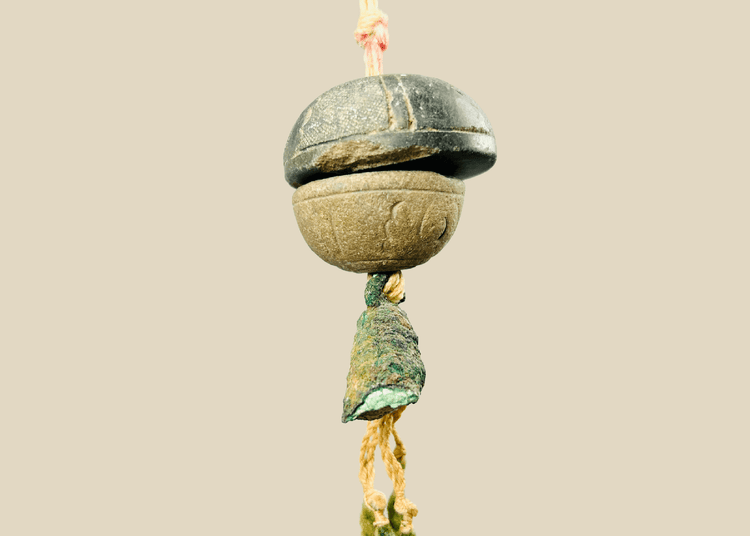
Cloche rituelle précolombienne en alliage de cuivre avec son cordon d'origine | Vers 800-1400 ap. J.-C.
- Prix habituel
- $400.00
- Prix soldé
- $400.00
- Prix habituel
Impossible de charger la disponibilité du service de retrait


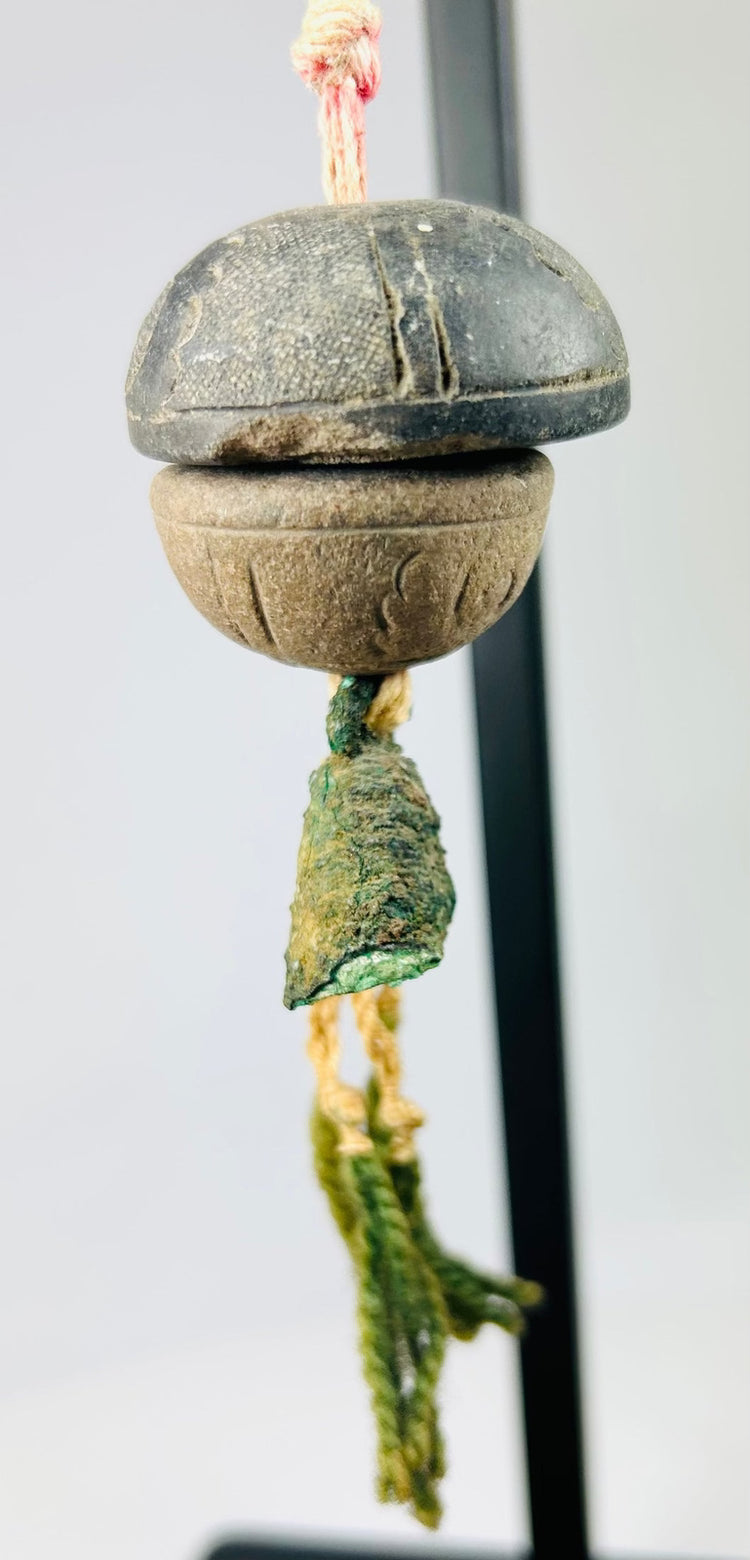
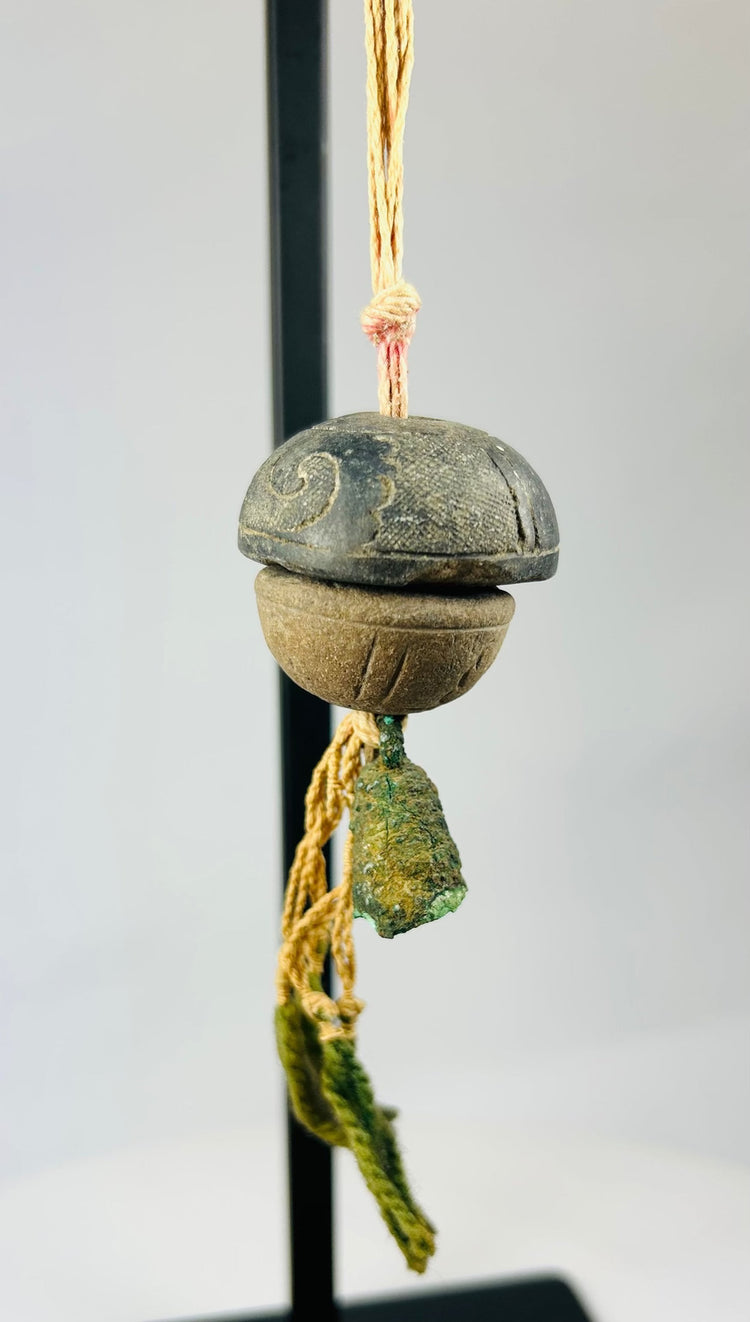
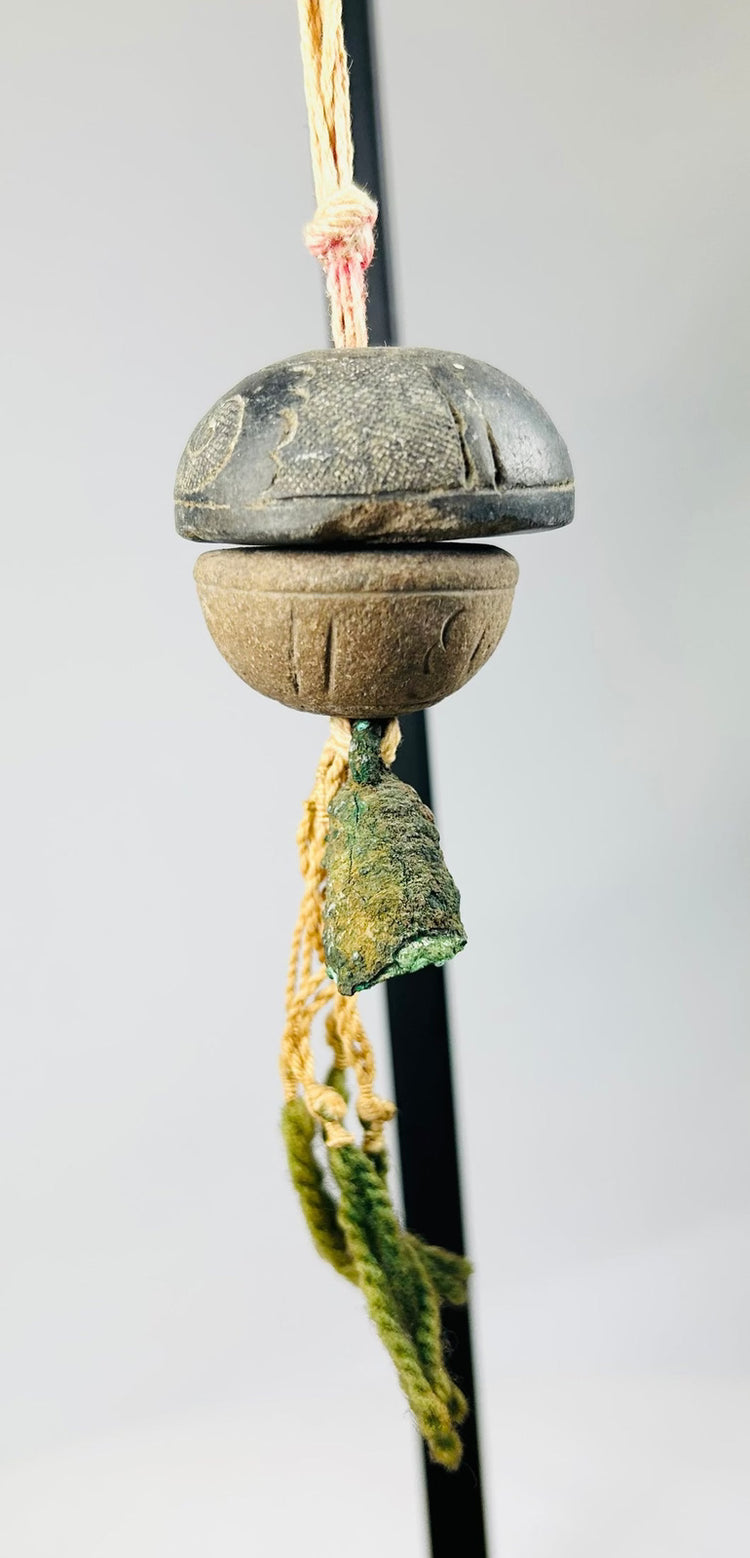
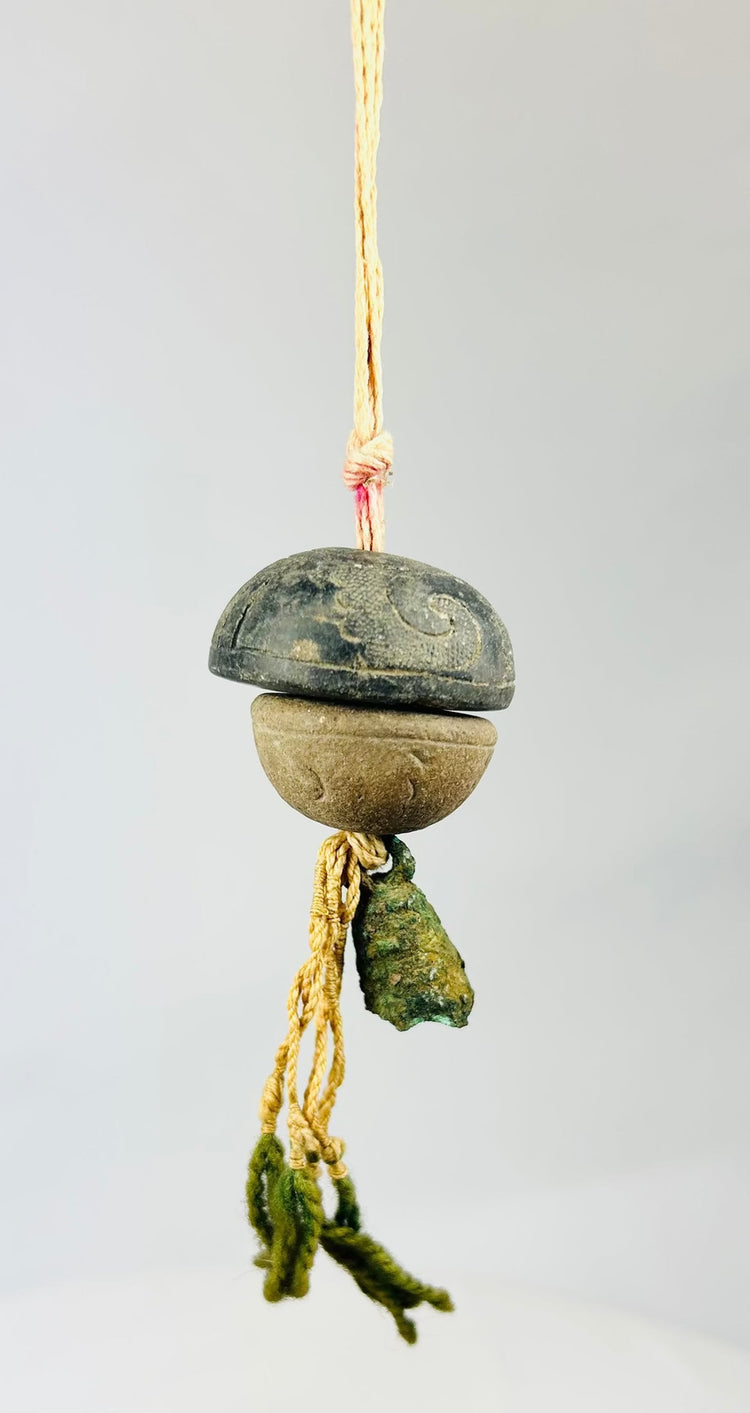
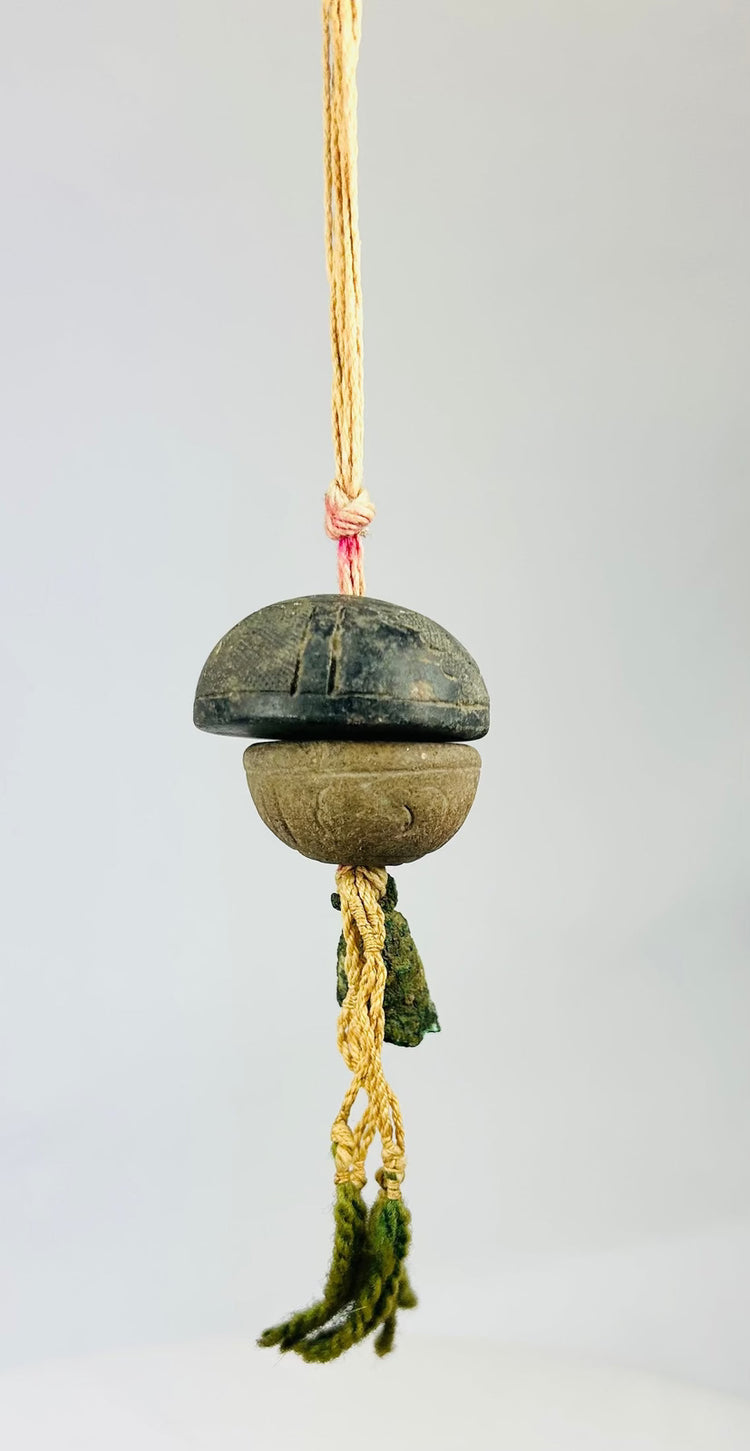

Cloche rituelle précolombienne en alliage de cuivre avec son cordon d'origine | Vers 800-1400 ap. J.-C.
Description
Plus
Moins
Contexte historique et origine
Région : Nord andin ou région ouest du Mexique (probablement Chimú ou Mixtèque)
Matériau : Alliage de cuivre avec des vestiges de cordon textile et de pompons
Période : Vers 800-1400 après J.-C.
Description
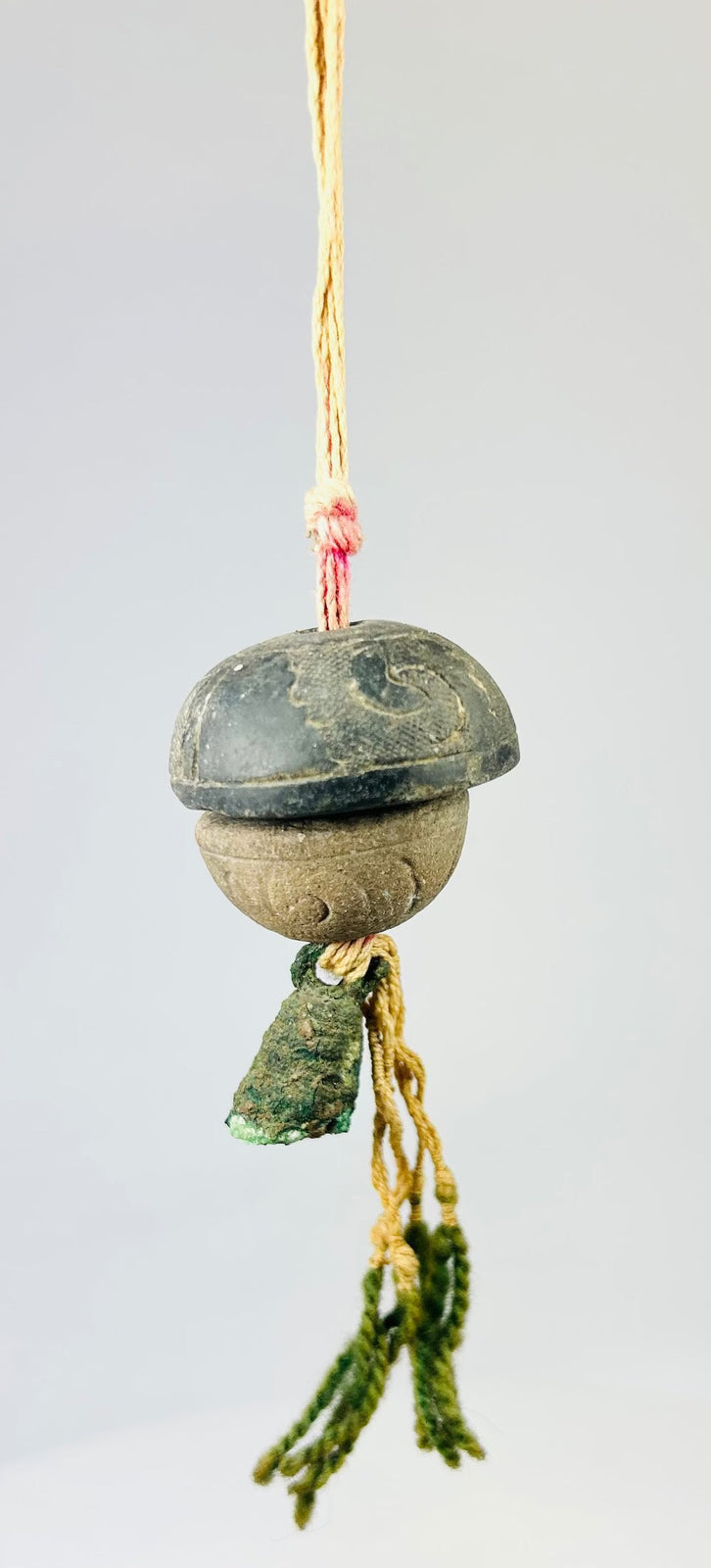
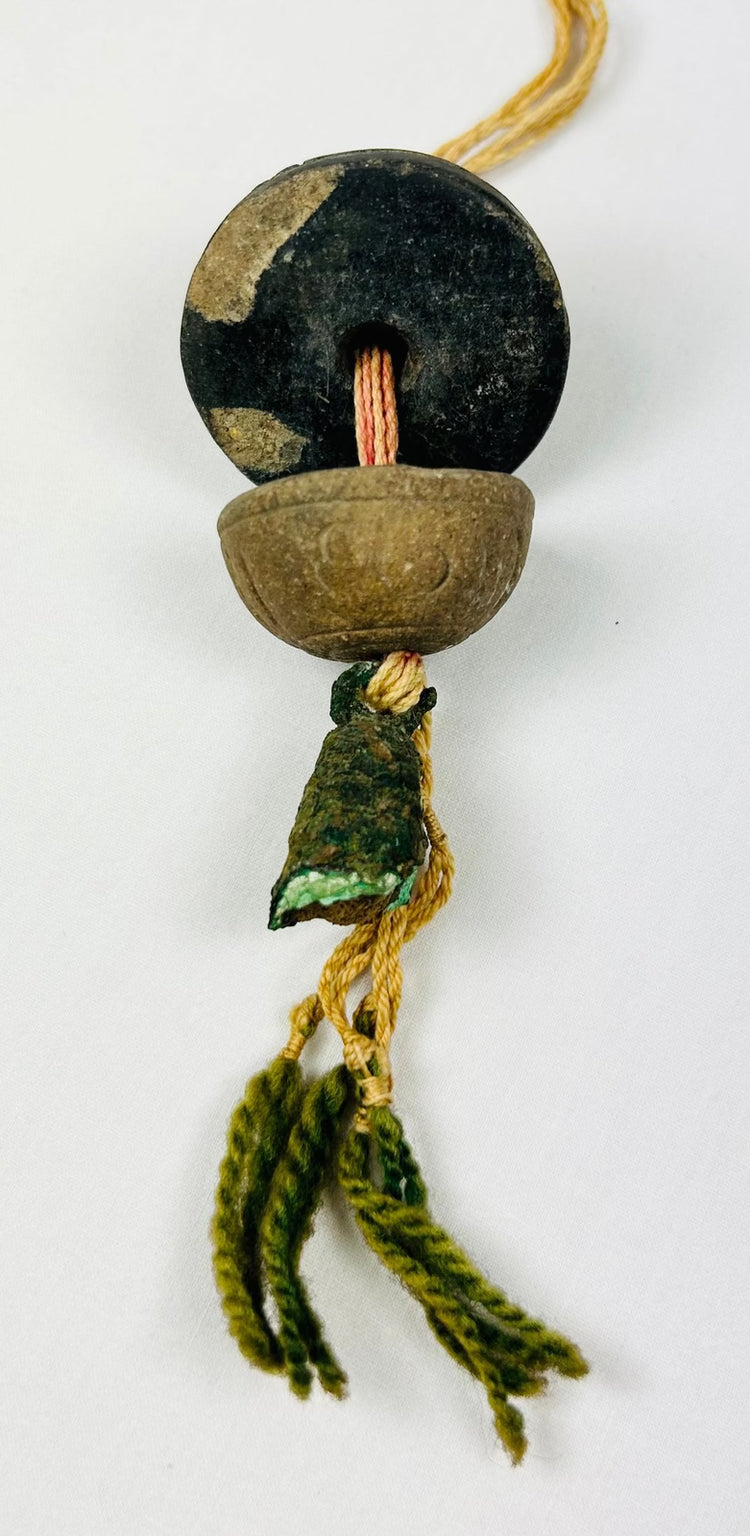
Cette rare cloche rituelle précolombienne en alliage de cuivre représente l'art métallurgique et le symbolisme spirituel des anciennes civilisations andines et mésoaméricaines. Composée de deux moitiés hémisphériques finement coulées formant un orbe résonant, la cloche est dotée d'un battant interne suspendu qui produisait autrefois un son métallique clair utilisé lors des rites et cérémonies sacrés.
Sa surface présente des motifs géométriques et tourbillonnants finement incisés, évoquant peut-être le symbolisme du serpent ou du vent associé à la communication divine. Des traces de vert-de-gris et d'incrustations minérales témoignent de siècles d'enfouissement et de conservation. Le cordon tressé et les pompons textiles verts qui subsistent renforcent son authenticité et sa signification culturelle, offrant un aperçu rare des traditions cérémonielles des anciennes civilisations américaines.
Caractéristiques
- Hémisphères en alliage de cuivre moulé assemblés pour former un corps de cloche résonant
- Motifs décoratifs finement incisés symbolisant le vent et le mouvement
- Conserve le cordon tressé et les fragments de pompons verts d'origine
- Patine distincte avec du vert-de-gris et des dépôts minéraux partout
- Battant interne intact, produisant une faible résonance
- Superbe conservation et intégrité esthétique
Signification culturelle
De telles cloches rituelles étaient des objets sacrés dans la pratique spirituelle précolombienne, fonctionnant comme des instruments à la fois sonores et symboliques. Dans des cultures comme celles des Chimú, des Mochica et des Mixtèques, leurs sons étaient censés invoquer les forces divines, honorer les morts ou invoquer la fertilité et la pluie. Souvent enterrées avec l'élite ou utilisées lors des cérémonies du temple, les cloches étaient considérées comme des ponts entre les mondes physique et spirituel.
Cet exemple illustre l'équilibre entre l'utilité, l'art et l'intention métaphysique atteint par les anciens métallurgistes, transformant le cuivre brut en un réceptacle de son et de sainteté.
État
Excellent état ancien avec une patine de surface stable, de légères incrustations et des traces visibles de vert-de-gris. Le cordon et les pompons montrent une usure naturelle conforme à leur grand âge mais restent solidement attachés. Aucun signe de restauration ou de réparation moderne.
Dimensions (approximatives)
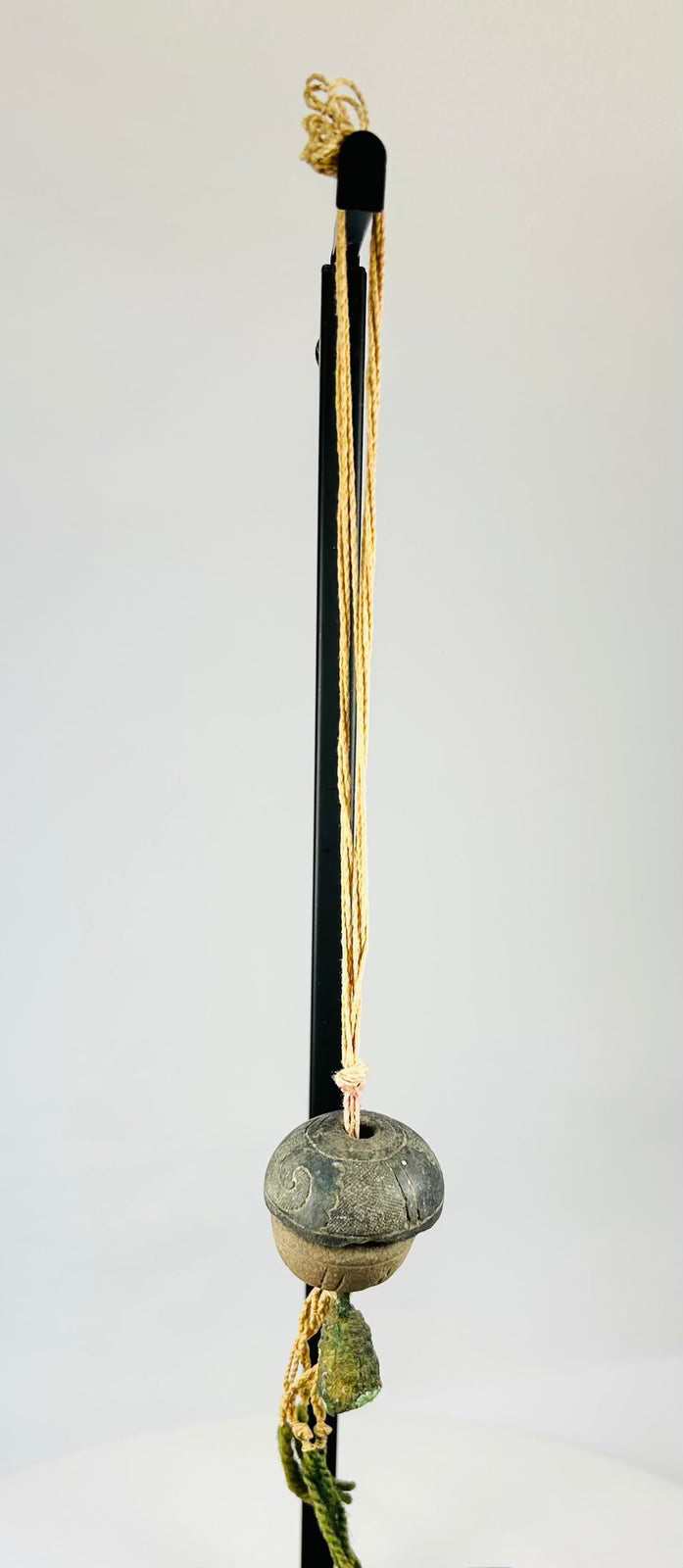
Longueur totale suspendue (y compris le cordon et les pompons) : 30,5 cm
Âge (approximatif)
Entre 625 et 1 225 ans
En savoir plus
Voir un exemple comparable au Metropolitan Museum of Art Cloche précolombienne en cuivre
Parcourir les œuvres connexes dans notre collection Collection d'artefacts précolombiens anciens
Description
Contexte historique et origine
Région : Nord andin ou région ouest du Mexique (probablement Chimú ou Mixtèque)
Matériau : Alliage de cuivre avec des vestiges de cordon textile et de pompons
Période : Vers 800-1400 après J.-C.
Description
Cette rare cloche rituelle précolombienne en alliage de cuivre représente l'art métallurgique et le symbolisme spirituel des anciennes civilisations andines et mésoaméricaines. Composée de deux moitiés hémisphériques finement coulées formant un orbe résonant, la cloche est dotée d'un battant interne suspendu qui produisait autrefois un son métallique clair utilisé lors des rites et cérémonies sacrés.
Sa surface présente des motifs géométriques et tourbillonnants finement incisés, évoquant peut-être le symbolisme du serpent ou du vent associé à la communication divine. Des traces de vert-de-gris et d'incrustations minérales témoignent de siècles d'enfouissement et de conservation. Le cordon tressé et les pompons textiles verts qui subsistent renforcent son authenticité et sa signification culturelle, offrant un aperçu rare des traditions cérémonielles des anciennes civilisations américaines.
Caractéristiques
- Hémisphères en alliage de cuivre moulé assemblés pour former un corps de cloche résonant
- Motifs décoratifs finement incisés symbolisant le vent et le mouvement
- Conserve le cordon tressé et les fragments de pompons verts d'origine
- Patine distincte avec du vert-de-gris et des dépôts minéraux partout
- Battant interne intact, produisant une faible résonance
- Superbe conservation et intégrité esthétique
Signification culturelle
De telles cloches rituelles étaient des objets sacrés dans la pratique spirituelle précolombienne, fonctionnant comme des instruments à la fois sonores et symboliques. Dans des cultures comme celles des Chimú, des Mochica et des Mixtèques, leurs sons étaient censés invoquer les forces divines, honorer les morts ou invoquer la fertilité et la pluie. Souvent enterrées avec l'élite ou utilisées lors des cérémonies du temple, les cloches étaient considérées comme des ponts entre les mondes physique et spirituel.
Cet exemple illustre l'équilibre entre l'utilité, l'art et l'intention métaphysique atteint par les anciens métallurgistes, transformant le cuivre brut en un réceptacle de son et de sainteté.
État
Excellent état ancien avec une patine de surface stable, de légères incrustations et des traces visibles de vert-de-gris. Le cordon et les pompons montrent une usure naturelle conforme à leur grand âge mais restent solidement attachés. Aucun signe de restauration ou de réparation moderne.
Dimensions (approximatives)
Longueur totale suspendue (y compris le cordon et les pompons) : 30,5 cm
Âge (approximatif)
Entre 625 et 1 225 ans
En savoir plus
Voir un exemple comparable au Metropolitan Museum of Art Cloche précolombienne en cuivre
Parcourir les œuvres connexes dans notre collection Collection d'artefacts précolombiens anciens
Vous aimerez peut-être aussi
