

Précolombien | Récipient à piédestal en terre cuite à motifs géométriques | Vers 500 av. J.-C. – 1200 apr. J.-C.
- Prix habituel
- $300.00
- Prix soldé
- $300.00
- Prix habituel
Impossible de charger la disponibilité du service de retrait


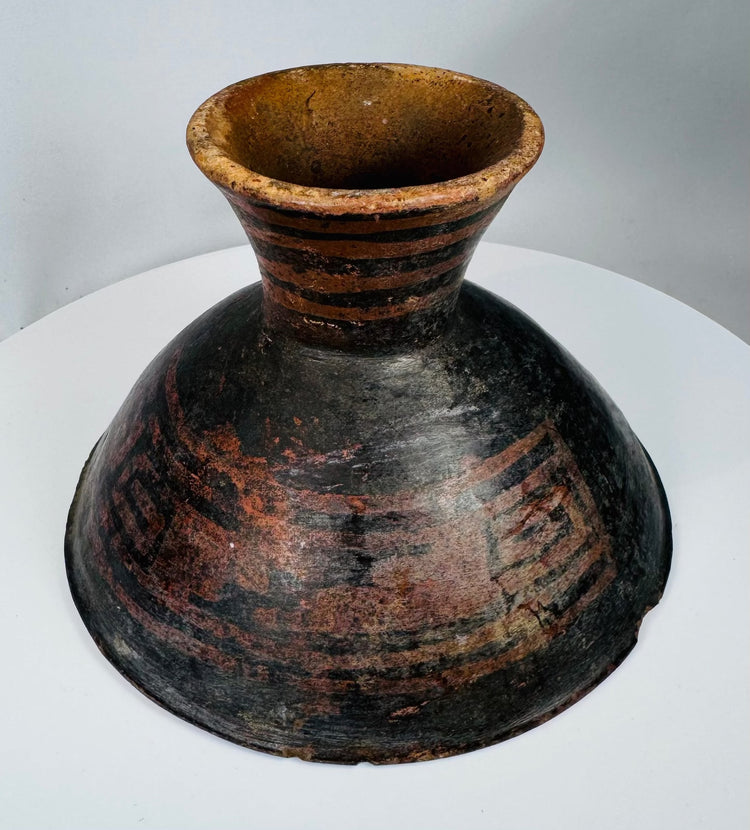
Précolombien | Récipient à piédestal en terre cuite à motifs géométriques | Vers 500 av. J.-C. – 1200 apr. J.-C.
Description
Plus
Moins
Contexte historique et origine
Région : Mésoamérique ou Amérique centrale précolombienne
Matériau : Poterie en terre cuite formée à la main avec décoration de pigments minéraux
Période : Environ 500 av. J.-C. – 1200 apr. J.-C.
Description
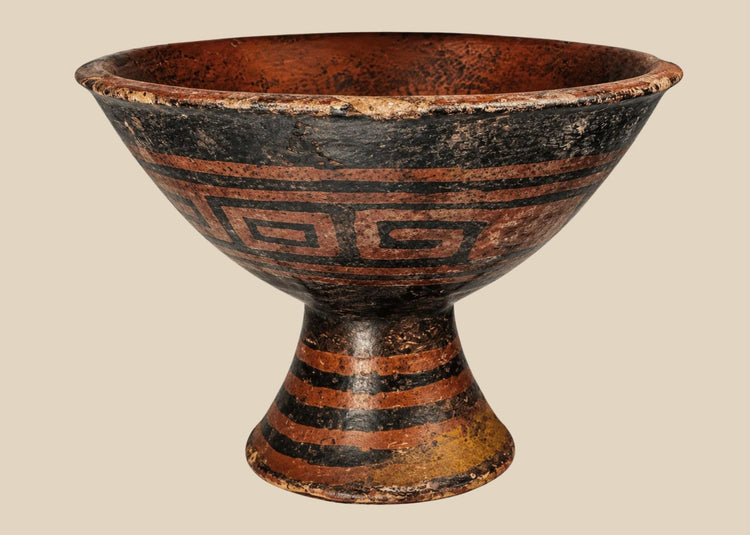
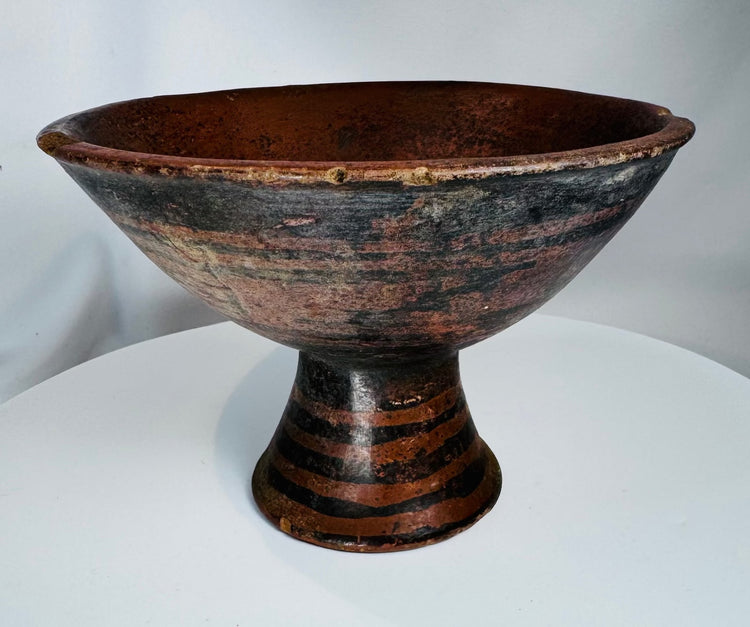
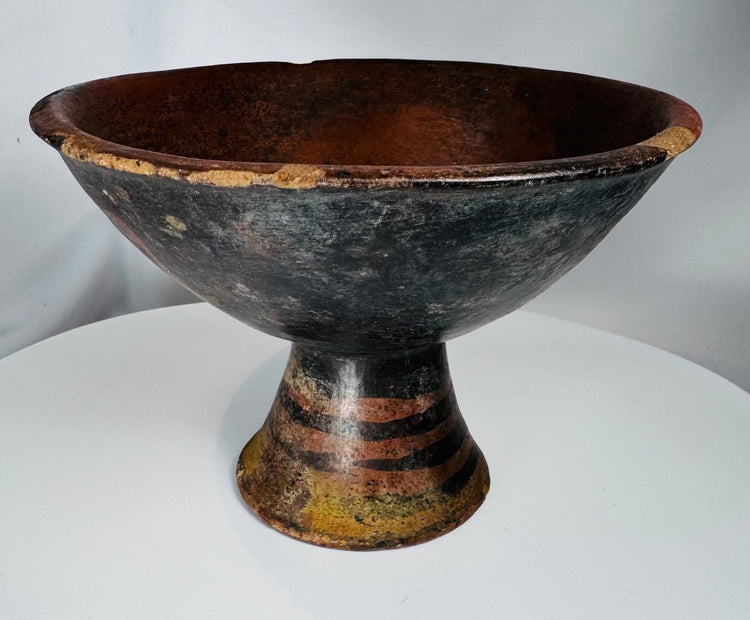
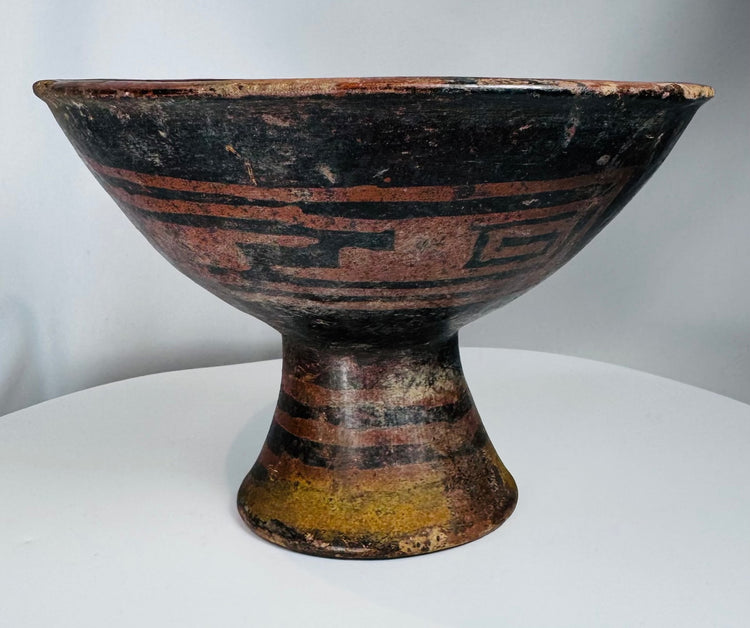
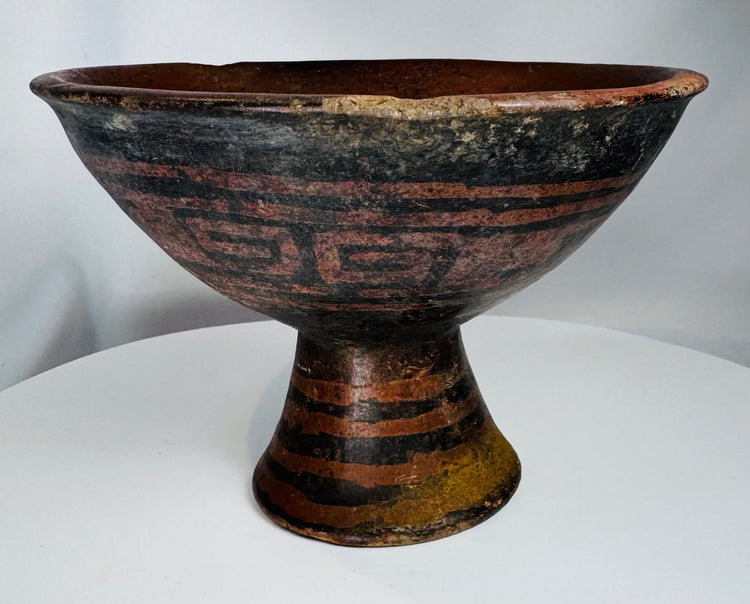
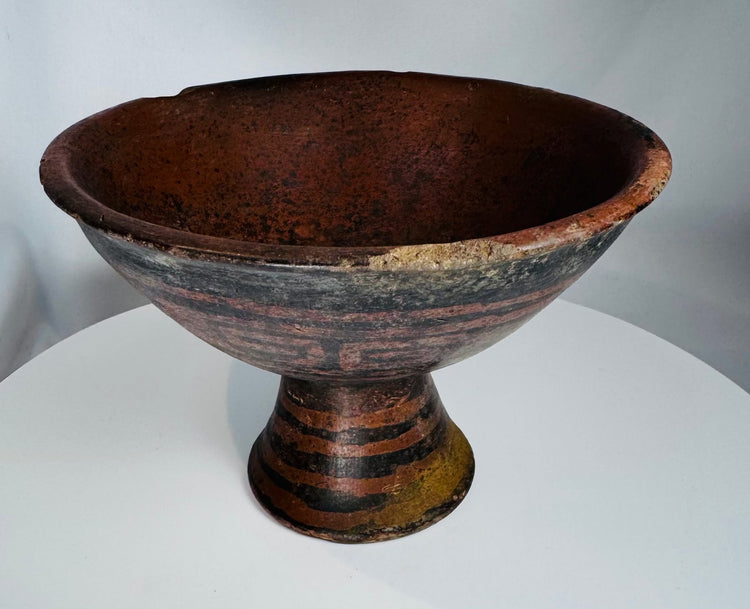
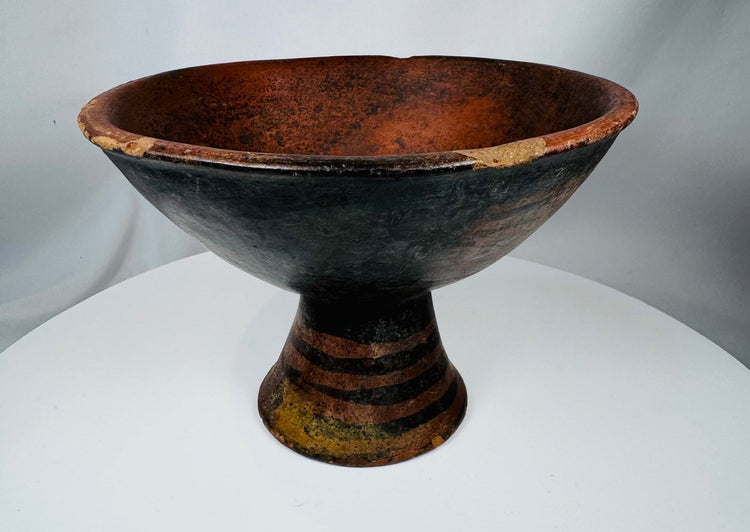
Cet impressionnant vase en poterie précolombienne présente un large bol conique sur un pied cylindrique évasé, décoré de motifs géométriques foncés peints sur un corps en faïence rougeâtre. Le vase présente de fortes similitudes stylistiques avec les formes céramiques cérémonielles et domestiques associées aux anciennes cultures mésoaméricaines, en particulier les exemples attribués aux régions de l'ouest du Mexique, Colima, Nayarit, ou aux traditions plus larges d'Amérique centrale datant d'environ 500 av. J.-C. à 1200 apr. J.-C.
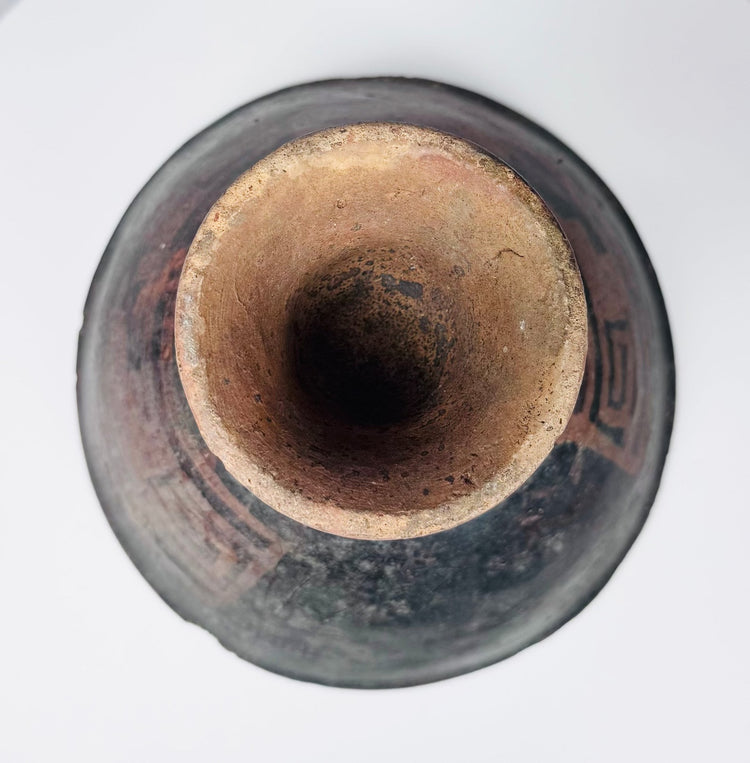
L'extérieur conserve une décoration en engobe noir ou pigment minéral très usée, disposée en bandes géométriques linéaires et en motifs étagés. Ces motifs abstraits sont caractéristiques de nombreuses anciennes traditions céramiques indigènes où les formes géométriques répétées avaient une signification symbolique, cérémonielle ou liée au clan. La forme en piédestal surélevé est particulièrement remarquable, car des récipients similaires étaient souvent utilisés pour la préparation des aliments, les offrandes, la présentation rituelle ou les repas communautaires.
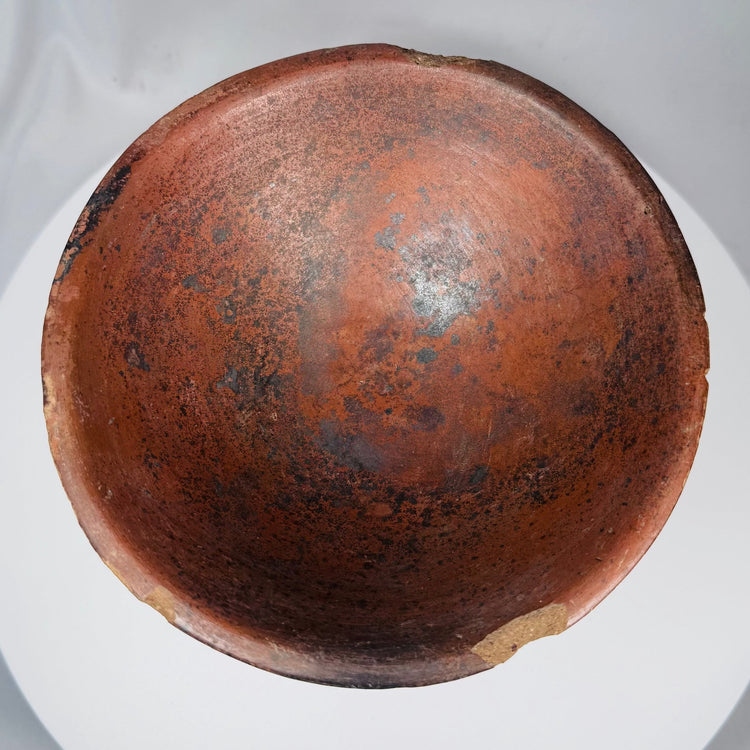
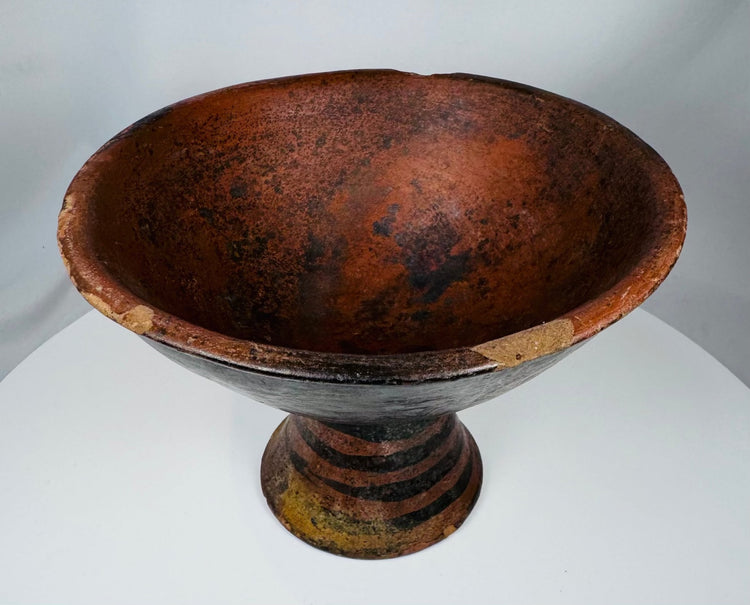
Le vase présente une usure de surface substantielle liée à l'âge, des concrétions minérales, des irrégularités de cuisson et des pertes au niveau du rebord, compatibles avec l'âge et la manipulation à long terme. L'intérieur révèle une surface en faïence brun rougeâtre chaud avec des zones assombries, probablement dues aux conditions de cuisson, à l'exposition à l l'environnement d'enfouissement ou à une utilisation prolongée.
La construction, la décoration géométrique peinte et la surface patinée sont conformes aux anciennes traditions céramiques précolombiennes. Le vase présente un excellent aspect visuel et constituerait une pièce d'exposition fascinante pour les collectionneurs d'art précolombien, de céramiques anciennes, d'art tribal et d'antiquités de style archéologique.
Caractéristiques
- Grand bol sur piédestal avec base évasée
- Décoration de bandes géométriques peintes à la main
- Construction en terre cuite
- Détails extérieurs en pigments minéraux foncés
- Forte influence stylistique précolombienne
- Variations de surface visibles dues à la cuisson et à l'âge
- Excellente présence décorative et d'exposition
Signification culturelle
Les vases sur piédestal ont joué un rôle important dans de nombreuses sociétés précolombiennes, remplissant des fonctions cérémonielles, domestiques, funéraires et rituelles. Les motifs géométriques peints symbolisaient fréquemment des concepts cosmologiques, des identités régionales, des croyances spirituelles ou des représentations stylisées d'éléments naturels. La forme surélevée que l'on voit ici est particulièrement associée à la présentation et à l'utilité cérémonielle dans diverses traditions céramiques anciennes des Amériques.
État
Présente une usure liée à l'âge, une abrasion de surface, des pertes de rebord éparses, une décoloration des pigments, des concrétions minérales et des irrégularités de cuisson conformes à l'âge et à la manipulation à long terme. Aucune réparation moderne majeure visible lors d'une inspection sommaire. L'ensemble présente exceptionnellement bien avec un fort caractère visuel et des qualités de surface archéologiques authentiques.
Dimensions (approximatives)
Hauteur : 11,4 cm
Diamètre : 16,5 cm
Âge (approximatif)
800 à 2 500 ans
Provenance
D'une collection privée de Philadelphie, Pennsylvanie, États-Unis.
En savoir plus
Découvrez le développement et la signification culturelle des anciennes traditions potières sud-américaines sur Britannica
Explorez notre Collection d'artefacts précolombiens anciens
Description
Contexte historique et origine
Région : Mésoamérique ou Amérique centrale précolombienne
Matériau : Poterie en terre cuite formée à la main avec décoration de pigments minéraux
Période : Environ 500 av. J.-C. – 1200 apr. J.-C.
Description
Cet impressionnant vase en poterie précolombienne présente un large bol conique sur un pied cylindrique évasé, décoré de motifs géométriques foncés peints sur un corps en faïence rougeâtre. Le vase présente de fortes similitudes stylistiques avec les formes céramiques cérémonielles et domestiques associées aux anciennes cultures mésoaméricaines, en particulier les exemples attribués aux régions de l'ouest du Mexique, Colima, Nayarit, ou aux traditions plus larges d'Amérique centrale datant d'environ 500 av. J.-C. à 1200 apr. J.-C.
L'extérieur conserve une décoration en engobe noir ou pigment minéral très usée, disposée en bandes géométriques linéaires et en motifs étagés. Ces motifs abstraits sont caractéristiques de nombreuses anciennes traditions céramiques indigènes où les formes géométriques répétées avaient une signification symbolique, cérémonielle ou liée au clan. La forme en piédestal surélevé est particulièrement remarquable, car des récipients similaires étaient souvent utilisés pour la préparation des aliments, les offrandes, la présentation rituelle ou les repas communautaires.
Le vase présente une usure de surface substantielle liée à l'âge, des concrétions minérales, des irrégularités de cuisson et des pertes au niveau du rebord, compatibles avec l'âge et la manipulation à long terme. L'intérieur révèle une surface en faïence brun rougeâtre chaud avec des zones assombries, probablement dues aux conditions de cuisson, à l'exposition à l l'environnement d'enfouissement ou à une utilisation prolongée.
La construction, la décoration géométrique peinte et la surface patinée sont conformes aux anciennes traditions céramiques précolombiennes. Le vase présente un excellent aspect visuel et constituerait une pièce d'exposition fascinante pour les collectionneurs d'art précolombien, de céramiques anciennes, d'art tribal et d'antiquités de style archéologique.
Caractéristiques
- Grand bol sur piédestal avec base évasée
- Décoration de bandes géométriques peintes à la main
- Construction en terre cuite
- Détails extérieurs en pigments minéraux foncés
- Forte influence stylistique précolombienne
- Variations de surface visibles dues à la cuisson et à l'âge
- Excellente présence décorative et d'exposition
Signification culturelle
Les vases sur piédestal ont joué un rôle important dans de nombreuses sociétés précolombiennes, remplissant des fonctions cérémonielles, domestiques, funéraires et rituelles. Les motifs géométriques peints symbolisaient fréquemment des concepts cosmologiques, des identités régionales, des croyances spirituelles ou des représentations stylisées d'éléments naturels. La forme surélevée que l'on voit ici est particulièrement associée à la présentation et à l'utilité cérémonielle dans diverses traditions céramiques anciennes des Amériques.
État
Présente une usure liée à l'âge, une abrasion de surface, des pertes de rebord éparses, une décoloration des pigments, des concrétions minérales et des irrégularités de cuisson conformes à l'âge et à la manipulation à long terme. Aucune réparation moderne majeure visible lors d'une inspection sommaire. L'ensemble présente exceptionnellement bien avec un fort caractère visuel et des qualités de surface archéologiques authentiques.
Dimensions (approximatives)
Hauteur : 11,4 cm
Diamètre : 16,5 cm
Âge (approximatif)
800 à 2 500 ans
Provenance
D'une collection privée de Philadelphie, Pennsylvanie, États-Unis.
En savoir plus
Découvrez le développement et la signification culturelle des anciennes traditions potières sud-américaines sur Britannica
Explorez notre Collection d'artefacts précolombiens anciens
Vous aimerez peut-être aussi
