

Statue précolombienne en terre cuite | Ouest du Mexique | 300 av. J.-C. – 500 apr. J.-C.
- Prix habituel
- $350.00
- Prix soldé
- $350.00
- Prix habituel
Impossible de charger la disponibilité du service de retrait


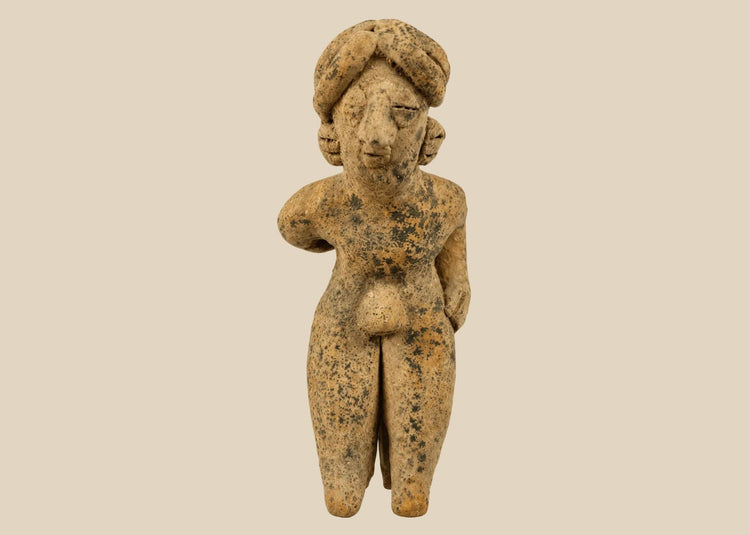
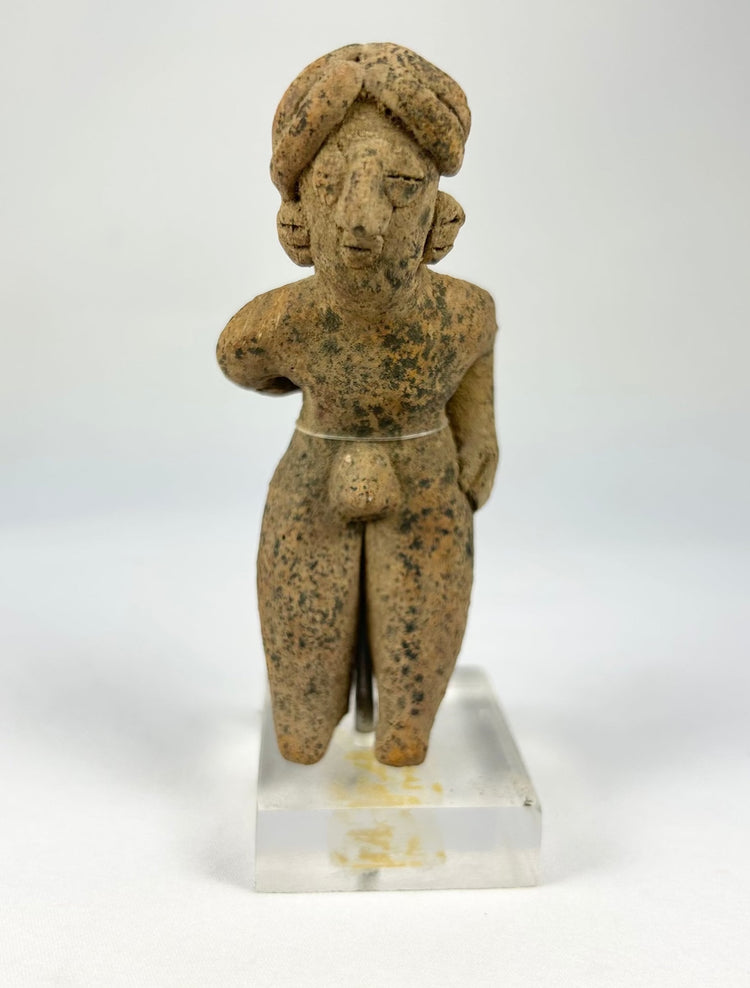
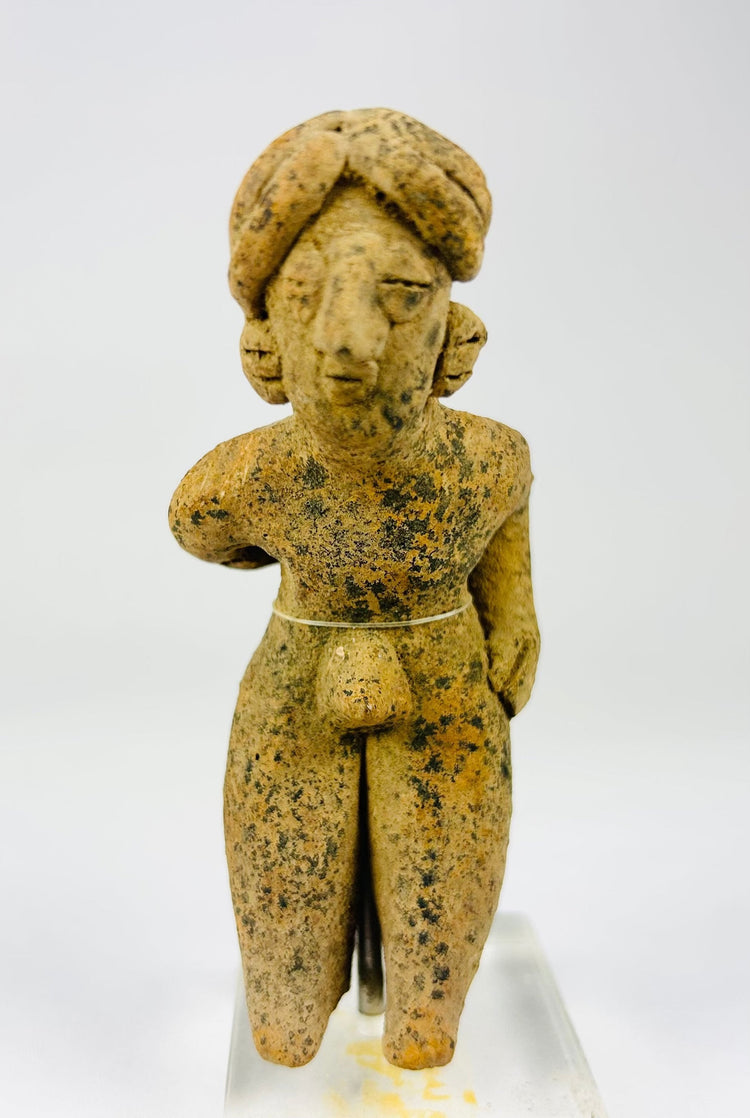
Statue précolombienne en terre cuite | Ouest du Mexique | 300 av. J.-C. – 500 apr. J.-C.
Description
Plus
Moins
Contexte historique et origine
Région : Ouest du Mexique (Nayarit, Jalisco ou Colima)
Matériau : Terre cuite modelée à la main
Période : Précolombien, environ 300 av. J.-C. – 500 apr. J.-C.
Description
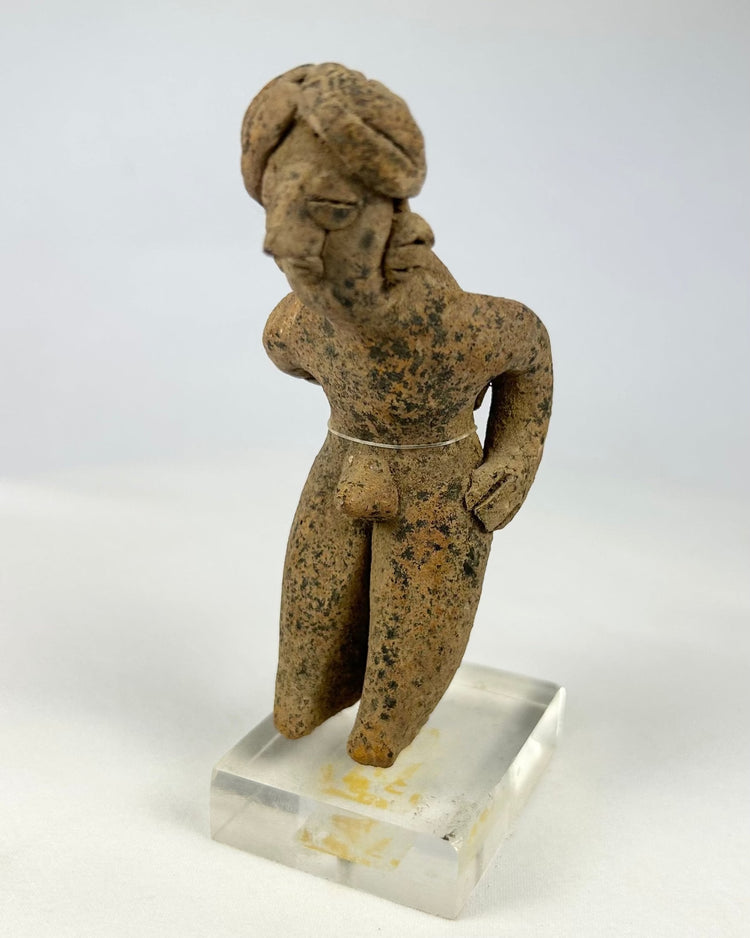
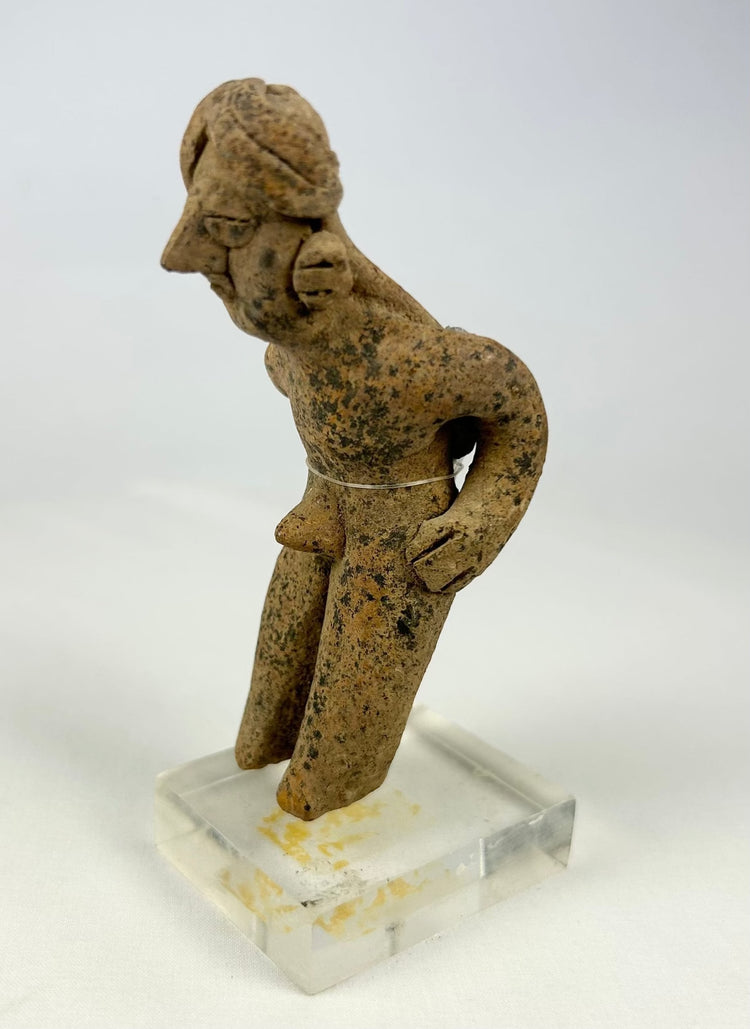
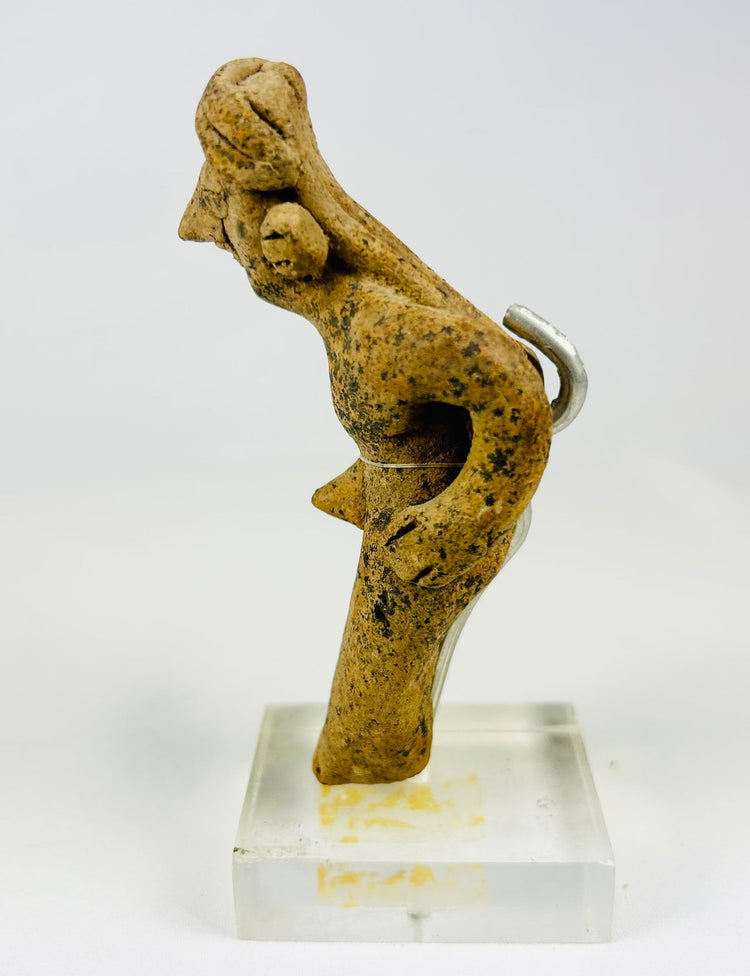
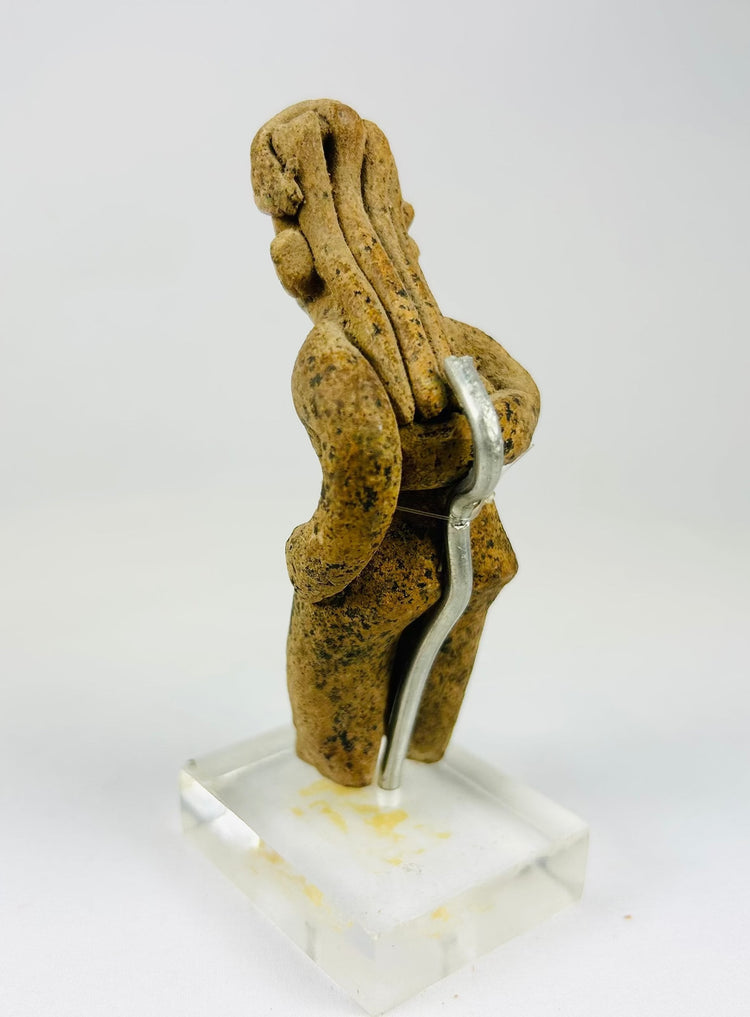
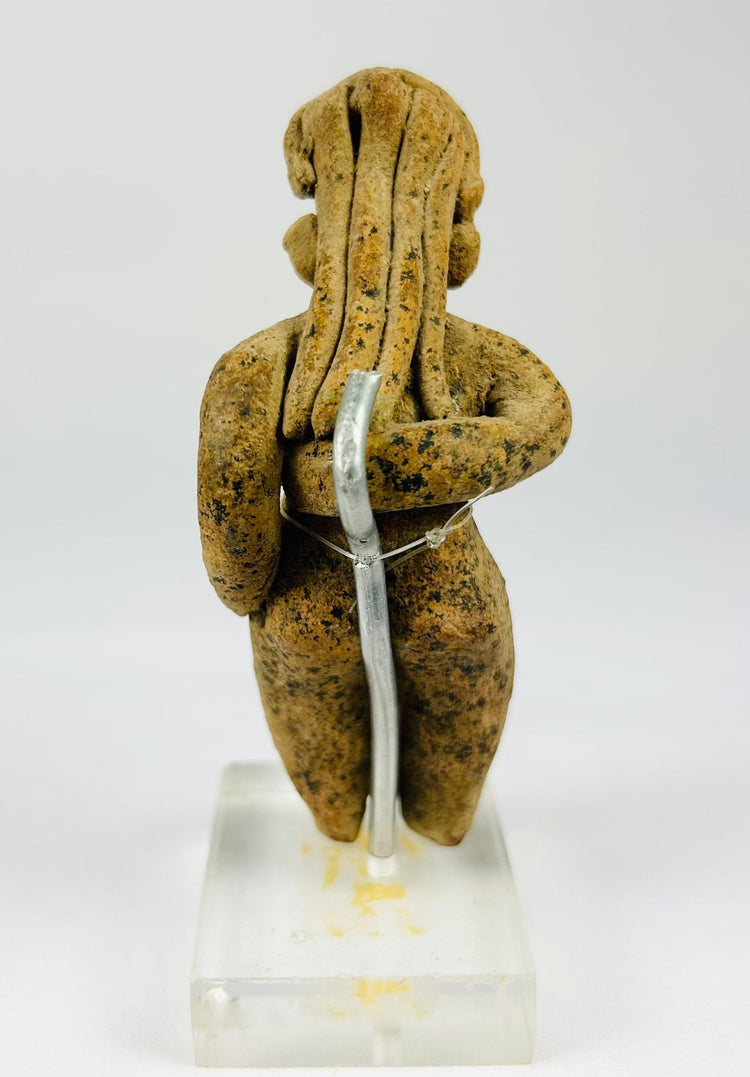
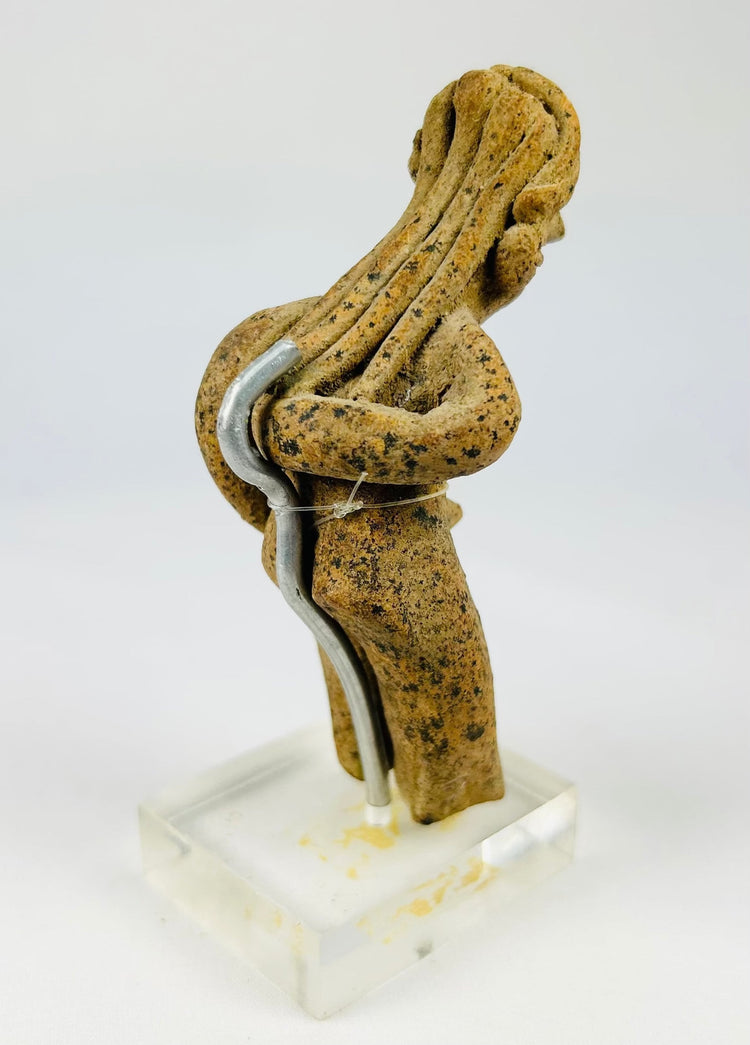
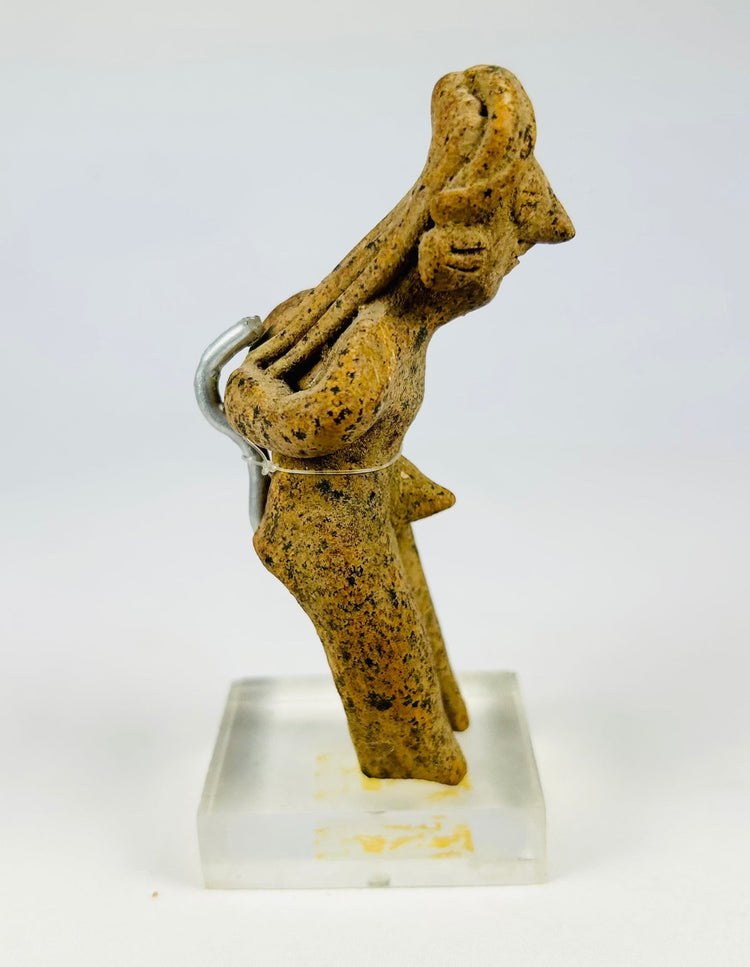
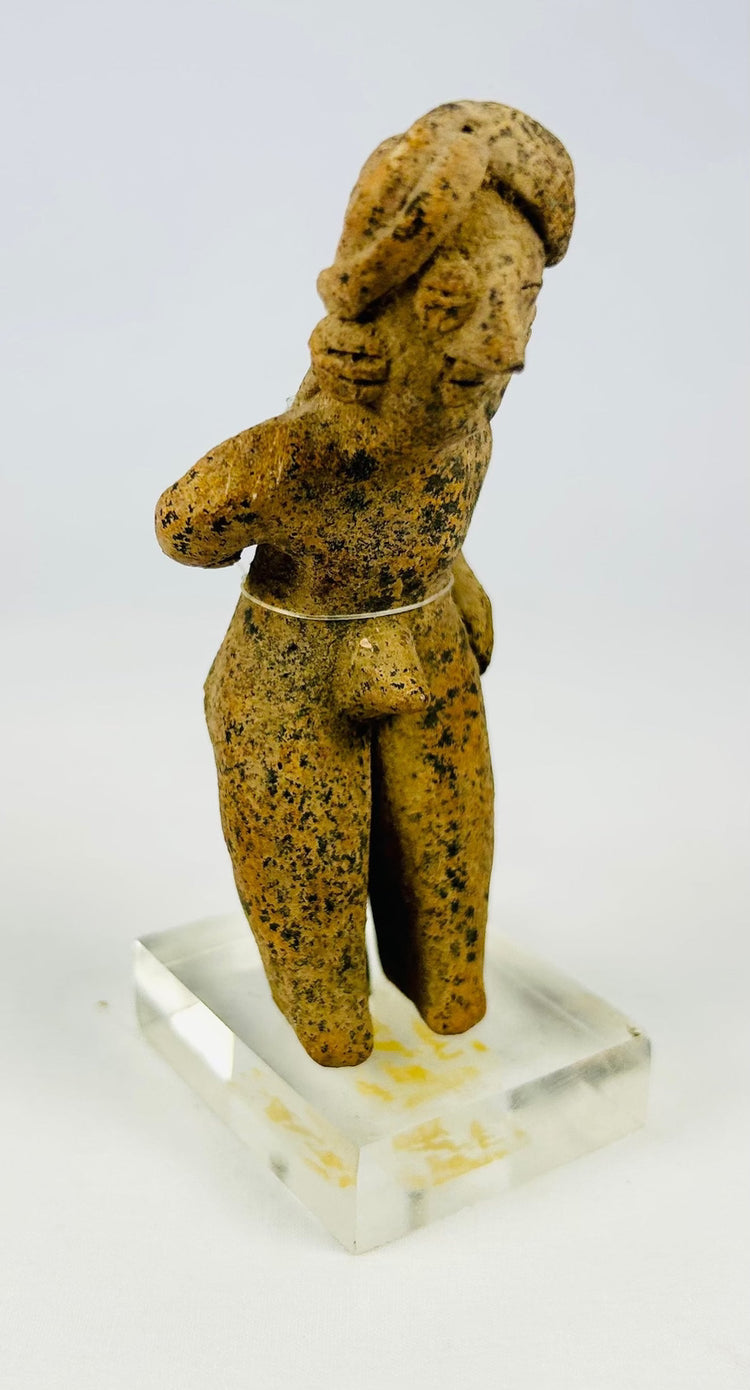
Cette figurine en terre cuite finement modelée à la main, créée il y a plus de 1 500 ans, représente l'art expressif des cultures des tombes à puits de l'Ouest du Mexique. La figurine est debout, les bras croisés sur la poitrine, et porte une haute coiffe en forme de turban, une caractéristique distinctive associée à l'identité rituelle ou cérémonielle. Malgré son ancienneté, la pièce conserve une grande partie de sa forme et de ses détails d'origine, avec des intempéries de surface et des incrustations compatibles avec un enterrement de longue durée. Montée sur une base en acrylique moderne, elle s'expose magnifiquement sous plusieurs angles, soulignant les proportions stylisées et le symbolisme culturel de l'art ancien de l'Ouest du Mexique.
Caractéristiques
- Figurine en terre cuite debout, les bras croisés sur la poitrine
- Coiffe distinctive en forme de turban
- Proportions stylisées typiques des sculptures des cultures des tombes à puits
- Incrustations funéraires et altérations de surface dues à l'ancienneté
- Monté sur une base en acrylique moderne pour un affichage sécurisé
Signification culturelle
Les figurines de ce type faisaient partie intégrante des pratiques funéraires de l'Ouest du Mexique, placées dans les tombes à puits comme gardiens, compagnons ou représentations symboliques de la fertilité et de la prospérité. Elles reflètent la vision spirituelle de la société précolombienne, où l'art jouait des rôles rituels et protecteurs. Aujourd'hui, ces figures sont très appréciées en tant qu'artefacts culturels, offrant un aperçu rare des croyances, des pratiques sociales et des traditions esthétiques des premières civilisations mésoaméricaines.
État
Bon état archéologique avec des pertes fragmentaires, une usure de surface et des dépôts minéraux compatibles avec un ancien enterrement. Globalement stable et solidement monté pour l'exposition.
Dimensions (approximatives)
Hauteur : 10,8 cm
Largeur : 3,8 cm
Profondeur : 5,1 cm
Âge (approximatif)
1 500 à 2 300 ans
Provenance
Anciennement détenue dans une collection privée dans le sud de la Californie, États-Unis, constituée entre les années 1970 et 1990. Ensuite détenue dans une collection privée à Brea, Californie, États-Unis.
En savoir plus
Découvrez une figurine de tombe à puits de l'Ouest du Mexique au The Metropolitan Museum of Art
Parcourez notre collection d'artefacts et reliques précolombiens anciens
Description
Contexte historique et origine
Région : Ouest du Mexique (Nayarit, Jalisco ou Colima)
Matériau : Terre cuite modelée à la main
Période : Précolombien, environ 300 av. J.-C. – 500 apr. J.-C.
Description
Cette figurine en terre cuite finement modelée à la main, créée il y a plus de 1 500 ans, représente l'art expressif des cultures des tombes à puits de l'Ouest du Mexique. La figurine est debout, les bras croisés sur la poitrine, et porte une haute coiffe en forme de turban, une caractéristique distinctive associée à l'identité rituelle ou cérémonielle. Malgré son ancienneté, la pièce conserve une grande partie de sa forme et de ses détails d'origine, avec des intempéries de surface et des incrustations compatibles avec un enterrement de longue durée. Montée sur une base en acrylique moderne, elle s'expose magnifiquement sous plusieurs angles, soulignant les proportions stylisées et le symbolisme culturel de l'art ancien de l'Ouest du Mexique.
Caractéristiques
- Figurine en terre cuite debout, les bras croisés sur la poitrine
- Coiffe distinctive en forme de turban
- Proportions stylisées typiques des sculptures des cultures des tombes à puits
- Incrustations funéraires et altérations de surface dues à l'ancienneté
- Monté sur une base en acrylique moderne pour un affichage sécurisé
Signification culturelle
Les figurines de ce type faisaient partie intégrante des pratiques funéraires de l'Ouest du Mexique, placées dans les tombes à puits comme gardiens, compagnons ou représentations symboliques de la fertilité et de la prospérité. Elles reflètent la vision spirituelle de la société précolombienne, où l'art jouait des rôles rituels et protecteurs. Aujourd'hui, ces figures sont très appréciées en tant qu'artefacts culturels, offrant un aperçu rare des croyances, des pratiques sociales et des traditions esthétiques des premières civilisations mésoaméricaines.
État
Bon état archéologique avec des pertes fragmentaires, une usure de surface et des dépôts minéraux compatibles avec un ancien enterrement. Globalement stable et solidement monté pour l'exposition.
Dimensions (approximatives)
Hauteur : 10,8 cm
Largeur : 3,8 cm
Profondeur : 5,1 cm
Âge (approximatif)
1 500 à 2 300 ans
Provenance
Anciennement détenue dans une collection privée dans le sud de la Californie, États-Unis, constituée entre les années 1970 et 1990. Ensuite détenue dans une collection privée à Brea, Californie, États-Unis.
En savoir plus
Découvrez une figurine de tombe à puits de l'Ouest du Mexique au The Metropolitan Museum of Art
Parcourez notre collection d'artefacts et reliques précolombiens anciens
Vous aimerez peut-être aussi
