



Statue précolombienne en terre cuite | Ouest du Mexique | 300 av. J.-C. – 500 apr. J.-C.
- Prix habituel
- $500.00
- Prix soldé
- $500.00
- Prix habituel
Impossible de charger la disponibilité du service de retrait


Statue précolombienne en terre cuite | Ouest du Mexique | 300 av. J.-C. – 500 apr. J.-C.
Description
Plus
Moins
Contexte Historique & Origine
Région : Ouest du Mexique (Nayarit, Colima ou Jalisco)
Matériau : Terre cuite modelée à la main avec des traces de pigment
Période : Précolombien, vers 300 avant notre ère – 500 de notre ère
Description
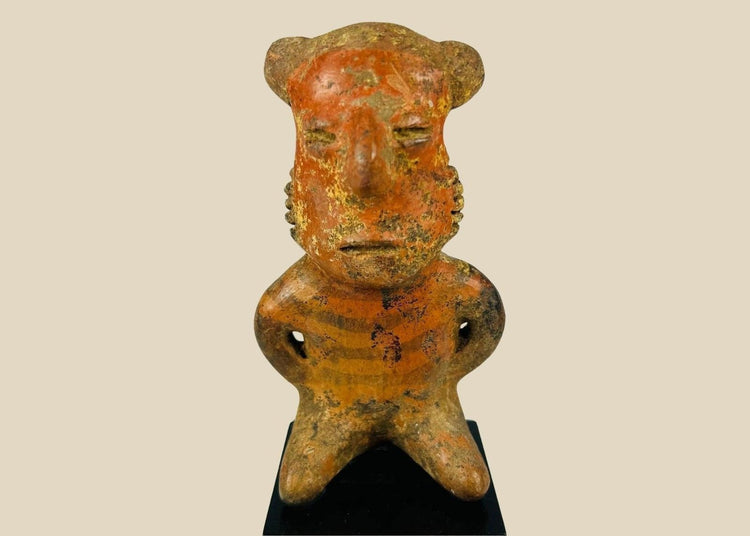
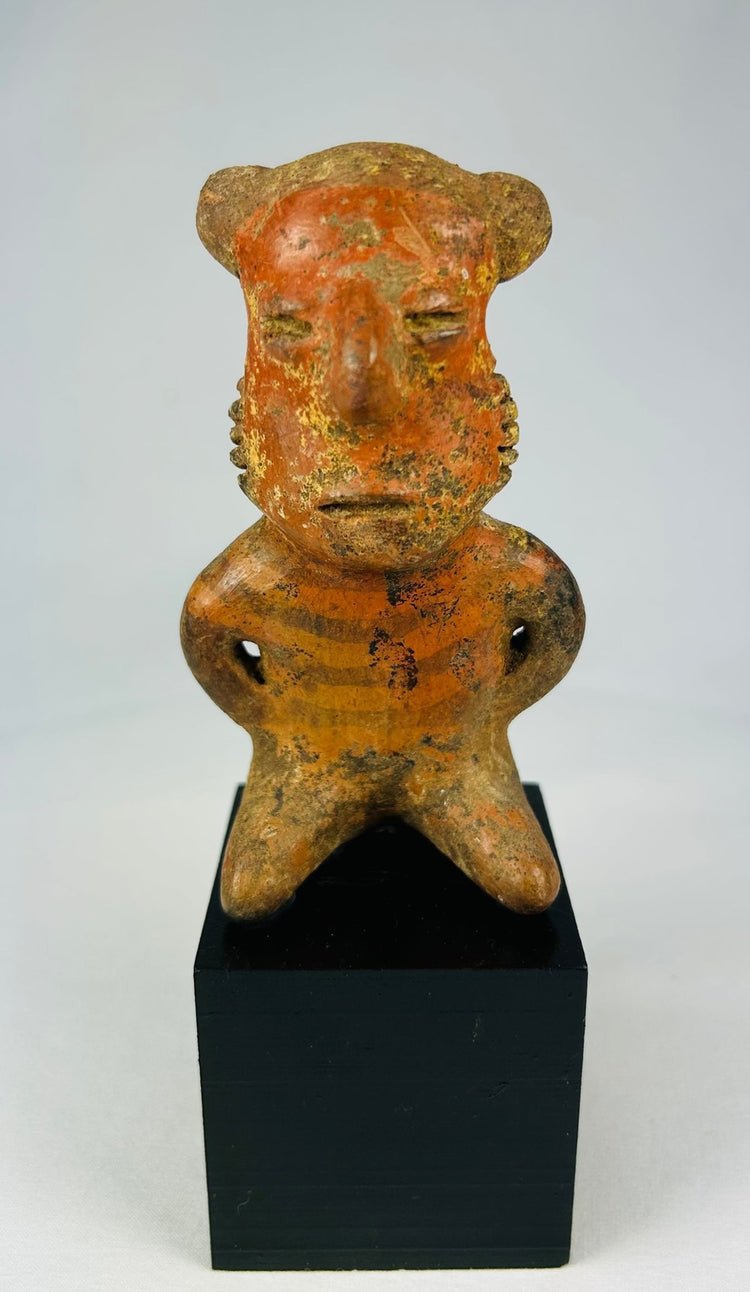
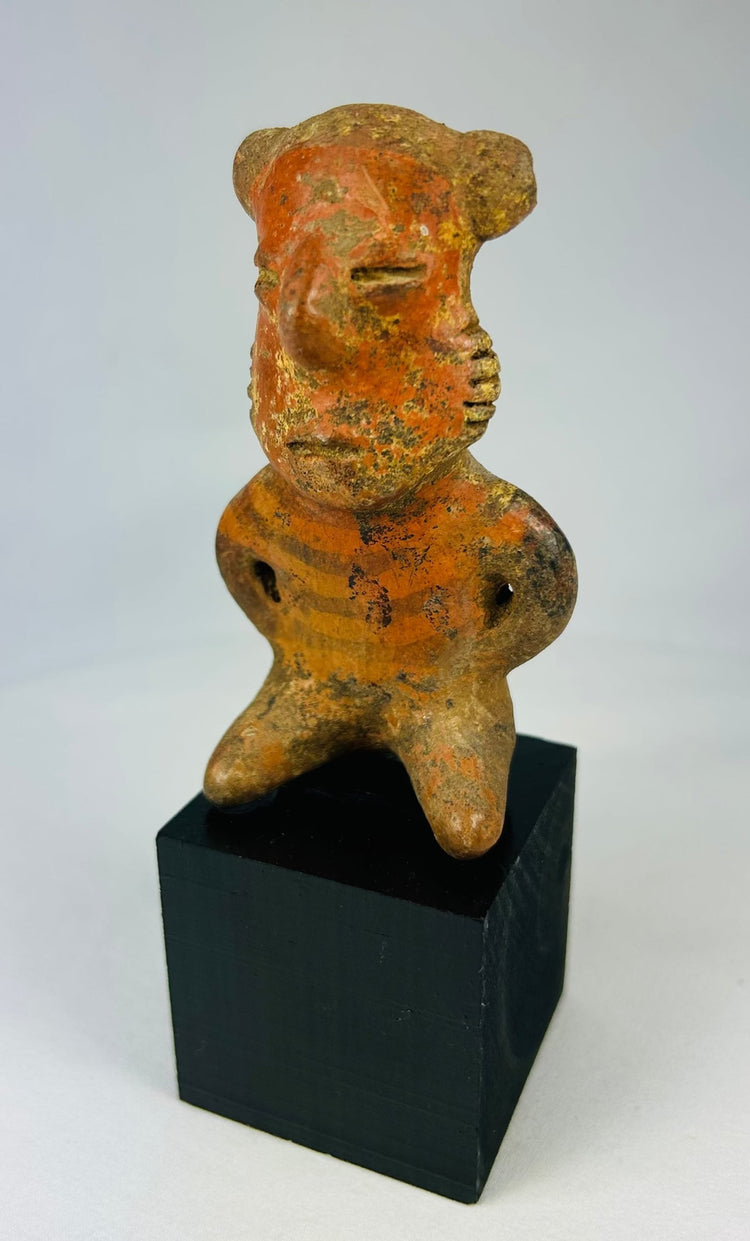
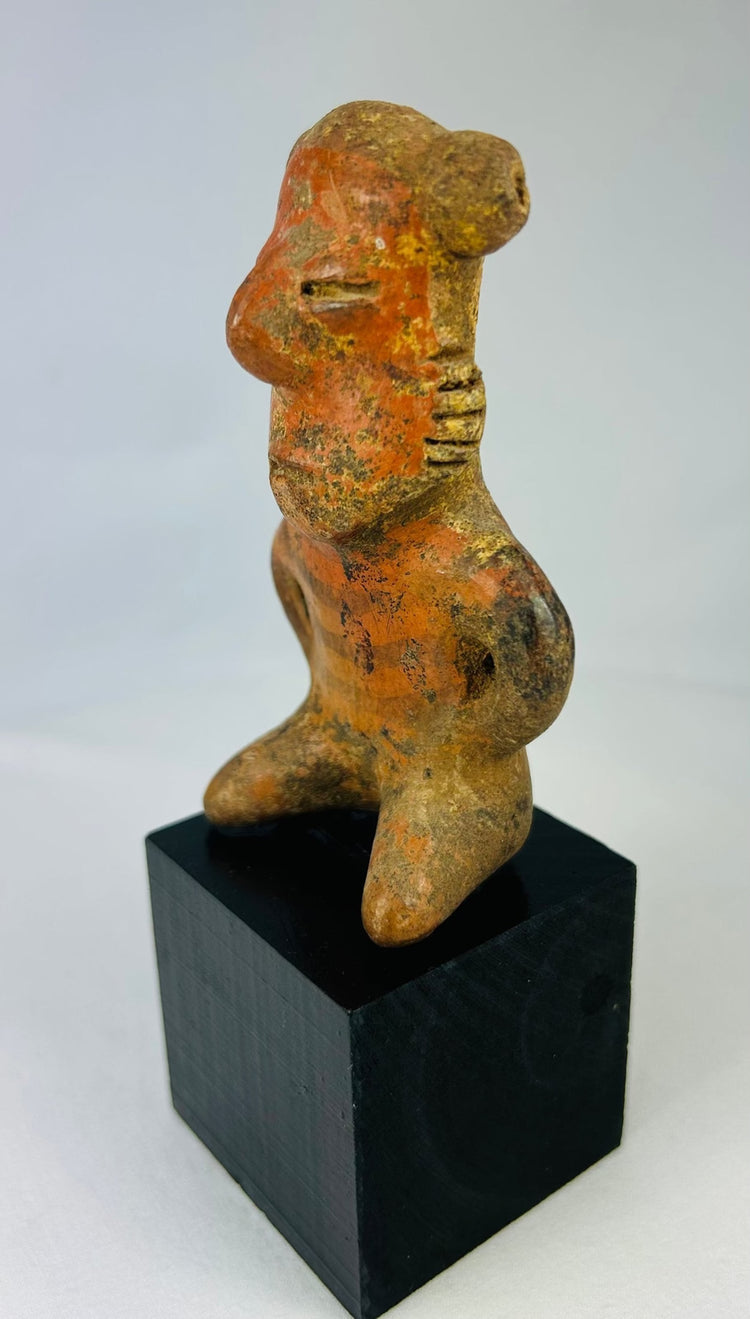
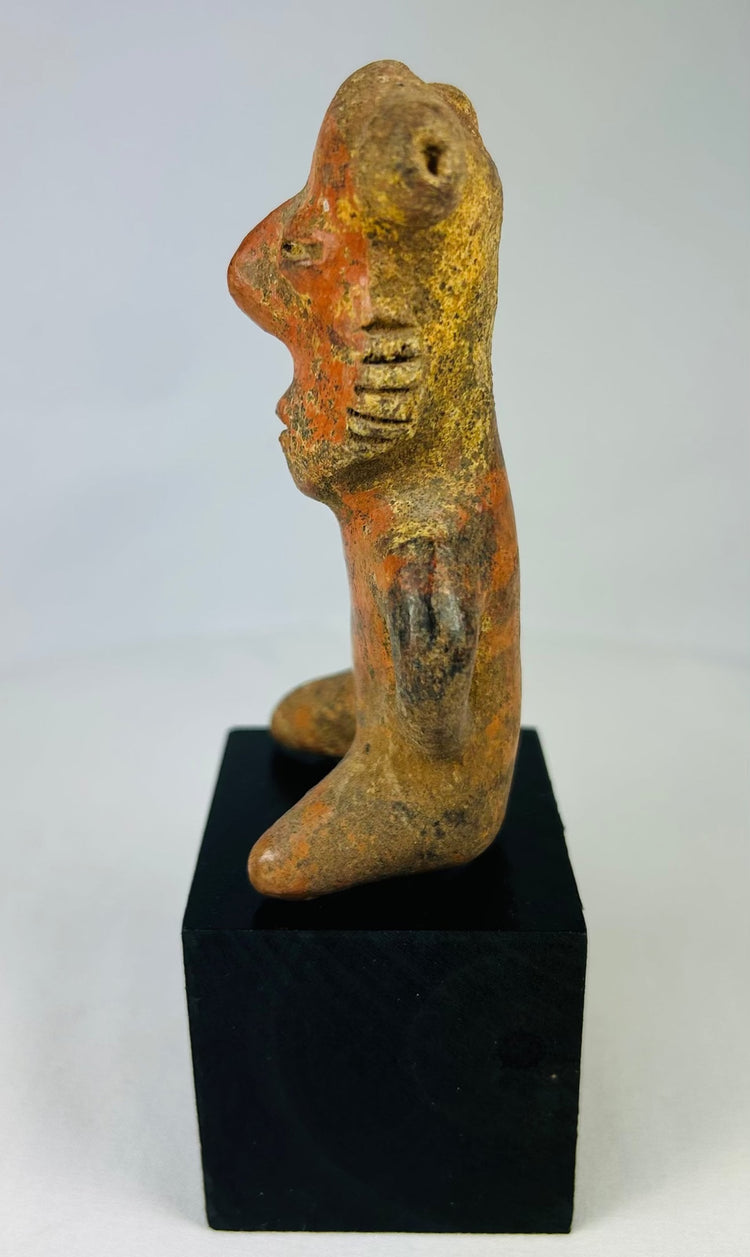
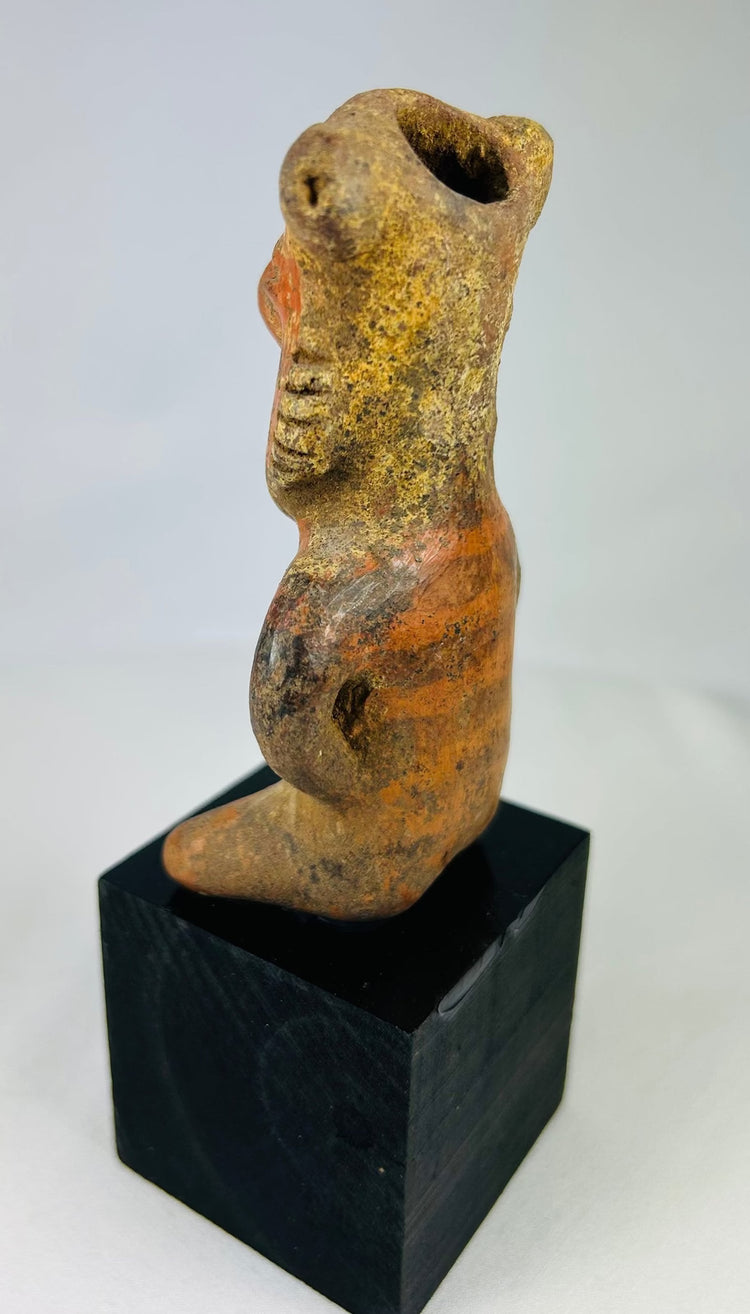
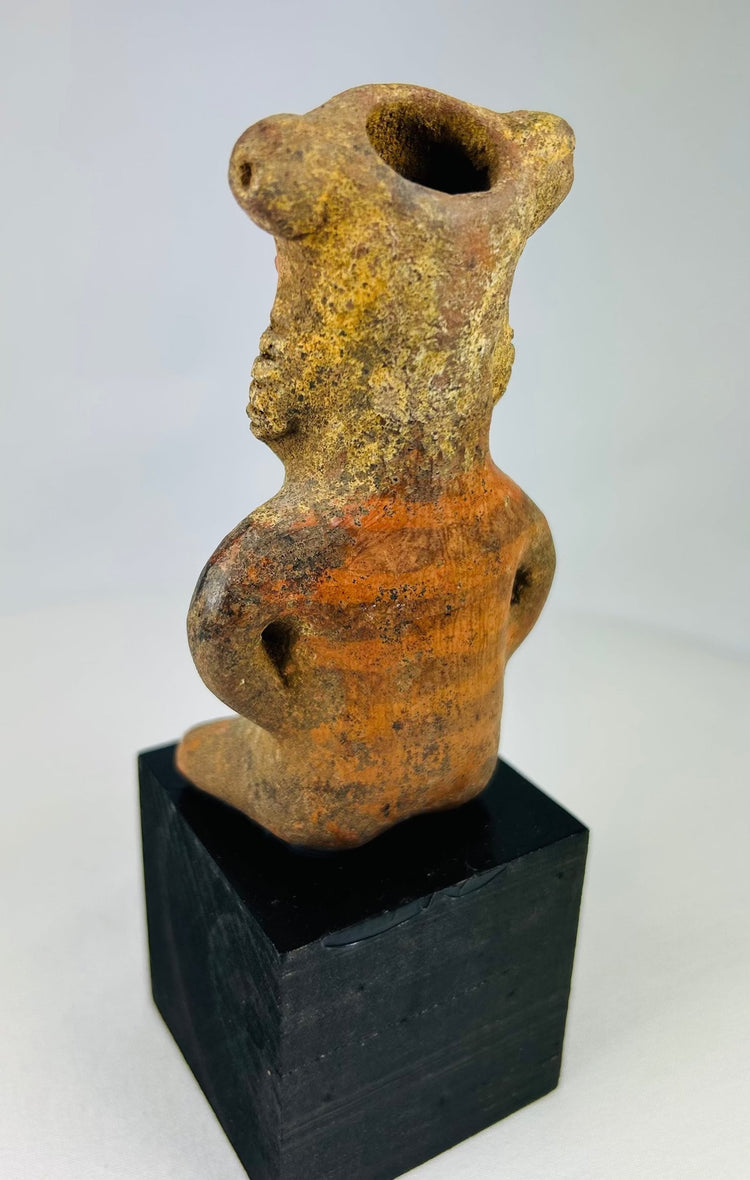
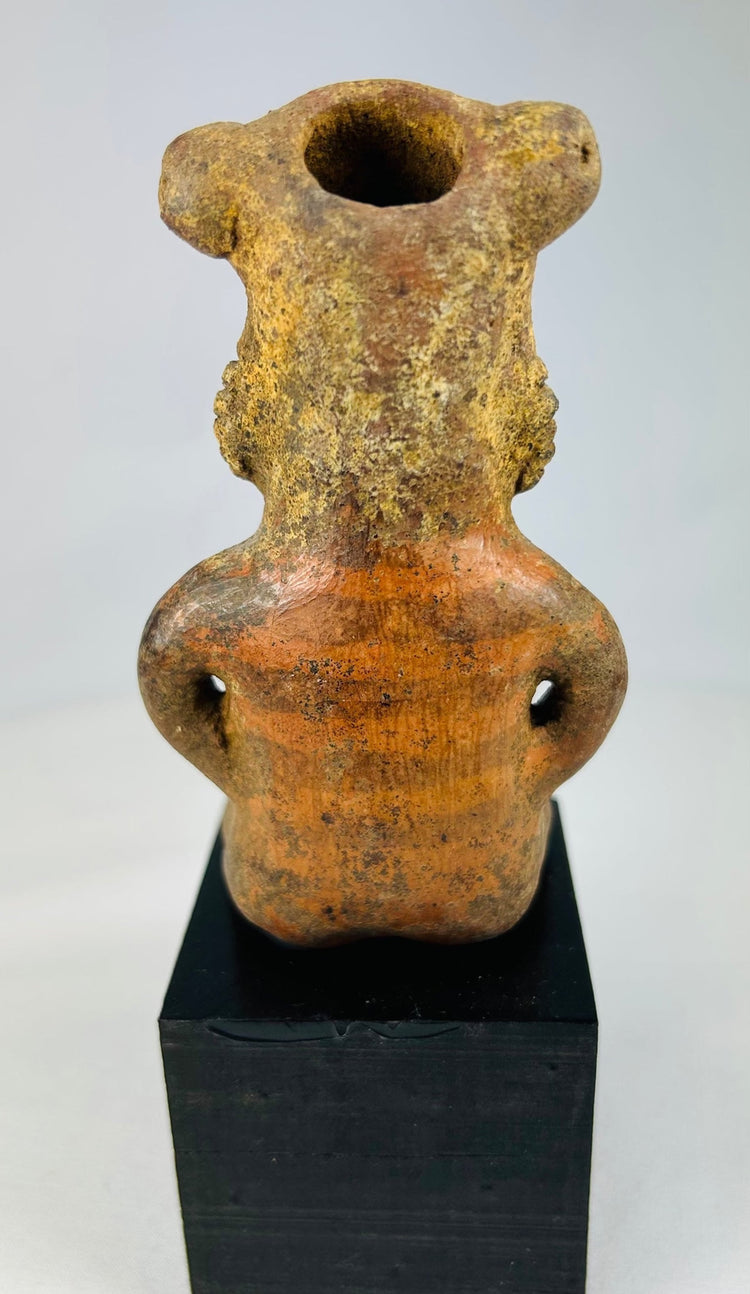
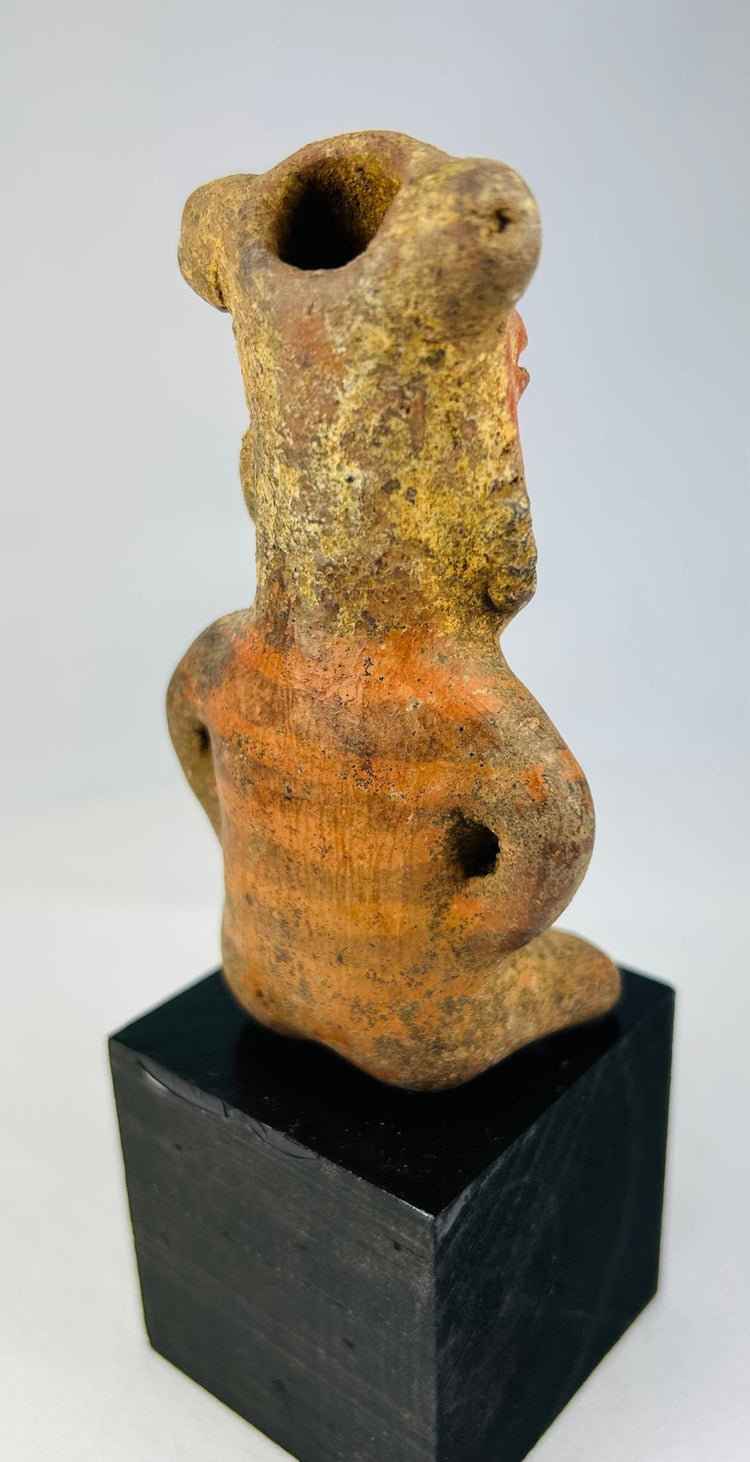
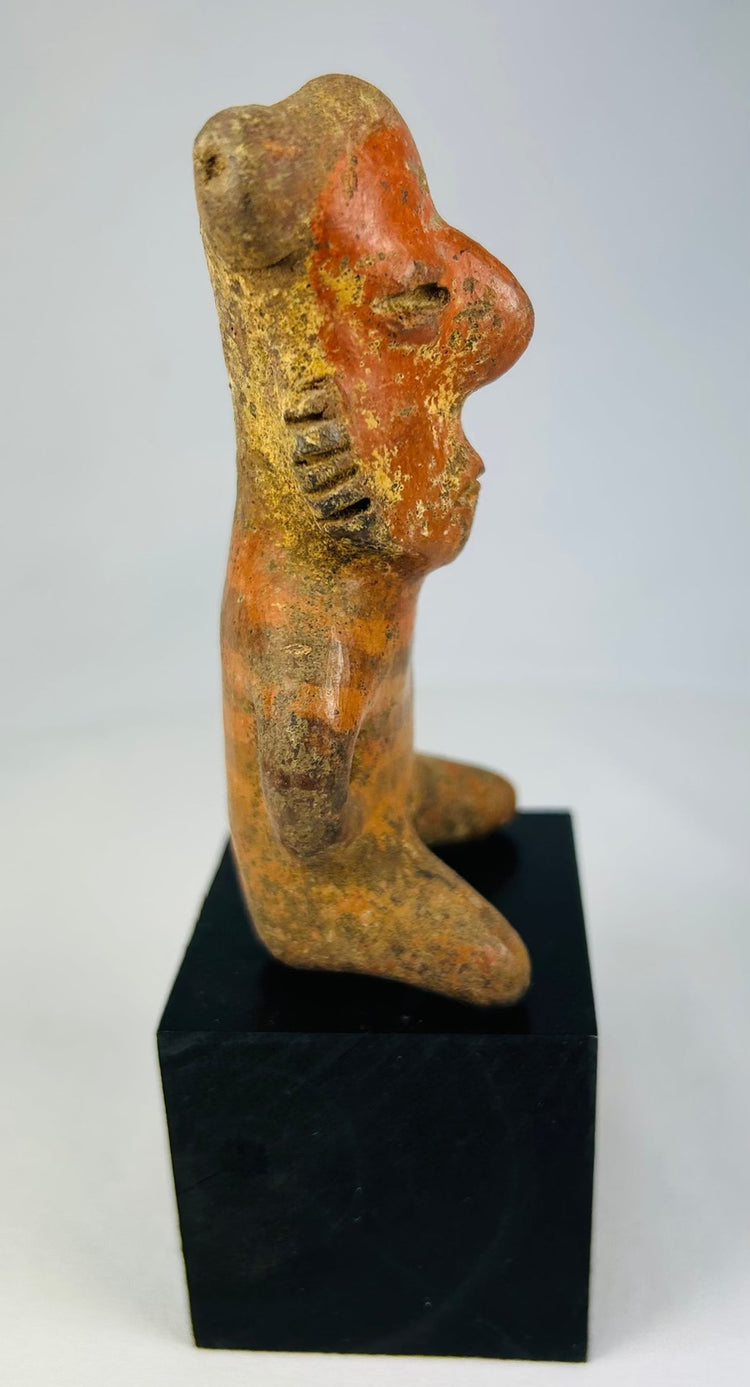
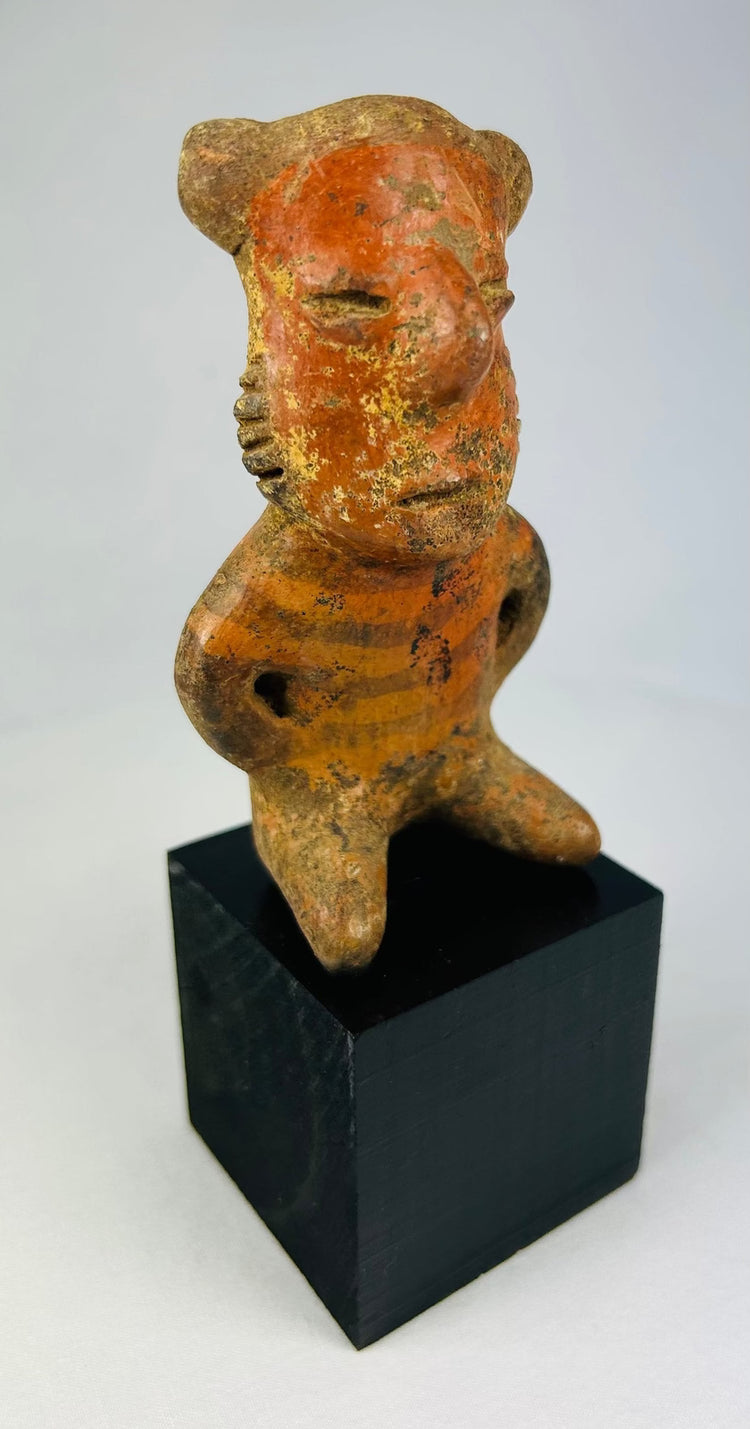
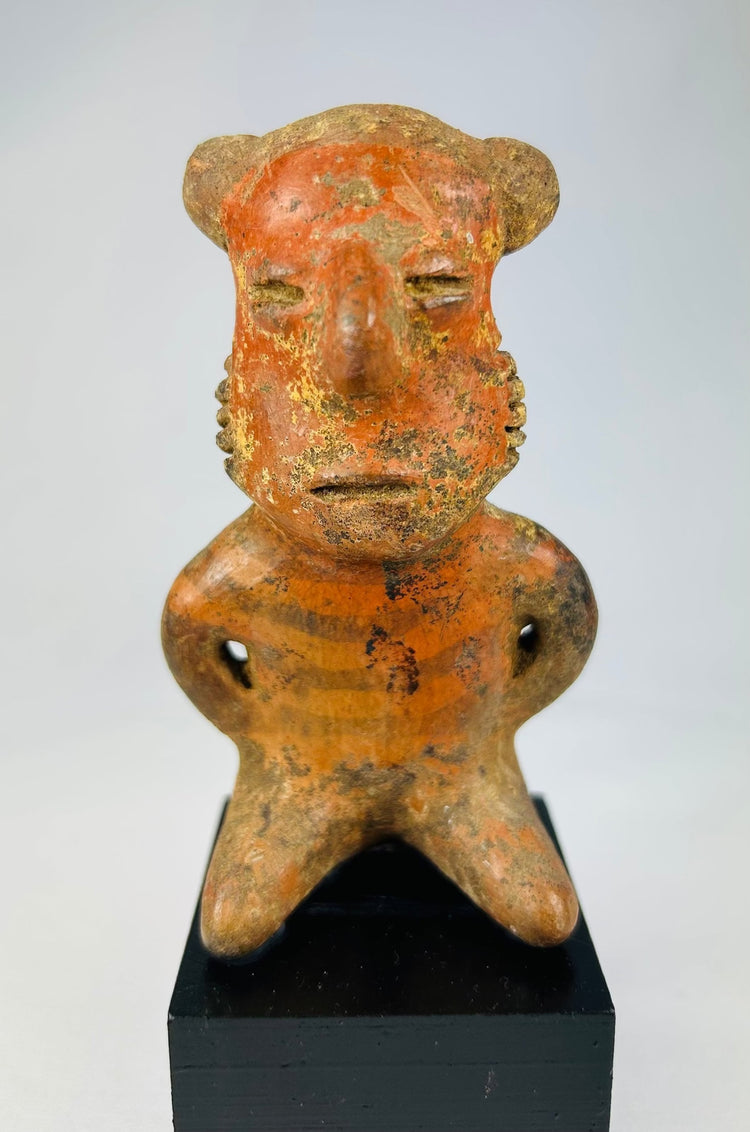
Cette ancienne figurine en terre cuite représente les formes audacieuses et stylisées caractéristiques de la culture des tombes à puits de l'Ouest du Mexique. La figurine se tient droite, les mains posées sur la section médiane, son large visage et ses éléments d'oreille percés ajoutant une présence expressive. De faibles traces de pigment rouge-orange original sont encore visibles, ce qui renforce le sentiment d'authenticité et le relie à son apparence vibrante d'origine. Montée sur une base d'exposition noire personnalisée, la pièce est à la fois sécurisée pour l'exposition et visuellement frappante, soulignant ses qualités sculpturales.
Caractéristiques
- Figurine en terre cuite modelée à la main en posture debout
- Proportions stylisées distinctives avec un visage expressif
- Éléments d'oreille percés reflétant l'ornementation régionale
- Traces de pigment rouge-orange original conservées
- Montée sur une base d'exposition noire personnalisée
Signification Culturelle
Les figurines de ce type étaient centrales dans les traditions funéraires de l'Ouest du Mexique, placées dans les tombes à puits pour servir de gardiens, de compagnons ou de représentations symboliques de la fertilité et de la protection. Elles incarnent le lien durable entre les vivants et leurs ancêtres, tout en illustrant l'identité artistique distinctive de la région. Aujourd'hui, elles comptent parmi les formes d'art précolombien les plus emblématiques et recherchées, appréciées à la fois pour leur signification culturelle et leur impact esthétique.
État
Bon état archéologique. Altération de la surface, pertes mineures et décoloration du pigment conformes à l'ancienneté et à l'enfouissement. Globalement stable, solidement monté pour l'exposition.
Dimensions (Approximatives)
Hauteur : 15 cm
Largeur : 5 cm
Profondeur : 5 cm
Âge (Approximatif)
1 500–2 300 ans
Description
Contexte Historique & Origine
Région : Ouest du Mexique (Nayarit, Colima ou Jalisco)
Matériau : Terre cuite modelée à la main avec des traces de pigment
Période : Précolombien, vers 300 avant notre ère – 500 de notre ère
Description
Cette ancienne figurine en terre cuite représente les formes audacieuses et stylisées caractéristiques de la culture des tombes à puits de l'Ouest du Mexique. La figurine se tient droite, les mains posées sur la section médiane, son large visage et ses éléments d'oreille percés ajoutant une présence expressive. De faibles traces de pigment rouge-orange original sont encore visibles, ce qui renforce le sentiment d'authenticité et le relie à son apparence vibrante d'origine. Montée sur une base d'exposition noire personnalisée, la pièce est à la fois sécurisée pour l'exposition et visuellement frappante, soulignant ses qualités sculpturales.
Caractéristiques
- Figurine en terre cuite modelée à la main en posture debout
- Proportions stylisées distinctives avec un visage expressif
- Éléments d'oreille percés reflétant l'ornementation régionale
- Traces de pigment rouge-orange original conservées
- Montée sur une base d'exposition noire personnalisée
Signification Culturelle
Les figurines de ce type étaient centrales dans les traditions funéraires de l'Ouest du Mexique, placées dans les tombes à puits pour servir de gardiens, de compagnons ou de représentations symboliques de la fertilité et de la protection. Elles incarnent le lien durable entre les vivants et leurs ancêtres, tout en illustrant l'identité artistique distinctive de la région. Aujourd'hui, elles comptent parmi les formes d'art précolombien les plus emblématiques et recherchées, appréciées à la fois pour leur signification culturelle et leur impact esthétique.
État
Bon état archéologique. Altération de la surface, pertes mineures et décoloration du pigment conformes à l'ancienneté et à l'enfouissement. Globalement stable, solidement monté pour l'exposition.
Dimensions (Approximatives)
Hauteur : 15 cm
Largeur : 5 cm
Profondeur : 5 cm
Âge (Approximatif)
1 500–2 300 ans
Vous aimerez peut-être aussi
