

Vase effigie précolombien en terre cuite | Figure humaine assise | Environ 500 av. J.-C. – 900 apr. J.-C.
- Prix habituel
- $1,000.00
- Prix soldé
- $1,000.00
- Prix habituel
Impossible de charger la disponibilité du service de retrait


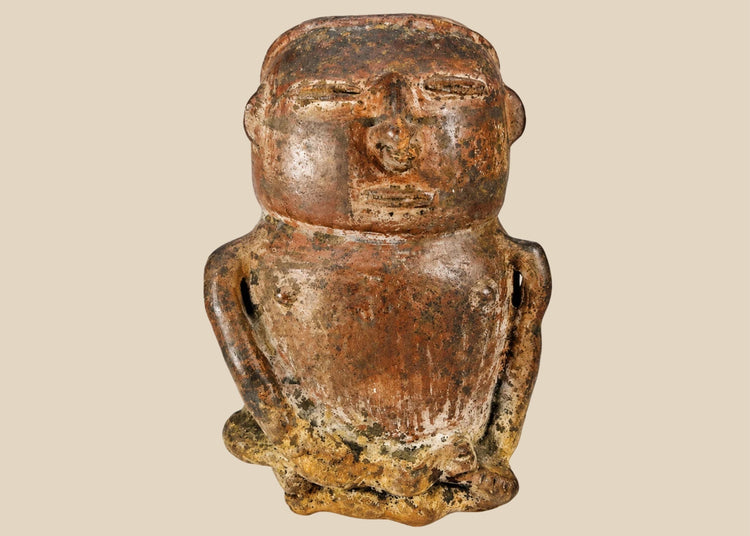


Vase effigie précolombien en terre cuite | Figure humaine assise | Environ 500 av. J.-C. – 900 apr. J.-C.
Description
Plus
Moins
Contexte historique et origine
Région : Mésoaméricaine ou Andine
Matériau : Terre cuite
Période : Précolombienne, environ 500 av. J.-C. – 900 apr. J.-C. (estimation)
Description
Ce remarquable vase en terre cuite fabriqué à la main représente une figure humaine assise avec des traits anthropomorphiques finement modelés, incluant un nez proéminent et des mains posées sur les genoux. L'ouverture au sommet de la tête suggère son utilisation comme récipient, probablement pour des liquides, des offrandes ou des rituels. De tels vases effigies étaient essentiels à la vie cérémonielle, servant à la fois de représentations symboliques d'ancêtres, de divinités ou de figures communautaires, et de récipients rituels fonctionnels.
Caractéristiques
- Figure humaine assise avec une forme anthropomorphique distincte
- Traits faciaux moulés proéminents, y compris le nez et les mains stylisées
- Ouverture du vase au sommet de la tête pour les offrandes ou les liquides
- Tons de terre cuite avec des traces d'altération et de dépôts minéraux
Signification culturelle
Les vases effigies comme celui-ci étaient centraux aux pratiques rituelles et funéraires des sociétés précolombiennes. On croyait qu'ils faisaient le pont entre les mondes spirituel et matériel, transportant des offrandes aux divinités ou servant de gardiens symboliques dans les contextes funéraires. La forme humaine souligne le lien profond entre les objets rituels, la vénération des ancêtres et les systèmes de croyances spirituelles dans les traditions mésoaméricaines et andines.
État
Bien conservé avec une altération conforme à l'ancienneté. La surface présente des dépôts minéraux et une usure naturelle, ce qui renforce l'authenticité et souligne l'utilisation cérémonielle et l'âge du vase.
Dimensions (approximatives)
Hauteur : 7,25 po
Largeur : 5,25 po
Âge (approximatif)
1 100–2 500 ans
Provenance
Anciennement partie d'une collection immobilière à Branford, Connecticut, États-Unis. La collection a été assemblée au cours de la vie du propriétaire et reflétait un intérêt de longue date pour l'art, les antiquités et les objets historiques européens et sud-américains.
En savoir plus
Explorez la signification culturelle et l'art des Vases effigies anciens
Parcourez notre Collection d'artefacts précolombiens
Description
Contexte historique et origine
Région : Mésoaméricaine ou Andine
Matériau : Terre cuite
Période : Précolombienne, environ 500 av. J.-C. – 900 apr. J.-C. (estimation)
Description
Ce remarquable vase en terre cuite fabriqué à la main représente une figure humaine assise avec des traits anthropomorphiques finement modelés, incluant un nez proéminent et des mains posées sur les genoux. L'ouverture au sommet de la tête suggère son utilisation comme récipient, probablement pour des liquides, des offrandes ou des rituels. De tels vases effigies étaient essentiels à la vie cérémonielle, servant à la fois de représentations symboliques d'ancêtres, de divinités ou de figures communautaires, et de récipients rituels fonctionnels.
Caractéristiques
- Figure humaine assise avec une forme anthropomorphique distincte
- Traits faciaux moulés proéminents, y compris le nez et les mains stylisées
- Ouverture du vase au sommet de la tête pour les offrandes ou les liquides
- Tons de terre cuite avec des traces d'altération et de dépôts minéraux
Signification culturelle
Les vases effigies comme celui-ci étaient centraux aux pratiques rituelles et funéraires des sociétés précolombiennes. On croyait qu'ils faisaient le pont entre les mondes spirituel et matériel, transportant des offrandes aux divinités ou servant de gardiens symboliques dans les contextes funéraires. La forme humaine souligne le lien profond entre les objets rituels, la vénération des ancêtres et les systèmes de croyances spirituelles dans les traditions mésoaméricaines et andines.
État
Bien conservé avec une altération conforme à l'ancienneté. La surface présente des dépôts minéraux et une usure naturelle, ce qui renforce l'authenticité et souligne l'utilisation cérémonielle et l'âge du vase.
Dimensions (approximatives)
Hauteur : 7,25 po
Largeur : 5,25 po
Âge (approximatif)
1 100–2 500 ans
Provenance
Anciennement partie d'une collection immobilière à Branford, Connecticut, États-Unis. La collection a été assemblée au cours de la vie du propriétaire et reflétait un intérêt de longue date pour l'art, les antiquités et les objets historiques européens et sud-américains.
En savoir plus
Explorez la signification culturelle et l'art des Vases effigies anciens
Parcourez notre Collection d'artefacts précolombiens
Vous aimerez peut-être aussi
