

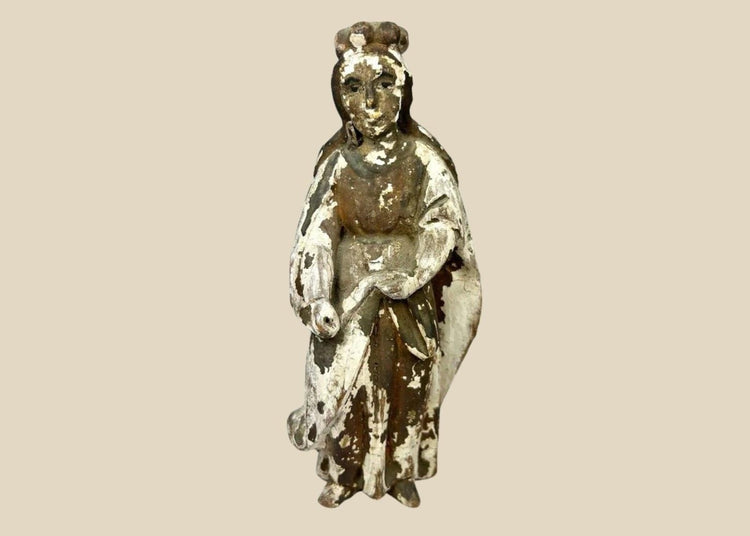
Statue religieuse en bois sculptée à la main du Santo colonial espagnol, vers 18e-19e siècle
- Prix habituel
- $400.00
- Prix soldé
- $400.00
- Prix habituel
Impossible de charger la disponibilité du service de retrait




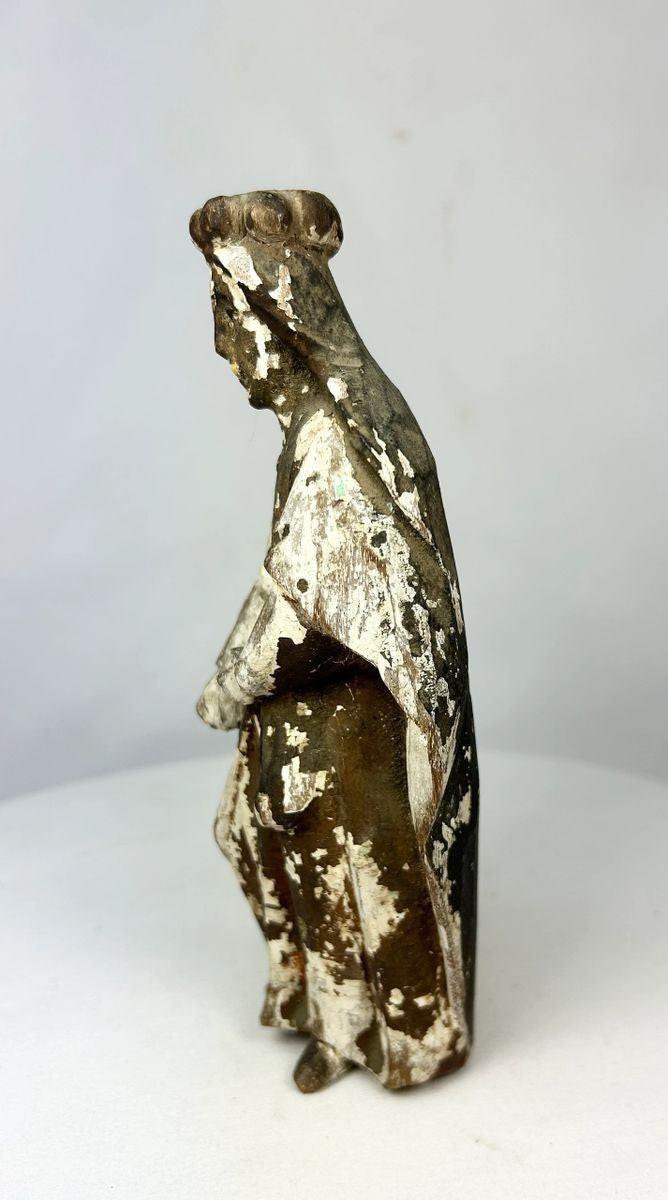
Statue religieuse en bois sculptée à la main du Santo colonial espagnol, vers 18e-19e siècle
Description
Plus
Moins
Contexte historique et origine
Région : Coloniale espagnole, probablement les Philippines ou l'Amérique du Sud
Matériau : Bois sculpté à la main avec des vestiges de polychromie et de peinture dorée
Période : XVIIIe-XIXe siècle
Description
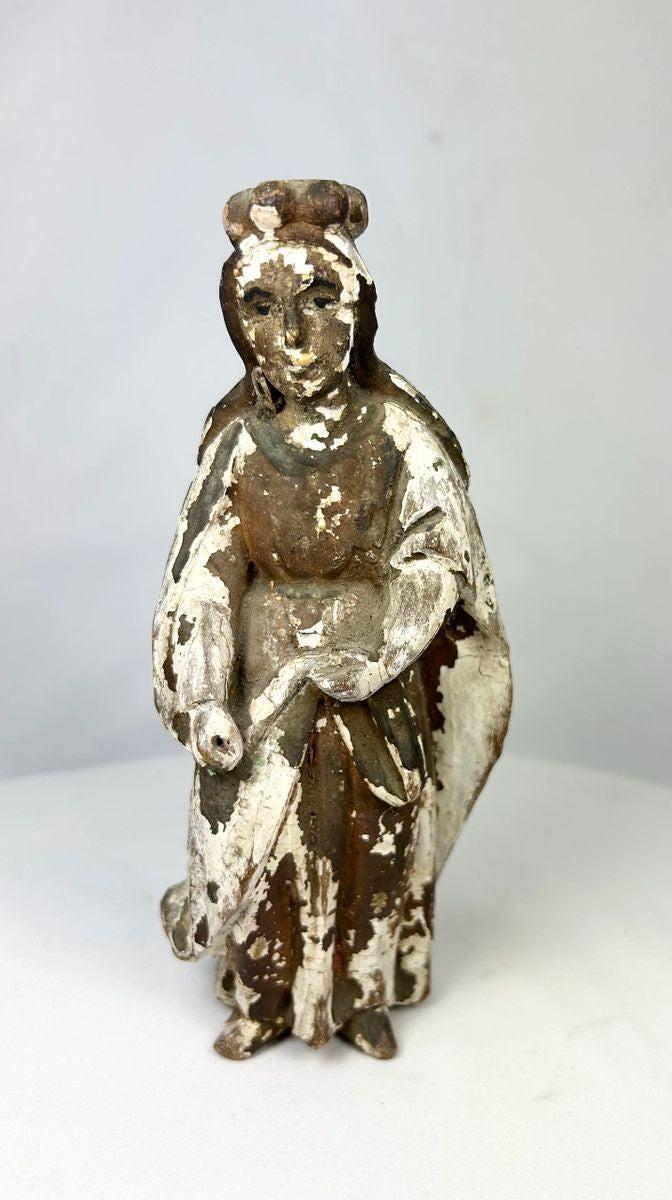
Ce santo colonial espagnol finement sculpté est une figure religieuse de dévotion créée pour être utilisée dans les églises, les chapelles privées ou les processions. Représentant probablement un saint ou la Vierge Marie, la figure se tient les mains ouvertes dans un geste de bénédiction ou de supplication. Elle conserve des traces de sa dorure et de sa polychromie d'origine, tandis que la surface usée et le fendillement naturel du bois témoignent de siècles de vénération et d'utilisation. La statue est montée sur un piédestal en bois intégral, ajoutant stabilité et authenticité.
Caractéristiques
- Figure en bois sculptée à la main avec une forme dévotionnelle expressive
- Vestiges de dorure et de polychromie d'origine
- Montée sur un piédestal intégral
- Geste des mains ouvertes symbolisant la bénédiction ou la supplication
- Patine de surface naturelle et finition vieillie
Signification culturelle
Les santos étaient au centre de la dévotion catholique dans les colonies espagnoles, incarnant la fusion des traditions religieuses européennes et de l'artisanat local. Ils servaient de points focaux tangibles pour la prière, les processions et le culte communautaire. Ce santo illustre les valeurs religieuses et culturelles durables du monde colonial espagnol, ce qui en fait une relique significative de la foi et de l'art.
Condition
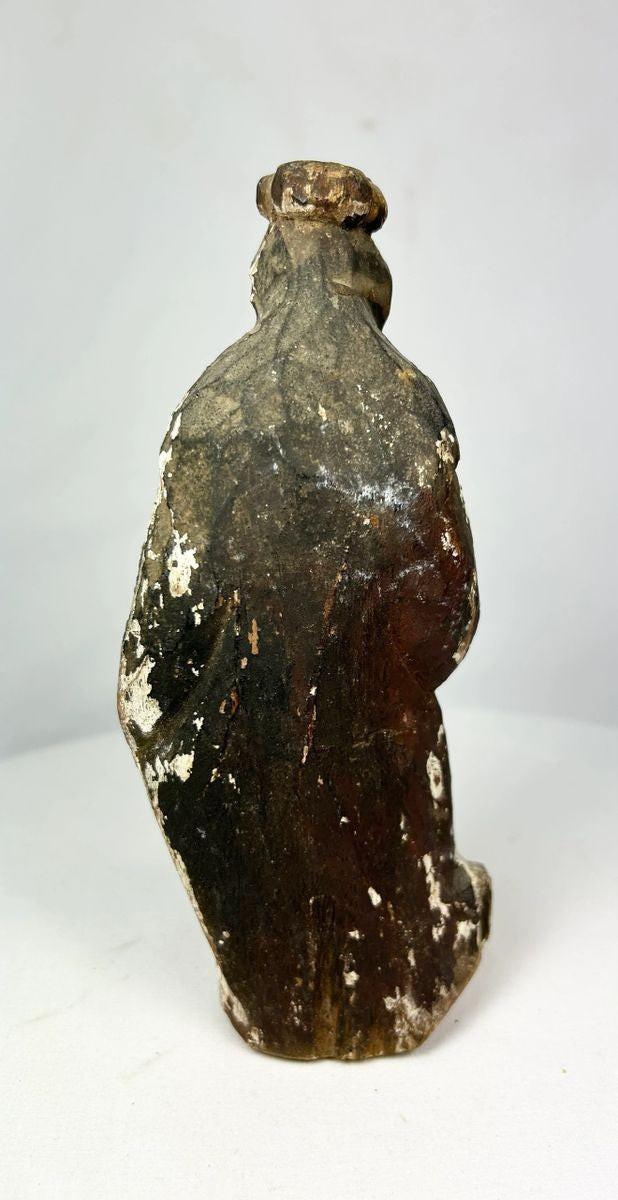
La figure reste structurellement stable malgré une usure visible. Des traces de sa dorure et de sa polychromie d'origine sont présentes, avec des fissures naturelles, des pertes et une érosion de surface conformes à son âge. Ces caractéristiques contribuent à son authenticité et à son histoire dévotionnelle.
Dimensions (approximatives)
Hauteur : 33 cm
Âge (approximatif)
200 à 300 ans
Provenance
Anciennement détenue dans une collection privée à Norfolk, Virginie, États-Unis, axée sur les santos, les figures dévotionnelles catholiques et les objets religieux.
En savoir plus
Étudiez la tradition de la sculpture dévotionnelle coloniale espagnole au Norton Simon Museum
Parcourez notre collection de santos coloniaux espagnols
Description
Contexte historique et origine
Région : Coloniale espagnole, probablement les Philippines ou l'Amérique du Sud
Matériau : Bois sculpté à la main avec des vestiges de polychromie et de peinture dorée
Période : XVIIIe-XIXe siècle
Description
Ce santo colonial espagnol finement sculpté est une figure religieuse de dévotion créée pour être utilisée dans les églises, les chapelles privées ou les processions. Représentant probablement un saint ou la Vierge Marie, la figure se tient les mains ouvertes dans un geste de bénédiction ou de supplication. Elle conserve des traces de sa dorure et de sa polychromie d'origine, tandis que la surface usée et le fendillement naturel du bois témoignent de siècles de vénération et d'utilisation. La statue est montée sur un piédestal en bois intégral, ajoutant stabilité et authenticité.
Caractéristiques
- Figure en bois sculptée à la main avec une forme dévotionnelle expressive
- Vestiges de dorure et de polychromie d'origine
- Montée sur un piédestal intégral
- Geste des mains ouvertes symbolisant la bénédiction ou la supplication
- Patine de surface naturelle et finition vieillie
Signification culturelle
Les santos étaient au centre de la dévotion catholique dans les colonies espagnoles, incarnant la fusion des traditions religieuses européennes et de l'artisanat local. Ils servaient de points focaux tangibles pour la prière, les processions et le culte communautaire. Ce santo illustre les valeurs religieuses et culturelles durables du monde colonial espagnol, ce qui en fait une relique significative de la foi et de l'art.
Condition
La figure reste structurellement stable malgré une usure visible. Des traces de sa dorure et de sa polychromie d'origine sont présentes, avec des fissures naturelles, des pertes et une érosion de surface conformes à son âge. Ces caractéristiques contribuent à son authenticité et à son histoire dévotionnelle.
Dimensions (approximatives)
Hauteur : 33 cm
Âge (approximatif)
200 à 300 ans
Provenance
Anciennement détenue dans une collection privée à Norfolk, Virginie, États-Unis, axée sur les santos, les figures dévotionnelles catholiques et les objets religieux.
En savoir plus
Étudiez la tradition de la sculpture dévotionnelle coloniale espagnole au Norton Simon Museum
Parcourez notre collection de santos coloniaux espagnols
Vous aimerez peut-être aussi
