

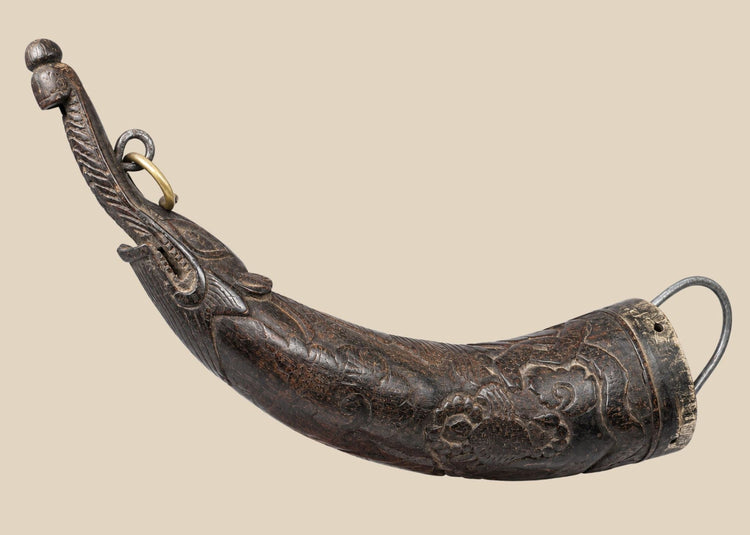
Outil rituel bouddhiste tibétain | Distributeur de graines en corne sculptée | Vers les XVIIIe-XIXe siècles
- Prix habituel
- $950.00
- Prix soldé
- $950.00
- Prix habituel
Impossible de charger la disponibilité du service de retrait


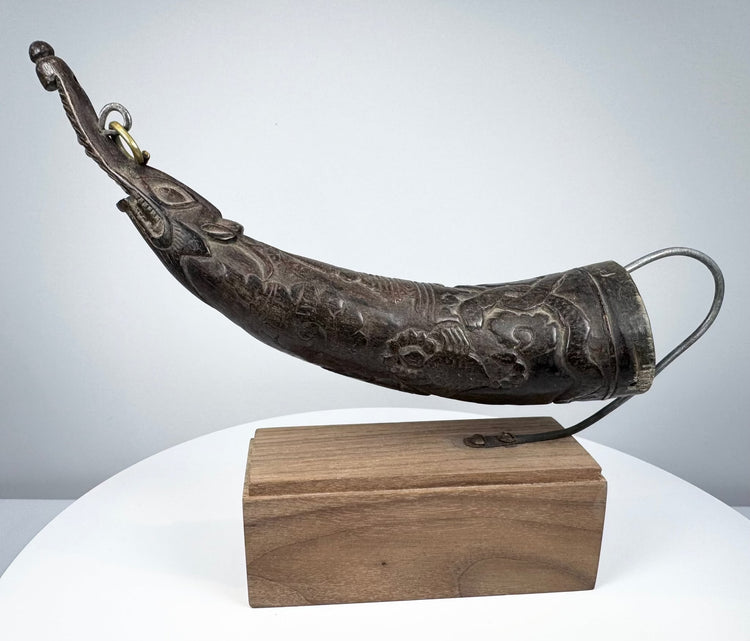
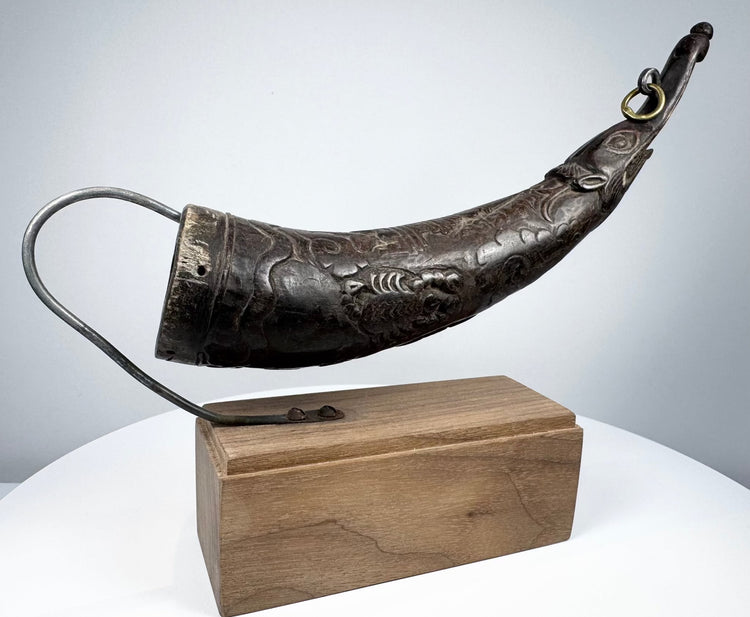
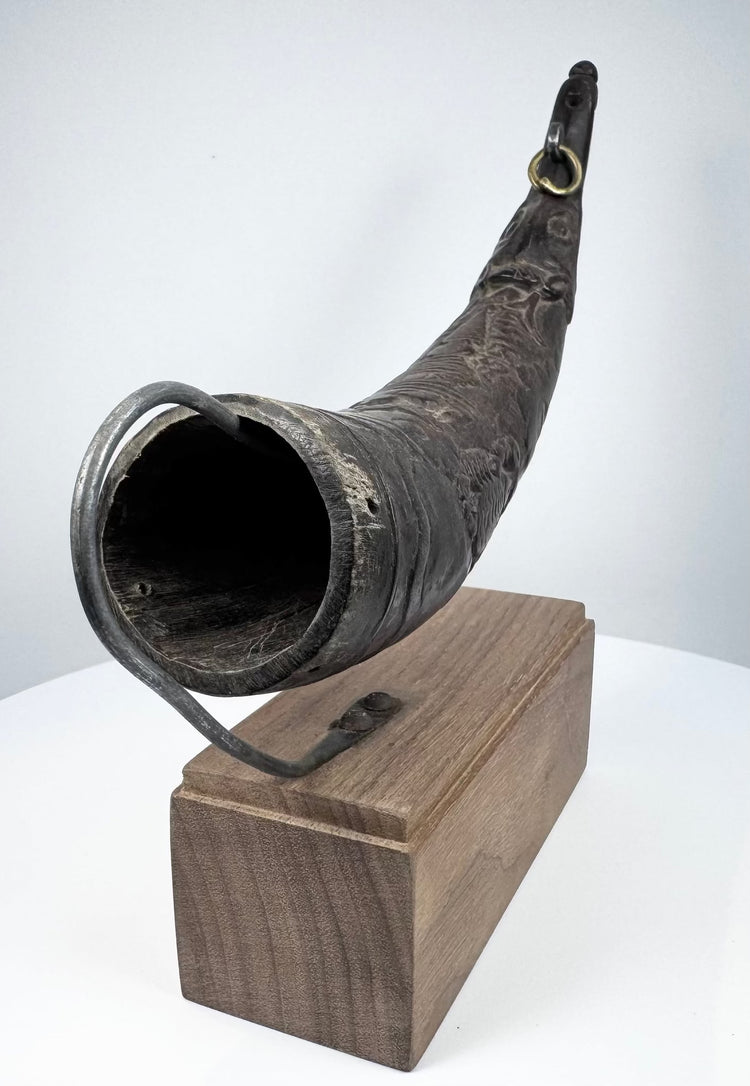
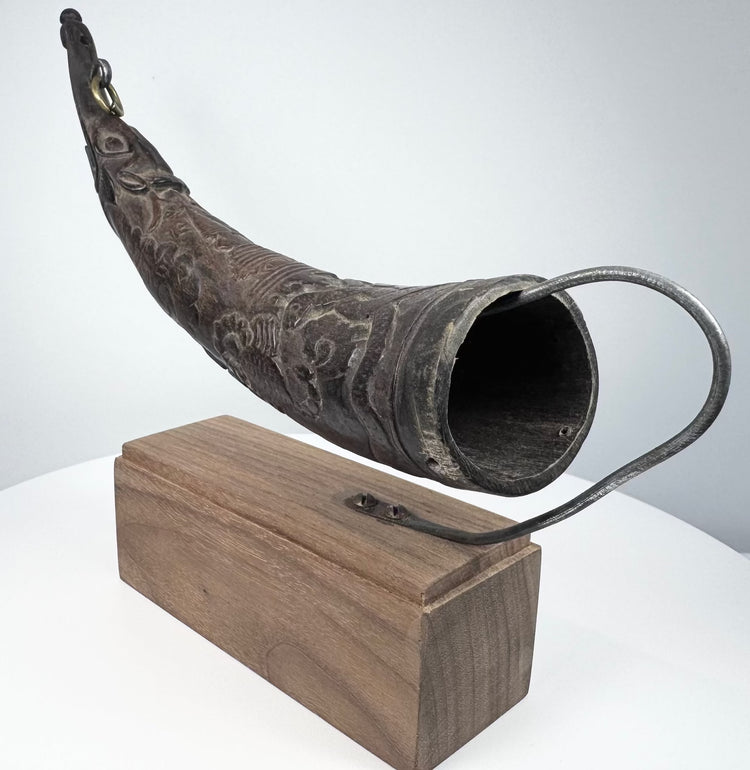
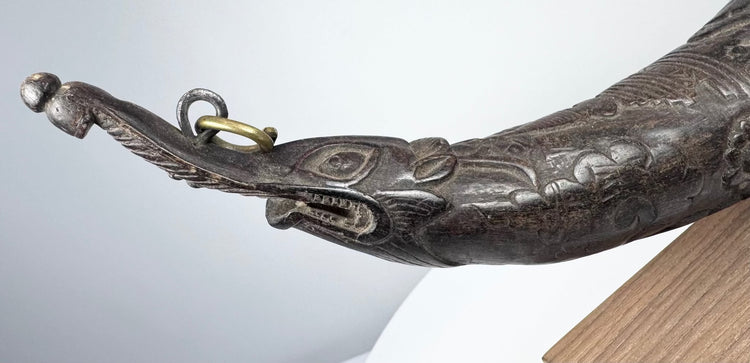
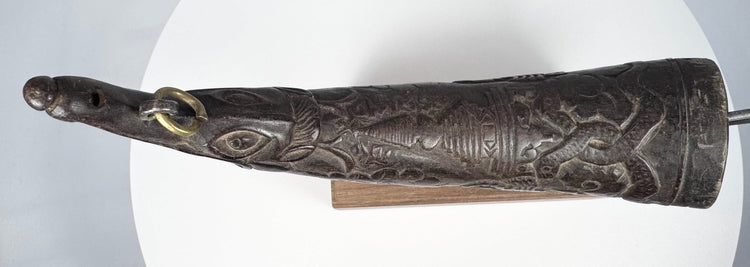
Outil rituel bouddhiste tibétain | Distributeur de graines en corne sculptée | Vers les XVIIIe-XIXe siècles
Description
Plus
Moins
Contexte historique et origine
Région : Tibet, région himalayenne
Matériau : Corne sculptée
Période : XVIIIe–XIXe siècle (forme traditionnelle)
Description
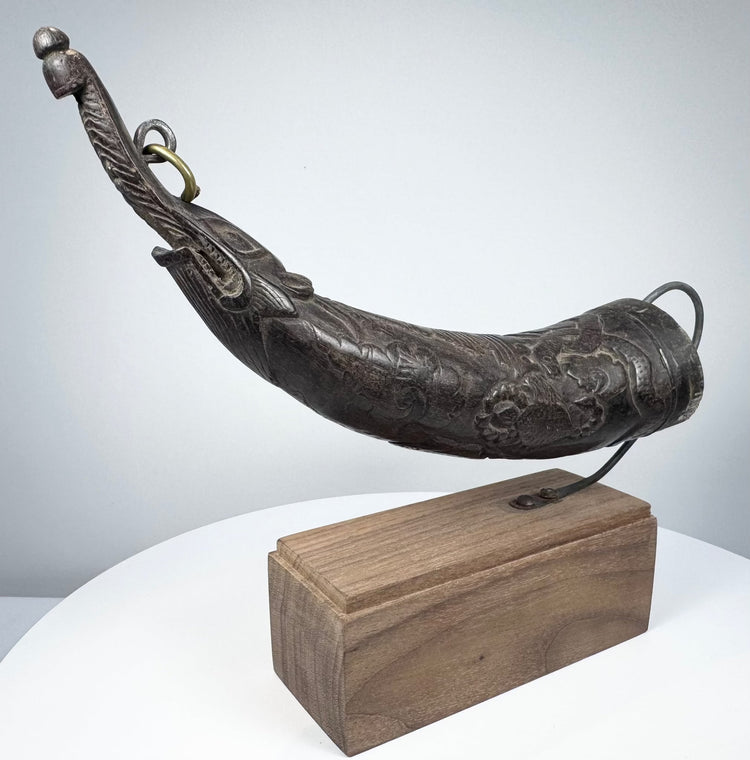
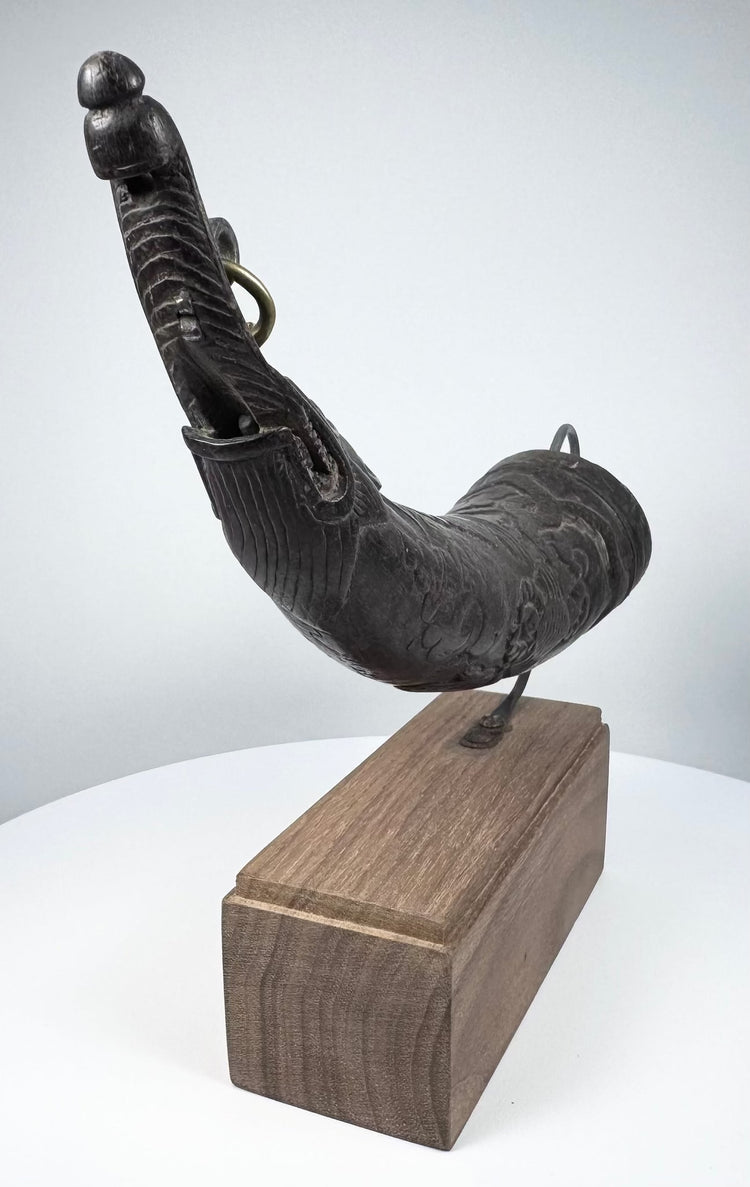
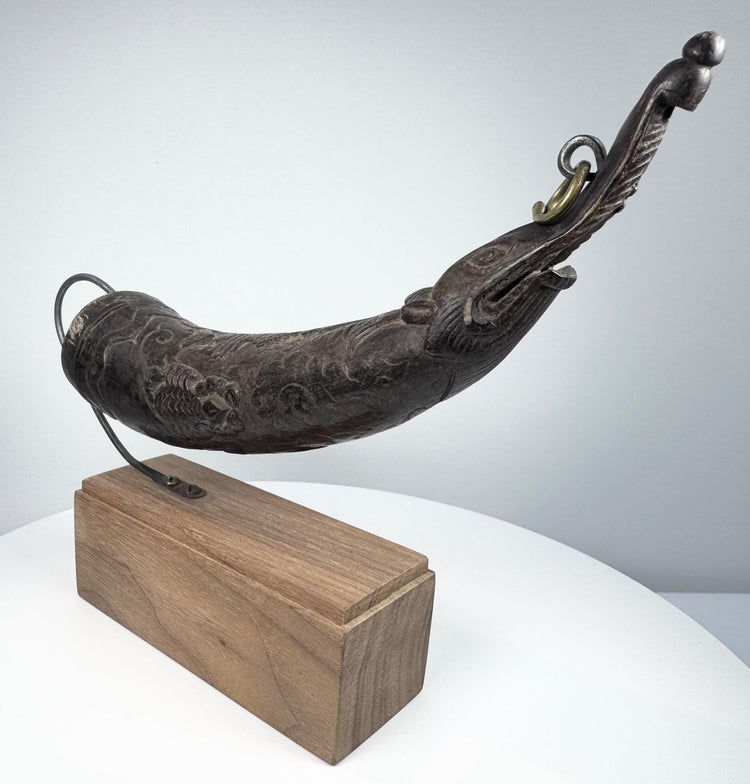
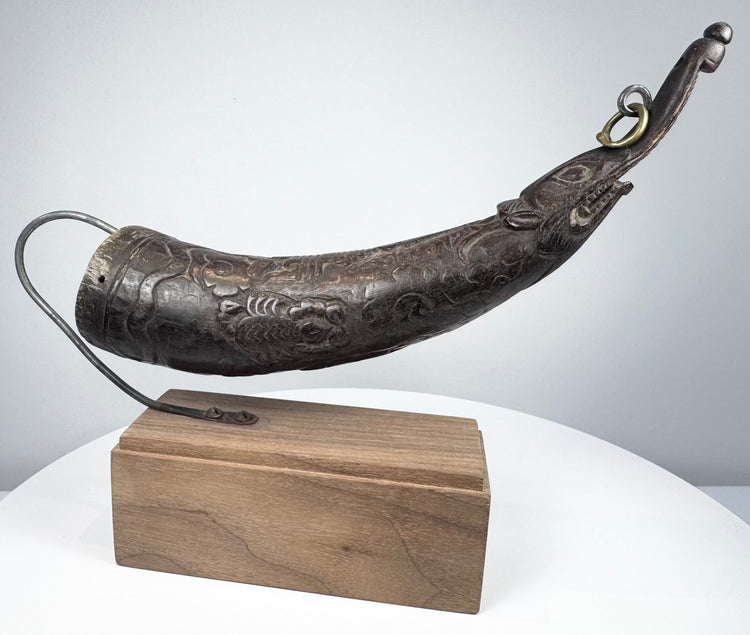
Cette corne rituelle tibétaine finement sculptée était traditionnellement utilisée lors des cérémonies d'offrande de feu monastiques pour distribuer des graines de moutarde, symbolisant la purification et l'élimination des obstacles spirituels. L'instrument reflète à la fois les pratiques dévotionnelles et l'artisanat raffiné associés aux objets rituels bouddhistes tibétains. Sa forme allongée et ses sculptures symboliques illustrent l'intégration du sens sacré et du travail d'artisan qualifié.
Caractéristiques
- Instrument rituel en corne sculptée utilisé dans la pratique cérémonielle
- Ouverture conçue pour distribuer des graines de moutarde pendant les rituels du feu
- Pointe sculptée en forme de makara (créature mythique ressemblant à un dragon)
- Museau allongé permettant une libération contrôlée des graines
- Sculptures décoratives supplémentaires le long du corps
Signification culturelle
Dans le bouddhisme tibétain, les graines de moutarde sont utilisées dans les rites de purification destinés à éliminer les forces négatives et les obstacles spirituels. Pendant les cérémonies d'offrande de feu, les pratiquants récitent des mantras en jetant les graines dans des braseros rituels, détruisant symboliquement les impuretés. Le makara, une créature mythologique protectrice de la tradition indienne et himalayenne, apparaît fréquemment sur les instruments rituels sacrés comme symbole de gardien. Des objets comme celui-ci reflètent à la fois le symbolisme ésotérique et les traditions artistiques de la vie religieuse tibétaine.
Condition
Bien conservé avec des détails sculptés complexes intacts. La patine de surface naturelle conforme à l'âge améliore à la fois l'authenticité et le caractère visuel.
Dimensions (approximatives)
Longueur : 7,5 po
Âge (approximatif)
125–325 ans
Provenance
Anciennement géré par Heung Antiques Gallery, Toronto, Ontario, Canada. La pièce a ensuite été proposée par Waddington’s Auctioneers & Appraisers, Toronto, lors de sa vente aux enchères Asian Art le 6 avril 2023, en tant que lot 342, avant d'entrer dans une collection privée à Toronto, Ontario, Canada.
En savoir plus
Étudiez une corne rituelle tibétaine comparable dans la collection du musée de Penn
Parcourez notre Collection de reliques et objets rituels tibétains
Description
Contexte historique et origine
Région : Tibet, région himalayenne
Matériau : Corne sculptée
Période : XVIIIe–XIXe siècle (forme traditionnelle)
Description
Cette corne rituelle tibétaine finement sculptée était traditionnellement utilisée lors des cérémonies d'offrande de feu monastiques pour distribuer des graines de moutarde, symbolisant la purification et l'élimination des obstacles spirituels. L'instrument reflète à la fois les pratiques dévotionnelles et l'artisanat raffiné associés aux objets rituels bouddhistes tibétains. Sa forme allongée et ses sculptures symboliques illustrent l'intégration du sens sacré et du travail d'artisan qualifié.
Caractéristiques
- Instrument rituel en corne sculptée utilisé dans la pratique cérémonielle
- Ouverture conçue pour distribuer des graines de moutarde pendant les rituels du feu
- Pointe sculptée en forme de makara (créature mythique ressemblant à un dragon)
- Museau allongé permettant une libération contrôlée des graines
- Sculptures décoratives supplémentaires le long du corps
Signification culturelle
Dans le bouddhisme tibétain, les graines de moutarde sont utilisées dans les rites de purification destinés à éliminer les forces négatives et les obstacles spirituels. Pendant les cérémonies d'offrande de feu, les pratiquants récitent des mantras en jetant les graines dans des braseros rituels, détruisant symboliquement les impuretés. Le makara, une créature mythologique protectrice de la tradition indienne et himalayenne, apparaît fréquemment sur les instruments rituels sacrés comme symbole de gardien. Des objets comme celui-ci reflètent à la fois le symbolisme ésotérique et les traditions artistiques de la vie religieuse tibétaine.
Condition
Bien conservé avec des détails sculptés complexes intacts. La patine de surface naturelle conforme à l'âge améliore à la fois l'authenticité et le caractère visuel.
Dimensions (approximatives)
Longueur : 7,5 po
Âge (approximatif)
125–325 ans
Provenance
Anciennement géré par Heung Antiques Gallery, Toronto, Ontario, Canada. La pièce a ensuite été proposée par Waddington’s Auctioneers & Appraisers, Toronto, lors de sa vente aux enchères Asian Art le 6 avril 2023, en tant que lot 342, avant d'entrer dans une collection privée à Toronto, Ontario, Canada.
En savoir plus
Étudiez une corne rituelle tibétaine comparable dans la collection du musée de Penn
Parcourez notre Collection de reliques et objets rituels tibétains
Vous aimerez peut-être aussi
