


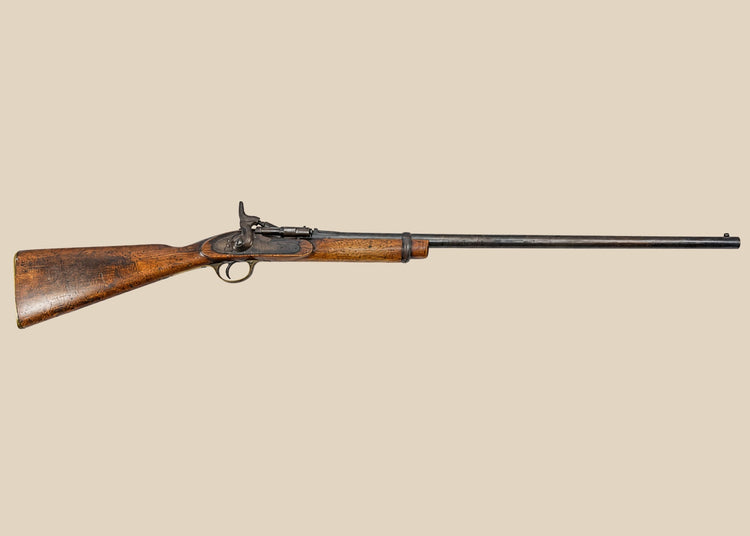
Fusil de service Enfield Snider de l'époque victorienne | Chiffre de la Reine | 1864
- Prix habituel
- $1,200.00
- Prix soldé
- $1,200.00
- Prix habituel
Impossible de charger la disponibilité du service de retrait



Fusil de service Enfield Snider de l'époque victorienne | Chiffre de la Reine | 1864
Description
Plus
Moins
Contexte historique et origine
Région : Royaume-Uni
Matériau : Acier, laiton et bois de noyer
Période : Milieu du XIXe siècle (daté de 1864)
Description
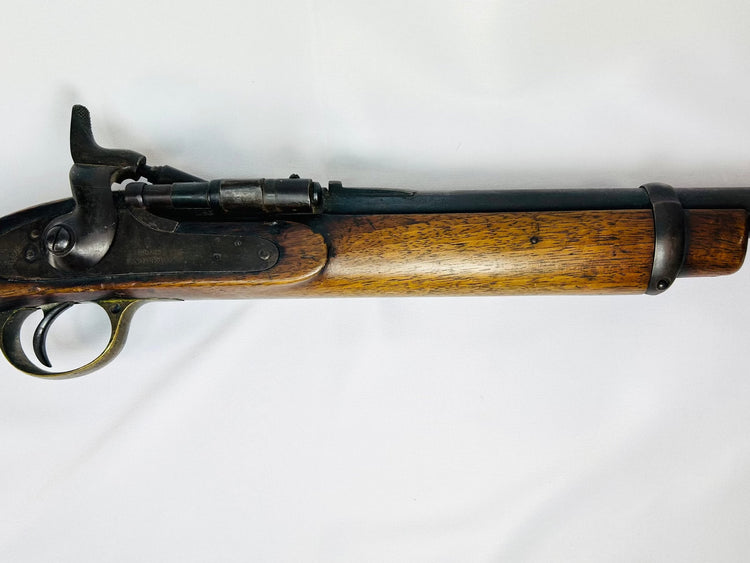
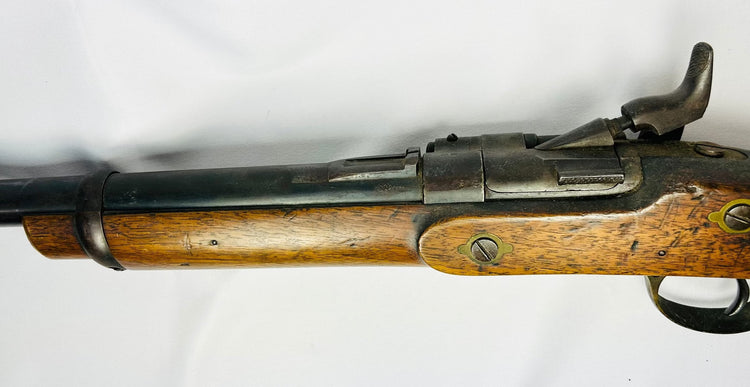
Cette fine arme à feu militaire britannique de l'ère victorienne, le fusil de service Snider-Enfield modèle 1853 Mark II, illustre la transition critique des systèmes à chargement par la bouche aux systèmes à chargement par la culasse. Initialement un mousquet à percussion, il a été converti au début des années 1860 selon le mécanisme breveté de Jacob Snider, puis officiellement adopté par l'armée britannique en 1866.
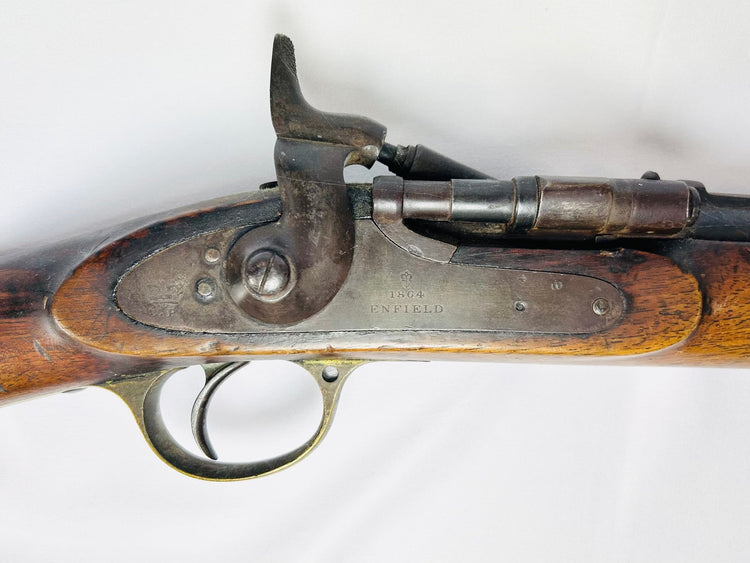
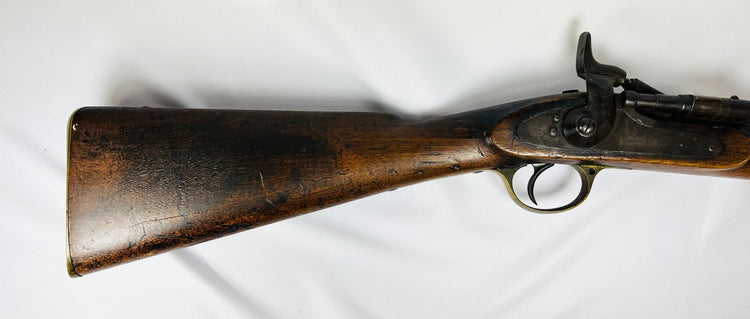
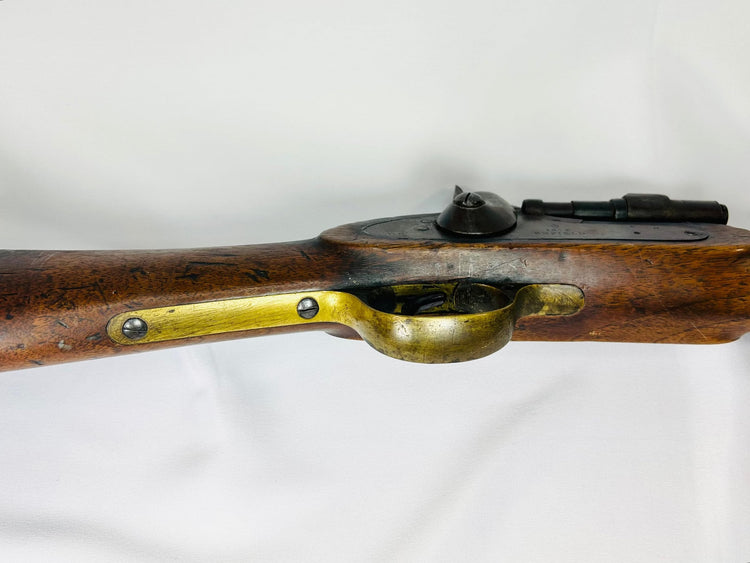
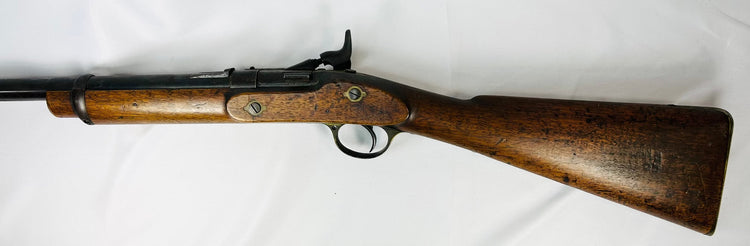
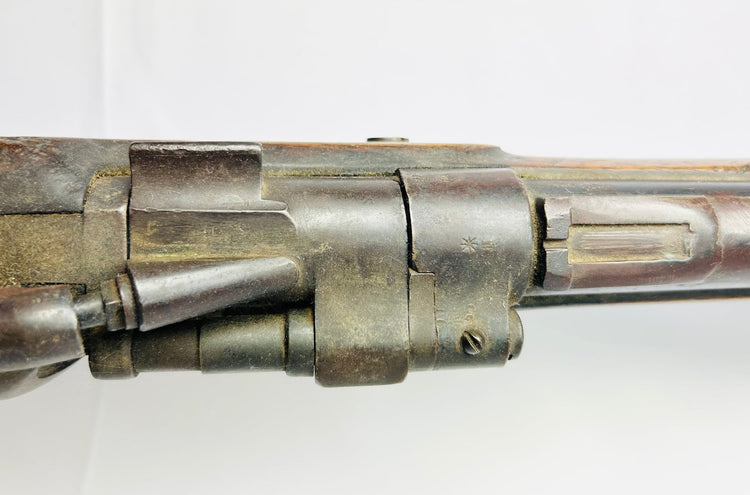
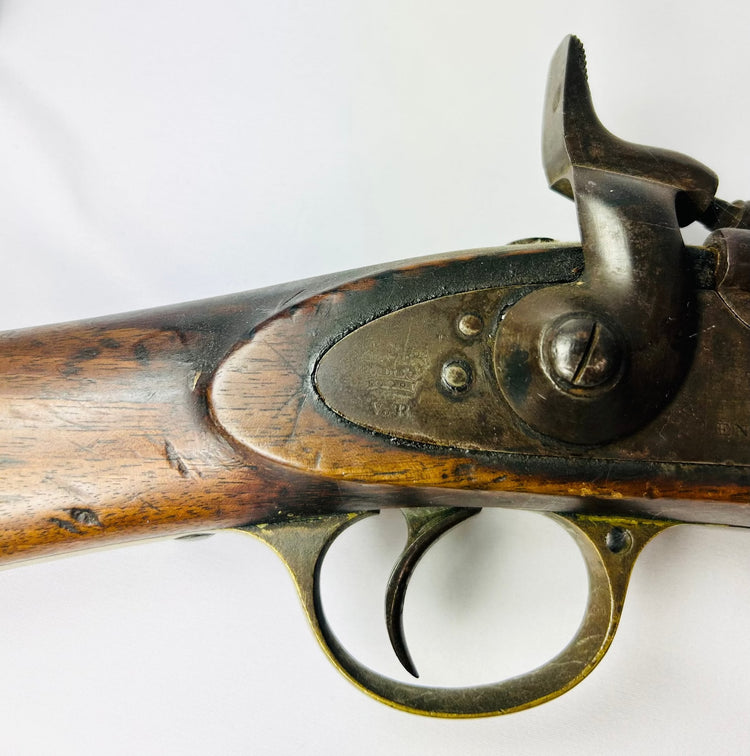
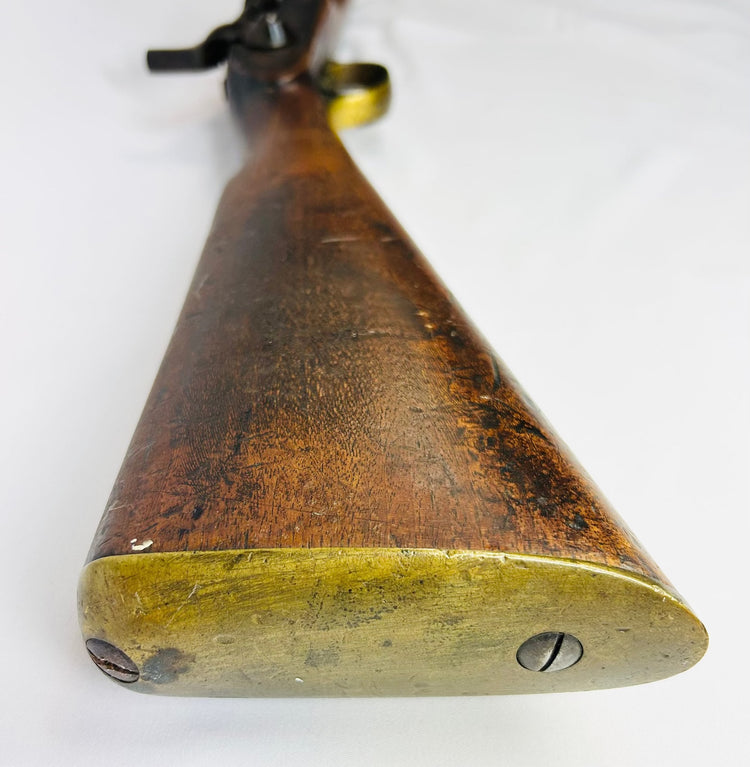
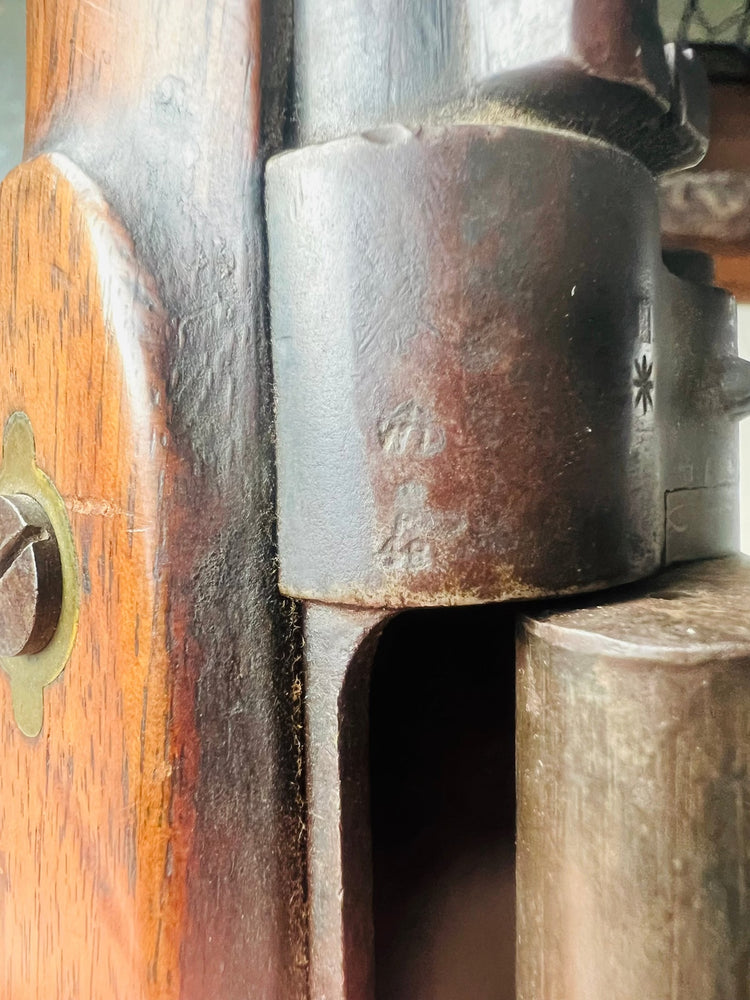
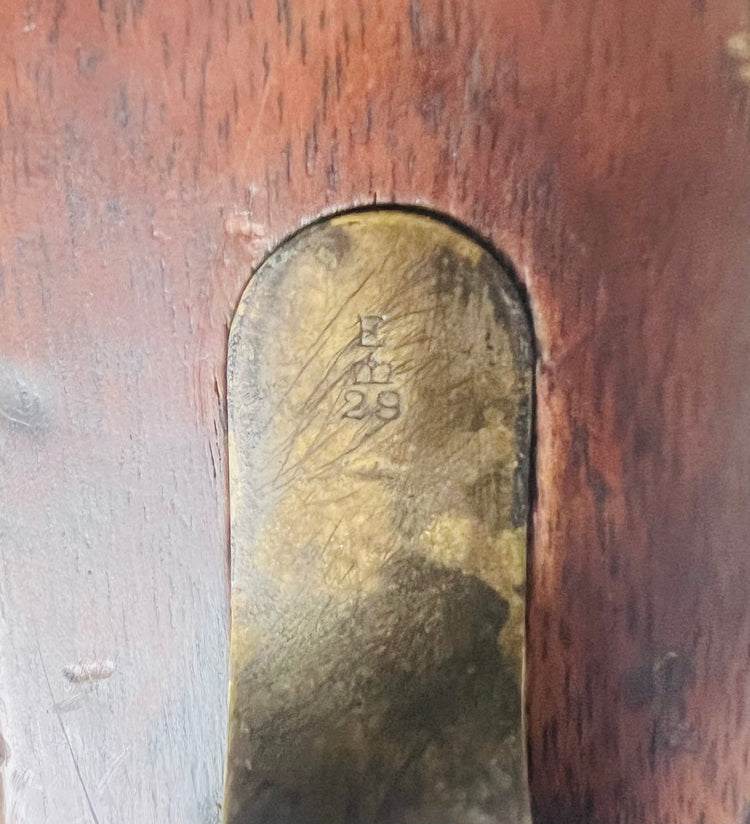
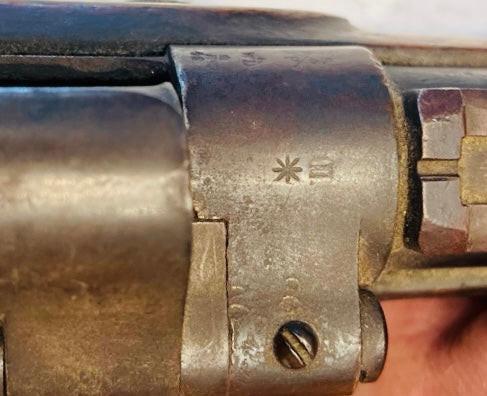
La platine est nettement estampillée « ENFIELD 1864 » sous la couronne et le chiffre de la Reine Victoria (« VR »), avec des marques d'inspection militaire et de poinçonnage supplémentaires sur toutes les ferrures en acier. Le fusil est doté du système de bloc-culasse articulé caractéristique des conversions Mk II, ainsi que de sa plaque de pontet et de crosse en laiton d'origine. La crosse en noyer porte la patine chaude et usée d'un service actif, montrant des signes clairs d'utilisation sur le terrain.
Caractéristiques
- Estampillé du chiffre royal de la Reine Victoria (« VR » sous la couronne) et daté de 1864
- Marquage d'arsenal « ENFIELD », confirmant la production de la Royal Small Arms Factory
- Converti en chargement par la culasse à l'aide du mécanisme Snider Mk II
- Ferrures en laiton : pontet et plaque de crosse
- Crosse en noyer avec usure et patine d'époque
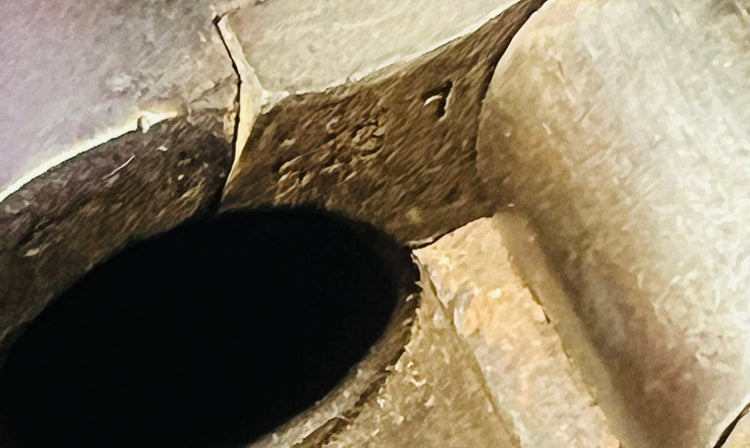
- Poinçons militaires et marques d'inspection visibles partout
Importance culturelle
Le Snider-Enfield fut le premier fusil à chargement par la culasse à être largement adopté par les forces britanniques et coloniales. Sa conception de conversion a prolongé la durée de vie des mousquets Enfield modèle 1853 tout en introduisant une puissance de feu basée sur des cartouches, représentant un moment charnière dans la modernisation de la technologie militaire mondiale. Des fusils de ce type ont été largement utilisés dans tout l'Empire lors des campagnes du milieu à la fin du XIXe siècle.
État
Bon état antique général. L'acier présente une patine et une usure de surface correspondant à l'âge. La crosse en noyer a été raccourcie, probablement pour un usage de cavalerie ou colonial, avec des marques de manipulation et des rayures partout. Le système de culasse reste intact et fonctionnel, bien que l'arme soit proposée strictement comme objet de collection historique non fonctionnel.
Dimensions (approximatives)
Longueur totale : 46,25 pouces
Âge (approximatif)
Daté de 1864, conversion Snider-Enfield Mk II
Provenance
Proposé par Waddington’s Auctioneers & Appraisers, Toronto, Ontario, Canada, lors de la vente aux enchères en ligne The Gentleman’s Online Auction le 9 novembre 2017, en tant que lot 442. La pièce a ensuite rejoint une importante collection privée d'armes et d'armures à Toronto, Ontario, Canada.
En savoir plus
Découvrez le système de chargement par la culasse Snider-Enfield au National Museum of American History
Parcourez notre collection sélectionnée d'armes à feu de collection et d'armements historiques
Description
Contexte historique et origine
Région : Royaume-Uni
Matériau : Acier, laiton et bois de noyer
Période : Milieu du XIXe siècle (daté de 1864)
Description
Cette fine arme à feu militaire britannique de l'ère victorienne, le fusil de service Snider-Enfield modèle 1853 Mark II, illustre la transition critique des systèmes à chargement par la bouche aux systèmes à chargement par la culasse. Initialement un mousquet à percussion, il a été converti au début des années 1860 selon le mécanisme breveté de Jacob Snider, puis officiellement adopté par l'armée britannique en 1866.
La platine est nettement estampillée « ENFIELD 1864 » sous la couronne et le chiffre de la Reine Victoria (« VR »), avec des marques d'inspection militaire et de poinçonnage supplémentaires sur toutes les ferrures en acier. Le fusil est doté du système de bloc-culasse articulé caractéristique des conversions Mk II, ainsi que de sa plaque de pontet et de crosse en laiton d'origine. La crosse en noyer porte la patine chaude et usée d'un service actif, montrant des signes clairs d'utilisation sur le terrain.
Caractéristiques
- Estampillé du chiffre royal de la Reine Victoria (« VR » sous la couronne) et daté de 1864
- Marquage d'arsenal « ENFIELD », confirmant la production de la Royal Small Arms Factory
- Converti en chargement par la culasse à l'aide du mécanisme Snider Mk II
- Ferrures en laiton : pontet et plaque de crosse
- Crosse en noyer avec usure et patine d'époque
- Poinçons militaires et marques d'inspection visibles partout
Importance culturelle
Le Snider-Enfield fut le premier fusil à chargement par la culasse à être largement adopté par les forces britanniques et coloniales. Sa conception de conversion a prolongé la durée de vie des mousquets Enfield modèle 1853 tout en introduisant une puissance de feu basée sur des cartouches, représentant un moment charnière dans la modernisation de la technologie militaire mondiale. Des fusils de ce type ont été largement utilisés dans tout l'Empire lors des campagnes du milieu à la fin du XIXe siècle.
État
Bon état antique général. L'acier présente une patine et une usure de surface correspondant à l'âge. La crosse en noyer a été raccourcie, probablement pour un usage de cavalerie ou colonial, avec des marques de manipulation et des rayures partout. Le système de culasse reste intact et fonctionnel, bien que l'arme soit proposée strictement comme objet de collection historique non fonctionnel.
Dimensions (approximatives)
Longueur totale : 46,25 pouces
Âge (approximatif)
Daté de 1864, conversion Snider-Enfield Mk II
Provenance
Proposé par Waddington’s Auctioneers & Appraisers, Toronto, Ontario, Canada, lors de la vente aux enchères en ligne The Gentleman’s Online Auction le 9 novembre 2017, en tant que lot 442. La pièce a ensuite rejoint une importante collection privée d'armes et d'armures à Toronto, Ontario, Canada.
En savoir plus
Découvrez le système de chargement par la culasse Snider-Enfield au National Museum of American History
Parcourez notre collection sélectionnée d'armes à feu de collection et d'armements historiques
Vous aimerez peut-être aussi
