

Escultura de cabeza de guerrero asirio antiguo | Edad del Bronce | Circa 1800–1700 a.C.
- Precio habitual
- $620.00
- Precio de venta
- $620.00
- Precio habitual
No se pudo cargar la disponibilidad de retiro


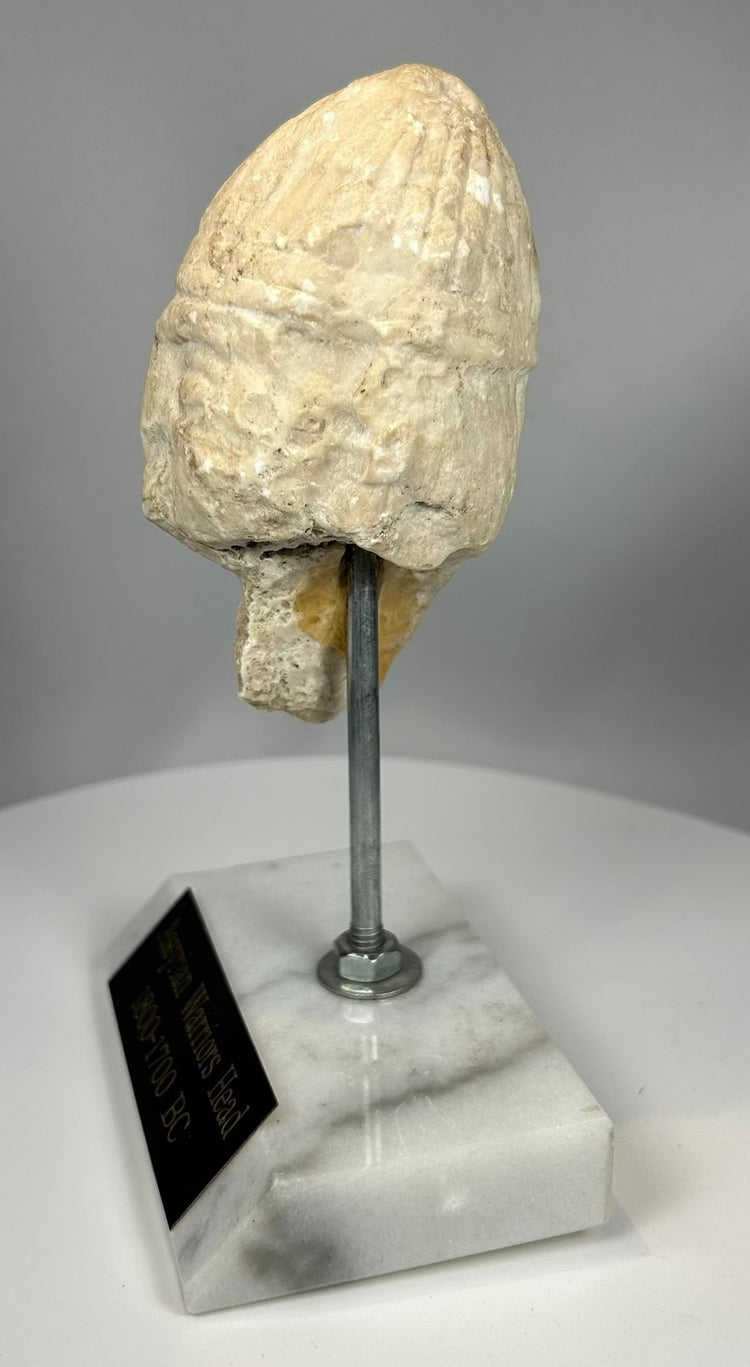
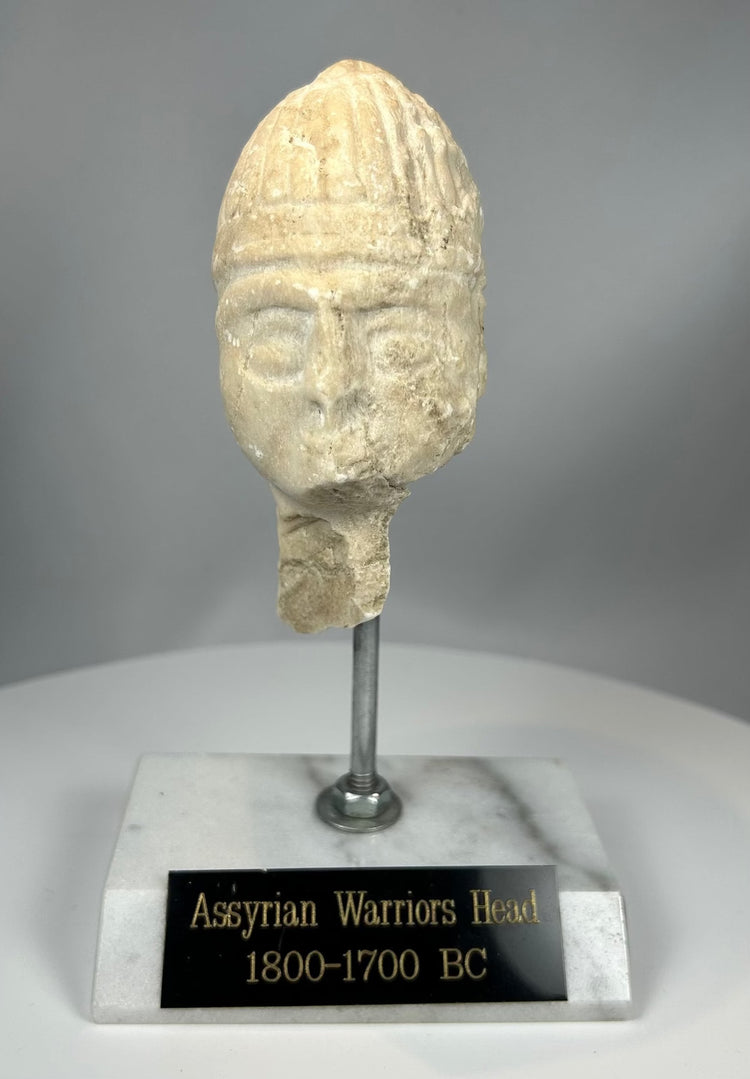
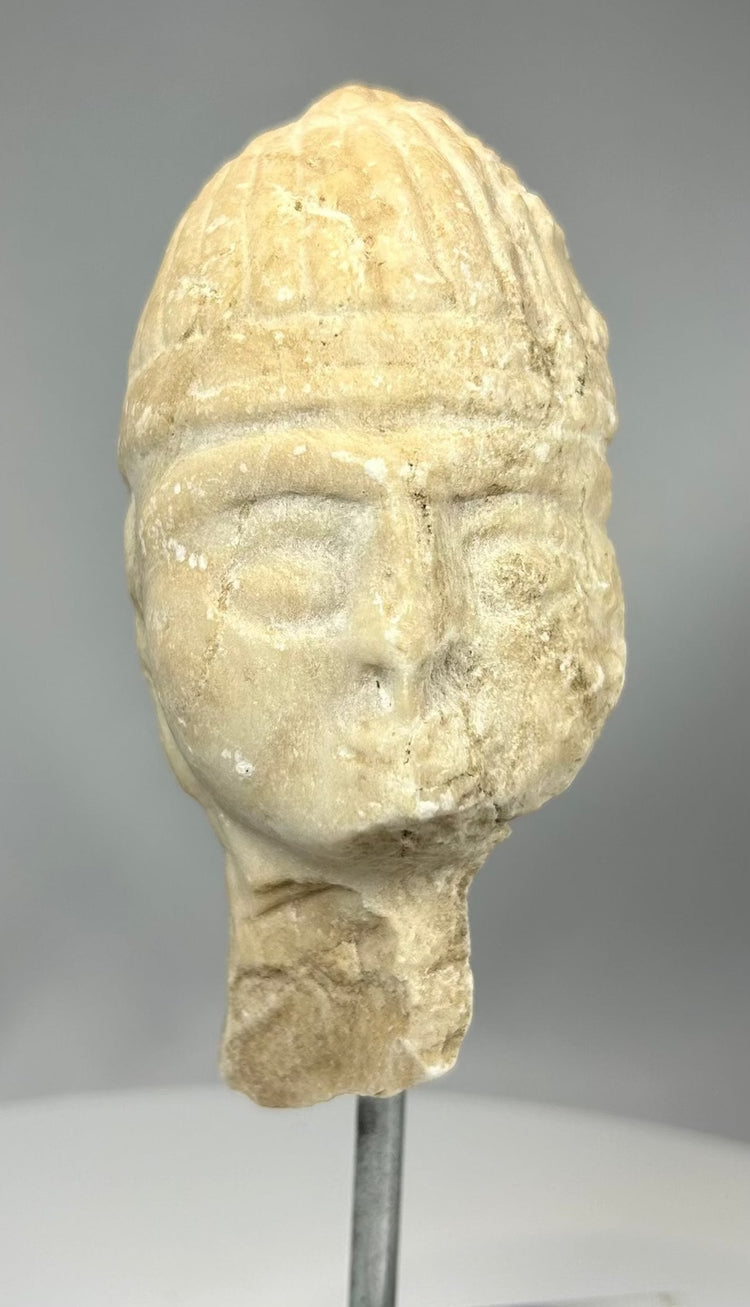
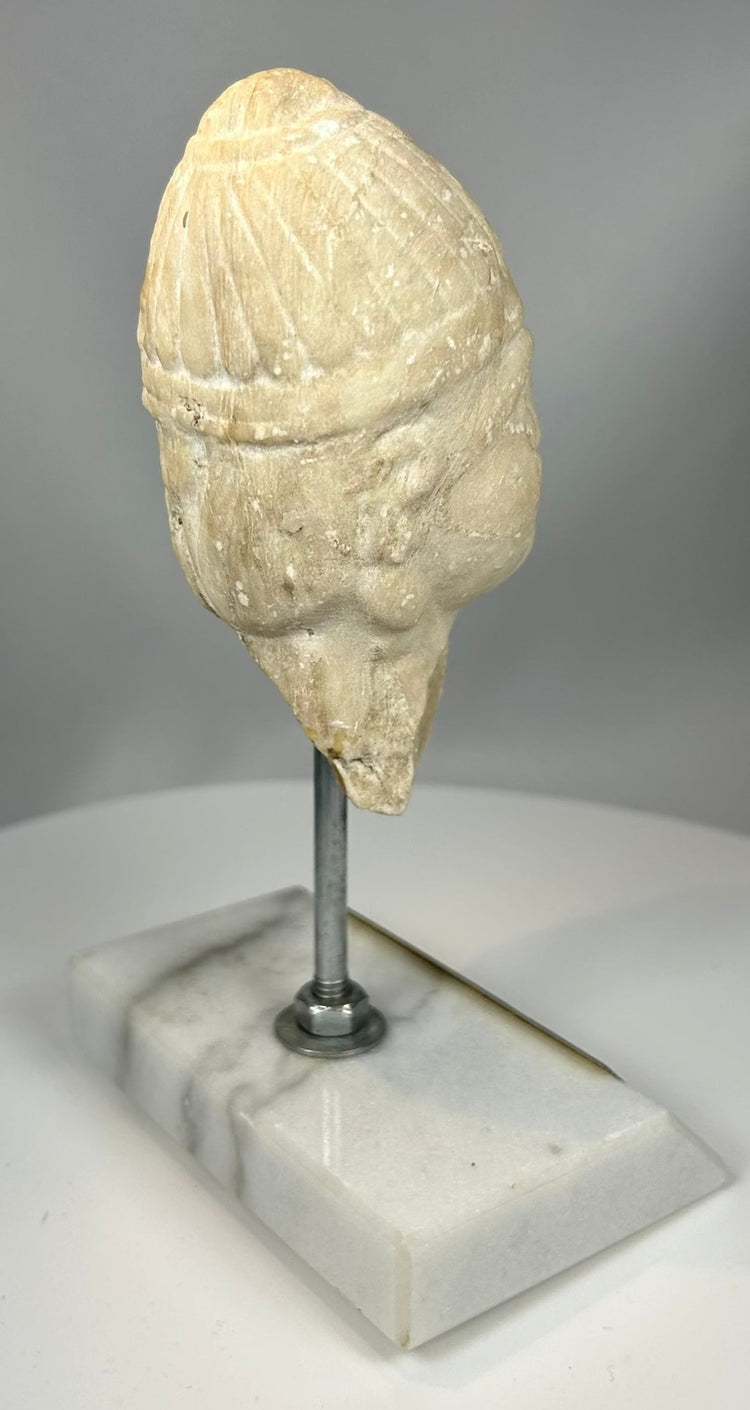
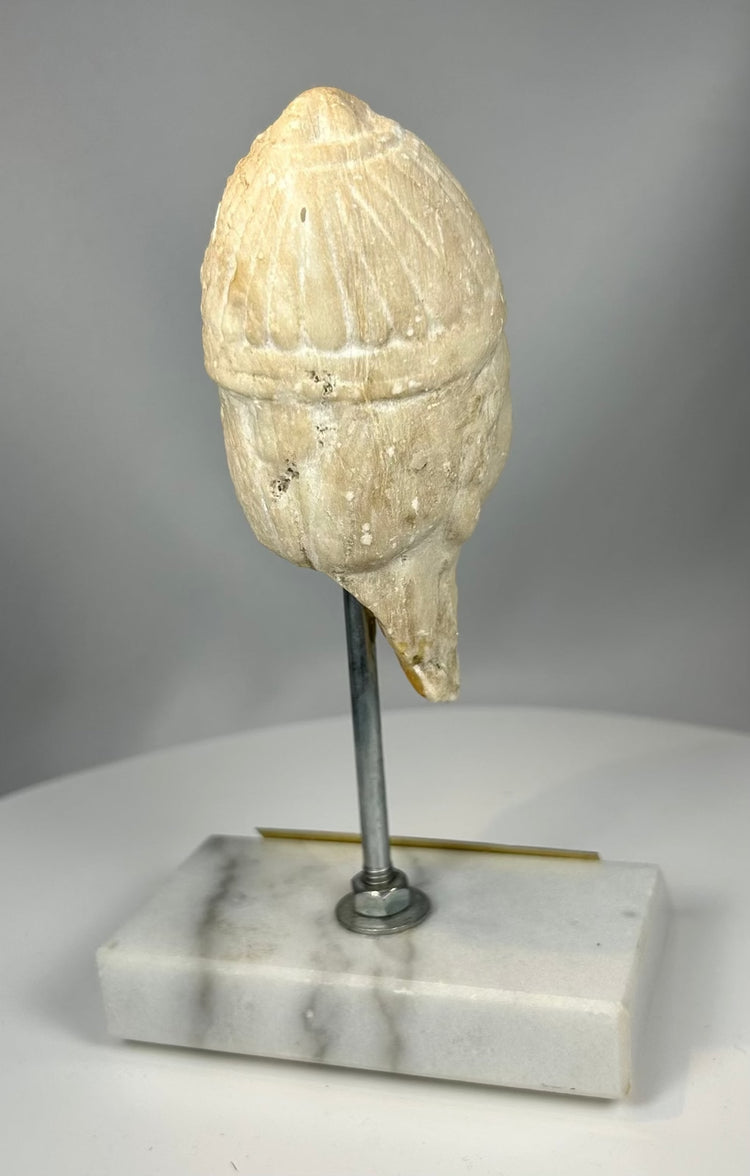
Escultura de cabeza de guerrero asirio antiguo | Edad del Bronce | Circa 1800–1700 a.C.
Descripción
Más
Menos
Contexto Histórico y Origen
Región: Mesopotamia (Antigua Asiria)
Material: Piedra tallada / alabastro
Período: Edad de Bronce, c. 1800–1700 a.C.
Descripción
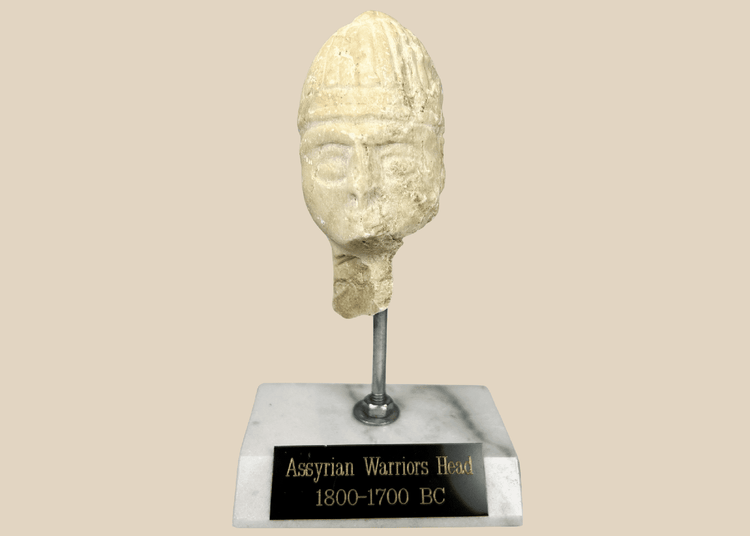
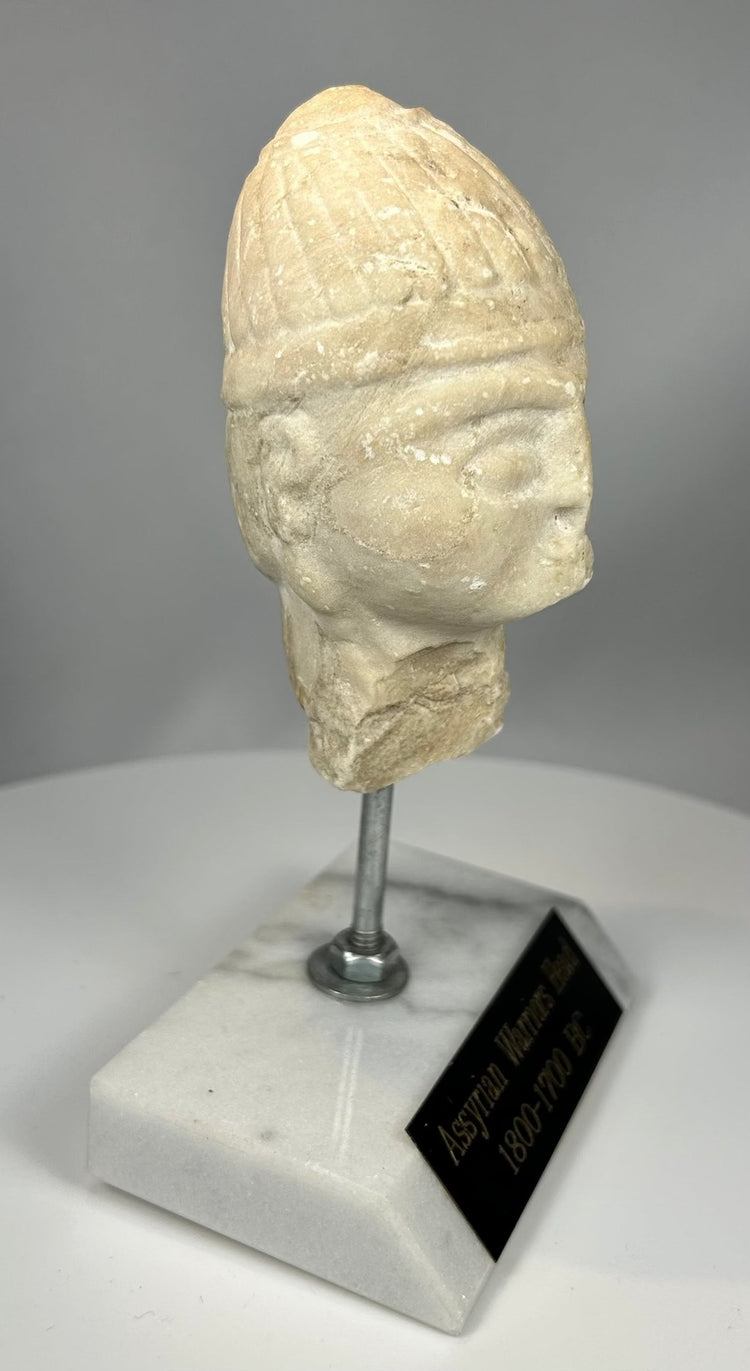
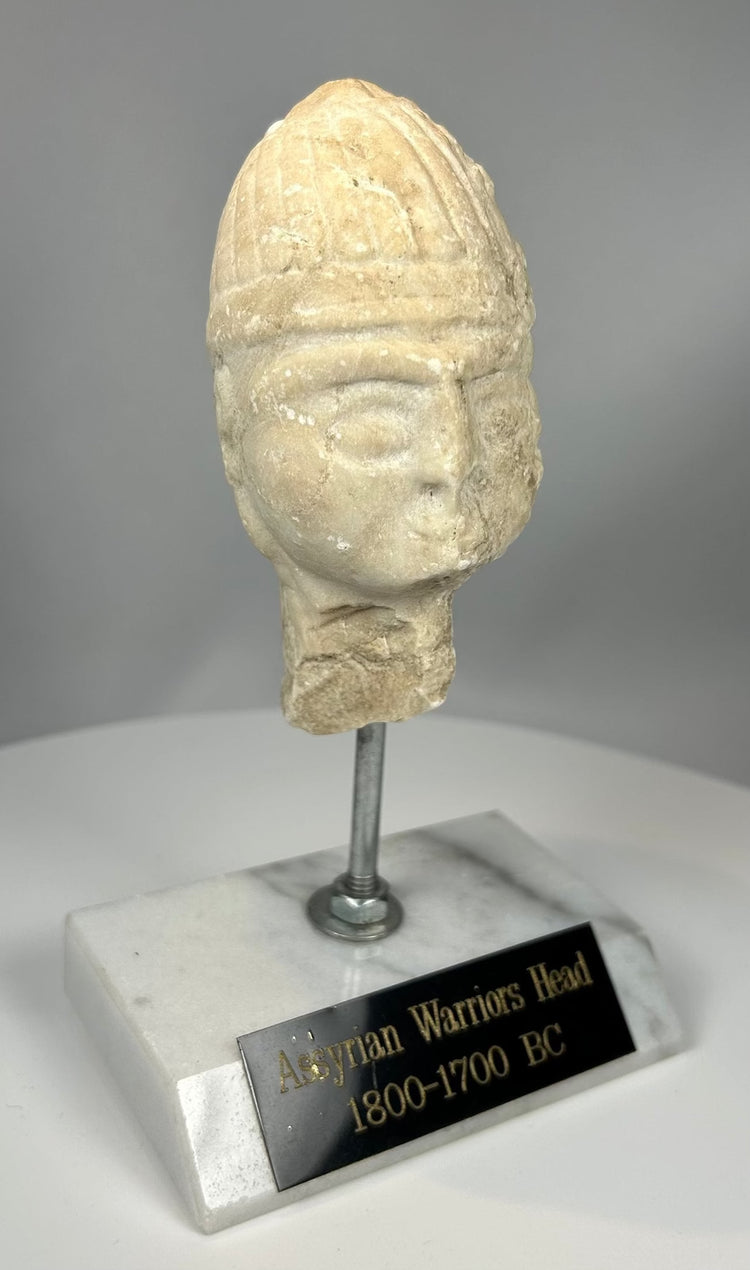
Esta antigua cabeza esculpida representa la figura de un guerrero de la esfera cultural asiria de Mesopotamia, que data de principios de la Edad del Bronce. La escultura muestra rasgos faciales estilizados típicos de las primeras tradiciones artísticas del Cercano Oriente, incluyendo ojos almendrados, nariz recta y boca simplificada. La cabeza está coronada con un casco estriado o tocado, una forma a menudo asociada con guerreros o figuras de élite representadas en la cultura visual asiria.
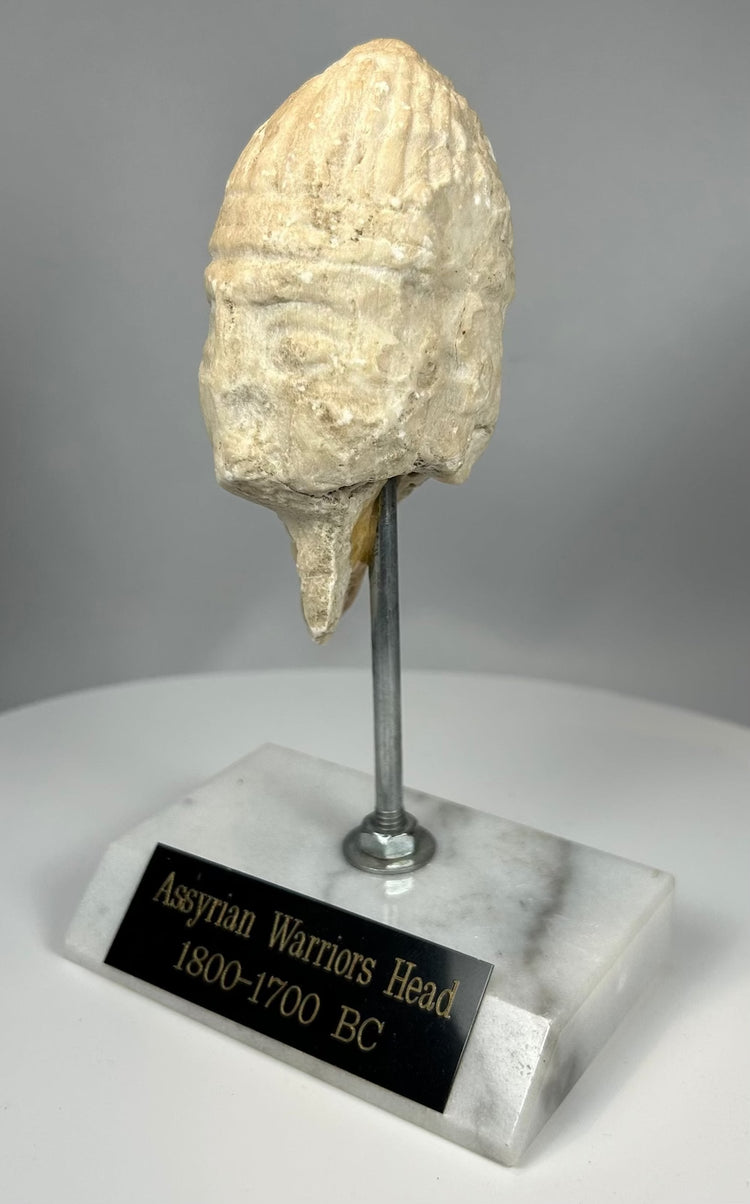
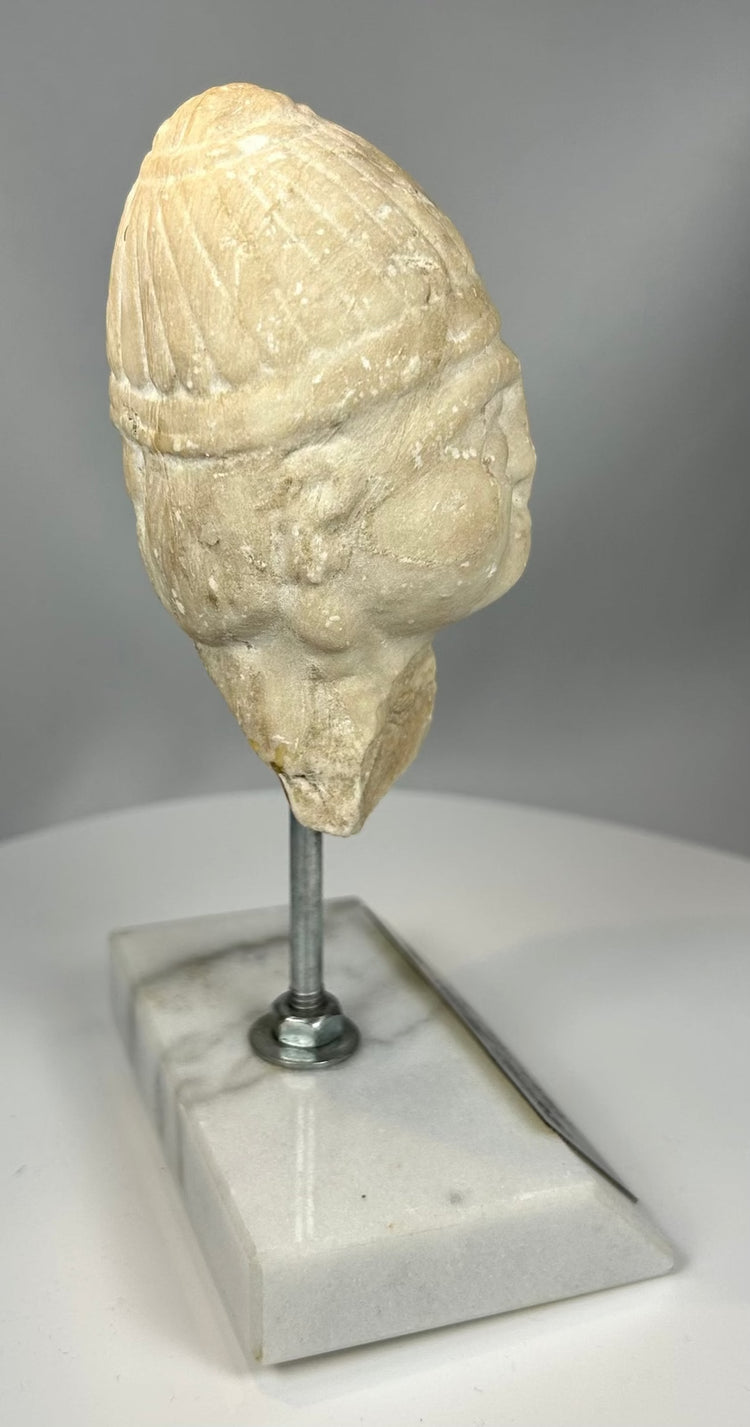
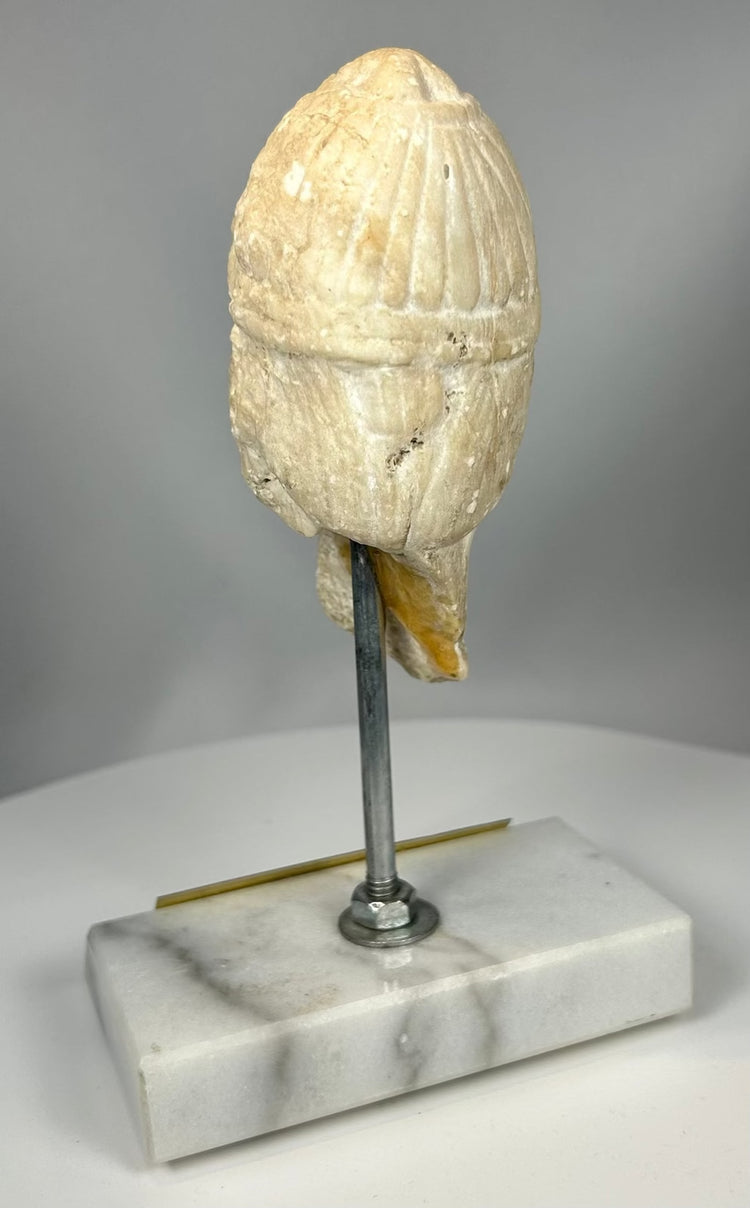
El casco presenta un tallado acanalado vertical, lo que sugiere un casco protector o una gorra ceremonial usada por figuras militares de la época. Tales representaciones reflejan la importancia del poder marcial y la autoridad en las primeras sociedades mesopotámicas, donde los reyes y guerreros eran frecuentemente representados en esculturas, relieves y objetos de templo.
La superficie exhibe un considerable desgaste relacionado con la edad, depósitos minerales y erosión consistente con un largo entierro y antigüedad. Partes del rostro muestran pérdidas y abrasiones, sin embargo, la forma esencial y el carácter de la figura permanecen intactos. La pieza ha sido montada sobre una base de mármol moderna estilo museo para su exhibición y estabilidad.
Fragmentos como este probablemente se originaron de una escultura más grande, una figura votiva o un elemento decorativo arquitectónico. Los ejemplos supervivientes ofrecen una valiosa visión de la expresión artística asiria temprana y el surgimiento de la representación figurativa monumental en el antiguo Cercano Oriente.
Características
- Cabeza esculpida de un guerrero con casco estriado o tocado
- Rasgos estilizados característicos del arte mesopotámico temprano
- Tallado en piedra pálida o alabastro con pátina natural
- Evidencia de edad, desgaste por entierro y acreciones minerales
- Montado sobre una base de mármol moderna para su presentación
Importancia Cultural
La antigua Asiria fue una de las grandes civilizaciones del Cercano Oriente, conocida por su organización militar, arquitectura monumental y sofisticadas tradiciones artísticas. Las esculturas de guerreros y figuras reales desempeñaron un papel importante en la comunicación de autoridad, protección y favor divino. Incluso obras fragmentarias como esta cabeza proporcionan evidencia significativa de la práctica artística temprana de la Edad del Bronce y la cultura visual que rodeaba el poder y la guerra en Mesopotamia.
Estado
Fragmentario con desgaste visible, erosión superficial y pérdidas en áreas faciales consistentes con la gran edad. Montado sobre una base de mármol moderna para estabilidad y exhibición.
Dimensiones (Aproximadas)
Altura: 7,25 pulgadas
Ancho: 4 pulgadas
Profundidad: 2,75 pulgadas
Edad (Aproximada)
3.700–3.800 años de antigüedad
Procedencia
Anteriormente parte de la colección de un coleccionista de antigüedades de toda la vida en South Paris, Maine, Estados Unidos. El coleccionista reunió un grupo amplio y variado de objetos históricos y decorativos a lo largo de muchas décadas. Tras el fallecimiento del coleccionista, la colección del patrimonio se dispersó en su totalidad, y esta pieza entró posteriormente en el mercado del arte.
Más información
Explore las tradiciones artísticas de la Escultura Asiria y la Artesanía del Cercano Oriente
Explore nuestra colección Cultural y Etnográfica
Descripción
Contexto Histórico y Origen
Región: Mesopotamia (Antigua Asiria)
Material: Piedra tallada / alabastro
Período: Edad de Bronce, c. 1800–1700 a.C.
Descripción
Esta antigua cabeza esculpida representa la figura de un guerrero de la esfera cultural asiria de Mesopotamia, que data de principios de la Edad del Bronce. La escultura muestra rasgos faciales estilizados típicos de las primeras tradiciones artísticas del Cercano Oriente, incluyendo ojos almendrados, nariz recta y boca simplificada. La cabeza está coronada con un casco estriado o tocado, una forma a menudo asociada con guerreros o figuras de élite representadas en la cultura visual asiria.
El casco presenta un tallado acanalado vertical, lo que sugiere un casco protector o una gorra ceremonial usada por figuras militares de la época. Tales representaciones reflejan la importancia del poder marcial y la autoridad en las primeras sociedades mesopotámicas, donde los reyes y guerreros eran frecuentemente representados en esculturas, relieves y objetos de templo.
La superficie exhibe un considerable desgaste relacionado con la edad, depósitos minerales y erosión consistente con un largo entierro y antigüedad. Partes del rostro muestran pérdidas y abrasiones, sin embargo, la forma esencial y el carácter de la figura permanecen intactos. La pieza ha sido montada sobre una base de mármol moderna estilo museo para su exhibición y estabilidad.
Fragmentos como este probablemente se originaron de una escultura más grande, una figura votiva o un elemento decorativo arquitectónico. Los ejemplos supervivientes ofrecen una valiosa visión de la expresión artística asiria temprana y el surgimiento de la representación figurativa monumental en el antiguo Cercano Oriente.
Características
- Cabeza esculpida de un guerrero con casco estriado o tocado
- Rasgos estilizados característicos del arte mesopotámico temprano
- Tallado en piedra pálida o alabastro con pátina natural
- Evidencia de edad, desgaste por entierro y acreciones minerales
- Montado sobre una base de mármol moderna para su presentación
Importancia Cultural
La antigua Asiria fue una de las grandes civilizaciones del Cercano Oriente, conocida por su organización militar, arquitectura monumental y sofisticadas tradiciones artísticas. Las esculturas de guerreros y figuras reales desempeñaron un papel importante en la comunicación de autoridad, protección y favor divino. Incluso obras fragmentarias como esta cabeza proporcionan evidencia significativa de la práctica artística temprana de la Edad del Bronce y la cultura visual que rodeaba el poder y la guerra en Mesopotamia.
Estado
Fragmentario con desgaste visible, erosión superficial y pérdidas en áreas faciales consistentes con la gran edad. Montado sobre una base de mármol moderna para estabilidad y exhibición.
Dimensiones (Aproximadas)
Altura: 7,25 pulgadas
Ancho: 4 pulgadas
Profundidad: 2,75 pulgadas
Edad (Aproximada)
3.700–3.800 años de antigüedad
Procedencia
Anteriormente parte de la colección de un coleccionista de antigüedades de toda la vida en South Paris, Maine, Estados Unidos. El coleccionista reunió un grupo amplio y variado de objetos históricos y decorativos a lo largo de muchas décadas. Tras el fallecimiento del coleccionista, la colección del patrimonio se dispersó en su totalidad, y esta pieza entró posteriormente en el mercado del arte.
Más información
Explore las tradiciones artísticas de la Escultura Asiria y la Artesanía del Cercano Oriente
Explore nuestra colección Cultural y Etnográfica
También te puede interesar
