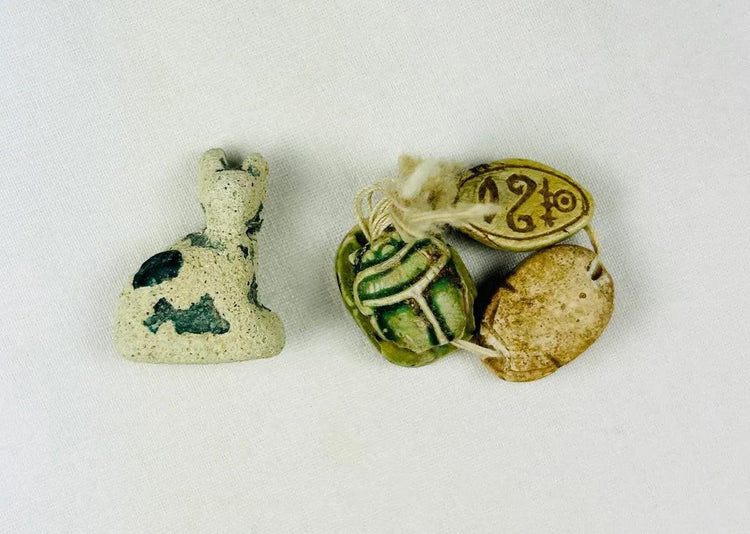
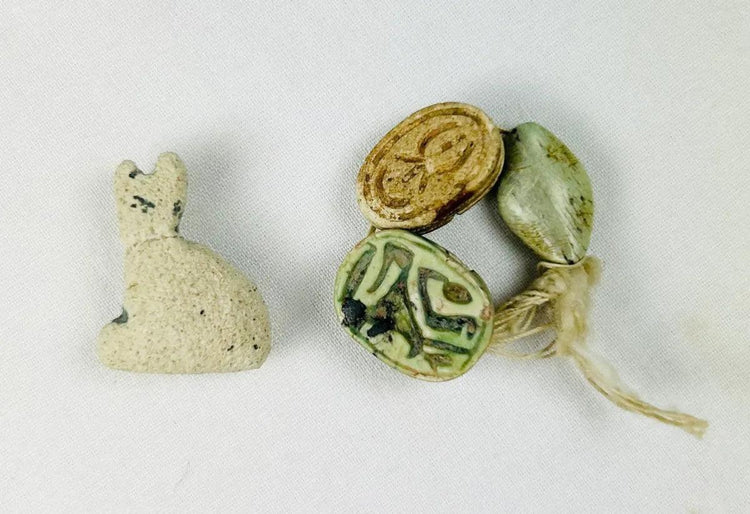
Colección de amuletos egipcios | Gato Bastet en loza y tres escarabajos | 600-200 a. C.

Historial de procedencia y propiedad

Anteriormente de una colección de bienes en la ciudad de Nueva York, Nueva York, EE. UU. Posteriormente, conservada en una colección privada en Astoria, Nueva York, EE. UU.

Precio habitual
$500.00
Precio de venta
$500.00
Precio habitual
Envío calculado al finalizar la compra.

This is a one-of-a-kind historical object. Once sold, this exact piece will not be restocked.

Questions before acquiring? Additional photographs, condition details, documentation, shipping information or a private viewing are available upon request.
Ancient Egyptian Bastet cat faience amulet alongside three scarab amulets showing blue-green glaze and texture
Rotating view of ancient Egyptian faience cat amulet of Bastet and three scarabs from the Late Period to Ptolemaic era
Ancient Egyptian faience cat amulet representing Bastet, with seated form and traces of blue-green glaze, circa 600–200 BCE.
Small Ancient Egyptian Bastet cat amulet in faience with worn blue-green glaze and age-related surface encrustations.
Small seated faience cat amulet with worn blue-green glaze patches on ears, back, and flank
Late Period to Ptolemaic Egyptian faience cat amulet with upright ears, seated posture, and naturally weathered surface.
Ancient Egyptian protective cat amulet depicting Bastet, goddess of fertility, home, and divine guardianship.
Small faience Bastet amulet from Ancient Egypt with textured earthen deposits and surviving areas of blue-green glazing.
Ancient Egyptian seated cat charm in glazed faience, dating to approximately 600–200 BCE and showing age-related glaze loss.
Close detail of an Ancient Egyptian Bastet cat amulet with modeled feline features, mineral deposits, and worn ancient glaze.
Three ancient Egyptian scarab amulets on string featuring green faience and beige stone with hieroglyphic details
Close-up of three tied scarab amulets displaying carved grid patterns and varied green and beige stone finishes
Ancient Egyptian scarab amulet group dating circa 600–200 BCE, representing rebirth, regeneration, and spiritual protection.
Side-by-side view of seated cat amulet and three stringed scarabs highlighting pale green glaze and blue accents
Upright seated cat amulet with mottled glaze next to connected green and beige scarab amulets on white surface
Low-angle detail of speckled green and blue cat amulet beside cluster of three scarab amulets on twine
Group of Ancient Egyptian protective charms including a blue-green faience cat amulet and three individually carved scarabs.
Ancient Egyptian amulet collection with seated Bastet cat and three scarabs in faience, steatite, and glazed composition.
Ancient Egyptian faience cat amulet of Bastet with three scarab amulets, Late Period to Ptolemaic, 600–200 BCE
Faience Bastet cat amulet and group of three ancient Egyptian scarabs with glaze and hieroglyphic bases
  • Ancient Egyptian Bastet cat faience amulet alongside three scarab amulets showing blue-green glaze and texture
  • Rotating view of ancient Egyptian faience cat amulet of Bastet and three scarabs from the Late Period to Ptolemaic era
  • Ancient Egyptian faience cat amulet representing Bastet, with seated form and traces of blue-green glaze, circa 600–200 BCE.
  • Small Ancient Egyptian Bastet cat amulet in faience with worn blue-green glaze and age-related surface encrustations.
  • Small seated faience cat amulet with worn blue-green glaze patches on ears, back, and flank
  • Late Period to Ptolemaic Egyptian faience cat amulet with upright ears, seated posture, and naturally weathered surface.
  • Ancient Egyptian protective cat amulet depicting Bastet, goddess of fertility, home, and divine guardianship.
  • Small faience Bastet amulet from Ancient Egypt with textured earthen deposits and surviving areas of blue-green glazing.
  • Ancient Egyptian seated cat charm in glazed faience, dating to approximately 600–200 BCE and showing age-related glaze loss.
  • Close detail of an Ancient Egyptian Bastet cat amulet with modeled feline features, mineral deposits, and worn ancient glaze.
  • Three ancient Egyptian scarab amulets on string featuring green faience and beige stone with hieroglyphic details
  • Close-up of three tied scarab amulets displaying carved grid patterns and varied green and beige stone finishes
  • Ancient Egyptian scarab amulet group dating circa 600–200 BCE, representing rebirth, regeneration, and spiritual protection.
  • Side-by-side view of seated cat amulet and three stringed scarabs highlighting pale green glaze and blue accents
  • Upright seated cat amulet with mottled glaze next to connected green and beige scarab amulets on white surface
  • Low-angle detail of speckled green and blue cat amulet beside cluster of three scarab amulets on twine
  • Group of Ancient Egyptian protective charms including a blue-green faience cat amulet and three individually carved scarabs.
  • Ancient Egyptian amulet collection with seated Bastet cat and three scarabs in faience, steatite, and glazed composition.
  • Ancient Egyptian faience cat amulet of Bastet with three scarab amulets, Late Period to Ptolemaic, 600–200 BCE
  • Faience Bastet cat amulet and group of three ancient Egyptian scarabs with glaze and hieroglyphic bases
Ancient Egyptian Bastet cat faience amulet alongside three scarab amulets showing blue-green glaze and texture
Rotating view of ancient Egyptian faience cat amulet of Bastet and three scarabs from the Late Period to Ptolemaic era
Ancient Egyptian faience cat amulet representing Bastet, with seated form and traces of blue-green glaze, circa 600–200 BCE.
Small Ancient Egyptian Bastet cat amulet in faience with worn blue-green glaze and age-related surface encrustations.
Small seated faience cat amulet with worn blue-green glaze patches on ears, back, and flank
Late Period to Ptolemaic Egyptian faience cat amulet with upright ears, seated posture, and naturally weathered surface.
Ancient Egyptian protective cat amulet depicting Bastet, goddess of fertility, home, and divine guardianship.
Small faience Bastet amulet from Ancient Egypt with textured earthen deposits and surviving areas of blue-green glazing.
Ancient Egyptian seated cat charm in glazed faience, dating to approximately 600–200 BCE and showing age-related glaze loss.
Close detail of an Ancient Egyptian Bastet cat amulet with modeled feline features, mineral deposits, and worn ancient glaze.
Three ancient Egyptian scarab amulets on string featuring green faience and beige stone with hieroglyphic details
Close-up of three tied scarab amulets displaying carved grid patterns and varied green and beige stone finishes
Ancient Egyptian scarab amulet group dating circa 600–200 BCE, representing rebirth, regeneration, and spiritual protection.
Side-by-side view of seated cat amulet and three stringed scarabs highlighting pale green glaze and blue accents
Upright seated cat amulet with mottled glaze next to connected green and beige scarab amulets on white surface
Low-angle detail of speckled green and blue cat amulet beside cluster of three scarab amulets on twine
Group of Ancient Egyptian protective charms including a blue-green faience cat amulet and three individually carved scarabs.
Ancient Egyptian amulet collection with seated Bastet cat and three scarabs in faience, steatite, and glazed composition.
Ancient Egyptian faience cat amulet of Bastet with three scarab amulets, Late Period to Ptolemaic, 600–200 BCE
Faience Bastet cat amulet and group of three ancient Egyptian scarabs with glaze and hieroglyphic bases
Authenticity and secure checkout guarantee

Colección de amuletos egipcios | Gato Bastet en loza y tres escarabajos | 600-200 a. C.

Descripción

Contexto histórico y origen

Región: Antiguo Egipto
Material: Loza, esteatita (escarabajos), composición vidriada
Período: Período tardío al período ptolemaico, c. 600-200 a. C.

Descripción

Este lote consta de dos ejemplos complementarios de artesanía egipcia antigua:

  • Amuleto de gato de loza – Un amuleto finamente modelado en forma de gato sentado, que representa a Bastet, la diosa del hogar, la fertilidad y la protección. La pieza conserva áreas de su esmalte azul verdoso original, ahora desgastado por el tiempo, lo que le confiere a la superficie una calidad terrosa y texturizada. Los gatos eran venerados en el antiguo Egipto, y amuletos como este se usaban para proteger al portador de la desgracia e invocar la bendición divina.

  • Grupo de tres escarabajos – Una colección de tres escarabajos en materiales variados y estados de conservación. Uno está grabado con jeroglíficos en su base, otro está esmaltado en verde con patrones decorativos lineales, y el tercero es un ejemplo más desgastado. Los escarabajos simbolizaban el renacimiento, la regeneración y la protección, mientras que sus superficies inferiores grabadas reflejan tanto funciones rituales como administrativas en la sociedad antigua.

Características

- Auténtico amuleto de loza con la forma de Bastet, diosa gata sentada

- Tres escarabajos con características distintivas: base jeroglífica, decoración esmaltada en verde y un espécimen desgastado

- Finos detalles incisos y restos de esmalte original conservados

- Montado o ensartado para estudio y exhibición

Significado cultural

El amuleto de gato encarna el poder protector de Bastet, una diosa profundamente ligada a la fertilidad, la armonía doméstica y la protección divina. Los escarabajos, asociados con el dios sol Ra y el ciclo eterno de renacimiento, fueron los amuletos más comunes y duraderos del antiguo Egipto. Juntas, estas piezas reflejan la devoción personal, la creencia espiritual y el arte simbólico de la vida diaria y funeraria del antiguo Egipto.

Estado

  • Amuleto de gato: Intacto, con incrustaciones y pérdida de esmalte consistentes con la antigüedad

  • Escarabajos: Conservación variable, desde detalles incisos nítidos hasta superficies suavizadas; algunos conservan rastros de esmalte. Todos muestran un desgaste apropiado para su antigüedad

Dimensiones (aproximadas)

Altura (amuleto de gato): 0.75 pulg.
Longitud (escarabajos): 0.6–0.8 pulg. cada uno

Edad (aproximada)

2,225–2,625 años de antigüedad

Procedencia

Anteriormente de una colección privada en la ciudad de Nueva York, Nueva York, EE. UU. Posteriormente en una colección privada en Astoria, Nueva York, EE. UU.

Más información

Explora un artefacto del Antiguo Egipto de la Colección de Antigüedades de la Bibliotheca Alexandrina

Explora nuestra Colección de Momias y Artefactos del Antiguo Egipto

Descripción

Contexto histórico y origen

Región: Antiguo Egipto
Material: Loza, esteatita (escarabajos), composición vidriada
Período: Período tardío al período ptolemaico, c. 600-200 a. C.

Descripción

Este lote consta de dos ejemplos complementarios de artesanía egipcia antigua:

  • Amuleto de gato de loza – Un amuleto finamente modelado en forma de gato sentado, que representa a Bastet, la diosa del hogar, la fertilidad y la protección. La pieza conserva áreas de su esmalte azul verdoso original, ahora desgastado por el tiempo, lo que le confiere a la superficie una calidad terrosa y texturizada. Los gatos eran venerados en el antiguo Egipto, y amuletos como este se usaban para proteger al portador de la desgracia e invocar la bendición divina.

  • Grupo de tres escarabajos – Una colección de tres escarabajos en materiales variados y estados de conservación. Uno está grabado con jeroglíficos en su base, otro está esmaltado en verde con patrones decorativos lineales, y el tercero es un ejemplo más desgastado. Los escarabajos simbolizaban el renacimiento, la regeneración y la protección, mientras que sus superficies inferiores grabadas reflejan tanto funciones rituales como administrativas en la sociedad antigua.

Características

- Auténtico amuleto de loza con la forma de Bastet, diosa gata sentada

- Tres escarabajos con características distintivas: base jeroglífica, decoración esmaltada en verde y un espécimen desgastado

- Finos detalles incisos y restos de esmalte original conservados

- Montado o ensartado para estudio y exhibición

Significado cultural

El amuleto de gato encarna el poder protector de Bastet, una diosa profundamente ligada a la fertilidad, la armonía doméstica y la protección divina. Los escarabajos, asociados con el dios sol Ra y el ciclo eterno de renacimiento, fueron los amuletos más comunes y duraderos del antiguo Egipto. Juntas, estas piezas reflejan la devoción personal, la creencia espiritual y el arte simbólico de la vida diaria y funeraria del antiguo Egipto.

Estado

  • Amuleto de gato: Intacto, con incrustaciones y pérdida de esmalte consistentes con la antigüedad

  • Escarabajos: Conservación variable, desde detalles incisos nítidos hasta superficies suavizadas; algunos conservan rastros de esmalte. Todos muestran un desgaste apropiado para su antigüedad

Dimensiones (aproximadas)

Altura (amuleto de gato): 0.75 pulg.
Longitud (escarabajos): 0.6–0.8 pulg. cada uno

Edad (aproximada)

2,225–2,625 años de antigüedad

Procedencia

Anteriormente de una colección privada en la ciudad de Nueva York, Nueva York, EE. UU. Posteriormente en una colección privada en Astoria, Nueva York, EE. UU.

Más información

Explora un artefacto del Antiguo Egipto de la Colección de Antigüedades de la Bibliotheca Alexandrina

Explora nuestra Colección de Momias y Artefactos del Antiguo Egipto

También te puede interesar