



Figuras Ushabti del Antiguo Egipto (3) | Circa 1069–664 a. C.
- Precio habitual
- $1,000.00
- Precio de venta
- $1,000.00
- Precio habitual
No se pudo cargar la disponibilidad de retiro


Figuras Ushabti del Antiguo Egipto (3) | Circa 1069–664 a. C.
Descripción
Más
Menos
Contexto Histórico y Origen
Región: Antiguo Egipto
Material: Loza con pigmentación mineral
Período: Circa 1069–664 a. C. (Tercer Período Intermedio)
Descripción
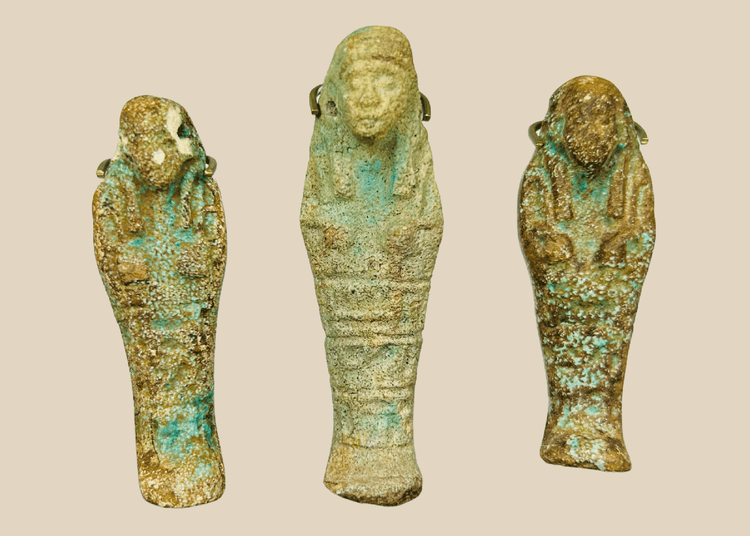
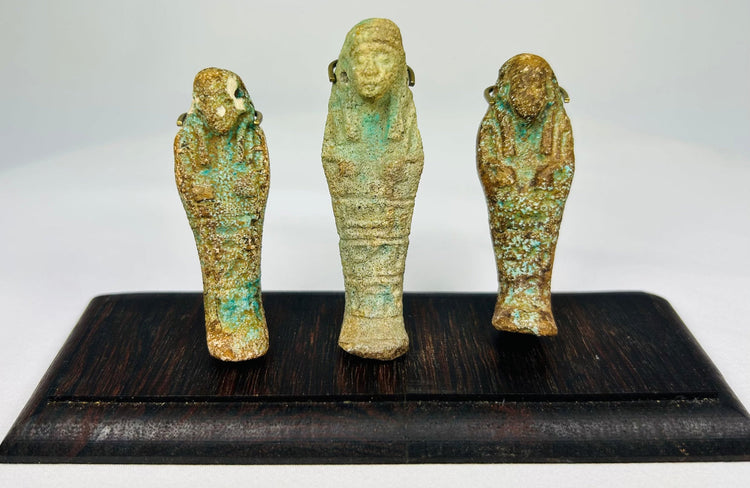
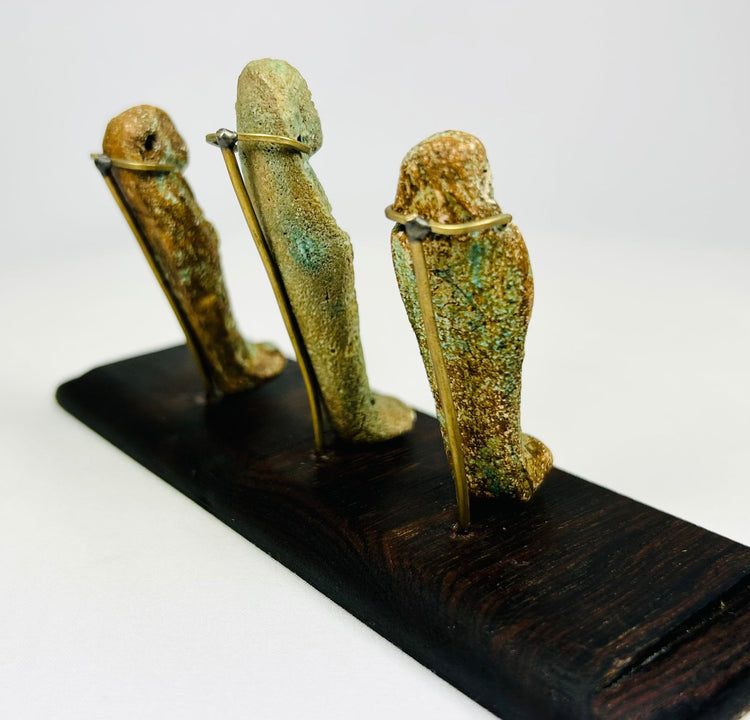
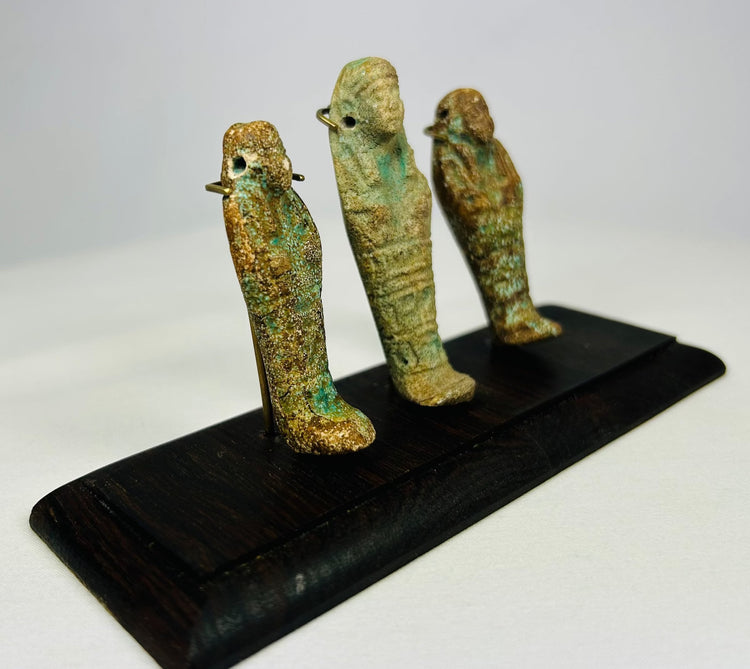
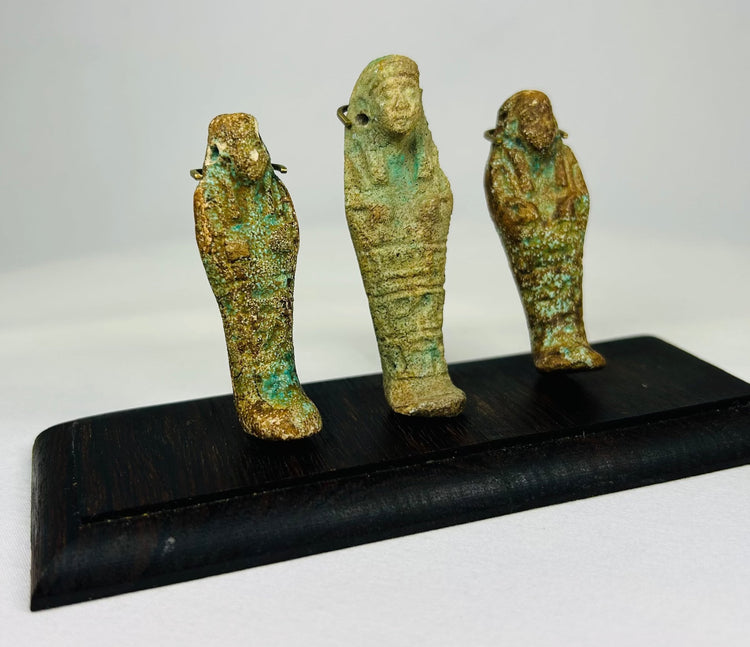
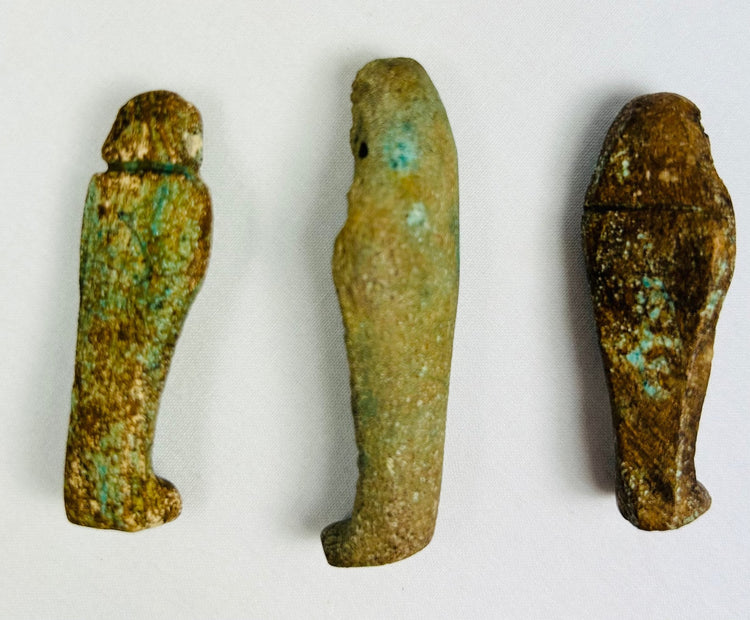
Este excepcional trío de figuras de ushabti de loza del antiguo Egipto es una agrupación funeraria bellamente conservada, cada una modelada en la postura tradicional momiforme con los brazos cruzados y rasgos faciales detallados. Exhibiendo una sorprendente paleta de incrustaciones superficiales de turquesa envejecido, marrón arena y verde mineral, las figuras conservan rastros de su esmalte de loza original, ahora suavizado por siglos de entierro.
Cada ushabti se yergue con una característica elegancia, representaciones icónicas de sirvientes destinados a acompañar y servir al difunto en el más allá. Las variaciones en los detalles escultóricos de los tres indican que fueron hechos individualmente, probablemente por el mismo taller, lo que hace de este un conjunto en miniatura inusualmente coherente.
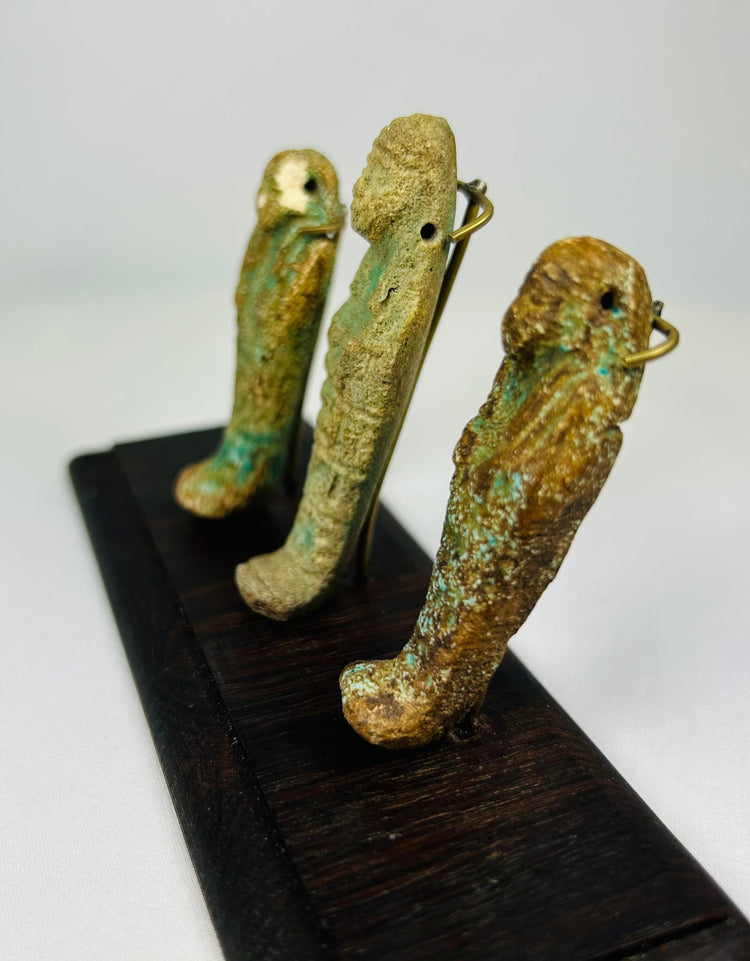
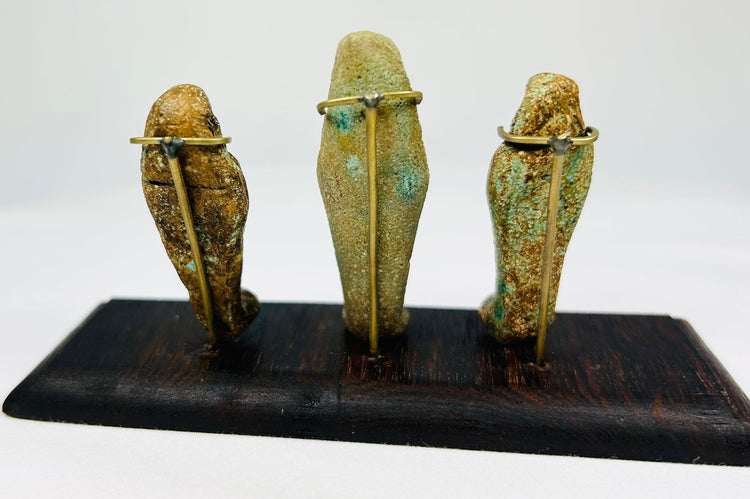
Montado sobre una base de exhibición de madera oscura hecha a medida, el grupo se presenta como una reliquia arqueológica y una elegante pieza de presentación para coleccionistas de antigüedades egipcias.
Características
- Trío auténtico de ushabti de loza del Antiguo Egipto
- Distintas diferencias escultóricas que muestran la individualidad hecha a mano
- Atractiva pátina mineral con tonos turquesa, arenisca y tierra
- Detalles faciales bien conservados y formas momiformes tradicionales
- Montado sobre una base de madera de estilo museo hecha a medida
- Un raro conjunto curado, ideal para exhibición o colección académica
Significado Cultural
Los ushabtis, también conocidos como shabtis o shawabtis, desempeñaron un papel vital en la tradición funeraria egipcia. Colocados dentro de las tumbas, se creía que se animaban mágicamente en el más allá para realizar tareas agrícolas y laborales en nombre del difunto. A menudo inscritos con hechizos del Capítulo 6 del Libro de los Muertos, su presencia simbolizaba consuelo, provisión y servicio eterno.
Un conjunto agrupado como este hace eco de la creencia del antiguo Egipto de tener numerosos asistentes para asegurar la abundancia y la seguridad a lo largo de la eternidad.
Estado
Excelente estado arqueológico con el desgaste superficial esperado del entierro. Depósitos minerales estables, incrustaciones y ligeras pérdidas consistentes con la edad. No se observan restauraciones modernas. Montado de forma segura para su exhibición.
Dimensiones (Aproximadas)
Cada Ushabti:
Altura: 2.75–3.25 in
Ancho: 0.75–1 in
Base de exhibición montada:
Largo: 6.5 in
Profundidad: 2.5 in
Edad (Aproximada)
2,700–3,100 años de antigüedad
Más información
Explore las antiguas tradiciones funerarias a través del Ushabti de Horudja – Instituto de Arte de Chicago
Descubra nuestra Colección de Momias y Artefactos del Antiguo Egipto
Descripción
Contexto Histórico y Origen
Región: Antiguo Egipto
Material: Loza con pigmentación mineral
Período: Circa 1069–664 a. C. (Tercer Período Intermedio)
Descripción
Este excepcional trío de figuras de ushabti de loza del antiguo Egipto es una agrupación funeraria bellamente conservada, cada una modelada en la postura tradicional momiforme con los brazos cruzados y rasgos faciales detallados. Exhibiendo una sorprendente paleta de incrustaciones superficiales de turquesa envejecido, marrón arena y verde mineral, las figuras conservan rastros de su esmalte de loza original, ahora suavizado por siglos de entierro.
Cada ushabti se yergue con una característica elegancia, representaciones icónicas de sirvientes destinados a acompañar y servir al difunto en el más allá. Las variaciones en los detalles escultóricos de los tres indican que fueron hechos individualmente, probablemente por el mismo taller, lo que hace de este un conjunto en miniatura inusualmente coherente.
Montado sobre una base de exhibición de madera oscura hecha a medida, el grupo se presenta como una reliquia arqueológica y una elegante pieza de presentación para coleccionistas de antigüedades egipcias.
Características
- Trío auténtico de ushabti de loza del Antiguo Egipto
- Distintas diferencias escultóricas que muestran la individualidad hecha a mano
- Atractiva pátina mineral con tonos turquesa, arenisca y tierra
- Detalles faciales bien conservados y formas momiformes tradicionales
- Montado sobre una base de madera de estilo museo hecha a medida
- Un raro conjunto curado, ideal para exhibición o colección académica
Significado Cultural
Los ushabtis, también conocidos como shabtis o shawabtis, desempeñaron un papel vital en la tradición funeraria egipcia. Colocados dentro de las tumbas, se creía que se animaban mágicamente en el más allá para realizar tareas agrícolas y laborales en nombre del difunto. A menudo inscritos con hechizos del Capítulo 6 del Libro de los Muertos, su presencia simbolizaba consuelo, provisión y servicio eterno.
Un conjunto agrupado como este hace eco de la creencia del antiguo Egipto de tener numerosos asistentes para asegurar la abundancia y la seguridad a lo largo de la eternidad.
Estado
Excelente estado arqueológico con el desgaste superficial esperado del entierro. Depósitos minerales estables, incrustaciones y ligeras pérdidas consistentes con la edad. No se observan restauraciones modernas. Montado de forma segura para su exhibición.
Dimensiones (Aproximadas)
Cada Ushabti:
Altura: 2.75–3.25 in
Ancho: 0.75–1 in
Base de exhibición montada:
Largo: 6.5 in
Profundidad: 2.5 in
Edad (Aproximada)
2,700–3,100 años de antigüedad
Más información
Explore las antiguas tradiciones funerarias a través del Ushabti de Horudja – Instituto de Arte de Chicago
Descubra nuestra Colección de Momias y Artefactos del Antiguo Egipto
También te puede interesar
