

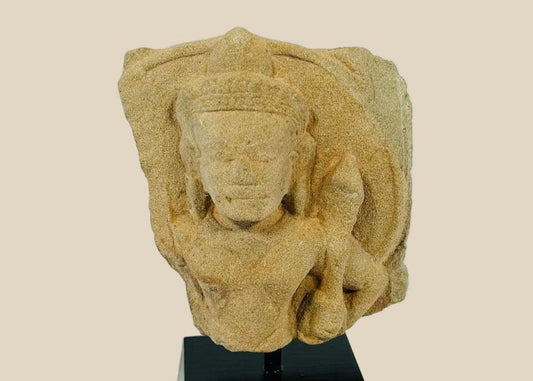

Ancient Near Eastern | Stone Worshipper Votive Figurine | Early Dynastic Period | Circa 2900–2350 B.C.
- Precio habitual
- $700.00
- Precio de venta
- $700.00
- Precio habitual
No se pudo cargar la disponibilidad de retiro


Ancient Near Eastern | Stone Worshipper Votive Figurine | Early Dynastic Period | Circa 2900–2350 B.C.
Descripción
Más
Menos
Historical Context & Origin
Region: Mesopotamia (Ancient Near East)
Material: Carved stone
Period: Early Dynastic Period, circa 2900–2350 B.C.
Description
This ancient carved stone figurine represents a standing worshipper from the Early Dynastic period of Mesopotamia. The figure is depicted with stylized facial features, almond-shaped eyes, and simplified proportions characteristic of early Near Eastern votive sculpture. The individual stands in a formal posture with hands clasped at the chest, possibly holding a small vessel or offering, suggesting a devotional or ritual function.
The figure wears a long robe that extends to the feet, with subtle carving indicating the garment folds. The head is framed by stylized hair or a headdress that falls to the sides, reflecting artistic conventions seen in early Mesopotamian votive figures placed within temples.
Votive sculptures such as this were commonly dedicated in temples by individuals seeking the favor or protection of the gods. These figures symbolically represented the donor in perpetual prayer before the deity. The simplified form and direct frontal stance reflect the sacred function of the sculpture rather than naturalistic representation.
Features
- Carved stone standing worshipper figure
- Hands clasped in devotional posture holding an offering vessel
- Stylized facial features typical of Early Dynastic Mesopotamian sculpture
- Long robe with simplified carved folds
- Natural patina, mineral deposits, and weathering consistent with antiquity
Cultural Significance
In ancient Mesopotamia, votive worshipper figures were placed within temples as offerings to the gods. These sculptures symbolized the donor's eternal presence in prayer before the deity, serving as intermediaries between the human and divine realms. Such figures provide valuable insight into early religious practices, artistic conventions, and social life during the formative periods of Near Eastern civilization.
Condition
Ancient surface wear with mineral accretions, small abrasions, and a visible vertical fissure consistent with age and burial conditions. Structurally stable and well preserved overall.
Dimensions (Approximate)
Height: 4.25 in
Width: 2 in
Depth: 1.2 in
Age (Approximate)
4,000–5,000 years old
Learn More
Explore the development of Early Dynastic Mesopotamian sculpture at The Metropolitan Museum of Art
Browse our Cultural & Ethnographic collection
Descripción
Historical Context & Origin
Region: Mesopotamia (Ancient Near East)
Material: Carved stone
Period: Early Dynastic Period, circa 2900–2350 B.C.
Description
This ancient carved stone figurine represents a standing worshipper from the Early Dynastic period of Mesopotamia. The figure is depicted with stylized facial features, almond-shaped eyes, and simplified proportions characteristic of early Near Eastern votive sculpture. The individual stands in a formal posture with hands clasped at the chest, possibly holding a small vessel or offering, suggesting a devotional or ritual function.
The figure wears a long robe that extends to the feet, with subtle carving indicating the garment folds. The head is framed by stylized hair or a headdress that falls to the sides, reflecting artistic conventions seen in early Mesopotamian votive figures placed within temples.
Votive sculptures such as this were commonly dedicated in temples by individuals seeking the favor or protection of the gods. These figures symbolically represented the donor in perpetual prayer before the deity. The simplified form and direct frontal stance reflect the sacred function of the sculpture rather than naturalistic representation.
Features
- Carved stone standing worshipper figure
- Hands clasped in devotional posture holding an offering vessel
- Stylized facial features typical of Early Dynastic Mesopotamian sculpture
- Long robe with simplified carved folds
- Natural patina, mineral deposits, and weathering consistent with antiquity
Cultural Significance
In ancient Mesopotamia, votive worshipper figures were placed within temples as offerings to the gods. These sculptures symbolized the donor's eternal presence in prayer before the deity, serving as intermediaries between the human and divine realms. Such figures provide valuable insight into early religious practices, artistic conventions, and social life during the formative periods of Near Eastern civilization.
Condition
Ancient surface wear with mineral accretions, small abrasions, and a visible vertical fissure consistent with age and burial conditions. Structurally stable and well preserved overall.
Dimensions (Approximate)
Height: 4.25 in
Width: 2 in
Depth: 1.2 in
Age (Approximate)
4,000–5,000 years old
Learn More
Explore the development of Early Dynastic Mesopotamian sculpture at The Metropolitan Museum of Art
Browse our Cultural & Ethnographic collection
También te puede interesar
