

Fragmento de cabeza de terracota antigua | Artefacto romano/mediterráneo | Siglos I-II
- Precio habitual
- $400.00
- Precio de venta
- $400.00
- Precio habitual
No se pudo cargar la disponibilidad de retiro


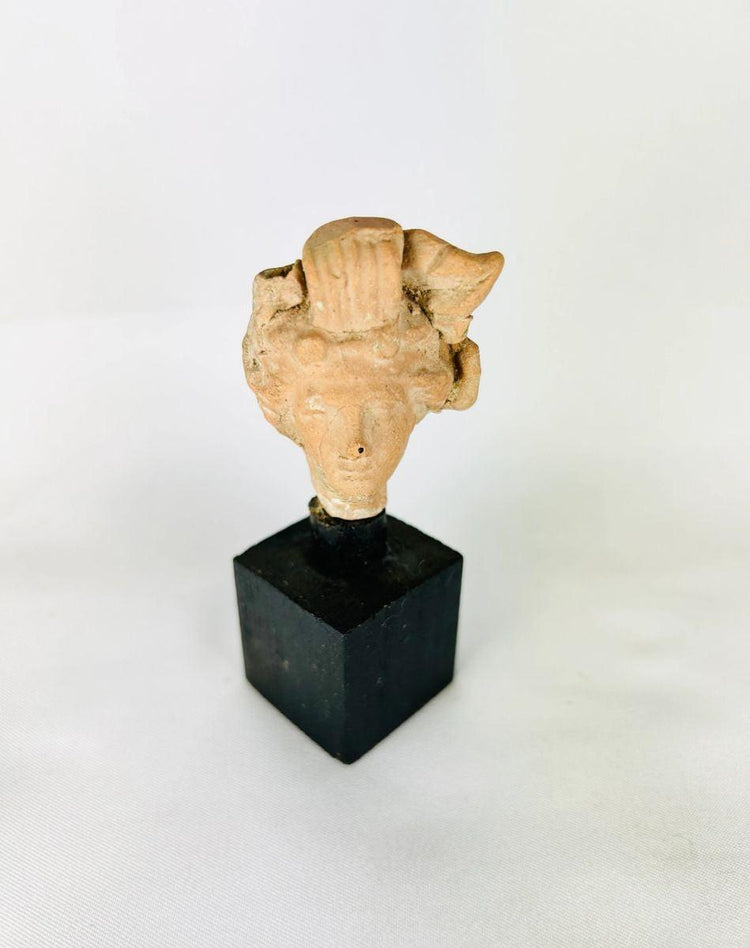


Fragmento de cabeza de terracota antigua | Artefacto romano/mediterráneo | Siglos I-II
Descripción
Más
Menos
Contexto histórico y origen
Región: Mundo grecorromano (probablemente la cuenca mediterránea)
Material: Terracota
Periodo: Helenístico a grecorromano, c. siglos IV-I a.C.
Descripción
Este elegante fragmento de cabeza de terracota, de aproximadamente 3.5 pulgadas de altura, ejemplifica el arte refinado y la estética clásica del mundo mediterráneo antiguo. Probablemente, una vez parte de una figura o estatua votiva más grande, el fragmento pudo haber representado a una deidad, una figura noble o un individuo idealizado. A pesar del desgaste de la superficie, los delicados contornos faciales y los restos de un elaborado peinado o tocado conservan una cualidad expresiva y naturalista que refleja la maestría escultórica de los períodos helenístico y grecorromano. Montado sobre una base negra moderna, se exhibe bellamente como un artefacto y una pieza de arte clásico.
Características
- Detalles faciales expresivos al estilo naturalista helenístico
- Elaborado peinado o tocado que sugiere importancia social o divina
- Construcción en terracota, un medio preferido para figuras votivas y funerarias
- Pátina natural y desgaste de la superficie consistente con el entierro antiguo y la edad
- Montado sobre una base negra moderna para una exhibición segura
Significado cultural
La escultura helenística marcó un punto de inflexión en el arte antiguo, enfatizando el naturalismo, la individualidad y la emoción. Las figurillas de terracota se producían ampliamente en todo el mundo grecorromano, sirviendo a propósitos religiosos, decorativos y funerarios. Este fragmento encarna esa síntesis cultural, combinando formas griegas expresivas con la adopción romana generalizada de la terracota como medio. Tales artefactos proporcionan una visión invaluable de las antiguas tradiciones artísticas, las prácticas devocionales y la estética compartida del mundo clásico.
Condición
Fragmento bien conservado con desgaste superficial y pátina natural. Montado para estabilidad y exhibición.
Dimensiones (aproximadas)
Altura: 3.5 in
Edad (aproximada)
2,025–2,425 años de antigüedad
Aprende más
Explora el Mundo de la Antigua Grecia y Roma
Ver nuestra Colección de artefactos griegos y romanos antiguos
Descripción
Contexto histórico y origen
Región: Mundo grecorromano (probablemente la cuenca mediterránea)
Material: Terracota
Periodo: Helenístico a grecorromano, c. siglos IV-I a.C.
Descripción
Este elegante fragmento de cabeza de terracota, de aproximadamente 3.5 pulgadas de altura, ejemplifica el arte refinado y la estética clásica del mundo mediterráneo antiguo. Probablemente, una vez parte de una figura o estatua votiva más grande, el fragmento pudo haber representado a una deidad, una figura noble o un individuo idealizado. A pesar del desgaste de la superficie, los delicados contornos faciales y los restos de un elaborado peinado o tocado conservan una cualidad expresiva y naturalista que refleja la maestría escultórica de los períodos helenístico y grecorromano. Montado sobre una base negra moderna, se exhibe bellamente como un artefacto y una pieza de arte clásico.
Características
- Detalles faciales expresivos al estilo naturalista helenístico
- Elaborado peinado o tocado que sugiere importancia social o divina
- Construcción en terracota, un medio preferido para figuras votivas y funerarias
- Pátina natural y desgaste de la superficie consistente con el entierro antiguo y la edad
- Montado sobre una base negra moderna para una exhibición segura
Significado cultural
La escultura helenística marcó un punto de inflexión en el arte antiguo, enfatizando el naturalismo, la individualidad y la emoción. Las figurillas de terracota se producían ampliamente en todo el mundo grecorromano, sirviendo a propósitos religiosos, decorativos y funerarios. Este fragmento encarna esa síntesis cultural, combinando formas griegas expresivas con la adopción romana generalizada de la terracota como medio. Tales artefactos proporcionan una visión invaluable de las antiguas tradiciones artísticas, las prácticas devocionales y la estética compartida del mundo clásico.
Condición
Fragmento bien conservado con desgaste superficial y pátina natural. Montado para estabilidad y exhibición.
Dimensiones (aproximadas)
Altura: 3.5 in
Edad (aproximada)
2,025–2,425 años de antigüedad
Aprende más
Explora el Mundo de la Antigua Grecia y Roma
Ver nuestra Colección de artefactos griegos y romanos antiguos
También te puede interesar
