

Antique Japanese Kayaku-Ire Gunpowder Flask with Floral Metalwork | Meiji Period, Circa 1868 – 1912
- Precio habitual
- $1,350.00
- Precio de venta
- $1,350.00
- Precio habitual
No se pudo cargar la disponibilidad de retiro






Antique Japanese Kayaku-Ire Gunpowder Flask with Floral Metalwork | Meiji Period, Circa 1868 – 1912
Descripción
Más
Menos
Historical Context & Origin
Region: Japan
Material: Textured lacquered body, likely leather over a rigid core, with dark-patinated and silver-coloured mixed-metal fittings
Period: Meiji Period, circa 1868–1912
Description
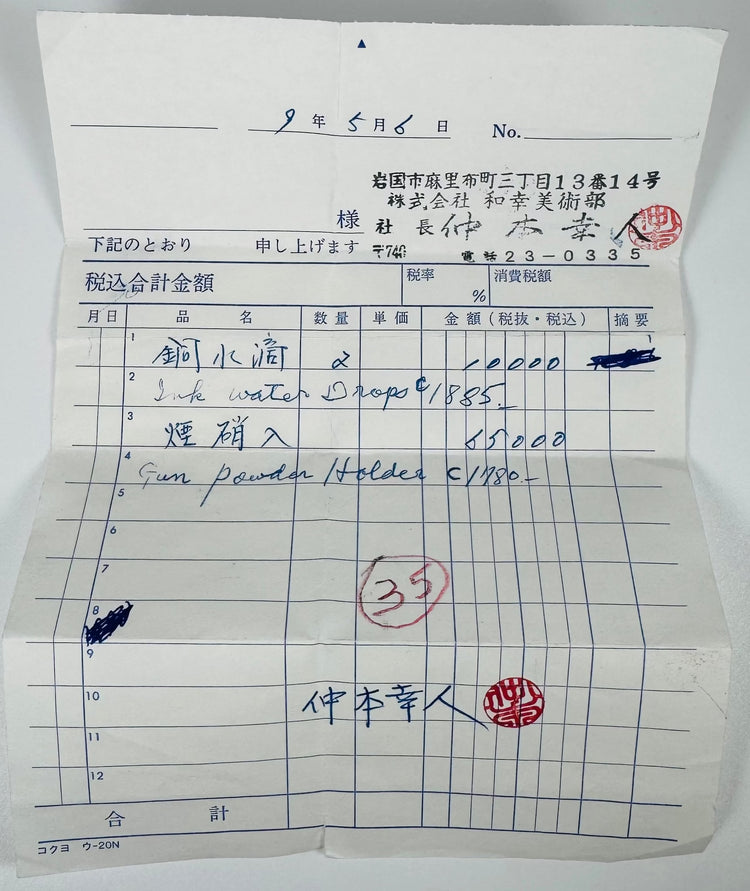
An antique Japanese kayaku-ire, or gunpowder flask, dating to the Meiji Period. The accompanying Japanese dealer paperwork describes the object as an enshō-ire (煙硝入), an older term for a container intended to hold gunpowder.
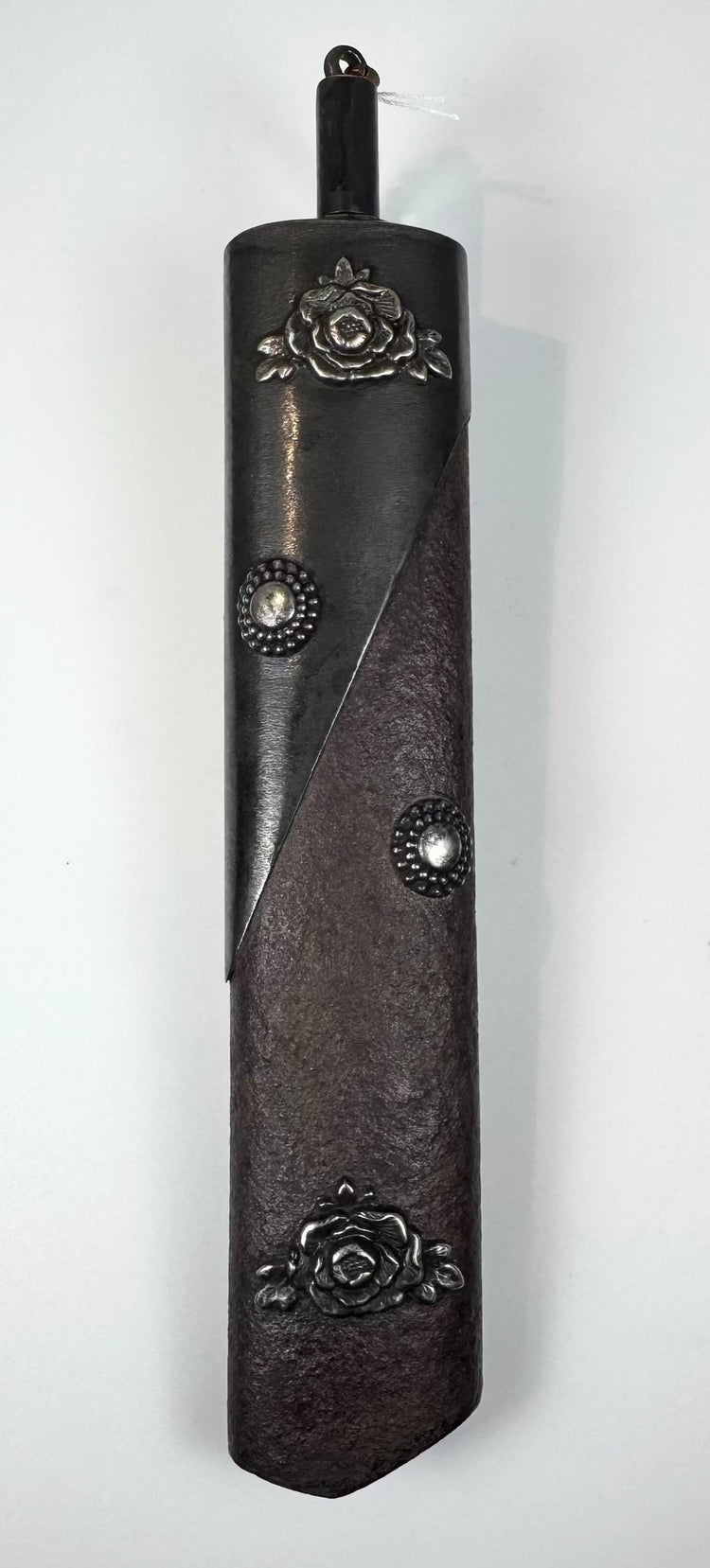
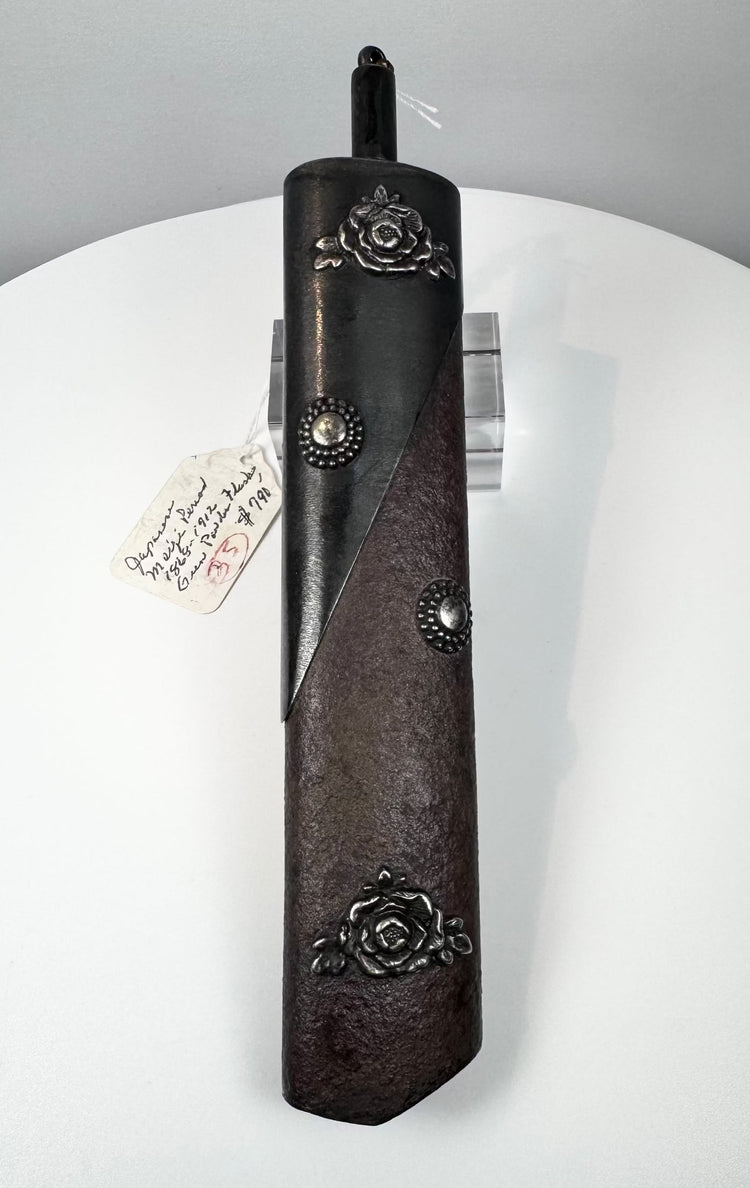
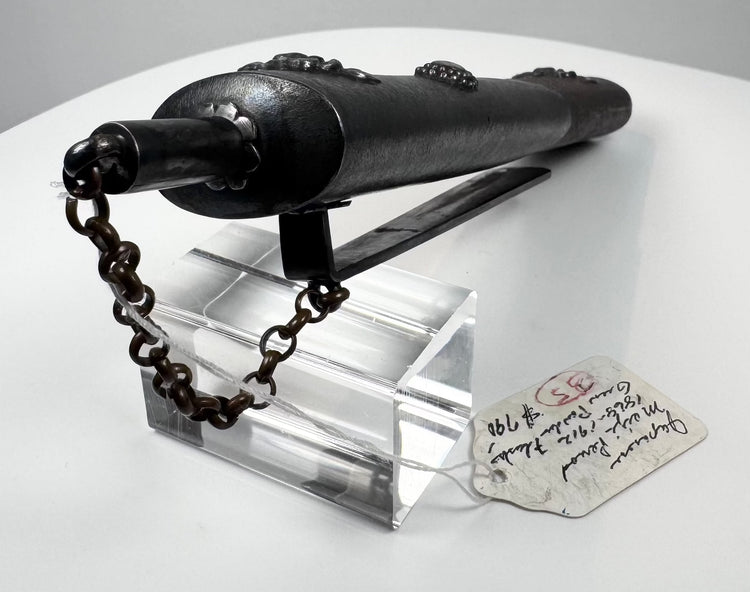
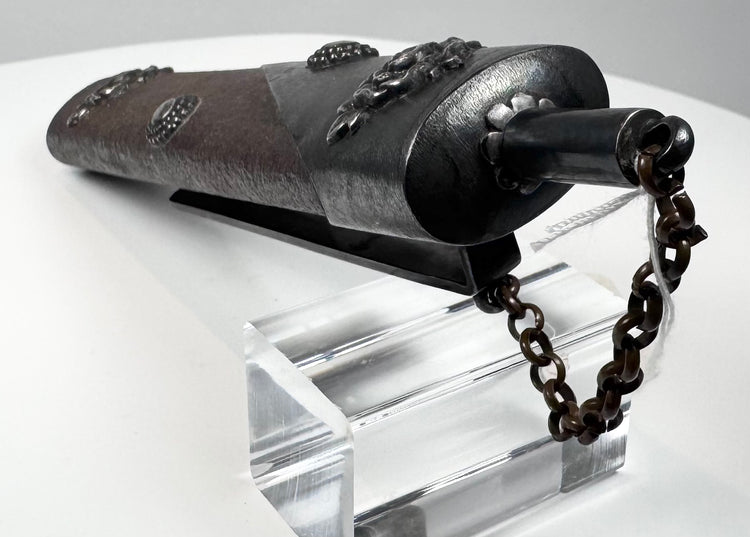
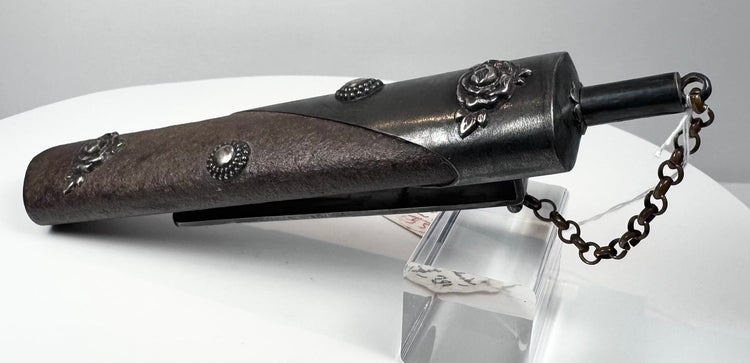
The flask possesses a distinctive long, flattened form resembling a small dagger scabbard. Its body displays a richly textured reddish-brown surface partially enclosed by smooth, dark-patinated metalwork. This contrasting finish gives the flask both utilitarian strength and an unusually refined decorative character.
The front is embellished with two raised silver-coloured floral appliqués resembling peony blossoms, accompanied by two circular bosses surrounded by beaded borders. A narrow cylindrical dispensing spout projects from the upper end, where it is joined by an aged linked-metal chain intended to secure the closure and prevent its loss.
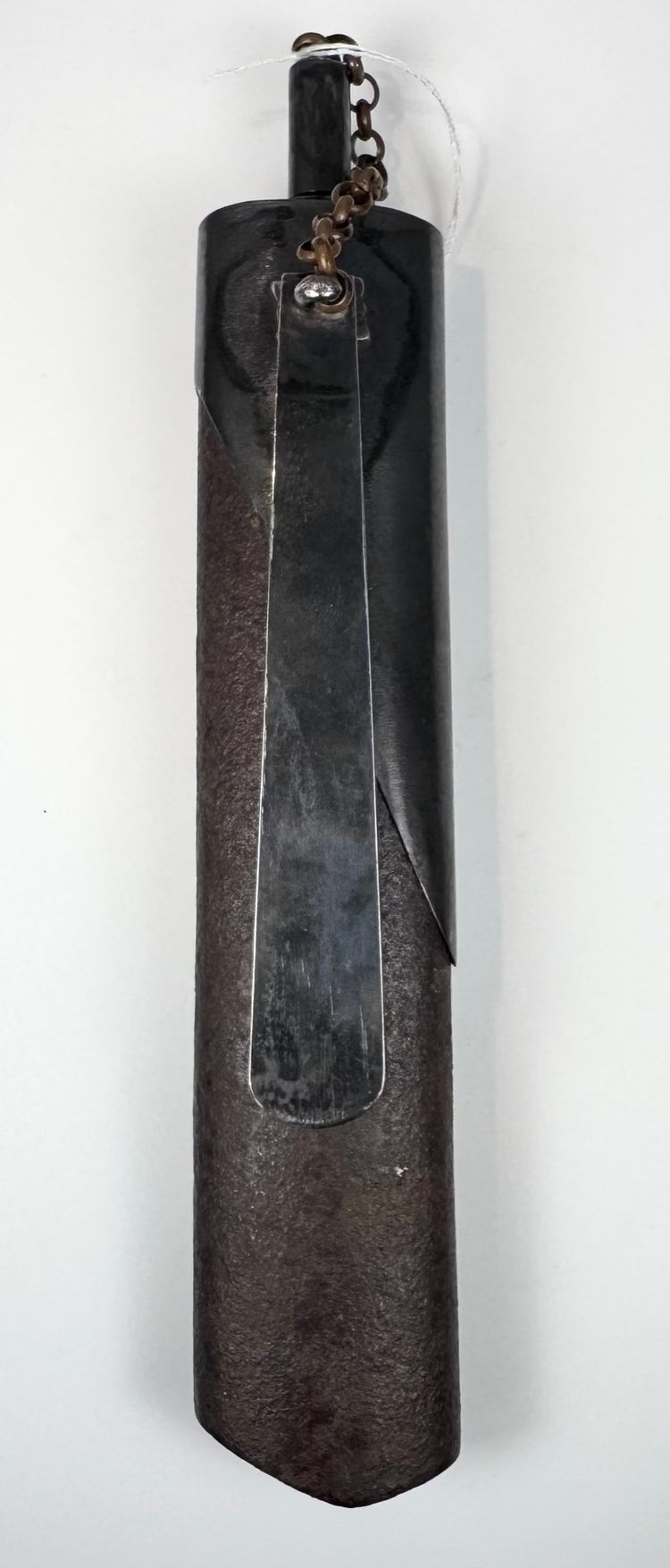
A long metal clip or suspension fitting extends along the reverse. This would have allowed the flask to be secured at the wearer’s waist, potentially passed through an obi or attached to other firearm equipment. The slender profile was particularly well suited to being carried close to the body.
Although traditionally associated with Japanese matchlock culture, powder flasks were used by several classes of firearm owners, including warriors and hunters.
Features
- Meiji Period dating retained on the old identification tag
- Long, flattened dagger-scabbard form
- Textured reddish-brown lacquered body
- Smooth dark-patinated mixed-metal covering
- Two raised silver-coloured floral appliqués
- Two decorative circular bosses with beaded borders
- Narrow cylindrical powder-dispensing spout
- Surviving linked-metal securing chain
- Long reverse clip or suspension fitting
- Accompanied by original Japanese dealer documentation
Cultural Significance
Matchlock firearms were introduced to Japan by Portuguese traders during the 16th century and were rapidly incorporated into Japanese warfare. These weapons became known as tanegashima or teppō and were employed by samurai, foot soldiers, guards, and hunters.
Gunpowder flasks formed an essential part of the equipment required to operate a muzzle-loading firearm. They allowed loose powder to be carried securely and dispensed through a narrow spout when preparing a charge or priming the firing pan.
During the Meiji Period, Japan underwent extensive military and technological modernization. Traditional matchlocks and their accessories were gradually displaced by breech-loading firearms and self-contained metallic cartridges. Surviving Meiji-period powder flasks consequently represent the closing chapter of a firearms tradition that had shaped Japanese military history for more than three centuries.
The flask’s decorative floral metalwork also illustrates the Japanese tendency to transform functional personal equipment into carefully ornamented objects reflecting the owner’s taste and status.
Condition
Good antique condition consistent with age and historical use. The flask displays surface wear, scratches, rubbing, oxidation, patination, and minor abrasions. The textured body exhibits areas of wear and discolouration, while the floral appliqués, bosses, chain, spout, and reverse suspension fitting display age-related tarnishing.
The accompanying paper documents exhibit folds, creasing, staining, handwriting, edge wear, and general deterioration consistent with their age. The flask’s interior has not been tested for historic powder residue, and the piece is offered strictly as a historical collector’s object rather than for functional use.
Dimensions (Approximate)
Length: 7.5 in
Width: 1.5 in
Age (Approximate)
114–158 years old
Provenance
Accompanied by an original Japanese itemized dealer document dated May 6, 1997—Heisei 9—issued by Wakō Co., Ltd., Fine Art Department (株式会社和幸 美術部), formerly located at 3-13-14 Marifumachi, Iwakuni, Yamaguchi Prefecture, Japan.
The relevant entry identifies the object as an enshō-ire (煙硝入), translated as “gunpowder container” or “gunpowder flask,” and records a price of ¥65,000.
The flask also retains an old handwritten collector or dealer tag identifying it as a “Japanese Meiji Period 1868–1912 Gun Powder Flask.” The tag bears a former price notation of $790, currency unspecified, and a circled inventory number 35.
Subsequently sold through Waddington’s Auctioneers & Appraisers, Toronto, Ontario, Canada. Established in 1850, Waddington’s is a longstanding Canadian auction house with specialist departments devoted to Asian and international art.
Learn More
Discover a comparable long, scabbard-form Japanese kayaku-ire dating to the Late Edo or Early Meiji Period in the collection of the Royal Armouries
Explore our Collection of Historical Arms & Armour
Descripción
Historical Context & Origin
Region: Japan
Material: Textured lacquered body, likely leather over a rigid core, with dark-patinated and silver-coloured mixed-metal fittings
Period: Meiji Period, circa 1868–1912
Description
An antique Japanese kayaku-ire, or gunpowder flask, dating to the Meiji Period. The accompanying Japanese dealer paperwork describes the object as an enshō-ire (煙硝入), an older term for a container intended to hold gunpowder.
The flask possesses a distinctive long, flattened form resembling a small dagger scabbard. Its body displays a richly textured reddish-brown surface partially enclosed by smooth, dark-patinated metalwork. This contrasting finish gives the flask both utilitarian strength and an unusually refined decorative character.
The front is embellished with two raised silver-coloured floral appliqués resembling peony blossoms, accompanied by two circular bosses surrounded by beaded borders. A narrow cylindrical dispensing spout projects from the upper end, where it is joined by an aged linked-metal chain intended to secure the closure and prevent its loss.
A long metal clip or suspension fitting extends along the reverse. This would have allowed the flask to be secured at the wearer’s waist, potentially passed through an obi or attached to other firearm equipment. The slender profile was particularly well suited to being carried close to the body.
Although traditionally associated with Japanese matchlock culture, powder flasks were used by several classes of firearm owners, including warriors and hunters.
Features
- Meiji Period dating retained on the old identification tag
- Long, flattened dagger-scabbard form
- Textured reddish-brown lacquered body
- Smooth dark-patinated mixed-metal covering
- Two raised silver-coloured floral appliqués
- Two decorative circular bosses with beaded borders
- Narrow cylindrical powder-dispensing spout
- Surviving linked-metal securing chain
- Long reverse clip or suspension fitting
- Accompanied by original Japanese dealer documentation
Cultural Significance
Matchlock firearms were introduced to Japan by Portuguese traders during the 16th century and were rapidly incorporated into Japanese warfare. These weapons became known as tanegashima or teppō and were employed by samurai, foot soldiers, guards, and hunters.
Gunpowder flasks formed an essential part of the equipment required to operate a muzzle-loading firearm. They allowed loose powder to be carried securely and dispensed through a narrow spout when preparing a charge or priming the firing pan.
During the Meiji Period, Japan underwent extensive military and technological modernization. Traditional matchlocks and their accessories were gradually displaced by breech-loading firearms and self-contained metallic cartridges. Surviving Meiji-period powder flasks consequently represent the closing chapter of a firearms tradition that had shaped Japanese military history for more than three centuries.
The flask’s decorative floral metalwork also illustrates the Japanese tendency to transform functional personal equipment into carefully ornamented objects reflecting the owner’s taste and status.
Condition
Good antique condition consistent with age and historical use. The flask displays surface wear, scratches, rubbing, oxidation, patination, and minor abrasions. The textured body exhibits areas of wear and discolouration, while the floral appliqués, bosses, chain, spout, and reverse suspension fitting display age-related tarnishing.
The accompanying paper documents exhibit folds, creasing, staining, handwriting, edge wear, and general deterioration consistent with their age. The flask’s interior has not been tested for historic powder residue, and the piece is offered strictly as a historical collector’s object rather than for functional use.
Dimensions (Approximate)
Length: 7.5 in
Width: 1.5 in
Age (Approximate)
114–158 years old
Provenance
Accompanied by an original Japanese itemized dealer document dated May 6, 1997—Heisei 9—issued by Wakō Co., Ltd., Fine Art Department (株式会社和幸 美術部), formerly located at 3-13-14 Marifumachi, Iwakuni, Yamaguchi Prefecture, Japan.
The relevant entry identifies the object as an enshō-ire (煙硝入), translated as “gunpowder container” or “gunpowder flask,” and records a price of ¥65,000.
The flask also retains an old handwritten collector or dealer tag identifying it as a “Japanese Meiji Period 1868–1912 Gun Powder Flask.” The tag bears a former price notation of $790, currency unspecified, and a circled inventory number 35.
Subsequently sold through Waddington’s Auctioneers & Appraisers, Toronto, Ontario, Canada. Established in 1850, Waddington’s is a longstanding Canadian auction house with specialist departments devoted to Asian and international art.
Learn More
Discover a comparable long, scabbard-form Japanese kayaku-ire dating to the Late Edo or Early Meiji Period in the collection of the Royal Armouries
Explore our Collection of Historical Arms & Armour
También te puede interesar
