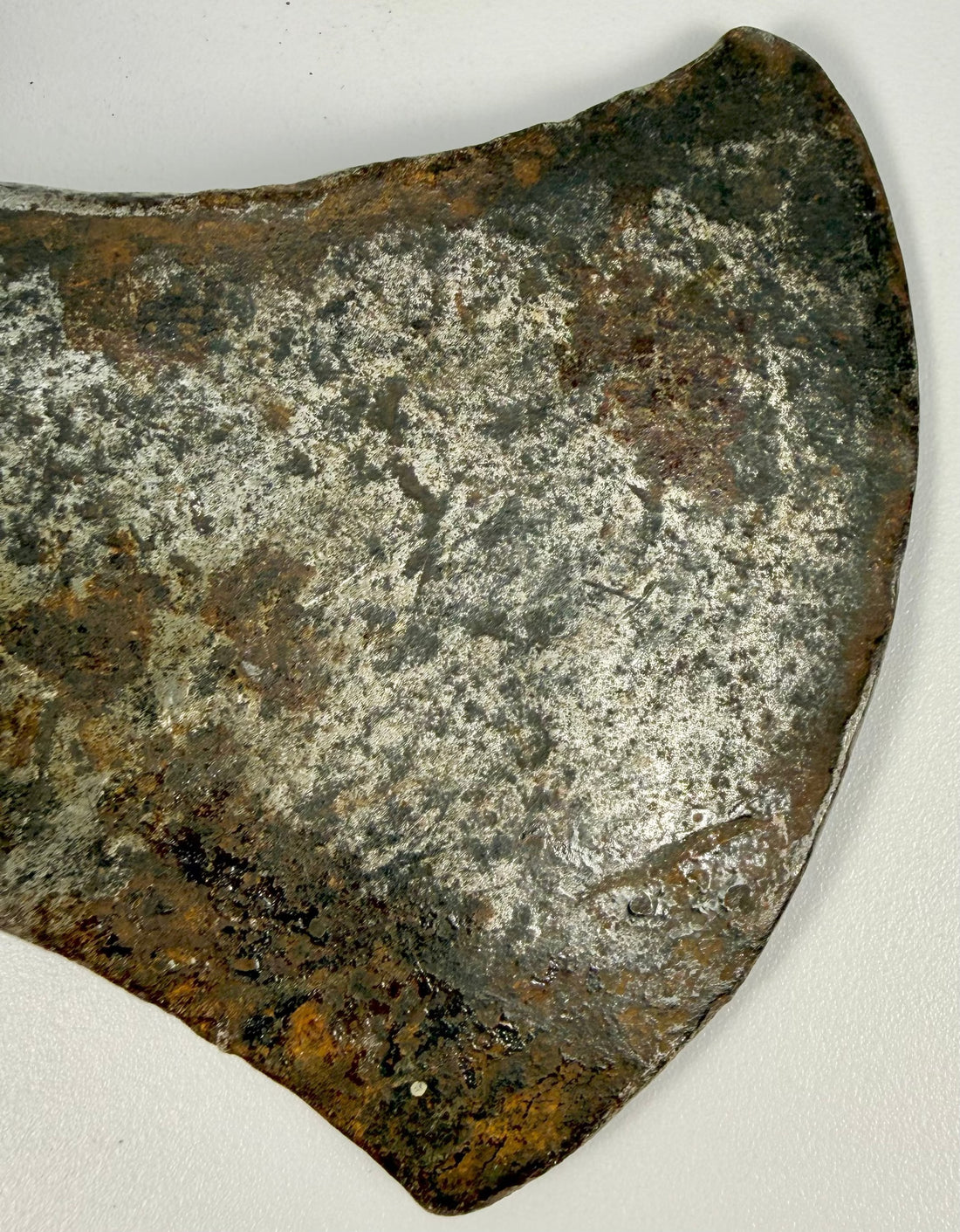
Cabeza de hacha de la época fronteriza | Herramienta de corte de madera de hierro forjado a mano | América del Norte, siglo XIX

Historial de procedencia y propiedad

Anteriormente en una colección privada en Los Ángeles, California, EE. UU.

Precio habitual
$225.00
Precio de venta
$225.00
Precio habitual
Envío calculado al finalizar la compra.

This is a one-of-a-kind historical object. Once sold, this exact piece will not be restocked.

Questions before acquiring? Additional photographs, condition details, documentation, shipping information or a private viewing are available upon request.
Antique 19th-century North American axe head, hand-forged iron with weathered patina and signs of historic use.
360-degree rotating view of a 19th-century North American frontier-era axe head, highlighting its hand-forged iron construction, distinctive cutting blade, weathered metal surface, and traditional blacksmith craftsmanship from multiple angles.
Antique 19th-century North American forged iron axe head with a tapered cutting edge and naturally aged patina.
Historic North American iron axe head from the 1800s featuring traditional blacksmith craftsmanship and sturdy construction.
Nineteenth-century hand-forged iron axe head with a compact design and distinctive eye socket for a wooden handle.
Antique North American frontier axe head featuring a tapered blade, weathered iron surface, and traditional craftsmanship.
Historic 1800s forged iron woodworking axe head with natural surface pitting and a rich dark patina.
Antique North American iron axe head featuring hand-forged construction and a traditional timber-cutting design.
Nineteenth-century frontier-era axe head crafted from forged iron with a reinforced socket and aged metal surface.
Historic North American blacksmith-made axe head featuring a tapered cutting edge and signs of prolonged use.
Antique 19th-century forged iron axe head with traditional eye socket construction and weathered surface texture.
North American frontier-era iron axe head displaying historic wear, natural oxidation, and practical hand-forged design.
Antique forged iron axe head from the 1800s featuring a compact profile, sturdy body, and aged patina.
Historic 19th-century North American timber-working axe head with a tapered blade and traditional iron construction.
Antique hand-forged iron axe head featuring a darkened surface, scattered pitting, and traditional blacksmith detailing.
  • Antique 19th-century North American axe head, hand-forged iron with weathered patina and signs of historic use.
  • 360-degree rotating view of a 19th-century North American frontier-era axe head, highlighting its hand-forged iron construction, distinctive cutting blade, weathered metal surface, and traditional blacksmith craftsmanship from multiple angles.
  • Antique 19th-century North American forged iron axe head with a tapered cutting edge and naturally aged patina.
  • Historic North American iron axe head from the 1800s featuring traditional blacksmith craftsmanship and sturdy construction.
  • Nineteenth-century hand-forged iron axe head with a compact design and distinctive eye socket for a wooden handle.
  • Antique North American frontier axe head featuring a tapered blade, weathered iron surface, and traditional craftsmanship.
  • Historic 1800s forged iron woodworking axe head with natural surface pitting and a rich dark patina.
  • Antique North American iron axe head featuring hand-forged construction and a traditional timber-cutting design.
  • Nineteenth-century frontier-era axe head crafted from forged iron with a reinforced socket and aged metal surface.
  • Historic North American blacksmith-made axe head featuring a tapered cutting edge and signs of prolonged use.
  • Antique 19th-century forged iron axe head with traditional eye socket construction and weathered surface texture.
  • North American frontier-era iron axe head displaying historic wear, natural oxidation, and practical hand-forged design.
  • Antique forged iron axe head from the 1800s featuring a compact profile, sturdy body, and aged patina.
  • Historic 19th-century North American timber-working axe head with a tapered blade and traditional iron construction.
  • Antique hand-forged iron axe head featuring a darkened surface, scattered pitting, and traditional blacksmith detailing.
Antique 19th-century North American axe head, hand-forged iron with weathered patina and signs of historic use.
360-degree rotating view of a 19th-century North American frontier-era axe head, highlighting its hand-forged iron construction, distinctive cutting blade, weathered metal surface, and traditional blacksmith craftsmanship from multiple angles.
Antique 19th-century North American forged iron axe head with a tapered cutting edge and naturally aged patina.
Historic North American iron axe head from the 1800s featuring traditional blacksmith craftsmanship and sturdy construction.
Nineteenth-century hand-forged iron axe head with a compact design and distinctive eye socket for a wooden handle.
Antique North American frontier axe head featuring a tapered blade, weathered iron surface, and traditional craftsmanship.
Historic 1800s forged iron woodworking axe head with natural surface pitting and a rich dark patina.
Antique North American iron axe head featuring hand-forged construction and a traditional timber-cutting design.
Nineteenth-century frontier-era axe head crafted from forged iron with a reinforced socket and aged metal surface.
Historic North American blacksmith-made axe head featuring a tapered cutting edge and signs of prolonged use.
Antique 19th-century forged iron axe head with traditional eye socket construction and weathered surface texture.
North American frontier-era iron axe head displaying historic wear, natural oxidation, and practical hand-forged design.
Antique forged iron axe head from the 1800s featuring a compact profile, sturdy body, and aged patina.
Historic 19th-century North American timber-working axe head with a tapered blade and traditional iron construction.
Antique hand-forged iron axe head featuring a darkened surface, scattered pitting, and traditional blacksmith detailing.
Authenticity and secure checkout guarantee

Cabeza de hacha de la época fronteriza | Herramienta de corte de madera de hierro forjado a mano | América del Norte, siglo XIX

Descripción

Contexto histórico y origen

Región: América del Norte
Material: Hierro forjado
Período: Siglo XIX (c. 1800)

Descripción

Esta auténtica cabeza de hacha de hierro forjado data del siglo XIX, un período en el que los colonos y trabajadores de toda América del Norte dependían en gran medida de herramientas duraderas para subsistir en la frontera. Probablemente utilizada para la tala de madera, la agricultura y la construcción, esta cabeza de hacha encarna la resiliencia y el ingenio de los primeros colonos que talaron bosques, construyeron casas y cultivaron la tierra. Su forma —un filo cónico con un ojo forjado a mano— representa la destreza práctica de los herreros rurales, cuyo trabajo era esencial para la supervivencia diaria.

Características

- Forjado a mano con un borde cónico para un corte eficiente

- Distinta cavidad ocular diseñada para asegurar un mango de madera

- Construcción compacta pero robusta, típica de las herramientas de la frontera del siglo XIX

- Superficie envejecida con picaduras y pátina por el uso extensivo

Importancia cultural

Más allá de su función utilitaria, esta cabeza de hacha simboliza el espíritu de la vida pionera en América del Norte. Los herreros proporcionaban herramientas como estas como una necesidad vital para el asentamiento, la agricultura y la construcción. Cada marca de desgaste habla de su papel en la formación de las primeras comunidades del siglo XIX.

Estado

La cabeza de hacha se encuentra en un estado antiguo estable, con una pátina rica y oscura y picaduras dispersas, consistentes con la edad. Las marcas de desgaste por el uso repetido son visibles a lo largo del borde y el cuerpo, lo que realza su autenticidad como herramienta de trabajo de la época. A pesar de su larga vida útil, sigue siendo estructuralmente sólida, sin reparaciones modernas.

Dimensiones (aproximadas)

Longitud: 5 pulgadas

Edad (aproximada)

150-200 años

Procedencia 

Anteriormente en una colección privada en Los Ángeles, California, EE. UU.

Más información

Explore la historia jamás contada del hacha a través de los tiempos

Examine nuestra colección de hachas históricas

Descripción

Contexto histórico y origen

Región: América del Norte
Material: Hierro forjado
Período: Siglo XIX (c. 1800)

Descripción

Esta auténtica cabeza de hacha de hierro forjado data del siglo XIX, un período en el que los colonos y trabajadores de toda América del Norte dependían en gran medida de herramientas duraderas para subsistir en la frontera. Probablemente utilizada para la tala de madera, la agricultura y la construcción, esta cabeza de hacha encarna la resiliencia y el ingenio de los primeros colonos que talaron bosques, construyeron casas y cultivaron la tierra. Su forma —un filo cónico con un ojo forjado a mano— representa la destreza práctica de los herreros rurales, cuyo trabajo era esencial para la supervivencia diaria.

Características

- Forjado a mano con un borde cónico para un corte eficiente

- Distinta cavidad ocular diseñada para asegurar un mango de madera

- Construcción compacta pero robusta, típica de las herramientas de la frontera del siglo XIX

- Superficie envejecida con picaduras y pátina por el uso extensivo

Importancia cultural

Más allá de su función utilitaria, esta cabeza de hacha simboliza el espíritu de la vida pionera en América del Norte. Los herreros proporcionaban herramientas como estas como una necesidad vital para el asentamiento, la agricultura y la construcción. Cada marca de desgaste habla de su papel en la formación de las primeras comunidades del siglo XIX.

Estado

La cabeza de hacha se encuentra en un estado antiguo estable, con una pátina rica y oscura y picaduras dispersas, consistentes con la edad. Las marcas de desgaste por el uso repetido son visibles a lo largo del borde y el cuerpo, lo que realza su autenticidad como herramienta de trabajo de la época. A pesar de su larga vida útil, sigue siendo estructuralmente sólida, sin reparaciones modernas.

Dimensiones (aproximadas)

Longitud: 5 pulgadas

Edad (aproximada)

150-200 años

Procedencia 

Anteriormente en una colección privada en Los Ángeles, California, EE. UU.

Más información

Explore la historia jamás contada del hacha a través de los tiempos

Examine nuestra colección de hachas históricas

También te puede interesar