



Escritorio portátil antiguo con tintero y compartimentos para papelería integrados | Principios del siglo XX
- Precio habitual
- $300.00
- Precio de venta
- $300.00
- Precio habitual
No se pudo cargar la disponibilidad de retiro


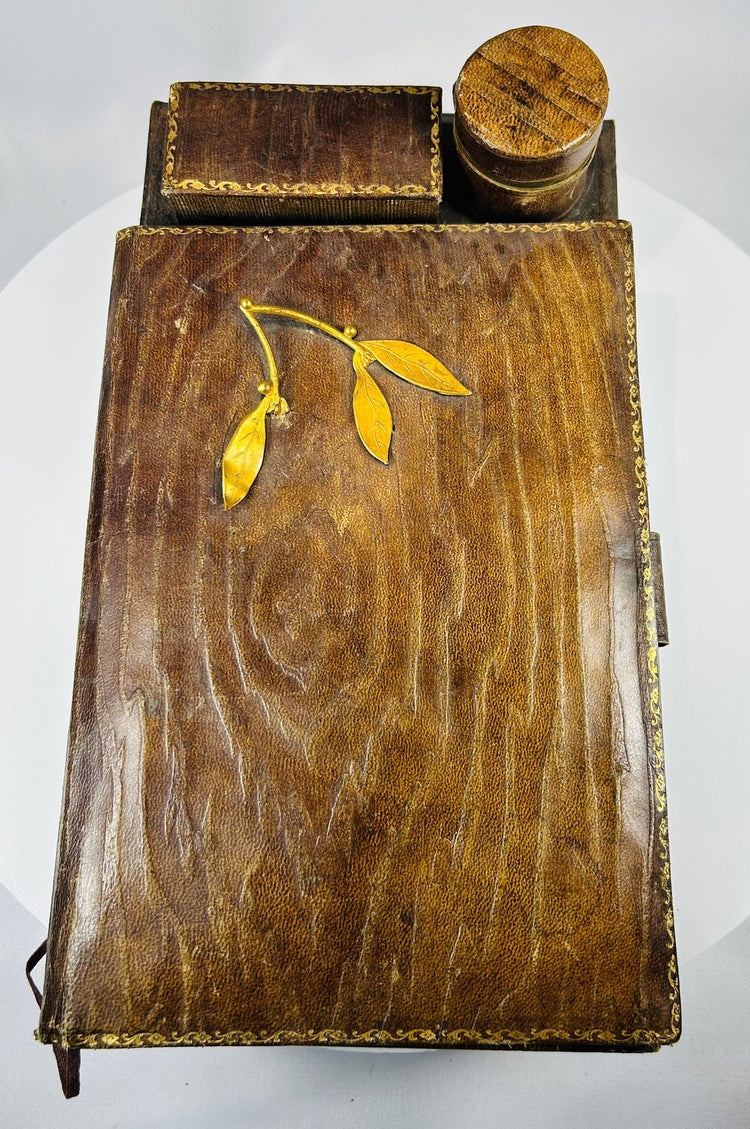
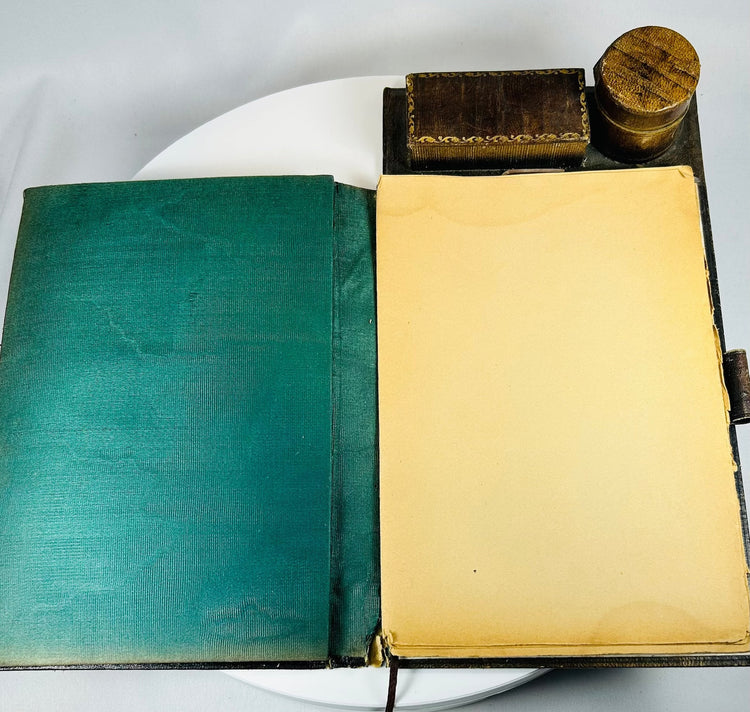
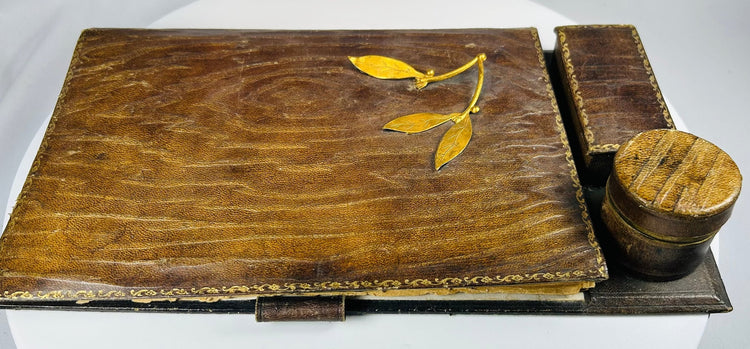
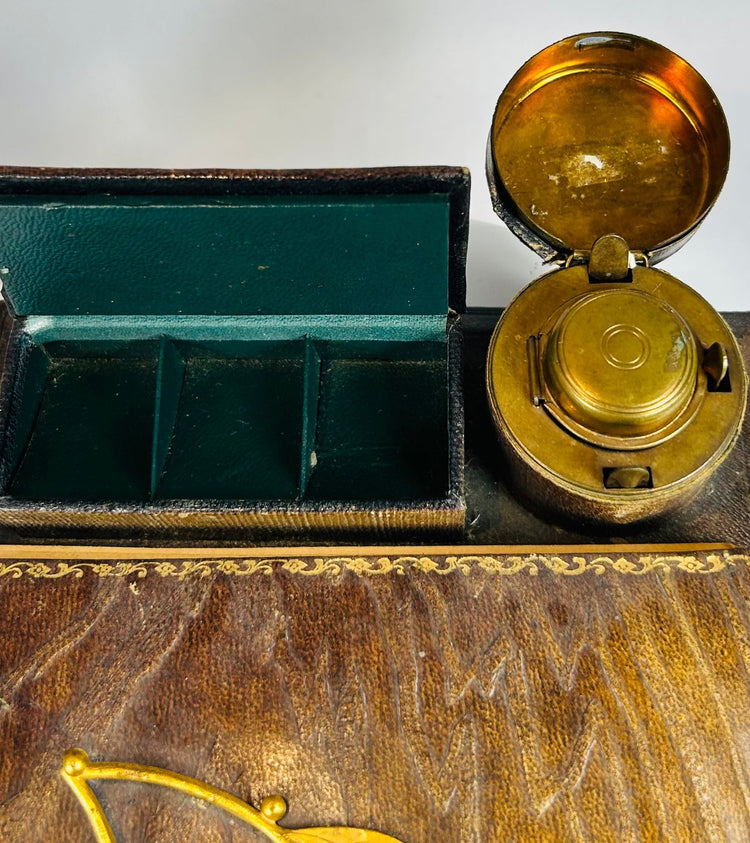
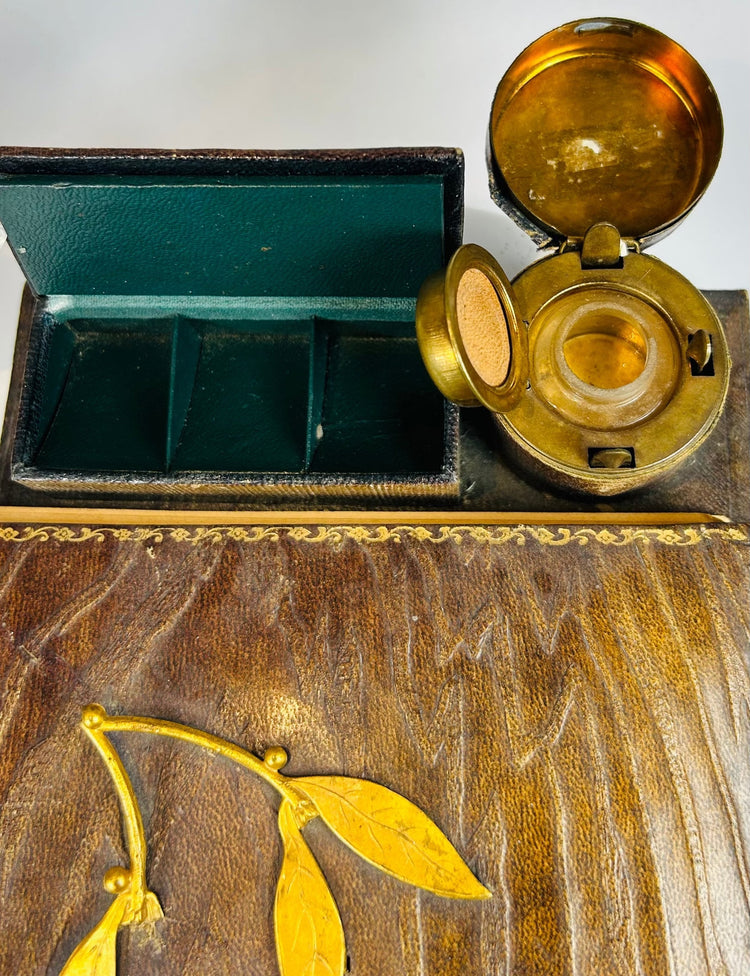
Escritorio portátil antiguo con tintero y compartimentos para papelería integrados | Principios del siglo XX
Descripción
Más
Menos
Contexto histórico y origen
Región: Europa o Norteamérica
Material: Madera revestida en cuero, montura de metal dorado (hoja decorativa), componentes de tintero de latón y vidrio, interior forrado en tela
Período: Circa 1900–1930
Descripción
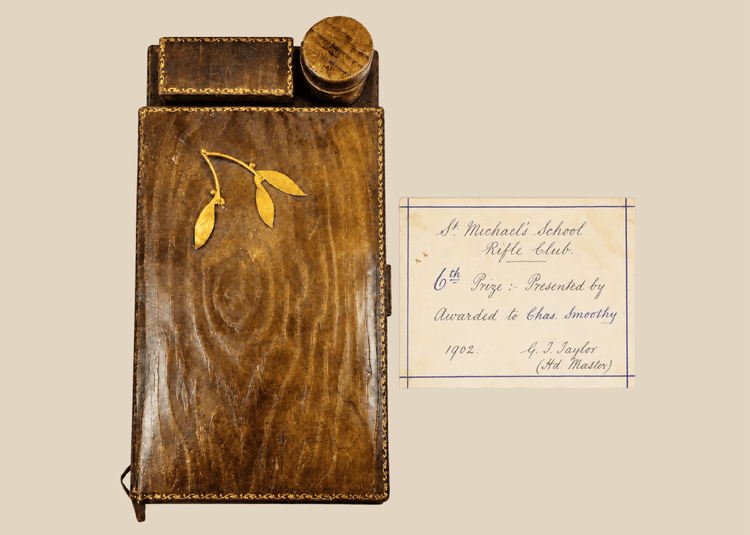
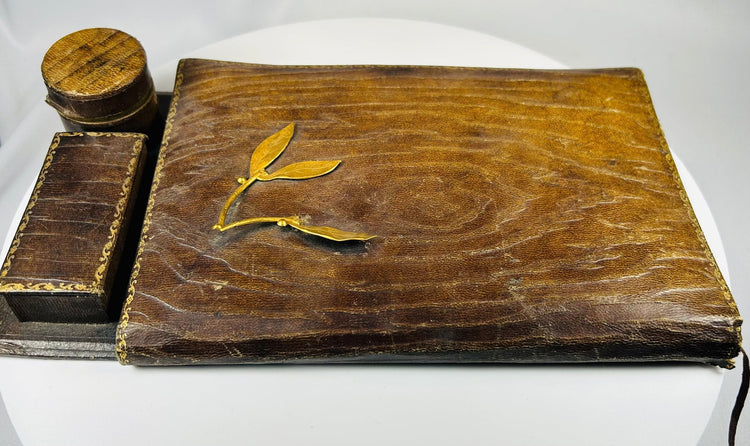
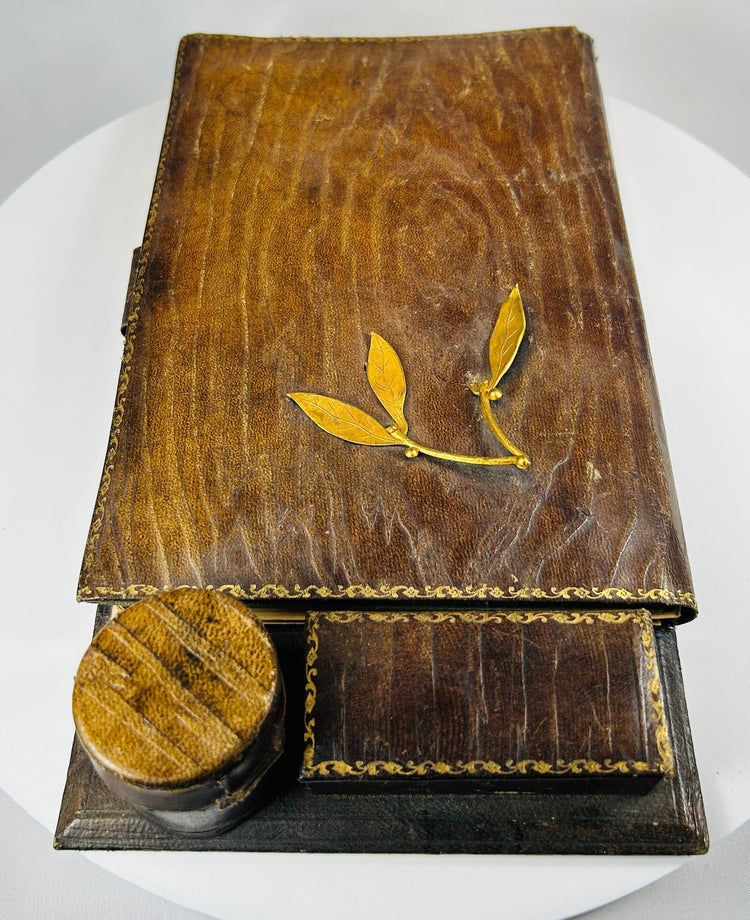
Este elegante atril de escritura antiguo representa un refinado ejemplo de la artesanía de escritorio portátil de principios del siglo XX, diseñado para combinar funcionalidad con atractivo estético. Construido en madera y cubierto con cuero marrón de rica veta, el exterior está acentuado con un delicado labrado de bordes dorados y un motivo de hoja de metal aplicado decorativo, lo que le confiere una sutil influencia Art Nouveau.
La superficie de escritura se abre para revelar un interior acondicionado, que incluye un compartimento para papel y almacenamiento integrado para utensilios de escritura. En la sección superior, una bandeja empotrada alberga un tintero con tapa con herrajes de latón y un depósito interno de vidrio, junto a un compartimento dividido probablemente destinado a sellos, plumillas o pequeños accesorios de escritorio.
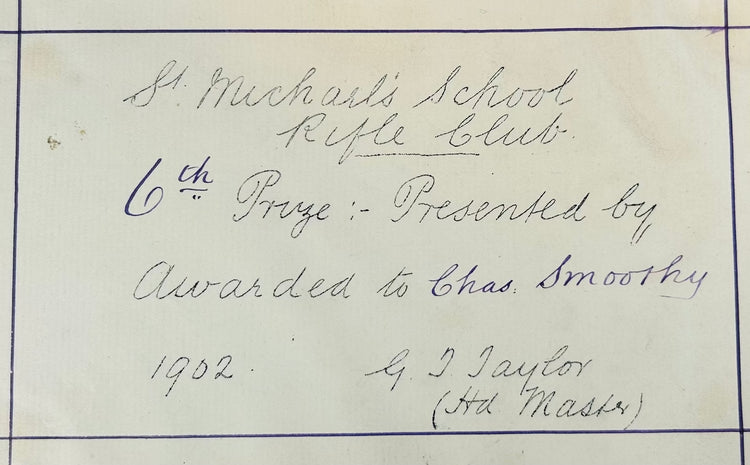
Una característica particularmente notable es la presencia de una inscripción de presentación manuscrita claramente legible adherida en el interior. Registra que el atril de escritura fue otorgado como premio en 1902 por el Club de Tiro de la Escuela St. Michael, presentado por un individuo identificado como G. J. Taylor, señalado como el Profesor de Arte, añadiendo una capa única de procedencia histórica y narrativa personal a la pieza.
Compacto pero altamente funcional, este atril de escritura habría servido como una estación de escritura personal para la correspondencia en casa o mientras se viajaba, reflejando un período en el que la comunicación manuscrita seguía siendo central en la vida diaria.
Características
- Diseño de atril de escritura plegable con exterior revestido en cuero
- Labrado dorado decorativo y motivo de hoja de metal aplicado
- Tintero integrado con montura de latón y depósito interno
- Compartimentos de almacenamiento divididos para papelería y accesorios
- Interior forrado en tela para almacenamiento de documentos
- Formato de escritorio compacto y portátil
Significado cultural
Los atriles de escritura como este eran artículos personales esenciales a finales del siglo XIX y principios del XX, utilizados para escribir cartas, llevar registros y la correspondencia diaria.
Representan un momento de transición en la historia de la comunicación —justo antes de la adopción generalizada de las máquinas de escribir y las herramientas de oficina modernas— cuando la artesanía y la portabilidad se combinaban para satisfacer las necesidades de una sociedad alfabetizada y cada vez más móvil.
Estado
Buen estado antiguo con desgaste visible consistente con la edad y el uso. El exterior de cuero muestra rozaduras y pátina naturales. Los compartimentos interiores permanecen intactos, con ligero desgaste en el forro y las superficies. Los componentes del tintero están presentes con la oxidación esperada y residuos relacionados con el uso.
Dimensiones (aproximadas)
Largo: 11 pulgadas
Ancho: 6 pulgadas
Edad (aproximada)
90-120 años
Procedencia
Colección privada de Toronto, ON, Canadá.
Más información
Explore la historia y función de los atriles de escritura a través del Museo Cowper y Newton
Explore nuestra Colección de Artefactos del Siglo XX
Descripción
Contexto histórico y origen
Región: Europa o Norteamérica
Material: Madera revestida en cuero, montura de metal dorado (hoja decorativa), componentes de tintero de latón y vidrio, interior forrado en tela
Período: Circa 1900–1930
Descripción
Este elegante atril de escritura antiguo representa un refinado ejemplo de la artesanía de escritorio portátil de principios del siglo XX, diseñado para combinar funcionalidad con atractivo estético. Construido en madera y cubierto con cuero marrón de rica veta, el exterior está acentuado con un delicado labrado de bordes dorados y un motivo de hoja de metal aplicado decorativo, lo que le confiere una sutil influencia Art Nouveau.
La superficie de escritura se abre para revelar un interior acondicionado, que incluye un compartimento para papel y almacenamiento integrado para utensilios de escritura. En la sección superior, una bandeja empotrada alberga un tintero con tapa con herrajes de latón y un depósito interno de vidrio, junto a un compartimento dividido probablemente destinado a sellos, plumillas o pequeños accesorios de escritorio.
Una característica particularmente notable es la presencia de una inscripción de presentación manuscrita claramente legible adherida en el interior. Registra que el atril de escritura fue otorgado como premio en 1902 por el Club de Tiro de la Escuela St. Michael, presentado por un individuo identificado como G. J. Taylor, señalado como el Profesor de Arte, añadiendo una capa única de procedencia histórica y narrativa personal a la pieza.
Compacto pero altamente funcional, este atril de escritura habría servido como una estación de escritura personal para la correspondencia en casa o mientras se viajaba, reflejando un período en el que la comunicación manuscrita seguía siendo central en la vida diaria.
Características
- Diseño de atril de escritura plegable con exterior revestido en cuero
- Labrado dorado decorativo y motivo de hoja de metal aplicado
- Tintero integrado con montura de latón y depósito interno
- Compartimentos de almacenamiento divididos para papelería y accesorios
- Interior forrado en tela para almacenamiento de documentos
- Formato de escritorio compacto y portátil
Significado cultural
Los atriles de escritura como este eran artículos personales esenciales a finales del siglo XIX y principios del XX, utilizados para escribir cartas, llevar registros y la correspondencia diaria.
Representan un momento de transición en la historia de la comunicación —justo antes de la adopción generalizada de las máquinas de escribir y las herramientas de oficina modernas— cuando la artesanía y la portabilidad se combinaban para satisfacer las necesidades de una sociedad alfabetizada y cada vez más móvil.
Estado
Buen estado antiguo con desgaste visible consistente con la edad y el uso. El exterior de cuero muestra rozaduras y pátina naturales. Los compartimentos interiores permanecen intactos, con ligero desgaste en el forro y las superficies. Los componentes del tintero están presentes con la oxidación esperada y residuos relacionados con el uso.
Dimensiones (aproximadas)
Largo: 11 pulgadas
Ancho: 6 pulgadas
Edad (aproximada)
90-120 años
Procedencia
Colección privada de Toronto, ON, Canadá.
Más información
Explore la historia y función de los atriles de escritura a través del Museo Cowper y Newton
Explore nuestra Colección de Artefactos del Siglo XX
También te puede interesar
