
Etrusco | Skyphos de terracota con decoración de roseta floral | Circa siglos VII-V a.C.
- Precio habitual
- $1,000.00
- Precio de venta
- $1,000.00
- Precio habitual
No se pudo cargar la disponibilidad de retiro


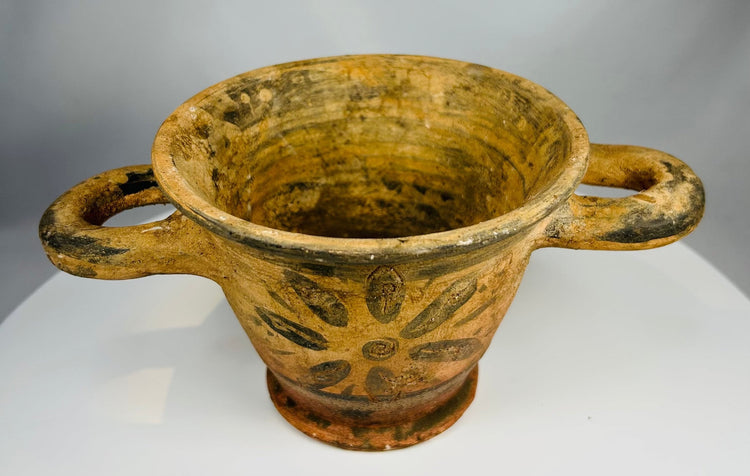
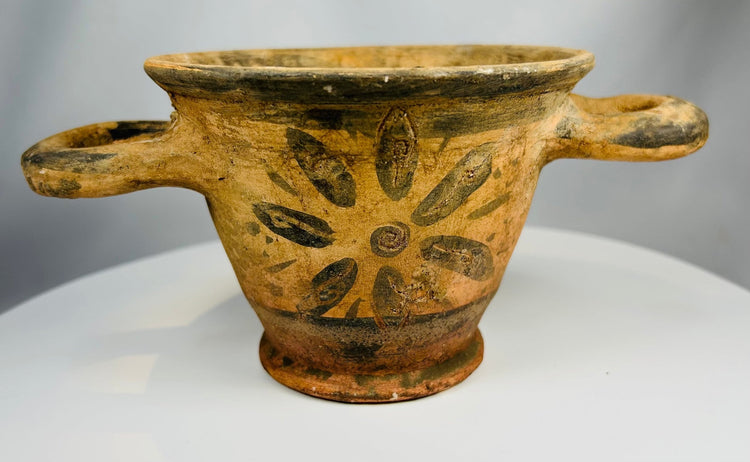
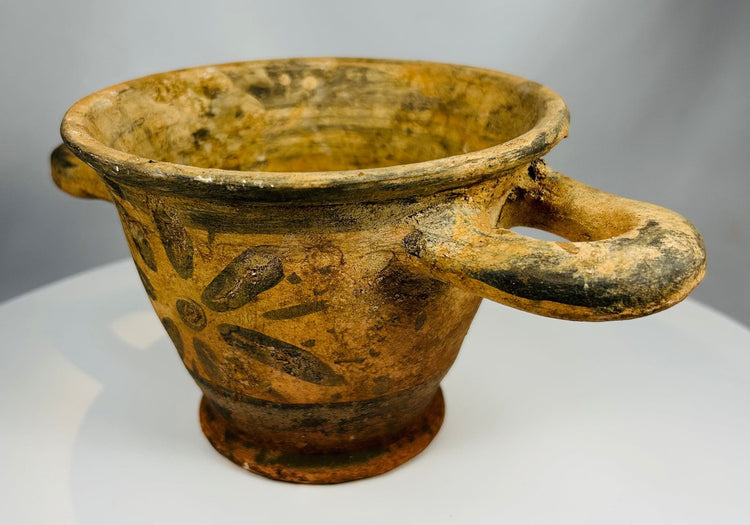
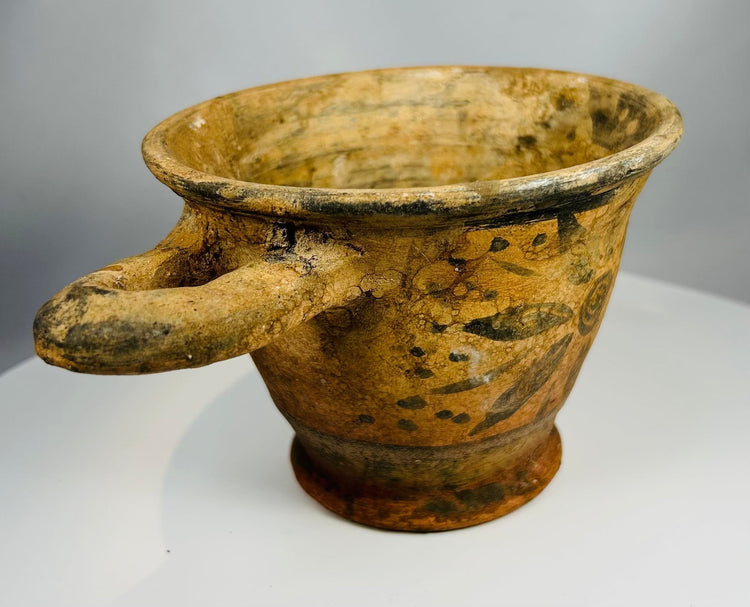
Etrusco | Skyphos de terracota con decoración de roseta floral | Circa siglos VII-V a.C.
Descripción
Más
Menos
Contexto histórico y origen
Región: Antigua Italia (Etruria)
Material: Terracota con decoración de pigmentos minerales
Periodo: Periodo Arcaico, circa Siglos VII-V a.C.
Descripción
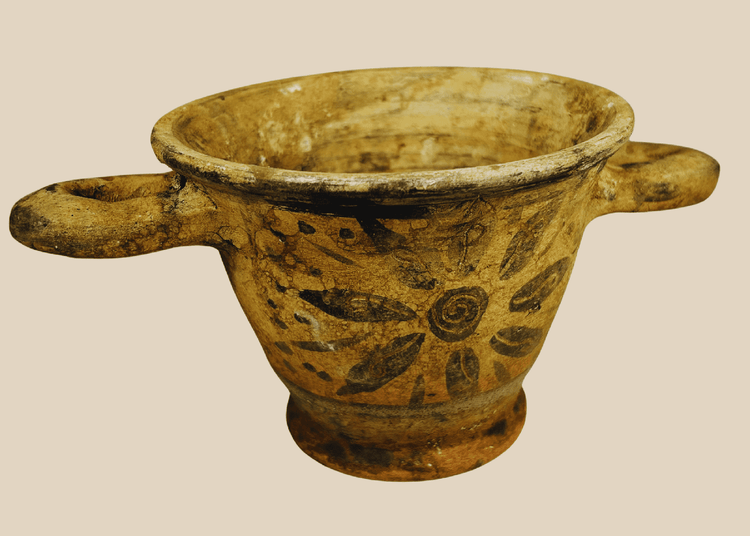
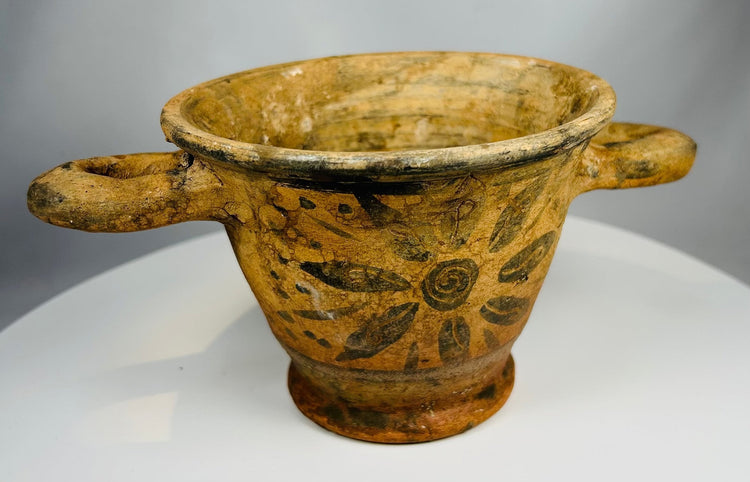
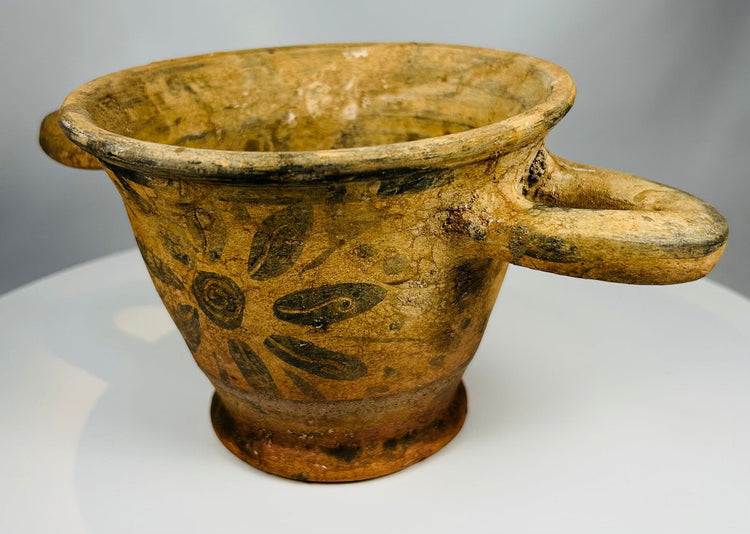
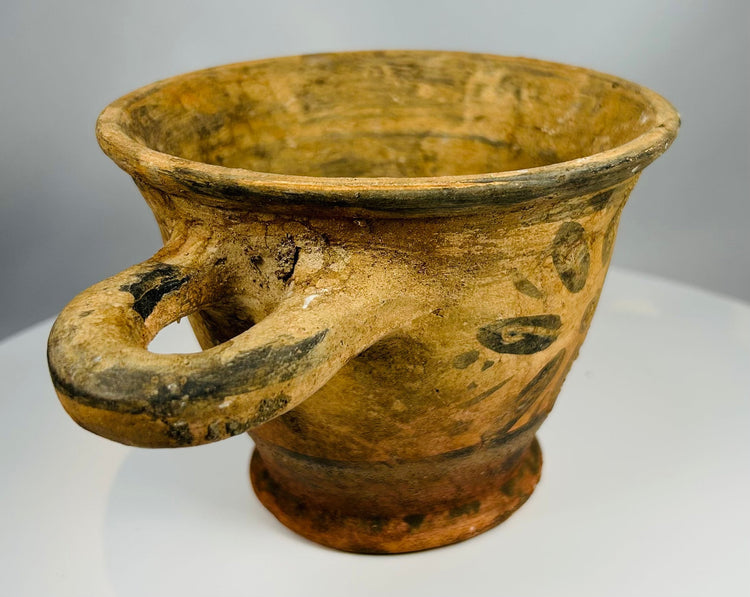
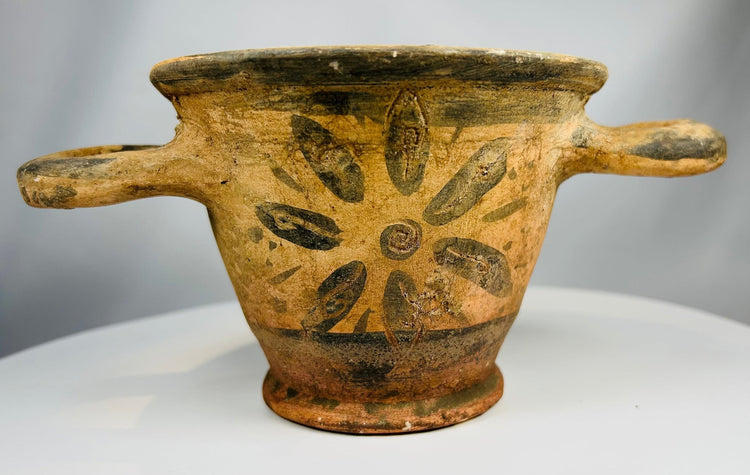
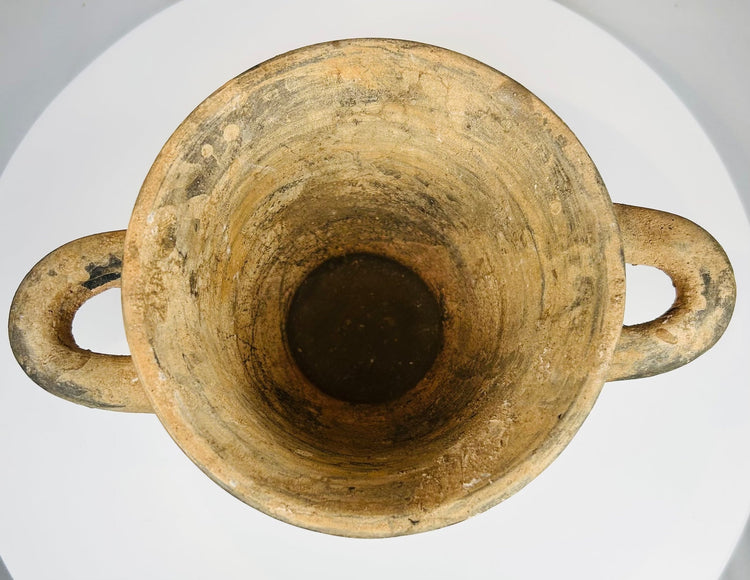
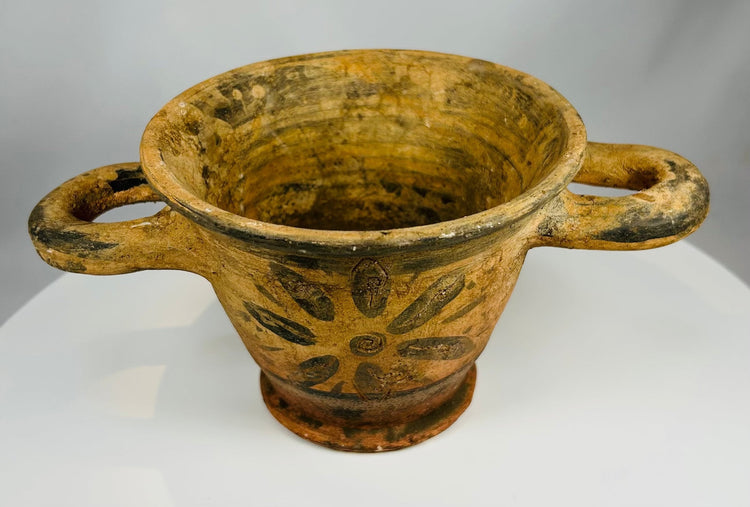
Este antiguo escifo etrusco de terracota es un ejemplo bellamente conservado de la cerámica itálica temprana del periodo Arcaico. La vasija presenta un borde ancho acampanado y un pie de pedestal estable, acompañado de dos asas de asa horizontales que se extienden desde el hombro, una forma elegante asociada con las copas ceremoniales utilizadas en todo el Mediterráneo antiguo.
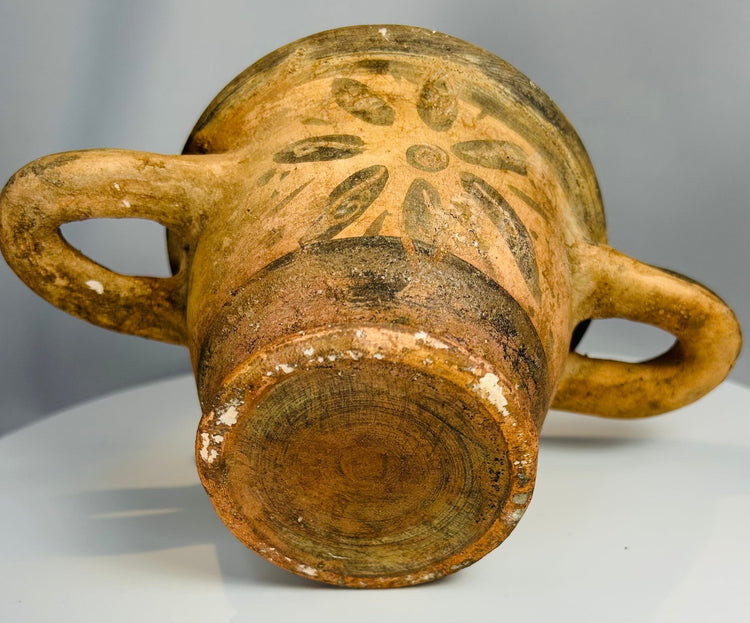
El exterior está decorado con un llamativo motivo floral radial compuesto por elementos alargados en forma de pétalos que rodean una roseta central. Realizada con pigmento mineral oscuro sobre la cálida superficie de terracota de color beige, la decoración refleja los patrones geométricos y florales estilizados característicos de los talleres de cerámica etruscos influenciados tanto por las tradiciones itálicas indígenas como por el intercambio artístico griego.
Las superficies interior y exterior de la vasija exhiben extensas concreciones minerales, pátina de entierro y desgaste superficial relacionado con la edad, consistentes con una antigüedad significativa. Las marcas de torneado de rueda permanecen visibles en la parte inferior, ofreciendo evidencia adicional de su antigua fabricación. El motivo decorativo, las proporciones equilibradas y la construcción robusta sugieren que la pieza fue tanto funcional como simbólica, probablemente utilizada en contextos rituales de bebida o ceremonias domésticas.
Características
- Auténtica forma de escifo etrusco de terracota con asas gemelas
- Decoración floral radial de roseta pintada a mano
- Borde acampanado y pie de pedestal típicos de la cerámica itálica arcaica
- Marcas visibles de torneado de rueda en la base
- Pátina mineral pesada y concreciones de entierro consistentes con la edad
- Forma clásica de vasija para beber mediterránea utilizada en entornos rituales y domésticos
Significado Cultural
Los escifos fueron vasijas para beber ampliamente utilizadas en el Mediterráneo antiguo, adoptadas tanto por las culturas griega como etrusca. En Etruria, tales vasijas a menudo aparecían en banquetes domésticos, así como en contextos funerarios, lo que refleja la importancia de la bebida comunitaria y los festines rituales en la sociedad etrusca. Los motivos florales y de rosetas eran elementos decorativos simbólicos frecuentemente asociados con la vida, la regeneración y el orden cosmológico en el arte itálico antiguo.
Estado
Condición antigua con desgaste superficial esperado, incrustaciones minerales y áreas de pérdida de pigmento consistentes con la edad y el entierro. Estructuralmente estable y bien conservado para su antigüedad.
Dimensiones (Aproximadas)
Altura: 4 pulgadas
Ancho: 8.5 pulgadas
Profundidad: 5.25 pulgadas
Edad (Aproximada)
2,400–2,700 años de antigüedad
Aprende más
Estudia una vasija para beber antigua comparable en la colección del Museo Metropolitano de Arte
Explora nuestra Colección de Cerámica y Alfarería: Arte de la Herencia Antigua
Descripción
Contexto histórico y origen
Región: Antigua Italia (Etruria)
Material: Terracota con decoración de pigmentos minerales
Periodo: Periodo Arcaico, circa Siglos VII-V a.C.
Descripción
Este antiguo escifo etrusco de terracota es un ejemplo bellamente conservado de la cerámica itálica temprana del periodo Arcaico. La vasija presenta un borde ancho acampanado y un pie de pedestal estable, acompañado de dos asas de asa horizontales que se extienden desde el hombro, una forma elegante asociada con las copas ceremoniales utilizadas en todo el Mediterráneo antiguo.
El exterior está decorado con un llamativo motivo floral radial compuesto por elementos alargados en forma de pétalos que rodean una roseta central. Realizada con pigmento mineral oscuro sobre la cálida superficie de terracota de color beige, la decoración refleja los patrones geométricos y florales estilizados característicos de los talleres de cerámica etruscos influenciados tanto por las tradiciones itálicas indígenas como por el intercambio artístico griego.
Las superficies interior y exterior de la vasija exhiben extensas concreciones minerales, pátina de entierro y desgaste superficial relacionado con la edad, consistentes con una antigüedad significativa. Las marcas de torneado de rueda permanecen visibles en la parte inferior, ofreciendo evidencia adicional de su antigua fabricación. El motivo decorativo, las proporciones equilibradas y la construcción robusta sugieren que la pieza fue tanto funcional como simbólica, probablemente utilizada en contextos rituales de bebida o ceremonias domésticas.
Características
- Auténtica forma de escifo etrusco de terracota con asas gemelas
- Decoración floral radial de roseta pintada a mano
- Borde acampanado y pie de pedestal típicos de la cerámica itálica arcaica
- Marcas visibles de torneado de rueda en la base
- Pátina mineral pesada y concreciones de entierro consistentes con la edad
- Forma clásica de vasija para beber mediterránea utilizada en entornos rituales y domésticos
Significado Cultural
Los escifos fueron vasijas para beber ampliamente utilizadas en el Mediterráneo antiguo, adoptadas tanto por las culturas griega como etrusca. En Etruria, tales vasijas a menudo aparecían en banquetes domésticos, así como en contextos funerarios, lo que refleja la importancia de la bebida comunitaria y los festines rituales en la sociedad etrusca. Los motivos florales y de rosetas eran elementos decorativos simbólicos frecuentemente asociados con la vida, la regeneración y el orden cosmológico en el arte itálico antiguo.
Estado
Condición antigua con desgaste superficial esperado, incrustaciones minerales y áreas de pérdida de pigmento consistentes con la edad y el entierro. Estructuralmente estable y bien conservado para su antigüedad.
Dimensiones (Aproximadas)
Altura: 4 pulgadas
Ancho: 8.5 pulgadas
Profundidad: 5.25 pulgadas
Edad (Aproximada)
2,400–2,700 años de antigüedad
Aprende más
Estudia una vasija para beber antigua comparable en la colección del Museo Metropolitano de Arte
Explora nuestra Colección de Cerámica y Alfarería: Arte de la Herencia Antigua
También te puede interesar
