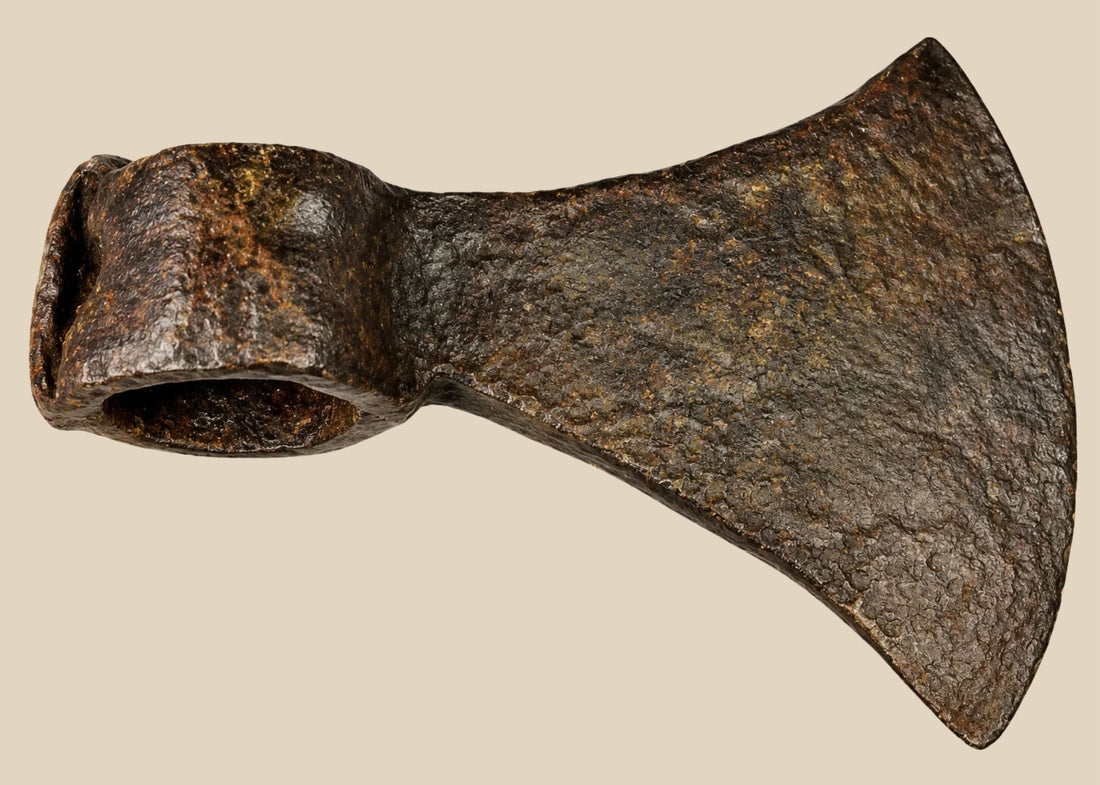
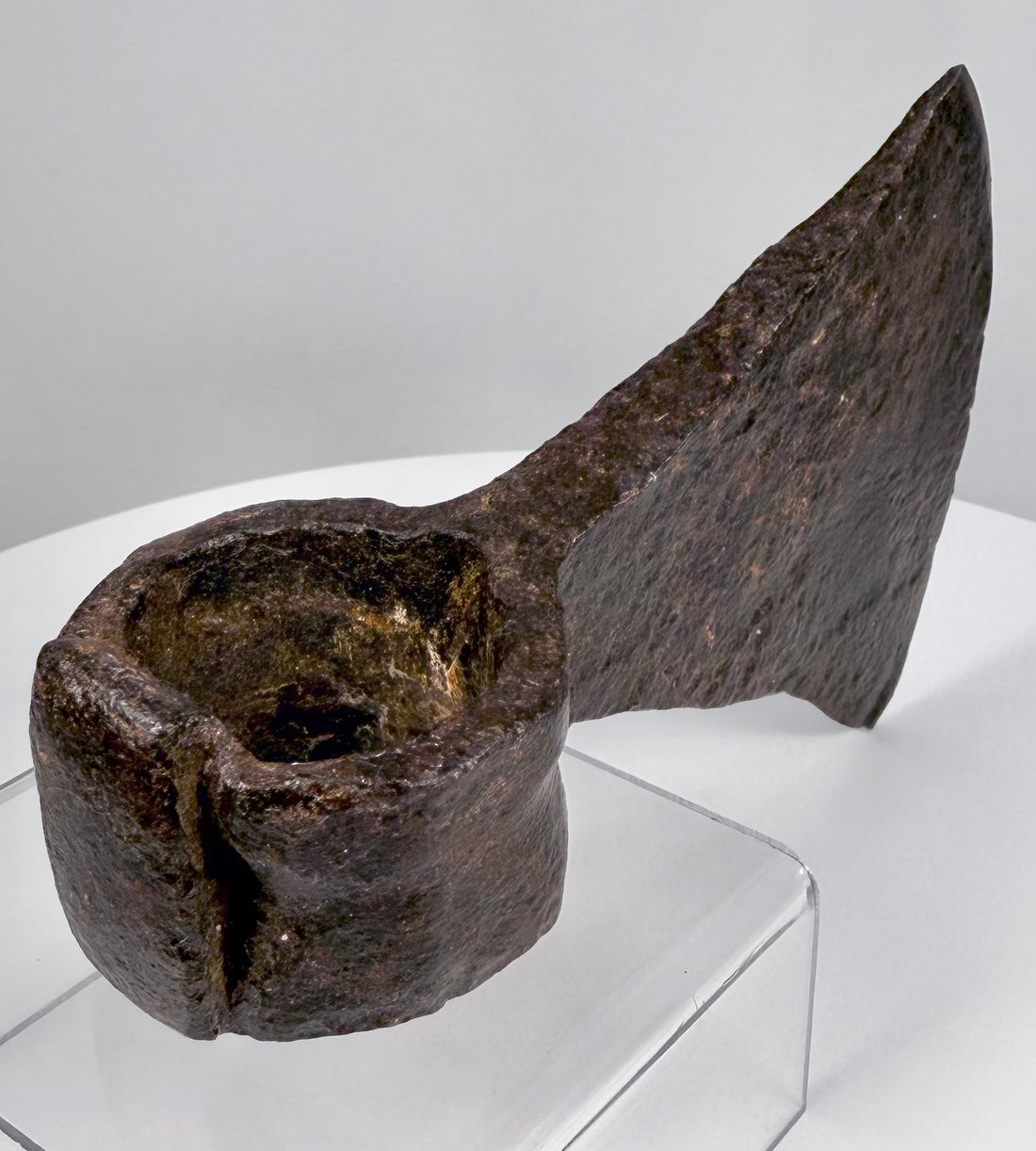
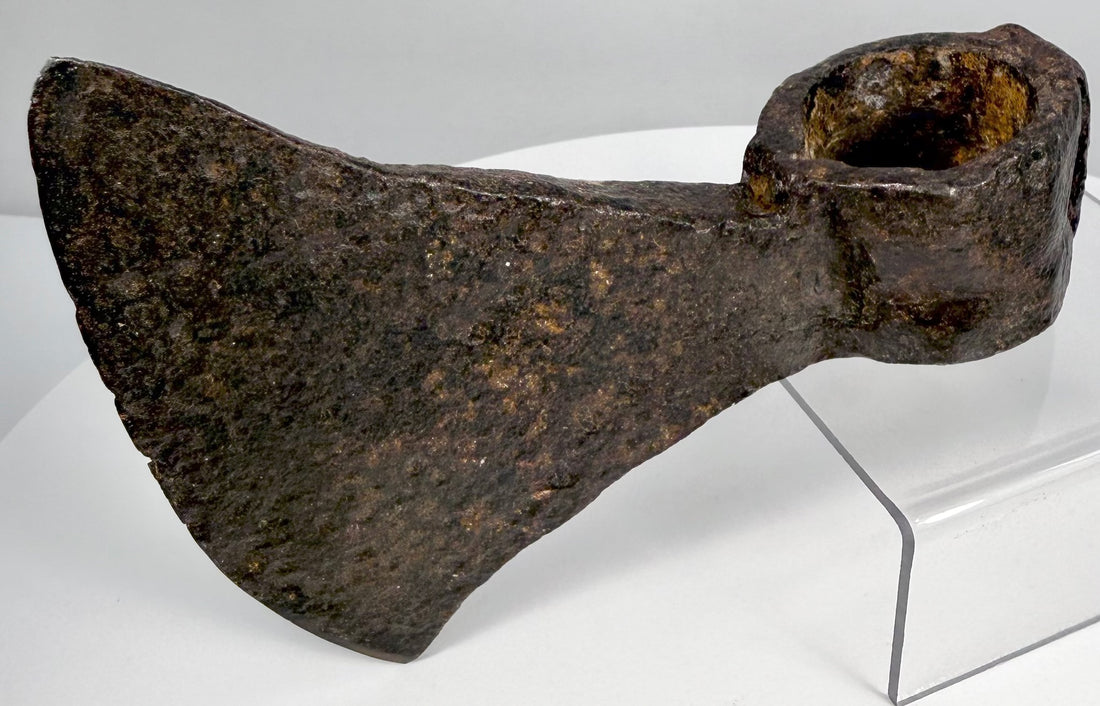
Cabeza de hacha de hierro forjado | Herramienta de los primeros colonos americanos | Siglo XIX d. C.

Historial de procedencia y propiedad

Anteriormente en una colección privada en Brea, California, Estados Unidos.

Precio habitual
$225.00
Precio de venta
$225.00
Precio habitual
Envío calculado al finalizar la compra.

This is a one-of-a-kind historical object. Once sold, this exact piece will not be restocked.

Questions before acquiring? Additional photographs, condition details, documentation, shipping information or a private viewing are available upon request.
19th century forged iron axe head with rusted texture and curved blade
360-degree rotating view of a 19th-century Early American forged iron axe head, highlighting its hand-forged construction, distinctive blade profile, aged iron surface, and historical craftsmanship associated with early American settlers and frontier tools.
Antique 19th-century American forged iron axe head with a broad cutting blade and naturally aged patina.
Historic American iron axe head from the 1800s featuring traditional blacksmith craftsmanship and rugged construction.
Nineteenth-century United States forged iron axe head with a wide blade and sturdy socket for a wooden handle.
Antique American frontier axe head featuring hand-forged iron construction and a weathered surface.
Historic 19th-century American woodworking axe head with a broad cutting edge and traditional iron design.
Antique forged iron axe head from the United States displaying darkened patina and historic surface wear.
Nineteenth-century American blacksmith-made axe head featuring a robust iron body and traditional timber-cutting design.
Antique American iron axe head with a compact profile, wide blade, and aged metal surface.
Historic 1800s forged iron axe head representing traditional American frontier tools and craftsmanship.
Antique American timber-working axe head featuring a reinforced socket and naturally developed iron patina.
Nineteenth-century United States iron axe head with traditional hand-forged construction and historic signs of use.
  • 19th century forged iron axe head with rusted texture and curved blade
  • 360-degree rotating view of a 19th-century Early American forged iron axe head, highlighting its hand-forged construction, distinctive blade profile, aged iron surface, and historical craftsmanship associated with early American settlers and frontier tools.
  • Antique 19th-century American forged iron axe head with a broad cutting blade and naturally aged patina.
  • Historic American iron axe head from the 1800s featuring traditional blacksmith craftsmanship and rugged construction.
  • Nineteenth-century United States forged iron axe head with a wide blade and sturdy socket for a wooden handle.
  • Antique American frontier axe head featuring hand-forged iron construction and a weathered surface.
  • Historic 19th-century American woodworking axe head with a broad cutting edge and traditional iron design.
  • Antique forged iron axe head from the United States displaying darkened patina and historic surface wear.
  • Nineteenth-century American blacksmith-made axe head featuring a robust iron body and traditional timber-cutting design.
  • Antique American iron axe head with a compact profile, wide blade, and aged metal surface.
  • Historic 1800s forged iron axe head representing traditional American frontier tools and craftsmanship.
  • Antique American timber-working axe head featuring a reinforced socket and naturally developed iron patina.
  • Nineteenth-century United States iron axe head with traditional hand-forged construction and historic signs of use.
19th century forged iron axe head with rusted texture and curved blade
360-degree rotating view of a 19th-century Early American forged iron axe head, highlighting its hand-forged construction, distinctive blade profile, aged iron surface, and historical craftsmanship associated with early American settlers and frontier tools.
Antique 19th-century American forged iron axe head with a broad cutting blade and naturally aged patina.
Historic American iron axe head from the 1800s featuring traditional blacksmith craftsmanship and rugged construction.
Nineteenth-century United States forged iron axe head with a wide blade and sturdy socket for a wooden handle.
Antique American frontier axe head featuring hand-forged iron construction and a weathered surface.
Historic 19th-century American woodworking axe head with a broad cutting edge and traditional iron design.
Antique forged iron axe head from the United States displaying darkened patina and historic surface wear.
Nineteenth-century American blacksmith-made axe head featuring a robust iron body and traditional timber-cutting design.
Antique American iron axe head with a compact profile, wide blade, and aged metal surface.
Historic 1800s forged iron axe head representing traditional American frontier tools and craftsmanship.
Antique American timber-working axe head featuring a reinforced socket and naturally developed iron patina.
Nineteenth-century United States iron axe head with traditional hand-forged construction and historic signs of use.
Authenticity and secure checkout guarantee

Cabeza de hacha de hierro forjado | Herramienta de los primeros colonos americanos | Siglo XIX d. C.

Descripción

Contexto histórico y origen

Región: Estados Unidos
Material: Hierro forjado
Periodo: Siglo XIX d. C.

Descripción

Esta cabeza de hacha de hierro forjado refleja la durabilidad, practicidad e ingenio de la artesanía estadounidense temprana. Que data del siglo XIX, durante un período de expansión y asentamiento, hachas como esta eran herramientas esenciales de la vida fronteriza. Compacta pero potente, fue diseñada para cortar madera, talar árboles y ayudar en la construcción de hogares y asentamientos, desempeñando un papel vital en la supervivencia diaria y el desarrollo comunitario.

Características

- Hoja forjada ancha adecuada para trabajos pesados con madera

- Casquillo robusto diseñado para asegurar un mango de madera

- Rica pátina y superficie texturizada consistente con la edad y el uso prolongado

- Forma compacta pero robusta que ejemplifica el diseño práctico del siglo XIX

Importancia cultural

El hacha fue una de las herramientas más importantes en la vida temprana de Estados Unidos, simbolizando la resiliencia, el ingenio y la expansión. Esencial para limpiar tierras, construir casas y proporcionar combustible, era más que un objeto utilitario; era una piedra angular de la supervivencia y el progreso en un entorno exigente. Esta cabeza de hacha refleja el espíritu pionero de los primeros colonos y su dependencia de implementos duraderos y bien elaborados.

Condición

La cabeza del hacha muestra una pátina estable y oscurecida por la edad con desgaste natural por el uso extensivo, lo que afirma su autenticidad e historia de trabajo. A pesar de esto, la pieza permanece estructuralmente intacta, un testimonio de la robusta artesanía de los herreros del siglo XIX.

Dimensiones (aproximadas)

Longitud: 5.75 pulgadas

Edad (aproximada)

125–225 años de antigüedad

Procedencia

Anteriormente en una colección privada en Brea, California, Estados Unidos.

Saber más

Descubre la historia y evolución del hacha en Gränsfors Bruk

Explora nuestra Colección de Hachas Históricas

Descripción

Contexto histórico y origen

Región: Estados Unidos
Material: Hierro forjado
Periodo: Siglo XIX d. C.

Descripción

Esta cabeza de hacha de hierro forjado refleja la durabilidad, practicidad e ingenio de la artesanía estadounidense temprana. Que data del siglo XIX, durante un período de expansión y asentamiento, hachas como esta eran herramientas esenciales de la vida fronteriza. Compacta pero potente, fue diseñada para cortar madera, talar árboles y ayudar en la construcción de hogares y asentamientos, desempeñando un papel vital en la supervivencia diaria y el desarrollo comunitario.

Características

- Hoja forjada ancha adecuada para trabajos pesados con madera

- Casquillo robusto diseñado para asegurar un mango de madera

- Rica pátina y superficie texturizada consistente con la edad y el uso prolongado

- Forma compacta pero robusta que ejemplifica el diseño práctico del siglo XIX

Importancia cultural

El hacha fue una de las herramientas más importantes en la vida temprana de Estados Unidos, simbolizando la resiliencia, el ingenio y la expansión. Esencial para limpiar tierras, construir casas y proporcionar combustible, era más que un objeto utilitario; era una piedra angular de la supervivencia y el progreso en un entorno exigente. Esta cabeza de hacha refleja el espíritu pionero de los primeros colonos y su dependencia de implementos duraderos y bien elaborados.

Condición

La cabeza del hacha muestra una pátina estable y oscurecida por la edad con desgaste natural por el uso extensivo, lo que afirma su autenticidad e historia de trabajo. A pesar de esto, la pieza permanece estructuralmente intacta, un testimonio de la robusta artesanía de los herreros del siglo XIX.

Dimensiones (aproximadas)

Longitud: 5.75 pulgadas

Edad (aproximada)

125–225 años de antigüedad

Procedencia

Anteriormente en una colección privada en Brea, California, Estados Unidos.

Saber más

Descubre la historia y evolución del hacha en Gränsfors Bruk

Explora nuestra Colección de Hachas Históricas

También te puede interesar