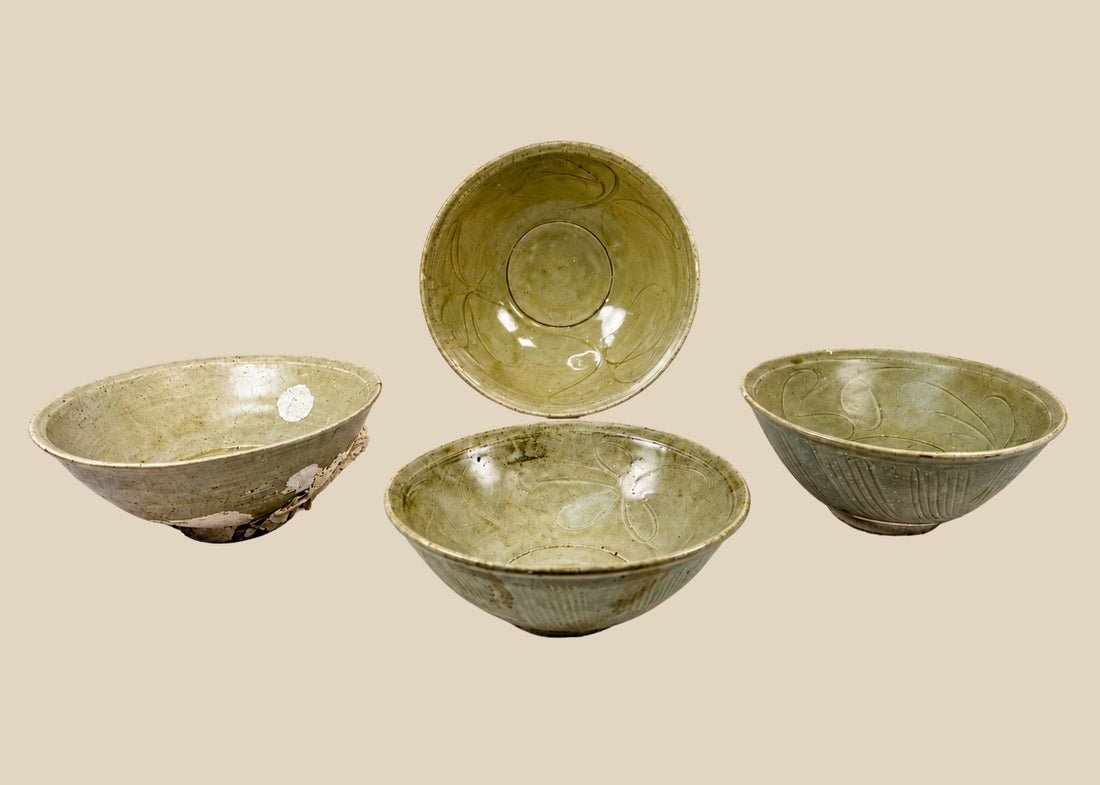
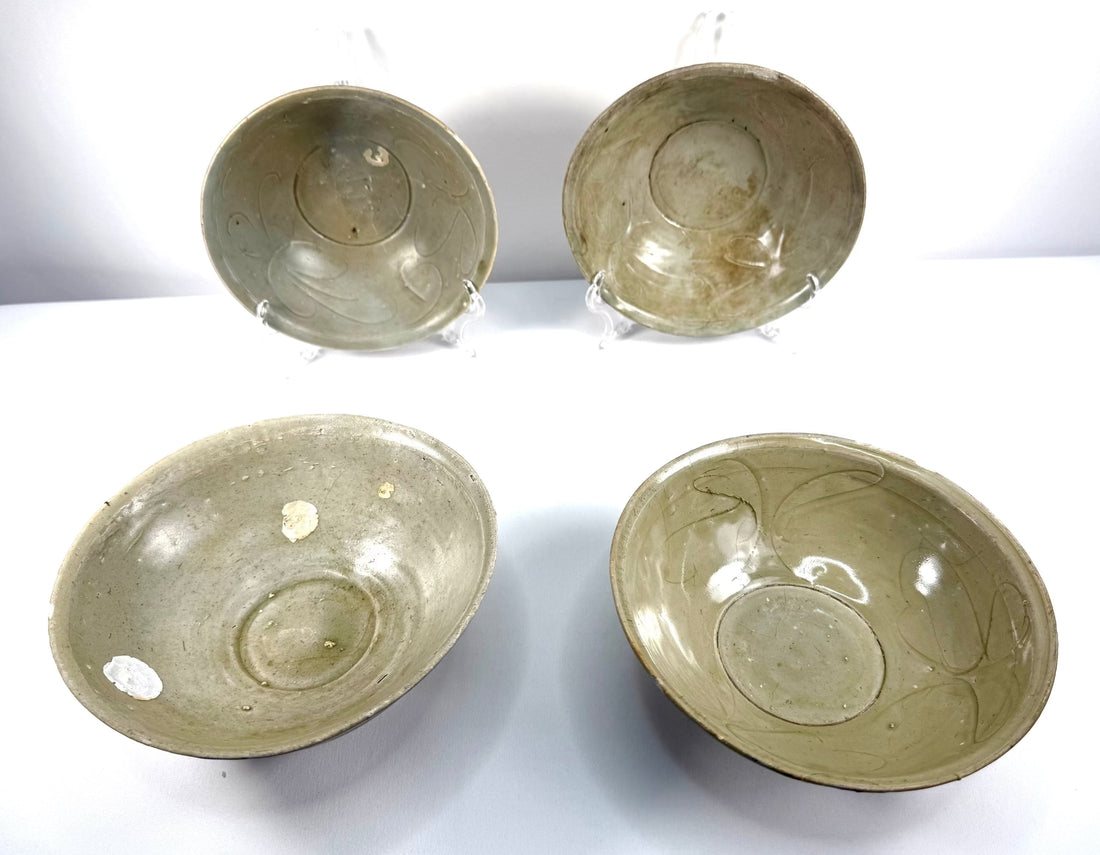
Cuatro cuencos de celadón Song | Provincia de Fujian | Alrededor del siglo XII

Historial de procedencia y propiedad

Anteriormente en la colección del Museo Nacional de Filipinas. La pieza fue posteriormente ofrecida por Ahlers & Ogletree Auction Gallery, Atlanta, Georgia, en su subasta de Arte y Antigüedades Europeas, Americanas y Asiáticasdel 18 de septiembre de 2023, como Lote 805. Después de la subasta, pasó a una colección privada en Toronto, Ontario, Canadá.

Precio habitual
$1,000.00
Precio de venta
$1,000.00
Precio habitual
Envío calculado al finalizar la compra.

This is a one-of-a-kind historical object. Once sold, this exact piece will not be restocked.

Questions before acquiring? Additional photographs, condition details, documentation, shipping information or a private viewing are available upon request.
Set of four 12th century Song Dynasty celadon ware bowls with incised floral motifs and maritime wear
Video showcasing four Song dynasty celadon bowls from Fujian, China, circa the 12th century, highlighting their pale green glaze, incised floral decoration, and rounded forms.
360-degree video of a Song dynasty celadon bowl from Fujian, China, circa the 12th century, showing its pale green glaze, incised floral decoration, and rounded form.
Set of four ancient Chinese Song Dynasty celadon bowls dating to the 12th century CE, recovered from the Jepara Shipwreck off the coast of Java, Indonesia.
Four Song Dynasty Chinese ceramic bowls featuring pale green celadon glaze, incised floral decorations, and marine encrustations from centuries of underwater submersion.
Ancient Chinese celadon pottery collection consisting of four heavily potted Song Dynasty bowls with delicate green glazes and archaeological marine deposits.
Group of four 12th-century Song Dynasty celadon bowls from the Jepara Shipwreck, displaying traditional Chinese ceramic craftsmanship, incised patterns, and preserved barnacle accretions.
Ancient Chinese Song Dynasty celadon bowl featuring a softly translucent green glaze and finely incised floral motifs decorating its interior.
Twelfth-century Chinese celadon pottery bowl recovered from the Jepara Shipwreck, displaying marine encrustations and naturally weathered ceramic surfaces.
Song Dynasty ceramic bowl featuring delicate floral incising beneath a pale green celadon glaze, reflecting traditional Chinese pottery techniques.
Ancient Chinese celadon-glazed bowl with a rounded body, gently flared rim, and decorative linear incisions along its exterior.
Archaeological Song Dynasty celadon bowl displaying preserved barnacle and mussel accretions from prolonged submersion in Southeast Asian waters.
Twelfth-century Chinese ceramic bowl featuring an unglazed foot ring, exposed natural clay body, and subtle variations in celadon glaze coloration.
Ancient Song Dynasty celadon ware bowl measuring approximately 6.75 inches in diameter, featuring a glazed interior and traditional incised floral decoration.
Chinese Song Dynasty shipwreck pottery bowl displaying marine mineral deposits, aged celadon glaze, and distinctive hand-finished ceramic construction.
Antique Chinese celadon bowl from the 12th century CE, featuring incised exterior lines, a softly rounded profile, and an unglazed base.
Song Dynasty celadon ceramic bowl recovered from the Jepara Shipwreck, preserving its original pale green glaze beneath areas of marine encrustation.
Ancient Chinese Song Dynasty celadon bowl associated with the National Museum of the Philippines collection, featuring traditional floral ornamentation and documented shipwreck provenance.
  • Set of four 12th century Song Dynasty celadon ware bowls with incised floral motifs and maritime wear
  • Video showcasing four Song dynasty celadon bowls from Fujian, China, circa the 12th century, highlighting their pale green glaze, incised floral decoration, and rounded forms.
  • 360-degree video of a Song dynasty celadon bowl from Fujian, China, circa the 12th century, showing its pale green glaze, incised floral decoration, and rounded form.
  • Set of four ancient Chinese Song Dynasty celadon bowls dating to the 12th century CE, recovered from the Jepara Shipwreck off the coast of Java, Indonesia.
  • Four Song Dynasty Chinese ceramic bowls featuring pale green celadon glaze, incised floral decorations, and marine encrustations from centuries of underwater submersion.
  • Ancient Chinese celadon pottery collection consisting of four heavily potted Song Dynasty bowls with delicate green glazes and archaeological marine deposits.
  • Group of four 12th-century Song Dynasty celadon bowls from the Jepara Shipwreck, displaying traditional Chinese ceramic craftsmanship, incised patterns, and preserved barnacle accretions.
  • Ancient Chinese Song Dynasty celadon bowl featuring a softly translucent green glaze and finely incised floral motifs decorating its interior.
  • Twelfth-century Chinese celadon pottery bowl recovered from the Jepara Shipwreck, displaying marine encrustations and naturally weathered ceramic surfaces.
  • Song Dynasty ceramic bowl featuring delicate floral incising beneath a pale green celadon glaze, reflecting traditional Chinese pottery techniques.
  • Ancient Chinese celadon-glazed bowl with a rounded body, gently flared rim, and decorative linear incisions along its exterior.
  • Archaeological Song Dynasty celadon bowl displaying preserved barnacle and mussel accretions from prolonged submersion in Southeast Asian waters.
  • Twelfth-century Chinese ceramic bowl featuring an unglazed foot ring, exposed natural clay body, and subtle variations in celadon glaze coloration.
  • Ancient Song Dynasty celadon ware bowl measuring approximately 6.75 inches in diameter, featuring a glazed interior and traditional incised floral decoration.
  • Chinese Song Dynasty shipwreck pottery bowl displaying marine mineral deposits, aged celadon glaze, and distinctive hand-finished ceramic construction.
  • Antique Chinese celadon bowl from the 12th century CE, featuring incised exterior lines, a softly rounded profile, and an unglazed base.
  • Song Dynasty celadon ceramic bowl recovered from the Jepara Shipwreck, preserving its original pale green glaze beneath areas of marine encrustation.
  • Ancient Chinese Song Dynasty celadon bowl associated with the National Museum of the Philippines collection, featuring traditional floral ornamentation and documented shipwreck provenance.
Set of four 12th century Song Dynasty celadon ware bowls with incised floral motifs and maritime wear
Video showcasing four Song dynasty celadon bowls from Fujian, China, circa the 12th century, highlighting their pale green glaze, incised floral decoration, and rounded forms.
360-degree video of a Song dynasty celadon bowl from Fujian, China, circa the 12th century, showing its pale green glaze, incised floral decoration, and rounded form.
Set of four ancient Chinese Song Dynasty celadon bowls dating to the 12th century CE, recovered from the Jepara Shipwreck off the coast of Java, Indonesia.
Four Song Dynasty Chinese ceramic bowls featuring pale green celadon glaze, incised floral decorations, and marine encrustations from centuries of underwater submersion.
Ancient Chinese celadon pottery collection consisting of four heavily potted Song Dynasty bowls with delicate green glazes and archaeological marine deposits.
Group of four 12th-century Song Dynasty celadon bowls from the Jepara Shipwreck, displaying traditional Chinese ceramic craftsmanship, incised patterns, and preserved barnacle accretions.
Ancient Chinese Song Dynasty celadon bowl featuring a softly translucent green glaze and finely incised floral motifs decorating its interior.
Twelfth-century Chinese celadon pottery bowl recovered from the Jepara Shipwreck, displaying marine encrustations and naturally weathered ceramic surfaces.
Song Dynasty ceramic bowl featuring delicate floral incising beneath a pale green celadon glaze, reflecting traditional Chinese pottery techniques.
Ancient Chinese celadon-glazed bowl with a rounded body, gently flared rim, and decorative linear incisions along its exterior.
Archaeological Song Dynasty celadon bowl displaying preserved barnacle and mussel accretions from prolonged submersion in Southeast Asian waters.
Twelfth-century Chinese ceramic bowl featuring an unglazed foot ring, exposed natural clay body, and subtle variations in celadon glaze coloration.
Ancient Song Dynasty celadon ware bowl measuring approximately 6.75 inches in diameter, featuring a glazed interior and traditional incised floral decoration.
Chinese Song Dynasty shipwreck pottery bowl displaying marine mineral deposits, aged celadon glaze, and distinctive hand-finished ceramic construction.
Antique Chinese celadon bowl from the 12th century CE, featuring incised exterior lines, a softly rounded profile, and an unglazed base.
Song Dynasty celadon ceramic bowl recovered from the Jepara Shipwreck, preserving its original pale green glaze beneath areas of marine encrustation.
Ancient Chinese Song Dynasty celadon bowl associated with the National Museum of the Philippines collection, featuring traditional floral ornamentation and documented shipwreck provenance.
Authenticity and secure checkout guarantee

Cuatro cuencos de celadón Song | Provincia de Fujian | Alrededor del siglo XII

Descripción

Contexto histórico y origen

Región: China (recuperado del naufragio de Jepara, costa central de Java)
Material: Terracota con esmalte celadón y decoración incisa
Período: Dinastía Song, siglo XII d.C.

Descripción

Este juego de cuatro cuencos de cerámica celadón Song refleja la elegancia y la artesanía de la cerámica de la era Song. Cada cuenco está fuertemente macetero y terminado con un esmalte celadón transparente, produciendo un tono verde suave con sutiles variaciones tonales. Los interiores están decorados con motivos florales incisos, mientras que los exteriores muestran incisiones lineales, dejando las bases sin esmaltar para revelar el cuerpo de arcilla natural.

Características

- Esmalte celadón transparente con sutil variación tonal

- Decoración floral incisa en el interior

- Incisión exterior lineal con anillos de pie sin esmaltar

- Construcción de macetero pesado para mayor durabilidad y uso diario

- Incrustaciones de percebes y mejillones de siglos de inmersión

Significado cultural

Las cerámicas celadón de la dinastía Song se encuentran entre los ejemplos más refinados de las tradiciones cerámicas chinas. Eran muy apreciadas tanto a nivel nacional como en el extranjero, con vastas cantidades exportadas por toda Asia. El naufragio de Jepara, descubierto frente a la costa de Java, contenía más de 10.000 piezas de cerámica, lo que proporcionó información inestimable sobre las rutas comerciales marítimas que unían China con el sudeste asiático. Este juego de cuencos encarna los intercambios transculturales y las redes comerciales que definieron el período, mientras que su decoración refleja el equilibrio de funcionalidad y belleza sobria de la dinastía Song.

Estado

Los cuencos se conservan bien, con el esmalte y la decoración intactos. Las incrustaciones marinas —incluidos percebes y mejillones— atestiguan su larga inmersión y refuerzan su procedencia marítima. Un cuenco lleva una etiqueta del Museo Nacional de Filipinas, lo que confirma su recuperación documentada y mejora su procedencia.

Dimensiones (aproximadas)

Diámetro: 6,75 pulgadas
Altura: 2,75 pulgadas

Antigüedad (aproximada)

825–925 años de antigüedad

Procedencia

Anteriormente en la colección del Museo Nacional de Filipinas. La pieza fue posteriormente ofrecida por Ahlers & Ogletree Auction Gallery, Atlanta, Georgia, en su subasta de Arte y Antigüedades Europeas, Americanas y Asiáticas del 18 de septiembre de 2023, como Lote 805. Tras la subasta, pasó a una colección privada en Toronto, Ontario, Canadá.

Más información

Estudie el legado de la Cerámica Celadón de la Dinastía Song

Explore nuestra Colección de Artefactos Chinos Antiguos

Descripción

Contexto histórico y origen

Región: China (recuperado del naufragio de Jepara, costa central de Java)
Material: Terracota con esmalte celadón y decoración incisa
Período: Dinastía Song, siglo XII d.C.

Descripción

Este juego de cuatro cuencos de cerámica celadón Song refleja la elegancia y la artesanía de la cerámica de la era Song. Cada cuenco está fuertemente macetero y terminado con un esmalte celadón transparente, produciendo un tono verde suave con sutiles variaciones tonales. Los interiores están decorados con motivos florales incisos, mientras que los exteriores muestran incisiones lineales, dejando las bases sin esmaltar para revelar el cuerpo de arcilla natural.

Características

- Esmalte celadón transparente con sutil variación tonal

- Decoración floral incisa en el interior

- Incisión exterior lineal con anillos de pie sin esmaltar

- Construcción de macetero pesado para mayor durabilidad y uso diario

- Incrustaciones de percebes y mejillones de siglos de inmersión

Significado cultural

Las cerámicas celadón de la dinastía Song se encuentran entre los ejemplos más refinados de las tradiciones cerámicas chinas. Eran muy apreciadas tanto a nivel nacional como en el extranjero, con vastas cantidades exportadas por toda Asia. El naufragio de Jepara, descubierto frente a la costa de Java, contenía más de 10.000 piezas de cerámica, lo que proporcionó información inestimable sobre las rutas comerciales marítimas que unían China con el sudeste asiático. Este juego de cuencos encarna los intercambios transculturales y las redes comerciales que definieron el período, mientras que su decoración refleja el equilibrio de funcionalidad y belleza sobria de la dinastía Song.

Estado

Los cuencos se conservan bien, con el esmalte y la decoración intactos. Las incrustaciones marinas —incluidos percebes y mejillones— atestiguan su larga inmersión y refuerzan su procedencia marítima. Un cuenco lleva una etiqueta del Museo Nacional de Filipinas, lo que confirma su recuperación documentada y mejora su procedencia.

Dimensiones (aproximadas)

Diámetro: 6,75 pulgadas
Altura: 2,75 pulgadas

Antigüedad (aproximada)

825–925 años de antigüedad

Procedencia

Anteriormente en la colección del Museo Nacional de Filipinas. La pieza fue posteriormente ofrecida por Ahlers & Ogletree Auction Gallery, Atlanta, Georgia, en su subasta de Arte y Antigüedades Europeas, Americanas y Asiáticas del 18 de septiembre de 2023, como Lote 805. Tras la subasta, pasó a una colección privada en Toronto, Ontario, Canadá.

Más información

Estudie el legado de la Cerámica Celadón de la Dinastía Song

Explore nuestra Colección de Artefactos Chinos Antiguos

También te puede interesar