



Adorno ritual japonés de bronce dorado con incrustaciones de plata | Circa 1400-1650
- Precio habitual
- $3,500.00
- Precio de venta
- $3,500.00
- Precio habitual
No se pudo cargar la disponibilidad de retiro


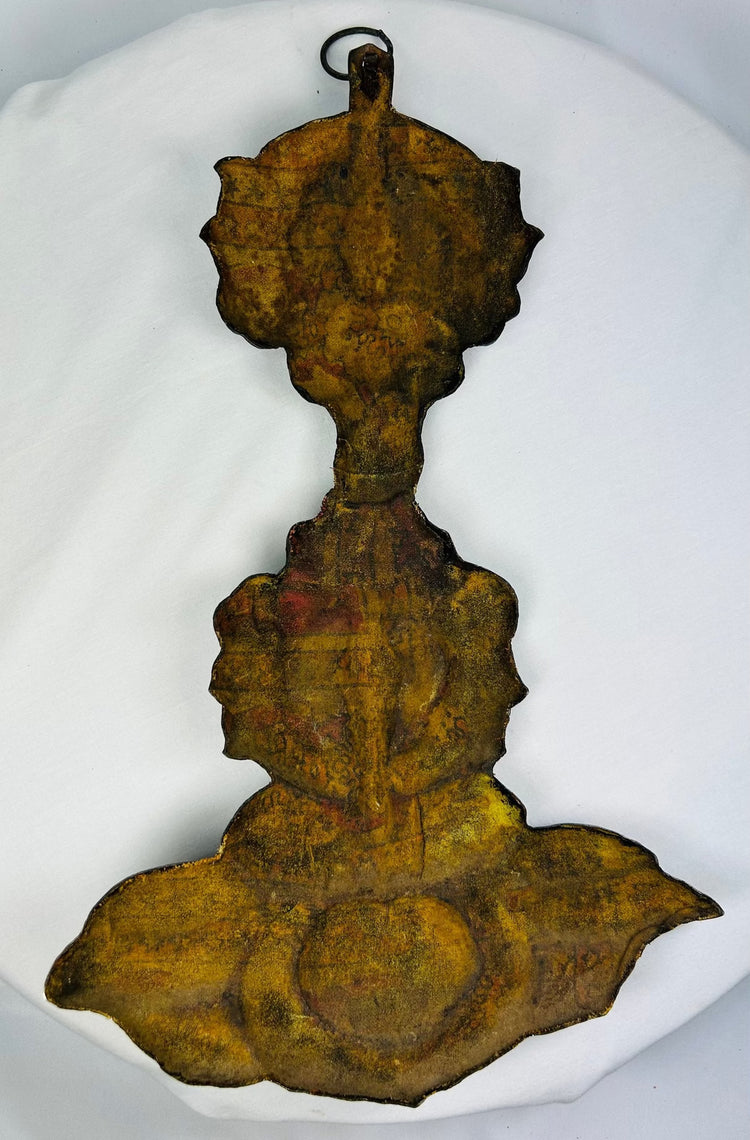
Adorno ritual japonés de bronce dorado con incrustaciones de plata | Circa 1400-1650
Descripción
Más
Menos
Contexto histórico y origen
Región: Japón, cultura de templos budistas
Material: Bronce repujado con incrustaciones de plata y dorado, y montura con respaldo textil
Período: Finales del período Muromachi a principios del período Edo, c. 1400-1650 d.C.
Descripción
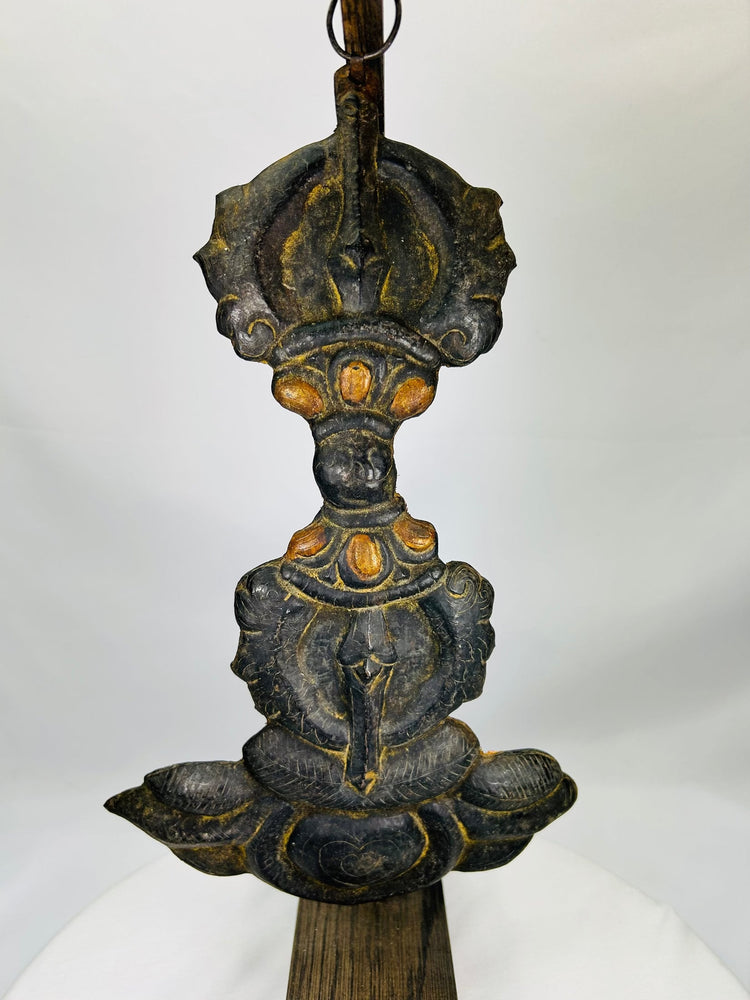
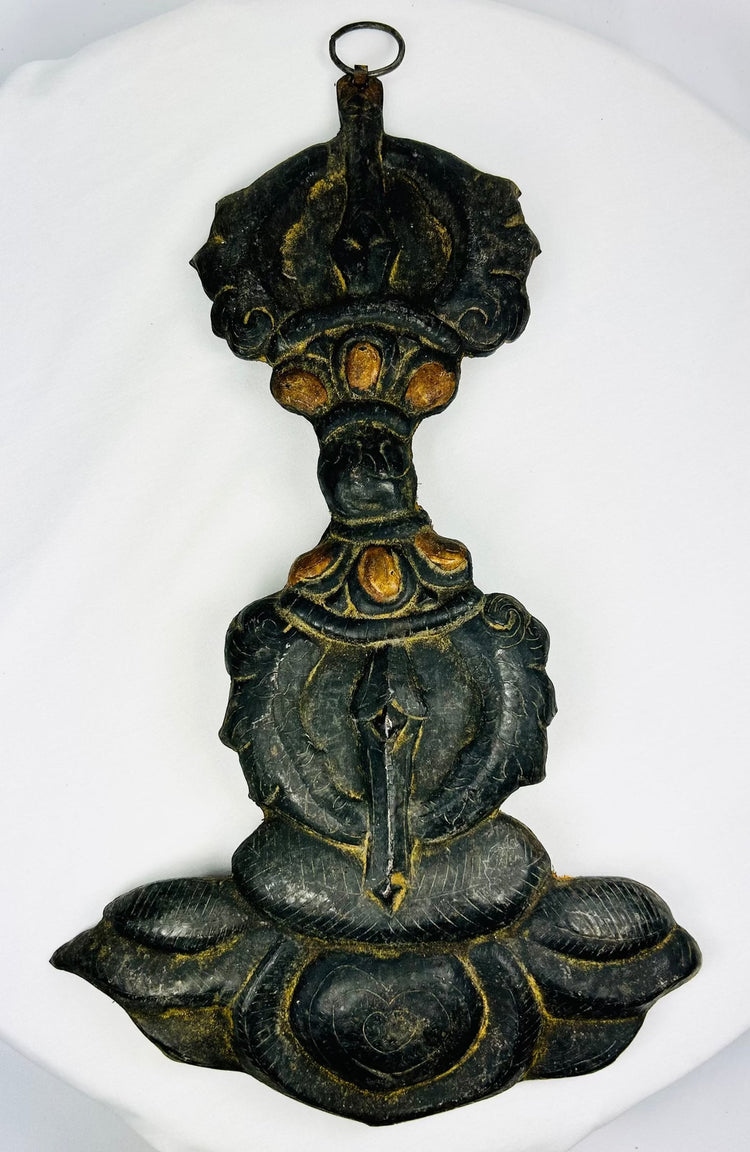
Este impresionante ornamento ritual budista japonés está elaborado en bronce repujado, realzado con restos de dorado original e incrustaciones de plata. Inspirado en la geometría sagrada del vajra (dorje) —símbolo de indestructibilidad y sabiduría trascendente en el budismo esotérico—, la pieza exhibe la refinada artesanía de los templos de la era Muromachi a principios de Edo.
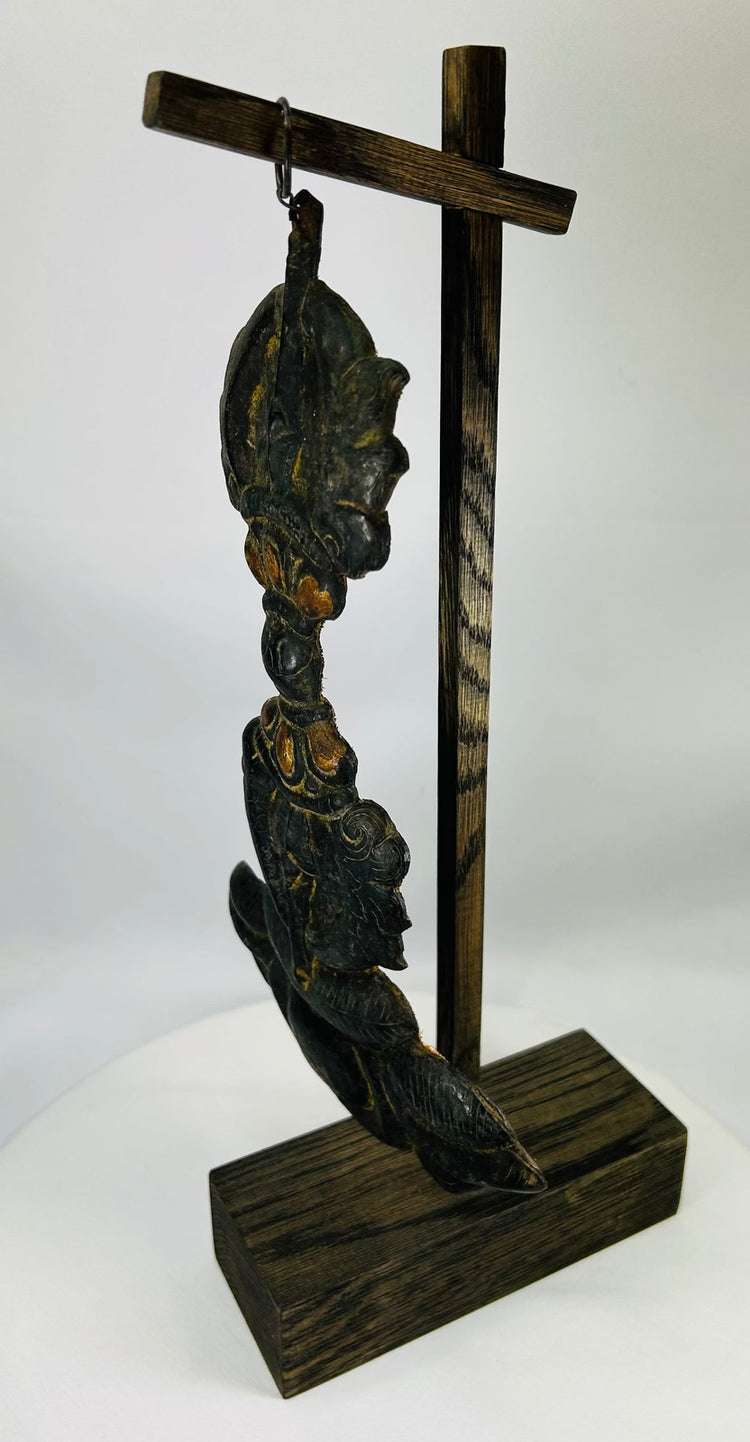
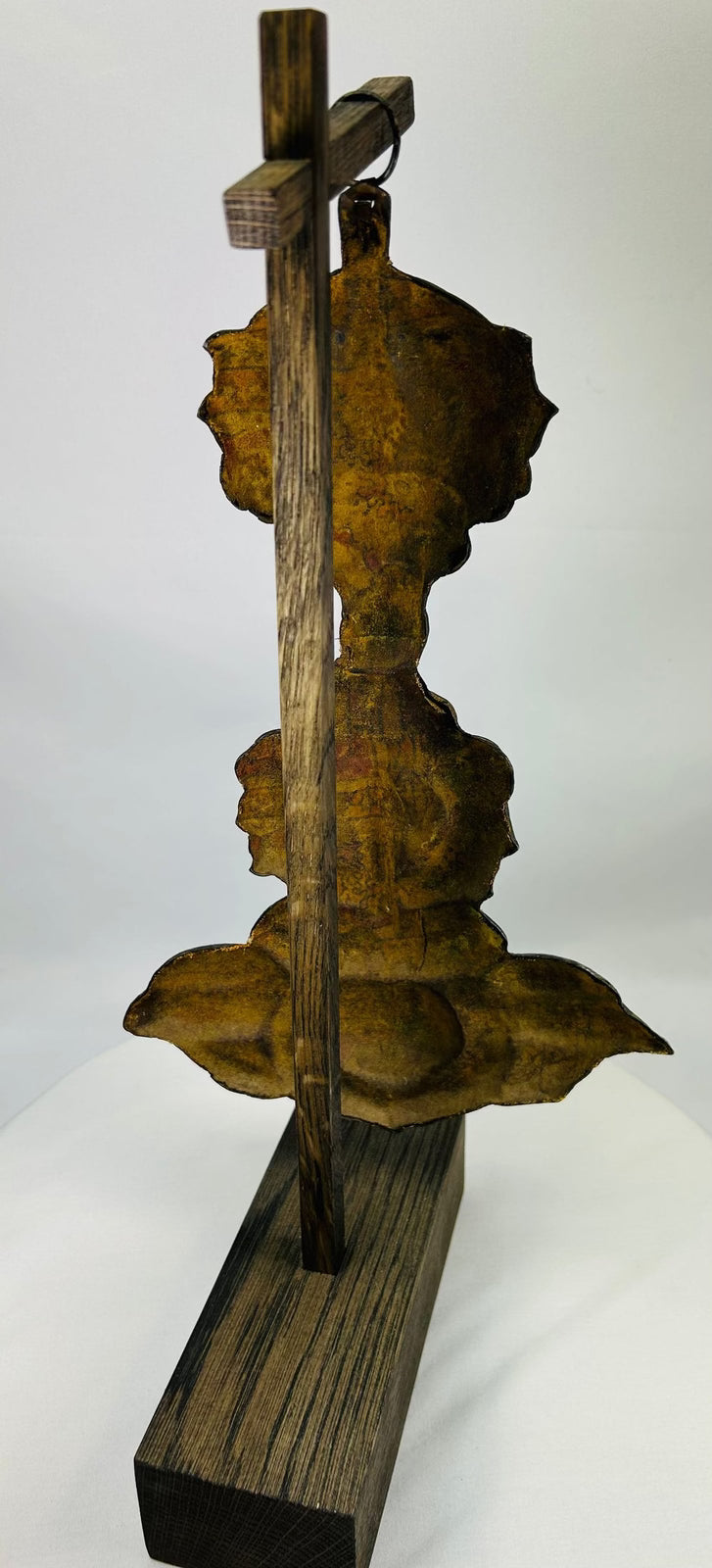
Su composición escalonada presenta bases de pétalos de loto, nodos redondeados y remates coronados dispuestos con elegante simetría. El reverso conserva su revestimiento textil teñido por reserva envejecido, lo que indica su uso como elemento de altar montado, adorno arquitectónico o componente del mobiliario ritual del templo. La pátina profunda contrasta bellamente con los acentos de oro y plata supervivientes, confiriendo al objeto una presencia espiritual imponente y digna.
Características
- Ornamento ritual de bronce repujado con incrustaciones de oro y plata
- Forma simbólica inspirada en el vajra con diseño arquitectónico basado en el loto
- Composición simétrica escalonada que representa el ascenso espiritual
- Respaldo textil original tradicional teñido por reserva
- Poderosa pátina envejecida con destellos de dorado restante
- Ejemplo raro de orfebrería ritual budista del período Muromachi-Edo
Significado cultural
Durante los períodos Muromachi y principios de Edo, los templos budistas encargaron elaborados muebles rituales para encarnar la cosmología esotérica y el poder sagrado. El motivo vajra simbolizaba la verdad inquebrantable y el rayo de la iluminación, apareciendo en altares, accesorios de templos y vestimenta ceremonial. Ornamentos como este eran parte integral de los entornos sagrados, elevando la conciencia espiritual y reforzando el significado ritual. Hoy, los ejemplos supervivientes ofrecen una visión profunda del arte religioso japonés y la tradición de la orfebrería.
Estado
La superficie exhibe pátina histórica, oxidación y desgaste consistente con siglos de uso en templos. Restos de dorado original y detalles plateados permanecen en áreas empotradas. El respaldo textil está gastado pero intacto. Estructuralmente estable sin restauración moderna observada.
Dimensiones (aproximadas)
Altura: 12.5 in
Edad (aproximada)
350–600 años
Procedencia
Anteriormente ofrecido y vendido por Waddington’s Auctioneers & Appraisers, Toronto, Ontario, como lote 338 en su subasta de Arte Asiático que cerró el 4 de diciembre de 2025. Posteriormente pasó a formar parte de una colección privada en Toronto, Ontario, Canadá.
Más información
Aprenda sobre el budismo japonés a través de Japan Experience
Explore nuestra Colección de artefactos culturales y etnográficos
Descripción
Contexto histórico y origen
Región: Japón, cultura de templos budistas
Material: Bronce repujado con incrustaciones de plata y dorado, y montura con respaldo textil
Período: Finales del período Muromachi a principios del período Edo, c. 1400-1650 d.C.
Descripción
Este impresionante ornamento ritual budista japonés está elaborado en bronce repujado, realzado con restos de dorado original e incrustaciones de plata. Inspirado en la geometría sagrada del vajra (dorje) —símbolo de indestructibilidad y sabiduría trascendente en el budismo esotérico—, la pieza exhibe la refinada artesanía de los templos de la era Muromachi a principios de Edo.
Su composición escalonada presenta bases de pétalos de loto, nodos redondeados y remates coronados dispuestos con elegante simetría. El reverso conserva su revestimiento textil teñido por reserva envejecido, lo que indica su uso como elemento de altar montado, adorno arquitectónico o componente del mobiliario ritual del templo. La pátina profunda contrasta bellamente con los acentos de oro y plata supervivientes, confiriendo al objeto una presencia espiritual imponente y digna.
Características
- Ornamento ritual de bronce repujado con incrustaciones de oro y plata
- Forma simbólica inspirada en el vajra con diseño arquitectónico basado en el loto
- Composición simétrica escalonada que representa el ascenso espiritual
- Respaldo textil original tradicional teñido por reserva
- Poderosa pátina envejecida con destellos de dorado restante
- Ejemplo raro de orfebrería ritual budista del período Muromachi-Edo
Significado cultural
Durante los períodos Muromachi y principios de Edo, los templos budistas encargaron elaborados muebles rituales para encarnar la cosmología esotérica y el poder sagrado. El motivo vajra simbolizaba la verdad inquebrantable y el rayo de la iluminación, apareciendo en altares, accesorios de templos y vestimenta ceremonial. Ornamentos como este eran parte integral de los entornos sagrados, elevando la conciencia espiritual y reforzando el significado ritual. Hoy, los ejemplos supervivientes ofrecen una visión profunda del arte religioso japonés y la tradición de la orfebrería.
Estado
La superficie exhibe pátina histórica, oxidación y desgaste consistente con siglos de uso en templos. Restos de dorado original y detalles plateados permanecen en áreas empotradas. El respaldo textil está gastado pero intacto. Estructuralmente estable sin restauración moderna observada.
Dimensiones (aproximadas)
Altura: 12.5 in
Edad (aproximada)
350–600 años
Procedencia
Anteriormente ofrecido y vendido por Waddington’s Auctioneers & Appraisers, Toronto, Ontario, como lote 338 en su subasta de Arte Asiático que cerró el 4 de diciembre de 2025. Posteriormente pasó a formar parte de una colección privada en Toronto, Ontario, Canadá.
Más información
Aprenda sobre el budismo japonés a través de Japan Experience
Explore nuestra Colección de artefactos culturales y etnográficos
También te puede interesar
