

Grand Tour | Figura clásica de bronce de filósofo con drapeado | Circa siglo XIX - principios del XX
- Precio habitual
- $450.00
- Precio de venta
- $450.00
- Precio habitual
No se pudo cargar la disponibilidad de retiro


Grand Tour | Figura clásica de bronce de filósofo con drapeado | Circa siglo XIX - principios del XX
Descripción
Más
Menos
Contexto histórico y origen
Región: Europa, probablemente Italia o Francia
Material: Bronce fundido o aleación de bronce con pátina verde natural
Período: Siglo XIX – principios del siglo XX, renacimiento clásico / era del Grand Tour
Descripción
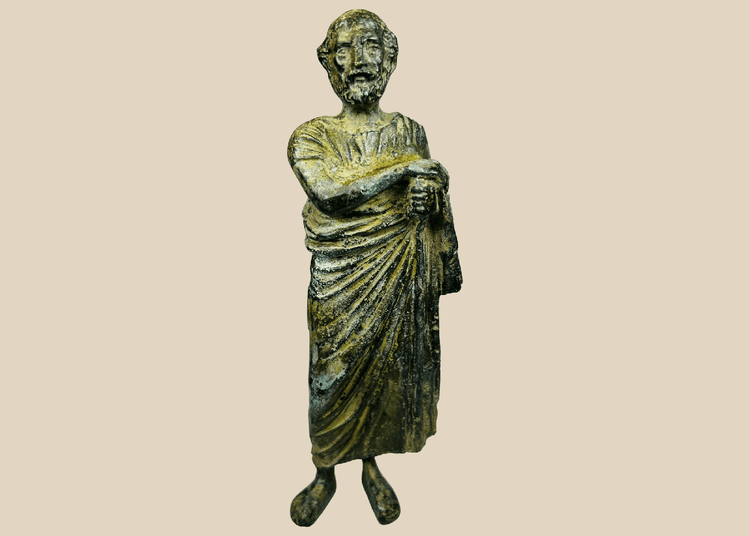
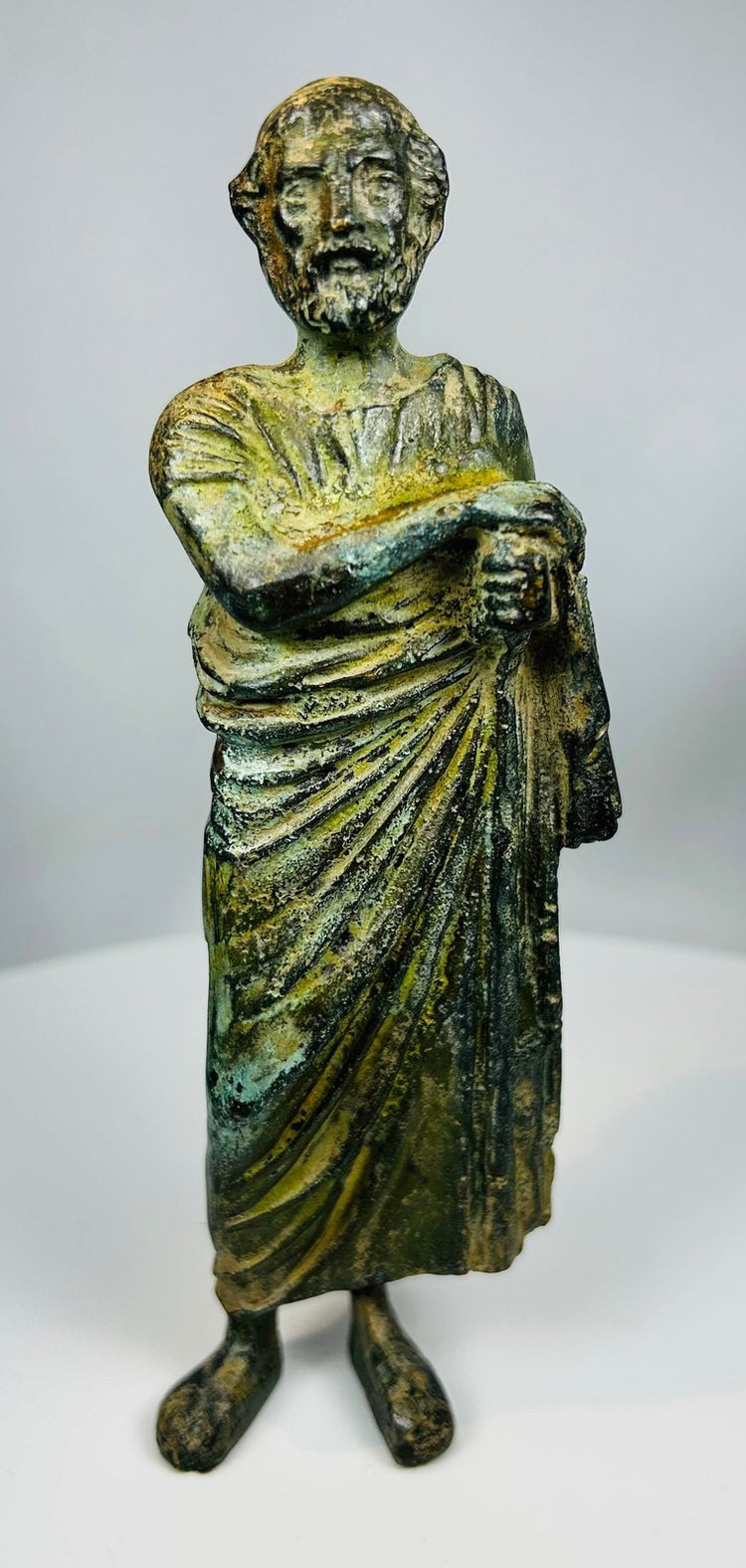
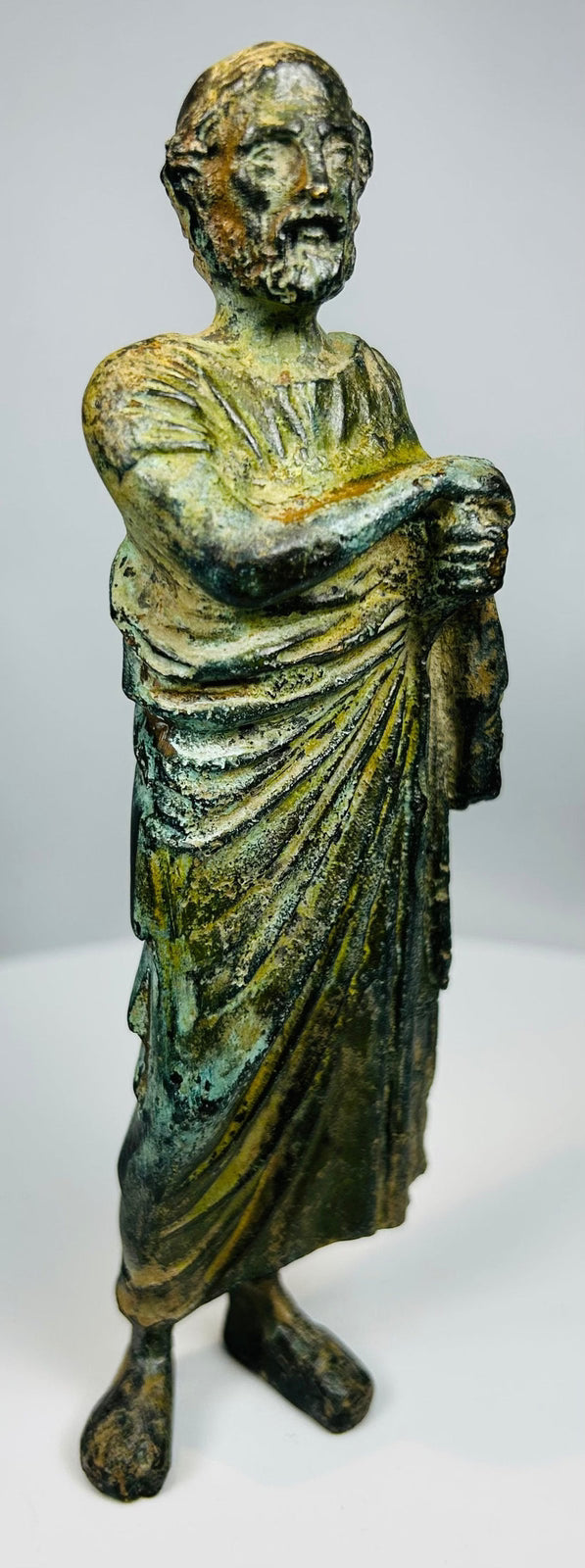
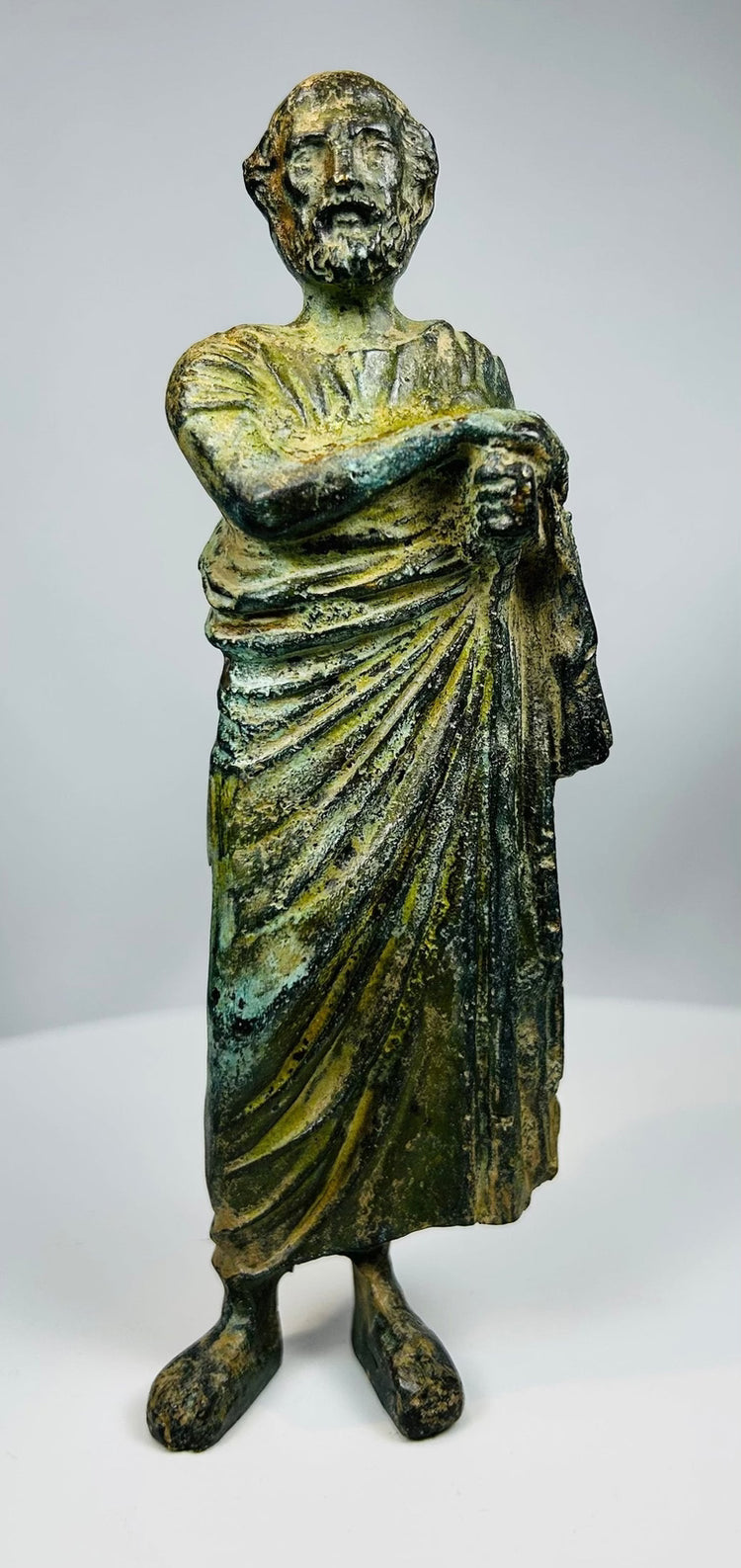
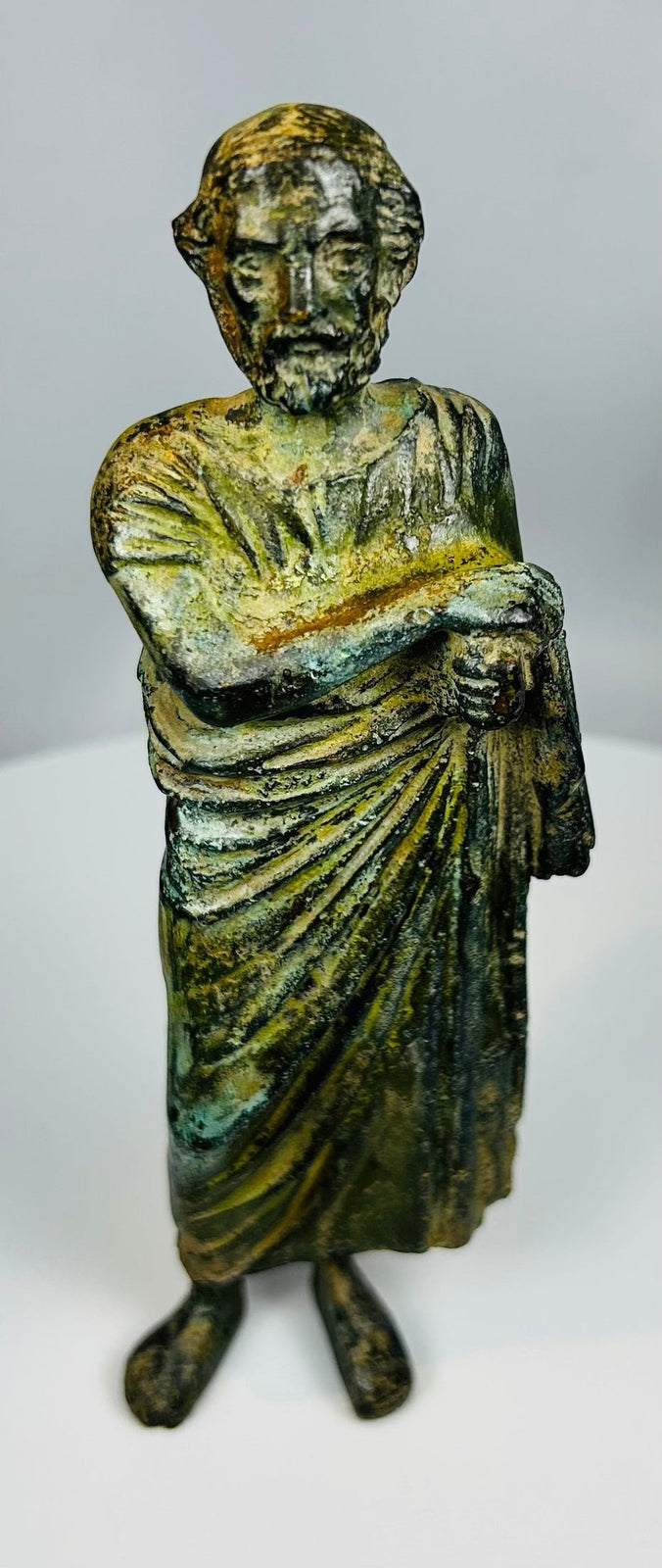
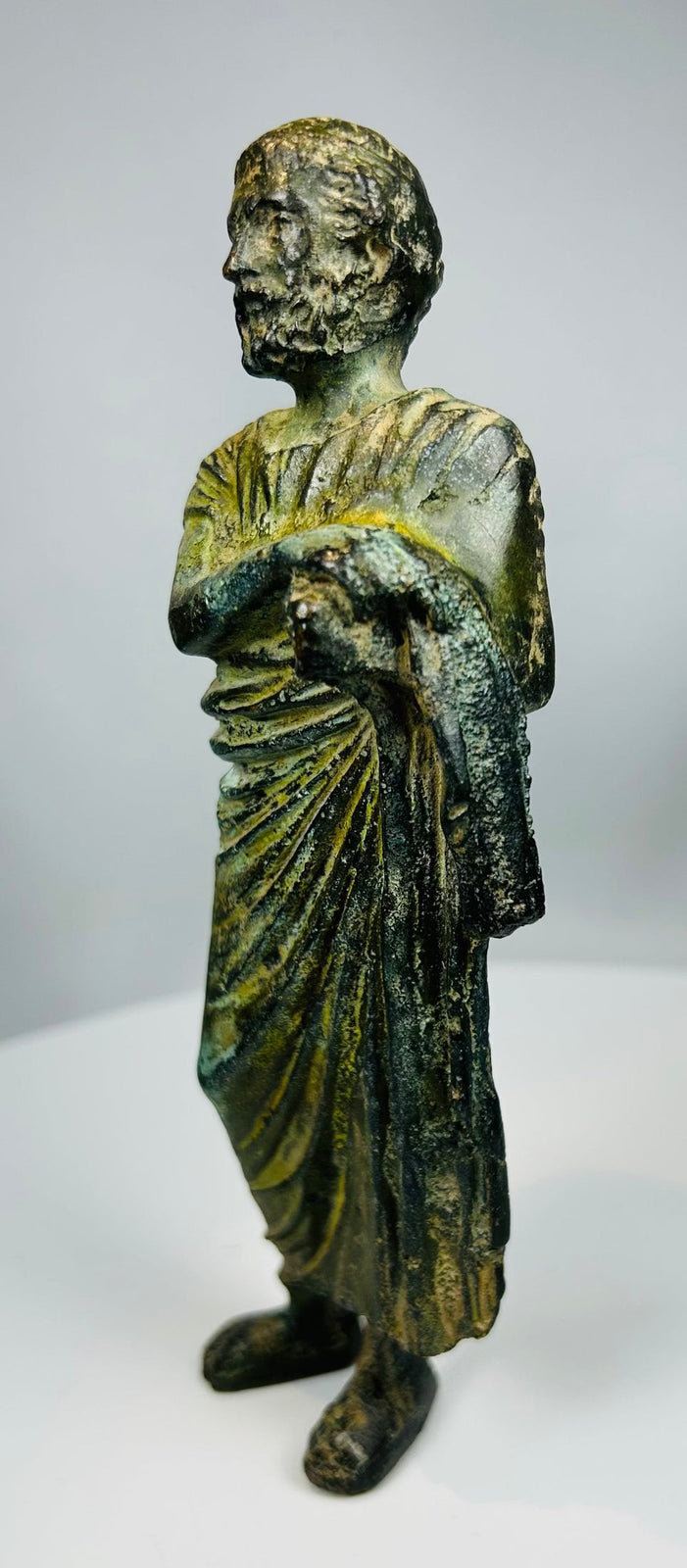
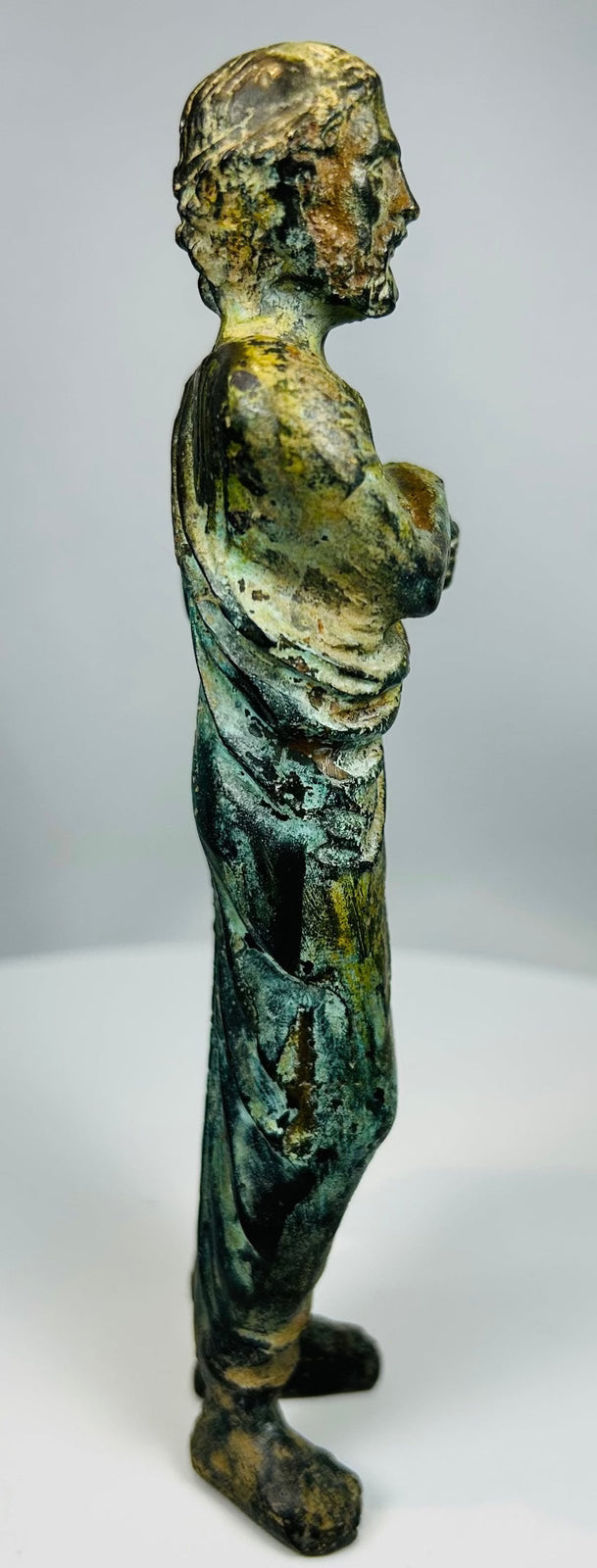
Esta figura de bronce finamente fundida representa un tema masculino clásico, realizado según la tradición del retrato escultórico grecorromano. La figura de pie está representada vistiendo una túnica drapeada, cayendo en pliegues profundamente tallados sobre el cuerpo, un sello distintivo de la estatuaria clásica. Una mano recoge el drapeado mientras el brazo opuesto cruza el pecho, sugiriendo la postura serena de un filósofo, orador o estadista.
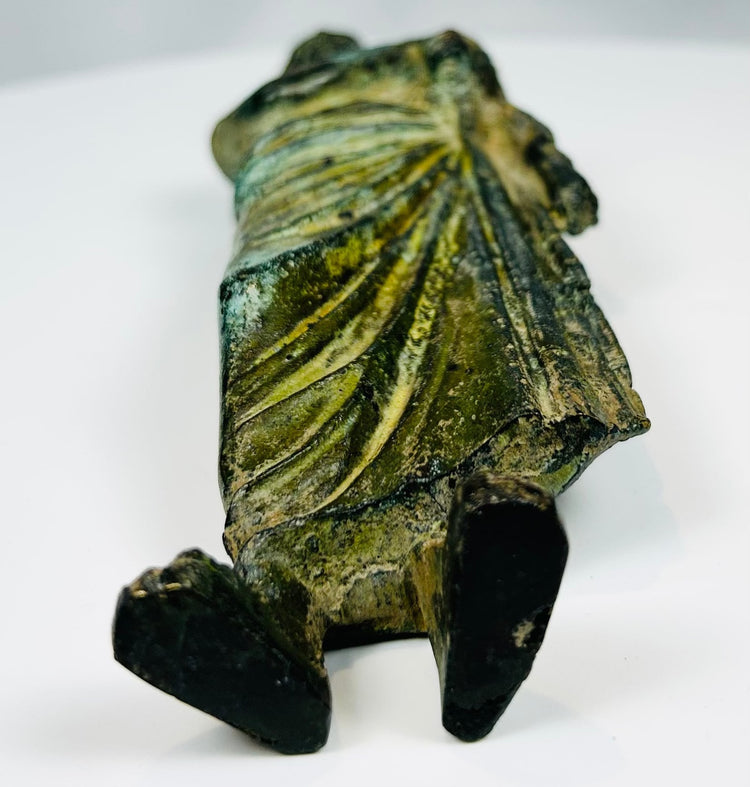
Las características faciales están cuidadosamente modeladas, mostrando una barba corta y una expresión contemplativa, haciendo eco de las tradiciones retratísticas de las figuras intelectuales y cívicas romanas. El tratamiento escultórico de la vestimenta muestra pliegues dinámicos en cascada, enfatizando el movimiento y el ideal clásico del drapeado naturalista.
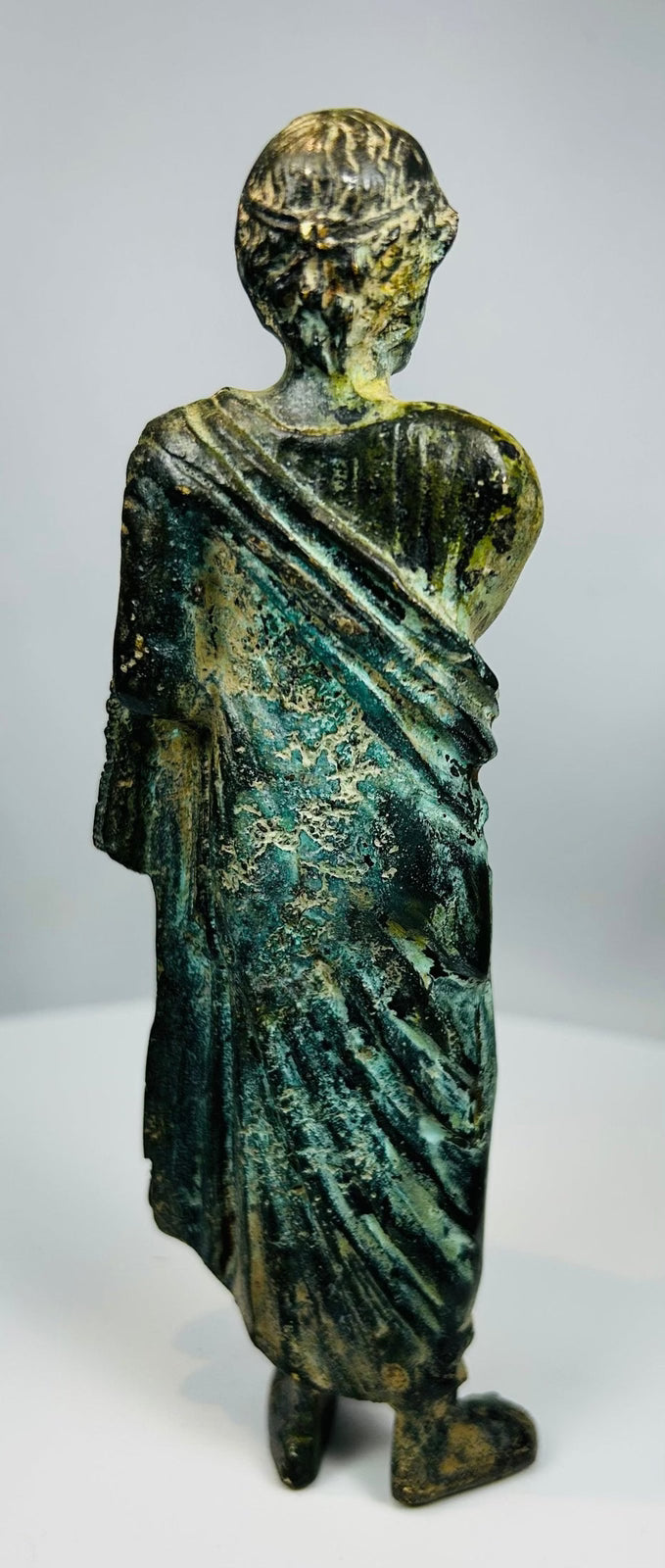
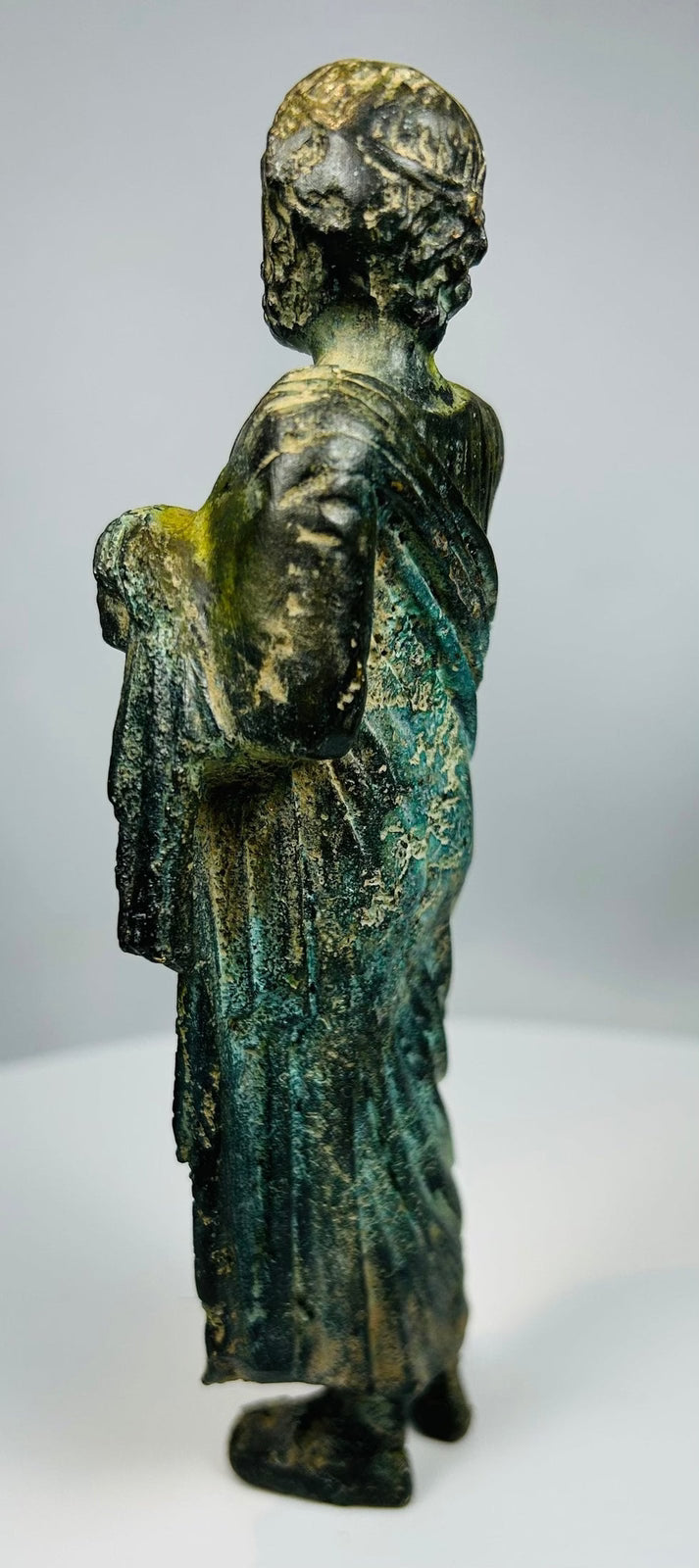
La superficie exhibe una rica pátina verde moteada consistente con el bronce envejecido, con áreas de oxidación más oscura y concreciones minerales que añaden profundidad visual y carácter. La figura se mantiene firme con una distribución equilibrada del peso, lo que le confiere a la escultura una presencia estable y digna.
Las figuras de bronce de temas clásicos se hicieron muy populares durante el período del Grand Tour del siglo XIX, cuando coleccionistas y viajeros buscaban esculturas inspiradas en las antigüedades romanas y griegas. Dichas piezas se exhibían comúnmente en bibliotecas, estudios y gabinetes de curiosidades como símbolos de educación y refinamiento clásico.
Características
- Figura masculina clásica con vestimenta tipo toga drapeada
- Rasgos faciales finamente modelados con barba y expresión contemplativa
- Pliegues de drapeado en cascada profundamente tallados
- Pátina de bronce rica, verde y oscura en toda la superficie
- Construcción de metal fundido sólido
- Escultura decorativa inspirada en la estatuaria grecorromana
Importancia cultural
Durante los siglos XVIII y XIX, la tradición del Grand Tour animó a los viajeros ricos europeos y americanos a coleccionar obras de arte inspiradas en la Antigüedad clásica. Se produjeron estatuillas de bronce de filósofos, senadores romanos y figuras mitológicas como objetos decorativos refinados que reflejaban la admiración por la cultura griega y romana antiguas.
Estas esculturas simbolizaban la educación, la filosofía y los ideales intelectuales asociados con la Antigüedad clásica. Se exhibían comúnmente en bibliotecas, estudios y colecciones privadas como expresiones de gusto cultivado y sofisticación cultural.
Estado
Buen estado antiguo general. La escultura muestra desgaste relacionado con la edad, consistente con la antigüedad y el material. La superficie presenta pátina natural con áreas de oxidación y depósitos minerales que realzan su carácter antiguo. Presenta un desgaste superficial menor e irregularidades de fundición.
Dimensiones (aproximadas)
Altura: 16.5 cm
Antigüedad (aproximada)
100-150 años
Procedencia
Antiguamente formó parte de la colección de un coleccionista de antigüedades de toda la vida en South Paris, Maine, Estados Unidos. El coleccionista reunió un grupo amplio y variado de objetos históricos y decorativos a lo largo de muchas décadas. Tras el fallecimiento del coleccionista, la colección de la herencia se dispersó por completo y esta pieza entró posteriormente en el mercado del arte.
Más información
Descubra una figura de bronce clásica en la colección de The Metropolitan Museum of Art
Explore nuestra Colección de Estatuas, Figuras y Tallados
Descripción
Contexto histórico y origen
Región: Europa, probablemente Italia o Francia
Material: Bronce fundido o aleación de bronce con pátina verde natural
Período: Siglo XIX – principios del siglo XX, renacimiento clásico / era del Grand Tour
Descripción
Esta figura de bronce finamente fundida representa un tema masculino clásico, realizado según la tradición del retrato escultórico grecorromano. La figura de pie está representada vistiendo una túnica drapeada, cayendo en pliegues profundamente tallados sobre el cuerpo, un sello distintivo de la estatuaria clásica. Una mano recoge el drapeado mientras el brazo opuesto cruza el pecho, sugiriendo la postura serena de un filósofo, orador o estadista.
Las características faciales están cuidadosamente modeladas, mostrando una barba corta y una expresión contemplativa, haciendo eco de las tradiciones retratísticas de las figuras intelectuales y cívicas romanas. El tratamiento escultórico de la vestimenta muestra pliegues dinámicos en cascada, enfatizando el movimiento y el ideal clásico del drapeado naturalista.
La superficie exhibe una rica pátina verde moteada consistente con el bronce envejecido, con áreas de oxidación más oscura y concreciones minerales que añaden profundidad visual y carácter. La figura se mantiene firme con una distribución equilibrada del peso, lo que le confiere a la escultura una presencia estable y digna.
Las figuras de bronce de temas clásicos se hicieron muy populares durante el período del Grand Tour del siglo XIX, cuando coleccionistas y viajeros buscaban esculturas inspiradas en las antigüedades romanas y griegas. Dichas piezas se exhibían comúnmente en bibliotecas, estudios y gabinetes de curiosidades como símbolos de educación y refinamiento clásico.
Características
- Figura masculina clásica con vestimenta tipo toga drapeada
- Rasgos faciales finamente modelados con barba y expresión contemplativa
- Pliegues de drapeado en cascada profundamente tallados
- Pátina de bronce rica, verde y oscura en toda la superficie
- Construcción de metal fundido sólido
- Escultura decorativa inspirada en la estatuaria grecorromana
Importancia cultural
Durante los siglos XVIII y XIX, la tradición del Grand Tour animó a los viajeros ricos europeos y americanos a coleccionar obras de arte inspiradas en la Antigüedad clásica. Se produjeron estatuillas de bronce de filósofos, senadores romanos y figuras mitológicas como objetos decorativos refinados que reflejaban la admiración por la cultura griega y romana antiguas.
Estas esculturas simbolizaban la educación, la filosofía y los ideales intelectuales asociados con la Antigüedad clásica. Se exhibían comúnmente en bibliotecas, estudios y colecciones privadas como expresiones de gusto cultivado y sofisticación cultural.
Estado
Buen estado antiguo general. La escultura muestra desgaste relacionado con la edad, consistente con la antigüedad y el material. La superficie presenta pátina natural con áreas de oxidación y depósitos minerales que realzan su carácter antiguo. Presenta un desgaste superficial menor e irregularidades de fundición.
Dimensiones (aproximadas)
Altura: 16.5 cm
Antigüedad (aproximada)
100-150 años
Procedencia
Antiguamente formó parte de la colección de un coleccionista de antigüedades de toda la vida en South Paris, Maine, Estados Unidos. El coleccionista reunió un grupo amplio y variado de objetos históricos y decorativos a lo largo de muchas décadas. Tras el fallecimiento del coleccionista, la colección de la herencia se dispersó por completo y esta pieza entró posteriormente en el mercado del arte.
Más información
Descubra una figura de bronce clásica en la colección de The Metropolitan Museum of Art
Explore nuestra Colección de Estatuas, Figuras y Tallados
También te puede interesar
