

Anillo de bronce imperial romano con bisel plano | Circa siglos II-III d. C.
- Precio habitual
- $175.00
- Precio de venta
- $175.00
- Precio habitual
No se pudo cargar la disponibilidad de retiro


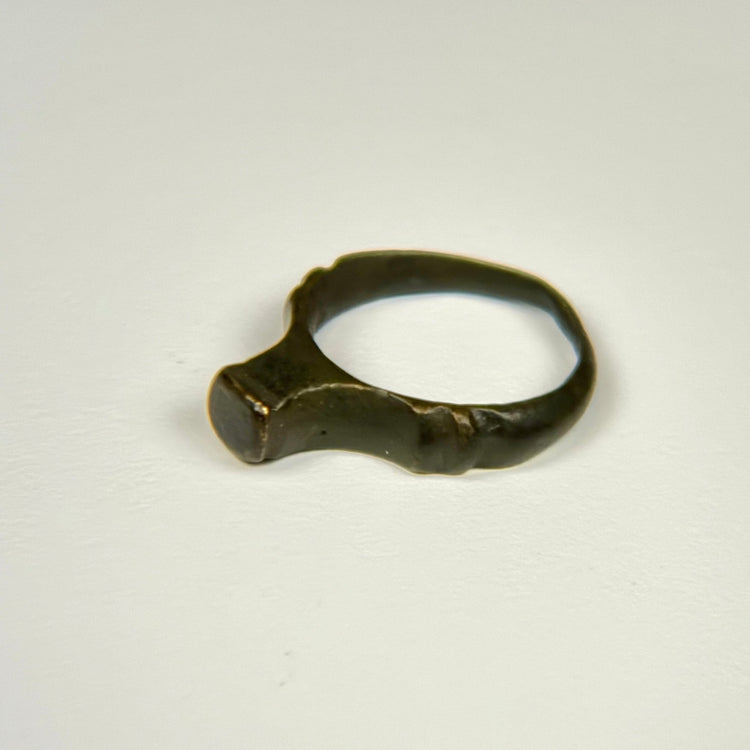
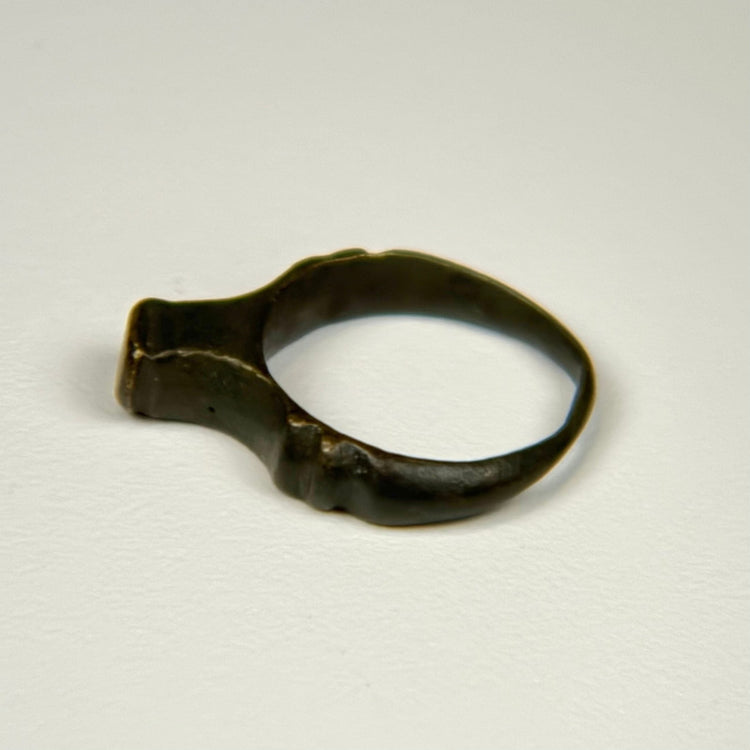


Anillo de bronce imperial romano con bisel plano | Circa siglos II-III d. C.
Descripción
Más
Menos
Contexto histórico y origen
Región: Imperio Romano
Material: Bronce
Período: Período Imperial Romano, c. 100-300 d.C.
Descripción
Este anillo de sello de bronce finamente fundido es un ejemplo auténtico de adorno personal y autoridad en el Imperio Romano. El anillo presenta una banda redondeada con un bisel plano ligeramente elevado, una vez grabado con un diseño de intaglio utilizado para marcar sellos en cera o arcilla. Aunque siglos de uso han dejado el bisel liso, la pieza conserva su fuerte forma arquitectónica y una atractiva pátina verde negruzca desarrollada por un largo entierro. Probablemente usado por un ciudadano o soldado romano, este anillo de sello encarna tanto la elegancia como la función, uniendo la joyería y la identidad social.
Características
- Auténtico bronce romano fundido a mano
- Bisel ancho y plano, típico de los anillos de sello romanos
- Pátina de color verde oscuro a negro con incrustaciones de tierra ligeras
- Forma minimalista, sin restaurar y tal como se encontró
Importancia cultural
En la sociedad romana, los anillos de sello servían como identificadores personales y herramientas funcionales para sellar correspondencia y documentos legales. Usados a diario y a menudo transmitidos de generación en generación, estos anillos representaban autoridad, linaje familiar y rango social. Este ejemplo, aunque gastado, sigue siendo un vínculo tangible e íntimo con la vida de un individuo en el Imperio Romano.
Estado
Buen estado antiguo con desgaste y oxidación relacionados con la edad. El bisel está desgastado y liso, probablemente debido a siglos de uso y entierro. Sin reparaciones ni restauraciones modernas.
Dimensiones (aproximadas)
Talla de anillo: EE. UU. 3
Edad (aproximada)
1.700–1.900 años de antigüedad
Procedencia
Anteriormente en una colección privada en Brooklyn, Nueva York, EE. UU.
Más información
Descubra cómo la joyería reflejaba el estatus, la identidad y el poder en la Antigua Roma
Ver nuestra Colección de Anillos y Joyas Antiguas
Descripción
Contexto histórico y origen
Región: Imperio Romano
Material: Bronce
Período: Período Imperial Romano, c. 100-300 d.C.
Descripción
Este anillo de sello de bronce finamente fundido es un ejemplo auténtico de adorno personal y autoridad en el Imperio Romano. El anillo presenta una banda redondeada con un bisel plano ligeramente elevado, una vez grabado con un diseño de intaglio utilizado para marcar sellos en cera o arcilla. Aunque siglos de uso han dejado el bisel liso, la pieza conserva su fuerte forma arquitectónica y una atractiva pátina verde negruzca desarrollada por un largo entierro. Probablemente usado por un ciudadano o soldado romano, este anillo de sello encarna tanto la elegancia como la función, uniendo la joyería y la identidad social.
Características
- Auténtico bronce romano fundido a mano
- Bisel ancho y plano, típico de los anillos de sello romanos
- Pátina de color verde oscuro a negro con incrustaciones de tierra ligeras
- Forma minimalista, sin restaurar y tal como se encontró
Importancia cultural
En la sociedad romana, los anillos de sello servían como identificadores personales y herramientas funcionales para sellar correspondencia y documentos legales. Usados a diario y a menudo transmitidos de generación en generación, estos anillos representaban autoridad, linaje familiar y rango social. Este ejemplo, aunque gastado, sigue siendo un vínculo tangible e íntimo con la vida de un individuo en el Imperio Romano.
Estado
Buen estado antiguo con desgaste y oxidación relacionados con la edad. El bisel está desgastado y liso, probablemente debido a siglos de uso y entierro. Sin reparaciones ni restauraciones modernas.
Dimensiones (aproximadas)
Talla de anillo: EE. UU. 3
Edad (aproximada)
1.700–1.900 años de antigüedad
Procedencia
Anteriormente en una colección privada en Brooklyn, Nueva York, EE. UU.
Más información
Descubra cómo la joyería reflejaba el estatus, la identidad y el poder en la Antigua Roma
Ver nuestra Colección de Anillos y Joyas Antiguas
También te puede interesar
