Jorasán islámico | Tintero de bronce | Siglos X-XII

Historial de procedencia y propiedad
Precio habitual
$500.00
Precio de venta
$500.00
Precio habitual
Envío calculado al finalizar la compra.

This is a one-of-a-kind historical object. Once sold, this exact piece will not be restocked.

Questions before acquiring? Additional photographs, condition details, documentation, shipping information or a private viewing are available upon request.
Islamic Khorassan bronze inkwell with domed lid and engraved floral geometric motifs
360-degree rotating video of an antique Islamic Khorassan bronze inkwell dating to the 10th–12th century CE, featuring a cylindrical body, domed lid with rounded finial, finely engraved floral and geometric patterns, decorative side fittings, and rich green and reddish-brown patina. An example of medieval Islamic metalwork from the Islamic Golden Age, shown from multiple angles.
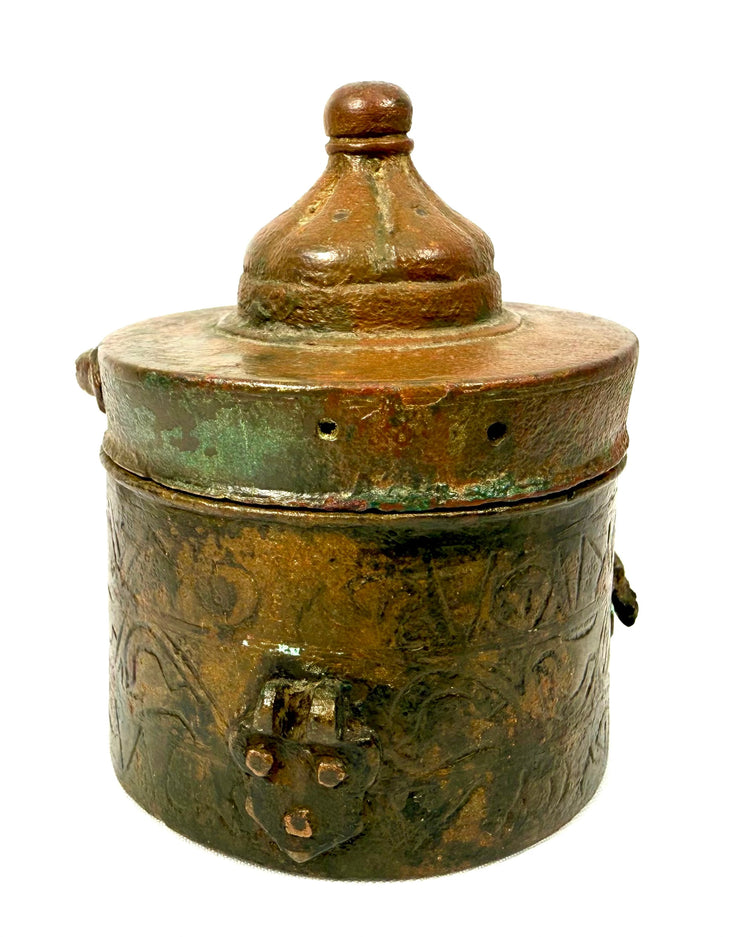
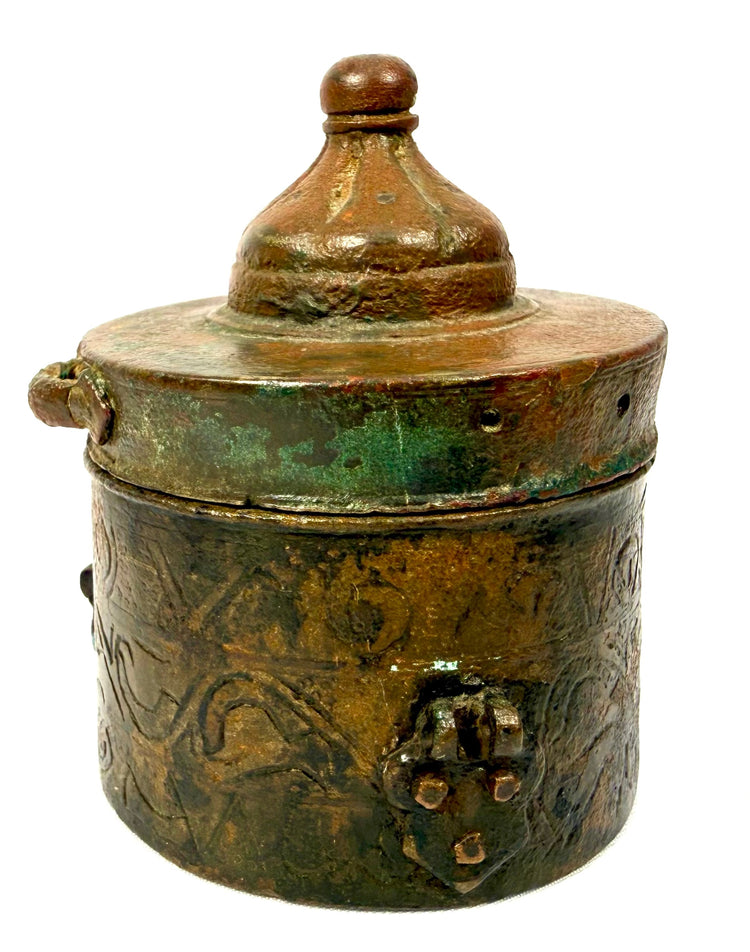
Medieval Islamic Khorassan bronze inkwell with a cylindrical body, conical domed lid, and rounded finial, attributed to the 10th–12th century CE.
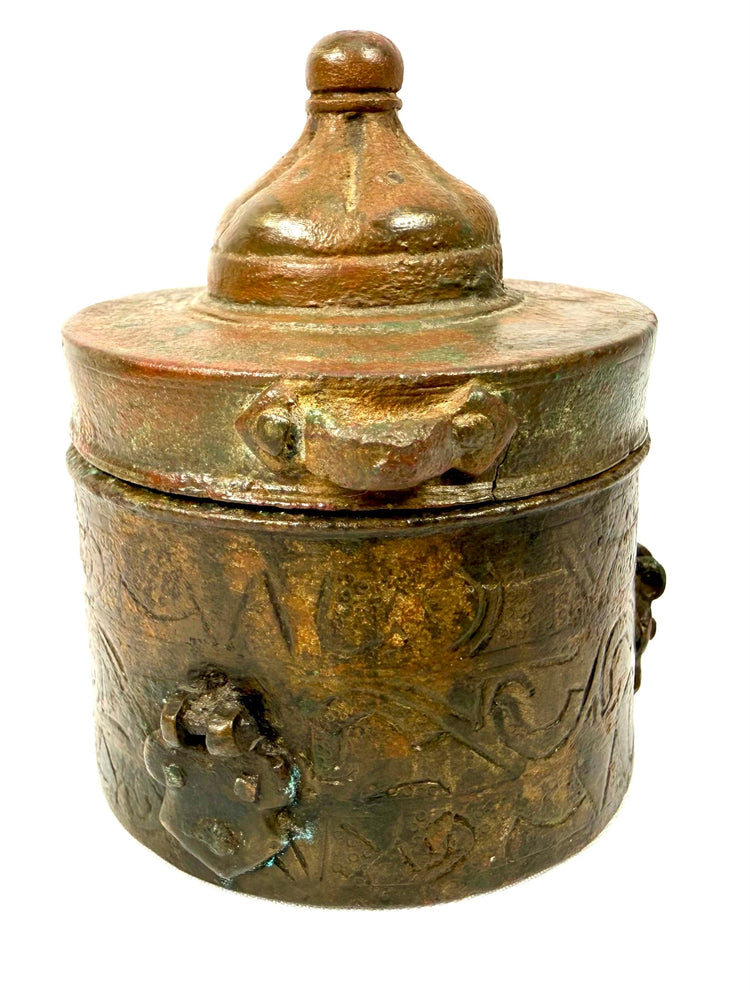
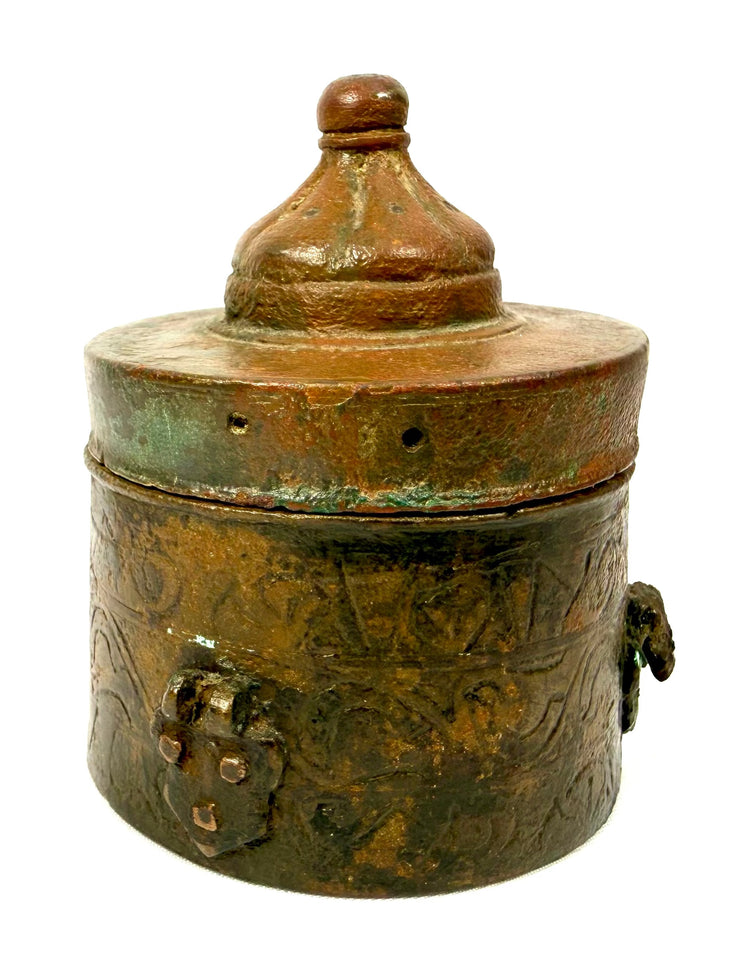
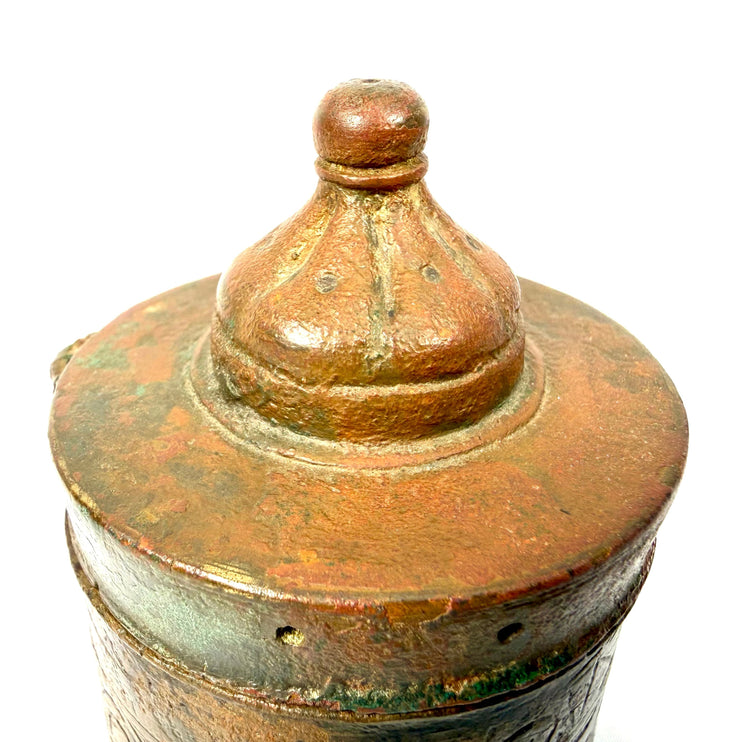
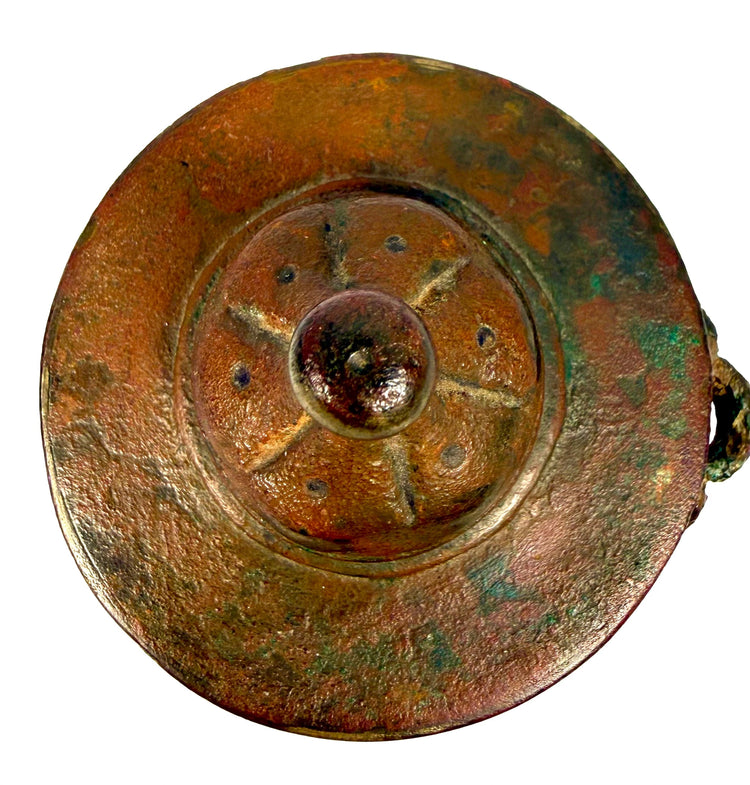
Antique Khorassan bronze inkwell featuring a broad circular lid with raised horizontal mouldings and a prominent rounded finial.
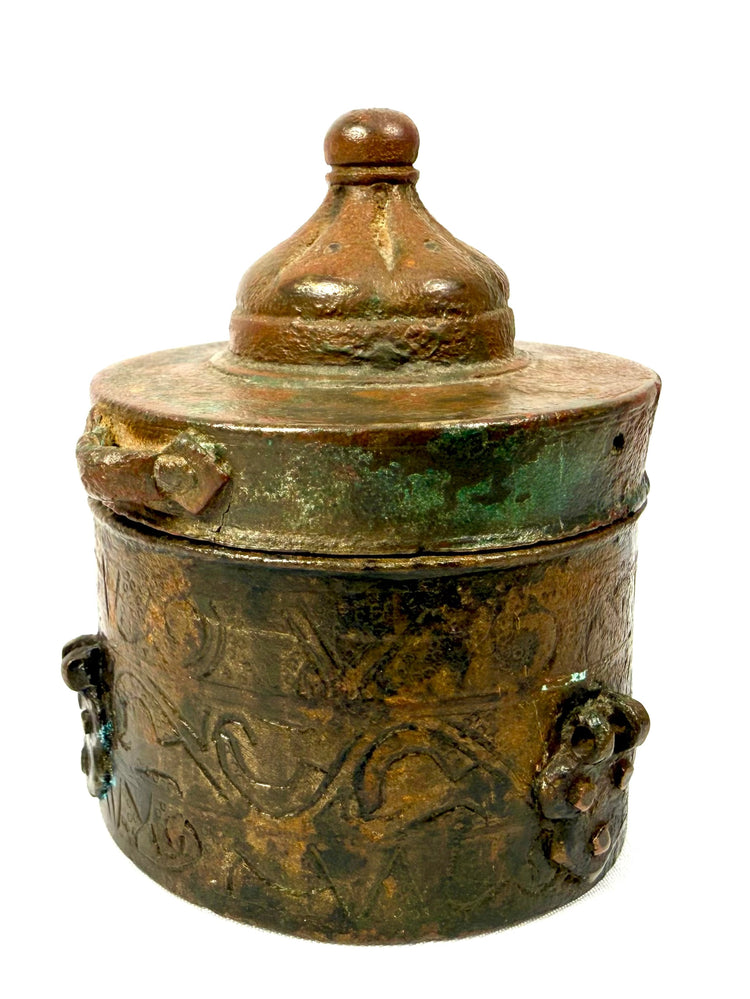
Islamic Golden Age bronze inkwell displaying intricate engraved scrolling, geometric, and circular motifs across its cylindrical body.
Medieval Islamic bronze writing vessel with a conical domed lid, small perforations along the upper band, and aged brown and green patination.
Khorassan bronze inkwell featuring surviving applied metal fittings, decorative engravings, and an irregular archaeological surface texture.
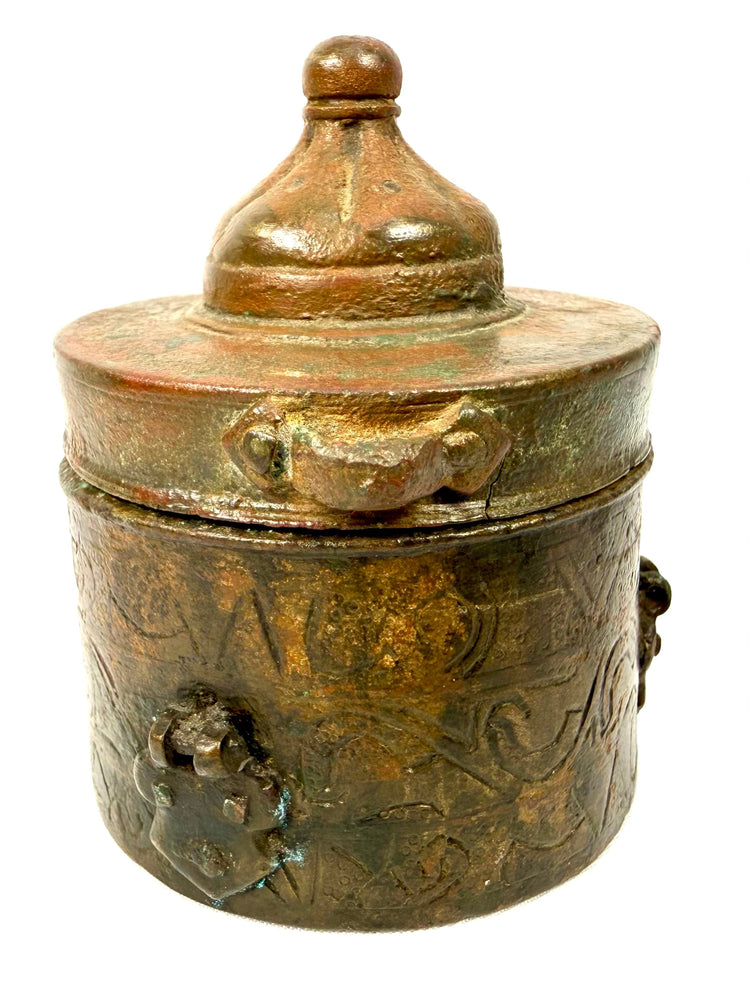
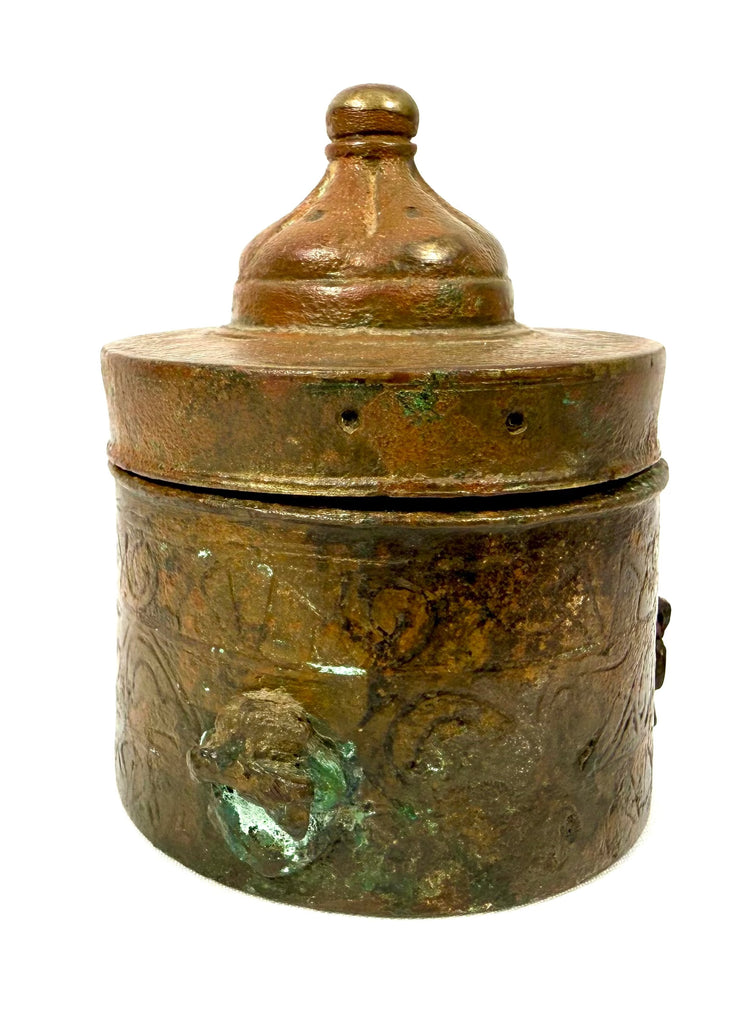
Antique Persian Khorassan bronze inkwell with a substantial cylindrical construction and naturally weathered olive, brown, and green surfaces.
Medieval Islamic bronze inkwell displaying engraved curvilinear ornamentation, localized oxidation, and centuries-old surface wear.
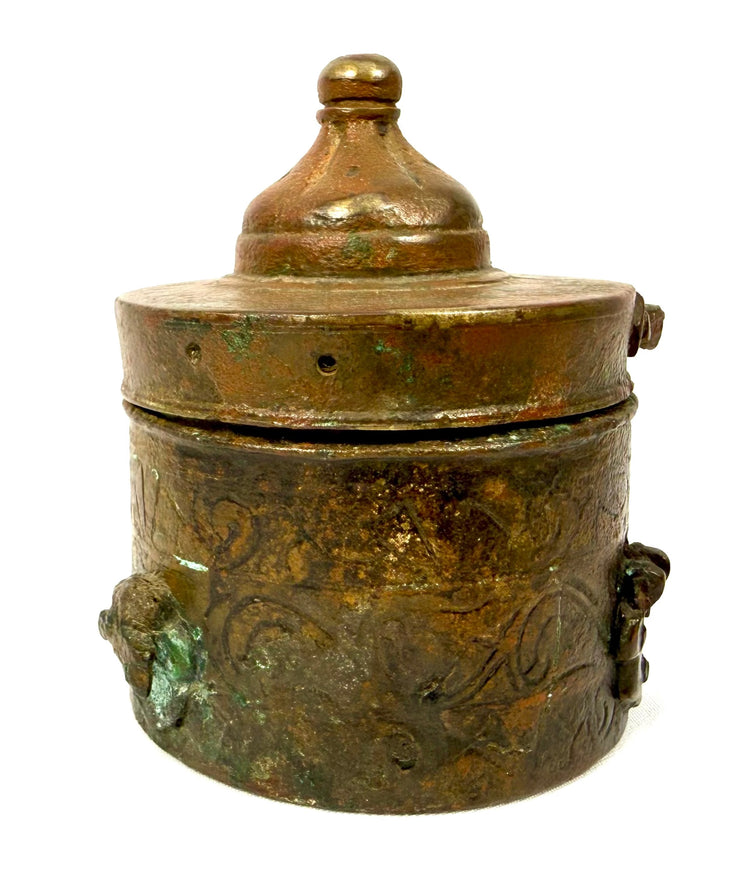
Historical Khorassan bronze writing accessory featuring a fitted domed lid, pronounced circular mouldings, and traditional Islamic metalworking details.
Islamic bronze inkwell with preserved metal attachment elements, small lid perforations, and partially worn geometric engravings.
Medieval Khorassan bronze inkwell showcasing a rounded lid finial, aged bronze patina, surface pitting, and intricate ornamental decoration.
Antique Islamic Khorassan bronze inkwell measuring approximately 3 inches tall and 2.5 inches wide, with a cylindrical body and conical domed lid.
  • Islamic Khorassan bronze inkwell with domed lid and engraved floral geometric motifs
  • 360-degree rotating video of an antique Islamic Khorassan bronze inkwell dating to the 10th–12th century CE, featuring a cylindrical body, domed lid with rounded finial, finely engraved floral and geometric patterns, decorative side fittings, and rich green and reddish-brown patina. An example of medieval Islamic metalwork from the Islamic Golden Age, shown from multiple angles.
  • Medieval Islamic Khorassan bronze inkwell with a cylindrical body, conical domed lid, and rounded finial, attributed to the 10th–12th century CE.
  • Antique Khorassan bronze inkwell featuring a broad circular lid with raised horizontal mouldings and a prominent rounded finial.
  • Islamic Golden Age bronze inkwell displaying intricate engraved scrolling, geometric, and circular motifs across its cylindrical body.
  • Medieval Islamic bronze writing vessel with a conical domed lid, small perforations along the upper band, and aged brown and green patination.
  • Khorassan bronze inkwell featuring surviving applied metal fittings, decorative engravings, and an irregular archaeological surface texture.
  • Antique Persian Khorassan bronze inkwell with a substantial cylindrical construction and naturally weathered olive, brown, and green surfaces.
  • Medieval Islamic bronze inkwell displaying engraved curvilinear ornamentation, localized oxidation, and centuries-old surface wear.
  • Historical Khorassan bronze writing accessory featuring a fitted domed lid, pronounced circular mouldings, and traditional Islamic metalworking details.
  • Islamic bronze inkwell with preserved metal attachment elements, small lid perforations, and partially worn geometric engravings.
  • Medieval Khorassan bronze inkwell showcasing a rounded lid finial, aged bronze patina, surface pitting, and intricate ornamental decoration.
  • Antique Islamic Khorassan bronze inkwell measuring approximately 3 inches tall and 2.5 inches wide, with a cylindrical body and conical domed lid.
Islamic Khorassan bronze inkwell with domed lid and engraved floral geometric motifs
360-degree rotating video of an antique Islamic Khorassan bronze inkwell dating to the 10th–12th century CE, featuring a cylindrical body, domed lid with rounded finial, finely engraved floral and geometric patterns, decorative side fittings, and rich green and reddish-brown patina. An example of medieval Islamic metalwork from the Islamic Golden Age, shown from multiple angles.
Medieval Islamic Khorassan bronze inkwell with a cylindrical body, conical domed lid, and rounded finial, attributed to the 10th–12th century CE.
Antique Khorassan bronze inkwell featuring a broad circular lid with raised horizontal mouldings and a prominent rounded finial.
Islamic Golden Age bronze inkwell displaying intricate engraved scrolling, geometric, and circular motifs across its cylindrical body.
Medieval Islamic bronze writing vessel with a conical domed lid, small perforations along the upper band, and aged brown and green patination.
Khorassan bronze inkwell featuring surviving applied metal fittings, decorative engravings, and an irregular archaeological surface texture.
Antique Persian Khorassan bronze inkwell with a substantial cylindrical construction and naturally weathered olive, brown, and green surfaces.
Medieval Islamic bronze inkwell displaying engraved curvilinear ornamentation, localized oxidation, and centuries-old surface wear.
Historical Khorassan bronze writing accessory featuring a fitted domed lid, pronounced circular mouldings, and traditional Islamic metalworking details.
Islamic bronze inkwell with preserved metal attachment elements, small lid perforations, and partially worn geometric engravings.
Medieval Khorassan bronze inkwell showcasing a rounded lid finial, aged bronze patina, surface pitting, and intricate ornamental decoration.
Antique Islamic Khorassan bronze inkwell measuring approximately 3 inches tall and 2.5 inches wide, with a cylindrical body and conical domed lid.
Authenticity and secure checkout guarantee

Jorasán islámico | Tintero de bronce | Siglos X-XII

Descripción

Contexto histórico y origen

Región: Jorasan (noreste de Irán, Afganistán, Asia Central)
Material: Bronce
Periodo: Siglos X-XII d. C.

Descripción

Este excepcional tintero islámico de bronce de Jorasan data de los siglos X-XII, un período de renombre por sus logros artísticos e intelectuales durante la Edad de Oro islámica. El tintero tiene un hermoso diseño con una tapa abovedada con un pequeño asa y un cuerpo cilíndrico, ricamente grabado con intrincados motivos florales y geométricos. Su elegante forma y detalles decorativos reflejan la refinada artesanía de la metalistería de Jorasan, una de las formas de arte más celebradas del período.

Características

- Motivos florales y geométricos finamente grabados, típicos del arte de Jorasan

- Tapa abovedada con pequeña asa y cuerpo cilíndrico

- Diseño compacto que combina funcionalidad con belleza decorativa

- Pátina desarrollada en tonos verdes y marrones por siglos de antigüedad y uso

Significado cultural

Los tinteros como este eran herramientas esenciales para eruditos, escribas y calígrafos, lo que subraya el papel central de la alfabetización y el aprendizaje en la Edad de Oro islámica. Más allá de su función práctica, estos objetos encarnaban el alto valor que se otorgaba al conocimiento, los manuscritos y la caligrafía como actividades artísticas e intelectuales. Esta pieza habría sido una posesión preciada, que simbolizaba la erudición y el refinamiento cultural.

Estado

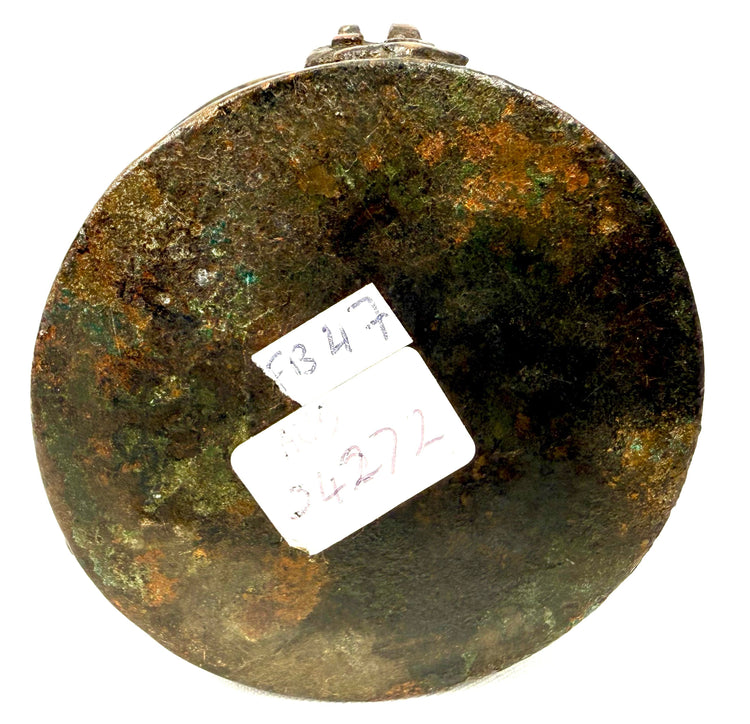
El tintero exhibe una rica pátina natural con tonos verdes y marrones consistentes con su edad. El desgaste superficial y la erosión añaden profundidad a su autenticidad, al tiempo que conservan sus intrincados patrones decorativos.

Dimensiones (aproximadas)

Altura: 7,6 cm (3 in)
Ancho: 6,3 cm (2,5 in)

Edad (aproximada)

800–1.100 años

Procedencia

Anteriormente parte de la Colección BC Galleries, Melbourne, Australia. Fundada en 1976, BC Galleries fue un destacado distribuidor australiano independiente especializado en arte y antigüedades antiguas, arte tribal, etnografía y objetos históricos de una amplia gama de culturas. Posteriormente se mantuvo en una colección privada en Armadale, Victoria, Australia.

Saber más

Examine un ejemplo comparable de metalistería de Oriente Medio en el Walters Art Museum

Explore nuestra Colección de antigüedades y arte antiguo de Oriente Medio

Descripción

Contexto histórico y origen

Región: Jorasan (noreste de Irán, Afganistán, Asia Central)
Material: Bronce
Periodo: Siglos X-XII d. C.

Descripción

Este excepcional tintero islámico de bronce de Jorasan data de los siglos X-XII, un período de renombre por sus logros artísticos e intelectuales durante la Edad de Oro islámica. El tintero tiene un hermoso diseño con una tapa abovedada con un pequeño asa y un cuerpo cilíndrico, ricamente grabado con intrincados motivos florales y geométricos. Su elegante forma y detalles decorativos reflejan la refinada artesanía de la metalistería de Jorasan, una de las formas de arte más celebradas del período.

Características

- Motivos florales y geométricos finamente grabados, típicos del arte de Jorasan

- Tapa abovedada con pequeña asa y cuerpo cilíndrico

- Diseño compacto que combina funcionalidad con belleza decorativa

- Pátina desarrollada en tonos verdes y marrones por siglos de antigüedad y uso

Significado cultural

Los tinteros como este eran herramientas esenciales para eruditos, escribas y calígrafos, lo que subraya el papel central de la alfabetización y el aprendizaje en la Edad de Oro islámica. Más allá de su función práctica, estos objetos encarnaban el alto valor que se otorgaba al conocimiento, los manuscritos y la caligrafía como actividades artísticas e intelectuales. Esta pieza habría sido una posesión preciada, que simbolizaba la erudición y el refinamiento cultural.

Estado

El tintero exhibe una rica pátina natural con tonos verdes y marrones consistentes con su edad. El desgaste superficial y la erosión añaden profundidad a su autenticidad, al tiempo que conservan sus intrincados patrones decorativos.

Dimensiones (aproximadas)

Altura: 7,6 cm (3 in)
Ancho: 6,3 cm (2,5 in)

Edad (aproximada)

800–1.100 años

Procedencia

Anteriormente parte de la Colección BC Galleries, Melbourne, Australia. Fundada en 1976, BC Galleries fue un destacado distribuidor australiano independiente especializado en arte y antigüedades antiguas, arte tribal, etnografía y objetos históricos de una amplia gama de culturas. Posteriormente se mantuvo en una colección privada en Armadale, Victoria, Australia.

Saber más

Examine un ejemplo comparable de metalistería de Oriente Medio en el Walters Art Museum

Explore nuestra Colección de antigüedades y arte antiguo de Oriente Medio

También te puede interesar