



Español | Casco de bombero con cresta (Kaji Kabuto) | Período Edo a principios del período Meiji | Alrededor del siglo XIX
- Precio habitual
- $1,637.08
- Precio de venta
- $1,637.08
- Precio habitual
No se pudo cargar la disponibilidad de retiro






Español | Casco de bombero con cresta (Kaji Kabuto) | Período Edo a principios del período Meiji | Alrededor del siglo XIX
Descripción
Más
Menos
Contexto Histórico y Origen
Región: Japón
Material: Hierro, cobre y latón con forro interior textil
Periodo: Finales del Periodo Edo a principios del Periodo Meiji, circa siglo XIX
Descripción
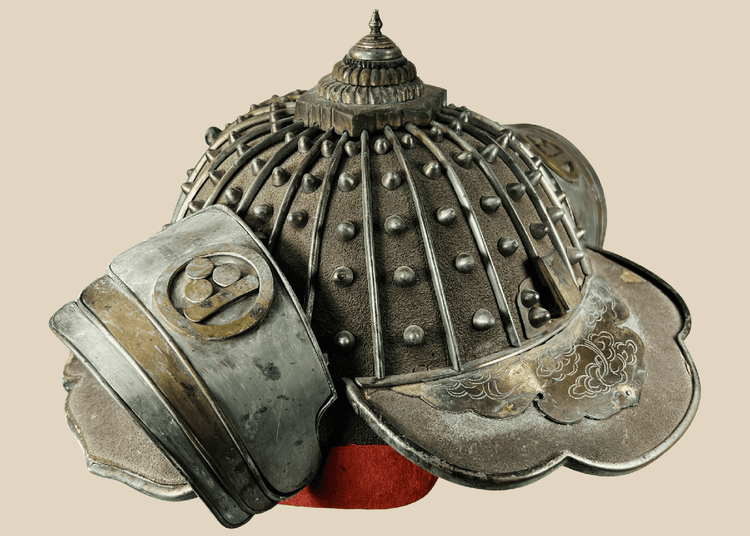
Un impactante y muy decorativo Kaji Kabuto japonés (casco de bombero), tradicionalmente usado por los bomberos del periodo Edo conocidos como hikeshi. A diferencia de los cascos de batalla, estos fueron diseñados para la extinción de incendios urbanos, donde el colapso de estructuras, la caída de escombros y las llamas representaban un peligro constante.
Este ejemplo presenta una construcción de hierro abovedada reforzada con prominentes nervaduras verticales y numerosos remaches elevados, creando tanto resistencia estructural como una audaz presencia visual. El ala ancha y festoneada proporciona protección adicional al cuello y los hombros, mientras que el casco está coronado con un ornamentado remate de varios niveles, un sello distintivo de las piezas más elaboradas o de alto rango.
A cada lado hay grandes protectores de orejas curvados (fukigaeshi) adornados con mon circulares de latón (escudos familiares o de brigada), que indican la afiliación a una unidad o grupo de bomberos específico. La placa frontal conserva motivos decorativos grabados, añadiendo un elemento artístico a un objeto que de otro modo sería utilitario.
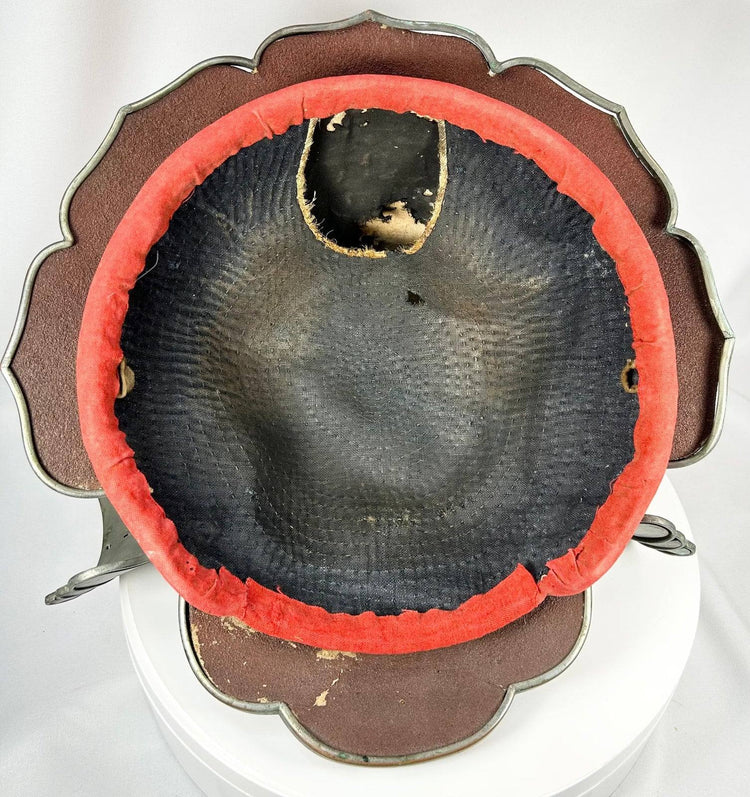
El interior conserva su forro textil original con un anillo acolchado rojo, mostrando claras evidencias de uso y antigüedad auténticos.
Características
- Forma tradicional de casco de bombero Kaji Kabuto
- Cúpula de hierro reforzada con nervaduras aplicadas y tachuelas remachadas
- Ala ancha festoneada para protección del cuello y los hombros
- Grandes protectores laterales con mon de latón (emblemas heráldicos)
- Remate ornamentado de varios niveles en la corona
- Placa frontal decorativa grabada
- Forro textil interior original con borde acolchado rojo
- Elementos de diseño funcionales y ceremoniales
Significado Cultural
Durante el período Edo, los bomberos japoneses eran figuras muy respetadas, a menudo organizados en brigadas rivales que se enorgullecían de sus elaborados uniformes y equipos. Los cascos Kaji Kabuto cumplían funciones tanto prácticas como simbólicas, ofreciendo protección al tiempo que mostraban identidad, estatus y artesanía.
Estos cascos representan una intersección única entre la tradición de la armadura samurái y la vida civil, adaptando los principios del diseño marcial para la protección urbana. Hoy en día, son artefactos muy coleccionables que reflejan la historia arquitectónica de Japón, la cultura de extinción de incendios y el arte de la metalistería.
Estado
Buen estado antiguo en general. La superficie muestra oxidación, pátina y pérdidas menores consistentes con la edad y el uso. El forro interior presenta desgaste y deterioro como es de esperar. Estructuralmente sólido y se exhibe excepcionalmente bien.
Dimensiones (Aproximadas)
Altura: 7.75 in
Ancho: 13 in
Largo: 13 in
Edad (Aproximada)
120-170 años de antigüedad
Aprende Más
Explore un casco japonés comparable en la colección de El Museo Metropolitano de Arte
Explore nuestra colección curada de Antigüedades Orientales y Reliquias Culturales
Descripción
Contexto Histórico y Origen
Región: Japón
Material: Hierro, cobre y latón con forro interior textil
Periodo: Finales del Periodo Edo a principios del Periodo Meiji, circa siglo XIX
Descripción
Un impactante y muy decorativo Kaji Kabuto japonés (casco de bombero), tradicionalmente usado por los bomberos del periodo Edo conocidos como hikeshi. A diferencia de los cascos de batalla, estos fueron diseñados para la extinción de incendios urbanos, donde el colapso de estructuras, la caída de escombros y las llamas representaban un peligro constante.
Este ejemplo presenta una construcción de hierro abovedada reforzada con prominentes nervaduras verticales y numerosos remaches elevados, creando tanto resistencia estructural como una audaz presencia visual. El ala ancha y festoneada proporciona protección adicional al cuello y los hombros, mientras que el casco está coronado con un ornamentado remate de varios niveles, un sello distintivo de las piezas más elaboradas o de alto rango.
A cada lado hay grandes protectores de orejas curvados (fukigaeshi) adornados con mon circulares de latón (escudos familiares o de brigada), que indican la afiliación a una unidad o grupo de bomberos específico. La placa frontal conserva motivos decorativos grabados, añadiendo un elemento artístico a un objeto que de otro modo sería utilitario.
El interior conserva su forro textil original con un anillo acolchado rojo, mostrando claras evidencias de uso y antigüedad auténticos.
Características
- Forma tradicional de casco de bombero Kaji Kabuto
- Cúpula de hierro reforzada con nervaduras aplicadas y tachuelas remachadas
- Ala ancha festoneada para protección del cuello y los hombros
- Grandes protectores laterales con mon de latón (emblemas heráldicos)
- Remate ornamentado de varios niveles en la corona
- Placa frontal decorativa grabada
- Forro textil interior original con borde acolchado rojo
- Elementos de diseño funcionales y ceremoniales
Significado Cultural
Durante el período Edo, los bomberos japoneses eran figuras muy respetadas, a menudo organizados en brigadas rivales que se enorgullecían de sus elaborados uniformes y equipos. Los cascos Kaji Kabuto cumplían funciones tanto prácticas como simbólicas, ofreciendo protección al tiempo que mostraban identidad, estatus y artesanía.
Estos cascos representan una intersección única entre la tradición de la armadura samurái y la vida civil, adaptando los principios del diseño marcial para la protección urbana. Hoy en día, son artefactos muy coleccionables que reflejan la historia arquitectónica de Japón, la cultura de extinción de incendios y el arte de la metalistería.
Estado
Buen estado antiguo en general. La superficie muestra oxidación, pátina y pérdidas menores consistentes con la edad y el uso. El forro interior presenta desgaste y deterioro como es de esperar. Estructuralmente sólido y se exhibe excepcionalmente bien.
Dimensiones (Aproximadas)
Altura: 7.75 in
Ancho: 13 in
Largo: 13 in
Edad (Aproximada)
120-170 años de antigüedad
Aprende Más
Explore un casco japonés comparable en la colección de El Museo Metropolitano de Arte
Explore nuestra colección curada de Antigüedades Orientales y Reliquias Culturales
También te puede interesar
