

Cerradura de puerta de hierro forjado antigua grande con llave esqueleto | Circa 1800–1850
- Precio habitual
- $600.00
- Precio de venta
- $600.00
- Precio habitual
No se pudo cargar la disponibilidad de retiro


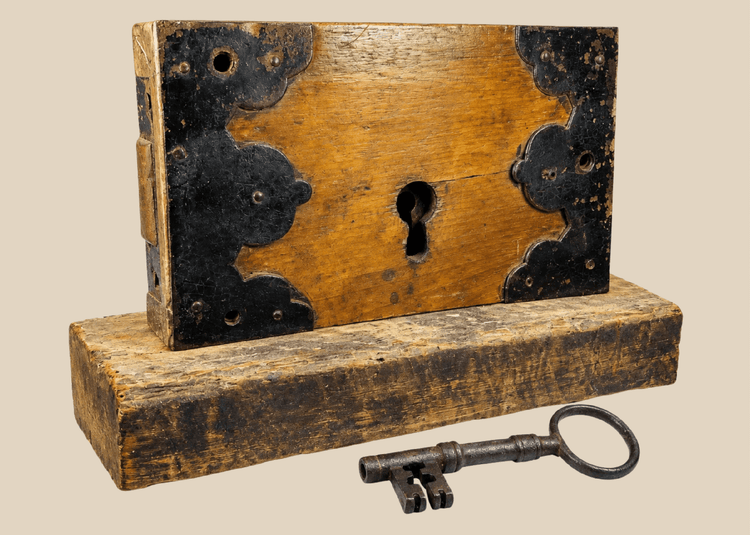
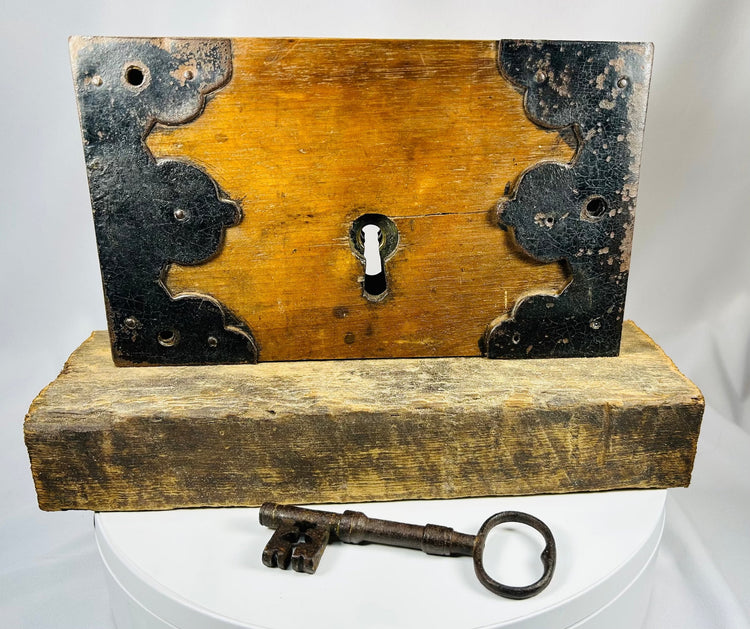
Cerradura de puerta de hierro forjado antigua grande con llave esqueleto | Circa 1800–1850
Descripción
Más
Menos
Contexto histórico y origen
Región: Europa o América del Norte
Material: Hierro forjado, bocallave de latón, madera
Período: Principios del siglo XIX, alrededor de 1800–1850
Descripción
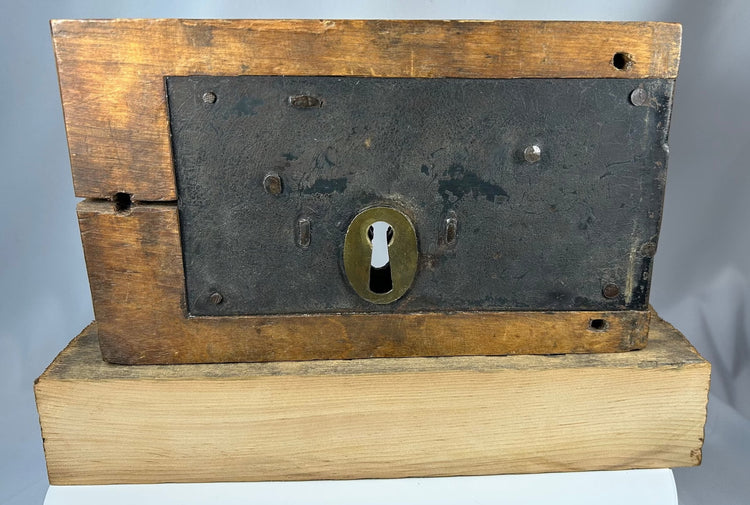
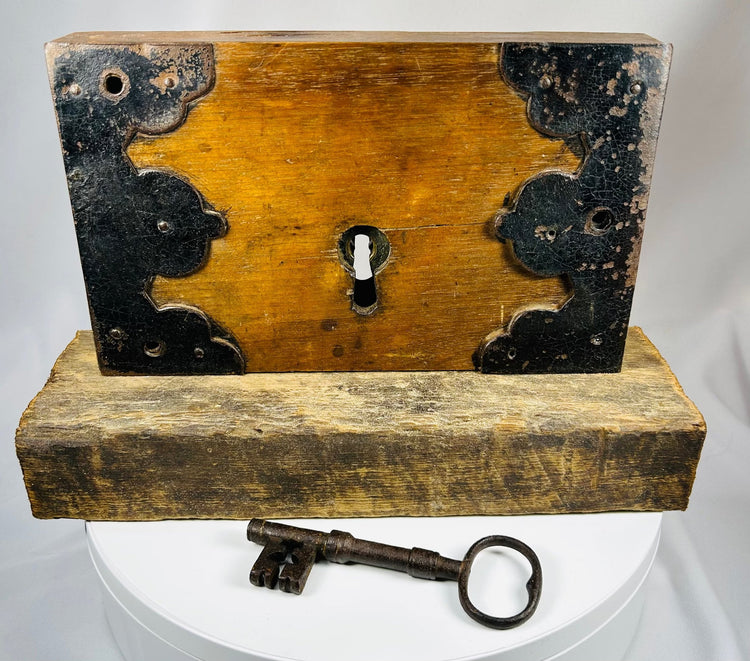
Esta impresionante cerradura de sobreponer antigua representa un ejemplo auténtico de herrajes arquitectónicos de principios del siglo XIX. Las cerraduras de sobreponer se montaban comúnmente directamente en la superficie de las puertas de madera y se usaron ampliamente en Europa y América del Norte durante los períodos georgiano y principios del victoriano.
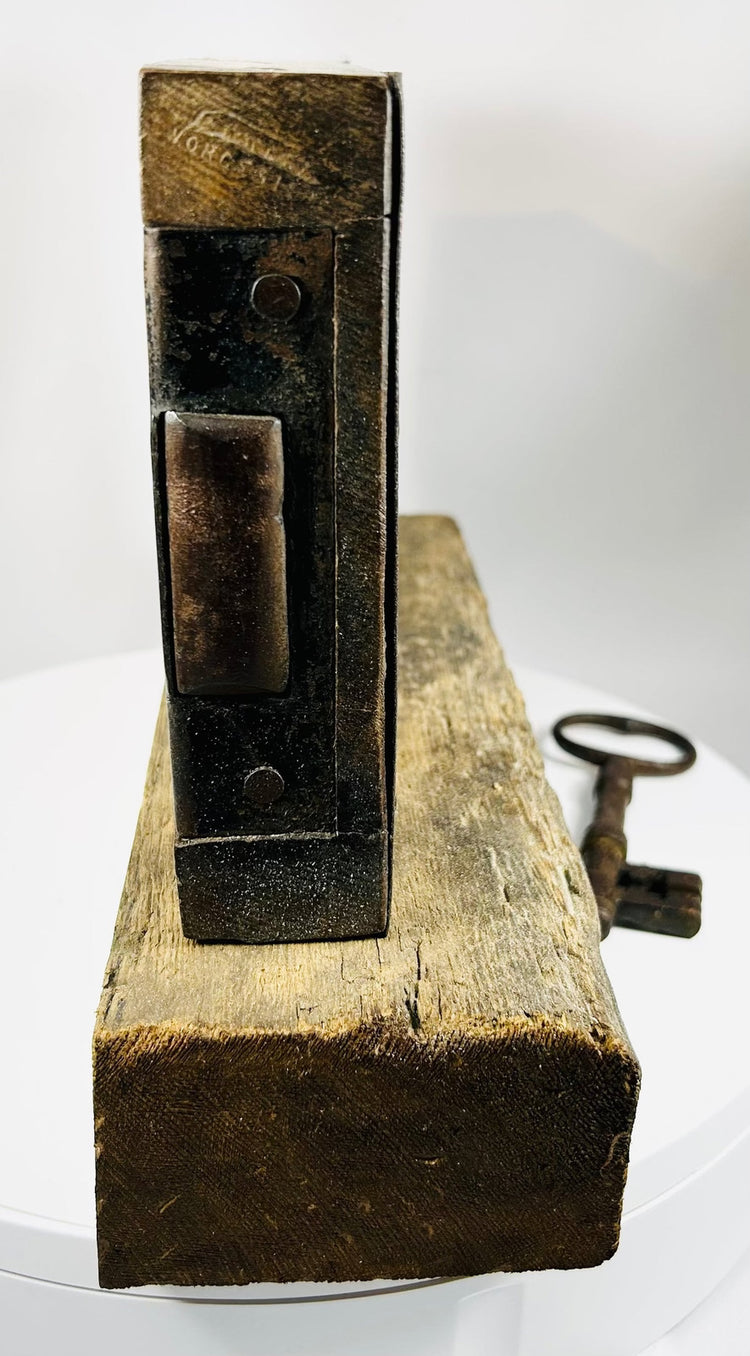
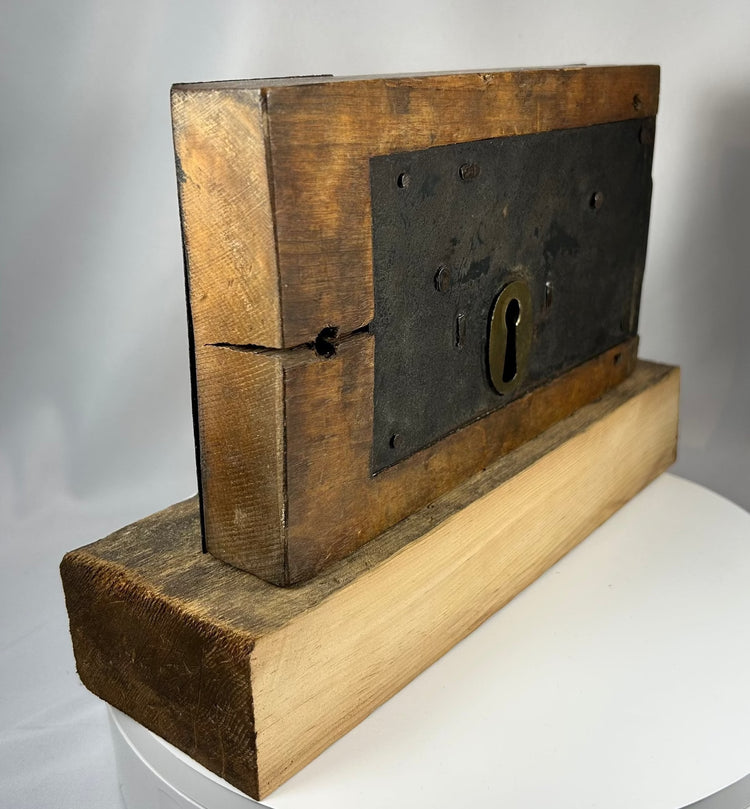
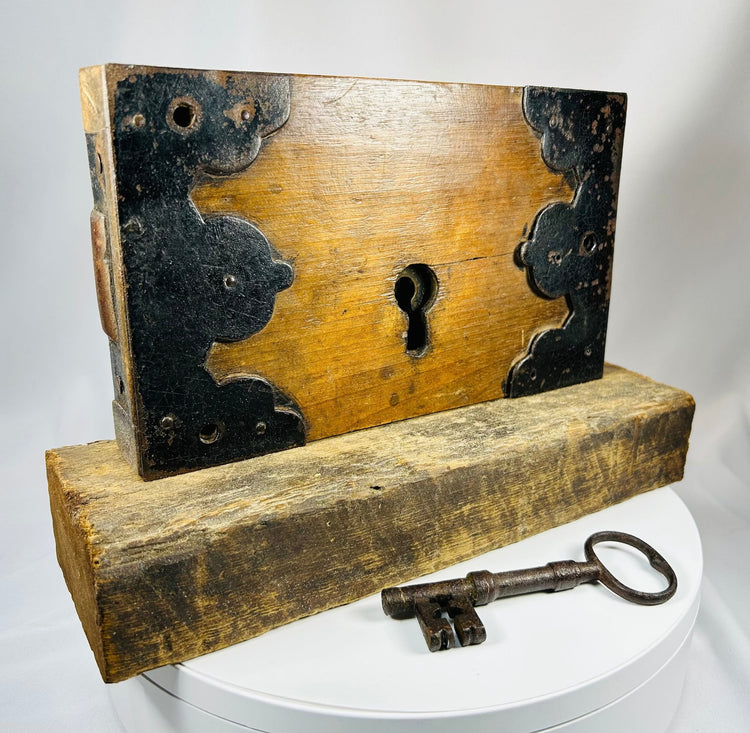
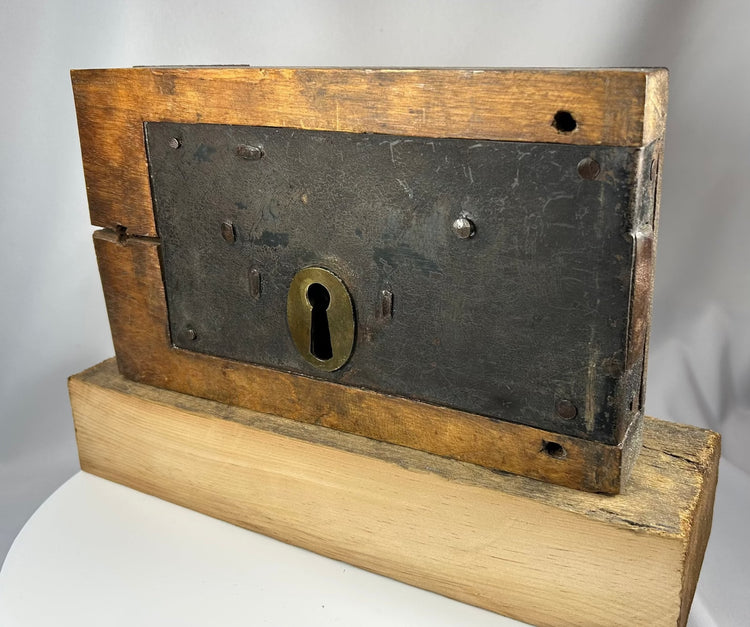
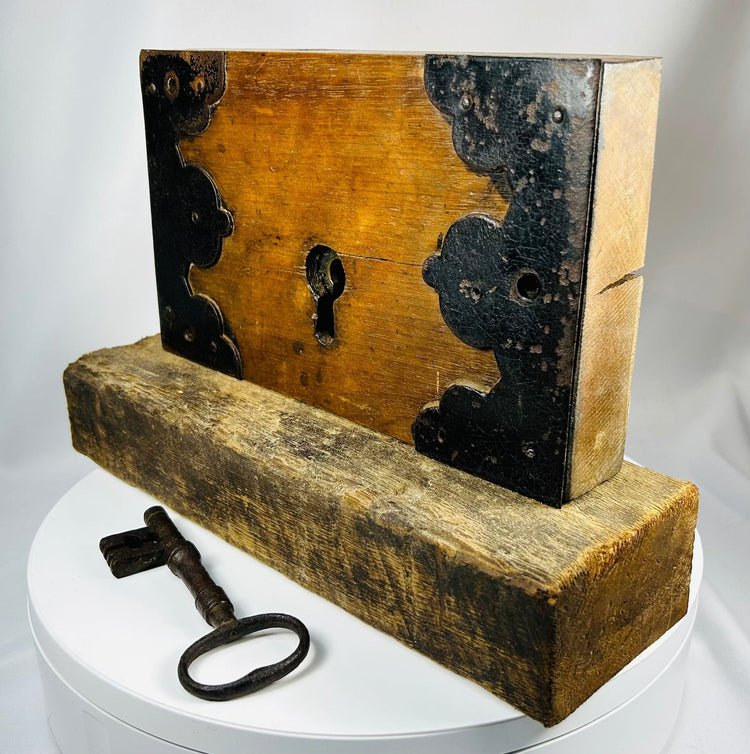
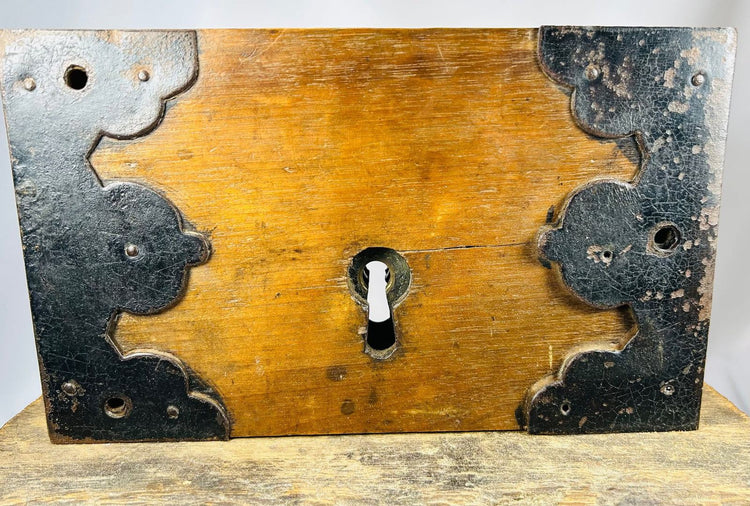
La cerradura presenta una robusta carcasa de madera rectangular equipada con grandes placas de montaje de hierro y refuerzos decorativos en las esquinas. Estos herrajes de hierro muestran texturas martilladas a mano y oxidación natural, destacando la artesanía típica de los herrajes forjados por herreros de antaño.
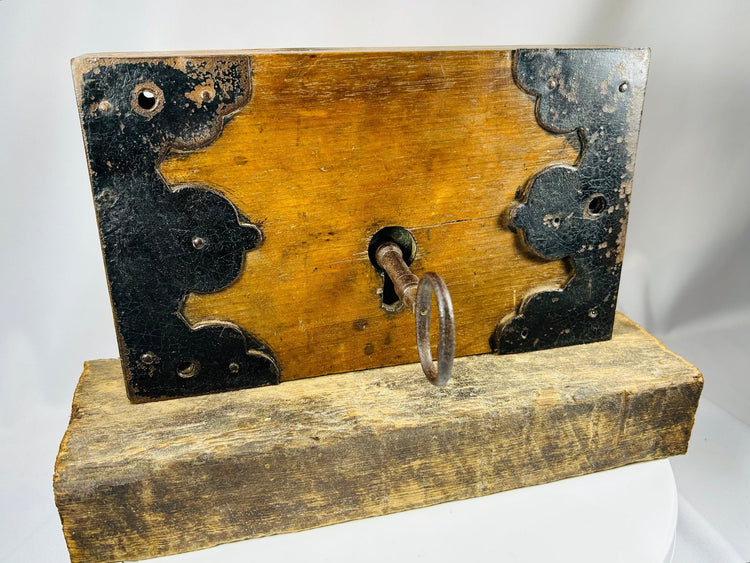
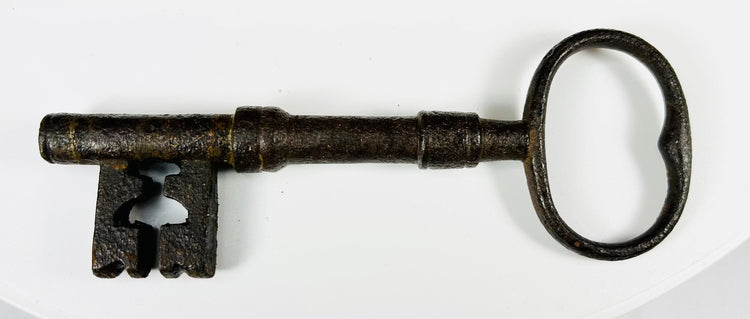
Acompañando la cerradura se encuentra su llave esqueleto de hierro original. El vástago hueco y el distintivo ojo anular de la llave fueron diseñados para operar un mecanismo de cierre de resguardos dentro de la caja. Cuando se inserta en el embellecedor del ojo de la cerradura forrado en latón, la llave activa el sistema de cerrojo interno utilizado para asegurar puertas en hogares, edificios agrícolas y estructuras institucionales.
Grandes cerraduras de sobreponer como esta se instalaban con frecuencia en las puertas exteriores de casas de campo, graneros, talleres y edificios cívicos antiguos. Su construcción duradera y su escala reflejan tanto las necesidades prácticas de seguridad como la artesanía tradicional preindustrial.
Características
- Auténtica cerradura de puerta de sobreponer de principios del siglo XIX
- Incluye llave esqueleto de hierro original
- Placas decorativas de refuerzo de hierro en las esquinas
- Bocallave de latón en la placa trasera
- Construcción de hierro forjado a mano con pátina natural
- Diseño clásico de mecanismo de cerradura de resguardos
Significado cultural
Las cerraduras de sobreponer se encontraban entre los mecanismos de cierre más comunes utilizados en hogares y edificios públicos antes de la adopción generalizada de las cerraduras de embutir a finales del siglo XIX. Su diseño refleja la transición de los herrajes forjados por herreros tradicionales a una producción de cerraduras más industrializada durante el período moderno temprano.
Estado
Buen estado antiguo con el desgaste, la oxidación y la pátina superficial esperados relacionados con la edad. La carcasa de madera muestra un envejecimiento natural y marcas de herramientas históricas consistentes con la construcción antigua. La llave y la cerradura permanecen juntas como un juego combinado.
Dimensiones (aproximadas)
Altura: 8.25 pulgadas
Ancho: 3.75 pulgadas
Longitud: 12 pulgadas
Edad (aproximada)
175–225 años
Procedencia
Anteriormente parte del Museo de Cerraduras y Cajas Fuertes de Elmer, un importante museo y colección privada dedicada a cerraduras, llaves, cajas fuertes y dispositivos de seguridad mecánicos históricos. La colección se dispersó en 2026. La pieza ingresó posteriormente en una colección privada en Valparaíso, Indiana, Estados Unidos.
Más información
Estudie la evolución de los herrajes de puertas del siglo XIX en este artículo de Architectural Observer
Explore nuestra Colección de herramientas funcionales e implementos antiguos
Descripción
Contexto histórico y origen
Región: Europa o América del Norte
Material: Hierro forjado, bocallave de latón, madera
Período: Principios del siglo XIX, alrededor de 1800–1850
Descripción
Esta impresionante cerradura de sobreponer antigua representa un ejemplo auténtico de herrajes arquitectónicos de principios del siglo XIX. Las cerraduras de sobreponer se montaban comúnmente directamente en la superficie de las puertas de madera y se usaron ampliamente en Europa y América del Norte durante los períodos georgiano y principios del victoriano.
La cerradura presenta una robusta carcasa de madera rectangular equipada con grandes placas de montaje de hierro y refuerzos decorativos en las esquinas. Estos herrajes de hierro muestran texturas martilladas a mano y oxidación natural, destacando la artesanía típica de los herrajes forjados por herreros de antaño.
Acompañando la cerradura se encuentra su llave esqueleto de hierro original. El vástago hueco y el distintivo ojo anular de la llave fueron diseñados para operar un mecanismo de cierre de resguardos dentro de la caja. Cuando se inserta en el embellecedor del ojo de la cerradura forrado en latón, la llave activa el sistema de cerrojo interno utilizado para asegurar puertas en hogares, edificios agrícolas y estructuras institucionales.
Grandes cerraduras de sobreponer como esta se instalaban con frecuencia en las puertas exteriores de casas de campo, graneros, talleres y edificios cívicos antiguos. Su construcción duradera y su escala reflejan tanto las necesidades prácticas de seguridad como la artesanía tradicional preindustrial.
Características
- Auténtica cerradura de puerta de sobreponer de principios del siglo XIX
- Incluye llave esqueleto de hierro original
- Placas decorativas de refuerzo de hierro en las esquinas
- Bocallave de latón en la placa trasera
- Construcción de hierro forjado a mano con pátina natural
- Diseño clásico de mecanismo de cerradura de resguardos
Significado cultural
Las cerraduras de sobreponer se encontraban entre los mecanismos de cierre más comunes utilizados en hogares y edificios públicos antes de la adopción generalizada de las cerraduras de embutir a finales del siglo XIX. Su diseño refleja la transición de los herrajes forjados por herreros tradicionales a una producción de cerraduras más industrializada durante el período moderno temprano.
Estado
Buen estado antiguo con el desgaste, la oxidación y la pátina superficial esperados relacionados con la edad. La carcasa de madera muestra un envejecimiento natural y marcas de herramientas históricas consistentes con la construcción antigua. La llave y la cerradura permanecen juntas como un juego combinado.
Dimensiones (aproximadas)
Altura: 8.25 pulgadas
Ancho: 3.75 pulgadas
Longitud: 12 pulgadas
Edad (aproximada)
175–225 años
Procedencia
Anteriormente parte del Museo de Cerraduras y Cajas Fuertes de Elmer, un importante museo y colección privada dedicada a cerraduras, llaves, cajas fuertes y dispositivos de seguridad mecánicos históricos. La colección se dispersó en 2026. La pieza ingresó posteriormente en una colección privada en Valparaíso, Indiana, Estados Unidos.
Más información
Estudie la evolución de los herrajes de puertas del siglo XIX en este artículo de Architectural Observer
Explore nuestra Colección de herramientas funcionales e implementos antiguos
También te puede interesar
