


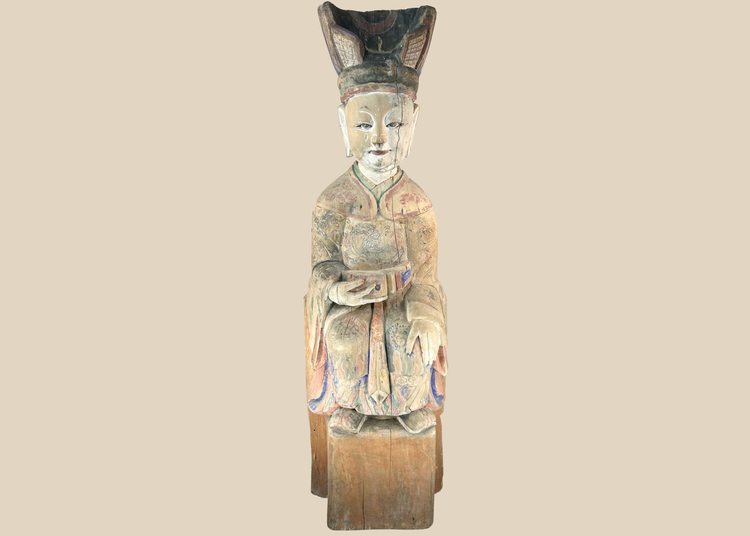
Large Chinese Carved Court Figure with Painted Robes | Temple Guardian Sculpture | Circa 18th–19th Century
- Precio habitual
- $2,500.00
- Precio de venta
- $2,500.00
- Precio habitual
No se pudo cargar la disponibilidad de retiro


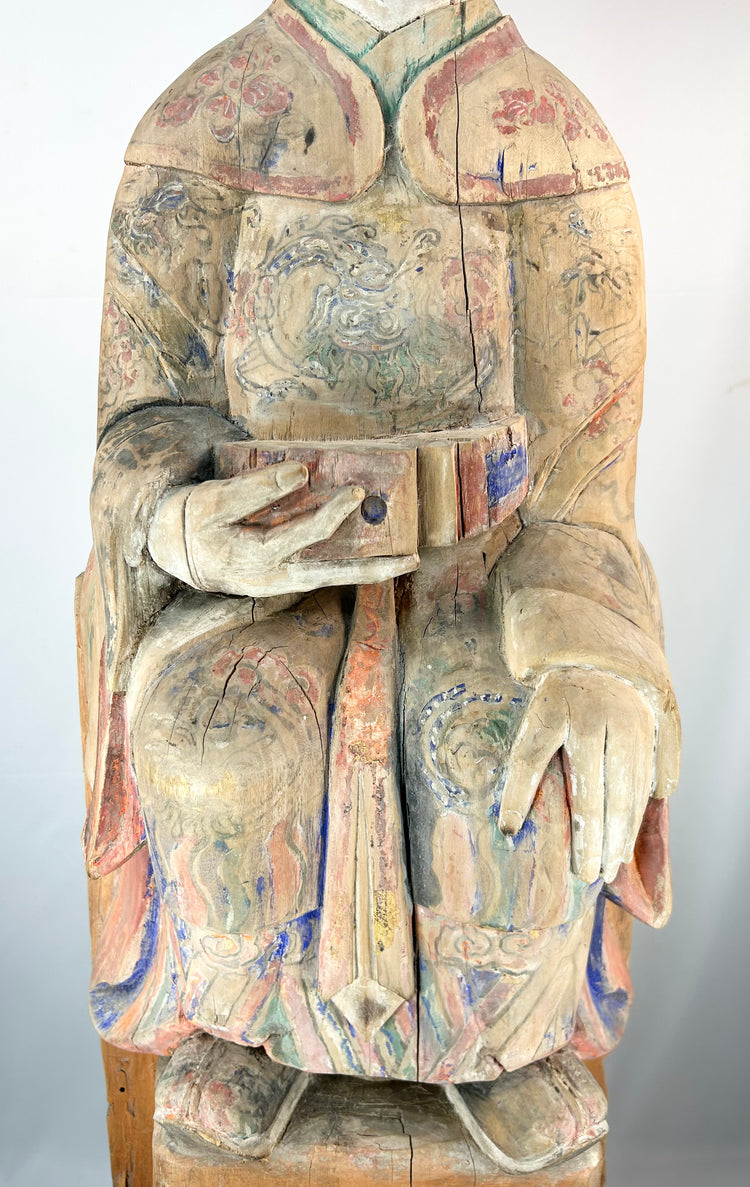
Large Chinese Carved Court Figure with Painted Robes | Temple Guardian Sculpture | Circa 18th–19th Century
Descripción
Más
Menos
Historical Context & Origin
Region: China
Material: Hand-carved wood with original polychrome painted decoration
Period: Likely Qing Dynasty, circa 18th–19th century
Description
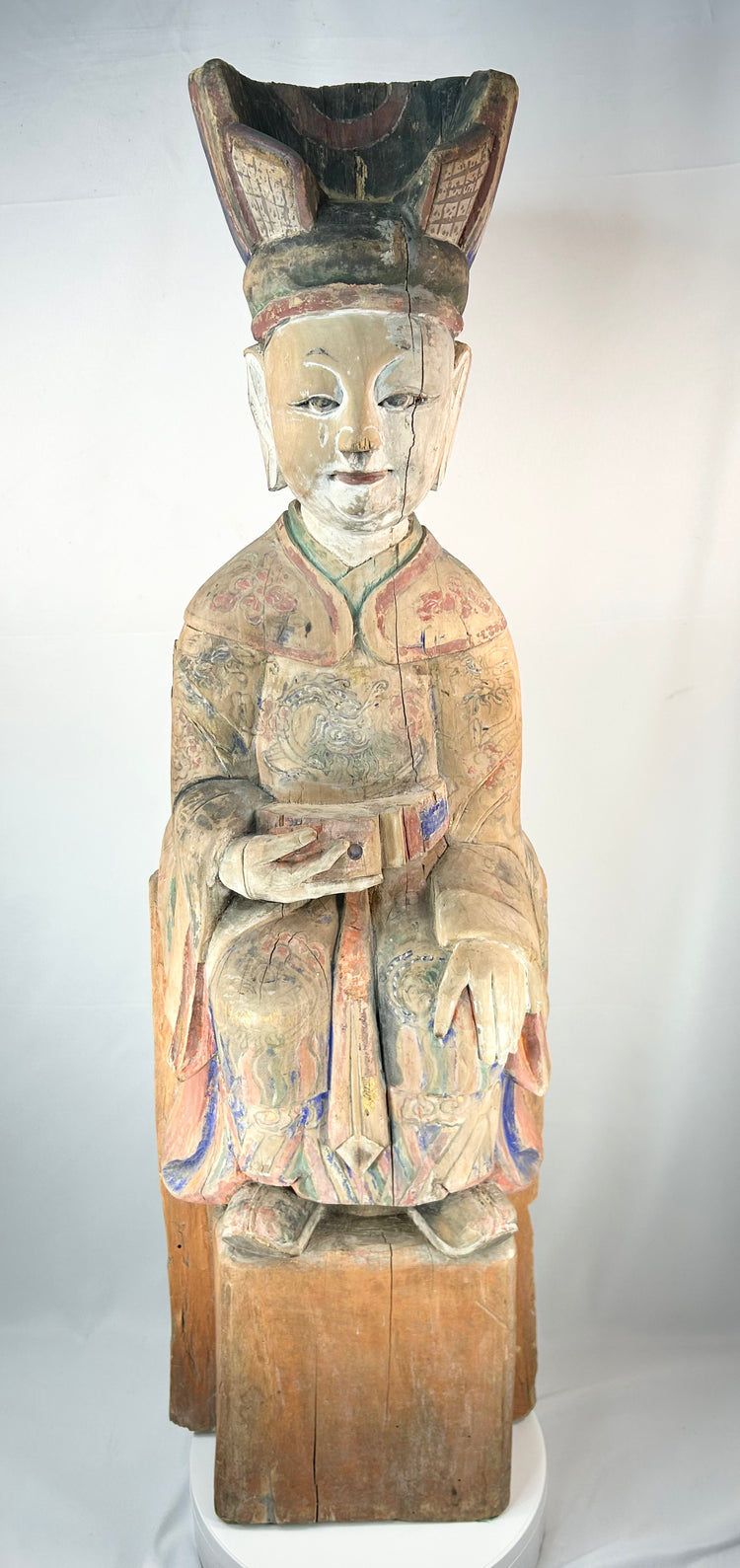
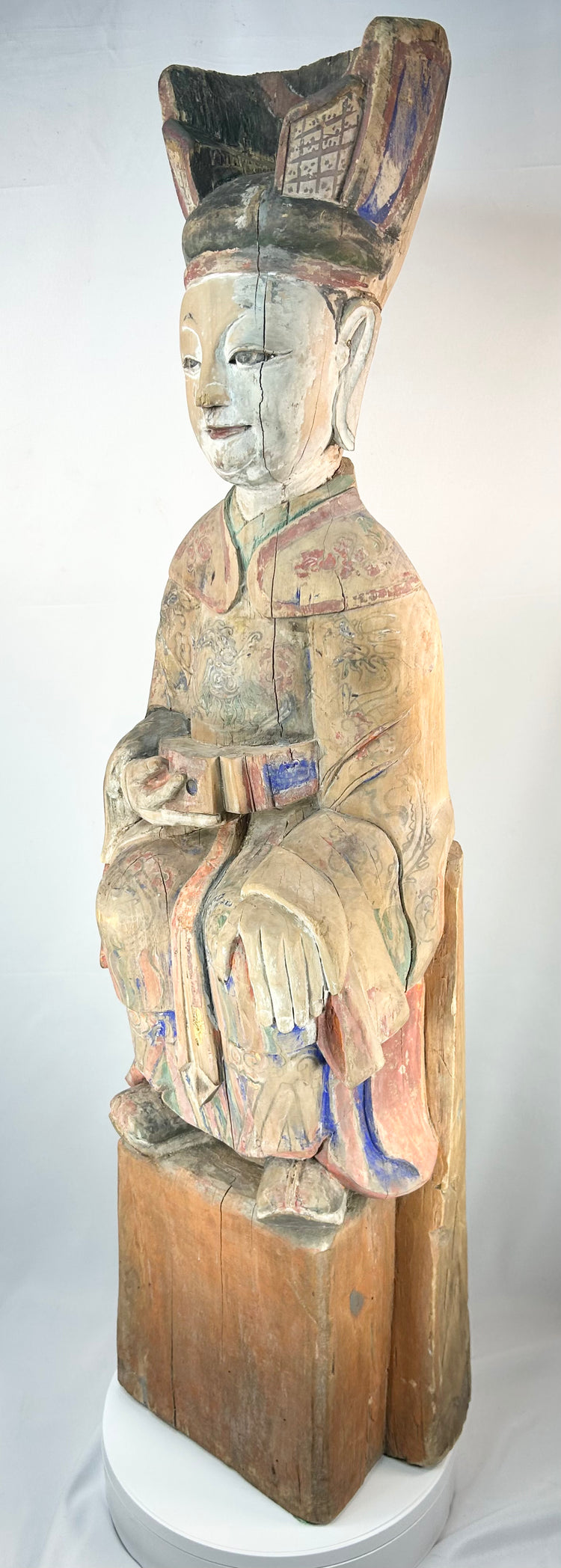
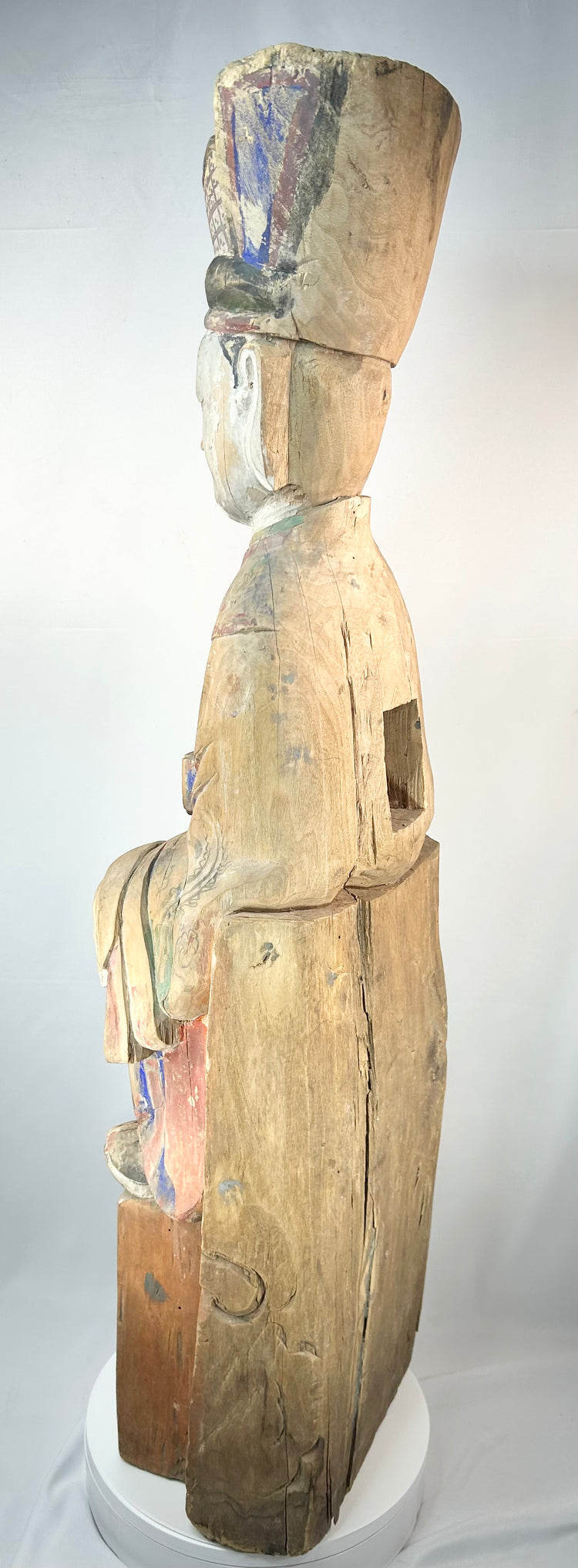
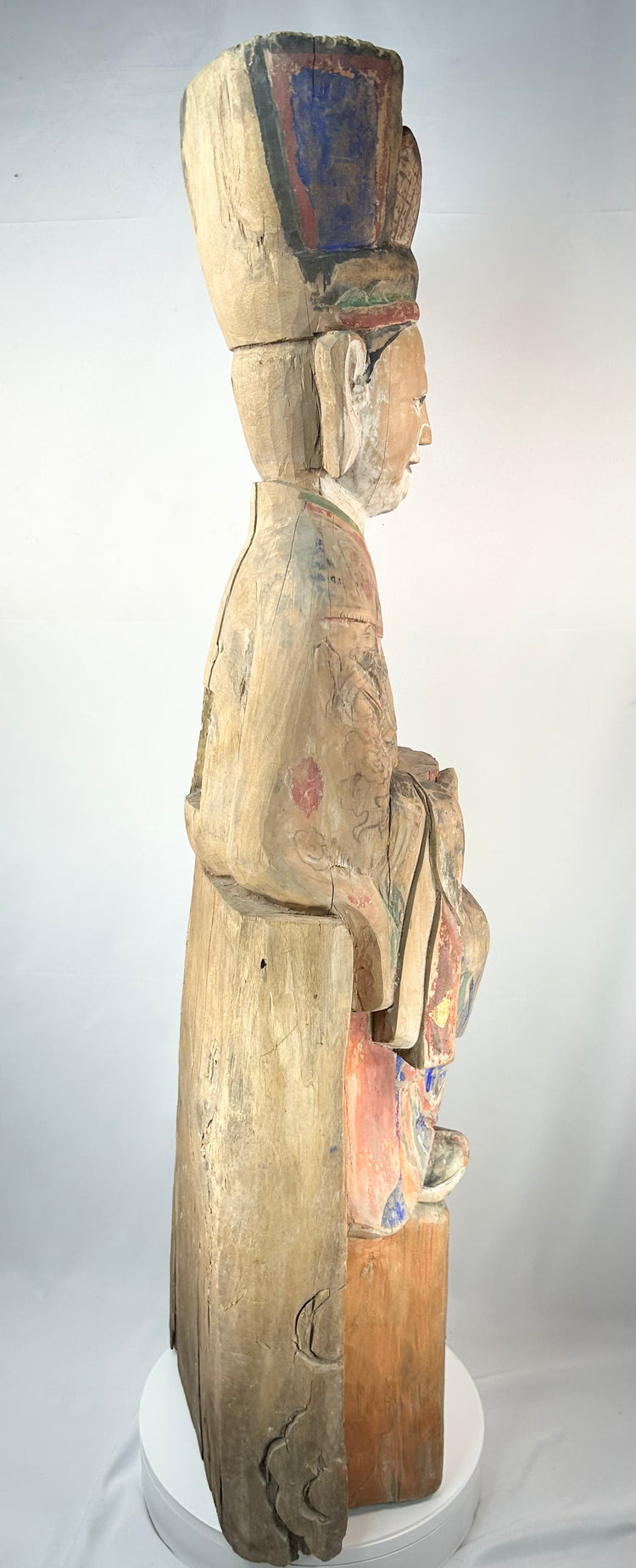
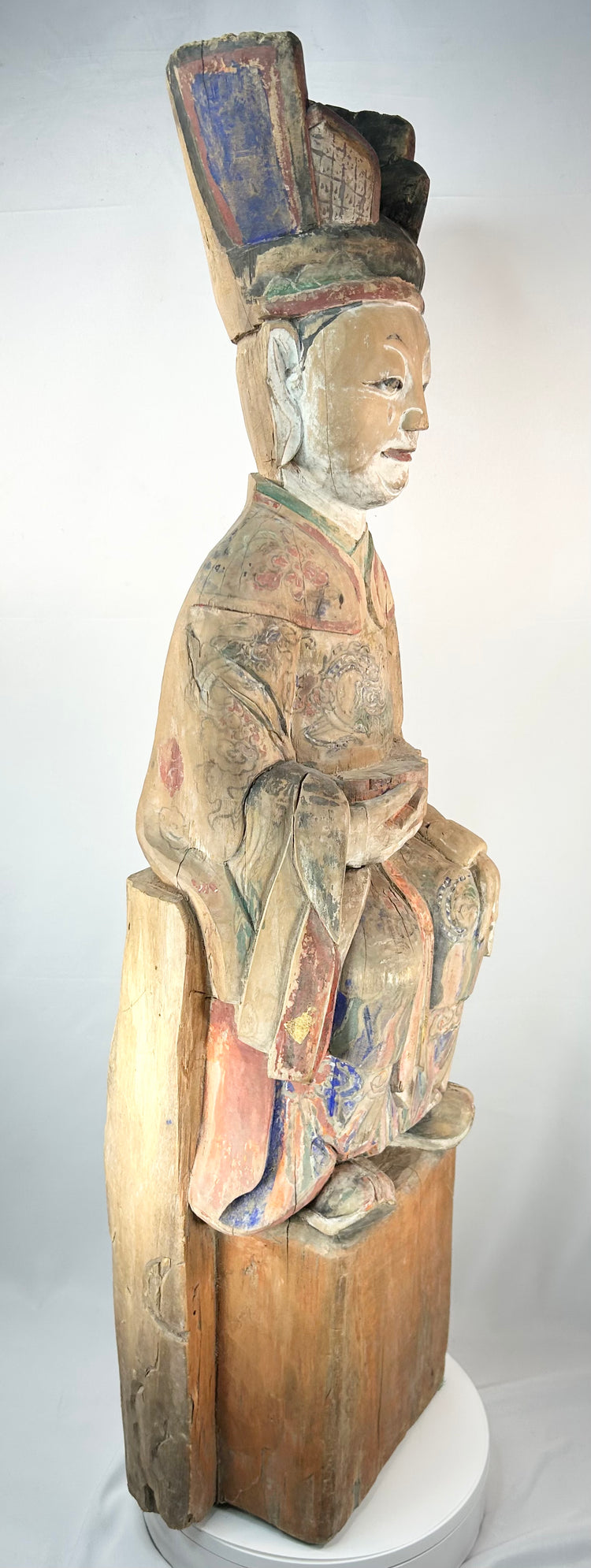
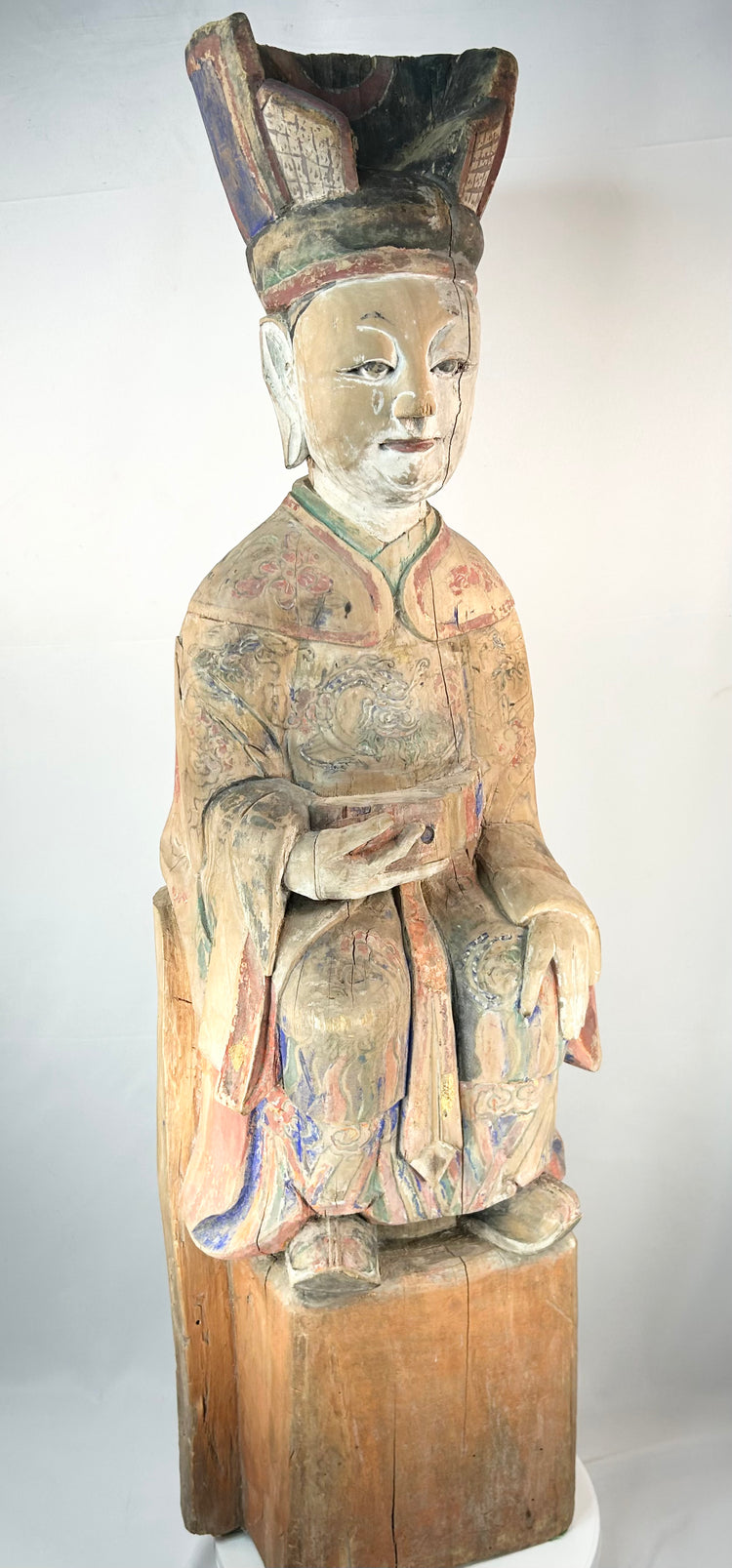
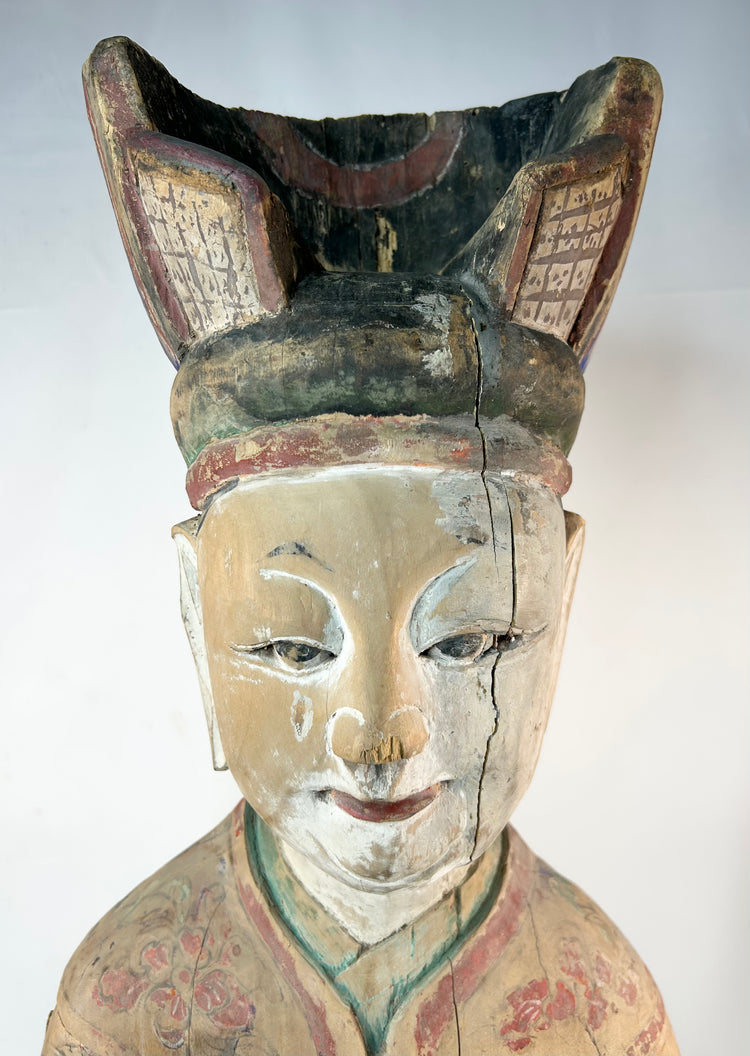
This impressive Chinese carved wooden sculpture depicts a seated court official, a figure traditionally associated with temple, shrine, or ancestral hall display. The dignified official sits upright upon a block-form base, wearing layered ceremonial robes and a tall formal headdress typical of Chinese court attire.
The figure holds a rectangular ceremonial tablet in both hands—an attribute commonly associated with scholar-officials and magistrates within traditional Chinese bureaucratic culture. The robes retain hand-painted polychrome decoration with stylized dragons and floral motifs symbolizing authority and auspicious power.
The face is carved with a calm expression and elongated ears, reflecting stylistic conventions seen in Chinese devotional sculpture. Remnants of the original painted surface remain visible throughout, with traces of red, blue, green, and cream pigments.
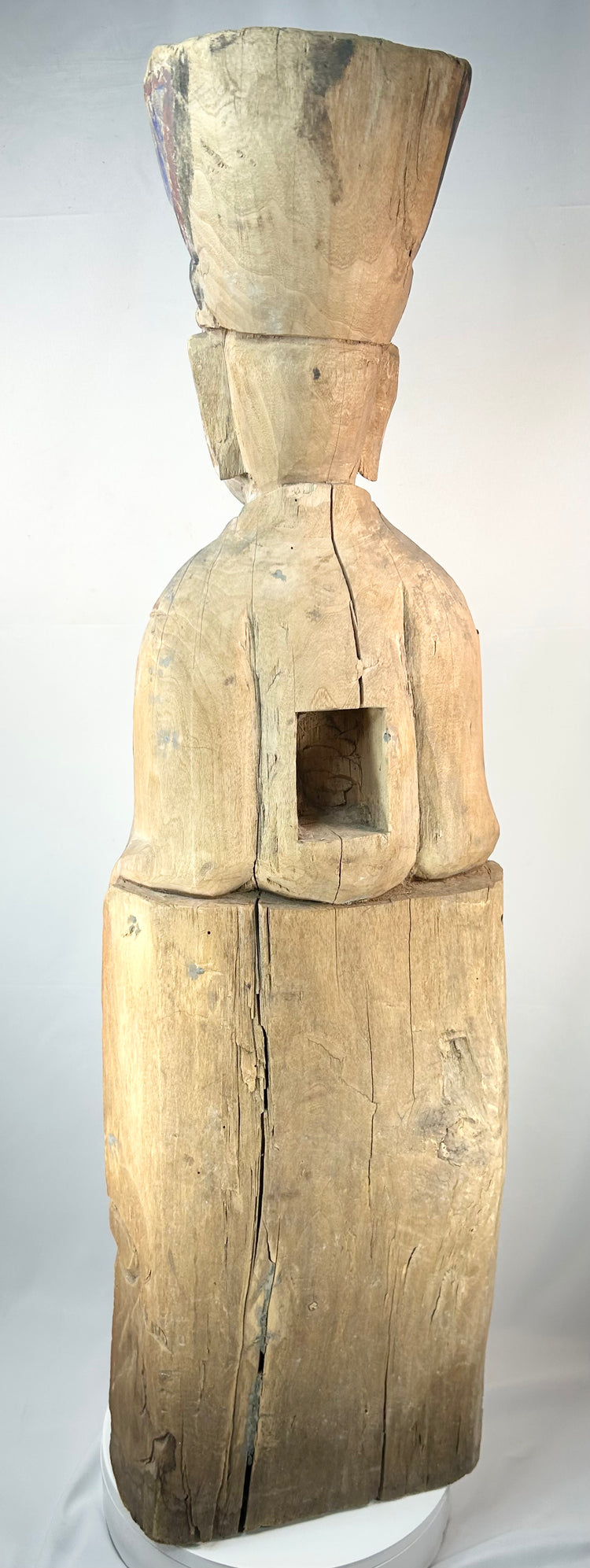
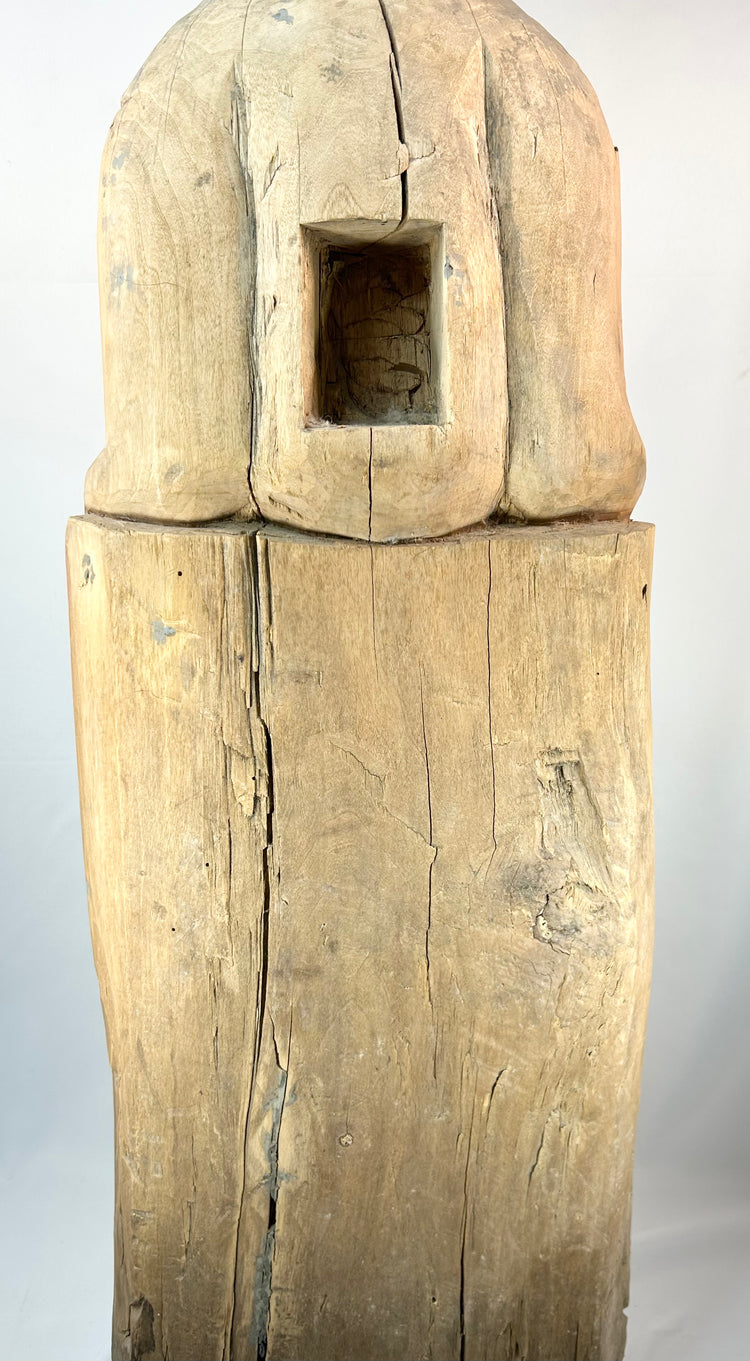
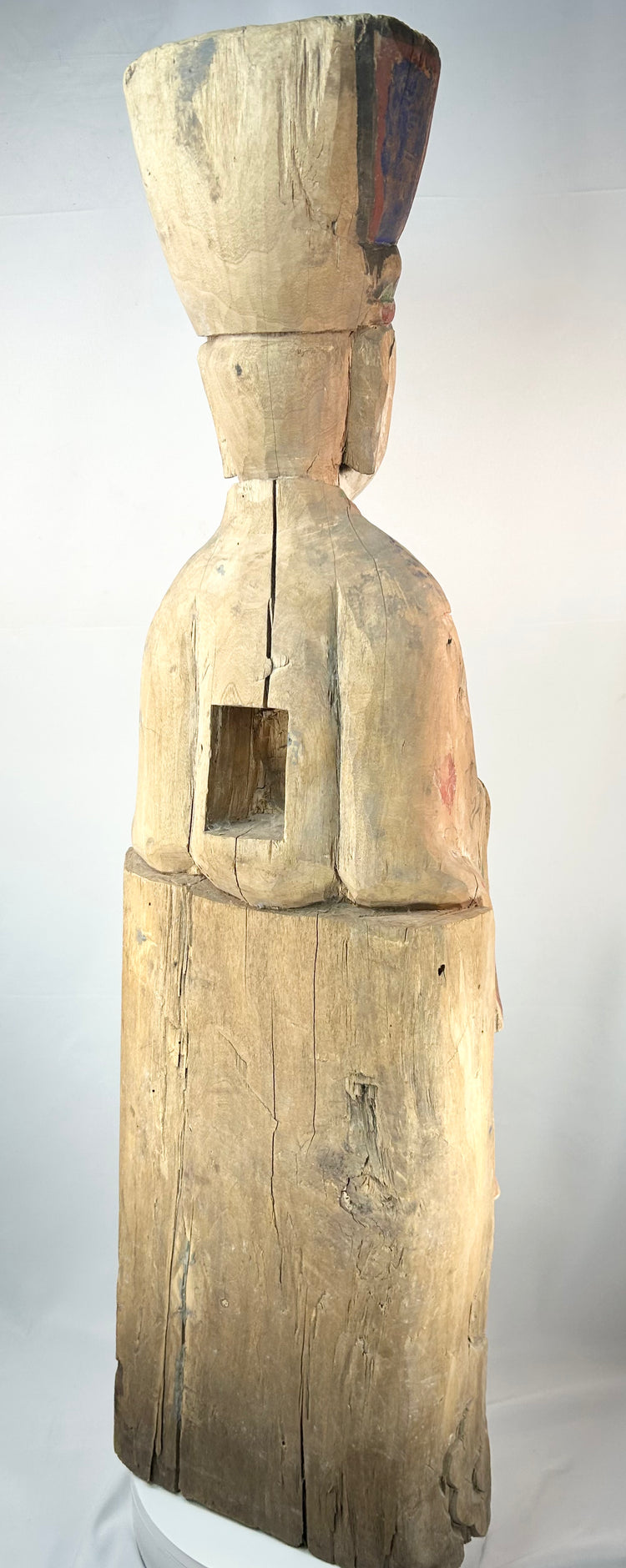
A rectangular cavity carved into the back likely once held consecration materials, a feature often found in temple sculptures. Standing over 40 inches tall, the figure has a commanding presence and likely served as an attendant or guardian within a shrine or temple setting.
Features
- Large-scale Chinese carved wood temple figure
- Original polychrome painted decoration
- Depicts a seated court official or magistrate
- Tall ceremonial headdress and formal robes
- Decorative robe motifs including dragons and floral ornamentation
- Consecration cavity present on the back
- Rich aged patina from centuries of age
Cultural Significance
Figures representing civil officials or magistrates were frequently displayed within Chinese temples, ancestral halls, and folk religious shrines. These figures symbolized authority, protection, and moral order, reflecting the importance of scholar-officials within the Confucian bureaucratic system.
During the Ming and Qing dynasties, sculptures of officials were commonly produced for temple settings where they served as attendants to deities or as symbolic administrators responsible for maintaining cosmic justice. The presence of a consecration cavity suggests the sculpture was once ritually installed within a shrine environment.
Condition
Good antique condition consistent with age. The sculpture shows expected age-related cracking and natural wood splitting, along with wear and losses to the original painted surface. Areas of abrasion and pigment loss are present throughout, but the structure remains stable. The surface patina reflects long-term age and devotional use.
Dimensions (Approximate)
Height: 41 in
Width: 12.5 in
Depth: 9.5 in
Age (Approximate)
150–250 years old
Learn More
Discover court etiquette in imperial China through The World of Chinese
Explore our curated Ancient Chinese Artifacts & Imperial Relics Collection
Descripción
Historical Context & Origin
Region: China
Material: Hand-carved wood with original polychrome painted decoration
Period: Likely Qing Dynasty, circa 18th–19th century
Description
This impressive Chinese carved wooden sculpture depicts a seated court official, a figure traditionally associated with temple, shrine, or ancestral hall display. The dignified official sits upright upon a block-form base, wearing layered ceremonial robes and a tall formal headdress typical of Chinese court attire.
The figure holds a rectangular ceremonial tablet in both hands—an attribute commonly associated with scholar-officials and magistrates within traditional Chinese bureaucratic culture. The robes retain hand-painted polychrome decoration with stylized dragons and floral motifs symbolizing authority and auspicious power.
The face is carved with a calm expression and elongated ears, reflecting stylistic conventions seen in Chinese devotional sculpture. Remnants of the original painted surface remain visible throughout, with traces of red, blue, green, and cream pigments.
A rectangular cavity carved into the back likely once held consecration materials, a feature often found in temple sculptures. Standing over 40 inches tall, the figure has a commanding presence and likely served as an attendant or guardian within a shrine or temple setting.
Features
- Large-scale Chinese carved wood temple figure
- Original polychrome painted decoration
- Depicts a seated court official or magistrate
- Tall ceremonial headdress and formal robes
- Decorative robe motifs including dragons and floral ornamentation
- Consecration cavity present on the back
- Rich aged patina from centuries of age
Cultural Significance
Figures representing civil officials or magistrates were frequently displayed within Chinese temples, ancestral halls, and folk religious shrines. These figures symbolized authority, protection, and moral order, reflecting the importance of scholar-officials within the Confucian bureaucratic system.
During the Ming and Qing dynasties, sculptures of officials were commonly produced for temple settings where they served as attendants to deities or as symbolic administrators responsible for maintaining cosmic justice. The presence of a consecration cavity suggests the sculpture was once ritually installed within a shrine environment.
Condition
Good antique condition consistent with age. The sculpture shows expected age-related cracking and natural wood splitting, along with wear and losses to the original painted surface. Areas of abrasion and pigment loss are present throughout, but the structure remains stable. The surface patina reflects long-term age and devotional use.
Dimensions (Approximate)
Height: 41 in
Width: 12.5 in
Depth: 9.5 in
Age (Approximate)
150–250 years old
Learn More
Discover court etiquette in imperial China through The World of Chinese
Explore our curated Ancient Chinese Artifacts & Imperial Relics Collection
También te puede interesar
