

Gran Figura de Soldado de Infantería de Terracota Pintada de la Dinastía Han | Circa 206 a.C.–220 d.C.
- Precio habitual
- $3,500.00
- Precio de venta
- $3,500.00
- Precio habitual
No se pudo cargar la disponibilidad de retiro


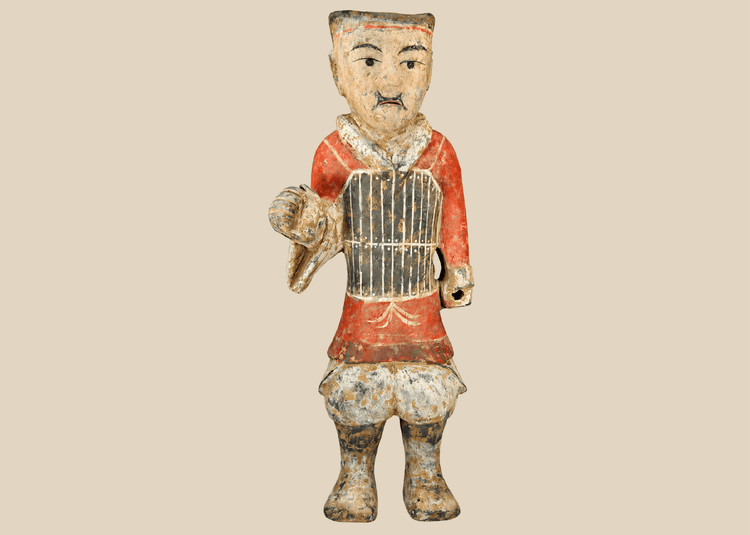
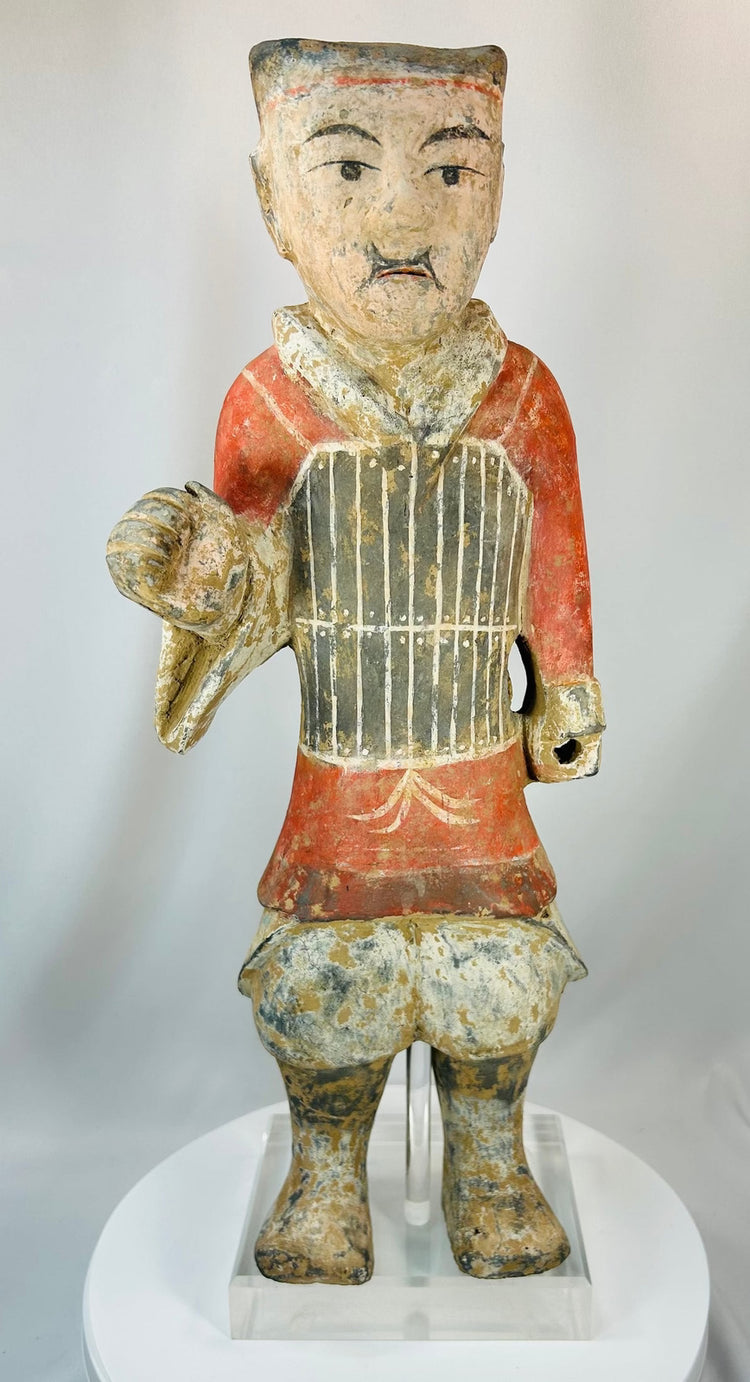
Gran Figura de Soldado de Infantería de Terracota Pintada de la Dinastía Han | Circa 206 a.C.–220 d.C.
Descripción
Más
Menos
Contexto histórico y origen
Región: China
Material: Terracota pintada (loza)
Período: Dinastía Han, alrededor del 206 a. C. – 220 d. C.
Descripción
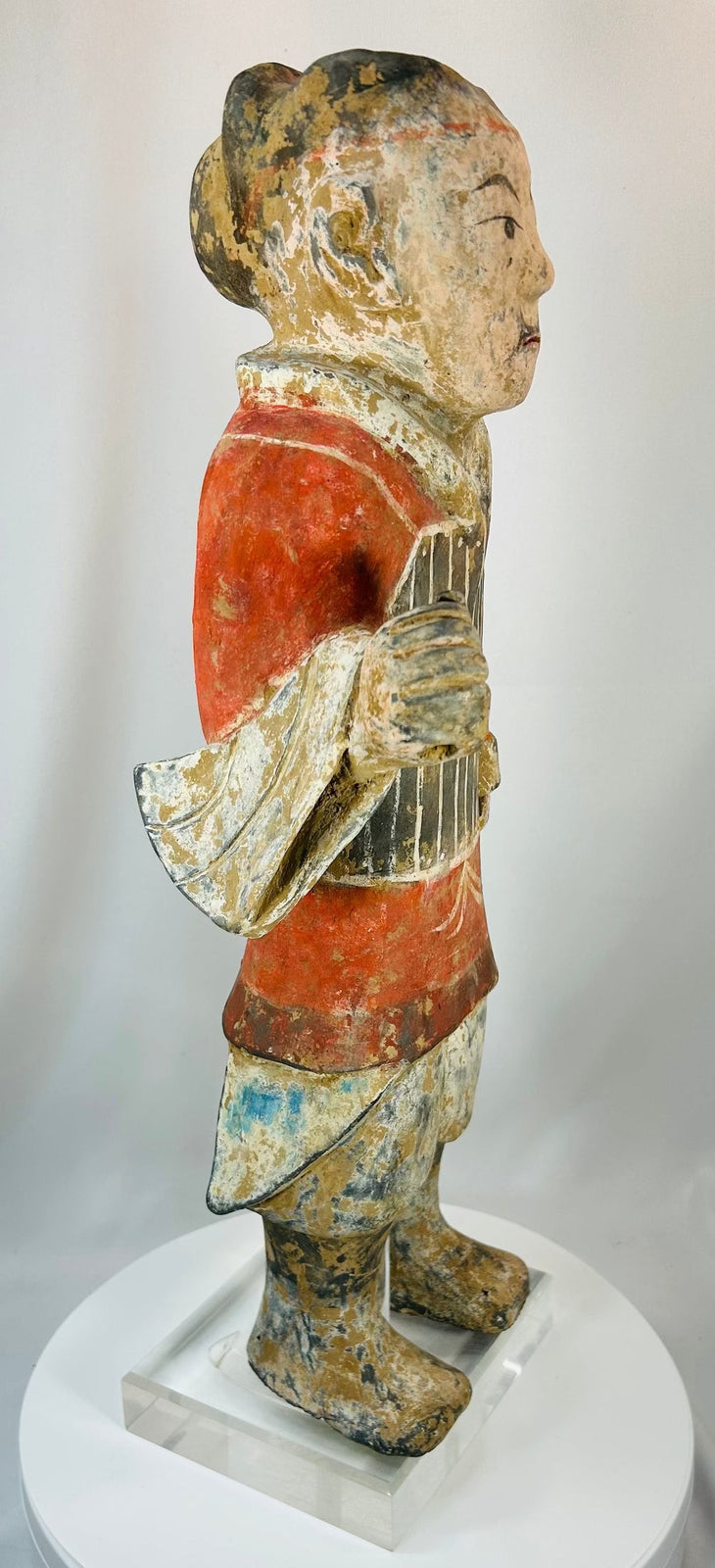
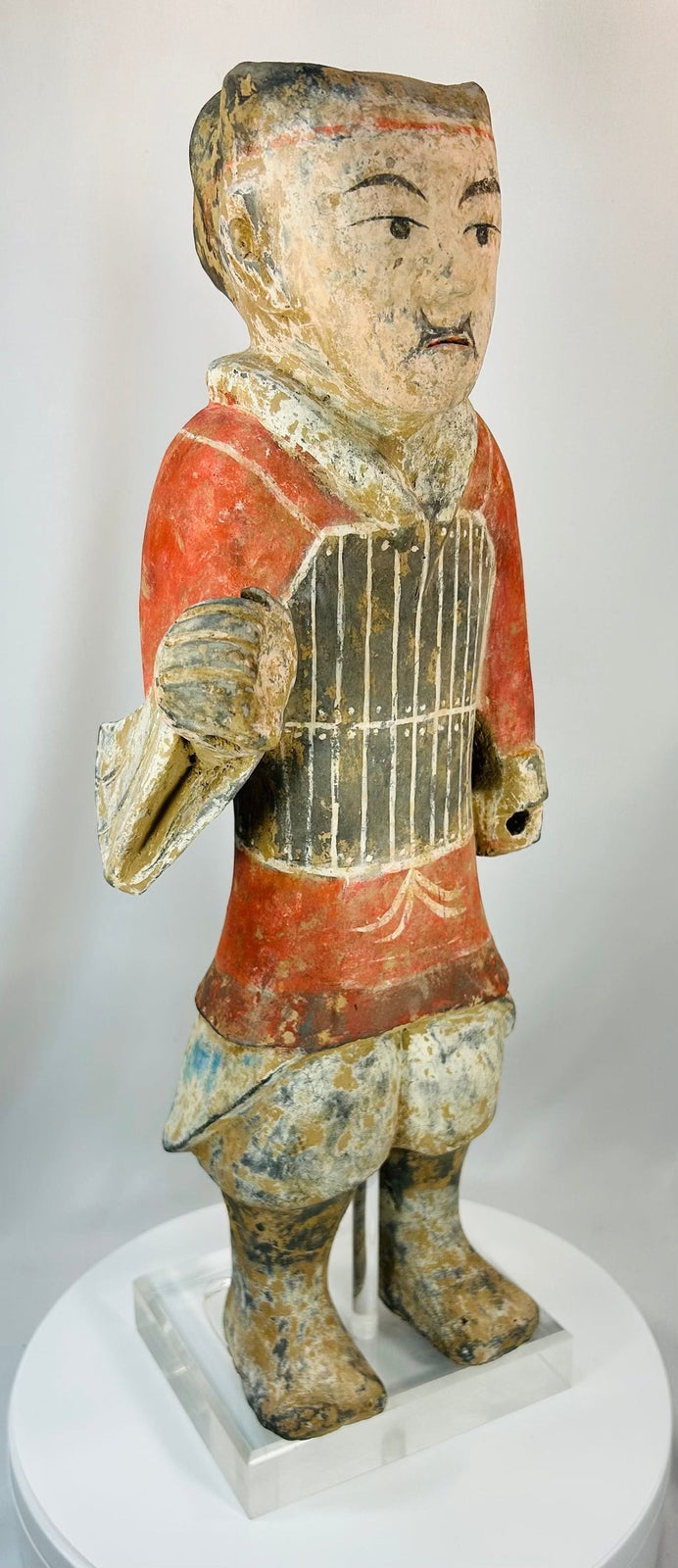
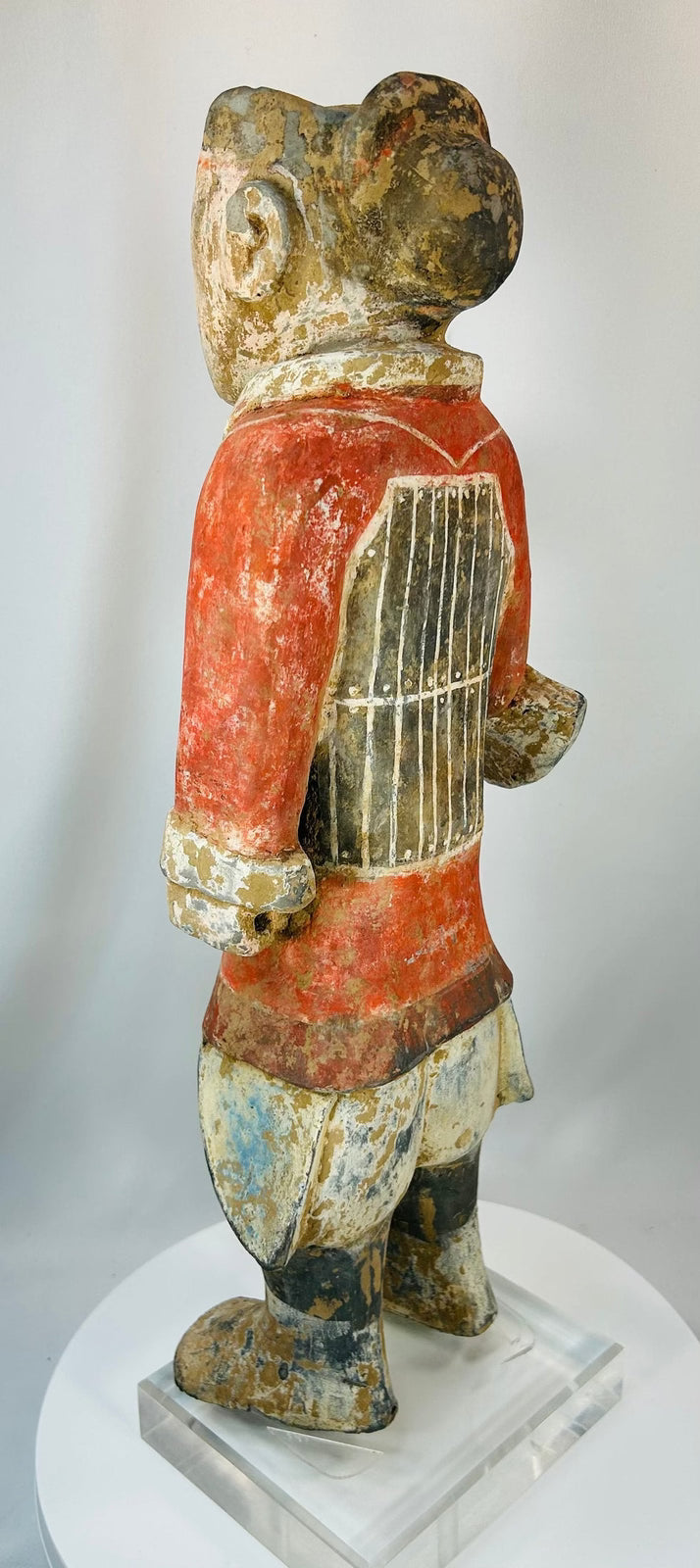
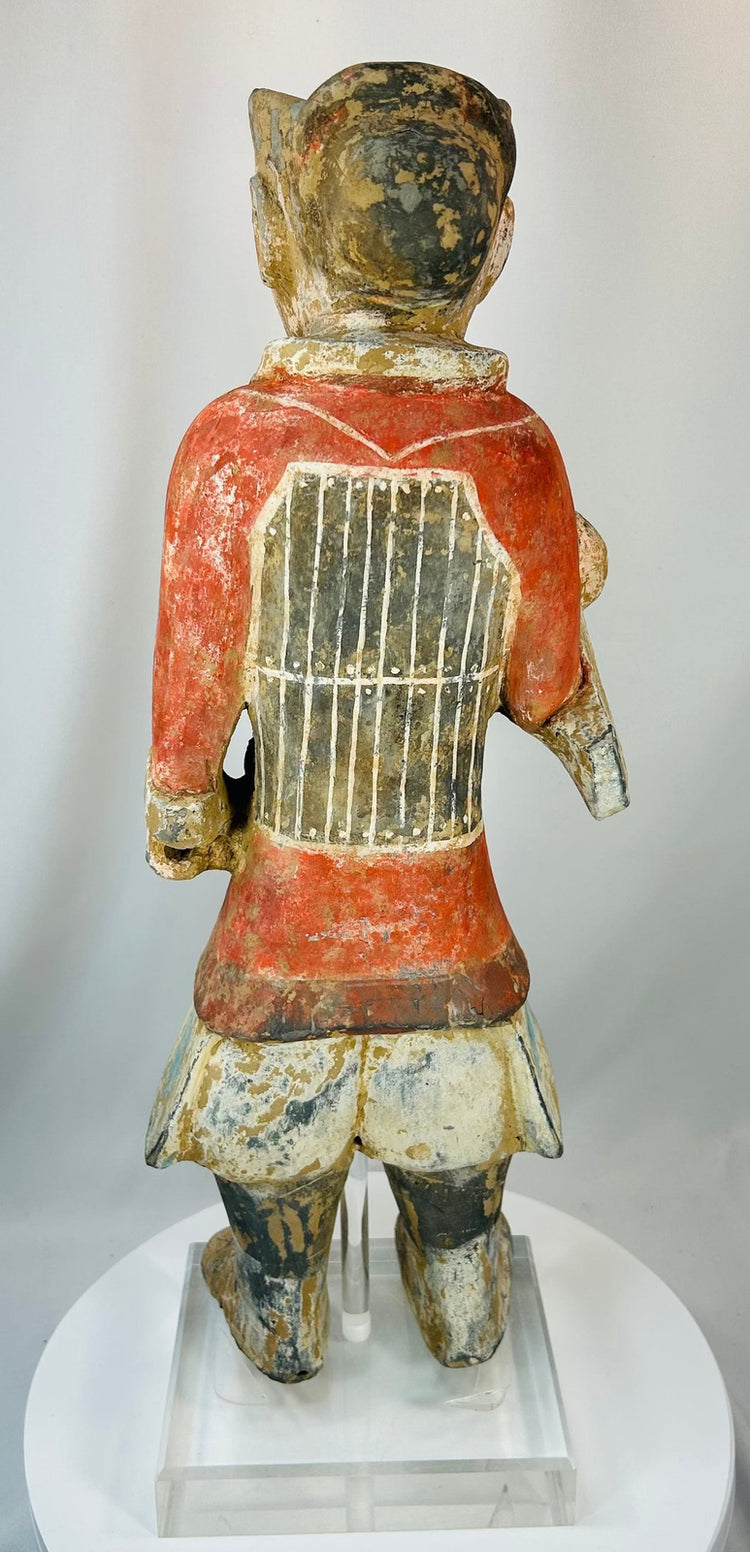
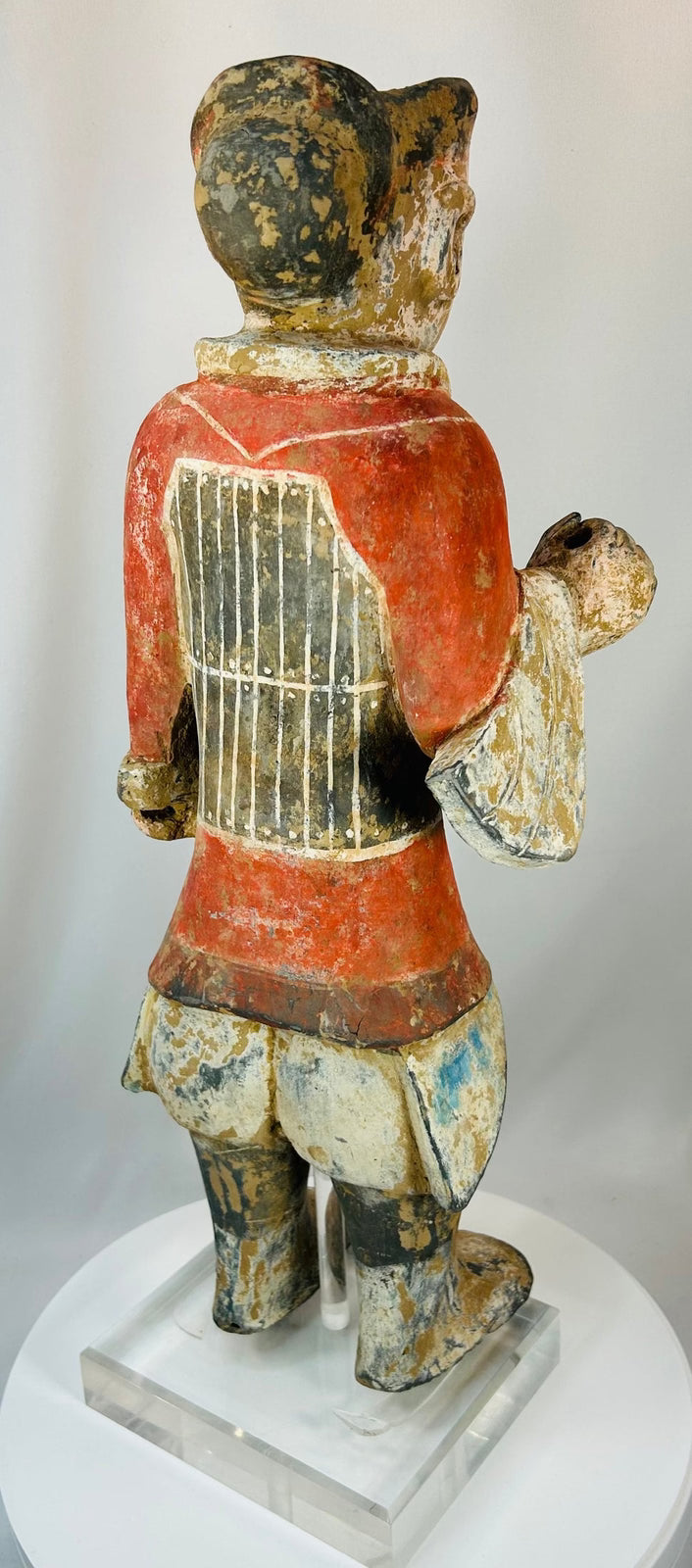
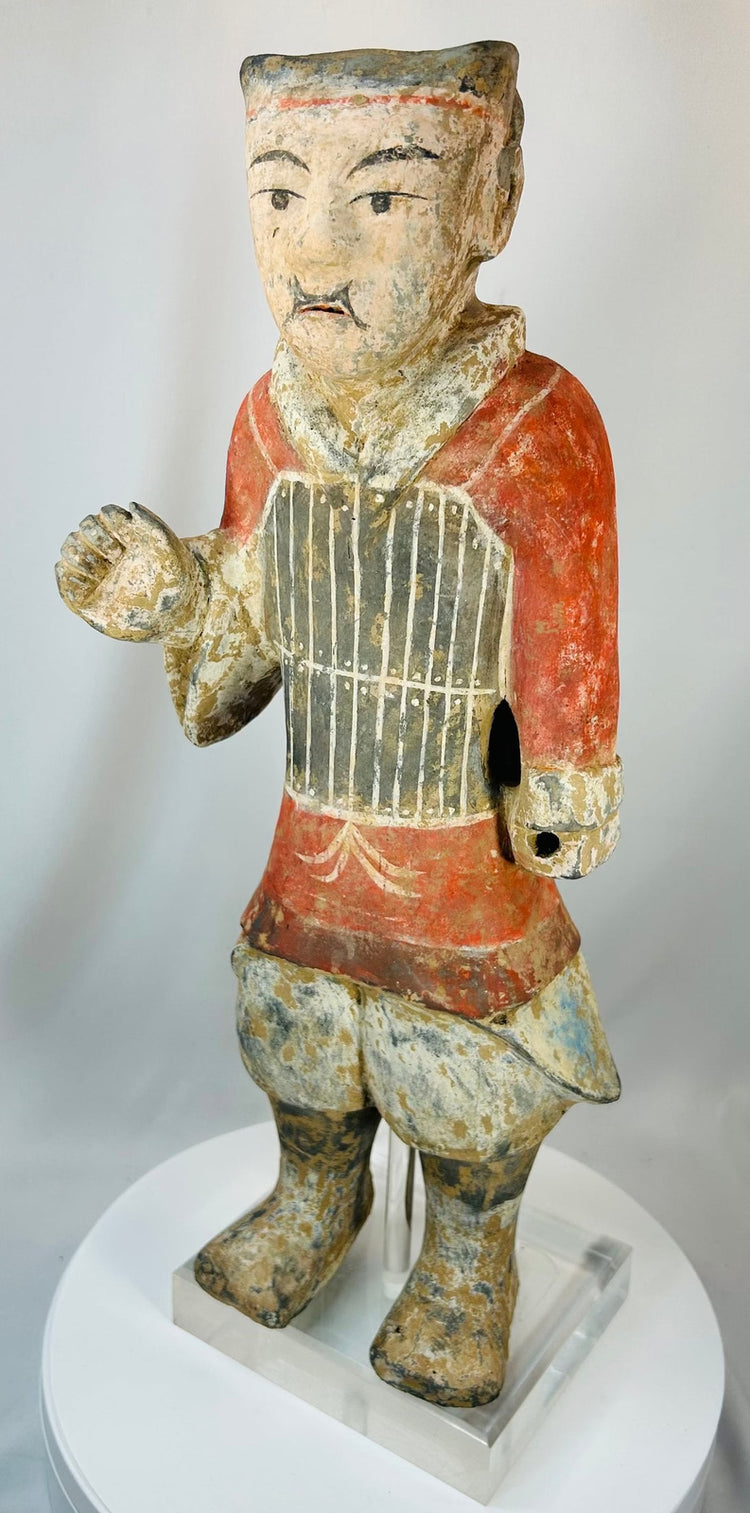
Esta gran y expresiva figura de terracota representa a un soldado de infantería de la Dinastía Han, creada originalmente como un objeto funerario colocado dentro de tumbas para servir y proteger al difunto en la otra vida. Tales figuras, conocidas como mingqi, eran un componente esencial de las prácticas funerarias de élite, simbolizando la fuerza militar, el orden y la continuación de la vida terrenal más allá de la muerte.
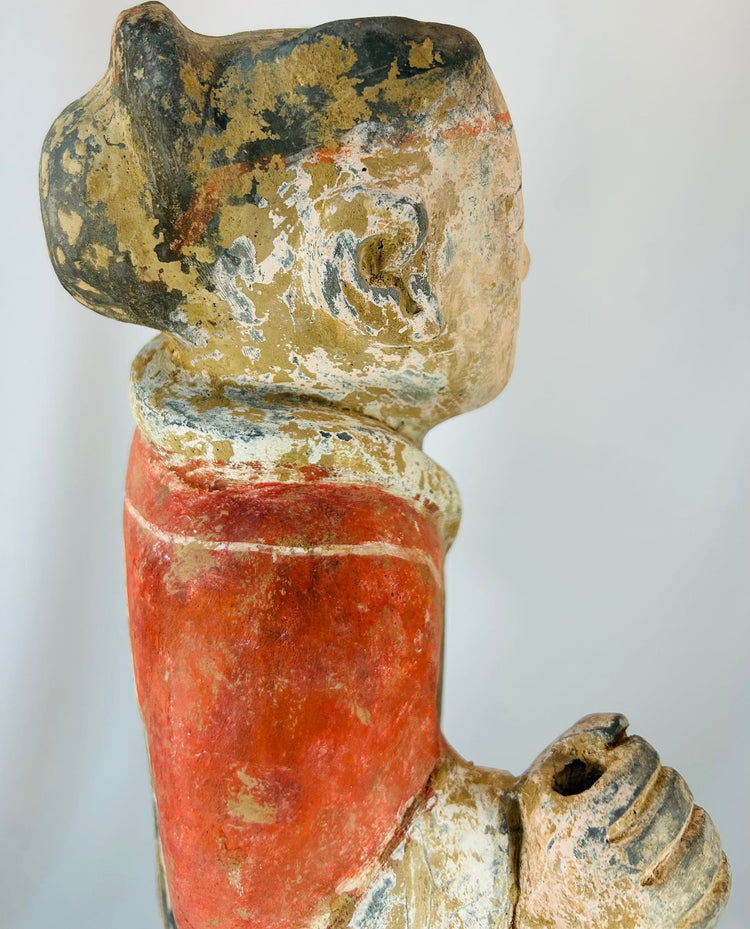
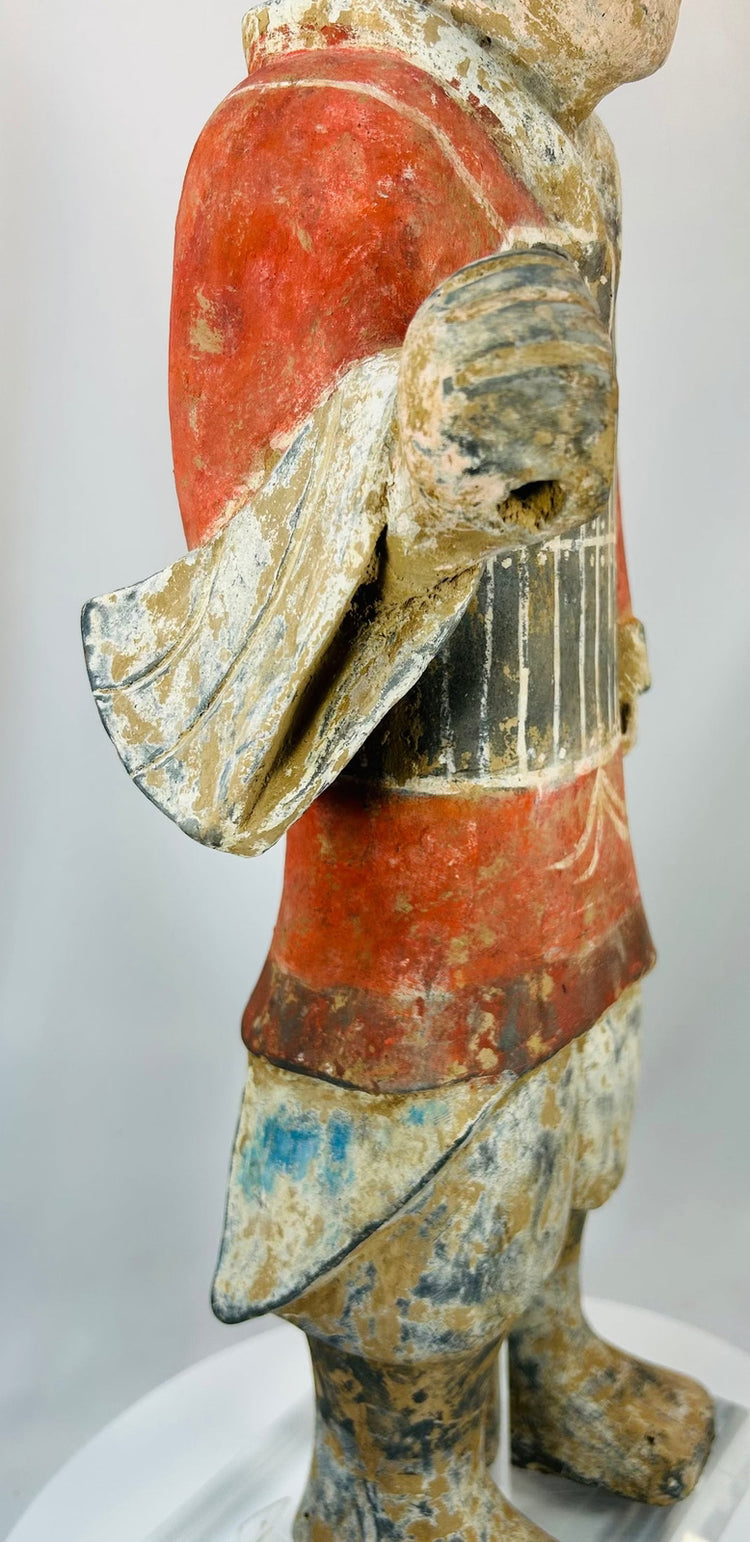
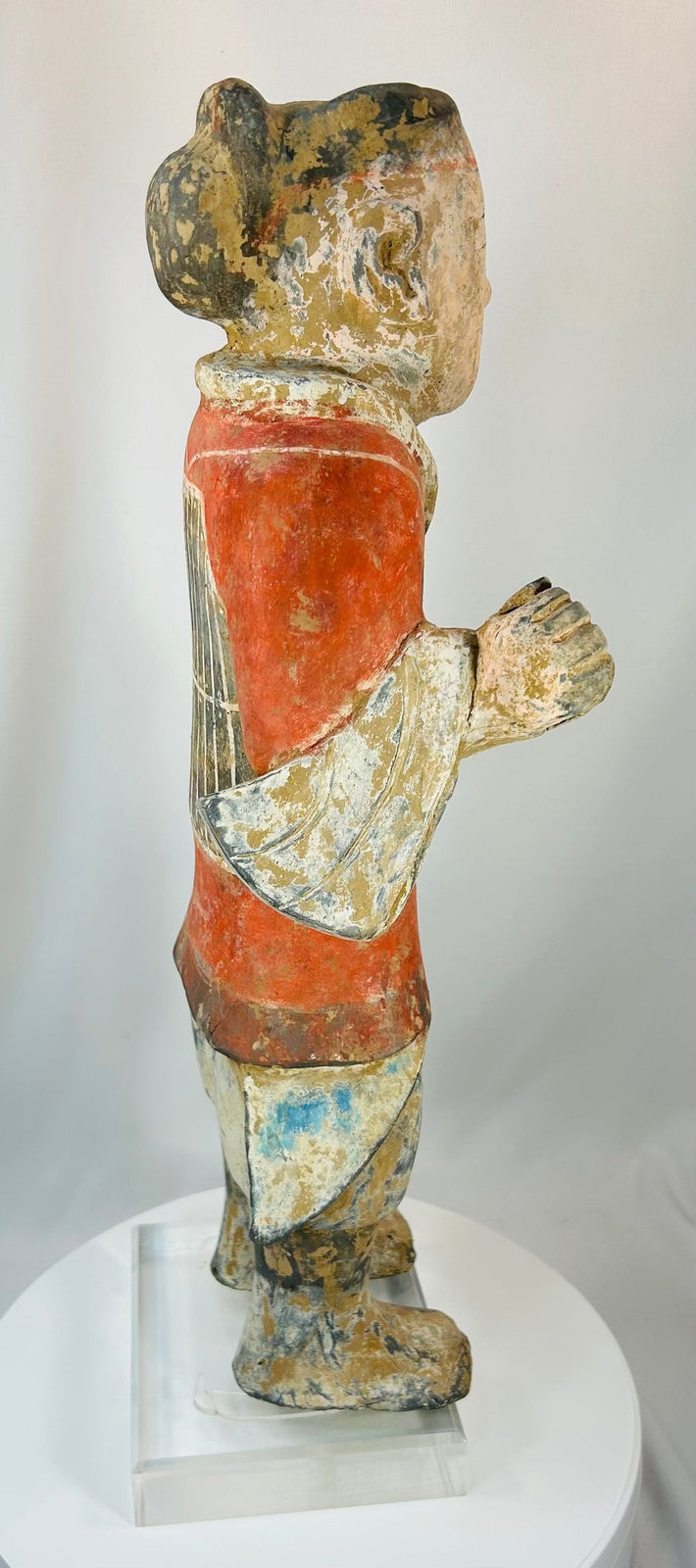
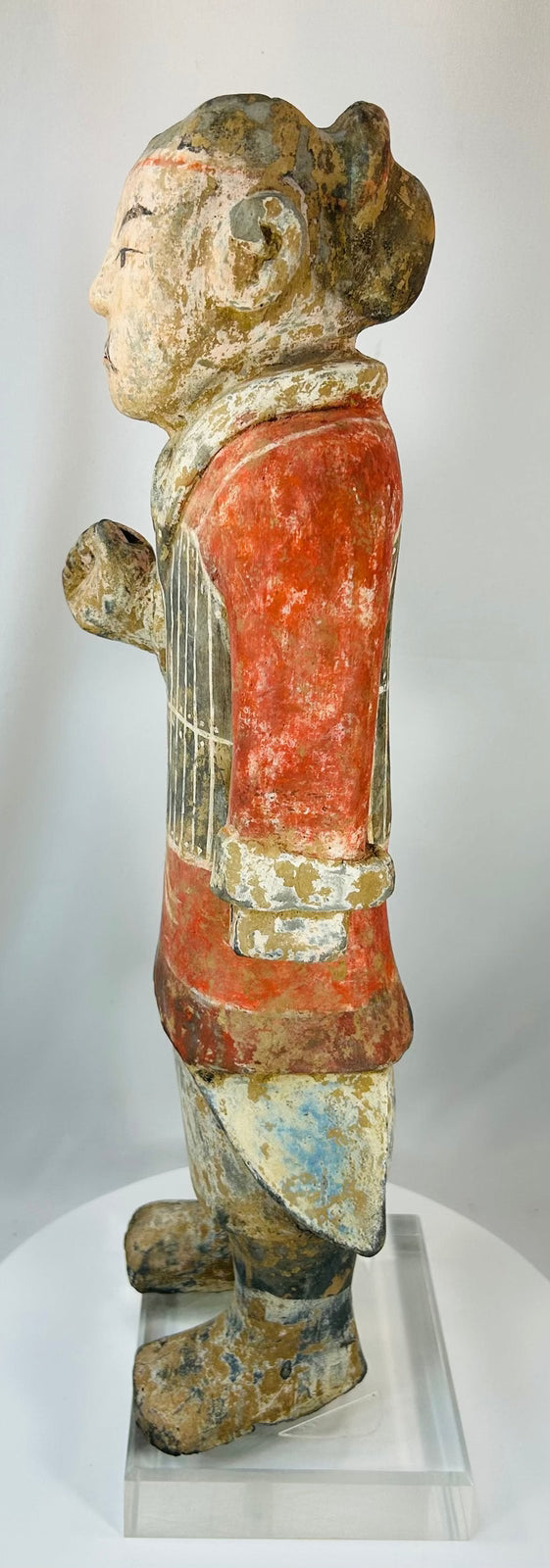
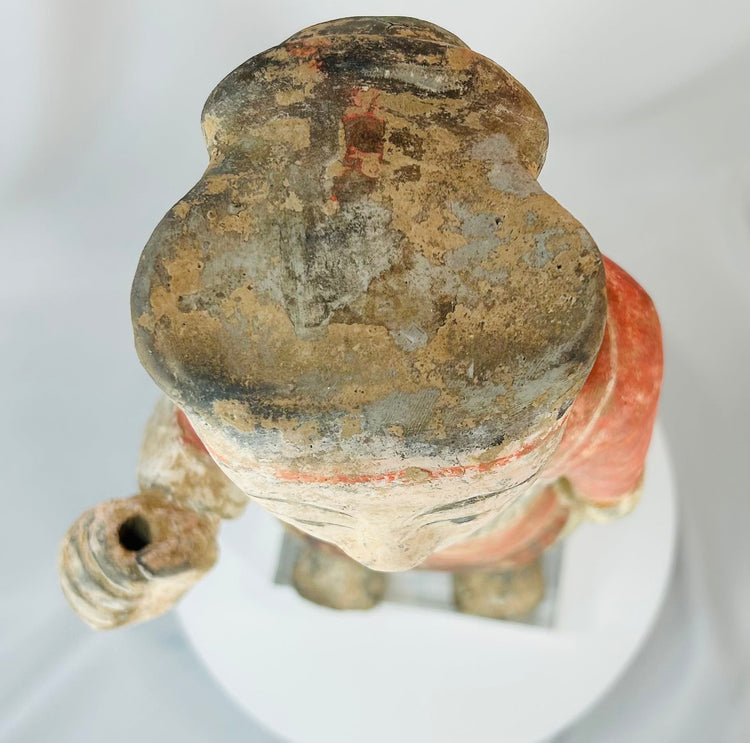
La figura se erige en una imponente postura erguida, con un brazo doblado hacia adelante como si alguna vez hubiera sostenido un arma o estandarte ahora perdido. El otro brazo presenta una abertura ahuecada, probablemente destinada a la inserción de un atributo separado, comúnmente elaborado en madera o metal y ahora perdido en el tiempo.
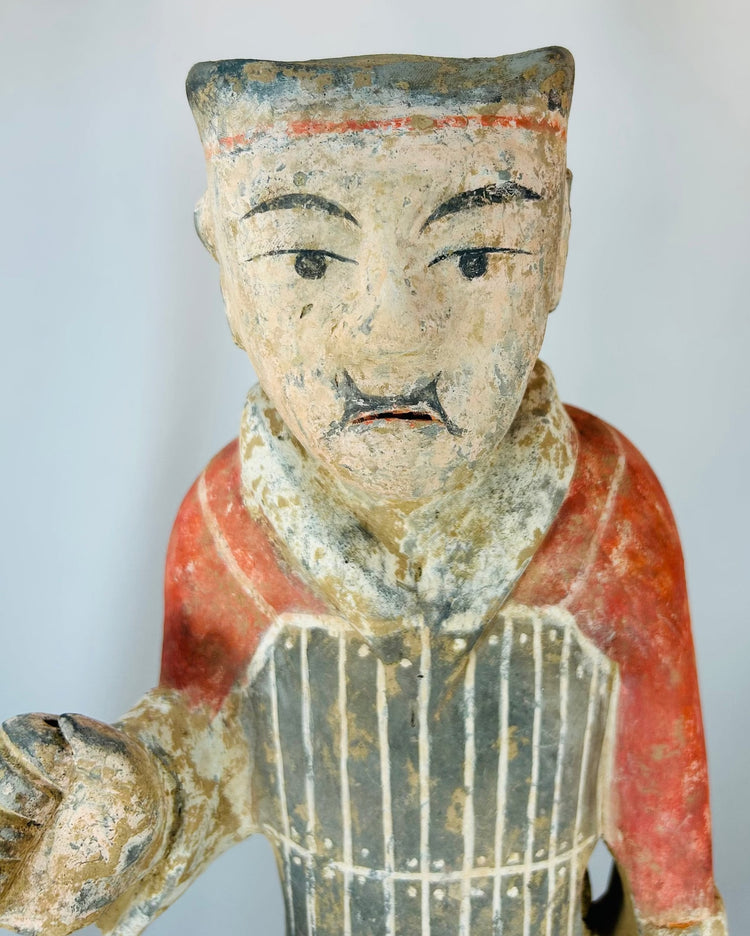
El soldado está representado con una túnica pintada de rojo sobre una armadura estilizada, con rayas verticales cuidadosamente renderizadas en el pecho que sugieren una protección lamelar o chapada. Sus rasgos faciales —cejas arqueadas, ojos definidos y una expresión solemne— están ejecutados con pinceladas seguras, conservando rastros del pigmento original a pesar de siglos de enterramiento. Los detalles de la diadema y el cabello reflejan además las convenciones artísticas Han.
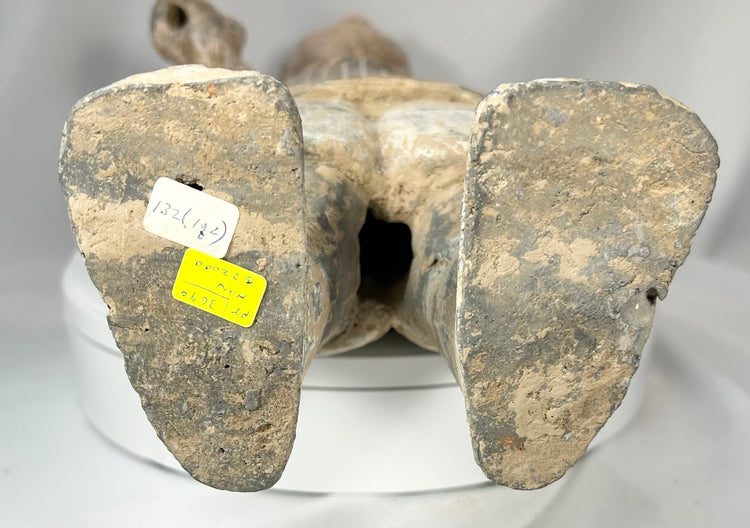
La superficie exhibe una extensa incrustación de tierra, depósitos minerales y meteorización natural consistente con un enterramiento prolongado, lo que contribuye tanto a la autenticidad como al carácter visual.
Características
- Figura funeraria de gran escala de la Dinastía Han (más de 50 cm de altura)
- Restos de pigmentos policromados originales, incluyendo rojo, negro y blanco
- Representa a un soldado de infantería de pie con atuendo militar
- Aberturas huecas en los brazos para los accesorios originales ahora desaparecidos
- Rasgos faciales y detalles de la armadura pintados a mano
- Sustancial incrustación y mineralización por enterramiento
- Montado sobre una base de exhibición moderna estilo museo
Significado cultural
Durante la Dinastía Han, las tumbas eran amuebladas con figuras de cerámica que representaban a sirvientes, asistentes y soldados para asegurar protección y servicio en la otra vida. Figuras militares como este ejemplo simbolizaban poder, orden y la salvaguarda del espíritu del ocupante de la tumba.
Estas figuras forman parte de una tradición funeraria más amplia que evolucionó a partir de prácticas anteriores como el Ejército de Terracota de la Dinastía Qin, continuando en las costumbres funerarias Han de una forma más estilizada y accesible. Los ejemplos más grandes como este son particularmente deseables, lo que refleja entierros de mayor estatus y una mayor inversión artística.
Estado
Buen estado antiguo en general. La superficie muestra una fuerte incrustación por enterramiento, pérdida de pigmento y depósitos minerales consistentes con la antigüedad. La integridad estructural se mantiene sólida. Las pérdidas de elementos insertados (arma o accesorios) son consistentes con los ejemplos excavados. Montado sobre una base de exhibición personalizada posterior.
Dimensiones (aproximadas)
Altura: 52,07 cm
Ancho: 13,34 cm
Profundidad: 15,88 cm
Edad (aproximada)
1.800–2.200 años de antigüedad
Procedencia
Anteriormente manejado y vendido por C.C. Lai Antiques, Toronto, Ontario, un anticuario canadiense de larga trayectoria especializado en arte y antigüedades asiáticas. La pieza entró posteriormente en el mercado secundario a través de Waddington's Auctioneers & Appraisers en Toronto, donde fue ofrecida y vendida en subasta en 2026.
Más información
Explore el legado de la escultura funeraria china antigua a través de Smarthistory
Explore nuestra Colección seleccionada de artefactos chinos antiguos y reliquias imperiales
Descripción
Contexto histórico y origen
Región: China
Material: Terracota pintada (loza)
Período: Dinastía Han, alrededor del 206 a. C. – 220 d. C.
Descripción
Esta gran y expresiva figura de terracota representa a un soldado de infantería de la Dinastía Han, creada originalmente como un objeto funerario colocado dentro de tumbas para servir y proteger al difunto en la otra vida. Tales figuras, conocidas como mingqi, eran un componente esencial de las prácticas funerarias de élite, simbolizando la fuerza militar, el orden y la continuación de la vida terrenal más allá de la muerte.
La figura se erige en una imponente postura erguida, con un brazo doblado hacia adelante como si alguna vez hubiera sostenido un arma o estandarte ahora perdido. El otro brazo presenta una abertura ahuecada, probablemente destinada a la inserción de un atributo separado, comúnmente elaborado en madera o metal y ahora perdido en el tiempo.
El soldado está representado con una túnica pintada de rojo sobre una armadura estilizada, con rayas verticales cuidadosamente renderizadas en el pecho que sugieren una protección lamelar o chapada. Sus rasgos faciales —cejas arqueadas, ojos definidos y una expresión solemne— están ejecutados con pinceladas seguras, conservando rastros del pigmento original a pesar de siglos de enterramiento. Los detalles de la diadema y el cabello reflejan además las convenciones artísticas Han.
La superficie exhibe una extensa incrustación de tierra, depósitos minerales y meteorización natural consistente con un enterramiento prolongado, lo que contribuye tanto a la autenticidad como al carácter visual.
Características
- Figura funeraria de gran escala de la Dinastía Han (más de 50 cm de altura)
- Restos de pigmentos policromados originales, incluyendo rojo, negro y blanco
- Representa a un soldado de infantería de pie con atuendo militar
- Aberturas huecas en los brazos para los accesorios originales ahora desaparecidos
- Rasgos faciales y detalles de la armadura pintados a mano
- Sustancial incrustación y mineralización por enterramiento
- Montado sobre una base de exhibición moderna estilo museo
Significado cultural
Durante la Dinastía Han, las tumbas eran amuebladas con figuras de cerámica que representaban a sirvientes, asistentes y soldados para asegurar protección y servicio en la otra vida. Figuras militares como este ejemplo simbolizaban poder, orden y la salvaguarda del espíritu del ocupante de la tumba.
Estas figuras forman parte de una tradición funeraria más amplia que evolucionó a partir de prácticas anteriores como el Ejército de Terracota de la Dinastía Qin, continuando en las costumbres funerarias Han de una forma más estilizada y accesible. Los ejemplos más grandes como este son particularmente deseables, lo que refleja entierros de mayor estatus y una mayor inversión artística.
Estado
Buen estado antiguo en general. La superficie muestra una fuerte incrustación por enterramiento, pérdida de pigmento y depósitos minerales consistentes con la antigüedad. La integridad estructural se mantiene sólida. Las pérdidas de elementos insertados (arma o accesorios) son consistentes con los ejemplos excavados. Montado sobre una base de exhibición personalizada posterior.
Dimensiones (aproximadas)
Altura: 52,07 cm
Ancho: 13,34 cm
Profundidad: 15,88 cm
Edad (aproximada)
1.800–2.200 años de antigüedad
Procedencia
Anteriormente manejado y vendido por C.C. Lai Antiques, Toronto, Ontario, un anticuario canadiense de larga trayectoria especializado en arte y antigüedades asiáticas. La pieza entró posteriormente en el mercado secundario a través de Waddington's Auctioneers & Appraisers en Toronto, donde fue ofrecida y vendida en subasta en 2026.
Más información
Explore el legado de la escultura funeraria china antigua a través de Smarthistory
Explore nuestra Colección seleccionada de artefactos chinos antiguos y reliquias imperiales
También te puede interesar
