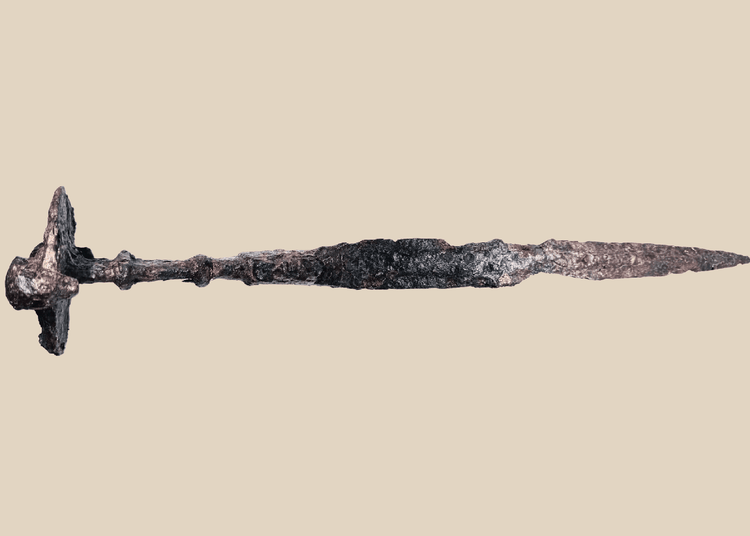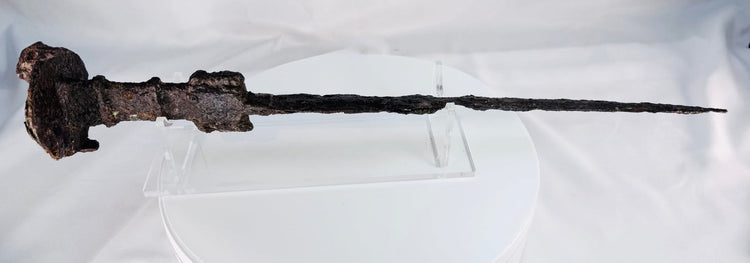
Espada corta de hierro de Luristán | Arma del antiguo Oriente Próximo | 750–650 a. C.

Historial de procedencia y propiedad

Antigua colección privada de Martin B. Retting, célebre coleccionista temprano y fundador de la antigua armería del sur de California Martin B. Retting, Inc.; posteriormente en la colección de un comerciante privado de armas y armaduras de Los Ángeles, California.

Precio habitual
$3,000.00
Precio de venta
$3,000.00
Precio habitual
Envío calculado al finalizar la compra.

This is a one-of-a-kind historical object. Once sold, this exact piece will not be restocked.

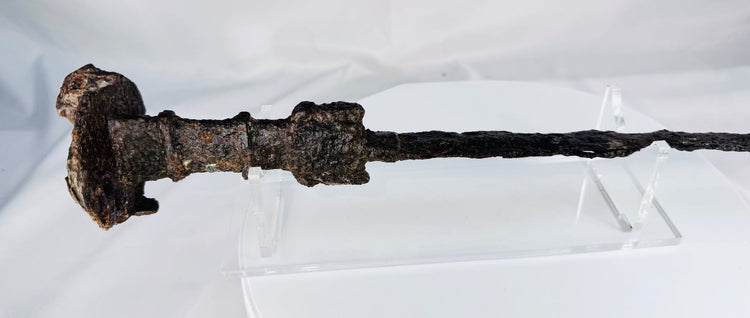
Ancient Luristan iron short sword from Western Iran, circa 750–650 BCE, featuring a lion-head disc pommel, ribbed grip, and straight double-edged blade. Iron Age weapon with natural patina and surface oxidization, reflecting Luristan metallurgical skill, ceremonial significance, and martial artistry.
Video showing an ancient Luristan iron short sword from Western Iran, dating to circa 750–650 BCE, with a lion-head disc pommel, ribbed grip, straight double-edged blade, and naturally aged surface oxidation from antiquity.
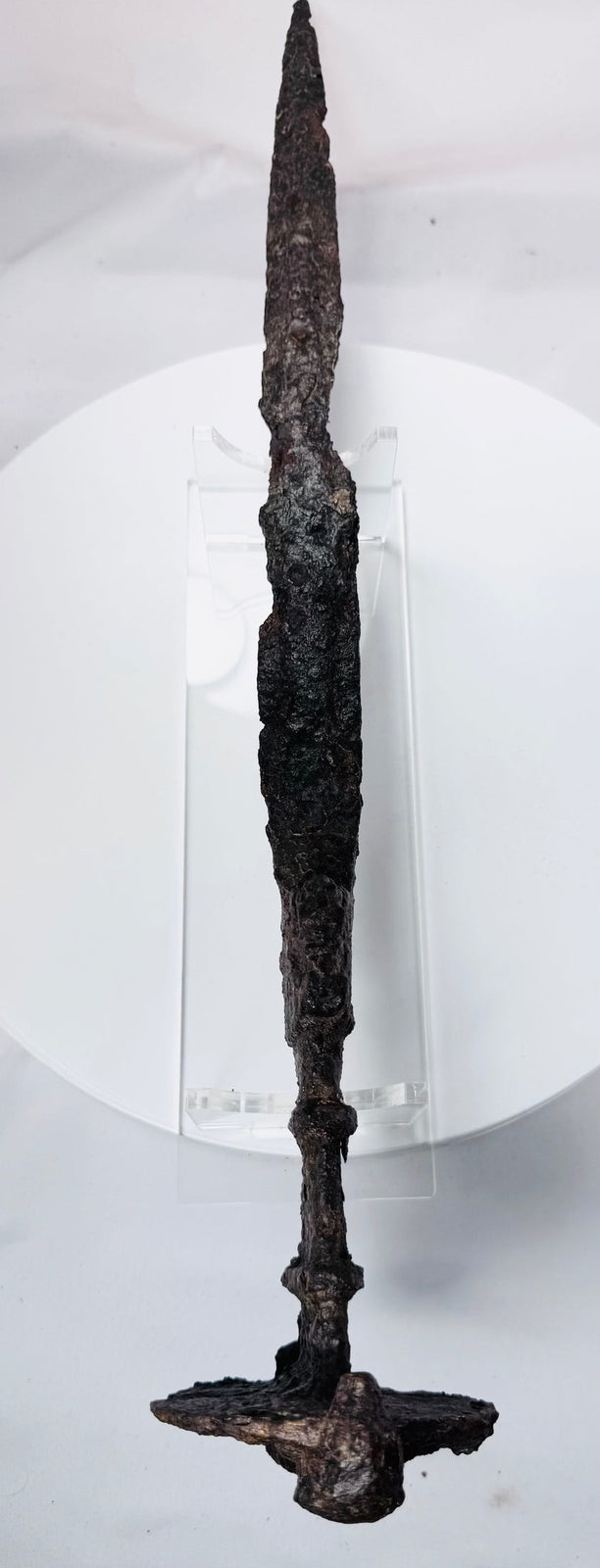
Ancient Luristan iron short sword from Western Iran dating to circa 750–650 BCE, shown in full with its straight blade and lion-head disc pommel.
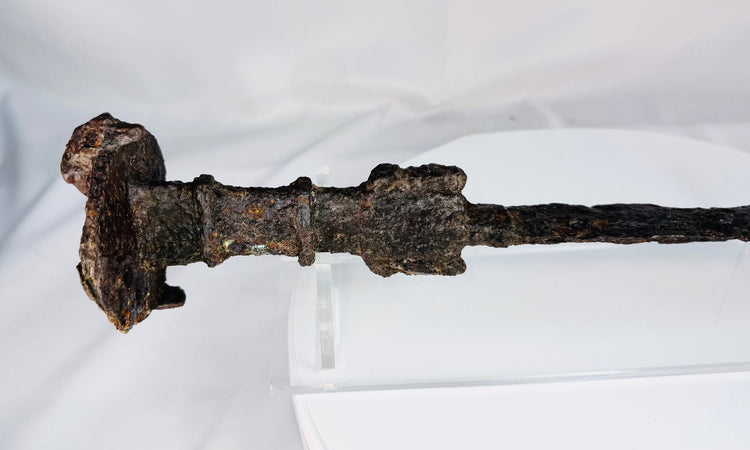
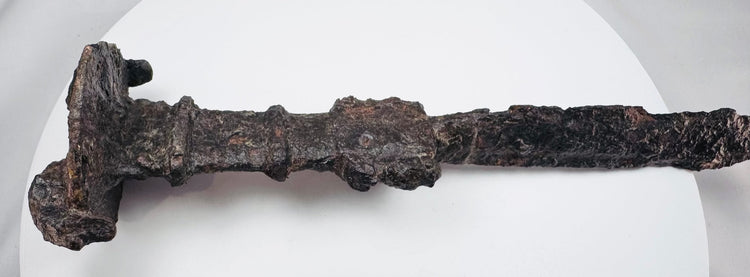
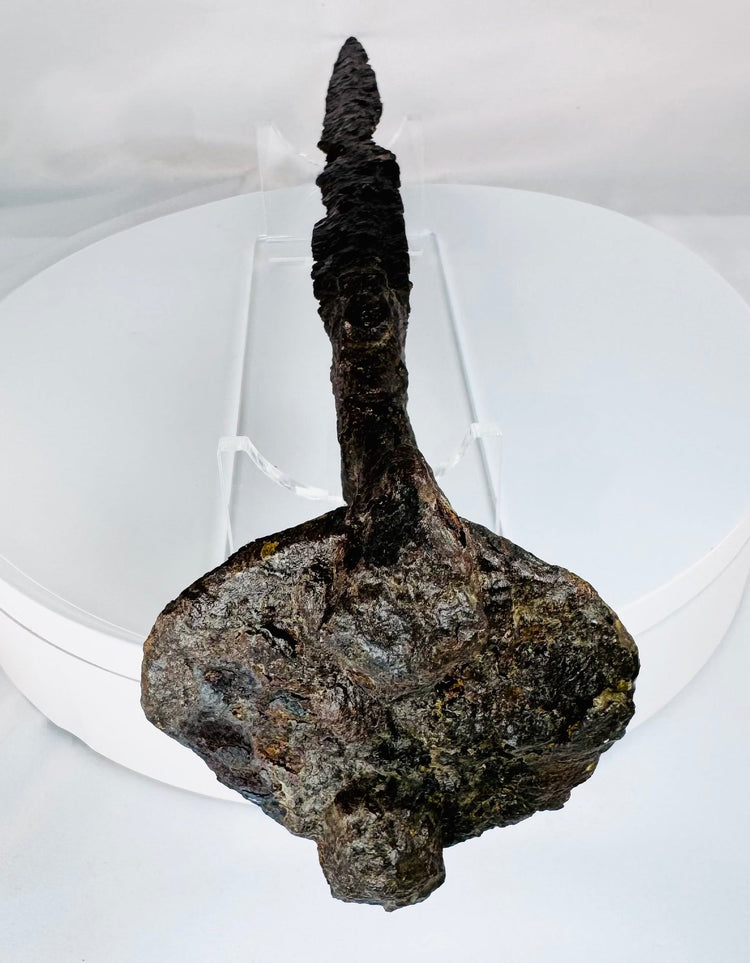
Close-up of the lion-head disc pommel on an Iron Age Luristan sword, highlighting its sculptural form and ancient surface patina.
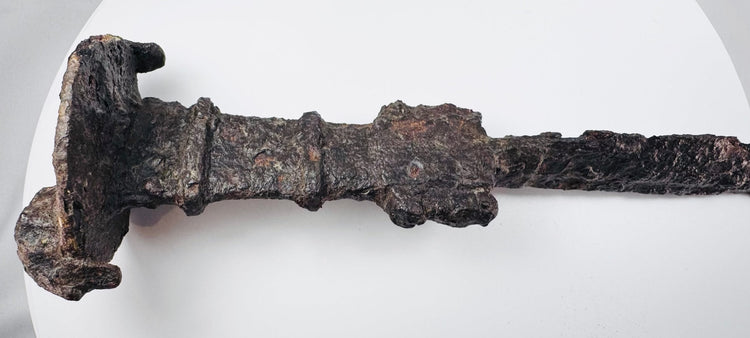
Detailed view of the ribbed iron grip on a Luristan short sword, showing preserved craftsmanship from the 8th–7th century BCE.
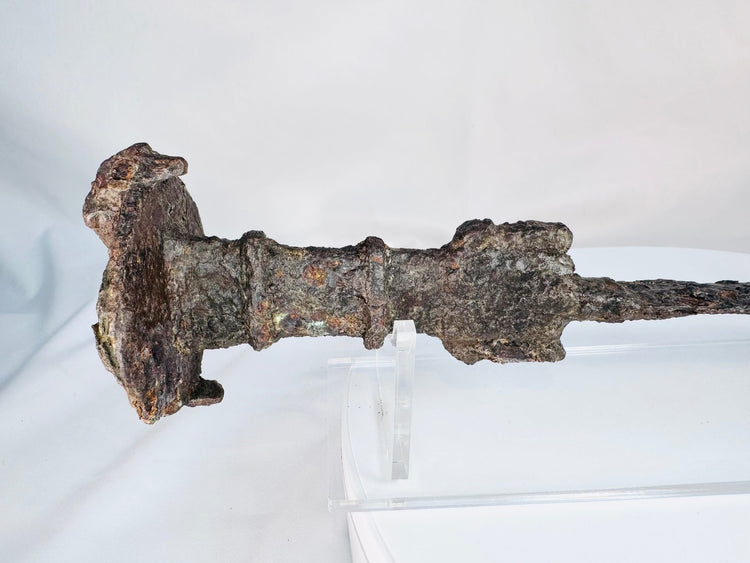
Side view of an ancient Iranian iron sword with a double-edged blade, ribbed handle, and naturally oxidized archaeological surface.
Close-up of the upper blade and hilt of a Luristan iron short sword, displaying corrosion and patina consistent with significant age.
Ancient Near Eastern iron weapon from Luristan featuring a straight blade and distinctive lion-form pommel associated with strength and protection.
Full-length view of a circa 750–650 BCE Luristan short sword measuring approximately 20.5 inches long with preserved original proportions.
Detailed photograph of an Iron Age Luristan sword showing its lion-head pommel, ribbed grip, double-edged blade, and centuries-old oxidation.
Archaeologists uncover ancient short sword partially buried in desert excavation site — real historical weapon discovery featured by Relic and Rarity.
  • Ancient Luristan iron short sword from Western Iran, circa 750–650 BCE, featuring a lion-head disc pommel, ribbed grip, and straight double-edged blade. Iron Age weapon with natural patina and surface oxidization, reflecting Luristan metallurgical skill, ceremonial significance, and martial artistry.
  • Video showing an ancient Luristan iron short sword from Western Iran, dating to circa 750–650 BCE, with a lion-head disc pommel, ribbed grip, straight double-edged blade, and naturally aged surface oxidation from antiquity.
  • Ancient Luristan iron short sword from Western Iran dating to circa 750–650 BCE, shown in full with its straight blade and lion-head disc pommel.
  • Close-up of the lion-head disc pommel on an Iron Age Luristan sword, highlighting its sculptural form and ancient surface patina.
  • Detailed view of the ribbed iron grip on a Luristan short sword, showing preserved craftsmanship from the 8th–7th century BCE.
  • Side view of an ancient Iranian iron sword with a double-edged blade, ribbed handle, and naturally oxidized archaeological surface.
  • Close-up of the upper blade and hilt of a Luristan iron short sword, displaying corrosion and patina consistent with significant age.
  • Ancient Near Eastern iron weapon from Luristan featuring a straight blade and distinctive lion-form pommel associated with strength and protection.
  • Full-length view of a circa 750–650 BCE Luristan short sword measuring approximately 20.5 inches long with preserved original proportions.
  • Detailed photograph of an Iron Age Luristan sword showing its lion-head pommel, ribbed grip, double-edged blade, and centuries-old oxidation.
  • Archaeologists uncover ancient short sword partially buried in desert excavation site — real historical weapon discovery featured by Relic and Rarity.
Ancient Luristan iron short sword from Western Iran, circa 750–650 BCE, featuring a lion-head disc pommel, ribbed grip, and straight double-edged blade. Iron Age weapon with natural patina and surface oxidization, reflecting Luristan metallurgical skill, ceremonial significance, and martial artistry.
Video showing an ancient Luristan iron short sword from Western Iran, dating to circa 750–650 BCE, with a lion-head disc pommel, ribbed grip, straight double-edged blade, and naturally aged surface oxidation from antiquity.
Ancient Luristan iron short sword from Western Iran dating to circa 750–650 BCE, shown in full with its straight blade and lion-head disc pommel.
Close-up of the lion-head disc pommel on an Iron Age Luristan sword, highlighting its sculptural form and ancient surface patina.
Detailed view of the ribbed iron grip on a Luristan short sword, showing preserved craftsmanship from the 8th–7th century BCE.
Side view of an ancient Iranian iron sword with a double-edged blade, ribbed handle, and naturally oxidized archaeological surface.
Close-up of the upper blade and hilt of a Luristan iron short sword, displaying corrosion and patina consistent with significant age.
Ancient Near Eastern iron weapon from Luristan featuring a straight blade and distinctive lion-form pommel associated with strength and protection.
Full-length view of a circa 750–650 BCE Luristan short sword measuring approximately 20.5 inches long with preserved original proportions.
Detailed photograph of an Iron Age Luristan sword showing its lion-head pommel, ribbed grip, double-edged blade, and centuries-old oxidation.
Archaeologists uncover ancient short sword partially buried in desert excavation site — real historical weapon discovery featured by Relic and Rarity.
Authenticity and secure checkout guarantee

Espada corta de hierro de Luristán | Arma del antiguo Oriente Próximo | 750–650 a. C.

Descripción

Contexto histórico y origen

Región: Luristán, Irán occidental (Antiguo Oriente Próximo)
Material: Hierro
Período: Circa 750–650 a. C. (Edad del Hierro)

Descripción

Esta espada corta de hierro de Luristán (circa 750–650 a. C.) ejemplifica la artesanía de la Edad del Hierro del antiguo Luristán en el oeste de Irán. Con una longitud aproximada de 20.5 pulgadas, la espada presenta un pomo de disco con cabeza de león, un potente símbolo de fuerza y protección, complementado por una empuñadura acanalada que combina un diseño funcional con un refinamiento artístico. A pesar de sus antiguos orígenes, esta espada conserva su forma y proporciones originales, ofreciendo una rara visión de las tradiciones marciales y ceremoniales del Antiguo Oriente Próximo.

Características

- Pomo de disco con cabeza de león que simboliza fuerza, autoridad y protección divina

- Empuñadura acanalada diseñada para un agarre seguro con refinamiento estético

- Hoja recta de doble filo con proporciones bien conservadas

- Pátina natural y oxidación superficial que realzan su antigüedad y autenticidad

Importancia cultural

Durante la Edad del Hierro, Luristán fue un centro de innovación metalúrgica, produciendo armas que eran tanto funcionales como simbólicas. Espadas como esta eran llevadas por guerreros y utilizadas en ceremonias. El motivo del león refleja temas de dominio, protección divina y estatus social dentro de la sociedad de Luristán. Esta espada conecta a su portador con el legado cultural y marcial de una de las civilizaciones más avanzadas del Antiguo Oriente Próximo.

Estado

Buen estado antiguo con oxidación superficial y corrosión debido a siglos de entierro. Estructuralmente estable, con todas las características clave, especialmente el pomo con cabeza de león y la empuñadura acanalada, claramente conservadas.

Dimensiones (aproximadas)

Largo: 20.5 pulgadas

Edad (aproximada)

2.675–2.775 años de antigüedad

Procedencia

Ex-colección privada de Martin B. Retting, destacado coleccionista temprano y fundador del longevo concesionario de armas del sur de California Martin B. Retting, Inc.; posteriormente en la colección de un distribuidor privado de armas y armaduras de Los Ángeles, California.

Más información

Lea el estudio académico Armas de bronce y hierro de Luristán

Examine la investigación Datación absoluta de objetos de hierro antiguos del Antiguo Oriente de la Universidad de Cambridge

De nuestro blog: La espada corta de hierro de Luristán – El legado de un guerrero

Descripción

Contexto histórico y origen

Región: Luristán, Irán occidental (Antiguo Oriente Próximo)
Material: Hierro
Período: Circa 750–650 a. C. (Edad del Hierro)

Descripción

Esta espada corta de hierro de Luristán (circa 750–650 a. C.) ejemplifica la artesanía de la Edad del Hierro del antiguo Luristán en el oeste de Irán. Con una longitud aproximada de 20.5 pulgadas, la espada presenta un pomo de disco con cabeza de león, un potente símbolo de fuerza y protección, complementado por una empuñadura acanalada que combina un diseño funcional con un refinamiento artístico. A pesar de sus antiguos orígenes, esta espada conserva su forma y proporciones originales, ofreciendo una rara visión de las tradiciones marciales y ceremoniales del Antiguo Oriente Próximo.

Características

- Pomo de disco con cabeza de león que simboliza fuerza, autoridad y protección divina

- Empuñadura acanalada diseñada para un agarre seguro con refinamiento estético

- Hoja recta de doble filo con proporciones bien conservadas

- Pátina natural y oxidación superficial que realzan su antigüedad y autenticidad

Importancia cultural

Durante la Edad del Hierro, Luristán fue un centro de innovación metalúrgica, produciendo armas que eran tanto funcionales como simbólicas. Espadas como esta eran llevadas por guerreros y utilizadas en ceremonias. El motivo del león refleja temas de dominio, protección divina y estatus social dentro de la sociedad de Luristán. Esta espada conecta a su portador con el legado cultural y marcial de una de las civilizaciones más avanzadas del Antiguo Oriente Próximo.

Estado

Buen estado antiguo con oxidación superficial y corrosión debido a siglos de entierro. Estructuralmente estable, con todas las características clave, especialmente el pomo con cabeza de león y la empuñadura acanalada, claramente conservadas.

Dimensiones (aproximadas)

Largo: 20.5 pulgadas

Edad (aproximada)

2.675–2.775 años de antigüedad

Procedencia

Ex-colección privada de Martin B. Retting, destacado coleccionista temprano y fundador del longevo concesionario de armas del sur de California Martin B. Retting, Inc.; posteriormente en la colección de un distribuidor privado de armas y armaduras de Los Ángeles, California.

Más información

Lea el estudio académico Armas de bronce y hierro de Luristán

Examine la investigación Datación absoluta de objetos de hierro antiguos del Antiguo Oriente de la Universidad de Cambridge

De nuestro blog: La espada corta de hierro de Luristán – El legado de un guerrero

También te puede interesar