



Neoclásico | Bronce | Figura barbuda de pie con vestimenta romana | Circa siglos XVIII-XIX
- Precio habitual
- $300.00
- Precio de venta
- $300.00
- Precio habitual
No se pudo cargar la disponibilidad de retiro


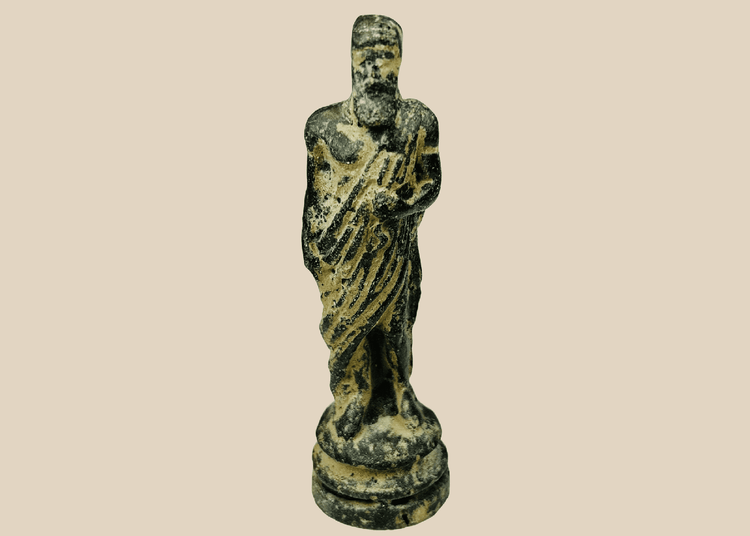
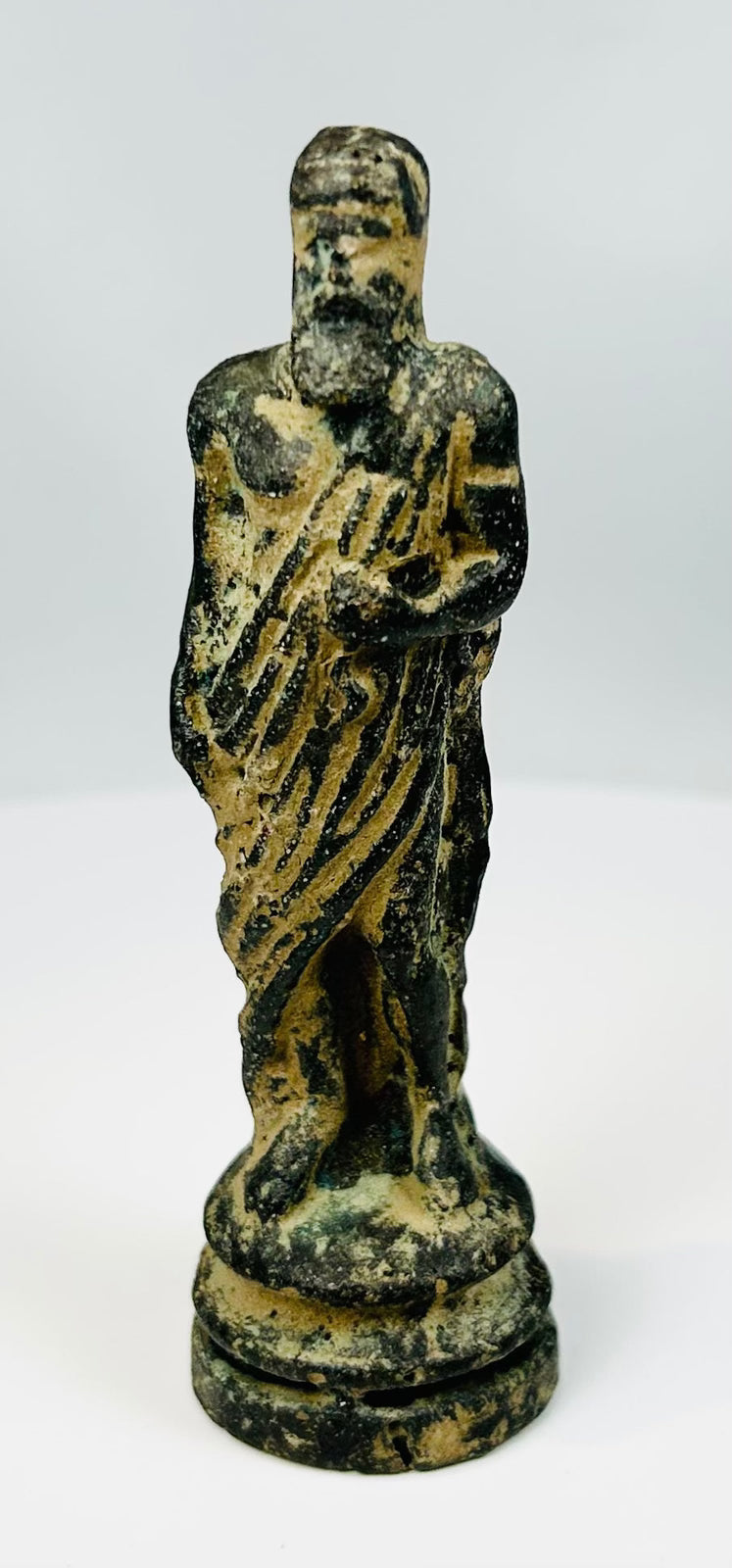
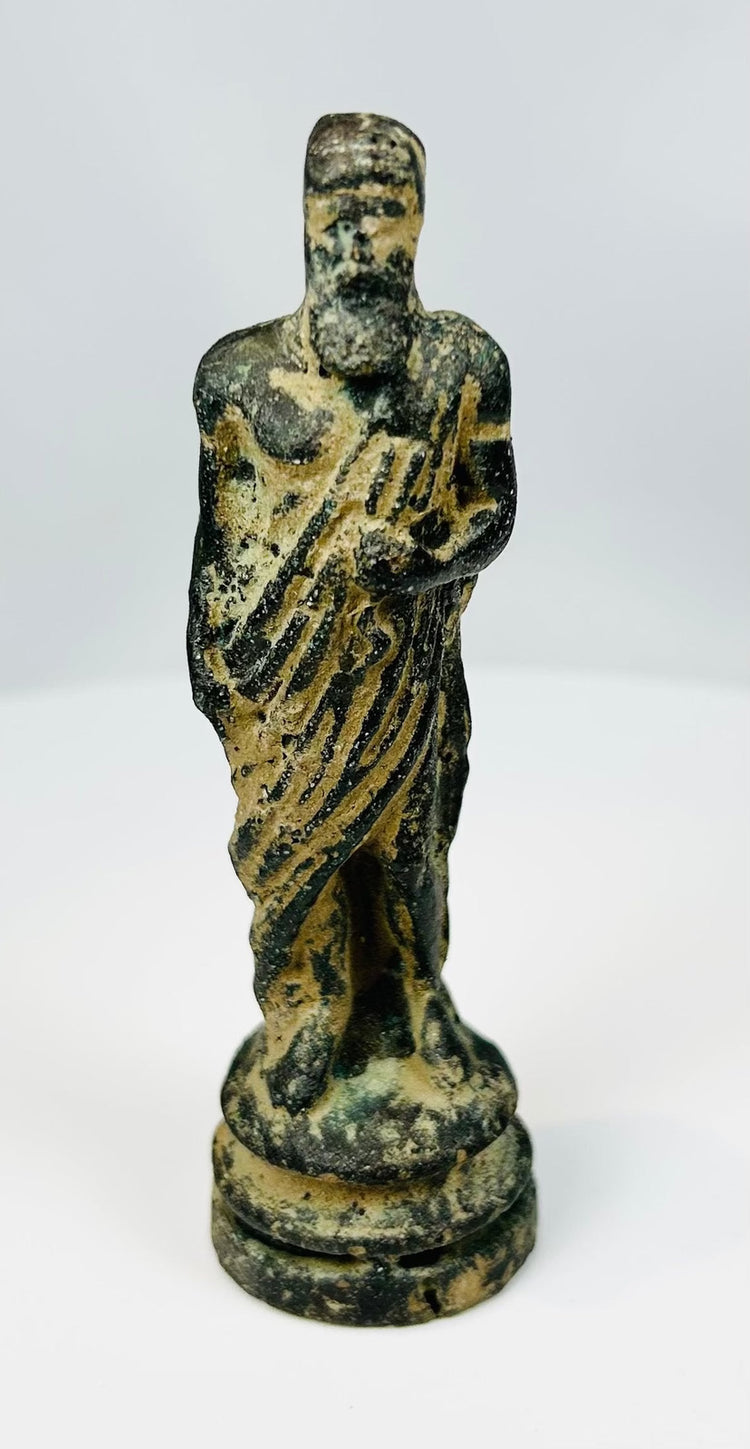
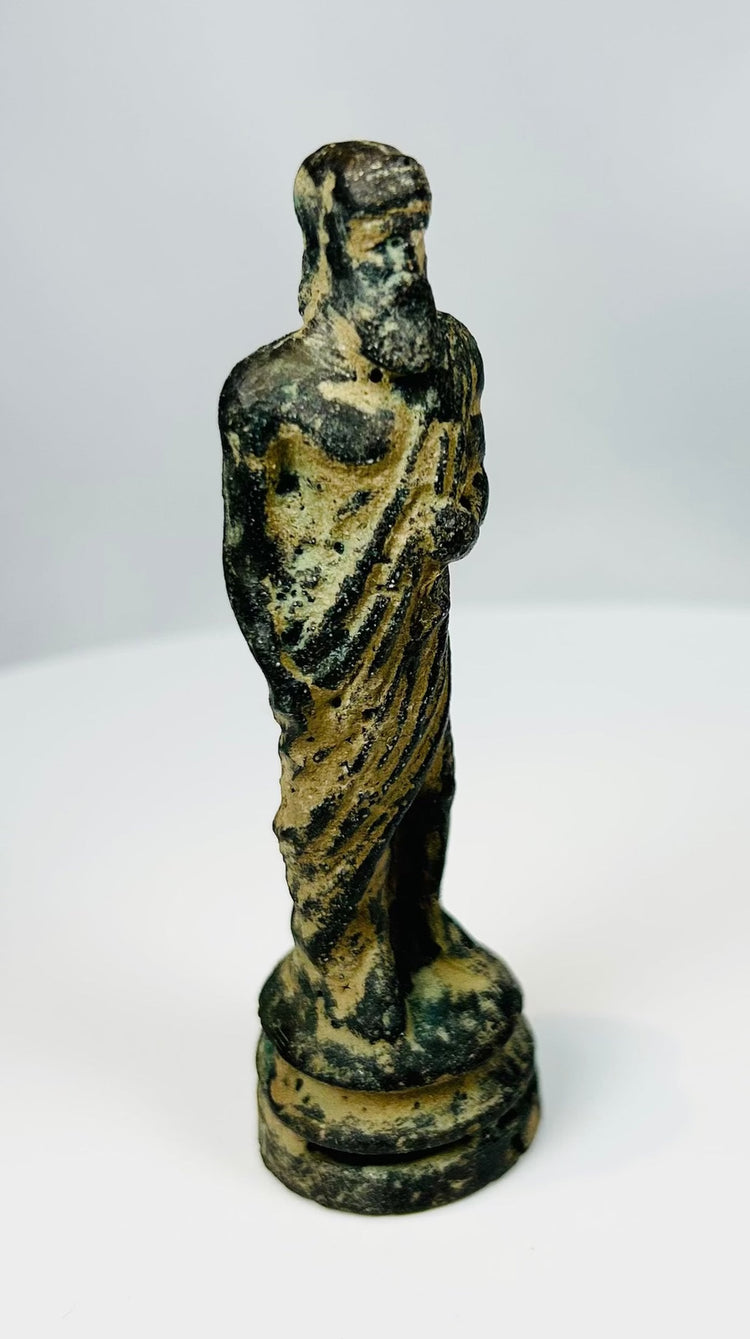
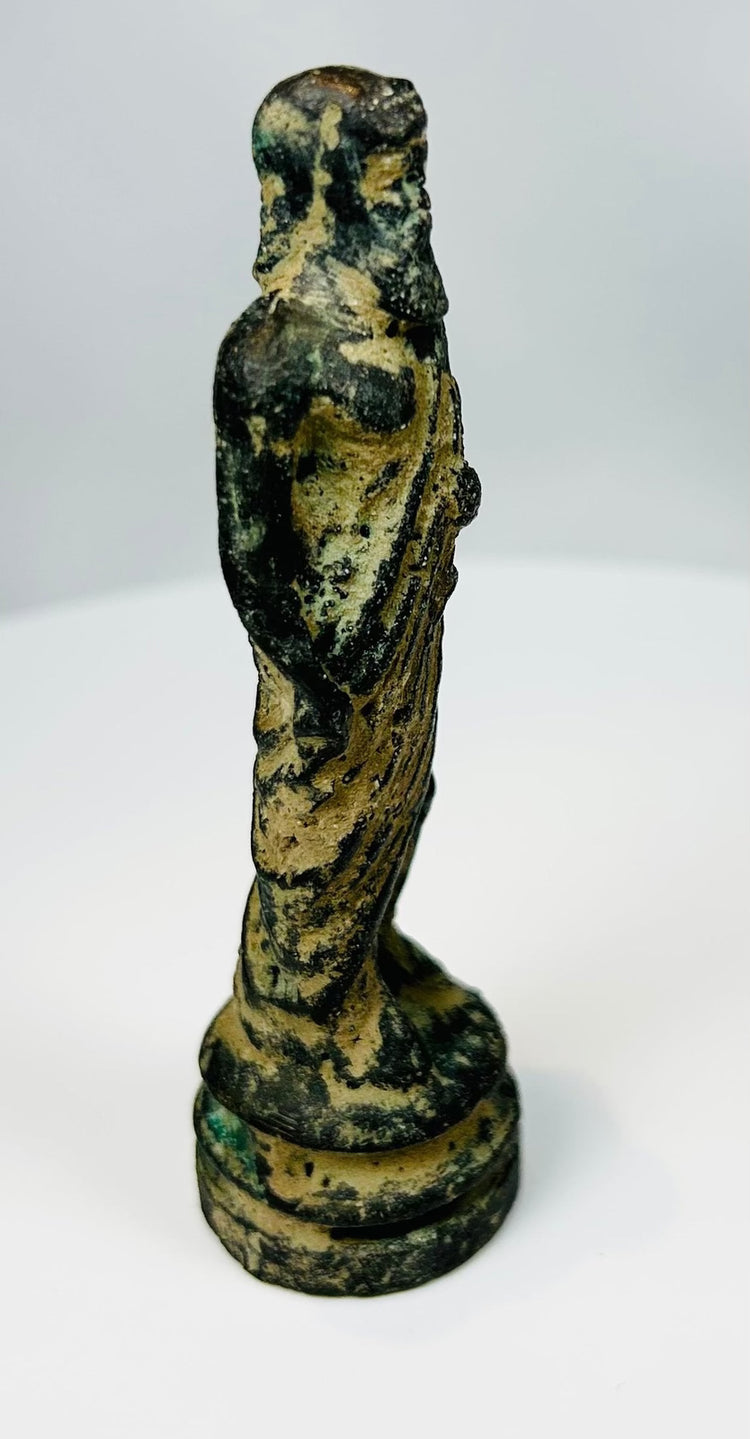
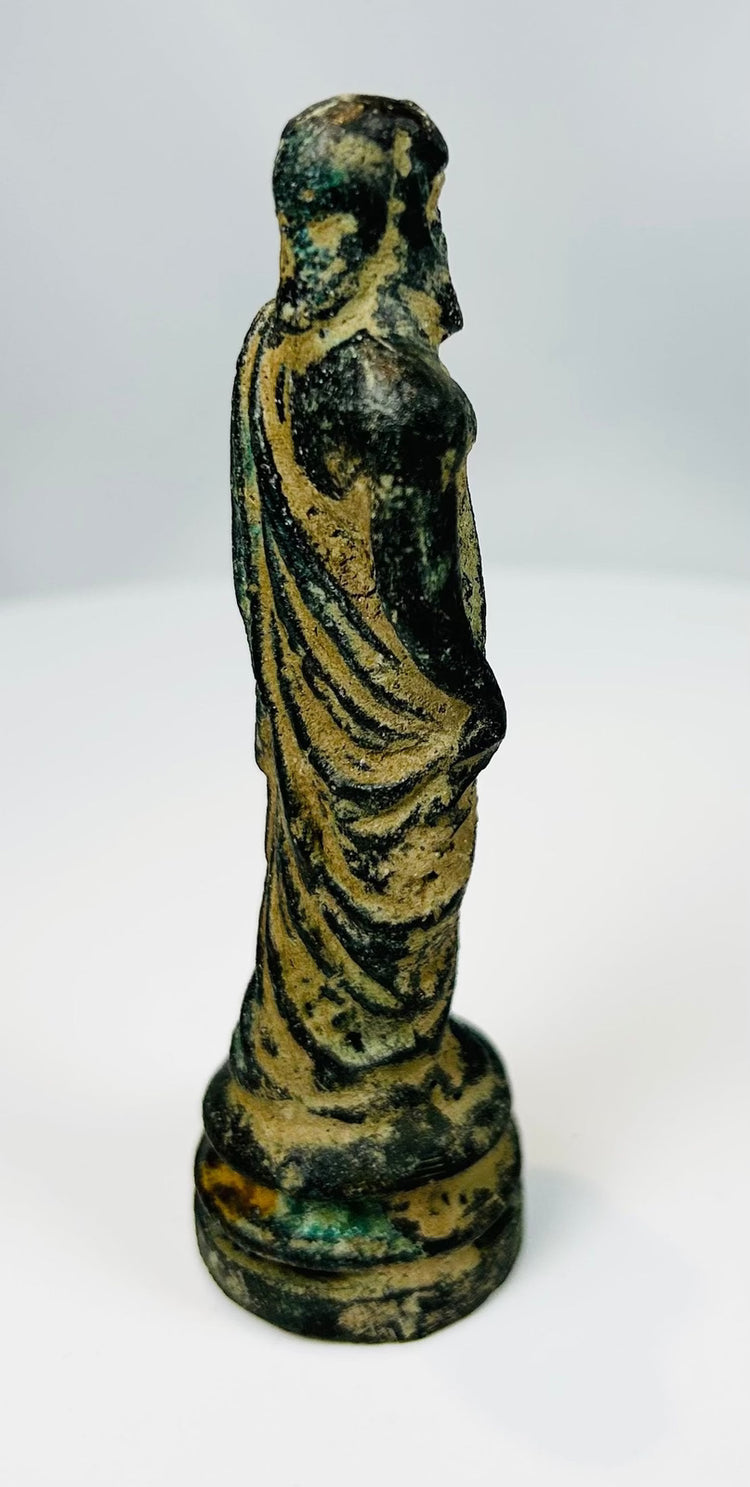
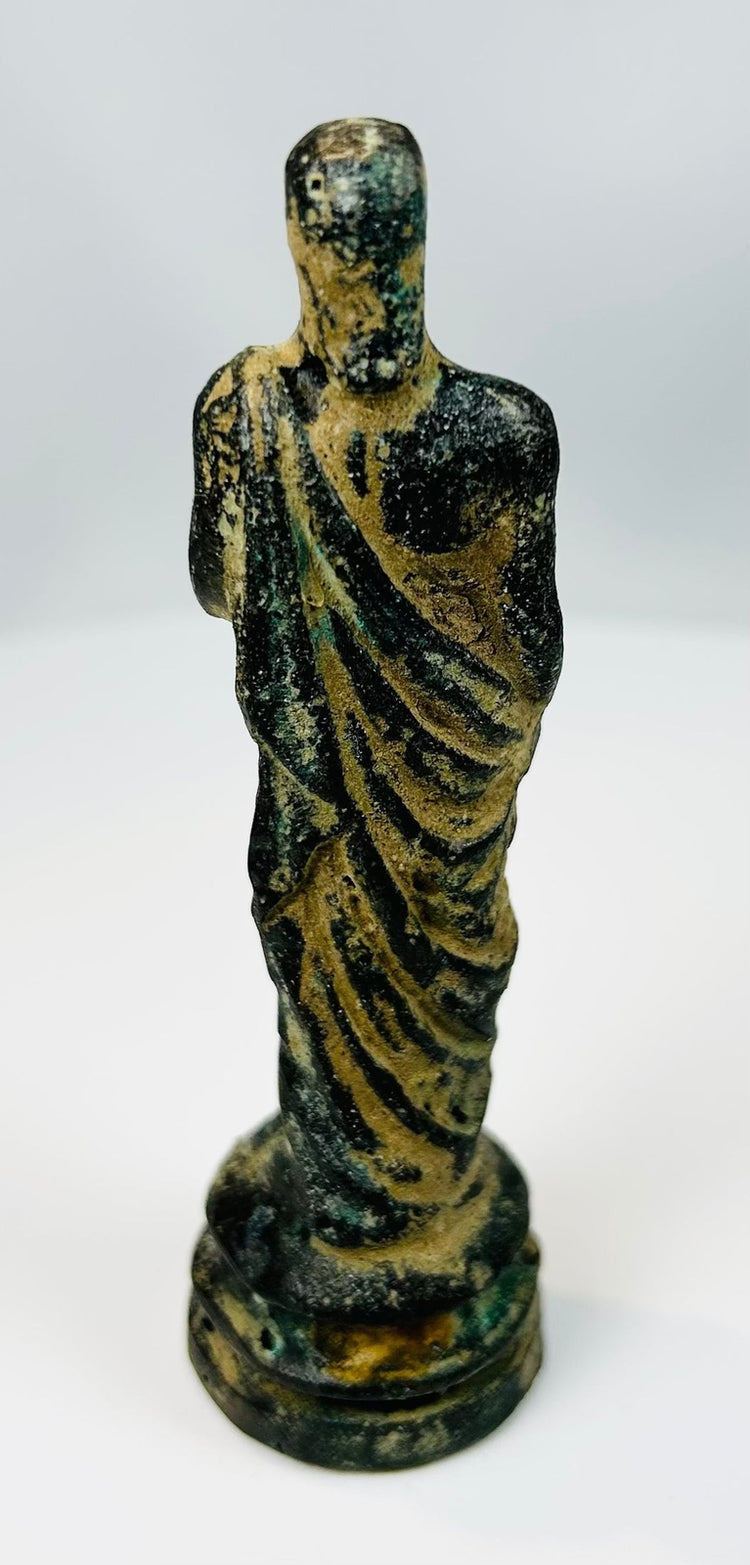
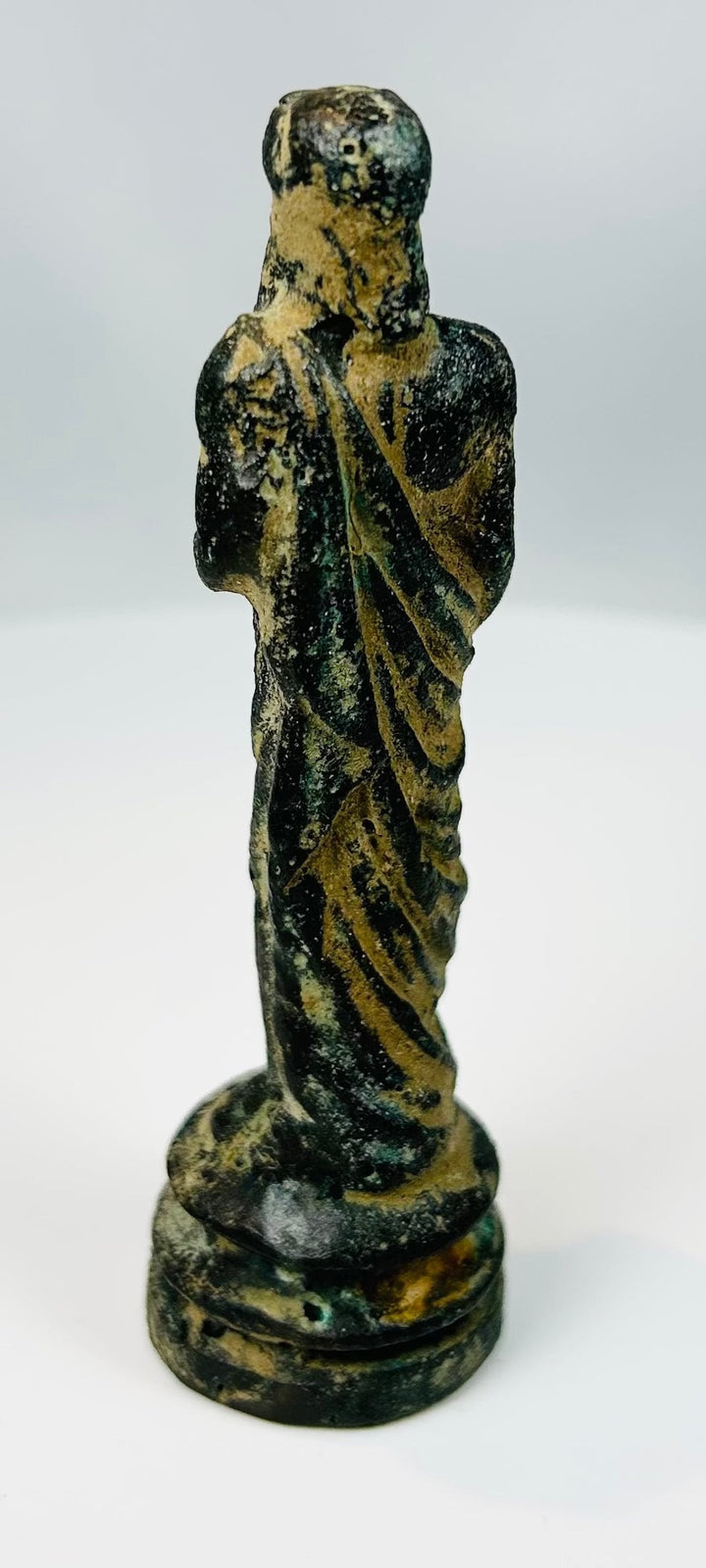
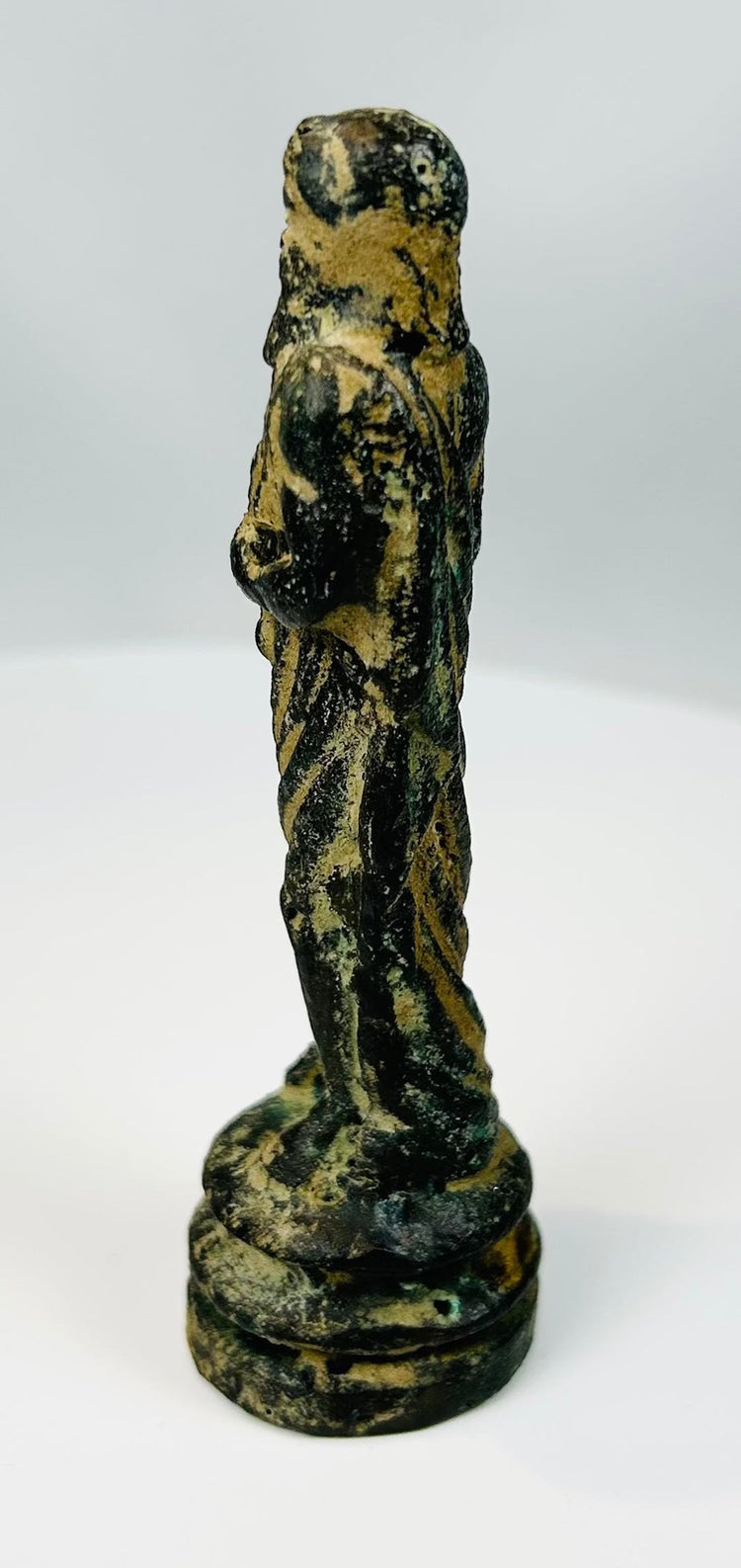
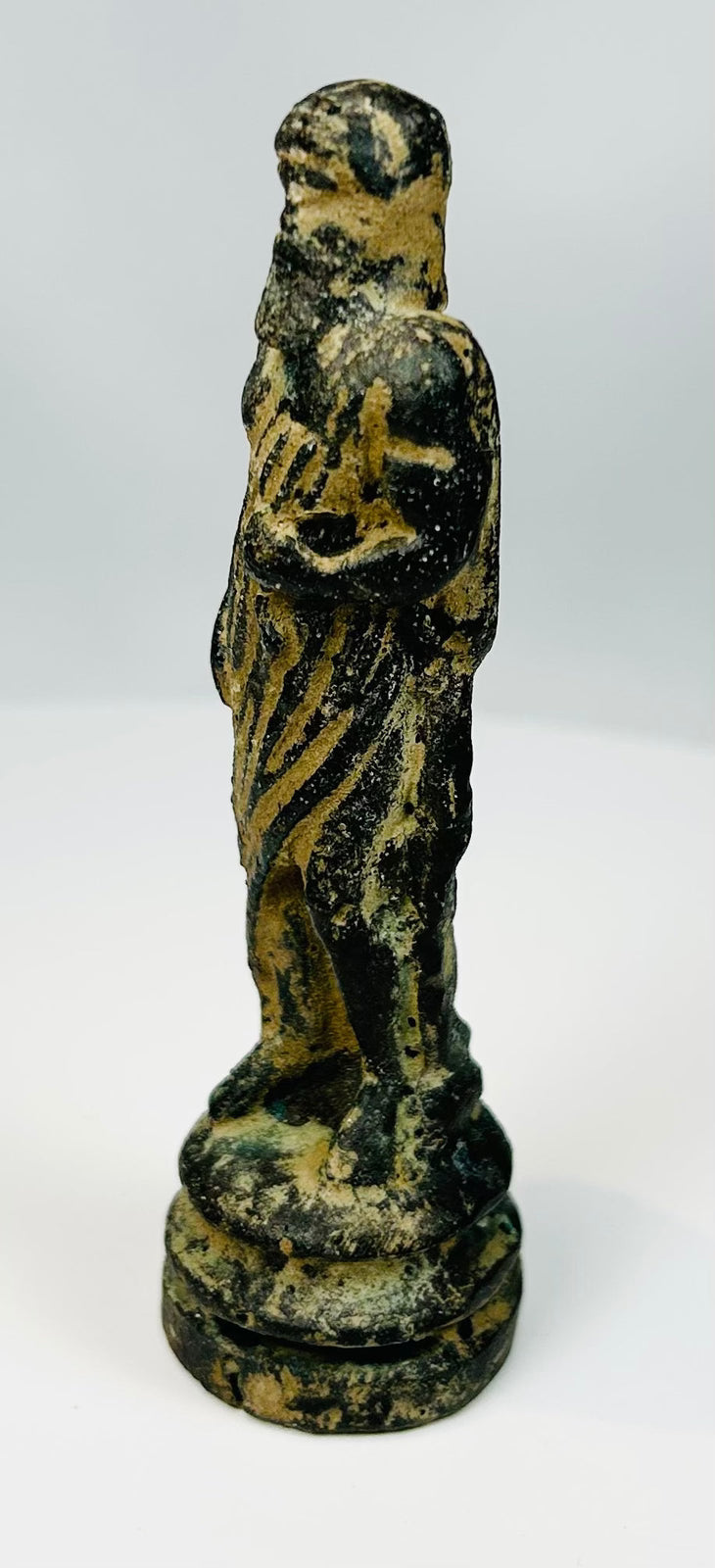
Neoclásico | Bronce | Figura barbuda de pie con vestimenta romana | Circa siglos XVIII-XIX
Descripción
Más
Menos
Contexto histórico y origen
Región: Mundo mediterráneo (Tradición clásica romana)
Material: Bronce fundido con pátina envejecida
Periodo: Probablemente siglos XVIII-XIX, inspirado en la escultura romana antigua
Descripción
Esta figura de bronce finamente fundido representa a un hombre barbudo de pie, realizado al estilo clásico de la estatuaria romana antigua. La figura aparece vestida con un ropaje fluido que recuerda a una toga o himation, con pliegues cuidadosamente modelados que caen en cascada diagonalmente por el torso y el cuerpo. Su larga barba y su expresión solemne evocan la iconografía de filósofos, sabios o figuras mitológicas frecuentemente representadas en la escultura grecorromana.
La figura se alza sobre una base circular escalonada, lo que refuerza la estética de la escultura clásica en miniatura. Las proporciones y el tratamiento estilizado de los drapeados reflejan la perdurable influencia de las tradiciones artísticas romanas, que inspiraron obras neoclásicas posteriores. Los objetos de este tipo se producían a menudo durante el Grand Tour y el renacimiento neoclásico europeo, cuando los coleccionistas buscaban pequeñas esculturas modeladas a partir de la Antigüedad.
Su escala compacta y su refinada presencia escultórica sugieren que pudo haber servido como objeto decorativo de escritorio, escultura de gabinete u ornamento arquitectónico que reflejaba el gusto clásico cultivado.
Características
- Figura masculina de bronce finamente fundido en estilo clásico romano
- Prenda drapeada tipo toga con pliegues profundamente modelados
- Cabeza barbuda y expresión solemne que recuerda a las figuras de filósofos
- Base escalonada circular que soporta la figura
- Pátina natural envejecida con zonas de oxidación y textura superficial
Importancia cultural
La imaginería clásica siguió siendo profundamente influyente en el arte europeo mucho después de la caída del Imperio Romano. Durante los siglos XVIII y XIX, artistas y fundiciones produjeron figuras de bronce inspiradas en la escultura antigua, celebrando los ideales de la filosofía, la mitología y la virtud cívica.
Tales obras reflejan la perdurable fascinación por la Antigüedad y el resurgimiento de la estética clásica durante el período neoclásico, particularmente entre los coleccionistas del Grand Tour que buscaban objetos que encarnaran el legado intelectual y artístico del mundo antiguo.
Estado
Buen estado antiguo general. La superficie presenta pátina natural, oxidación y concreciones minerales consistentes con la edad y la manipulación. Presenta pequeñas imperfecciones de fundición e irregularidades superficiales que contribuyen al carácter de la pieza.
Dimensiones (aproximadas)
Altura: 4 in
Anchura: 1.25 in
Edad (aproximada)
150-250 años
Procedencia
Antigua parte de la colección de un coleccionista de antigüedades de toda la vida en South Paris, Maine, Estados Unidos. El coleccionista reunió un amplio y variado grupo de objetos históricos y decorativos durante muchas décadas. Tras el fallecimiento del coleccionista, la colección de la herencia se dispersó en su totalidad, y esta pieza entró posteriormente en el mercado del arte.
Más información
Estudie una figura de bronce clásica comparable en la colección de El Museo Metropolitano de Arte
Explore nuestra colección de estatuas, figuras y tallas
Descripción
Contexto histórico y origen
Región: Mundo mediterráneo (Tradición clásica romana)
Material: Bronce fundido con pátina envejecida
Periodo: Probablemente siglos XVIII-XIX, inspirado en la escultura romana antigua
Descripción
Esta figura de bronce finamente fundido representa a un hombre barbudo de pie, realizado al estilo clásico de la estatuaria romana antigua. La figura aparece vestida con un ropaje fluido que recuerda a una toga o himation, con pliegues cuidadosamente modelados que caen en cascada diagonalmente por el torso y el cuerpo. Su larga barba y su expresión solemne evocan la iconografía de filósofos, sabios o figuras mitológicas frecuentemente representadas en la escultura grecorromana.
La figura se alza sobre una base circular escalonada, lo que refuerza la estética de la escultura clásica en miniatura. Las proporciones y el tratamiento estilizado de los drapeados reflejan la perdurable influencia de las tradiciones artísticas romanas, que inspiraron obras neoclásicas posteriores. Los objetos de este tipo se producían a menudo durante el Grand Tour y el renacimiento neoclásico europeo, cuando los coleccionistas buscaban pequeñas esculturas modeladas a partir de la Antigüedad.
Su escala compacta y su refinada presencia escultórica sugieren que pudo haber servido como objeto decorativo de escritorio, escultura de gabinete u ornamento arquitectónico que reflejaba el gusto clásico cultivado.
Características
- Figura masculina de bronce finamente fundido en estilo clásico romano
- Prenda drapeada tipo toga con pliegues profundamente modelados
- Cabeza barbuda y expresión solemne que recuerda a las figuras de filósofos
- Base escalonada circular que soporta la figura
- Pátina natural envejecida con zonas de oxidación y textura superficial
Importancia cultural
La imaginería clásica siguió siendo profundamente influyente en el arte europeo mucho después de la caída del Imperio Romano. Durante los siglos XVIII y XIX, artistas y fundiciones produjeron figuras de bronce inspiradas en la escultura antigua, celebrando los ideales de la filosofía, la mitología y la virtud cívica.
Tales obras reflejan la perdurable fascinación por la Antigüedad y el resurgimiento de la estética clásica durante el período neoclásico, particularmente entre los coleccionistas del Grand Tour que buscaban objetos que encarnaran el legado intelectual y artístico del mundo antiguo.
Estado
Buen estado antiguo general. La superficie presenta pátina natural, oxidación y concreciones minerales consistentes con la edad y la manipulación. Presenta pequeñas imperfecciones de fundición e irregularidades superficiales que contribuyen al carácter de la pieza.
Dimensiones (aproximadas)
Altura: 4 in
Anchura: 1.25 in
Edad (aproximada)
150-250 años
Procedencia
Antigua parte de la colección de un coleccionista de antigüedades de toda la vida en South Paris, Maine, Estados Unidos. El coleccionista reunió un amplio y variado grupo de objetos históricos y decorativos durante muchas décadas. Tras el fallecimiento del coleccionista, la colección de la herencia se dispersó en su totalidad, y esta pieza entró posteriormente en el mercado del arte.
Más información
Estudie una figura de bronce clásica comparable en la colección de El Museo Metropolitano de Arte
Explore nuestra colección de estatuas, figuras y tallas
También te puede interesar
