


Dinastía Wei del Norte | Figura de asistente de la corte con restos de pigmento policromado | C. 386-535 d. C.
- Precio habitual
- $2,500.00
- Precio de venta
- $2,500.00
- Precio habitual
No se pudo cargar la disponibilidad de retiro


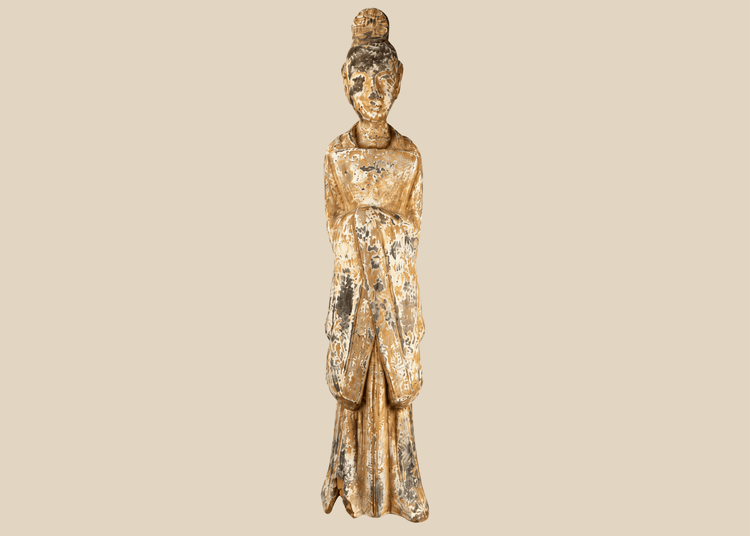
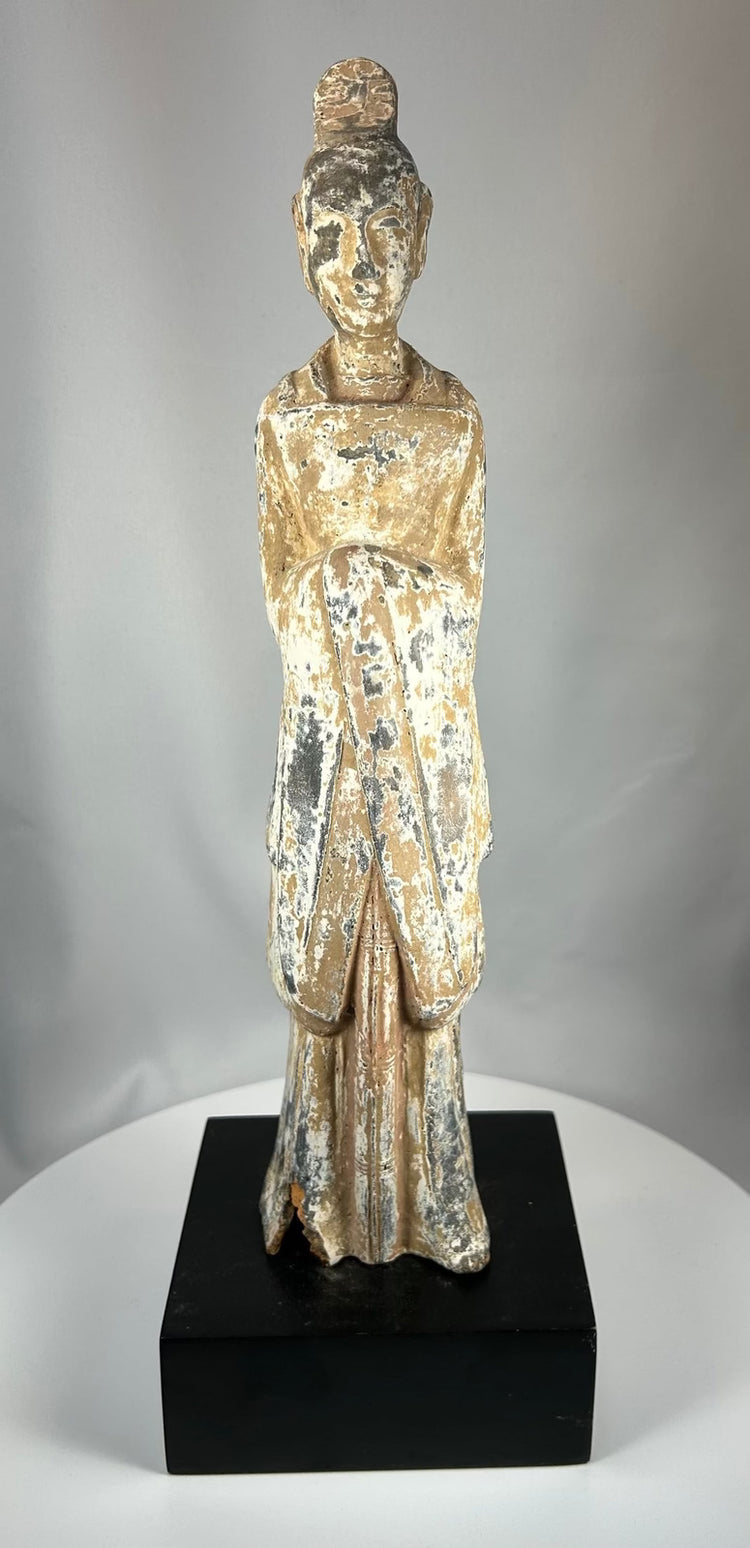
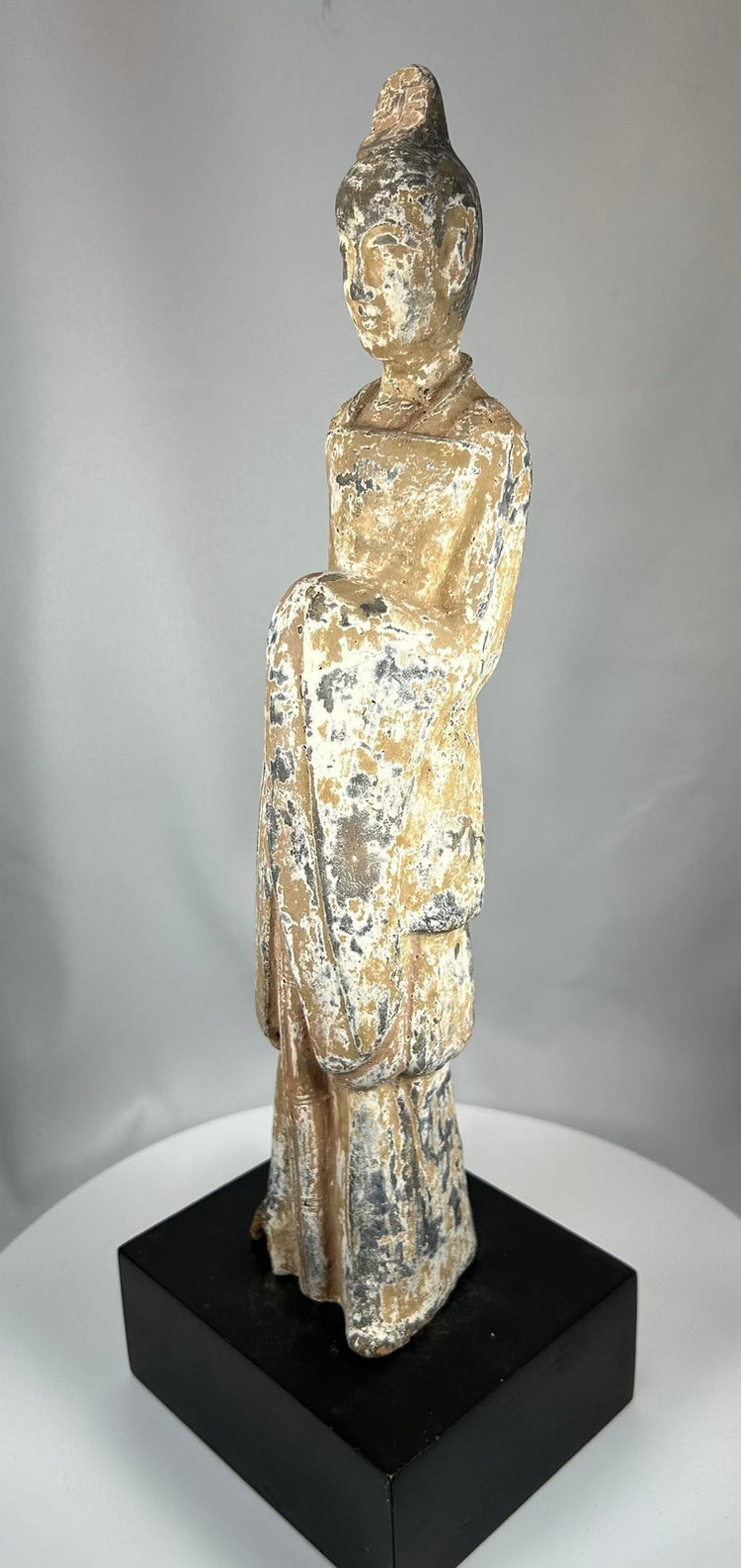
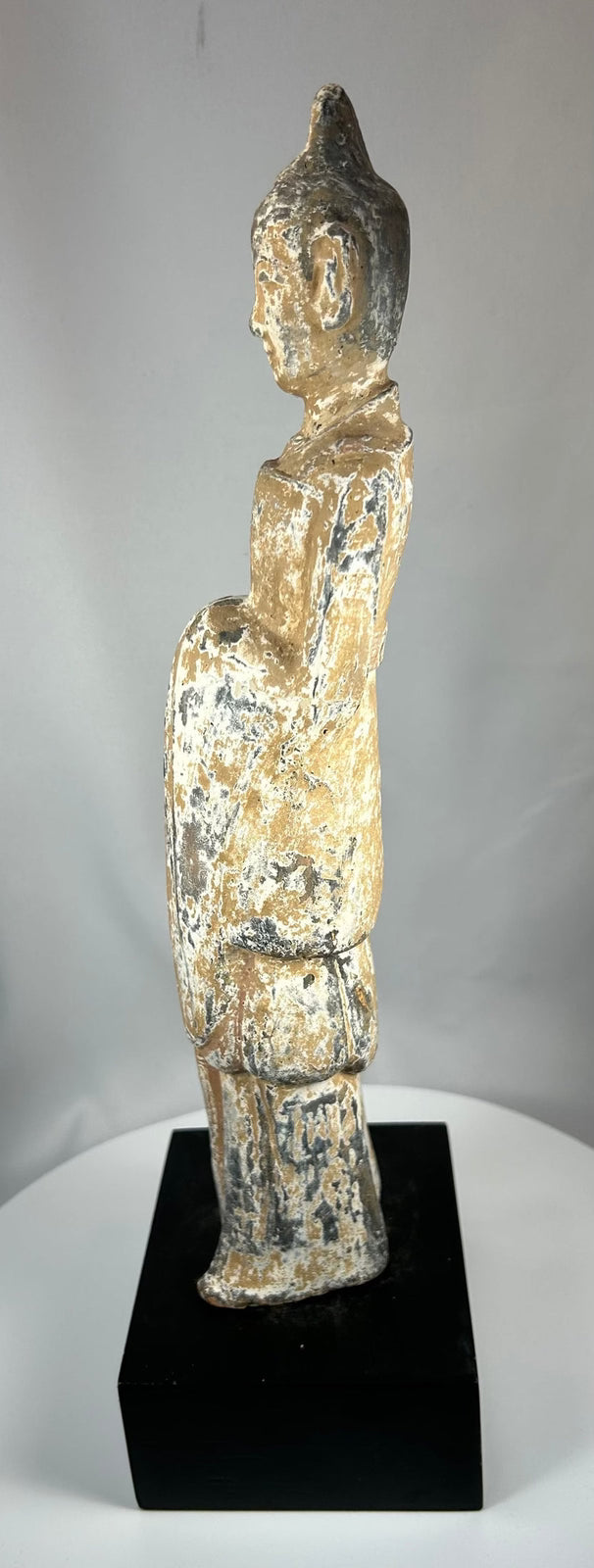
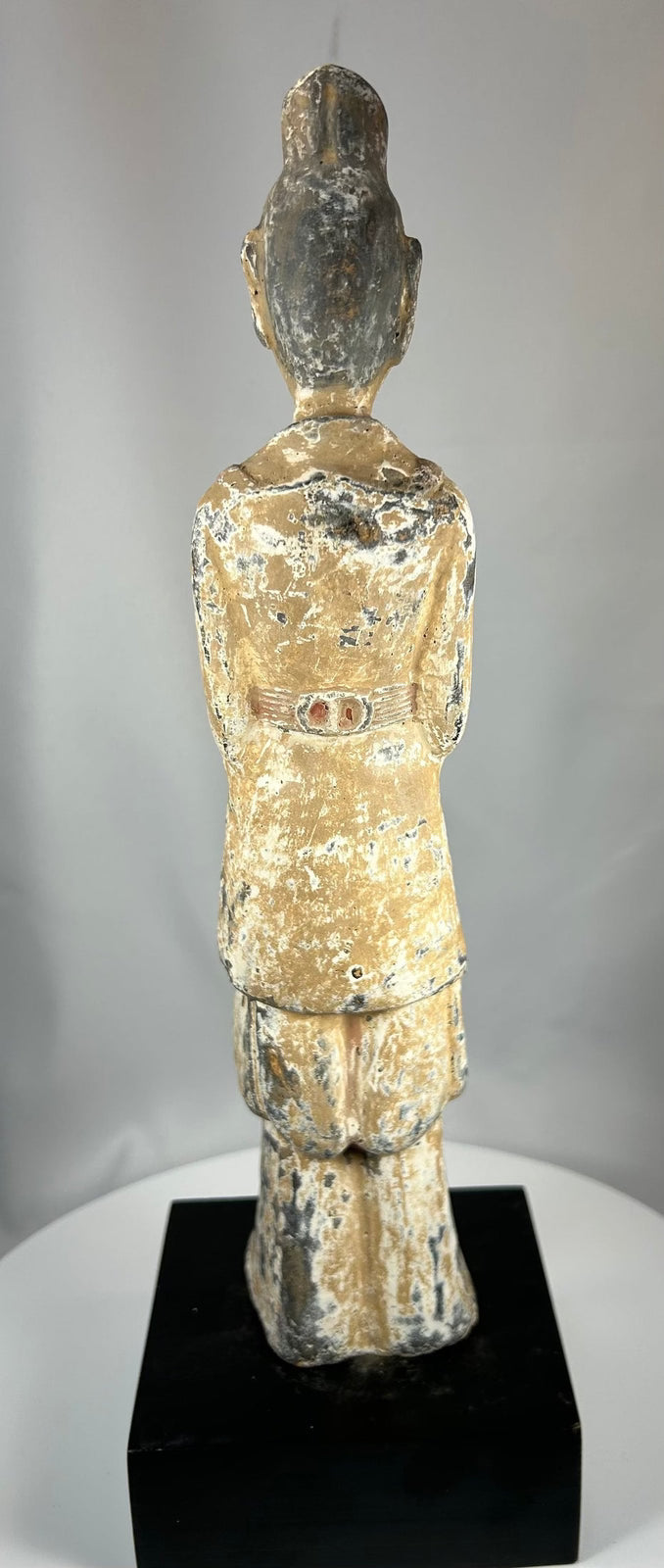
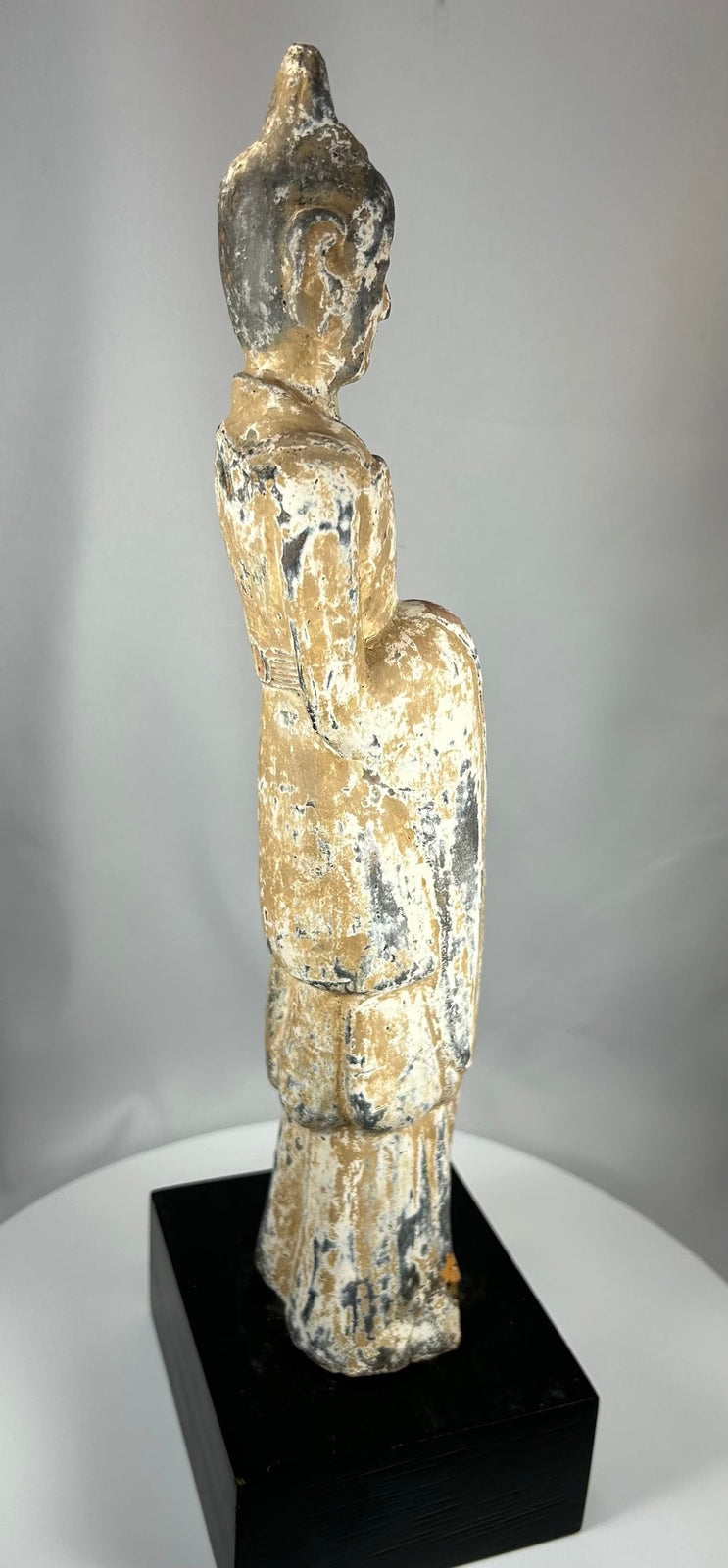
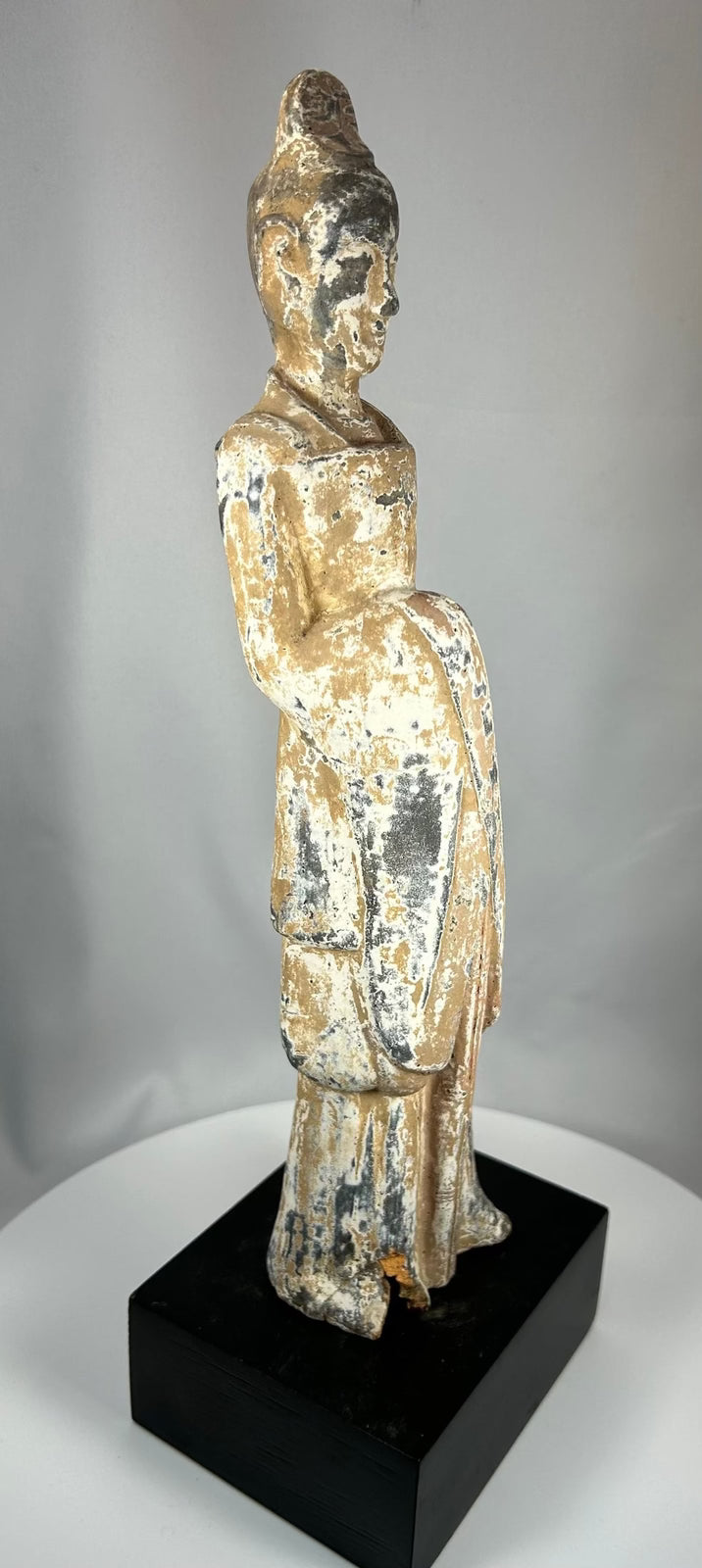
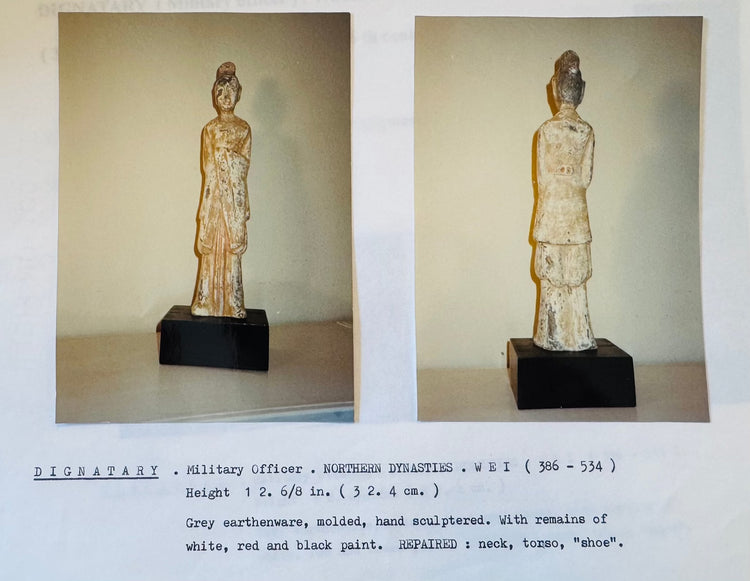
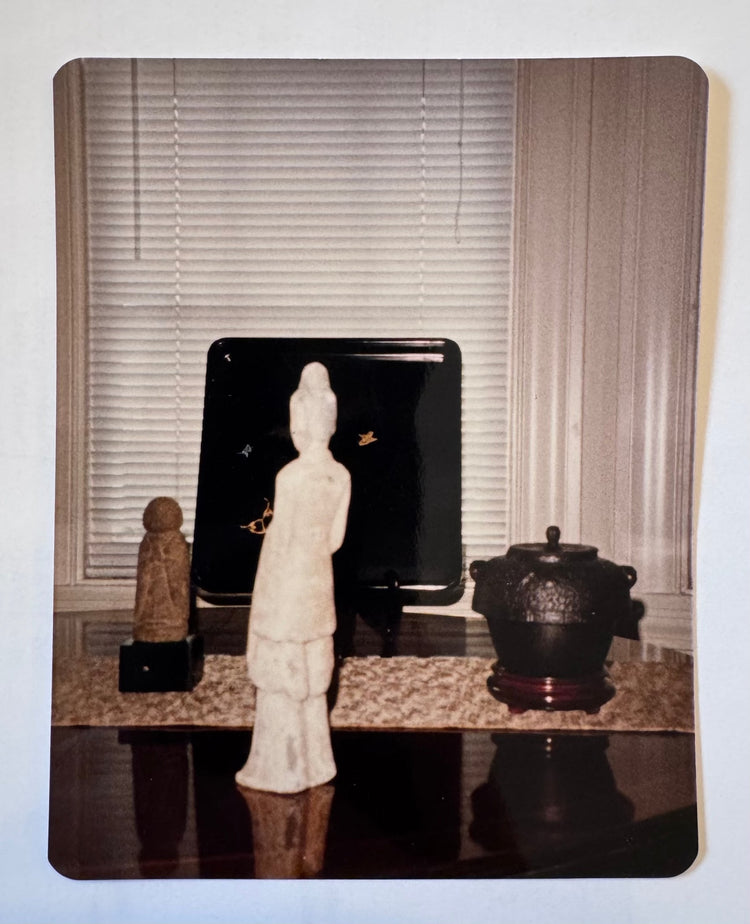
Dinastía Wei del Norte | Figura de asistente de la corte con restos de pigmento policromado | C. 386-535 d. C.
Descripción
Más
Menos
Contexto histórico y origen
Región: China
Material: Loza gris con restos de pigmentos minerales
Período: Dinastía Wei del Norte, 386–535 d.C.
Descripción
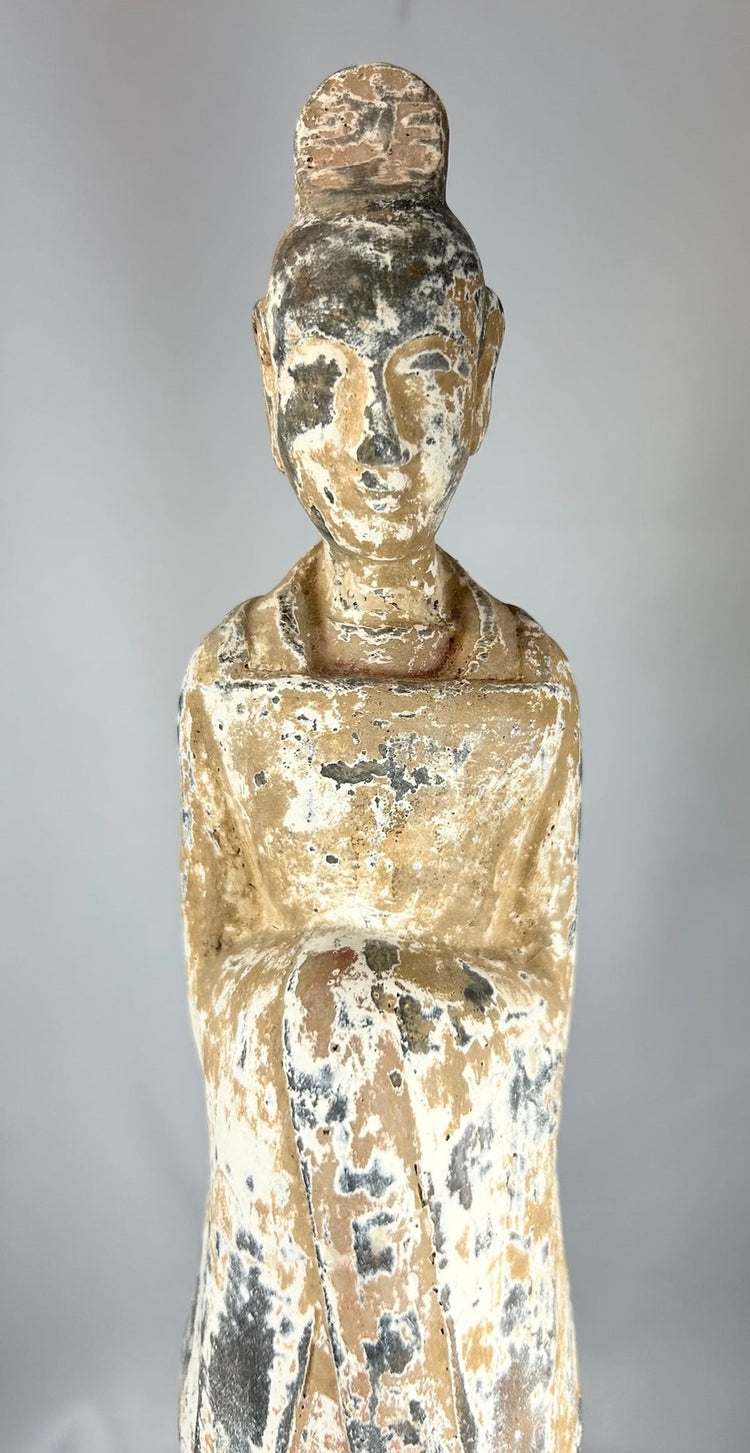
Esta llamativa figura de loza china antigua representa a un dignatario o sirviente de la corte de pie de la dinastía Wei del Norte, un período transformador en la historia china medieval temprana cuando el budismo, la cultura de la corte imperial y las tradiciones funerarias florecieron.
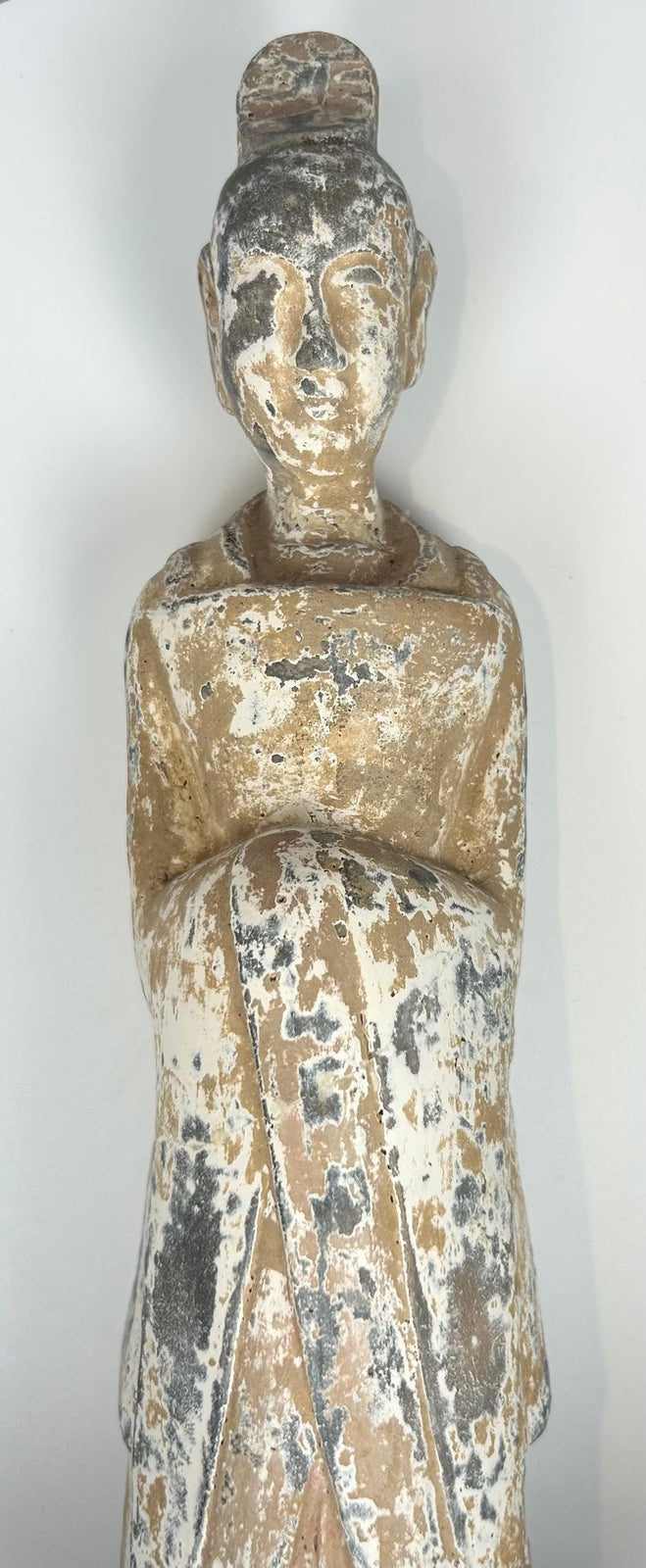
La figura se alza erguida en una postura formal, con las manos ocultas dentro de las largas mangas de una túnica de varias capas, un gesto comúnmente asociado con la etiqueta de la corte respetuosa en la escultura china temprana. El cuerpo alargado, el cuello alto y el drapeado estilizado reflejan la estética escultórica distintiva del período Wei del Norte, cuando los artistas enfatizaban la verticalidad elegante y las formas simplificadas.
La cabeza de la figura está coronada con un tocado formal o un nudo de pelo, lo que sugiere su estatus dentro de la jerarquía de la corte imperial. Los rasgos faciales están suavemente modelados, con ojos almendrados, una boca sutil y una expresión tranquila, transmitiendo la serena dignidad típica de la escultura funeraria china temprana.
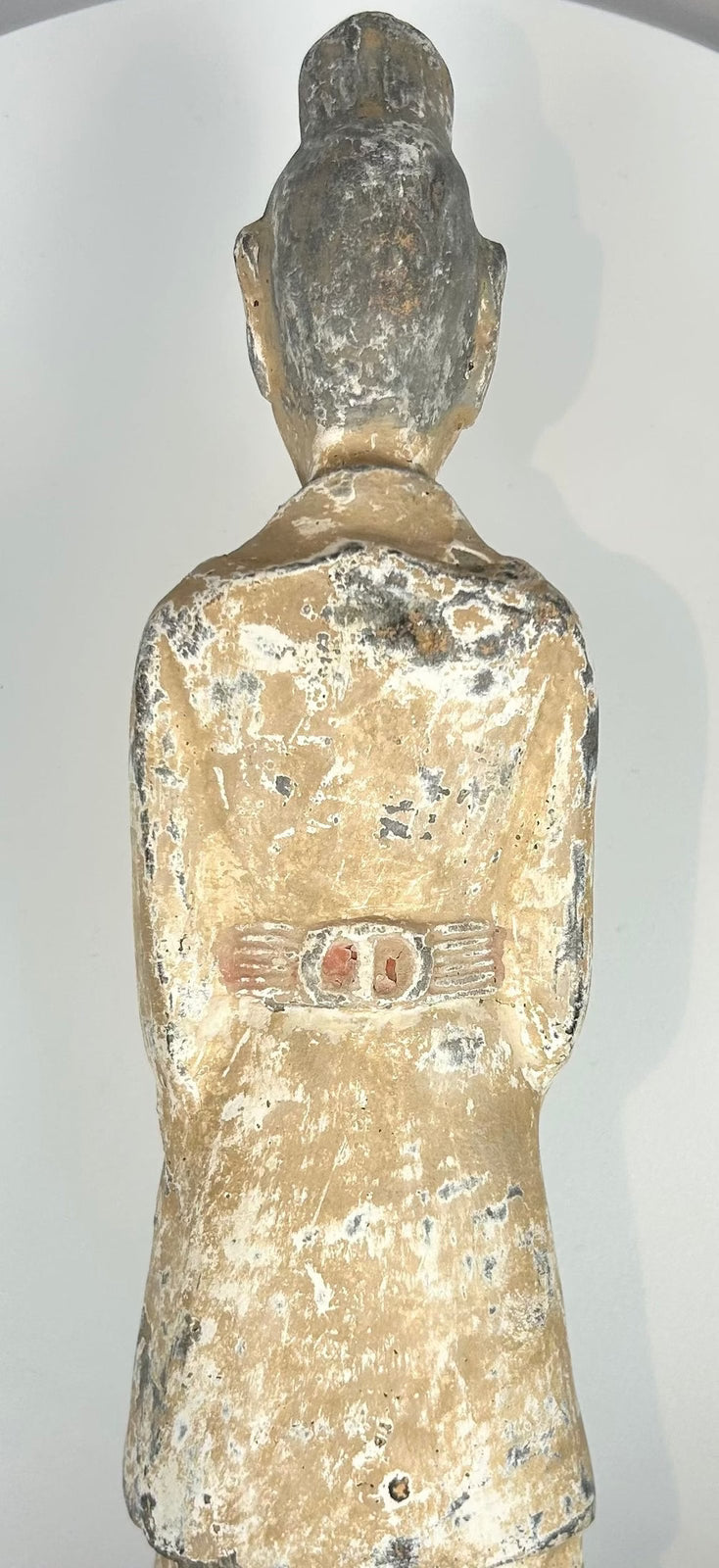
Aún son visibles restos de pigmentos polícromos originales blancos, rojos y negros en la superficie, lo que ofrece una rara evidencia de la vibrante decoración pintada que alguna vez cubrió estas figuras. Con el tiempo, los pigmentos se han desgastado, dejando una pátina superficial bellamente moteada que resalta la gran antigüedad de la escultura.
Tales figuras se colocaban típicamente en tumbas de élite como parte de mingqi, u "objetos espirituales", creados para acompañar y servir al difunto en el más allá. Se creía que los funcionarios de la corte, los asistentes y los guardianes proporcionaban protección y estatus al ocupante de la tumba.
La escultura está montada sobre una base de exhibición moderna para su estabilidad y presentación.
Características
- Figura de asistente funerario chino antiguo
- Atribuida a la dinastía Wei del Norte (386–535 d.C.)
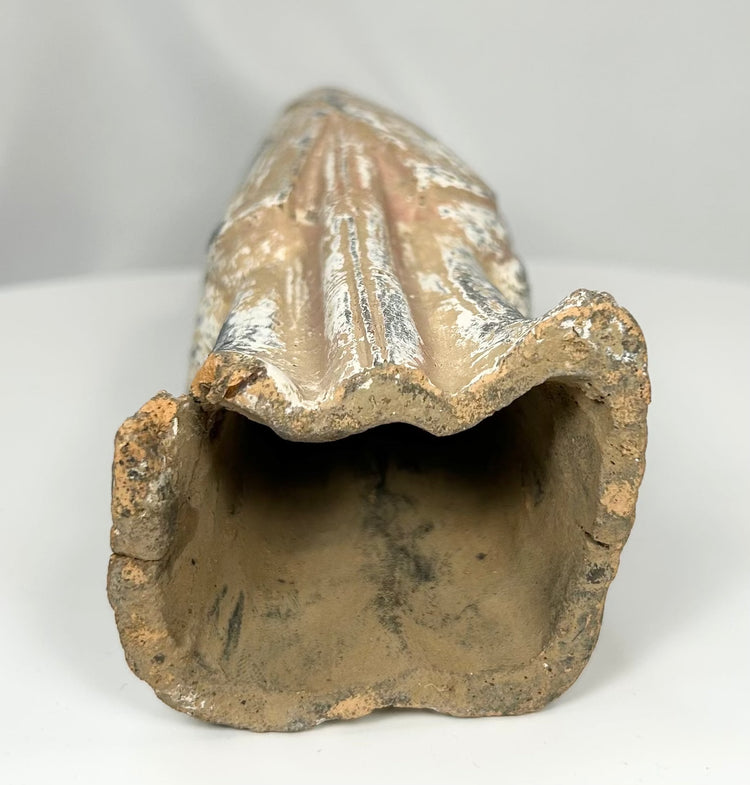
- Construcción de loza gris
- Detalles escultóricos moldeados y acabados a mano
- Restos de pigmentos polícromos originales (blanco, rojo y negro)
- Atuendo formal de la corte con una túnica larga y fluida
- Estilo escultórico distintivo de la dinastía Wei del Norte
- Montado sobre una base de exhibición moderna hecha a medida
Significado cultural
Durante la dinastía Wei del Norte, las tradiciones funerarias implicaban colocar figuras de cerámica dentro de las tumbas para representar a sirvientes, funcionarios, animales y guardianes que ayudarían al difunto en el reino espiritual.
Estas figuras reflejan tanto la estructura social de las primeras cortes chinas como la transición artística que tuvo lugar durante esta era, cuando las influencias de Asia Central y el budismo comenzaron a dar forma a la escultura china.
Estado de conservación
Desgaste generalizado relacionado con la edad, incluyendo el desgaste de la superficie y la pérdida de pigmento, consistente con el enterramiento y siglos de antigüedad. Hay reparaciones antiguas presentes en el cuello, el torso y el área del pie, típicas de las cerámicas excavadas antiguas. La escultura sigue siendo estructuralmente estable y se exhibe bien.
Dimensiones
Altura: 38,73 cm (montada sobre una base de exhibición moderna)
Edad
1500–1650 años
Procedencia
Más información
Explore una figura de asistente de tumba de la dinastía Wei del Norte comparable conservada en la colección de la Galería de Arte de la Universidad de Yale
Explore nuestra Colección de artefactos chinos antiguos y reliquias imperiales
Descripción
Contexto histórico y origen
Región: China
Material: Loza gris con restos de pigmentos minerales
Período: Dinastía Wei del Norte, 386–535 d.C.
Descripción
Esta llamativa figura de loza china antigua representa a un dignatario o sirviente de la corte de pie de la dinastía Wei del Norte, un período transformador en la historia china medieval temprana cuando el budismo, la cultura de la corte imperial y las tradiciones funerarias florecieron.
La figura se alza erguida en una postura formal, con las manos ocultas dentro de las largas mangas de una túnica de varias capas, un gesto comúnmente asociado con la etiqueta de la corte respetuosa en la escultura china temprana. El cuerpo alargado, el cuello alto y el drapeado estilizado reflejan la estética escultórica distintiva del período Wei del Norte, cuando los artistas enfatizaban la verticalidad elegante y las formas simplificadas.
La cabeza de la figura está coronada con un tocado formal o un nudo de pelo, lo que sugiere su estatus dentro de la jerarquía de la corte imperial. Los rasgos faciales están suavemente modelados, con ojos almendrados, una boca sutil y una expresión tranquila, transmitiendo la serena dignidad típica de la escultura funeraria china temprana.
Aún son visibles restos de pigmentos polícromos originales blancos, rojos y negros en la superficie, lo que ofrece una rara evidencia de la vibrante decoración pintada que alguna vez cubrió estas figuras. Con el tiempo, los pigmentos se han desgastado, dejando una pátina superficial bellamente moteada que resalta la gran antigüedad de la escultura.
Tales figuras se colocaban típicamente en tumbas de élite como parte de mingqi, u "objetos espirituales", creados para acompañar y servir al difunto en el más allá. Se creía que los funcionarios de la corte, los asistentes y los guardianes proporcionaban protección y estatus al ocupante de la tumba.
La escultura está montada sobre una base de exhibición moderna para su estabilidad y presentación.
Características
- Figura de asistente funerario chino antiguo
- Atribuida a la dinastía Wei del Norte (386–535 d.C.)
- Construcción de loza gris
- Detalles escultóricos moldeados y acabados a mano
- Restos de pigmentos polícromos originales (blanco, rojo y negro)
- Atuendo formal de la corte con una túnica larga y fluida
- Estilo escultórico distintivo de la dinastía Wei del Norte
- Montado sobre una base de exhibición moderna hecha a medida
Significado cultural
Durante la dinastía Wei del Norte, las tradiciones funerarias implicaban colocar figuras de cerámica dentro de las tumbas para representar a sirvientes, funcionarios, animales y guardianes que ayudarían al difunto en el reino espiritual.
Estas figuras reflejan tanto la estructura social de las primeras cortes chinas como la transición artística que tuvo lugar durante esta era, cuando las influencias de Asia Central y el budismo comenzaron a dar forma a la escultura china.
Estado de conservación
Desgaste generalizado relacionado con la edad, incluyendo el desgaste de la superficie y la pérdida de pigmento, consistente con el enterramiento y siglos de antigüedad. Hay reparaciones antiguas presentes en el cuello, el torso y el área del pie, típicas de las cerámicas excavadas antiguas. La escultura sigue siendo estructuralmente estable y se exhibe bien.
Dimensiones
Altura: 38,73 cm (montada sobre una base de exhibición moderna)
Edad
1500–1650 años
Procedencia
Más información
Explore una figura de asistente de tumba de la dinastía Wei del Norte comparable conservada en la colección de la Galería de Arte de la Universidad de Yale
Explore nuestra Colección de artefactos chinos antiguos y reliquias imperiales
También te puede interesar
