

Par de Phurba y Vajra Doble Tibetanos de Bronce | Circa Siglo XIX – Principios del Siglo XX
- Precio habitual
- $300.00
- Precio de venta
- $300.00
- Precio habitual
No se pudo cargar la disponibilidad de retiro


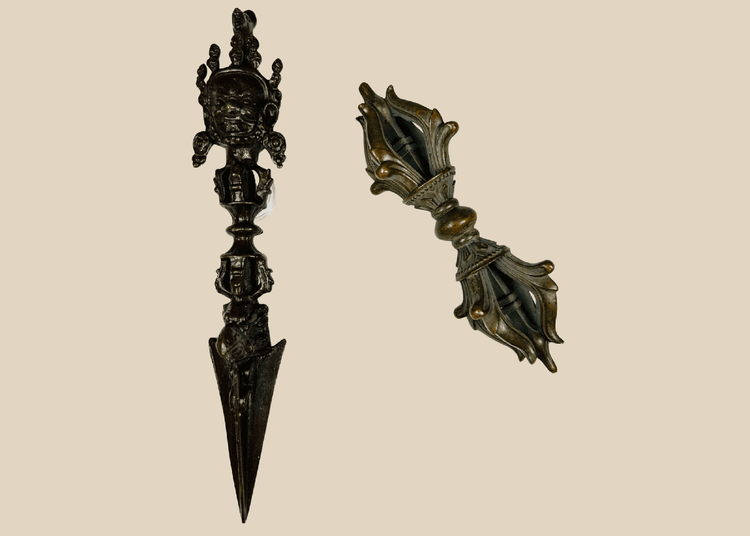

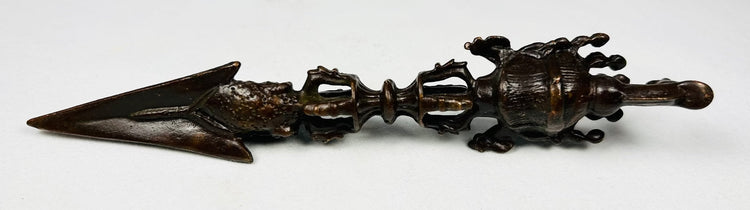
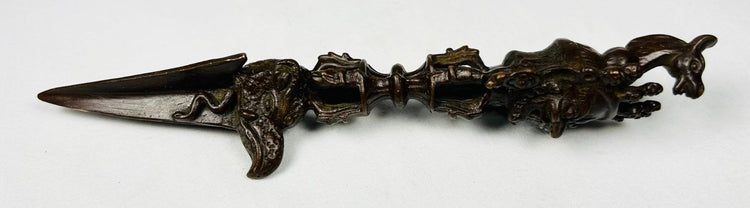
Par de Phurba y Vajra Doble Tibetanos de Bronce | Circa Siglo XIX – Principios del Siglo XX
Descripción
Más
Menos
Contexto histórico y origen
Región: Tíbet / Región del Himalaya
Material: Bronce fundido con pátina ritual natural
Período: Siglo XIX – principios del siglo XX
Descripción
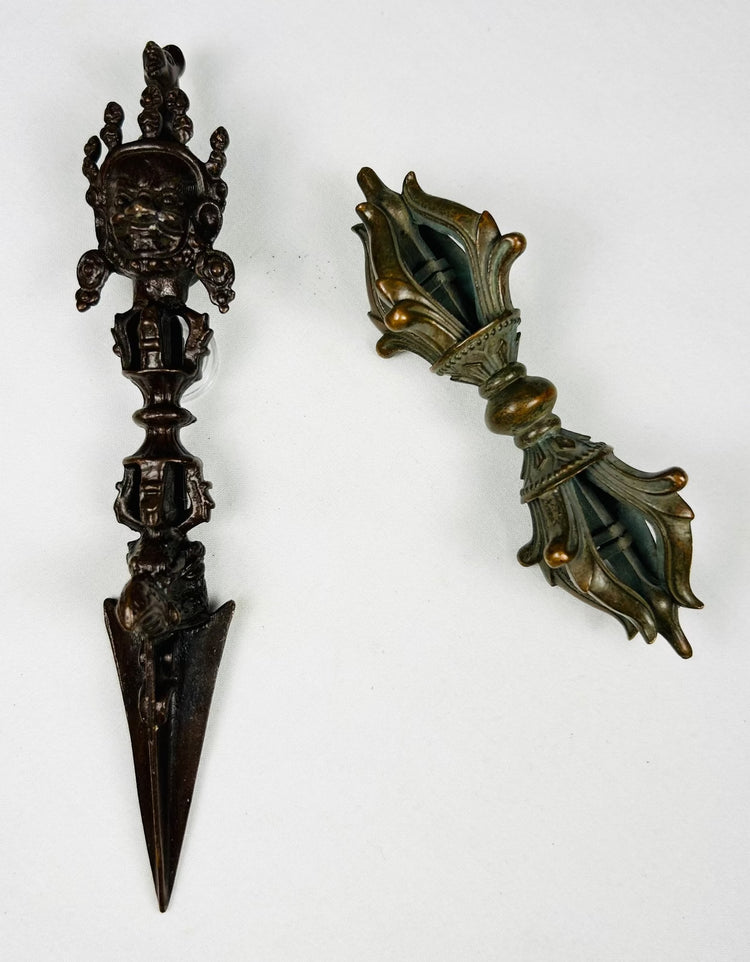
Este importante par de implementos rituales budistas tibetanos incluye un Phurba (daga ritual) finamente fundido y un Vajra doble (Vishvavajra), dos objetos sagrados centrales en la práctica ceremonial budista Vajrayana.
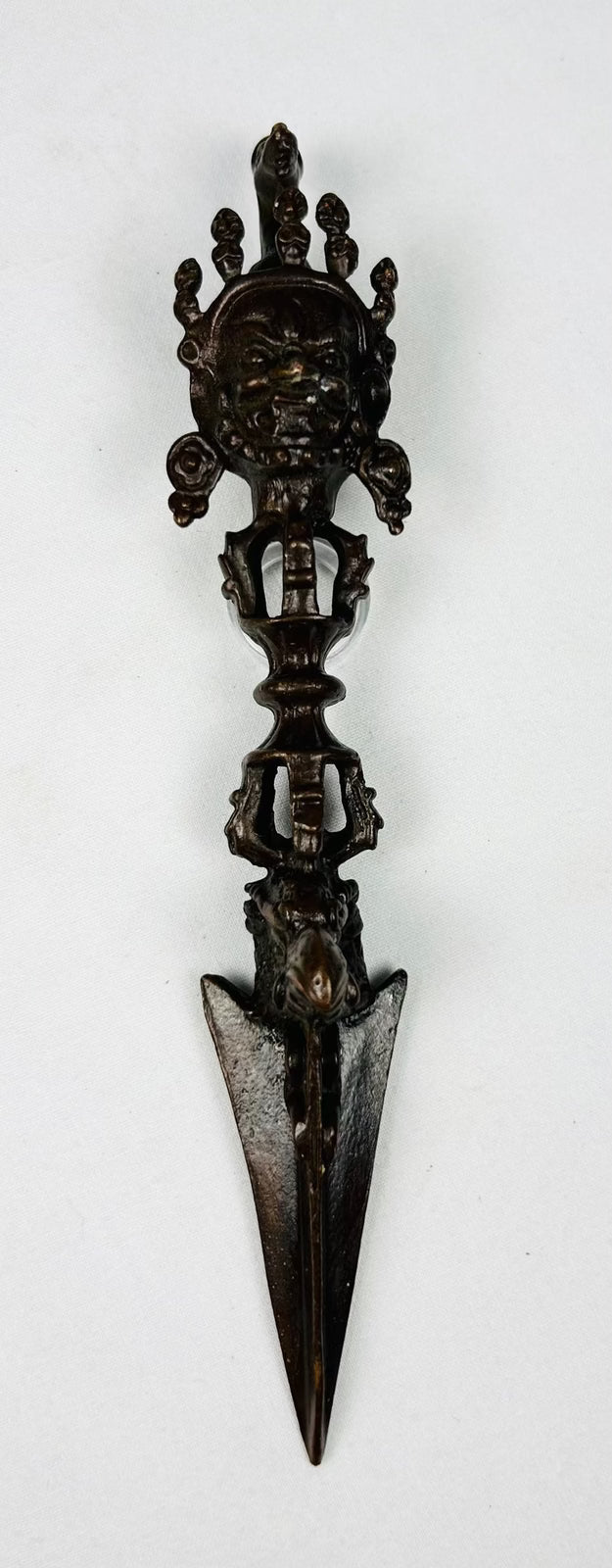
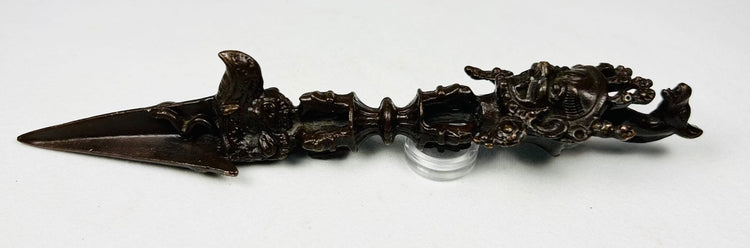
El phurba presenta una hoja triedra afilada que emerge de una mítica cabeza de makara, conduciendo a un mango intrincadamente modelado compuesto por formas arquitectónicas de vajra y coronado con una cabeza de deidad iracunda. En la práctica tántrica, el phurba se usa simbólicamente para someter las fuerzas negativas y los obstáculos espirituales, representando la transformación de las energías dañinas en sabiduría.
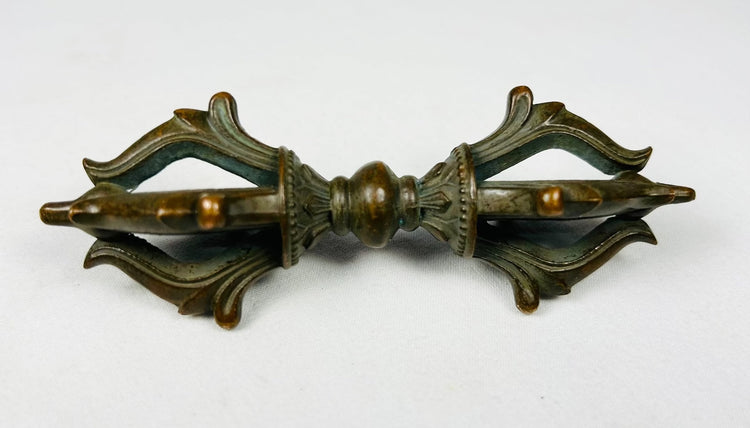
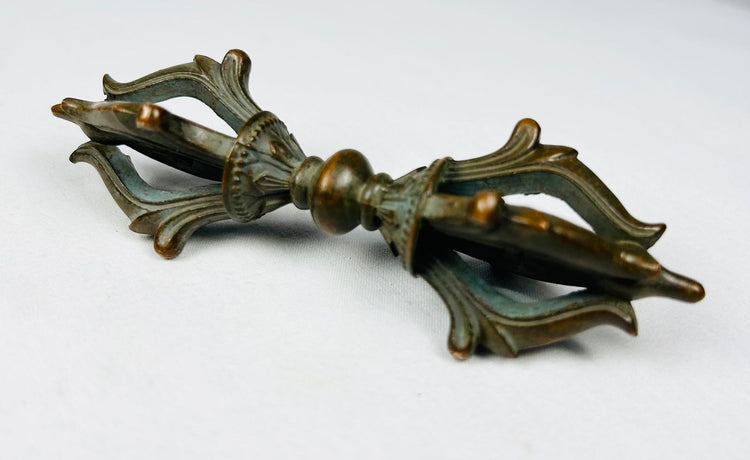
Lo acompaña un Vajra Doble finamente fundido, también conocido como Vishvavajra, formado por dos vajras cruzados que irradian desde un eje central. Este poderoso símbolo representa la indestructibilidad, la autoridad espiritual y el fundamento inquebrantable de la iluminación que se extiende en todas direcciones. Los vajras dobles se colocan comúnmente en la base de los mandalas rituales o se utilizan en entornos de santuarios para simbolizar la estabilidad y protección universales.
Juntos, estos objetos forman un armonioso emparejamiento ritual —uno activo y transformador, el otro estabilizador y protector— haciéndolos muy deseables para coleccionistas de arte ritual del Himalaya o para exhibición en santuarios.
Características
- Emparejamiento completo de dos importantes objetos rituales Vajrayana
- Forma tradicional de hoja de phurba triedra
- Detalles esculturales de deidad iracunda y makara
- Vajra doble que simboliza la estabilidad y protección universal
- Construcción de bronce finamente fundido
Significado cultural
En el budismo tibetano, el phurba se emplea para unir y neutralizar simbólicamente las energías obstructivas durante la práctica ritual, mientras que el vajra doble representa el equilibrio cósmico y la naturaleza indestructible de la verdad iluminada. Juntos, encarnan la transformación y la estabilidad, principios fundamentales dentro de la práctica budista tántrica. Tales implementos rituales eran elementos esenciales en monasterios, santuarios y espacios devocionales privados en todo el Tíbet y las regiones del Himalaya.
Condición
Ambas piezas se mantienen en muy buen estado antiguo con desgaste superficial y pátina apropiados para la edad y el uso devocional. Se presentan irregularidades menores de fundición y desgaste superficial, sin daños significativos observados.
Dimensiones (aproximadas)
Phurba (daga ritual): 6 pulgadas
Vajra Doble (Vishvavajra): 4 pulgadas
Antigüedad (aproximada)
100–150 años
Procedencia
Anteriormente en una colección privada especializada en antigüedades y arte asiáticos. Posteriormente adquirido por un coleccionista privado en Flushing, Nueva York, EE. UU.
Más información
Conozca el simbolismo del Vajra doble en Vishwa Vajra – Simbolismo e importancia
Explore nuestra Colección de Artefactos de Adoración y Devoción – Reliquias Sagradas
Descripción
Contexto histórico y origen
Región: Tíbet / Región del Himalaya
Material: Bronce fundido con pátina ritual natural
Período: Siglo XIX – principios del siglo XX
Descripción
Este importante par de implementos rituales budistas tibetanos incluye un Phurba (daga ritual) finamente fundido y un Vajra doble (Vishvavajra), dos objetos sagrados centrales en la práctica ceremonial budista Vajrayana.
El phurba presenta una hoja triedra afilada que emerge de una mítica cabeza de makara, conduciendo a un mango intrincadamente modelado compuesto por formas arquitectónicas de vajra y coronado con una cabeza de deidad iracunda. En la práctica tántrica, el phurba se usa simbólicamente para someter las fuerzas negativas y los obstáculos espirituales, representando la transformación de las energías dañinas en sabiduría.
Lo acompaña un Vajra Doble finamente fundido, también conocido como Vishvavajra, formado por dos vajras cruzados que irradian desde un eje central. Este poderoso símbolo representa la indestructibilidad, la autoridad espiritual y el fundamento inquebrantable de la iluminación que se extiende en todas direcciones. Los vajras dobles se colocan comúnmente en la base de los mandalas rituales o se utilizan en entornos de santuarios para simbolizar la estabilidad y protección universales.
Juntos, estos objetos forman un armonioso emparejamiento ritual —uno activo y transformador, el otro estabilizador y protector— haciéndolos muy deseables para coleccionistas de arte ritual del Himalaya o para exhibición en santuarios.
Características
- Emparejamiento completo de dos importantes objetos rituales Vajrayana
- Forma tradicional de hoja de phurba triedra
- Detalles esculturales de deidad iracunda y makara
- Vajra doble que simboliza la estabilidad y protección universal
- Construcción de bronce finamente fundido
Significado cultural
En el budismo tibetano, el phurba se emplea para unir y neutralizar simbólicamente las energías obstructivas durante la práctica ritual, mientras que el vajra doble representa el equilibrio cósmico y la naturaleza indestructible de la verdad iluminada. Juntos, encarnan la transformación y la estabilidad, principios fundamentales dentro de la práctica budista tántrica. Tales implementos rituales eran elementos esenciales en monasterios, santuarios y espacios devocionales privados en todo el Tíbet y las regiones del Himalaya.
Condición
Ambas piezas se mantienen en muy buen estado antiguo con desgaste superficial y pátina apropiados para la edad y el uso devocional. Se presentan irregularidades menores de fundición y desgaste superficial, sin daños significativos observados.
Dimensiones (aproximadas)
Phurba (daga ritual): 6 pulgadas
Vajra Doble (Vishvavajra): 4 pulgadas
Antigüedad (aproximada)
100–150 años
Procedencia
Anteriormente en una colección privada especializada en antigüedades y arte asiáticos. Posteriormente adquirido por un coleccionista privado en Flushing, Nueva York, EE. UU.
Más información
Conozca el simbolismo del Vajra doble en Vishwa Vajra – Simbolismo e importancia
Explore nuestra Colección de Artefactos de Adoración y Devoción – Reliquias Sagradas
También te puede interesar
