

Precolombino | Vaso efigie de Nicoya con motivos reptilianos | Costa Rica | Circa 800–1500 d.C.
- Precio habitual
- $1,000.00
- Precio de venta
- $1,000.00
- Precio habitual
No se pudo cargar la disponibilidad de retiro


Precolombino | Vaso efigie de Nicoya con motivos reptilianos | Costa Rica | Circa 800–1500 d.C.
Descripción
Más
Menos
Contexto histórico y origen
Región: América Central (probablemente Costa Rica, región de Nicoya / Guanacaste)
Material: Cerámica de terracota modelada a mano
Período: Período precolombino, circa 800–1500 d.C.
Descripción
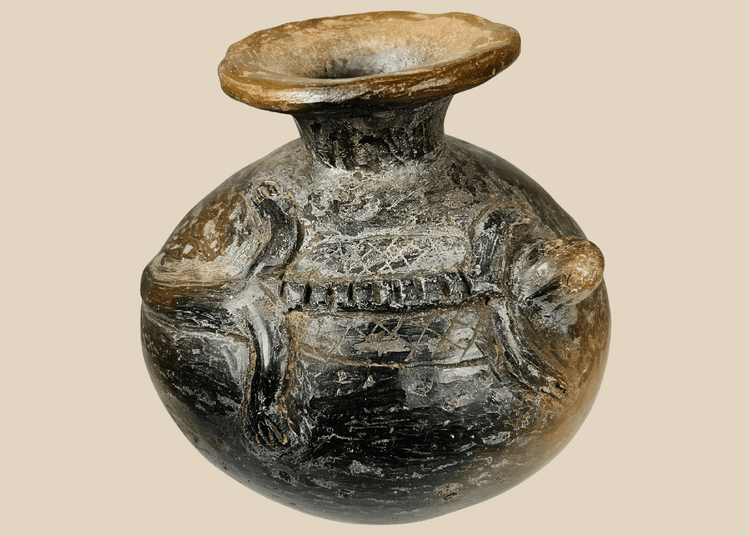
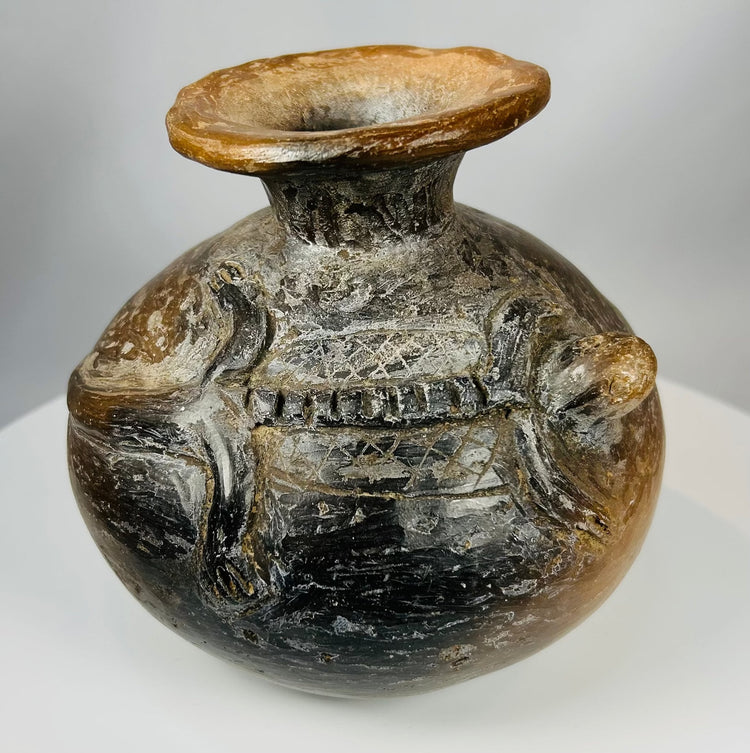
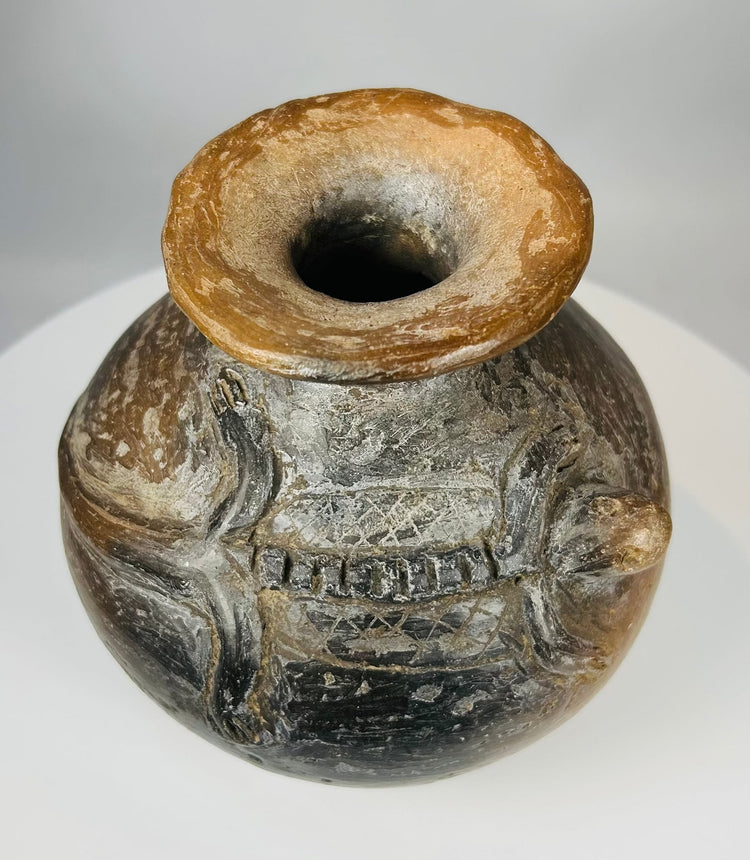
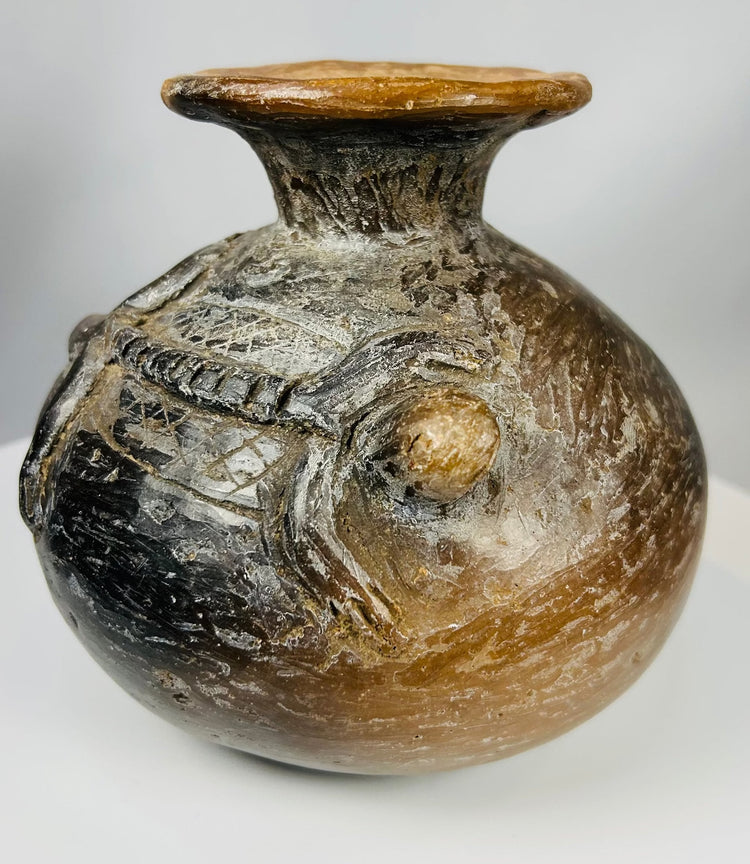
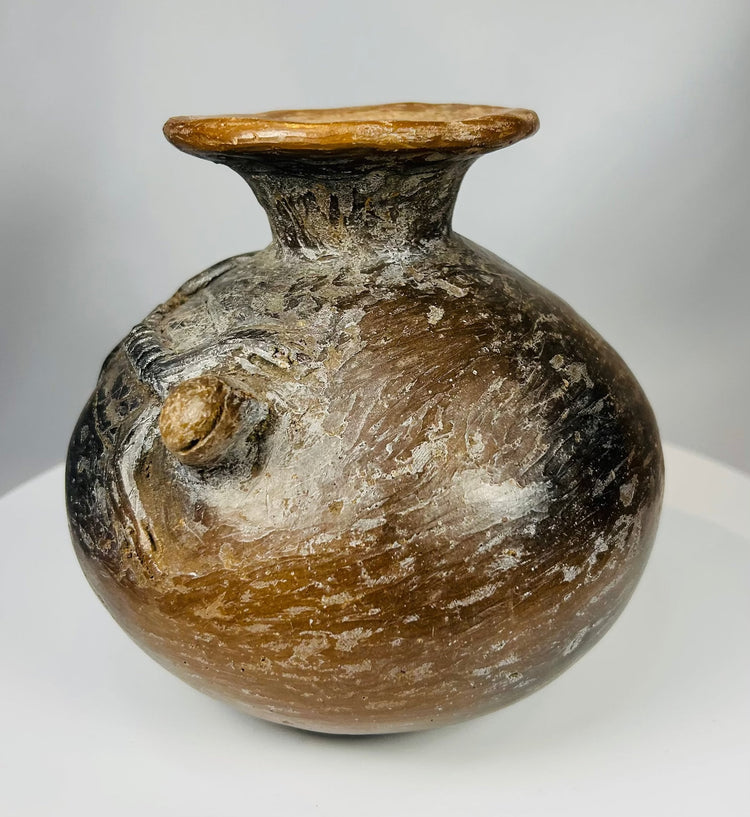
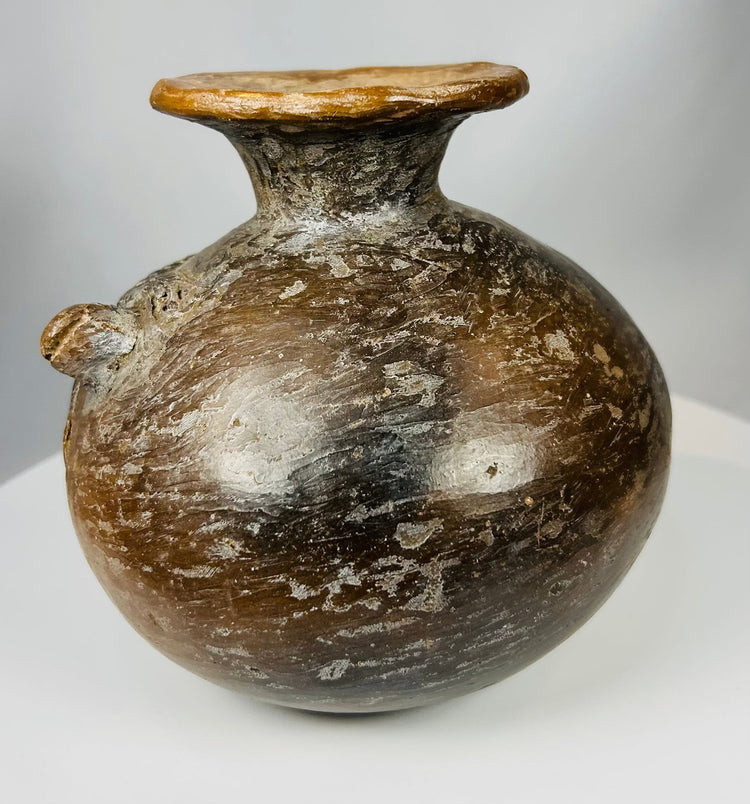
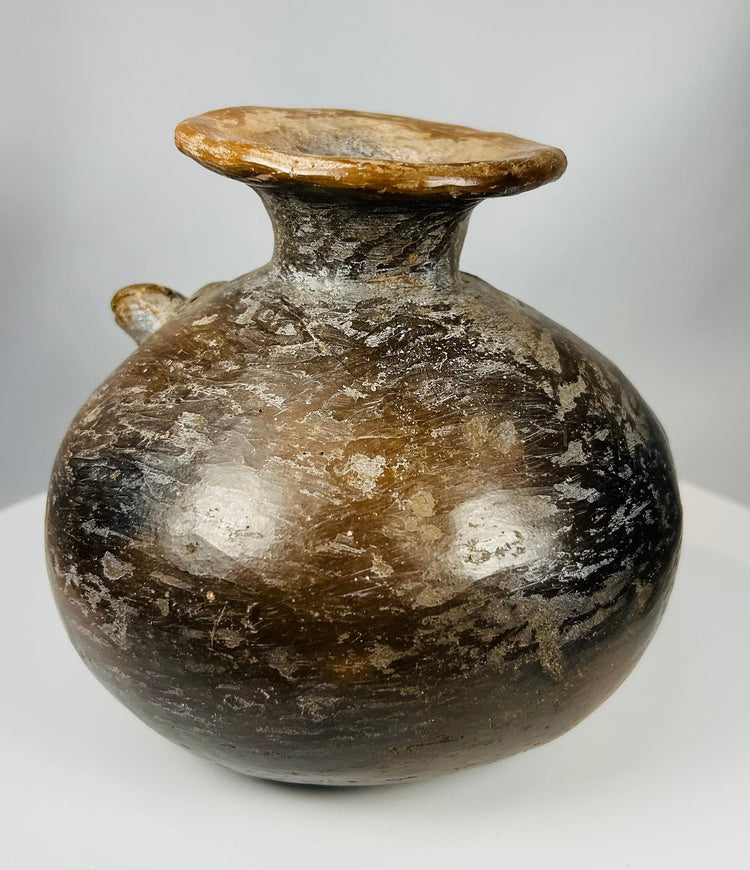
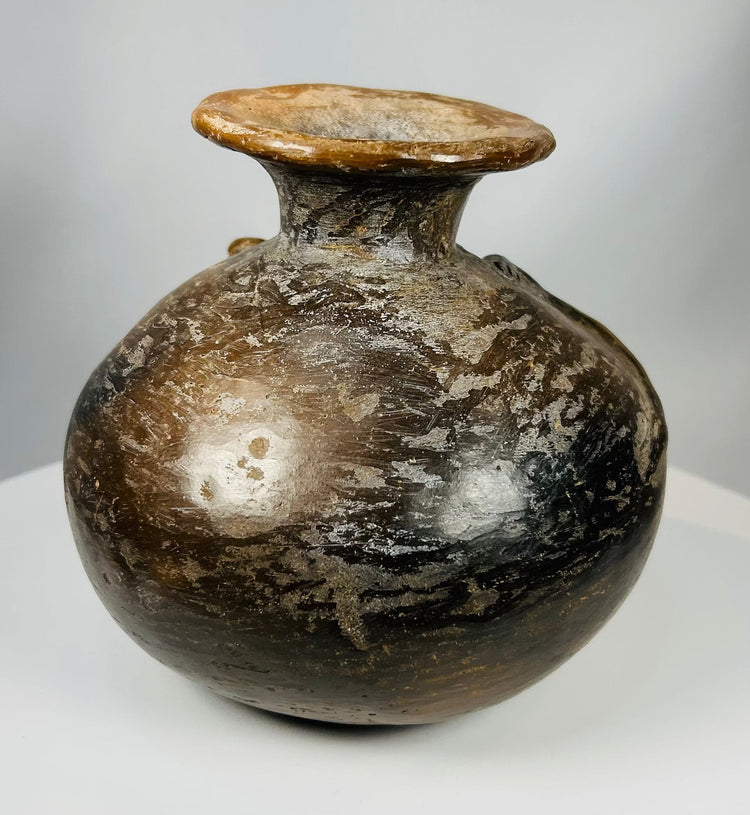
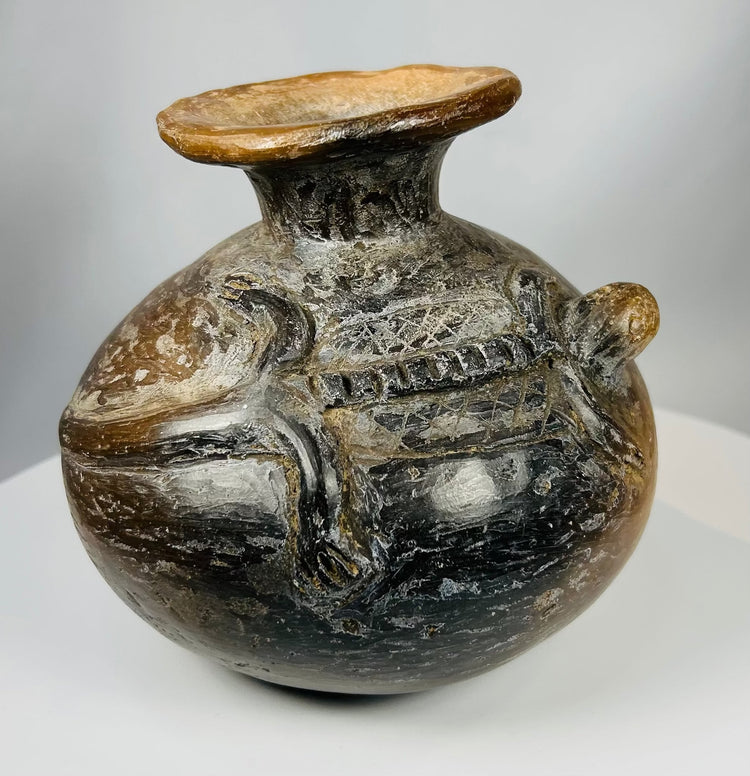
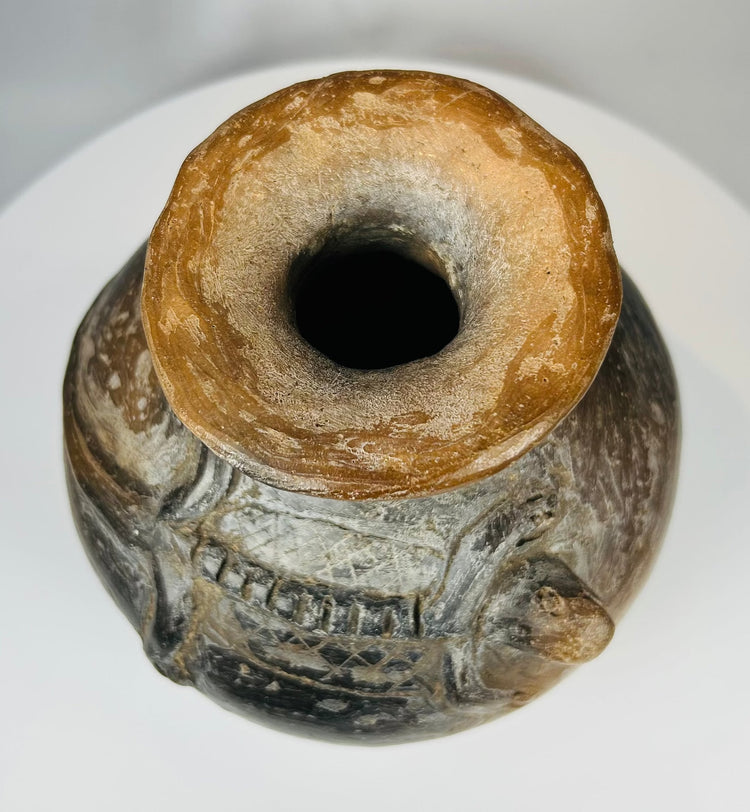
Esta llamativa vasija de cerámica precolombina procede de la región cultural de Nicoya, en la actual Costa Rica, una zona reconocida por sus sofisticadas tradiciones alfareras y su producción de cerámica ceremonial. La vasija presenta un cuerpo globular redondeado coronado por un cuello corto y un borde ancho y acampanado, una forma comúnmente asociada con recipientes rituales utilizados para líquidos u ofrendas.
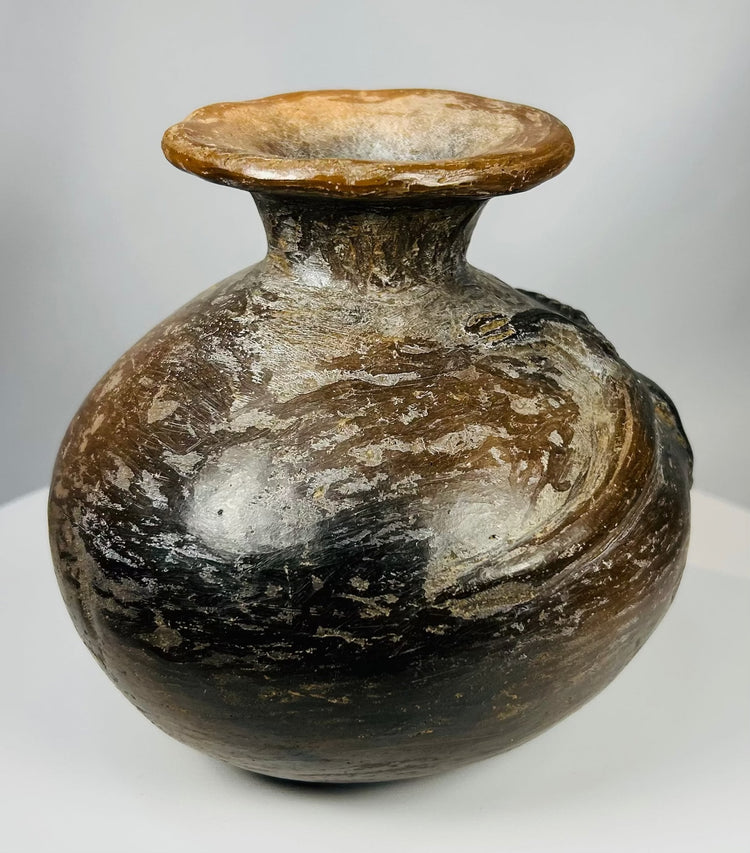
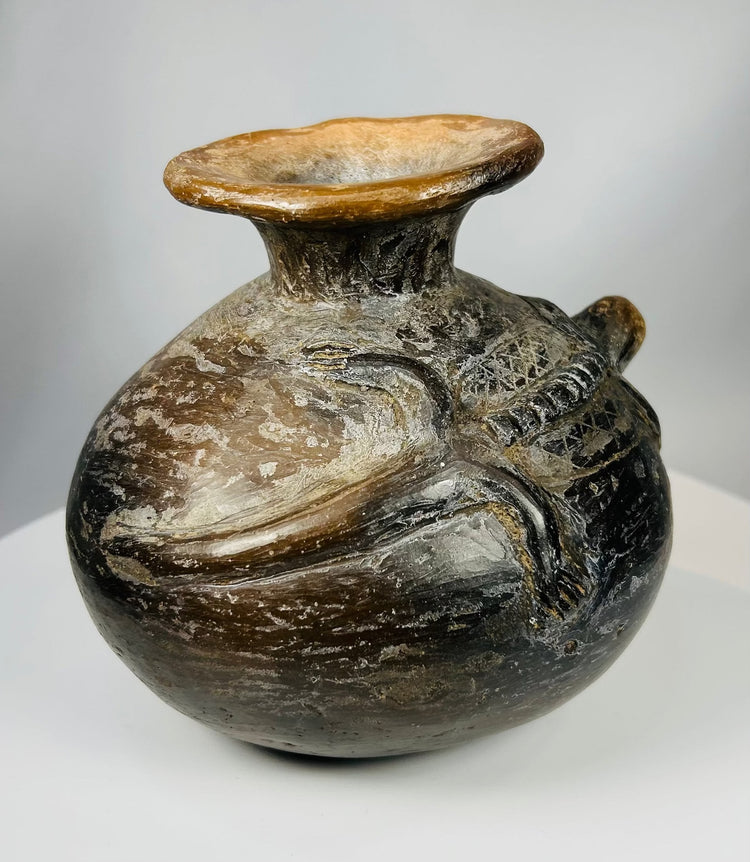
Rodeando la vasija hay elementos escultóricos en relieve que representan criaturas estilizadas reptilianas o crocodilianas cuyos cuerpos alargados se curvan alrededor del hombro de la vasija. Estas figuras parecen converger hacia una banda central elevada decorada con motivos geométricos de rayado cruzado, que posiblemente simbolizan elementos tejidos, ataduras protectoras o simbolismo ritual ligado a la cosmología y los espíritus del agua. En muchas tradiciones centroamericanas, los cocodrilianos y reptiles eran poderosos seres mitológicos asociados con la tierra, los ríos y el límite entre mundos.
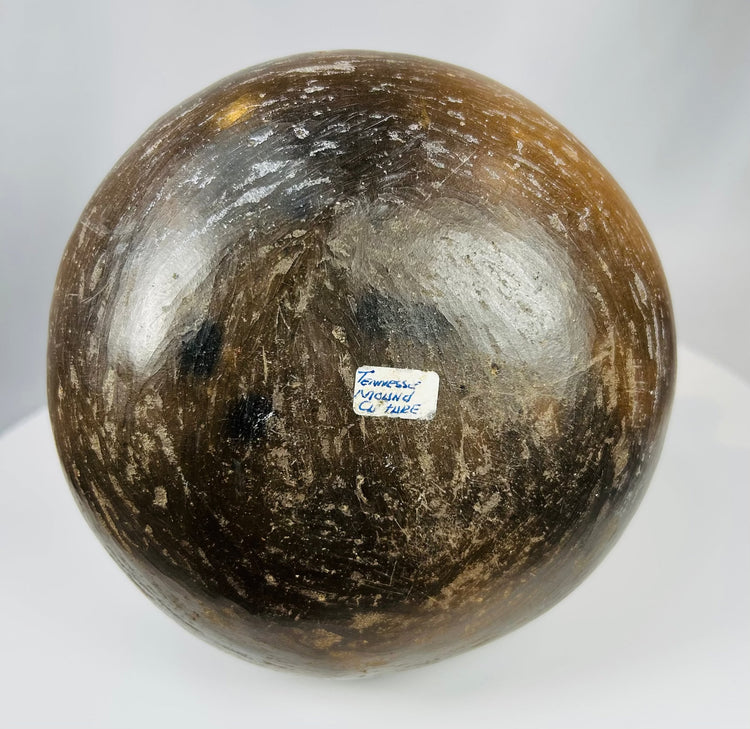
La superficie de la vasija muestra ricos tonos bruñidos oscuros con áreas de coloración terrosa más clara y concreciones minerales resultantes de siglos de entierro. Estos depósitos naturales y patrones de desgaste contribuyen al fuerte carácter arqueológico de la vasija y dan fe de su considerable antigüedad.
Piezas como esta probablemente se usaron en contextos rituales ceremoniales o domésticos, posiblemente para contener bebidas fermentadas, ofrendas de agua o sustancias sagradas durante ritos comunitarios.
Características
- Vasija efigie globular con borde ancho y acampanado
- Figuras escultóricas reptilianas en altorrelieve rodeando el hombro
- Banda decorativa central elevada con motivos geométricos incisos
- Superficie ricamente bruñida con depósitos minerales arqueológicos
- Fuerte estética ceremonial típica de las tradiciones alfareras de Nicoya
Significado cultural
Las cerámicas de la región de Nicoya en Costa Rica representan algunas de las tradiciones alfareras más logradas en la antigua América Central. Las vasijas eran frecuentemente adornadas con animales simbólicos, figuras mitológicas y diseños geométricos que reflejaban creencias cosmológicas y prácticas espirituales. La iconografía reptiliana, particularmente cocodrilos y formas serpentinas, a menudo simbolizaba fuerzas primordiales asociadas con la tierra y el agua, sirviendo como poderosos motivos protectores o mitológicos en el arte ritual.
Condición
Buen estado arqueológico con el desgaste superficial esperado, incrustaciones minerales y áreas de meteorización consistentes con la edad y el entierro. Pequeñas abrasiones y depósitos superficiales están presentes en toda la pieza, pero no restan valor al detalle escultórico o al impacto visual de la vasija.
Dimensiones (aproximadas)
Altura: 5,75 pulgadas
Ancho: 6 pulgadas
Edad (aproximada)
500-1200 años de antigüedad
Procedencia
De una colección privada en Hollywood, Florida, EE. UU.
Más información
Examine las primeras investigaciones sobre la cerámica mesoamericana en la publicación de Coe de 1962 sobre la cerámica mesoamericana
Explore nuestra colección de artefactos precolombinos antiguos
Descripción
Contexto histórico y origen
Región: América Central (probablemente Costa Rica, región de Nicoya / Guanacaste)
Material: Cerámica de terracota modelada a mano
Período: Período precolombino, circa 800–1500 d.C.
Descripción
Esta llamativa vasija de cerámica precolombina procede de la región cultural de Nicoya, en la actual Costa Rica, una zona reconocida por sus sofisticadas tradiciones alfareras y su producción de cerámica ceremonial. La vasija presenta un cuerpo globular redondeado coronado por un cuello corto y un borde ancho y acampanado, una forma comúnmente asociada con recipientes rituales utilizados para líquidos u ofrendas.
Rodeando la vasija hay elementos escultóricos en relieve que representan criaturas estilizadas reptilianas o crocodilianas cuyos cuerpos alargados se curvan alrededor del hombro de la vasija. Estas figuras parecen converger hacia una banda central elevada decorada con motivos geométricos de rayado cruzado, que posiblemente simbolizan elementos tejidos, ataduras protectoras o simbolismo ritual ligado a la cosmología y los espíritus del agua. En muchas tradiciones centroamericanas, los cocodrilianos y reptiles eran poderosos seres mitológicos asociados con la tierra, los ríos y el límite entre mundos.
La superficie de la vasija muestra ricos tonos bruñidos oscuros con áreas de coloración terrosa más clara y concreciones minerales resultantes de siglos de entierro. Estos depósitos naturales y patrones de desgaste contribuyen al fuerte carácter arqueológico de la vasija y dan fe de su considerable antigüedad.
Piezas como esta probablemente se usaron en contextos rituales ceremoniales o domésticos, posiblemente para contener bebidas fermentadas, ofrendas de agua o sustancias sagradas durante ritos comunitarios.
Características
- Vasija efigie globular con borde ancho y acampanado
- Figuras escultóricas reptilianas en altorrelieve rodeando el hombro
- Banda decorativa central elevada con motivos geométricos incisos
- Superficie ricamente bruñida con depósitos minerales arqueológicos
- Fuerte estética ceremonial típica de las tradiciones alfareras de Nicoya
Significado cultural
Las cerámicas de la región de Nicoya en Costa Rica representan algunas de las tradiciones alfareras más logradas en la antigua América Central. Las vasijas eran frecuentemente adornadas con animales simbólicos, figuras mitológicas y diseños geométricos que reflejaban creencias cosmológicas y prácticas espirituales. La iconografía reptiliana, particularmente cocodrilos y formas serpentinas, a menudo simbolizaba fuerzas primordiales asociadas con la tierra y el agua, sirviendo como poderosos motivos protectores o mitológicos en el arte ritual.
Condición
Buen estado arqueológico con el desgaste superficial esperado, incrustaciones minerales y áreas de meteorización consistentes con la edad y el entierro. Pequeñas abrasiones y depósitos superficiales están presentes en toda la pieza, pero no restan valor al detalle escultórico o al impacto visual de la vasija.
Dimensiones (aproximadas)
Altura: 5,75 pulgadas
Ancho: 6 pulgadas
Edad (aproximada)
500-1200 años de antigüedad
Procedencia
De una colección privada en Hollywood, Florida, EE. UU.
Más información
Examine las primeras investigaciones sobre la cerámica mesoamericana en la publicación de Coe de 1962 sobre la cerámica mesoamericana
Explore nuestra colección de artefactos precolombinos antiguos
También te puede interesar
