
Precolombino | Máscara ritual de terracota con ornamentación nodular | C. 500 a. C. – 900 d. C.
- Precio habitual
- $750.00
- Precio de venta
- $750.00
- Precio habitual
No se pudo cargar la disponibilidad de retiro


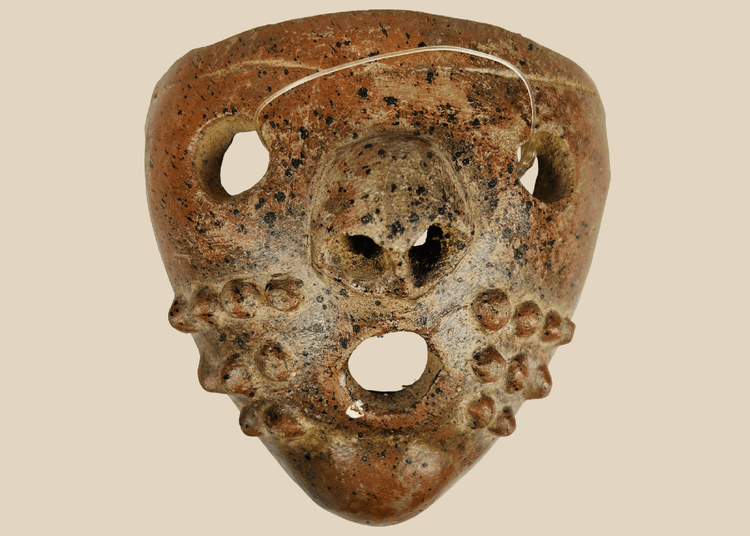


Precolombino | Máscara ritual de terracota con ornamentación nodular | C. 500 a. C. – 900 d. C.
Descripción
Más
Menos
Contexto histórico y origen
Región: Mesoamérica o Baja América Central (probablemente el occidente de México o Costa Rica)
Material: Terracota cocida / loza
Periodo: Periodo precolombino, circa 500 a. C. – 900 d. C.
Descripción
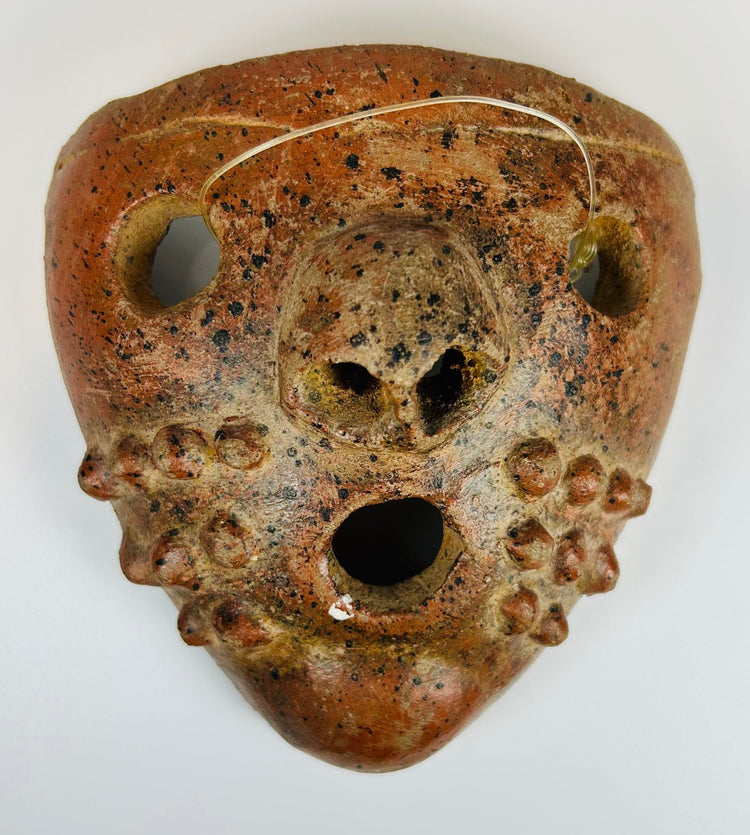
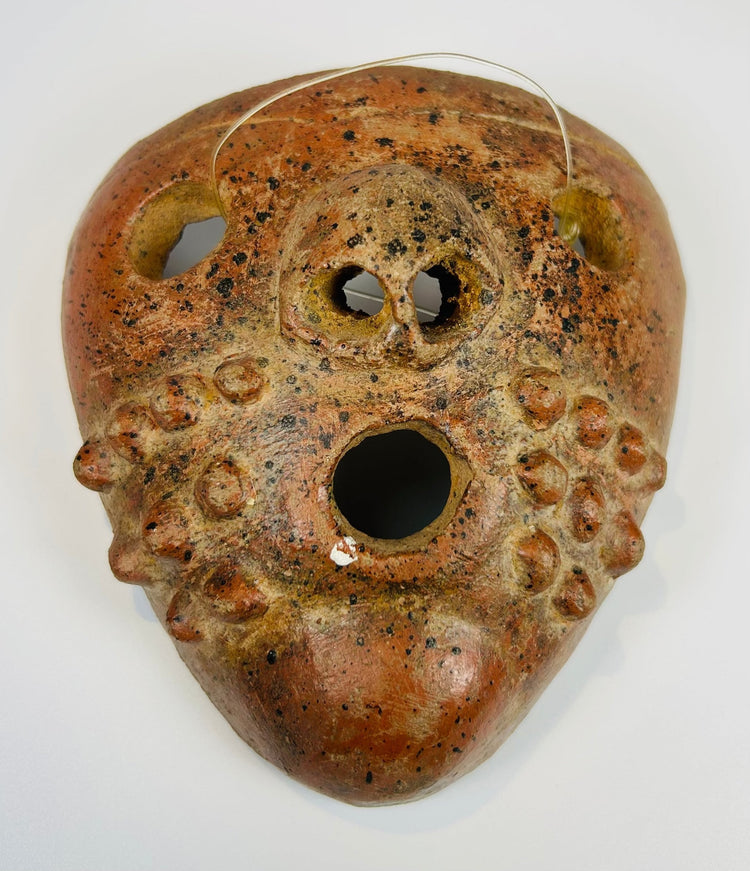
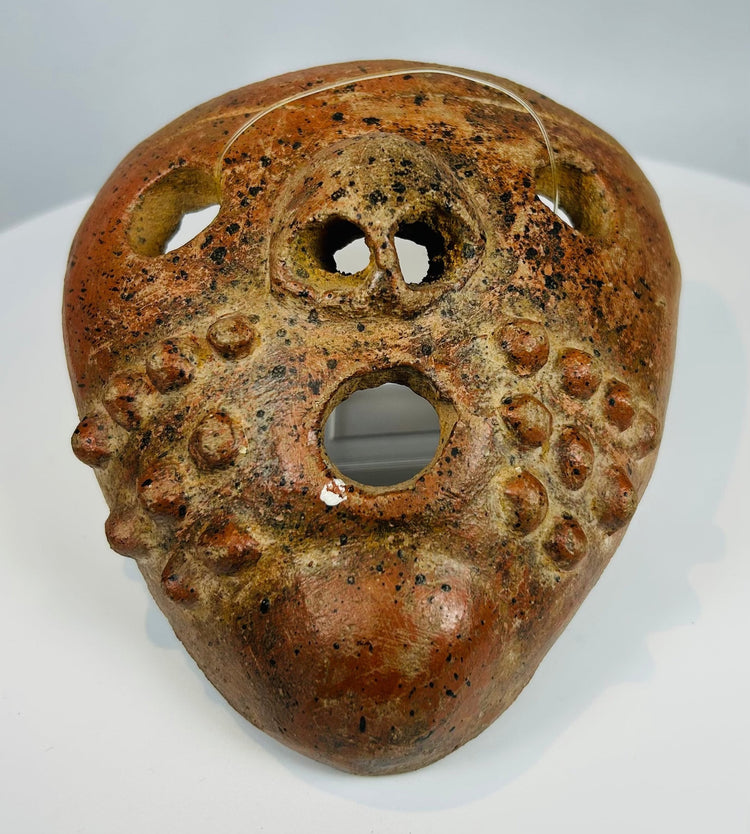
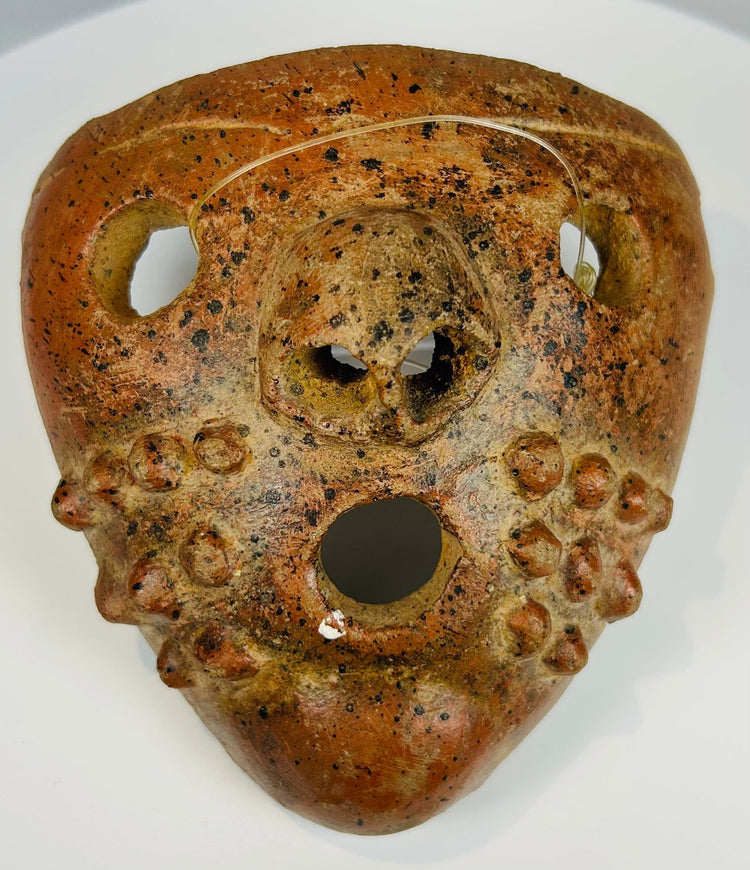
Esta llamativa máscara precolombina de terracota representa un rostro humano estilizado, realizado con una audaz abstracción escultórica. La máscara presenta cuencas oculares profundamente perforadas, una nariz prominente y elevada, y una gran abertura bucal circular, creando un semblante dramático y expresivo. Rodeando las mejillas hay grupos de elementos nodulares aplicados, que probablemente representan ornamentación facial ritual, escarificación o adorno simbólico.
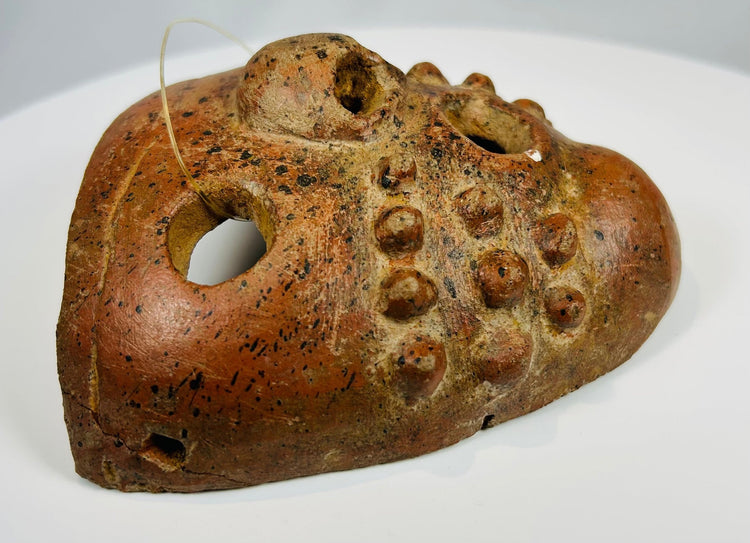
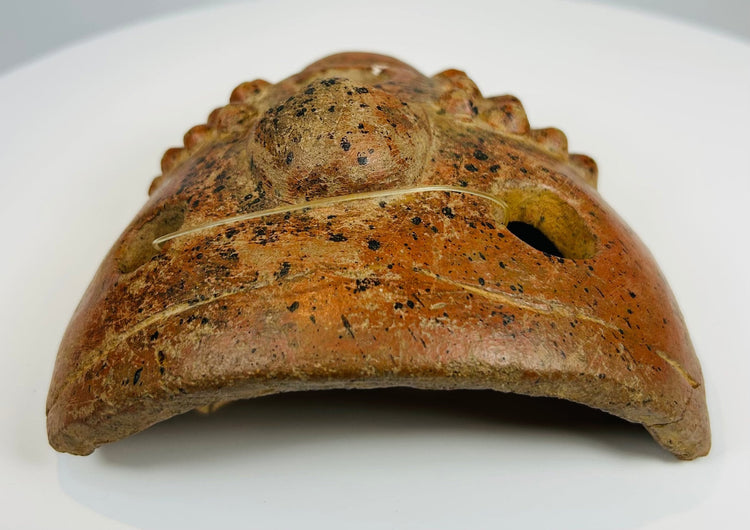
Dos grandes perforaciones laterales aparecen a los lados de la máscara, probablemente destinadas a la suspensión o sujeción mediante cordaje, lo que sugiere que la pieza pudo haber sido usada, montada o fijada a un objeto ceremonial. La superficie posterior muestra el interior cóncavo típico de las máscaras rituales moldeadas.
La cálida superficie de arcilla rojiza está fuertemente patinada con depósitos minerales, incrustaciones terrosas e inclusiones de cocción oscuras, que reflejan siglos de antigüedad y entierro. La calidad escultórica general y las características exageradas reflejan la estética espiritual y ceremonial común en los objetos rituales precolombinos, donde las máscaras a menudo representaban seres sobrenaturales, ancestros o artistas ceremoniales.
Características
- Forma de máscara antropomórfica expresiva con rasgos faciales exagerados
- Ojos profundamente perforados y gran abertura bucal circular
- Ornamentación nodular aplicada en las mejillas que sugiere escarificación o adorno ritual
- Orificios de suspensión laterales probablemente utilizados para cordaje o sujeción
- Superficie de terracota rojiza rica con pátina mineral y depósitos de entierro
Significado cultural
Las máscaras tuvieron una profunda importancia simbólica en las antiguas culturas mesoamericanas y centroamericanas. Se utilizaban en actuaciones ceremoniales, ritos funerarios y prácticas de transformación ritual donde los participantes encarnaban a ancestros, deidades o seres mitológicos. Los rasgos faciales estilizados y la decoración escultórica reflejan un simbolismo espiritual en lugar de un retrato naturalista, enfatizando la identidad sobrenatural de la figura representada.
Estado
Estado antiguo con desgaste superficial, depósitos minerales e incrustaciones relacionadas con la edad, coherentes con un entierro prolongado. Presenta pequeñas pérdidas y abrasiones superficiales. En general, bien conservada con un fuerte detalle escultórico.
Dimensiones (aproximadas)
Altura: 5.5 in
Anchura: 5 in
Profundidad: 2.5 in
Edad (aproximada)
1,100–2,500 años de antigüedad
Procedencia
De una colección privada en Hollywood, Florida, EE. UU.
Más información
Examine el arte de las máscaras precolombinas de arcilla y piedra en este estudio detallado de Masks of the World
Explore nuestra colección de artefactos precolombinos antiguos
Descripción
Contexto histórico y origen
Región: Mesoamérica o Baja América Central (probablemente el occidente de México o Costa Rica)
Material: Terracota cocida / loza
Periodo: Periodo precolombino, circa 500 a. C. – 900 d. C.
Descripción
Esta llamativa máscara precolombina de terracota representa un rostro humano estilizado, realizado con una audaz abstracción escultórica. La máscara presenta cuencas oculares profundamente perforadas, una nariz prominente y elevada, y una gran abertura bucal circular, creando un semblante dramático y expresivo. Rodeando las mejillas hay grupos de elementos nodulares aplicados, que probablemente representan ornamentación facial ritual, escarificación o adorno simbólico.
Dos grandes perforaciones laterales aparecen a los lados de la máscara, probablemente destinadas a la suspensión o sujeción mediante cordaje, lo que sugiere que la pieza pudo haber sido usada, montada o fijada a un objeto ceremonial. La superficie posterior muestra el interior cóncavo típico de las máscaras rituales moldeadas.
La cálida superficie de arcilla rojiza está fuertemente patinada con depósitos minerales, incrustaciones terrosas e inclusiones de cocción oscuras, que reflejan siglos de antigüedad y entierro. La calidad escultórica general y las características exageradas reflejan la estética espiritual y ceremonial común en los objetos rituales precolombinos, donde las máscaras a menudo representaban seres sobrenaturales, ancestros o artistas ceremoniales.
Características
- Forma de máscara antropomórfica expresiva con rasgos faciales exagerados
- Ojos profundamente perforados y gran abertura bucal circular
- Ornamentación nodular aplicada en las mejillas que sugiere escarificación o adorno ritual
- Orificios de suspensión laterales probablemente utilizados para cordaje o sujeción
- Superficie de terracota rojiza rica con pátina mineral y depósitos de entierro
Significado cultural
Las máscaras tuvieron una profunda importancia simbólica en las antiguas culturas mesoamericanas y centroamericanas. Se utilizaban en actuaciones ceremoniales, ritos funerarios y prácticas de transformación ritual donde los participantes encarnaban a ancestros, deidades o seres mitológicos. Los rasgos faciales estilizados y la decoración escultórica reflejan un simbolismo espiritual en lugar de un retrato naturalista, enfatizando la identidad sobrenatural de la figura representada.
Estado
Estado antiguo con desgaste superficial, depósitos minerales e incrustaciones relacionadas con la edad, coherentes con un entierro prolongado. Presenta pequeñas pérdidas y abrasiones superficiales. En general, bien conservada con un fuerte detalle escultórico.
Dimensiones (aproximadas)
Altura: 5.5 in
Anchura: 5 in
Profundidad: 2.5 in
Edad (aproximada)
1,100–2,500 años de antigüedad
Procedencia
De una colección privada en Hollywood, Florida, EE. UU.
Más información
Examine el arte de las máscaras precolombinas de arcilla y piedra en este estudio detallado de Masks of the World
Explore nuestra colección de artefactos precolombinos antiguos
También te puede interesar
