

Figura de pie de terracota precolombina | Oeste de México | 300 a. C.–500 d. C.
- Precio habitual
- $350.00
- Precio de venta
- $350.00
- Precio habitual
No se pudo cargar la disponibilidad de retiro


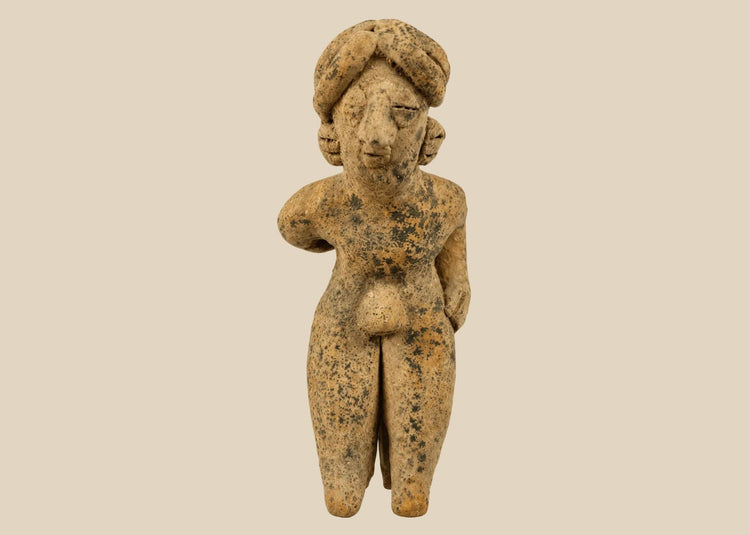
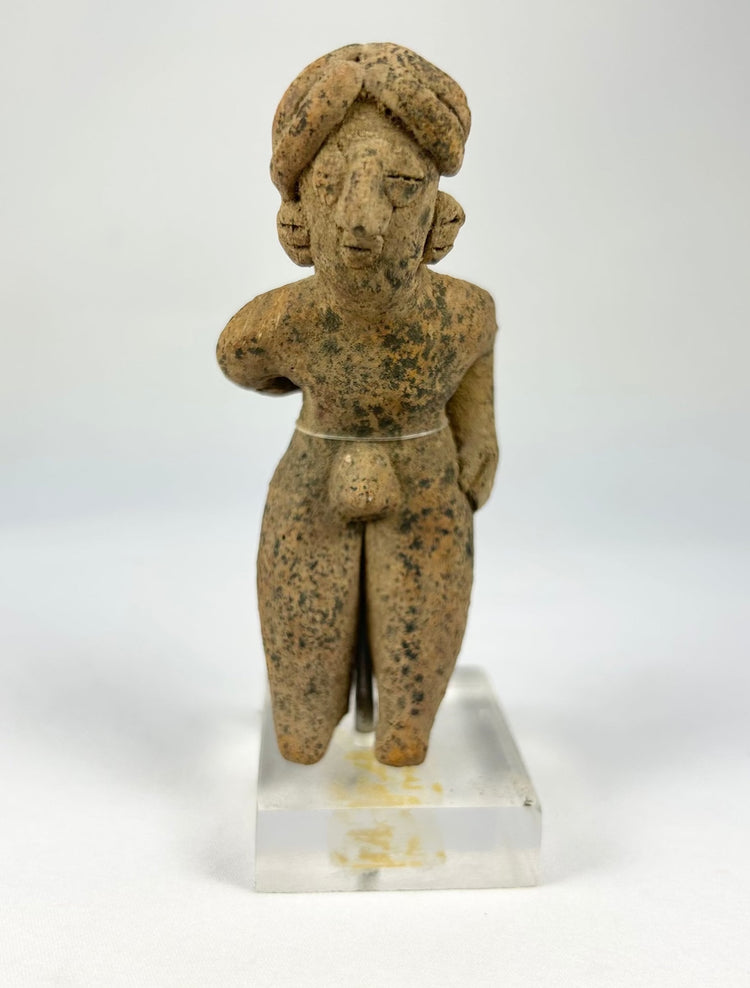
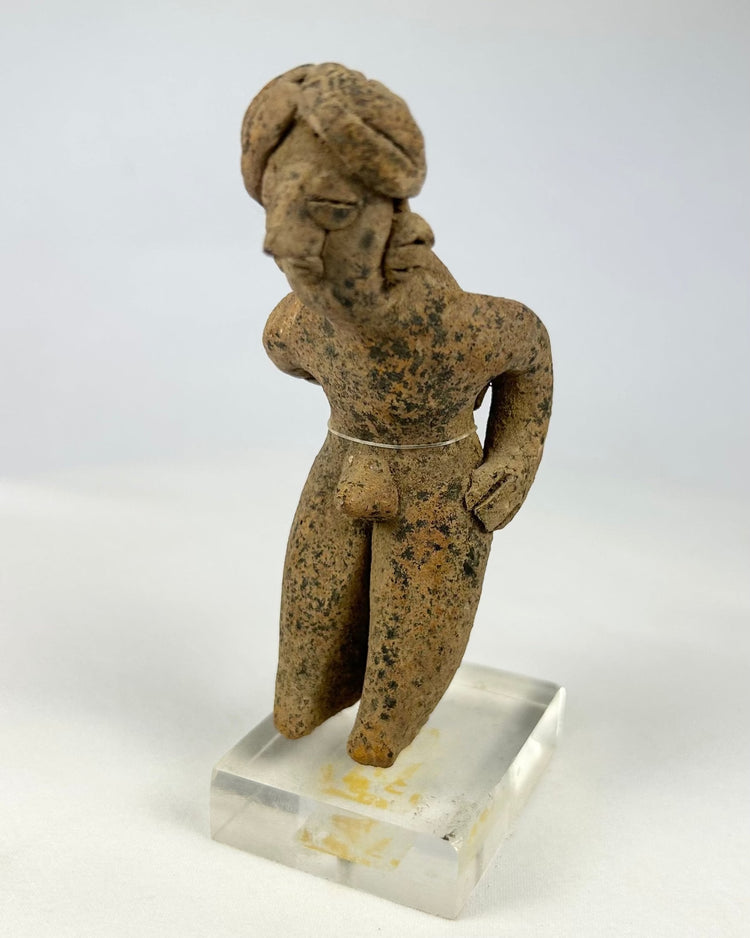
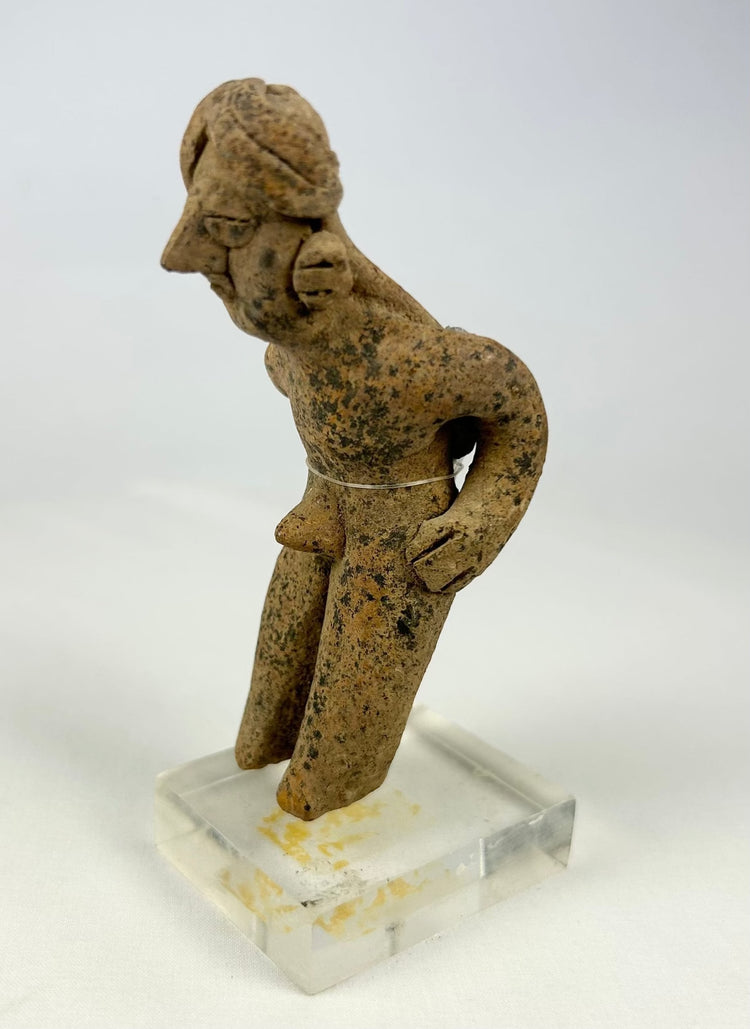
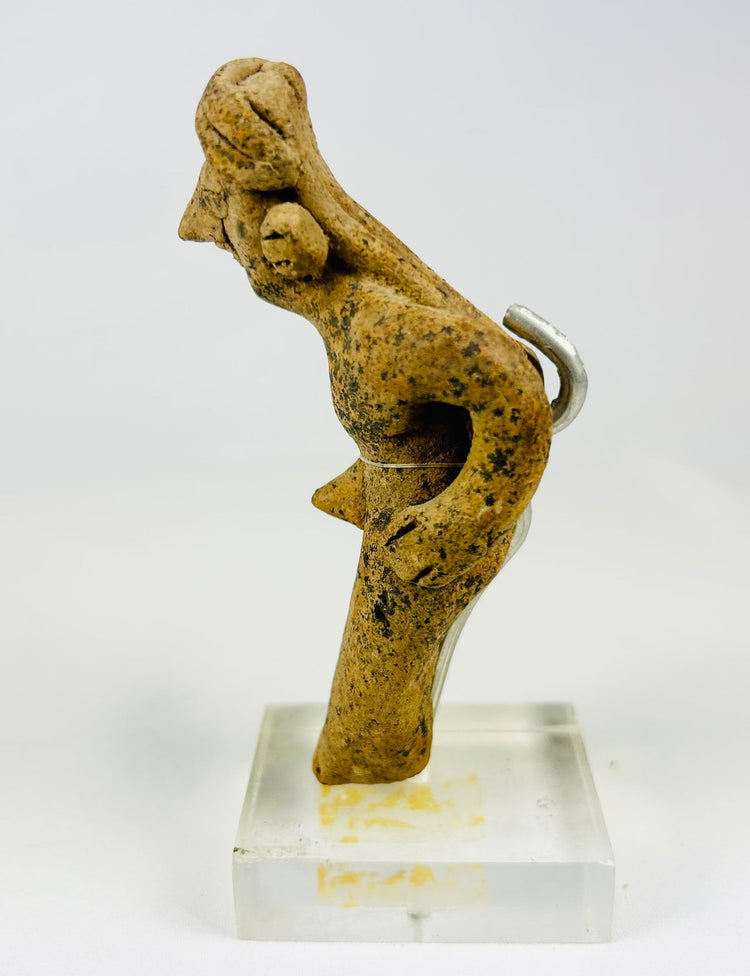
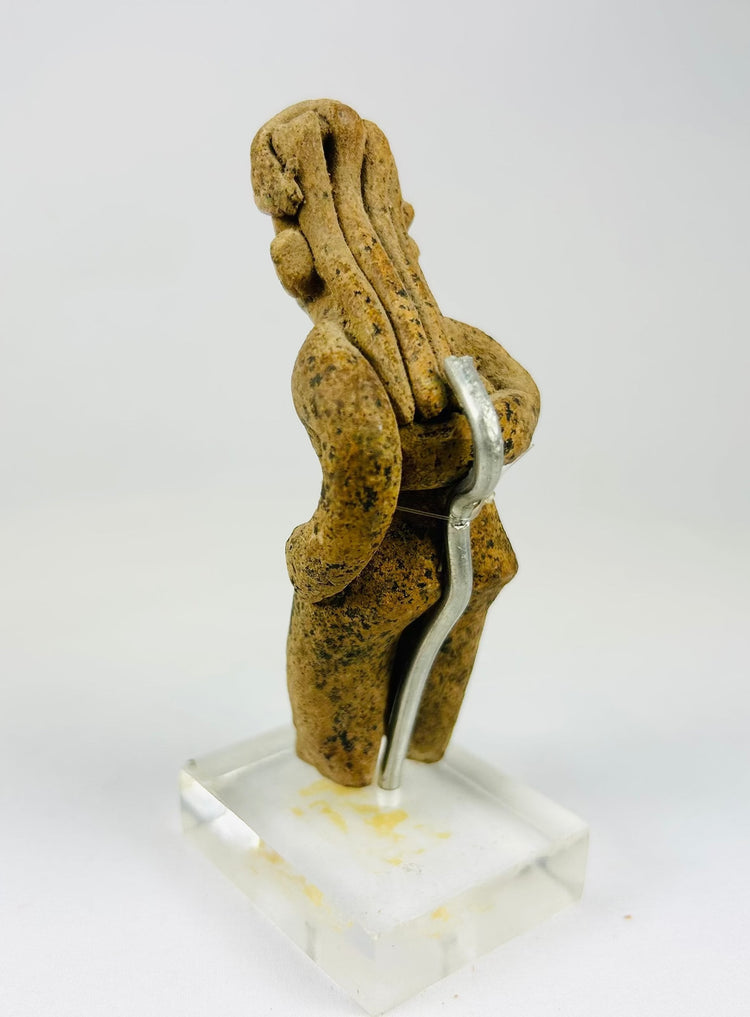
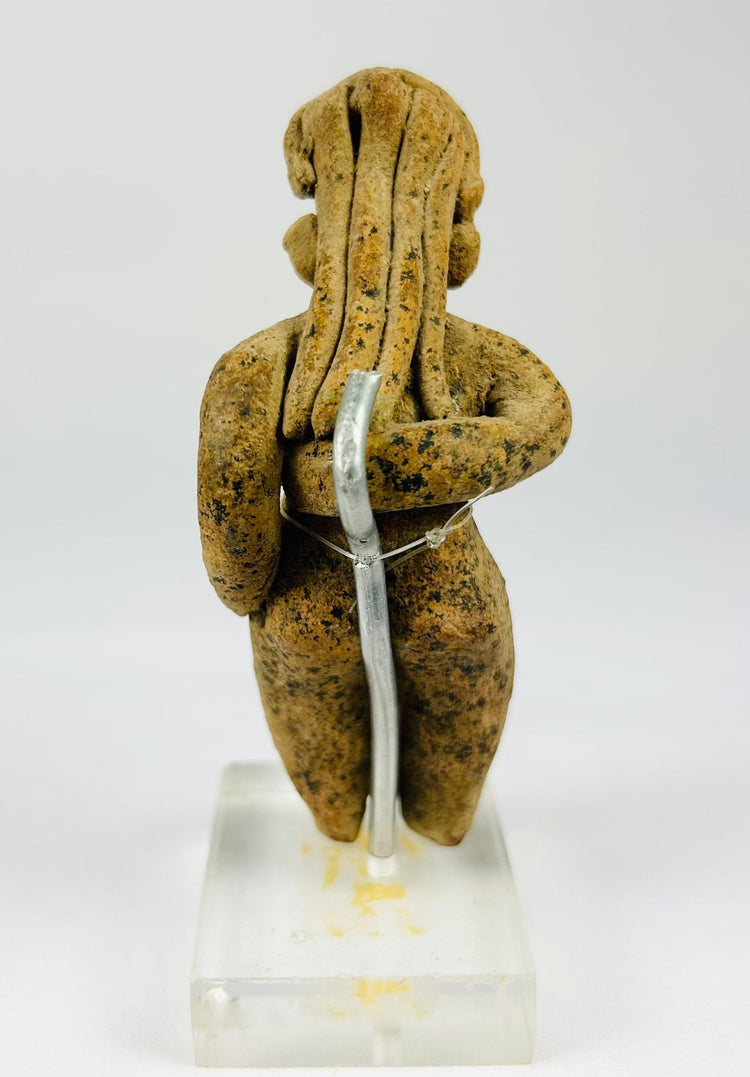
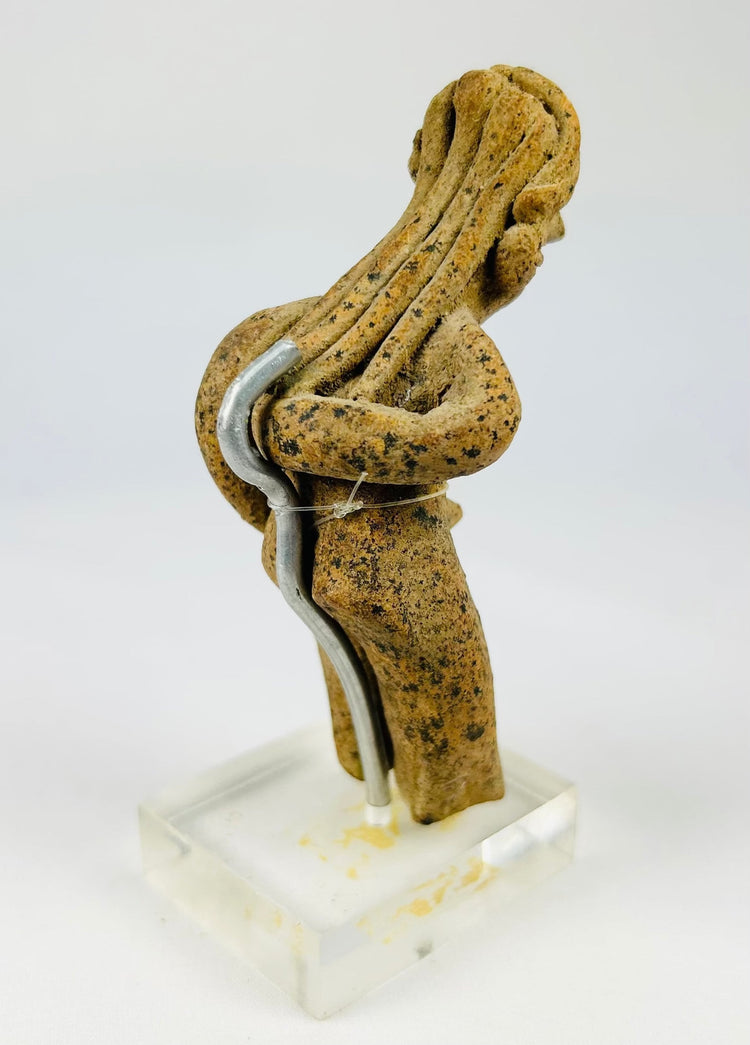
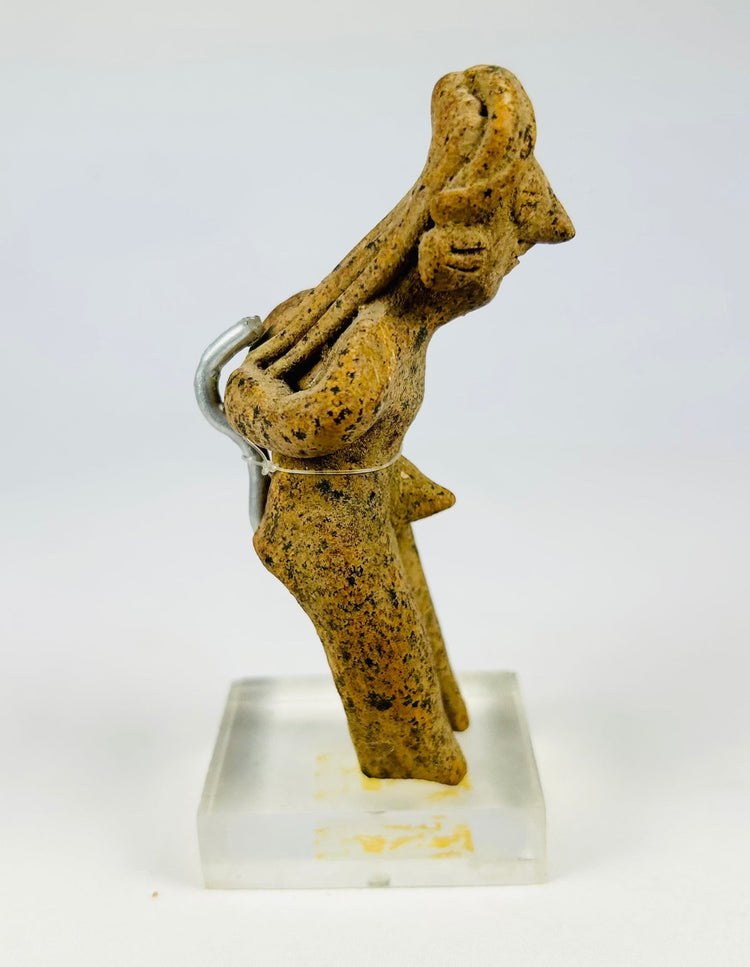
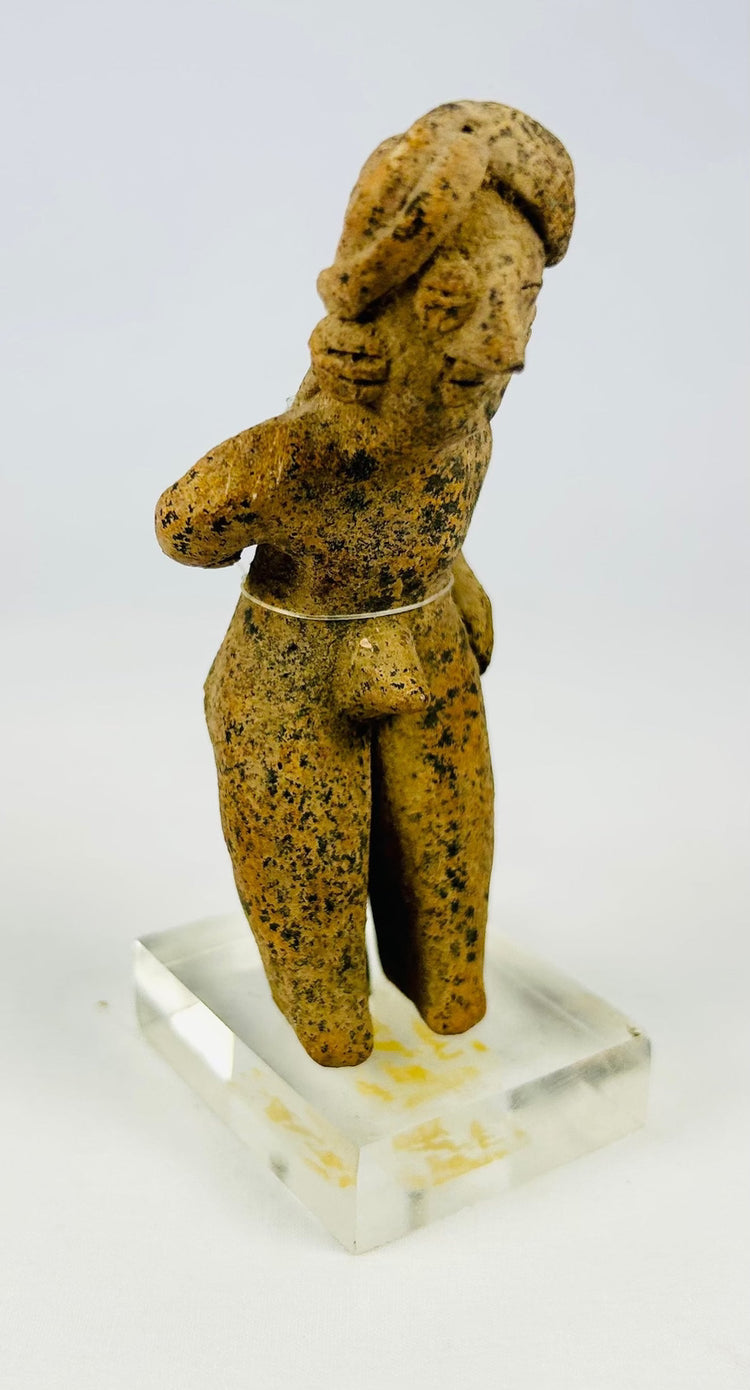
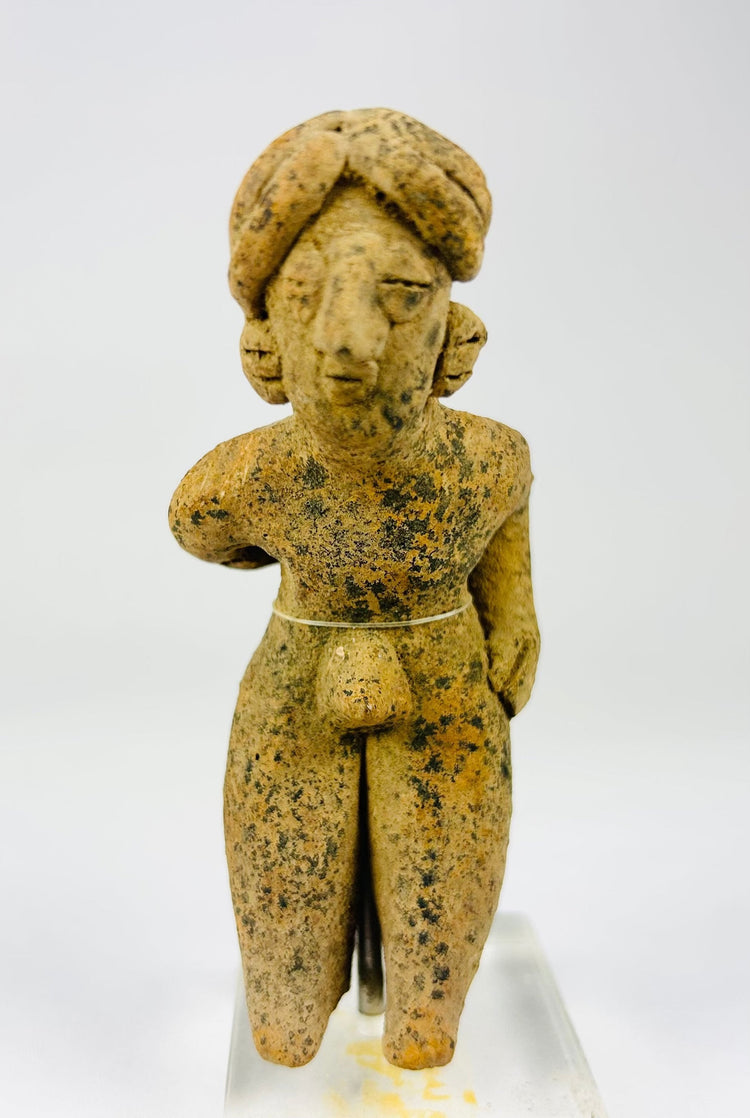
Figura de pie de terracota precolombina | Oeste de México | 300 a. C.–500 d. C.
Descripción
Más
Menos
Contexto Histórico y Origen
Región: Occidente de México (Nayarit, Jalisco o Colima)
Material: Terracota modelada a mano
Periodo: Precolombino, c. 300 a.C. – 500 d.C.
Descripción
Esta figura de terracota finamente modelada a mano, creada hace más de 1.500 años, representa el arte expresivo de las culturas de tumbas de tiro del Occidente de México. La figura se alza erguida con los brazos doblados sobre el pecho y lleva un alto tocado estilo turbante, una característica distintiva asociada con la identidad ritual o ceremonial. A pesar de su antigüedad, la pieza conserva gran parte de su forma y detalles originales, con la erosión superficial e incrustaciones consistentes con un largo entierro. Montada sobre una base de acrílico moderna, se exhibe bellamente desde múltiples ángulos, enfatizando las proporciones estilizadas y el simbolismo cultural del arte antiguo del Occidente de México.
Características
- Figura de terracota de pie con los brazos cruzados sobre el pecho
- Tocado distintivo estilo turbante
- Proporciones estilizadas típicas de la escultura de la cultura de tumbas de tiro
- Incrustaciones de entierro y erosión superficial debido a la antigüedad
- Montado sobre una base de acrílico moderna para una exhibición segura
Significado Cultural
Las figuras de este tipo eran parte integral de las prácticas funerarias del Occidente de México, colocadas en tumbas de tiro como guardianes, compañeros o representaciones simbólicas de fertilidad y prosperidad. Reflejan la cosmovisión espiritual de la sociedad precolombina, donde el arte cumplía roles rituales y protectores. Hoy en día, estas figuras son altamente valoradas como artefactos culturales, ofreciendo una rara visión de las creencias, prácticas sociales y tradiciones estéticas de las primeras civilizaciones mesoamericanas.
Condición
Buen estado arqueológico con pérdidas fragmentarias, desgaste superficial y depósitos minerales consistentes con el entierro antiguo. Estabilidad general y montado de forma segura para su exhibición.
Dimensiones (Aproximadas)
Altura: 4.25 in
Ancho: 1.5 in
Profundidad: 2 in
Edad (Aproximada)
1,500–2,300 años
Procedencia
Anteriormente en una colección privada en el sur de California, EE. UU., reunida entre los años 1970 y 1990. Posteriormente en una colección privada en Brea, California, EE. UU.
Más información
Descubra una figura de tumba de tiro del Occidente de México en el Museo Metropolitano de Arte
Explore nuestra Colección de Artefactos y Reliquias Precolombinas Antiguas
Descripción
Contexto Histórico y Origen
Región: Occidente de México (Nayarit, Jalisco o Colima)
Material: Terracota modelada a mano
Periodo: Precolombino, c. 300 a.C. – 500 d.C.
Descripción
Esta figura de terracota finamente modelada a mano, creada hace más de 1.500 años, representa el arte expresivo de las culturas de tumbas de tiro del Occidente de México. La figura se alza erguida con los brazos doblados sobre el pecho y lleva un alto tocado estilo turbante, una característica distintiva asociada con la identidad ritual o ceremonial. A pesar de su antigüedad, la pieza conserva gran parte de su forma y detalles originales, con la erosión superficial e incrustaciones consistentes con un largo entierro. Montada sobre una base de acrílico moderna, se exhibe bellamente desde múltiples ángulos, enfatizando las proporciones estilizadas y el simbolismo cultural del arte antiguo del Occidente de México.
Características
- Figura de terracota de pie con los brazos cruzados sobre el pecho
- Tocado distintivo estilo turbante
- Proporciones estilizadas típicas de la escultura de la cultura de tumbas de tiro
- Incrustaciones de entierro y erosión superficial debido a la antigüedad
- Montado sobre una base de acrílico moderna para una exhibición segura
Significado Cultural
Las figuras de este tipo eran parte integral de las prácticas funerarias del Occidente de México, colocadas en tumbas de tiro como guardianes, compañeros o representaciones simbólicas de fertilidad y prosperidad. Reflejan la cosmovisión espiritual de la sociedad precolombina, donde el arte cumplía roles rituales y protectores. Hoy en día, estas figuras son altamente valoradas como artefactos culturales, ofreciendo una rara visión de las creencias, prácticas sociales y tradiciones estéticas de las primeras civilizaciones mesoamericanas.
Condición
Buen estado arqueológico con pérdidas fragmentarias, desgaste superficial y depósitos minerales consistentes con el entierro antiguo. Estabilidad general y montado de forma segura para su exhibición.
Dimensiones (Aproximadas)
Altura: 4.25 in
Ancho: 1.5 in
Profundidad: 2 in
Edad (Aproximada)
1,500–2,300 años
Procedencia
Anteriormente en una colección privada en el sur de California, EE. UU., reunida entre los años 1970 y 1990. Posteriormente en una colección privada en Brea, California, EE. UU.
Más información
Descubra una figura de tumba de tiro del Occidente de México en el Museo Metropolitano de Arte
Explore nuestra Colección de Artefactos y Reliquias Precolombinas Antiguas
También te puede interesar
