

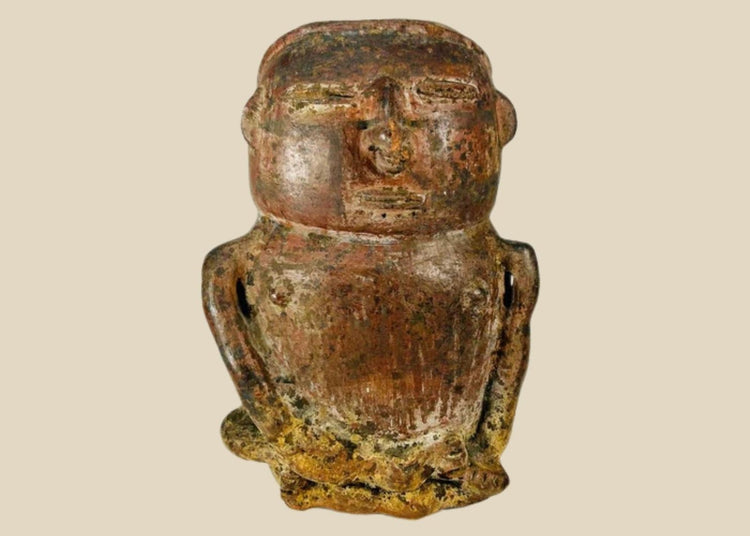
Vaso efigie de terracota precolombino | Figura humana sentada | C. 500 a. C. – 900 d. C.
- Precio habitual
- $1,000.00
- Precio de venta
- $1,000.00
- Precio habitual
No se pudo cargar la disponibilidad de retiro




Vaso efigie de terracota precolombino | Figura humana sentada | C. 500 a. C. – 900 d. C.
Descripción
Más
Menos
Contexto histórico y origen
Región: Región mesoamericana o andina
Material: Terracota
Periodo: Precolombino, circa 500 a. C. – 900 d. C. (estimado)
Descripción
Este notable recipiente de terracota hecho a mano tiene la forma de una figura humana sentada con rasgos antropomórficos finamente moldeados, que incluyen una nariz prominente y las manos apoyadas en el regazo. La abertura en la parte superior de la cabeza sugiere su uso como recipiente, probablemente para líquidos, ofrendas o fines rituales. Dichos vasos efigie eran centrales en la vida ceremonial, sirviendo tanto como representaciones simbólicas de ancestros, deidades o figuras comunitarias, como recipientes rituales funcionales.
Características
- Figura humana sentada con una forma antropomórfica distintiva
- Rasgos faciales moldeados prominentes que incluyen nariz y manos estilizadas
- Abertura del recipiente en la parte superior de la cabeza para ofrendas o líquidos
- Tonos terrosos de terracota con rastros de desgaste y depósitos minerales
Significado cultural
Los vasos efigie como este eran centrales en las prácticas rituales y funerarias en las sociedades precolombinas. Se creía que unían el mundo espiritual y material, llevando ofrendas a las deidades o sirviendo como guardianes simbólicos en contextos de enterramiento. La forma humana destaca la profunda conexión entre los objetos rituales, la veneración de los ancestros y los sistemas de creencias espirituales dentro de las tradiciones mesoamericanas y andinas.
Estado
Bien conservado con desgaste consistente con la antigüedad. La superficie muestra depósitos minerales y desgaste natural, lo que realza la autenticidad y enfatiza el uso ceremonial y la edad del recipiente.
Dimensiones (aproximadas)
Altura: 7.25 in
Ancho: 5.25 in
Edad (aproximada)
1,100–2,500 años de antigüedad
Procedencia
Anteriormente formó parte de una colección patrimonial en Branford, Connecticut, Estados Unidos. La colección se formó a lo largo de la vida del propietario y reflejó un interés duradero en el arte, las antigüedades y los objetos históricos europeos y sudamericanos.
Más información
Explore el significado cultural y el arte de los Antiguos Vasos Efigie
Explore nuestra Colección de Artefactos Precolombinos
Descripción
Contexto histórico y origen
Región: Región mesoamericana o andina
Material: Terracota
Periodo: Precolombino, circa 500 a. C. – 900 d. C. (estimado)
Descripción
Este notable recipiente de terracota hecho a mano tiene la forma de una figura humana sentada con rasgos antropomórficos finamente moldeados, que incluyen una nariz prominente y las manos apoyadas en el regazo. La abertura en la parte superior de la cabeza sugiere su uso como recipiente, probablemente para líquidos, ofrendas o fines rituales. Dichos vasos efigie eran centrales en la vida ceremonial, sirviendo tanto como representaciones simbólicas de ancestros, deidades o figuras comunitarias, como recipientes rituales funcionales.
Características
- Figura humana sentada con una forma antropomórfica distintiva
- Rasgos faciales moldeados prominentes que incluyen nariz y manos estilizadas
- Abertura del recipiente en la parte superior de la cabeza para ofrendas o líquidos
- Tonos terrosos de terracota con rastros de desgaste y depósitos minerales
Significado cultural
Los vasos efigie como este eran centrales en las prácticas rituales y funerarias en las sociedades precolombinas. Se creía que unían el mundo espiritual y material, llevando ofrendas a las deidades o sirviendo como guardianes simbólicos en contextos de enterramiento. La forma humana destaca la profunda conexión entre los objetos rituales, la veneración de los ancestros y los sistemas de creencias espirituales dentro de las tradiciones mesoamericanas y andinas.
Estado
Bien conservado con desgaste consistente con la antigüedad. La superficie muestra depósitos minerales y desgaste natural, lo que realza la autenticidad y enfatiza el uso ceremonial y la edad del recipiente.
Dimensiones (aproximadas)
Altura: 7.25 in
Ancho: 5.25 in
Edad (aproximada)
1,100–2,500 años de antigüedad
Procedencia
Anteriormente formó parte de una colección patrimonial en Branford, Connecticut, Estados Unidos. La colección se formó a lo largo de la vida del propietario y reflejó un interés duradero en el arte, las antigüedades y los objetos históricos europeos y sudamericanos.
Más información
Explore el significado cultural y el arte de los Antiguos Vasos Efigie
Explore nuestra Colección de Artefactos Precolombinos
También te puede interesar
