

Prehistórico | Nativo Americano | Puntas de lanza de cobre de los Grandes Lagos | Cerca de 3000-1000 a. C.
- Precio habitual
- $500.00
- Precio de venta
- $500.00
- Precio habitual
No se pudo cargar la disponibilidad de retiro


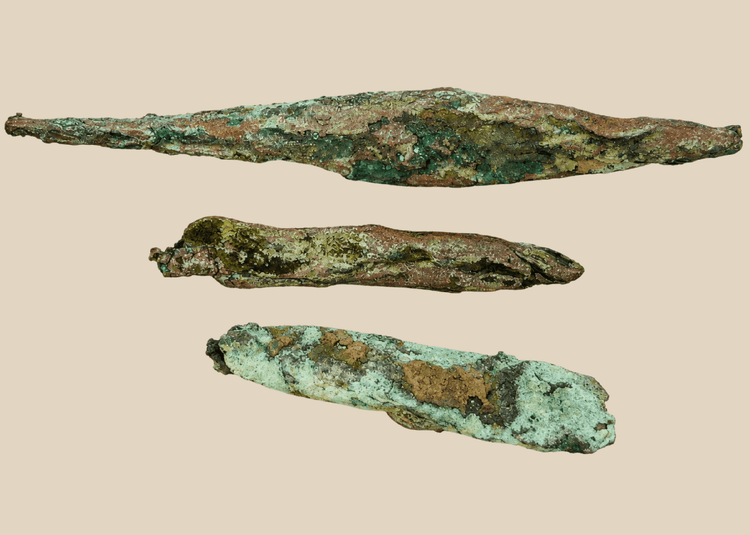
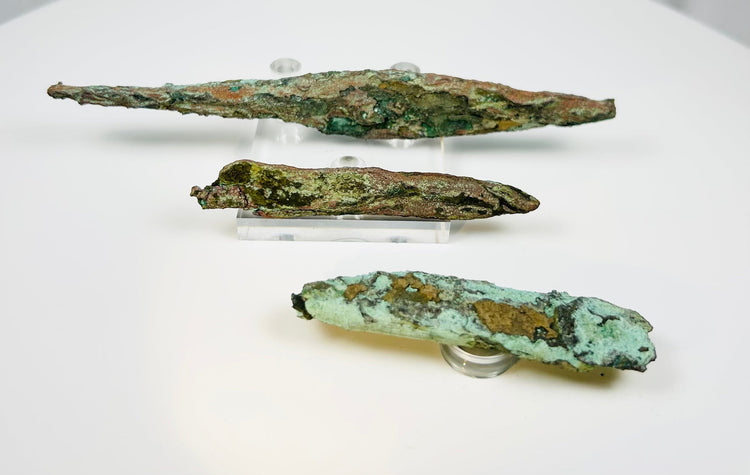
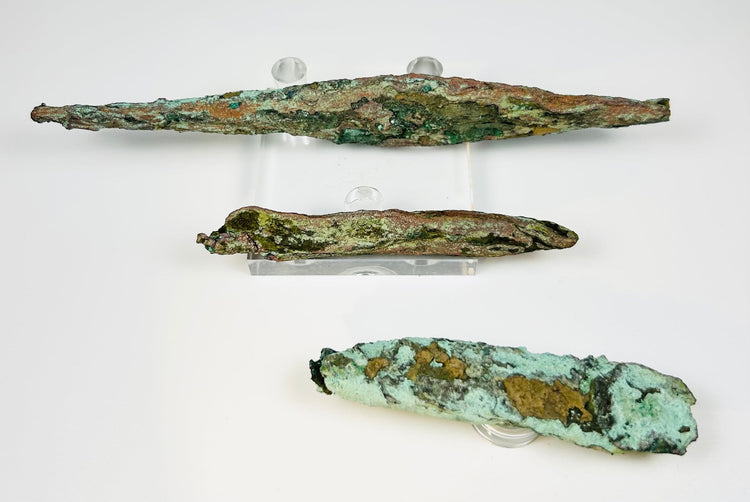
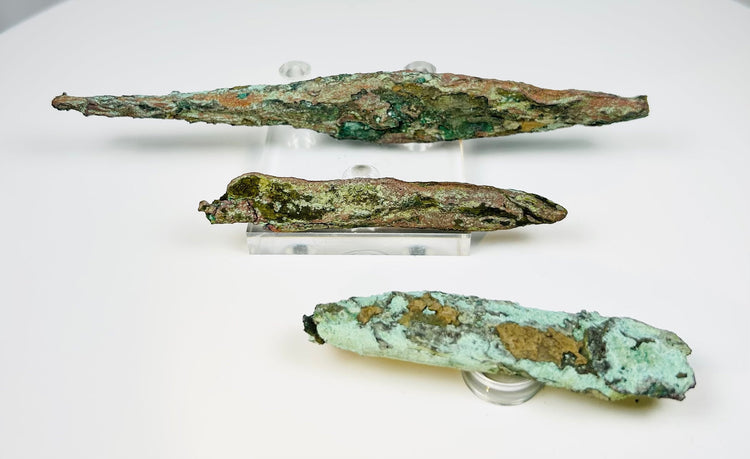
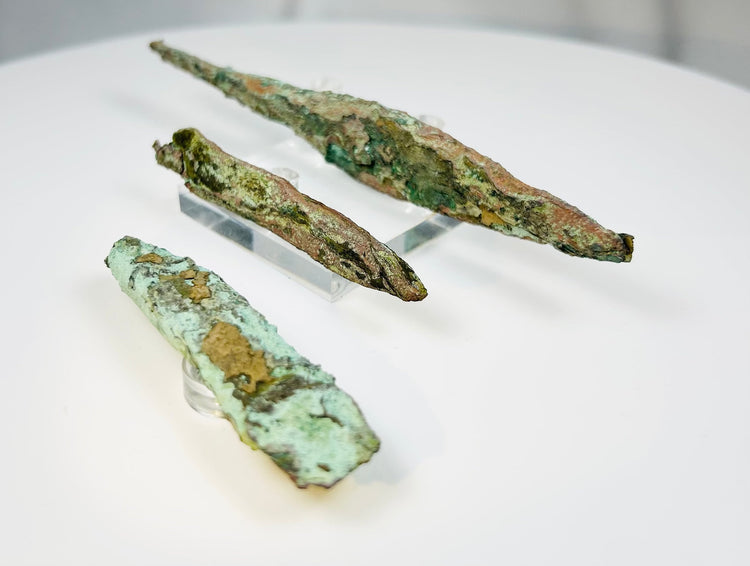
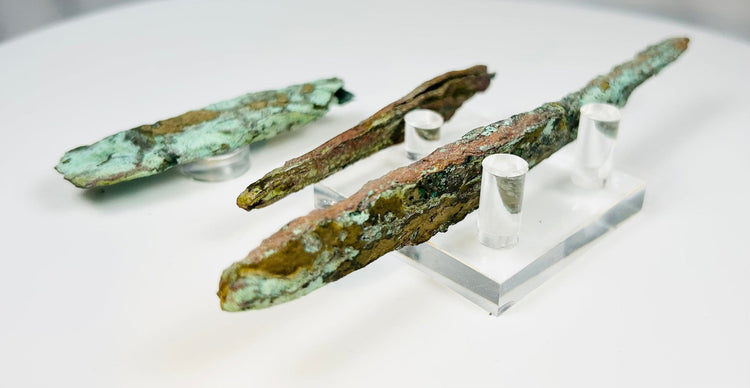
Prehistórico | Nativo Americano | Puntas de lanza de cobre de los Grandes Lagos | Cerca de 3000-1000 a. C.
Descripción
Más
Menos
Contexto histórico y origen
Región: Región de los Grandes Lagos, América del Norte (Wisconsin)
Material: Cobre nativo
Período: Cultura del Cobre Antiguo, c. 3000 a. C. – 1000 a. C.
Descripción
Este notable grupo de antiguas puntas de proyectil y hojas de cobre nativas americanas se atribuye a la Cultura del Cobre Antiguo de la región superior de los Grandes Lagos, una de las tradiciones metalúrgicas más antiguas conocidas en América del Norte. Estos artefactos fueron elaborados a partir de depósitos de cobre nativo que se encuentran de forma natural alrededor del lago Superior y Wisconsin.
Martilladas en frío y moldeadas sin el uso de tecnología de fundición, estas herramientas demuestran el sofisticado conocimiento metalúrgico de las culturas prehistóricas de América del Norte. Las formas alargadas y los bordes cónicos sugieren su uso como puntas de lanza, cuchillos o posiblemente hojas ceremoniales, lo que refleja roles funcionales y simbólicos dentro de las primeras comunidades indígenas.
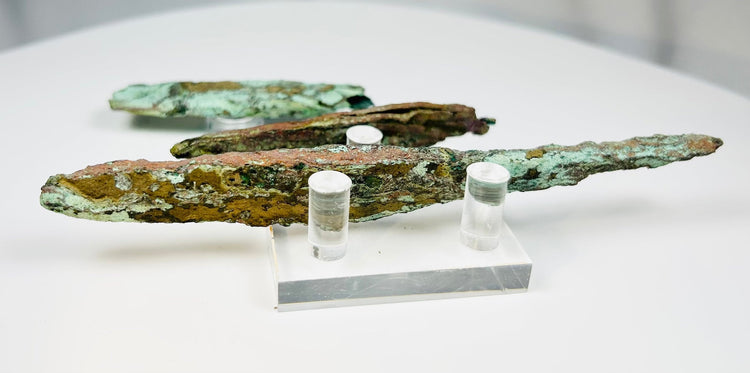
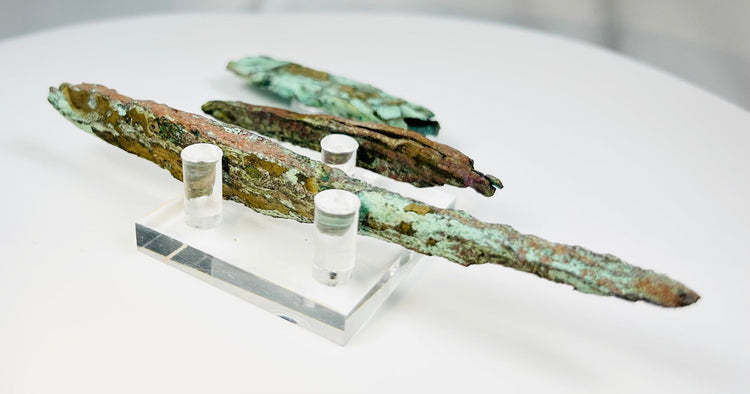
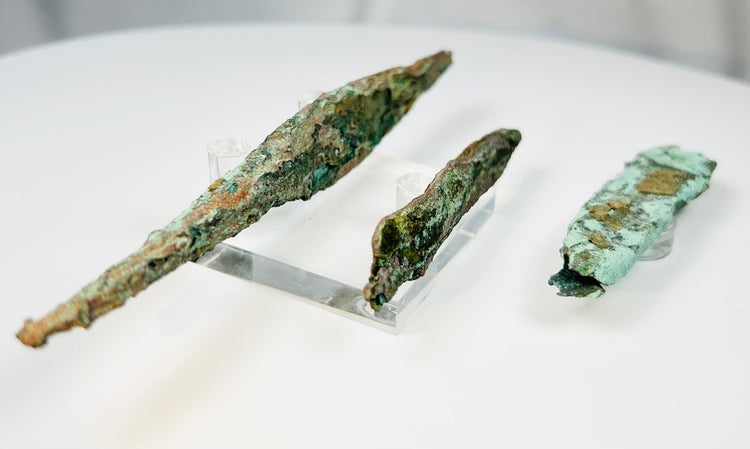
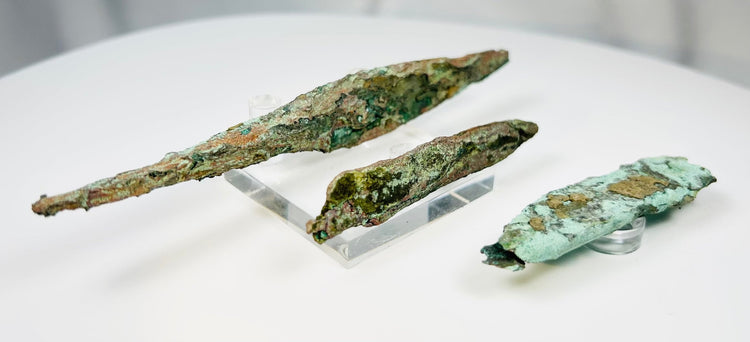
Recuperados a lo largo de las orillas del río Eagle en Wisconsin, estos ejemplos muestran atractivas pátinas de cobre verdes y rojizas desarrolladas a través de siglos de enterramiento y oxidación, lo que confiere a las piezas un carácter arqueológico visualmente sorprendente.
Características
- Auténticos artefactos de la Cultura del Cobre Antiguo de la región de los Grandes Lagos
- Cobre nativo trabajado a mano, formado mediante técnicas tradicionales de martillado en frío
- Tres puntas de proyectil o cuchillas alargadas
- Pátina mineral natural verde y rojiza debido a un largo enterramiento
- Supuestamente recuperado cerca del río Eagle, Wisconsin
Importancia cultural
La Cultura del Cobre Antiguo representa una de las tradiciones metalúrgicas más tempranas en las Américas. A partir de aproximadamente el 3000 a. C., los pueblos indígenas de la región de los Grandes Lagos descubrieron cómo dar forma al cobre natural mediante martilleo y recocido, creando herramientas, armas y objetos ceremoniales mucho antes de que la tecnología de fundición apareciera en América del Norte.
Los artefactos de esta cultura ilustran una comprensión avanzada de los materiales naturales y son importantes indicadores arqueológicos de las primeras redes comerciales, la innovación tecnológica y el desarrollo cultural en toda la región de los Grandes Lagos. Hoy en día, estas herramientas de cobre son muy valoradas por coleccionistas y académicos por su papel en la documentación de la metalurgia temprana en la América del Norte prehistórica.
Condición
Condición antigua con fuerte mineralización y oxidación, consistente con un largo enterramiento. Las superficies presentan pátina natural, corrosión y áreas de descamación típicas de los artefactos de cobre arqueológicos. Las piezas permanecen estructuralmente estables y están montadas para su exhibición.
Dimensiones (aproximadas)
Longitud del ejemplo más grande: 5.5 pulgadas
Edad (aproximada)
3.000–5.000 años de antigüedad
Procedencia
Supuestamente vendido a través de un puesto comercial en Montana, EE. UU., durante la década de 1980. Posteriormente se mantuvo en una colección privada en Missoula, Montana, EE. UU.
Más información
Descubra cómo los antiguos nativos americanos se convirtieron en algunos de los primeros herreros de cobre del mundo
Explore nuestra Colección de Artefactos y Armas de Combate Antiguas.
Descripción
Contexto histórico y origen
Región: Región de los Grandes Lagos, América del Norte (Wisconsin)
Material: Cobre nativo
Período: Cultura del Cobre Antiguo, c. 3000 a. C. – 1000 a. C.
Descripción
Este notable grupo de antiguas puntas de proyectil y hojas de cobre nativas americanas se atribuye a la Cultura del Cobre Antiguo de la región superior de los Grandes Lagos, una de las tradiciones metalúrgicas más antiguas conocidas en América del Norte. Estos artefactos fueron elaborados a partir de depósitos de cobre nativo que se encuentran de forma natural alrededor del lago Superior y Wisconsin.
Martilladas en frío y moldeadas sin el uso de tecnología de fundición, estas herramientas demuestran el sofisticado conocimiento metalúrgico de las culturas prehistóricas de América del Norte. Las formas alargadas y los bordes cónicos sugieren su uso como puntas de lanza, cuchillos o posiblemente hojas ceremoniales, lo que refleja roles funcionales y simbólicos dentro de las primeras comunidades indígenas.
Recuperados a lo largo de las orillas del río Eagle en Wisconsin, estos ejemplos muestran atractivas pátinas de cobre verdes y rojizas desarrolladas a través de siglos de enterramiento y oxidación, lo que confiere a las piezas un carácter arqueológico visualmente sorprendente.
Características
- Auténticos artefactos de la Cultura del Cobre Antiguo de la región de los Grandes Lagos
- Cobre nativo trabajado a mano, formado mediante técnicas tradicionales de martillado en frío
- Tres puntas de proyectil o cuchillas alargadas
- Pátina mineral natural verde y rojiza debido a un largo enterramiento
- Supuestamente recuperado cerca del río Eagle, Wisconsin
Importancia cultural
La Cultura del Cobre Antiguo representa una de las tradiciones metalúrgicas más tempranas en las Américas. A partir de aproximadamente el 3000 a. C., los pueblos indígenas de la región de los Grandes Lagos descubrieron cómo dar forma al cobre natural mediante martilleo y recocido, creando herramientas, armas y objetos ceremoniales mucho antes de que la tecnología de fundición apareciera en América del Norte.
Los artefactos de esta cultura ilustran una comprensión avanzada de los materiales naturales y son importantes indicadores arqueológicos de las primeras redes comerciales, la innovación tecnológica y el desarrollo cultural en toda la región de los Grandes Lagos. Hoy en día, estas herramientas de cobre son muy valoradas por coleccionistas y académicos por su papel en la documentación de la metalurgia temprana en la América del Norte prehistórica.
Condición
Condición antigua con fuerte mineralización y oxidación, consistente con un largo enterramiento. Las superficies presentan pátina natural, corrosión y áreas de descamación típicas de los artefactos de cobre arqueológicos. Las piezas permanecen estructuralmente estables y están montadas para su exhibición.
Dimensiones (aproximadas)
Longitud del ejemplo más grande: 5.5 pulgadas
Edad (aproximada)
3.000–5.000 años de antigüedad
Procedencia
Supuestamente vendido a través de un puesto comercial en Montana, EE. UU., durante la década de 1980. Posteriormente se mantuvo en una colección privada en Missoula, Montana, EE. UU.
Más información
Descubra cómo los antiguos nativos americanos se convirtieron en algunos de los primeros herreros de cobre del mundo
Explore nuestra Colección de Artefactos y Armas de Combate Antiguas.
También te puede interesar
