

Firmado Nobuaki | Panel de laca japonesa con contador de whist | Período Meiji | Circa finales del siglo XIX
- Precio habitual
- $500.00
- Precio de venta
- $500.00
- Precio habitual
No se pudo cargar la disponibilidad de retiro


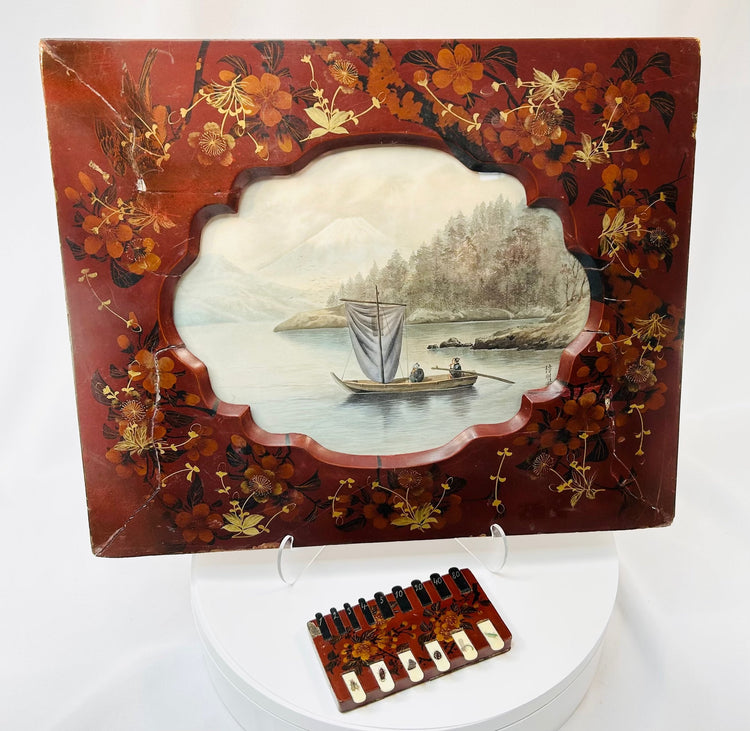
Firmado Nobuaki | Panel de laca japonesa con contador de whist | Período Meiji | Circa finales del siglo XIX
Descripción
Más
Menos
Contexto histórico y origen
Región: Japón
Material: Madera lacada (urushi) con decoración floral dorada; panel pintado a mano; lengüetas de hueso o de material compuesto temprano con motivos de insectos aplicados (incrustación estilo Shibayama)
Período: Período Meiji, finales del siglo XIX a principios del siglo XX
Descripción
Un cuadro enmarcado con laca japonesa, visualmente impactante y culturalmente rico, emparejado con un contador de whist estilo Shibayama, ambos datan del período Meiji, una época en que las artes decorativas japonesas se producían tanto para uso doméstico como para exportación.
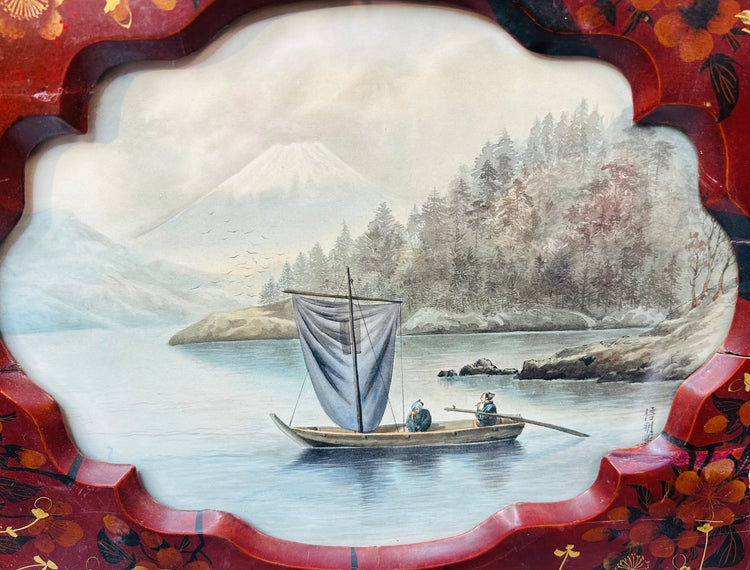
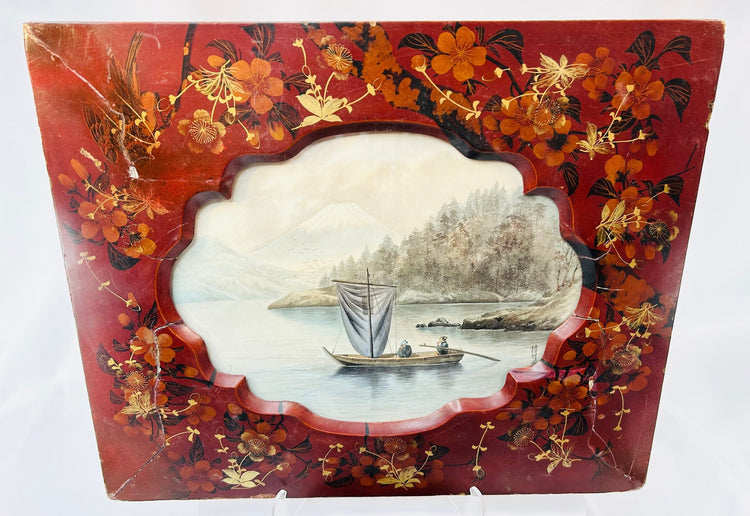
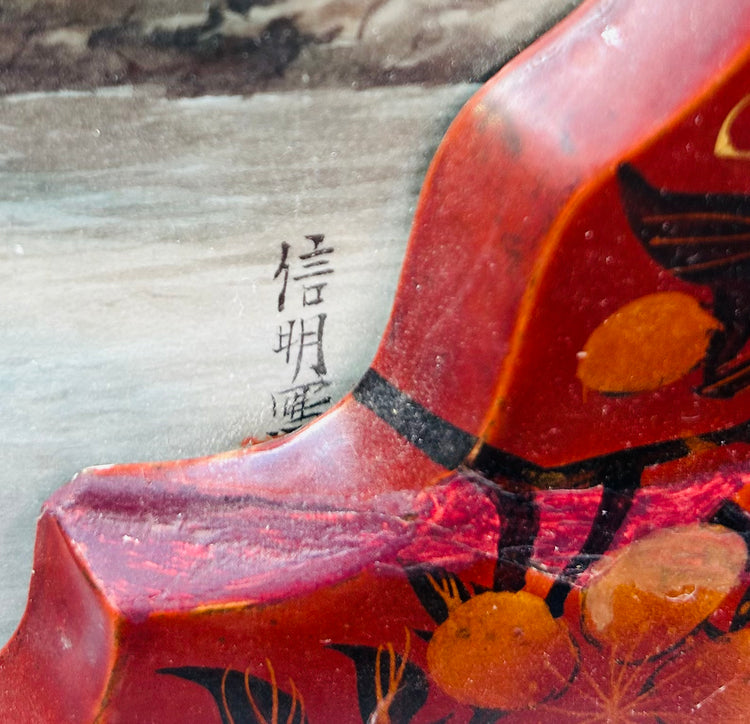
El panel de laca presenta una escena de paisaje finamente pintada a mano, que probablemente representa el Monte Fuji a lo lejos, con figuras navegando en un pequeño bote por aguas tranquilas. La pintura está enmarcada en una laca roja profunda adornada con intrincados motivos florales dorados, que reflejan el simbolismo estacional y la estética de diseño tradicional japonés. La obra está firmada como "Nobuaki", lo que añade un elemento de atribución artística y realza su atractivo coleccionable.
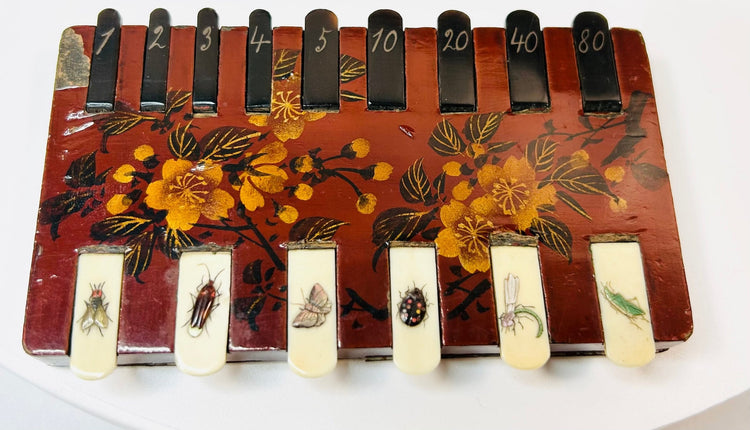
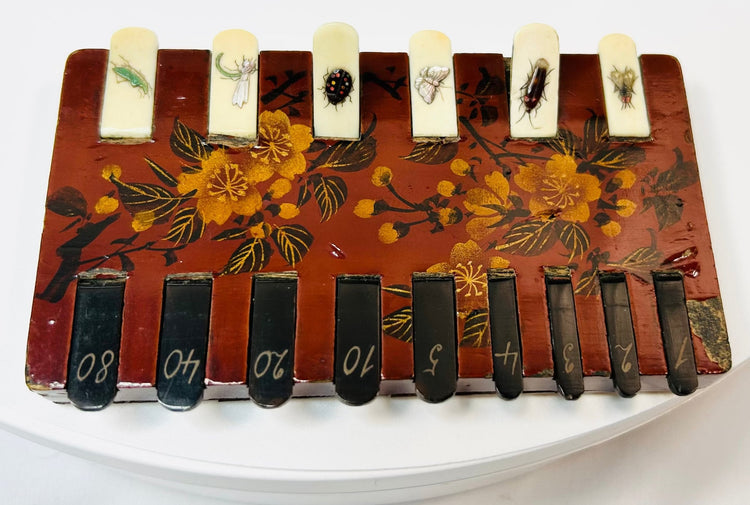
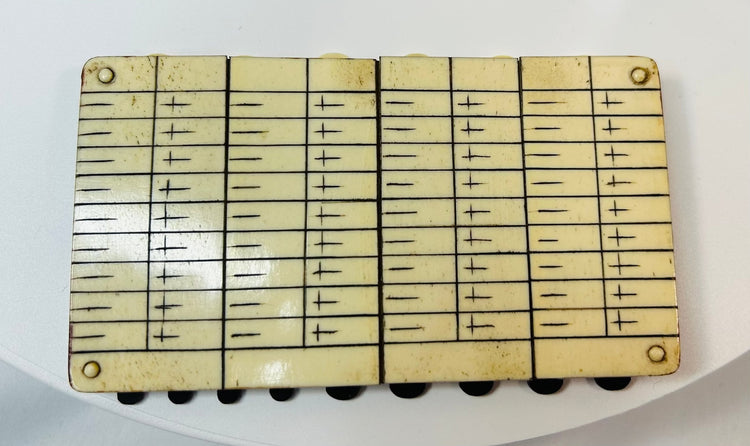
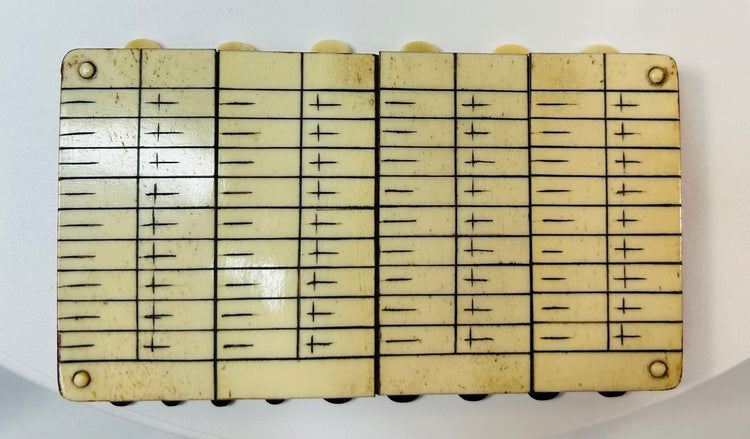
Acompañando al panel, hay un contador de whist, elaborado en laca con lengüetas incrustadas que representan motivos de insectos finamente detallados al estilo Shibayama. Esta técnica decorativa a menudo incorpora materiales naturales como conchas, huesos o elementos compuestos tempranos. Los contadores de whist se utilizaban en los juegos de cartas populares durante el siglo XIX y con frecuencia se exportaban a los mercados occidentales.
Juntas, estas piezas representan tanto el refinamiento artístico como el diseño funcional, encarnando la fusión de la artesanía japonesa con la cultura del ocio occidental durante la era Meiji.
Características
- Escena de paisaje japonés pintada a mano, que probablemente representa el Monte Fuji
- Firmado "Nobuaki" en la pintura
- Marco de laca roja profunda con decoración floral dorada
- Abertura de visualización con forma que mejora la profundidad visual
- Contador de whist de laca a juego con varias lengüetas de puntuación
- Lengüetas decoradas con motivos de insectos en incrustaciones estilo Shibayama
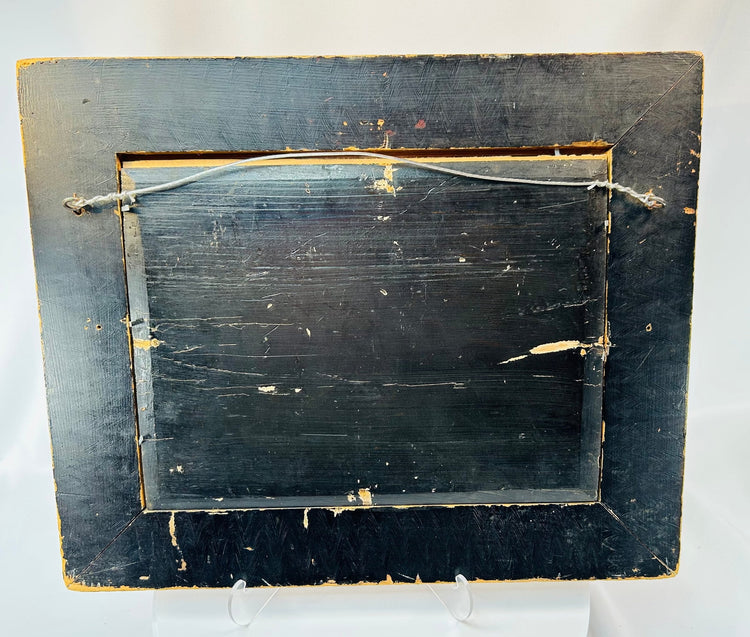
- Panel inverso que muestra técnicas de construcción tradicionales
- Combinación de elementos decorativos artísticos y funcionales
Importancia cultural
Durante el período Meiji, Japón expandió su presencia en los mercados internacionales, produciendo objetos decorativos finamente elaborados para coleccionistas occidentales. La laca (urushi) se convirtió en una de las exportaciones más celebradas, admirada por su durabilidad e intrincadas técnicas decorativas.
Los contadores de whist, como este ejemplo, se crearon específicamente para acompañar los populares juegos de cartas europeos, incorporando a menudo motivos japoneses tradicionales como flores e insectos de temporada. Estos objetos reflejan un intercambio cultural único, que combina el arte japonés con las prácticas sociales occidentales.
Estado
De bueno a regular estado antiguo en general. El marco de laca presenta grietas visibles, desgaste superficial y pérdidas acordes con la edad. La pintura permanece intacta con un desgaste menor. El contador de whist muestra desgaste, pérdidas en algunos elementos decorativos y envejecimiento superficial. Estructuralmente estable y se exhibe bien con un fuerte carácter.
Dimensiones (aproximadas)
Panel enmarcado
Alto: 12.5 pulgadas
Ancho: 15.25 pulgadas
Contador de whist
Alto: 3 pulgadas
Ancho: 4.5 pulgadas
Edad (aproximada)
100–130 años
Procedencia
Anteriormente manejado y vendido por C.C. Lai Antiques, Toronto, Ontario, un distribuidor canadiense de larga trayectoria especializado en arte y antigüedades asiáticas. La pieza entró posteriormente en el mercado secundario a través de Waddington's Auctioneers & Appraisers en Toronto, donde fue ofrecida y vendida en subasta en 2026.
Más información
Descubra el arte de los marcadores de whist estilo Shibayama a través de El Museo de Marcadores de Whist
Explore nuestra Colección curada de arte histórico y pinturas raras
Descripción
Contexto histórico y origen
Región: Japón
Material: Madera lacada (urushi) con decoración floral dorada; panel pintado a mano; lengüetas de hueso o de material compuesto temprano con motivos de insectos aplicados (incrustación estilo Shibayama)
Período: Período Meiji, finales del siglo XIX a principios del siglo XX
Descripción
Un cuadro enmarcado con laca japonesa, visualmente impactante y culturalmente rico, emparejado con un contador de whist estilo Shibayama, ambos datan del período Meiji, una época en que las artes decorativas japonesas se producían tanto para uso doméstico como para exportación.
El panel de laca presenta una escena de paisaje finamente pintada a mano, que probablemente representa el Monte Fuji a lo lejos, con figuras navegando en un pequeño bote por aguas tranquilas. La pintura está enmarcada en una laca roja profunda adornada con intrincados motivos florales dorados, que reflejan el simbolismo estacional y la estética de diseño tradicional japonés. La obra está firmada como "Nobuaki", lo que añade un elemento de atribución artística y realza su atractivo coleccionable.
Acompañando al panel, hay un contador de whist, elaborado en laca con lengüetas incrustadas que representan motivos de insectos finamente detallados al estilo Shibayama. Esta técnica decorativa a menudo incorpora materiales naturales como conchas, huesos o elementos compuestos tempranos. Los contadores de whist se utilizaban en los juegos de cartas populares durante el siglo XIX y con frecuencia se exportaban a los mercados occidentales.
Juntas, estas piezas representan tanto el refinamiento artístico como el diseño funcional, encarnando la fusión de la artesanía japonesa con la cultura del ocio occidental durante la era Meiji.
Características
- Escena de paisaje japonés pintada a mano, que probablemente representa el Monte Fuji
- Firmado "Nobuaki" en la pintura
- Marco de laca roja profunda con decoración floral dorada
- Abertura de visualización con forma que mejora la profundidad visual
- Contador de whist de laca a juego con varias lengüetas de puntuación
- Lengüetas decoradas con motivos de insectos en incrustaciones estilo Shibayama
- Panel inverso que muestra técnicas de construcción tradicionales
- Combinación de elementos decorativos artísticos y funcionales
Importancia cultural
Durante el período Meiji, Japón expandió su presencia en los mercados internacionales, produciendo objetos decorativos finamente elaborados para coleccionistas occidentales. La laca (urushi) se convirtió en una de las exportaciones más celebradas, admirada por su durabilidad e intrincadas técnicas decorativas.
Los contadores de whist, como este ejemplo, se crearon específicamente para acompañar los populares juegos de cartas europeos, incorporando a menudo motivos japoneses tradicionales como flores e insectos de temporada. Estos objetos reflejan un intercambio cultural único, que combina el arte japonés con las prácticas sociales occidentales.
Estado
De bueno a regular estado antiguo en general. El marco de laca presenta grietas visibles, desgaste superficial y pérdidas acordes con la edad. La pintura permanece intacta con un desgaste menor. El contador de whist muestra desgaste, pérdidas en algunos elementos decorativos y envejecimiento superficial. Estructuralmente estable y se exhibe bien con un fuerte carácter.
Dimensiones (aproximadas)
Panel enmarcado
Alto: 12.5 pulgadas
Ancho: 15.25 pulgadas
Contador de whist
Alto: 3 pulgadas
Ancho: 4.5 pulgadas
Edad (aproximada)
100–130 años
Procedencia
Anteriormente manejado y vendido por C.C. Lai Antiques, Toronto, Ontario, un distribuidor canadiense de larga trayectoria especializado en arte y antigüedades asiáticas. La pieza entró posteriormente en el mercado secundario a través de Waddington's Auctioneers & Appraisers en Toronto, donde fue ofrecida y vendida en subasta en 2026.
Más información
Descubra el arte de los marcadores de whist estilo Shibayama a través de El Museo de Marcadores de Whist
Explore nuestra Colección curada de arte histórico y pinturas raras
También te puede interesar
