

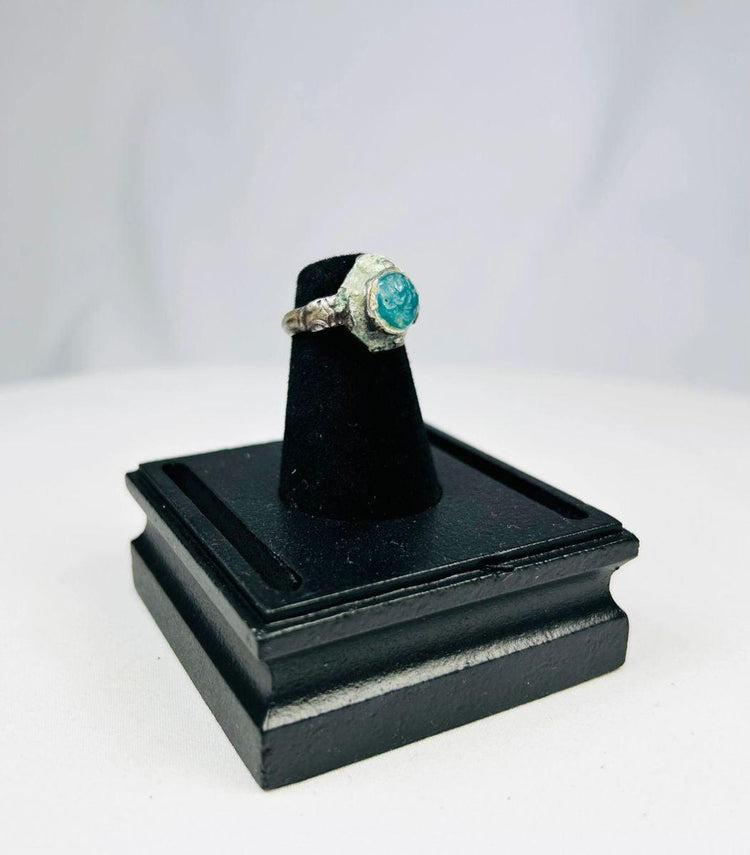
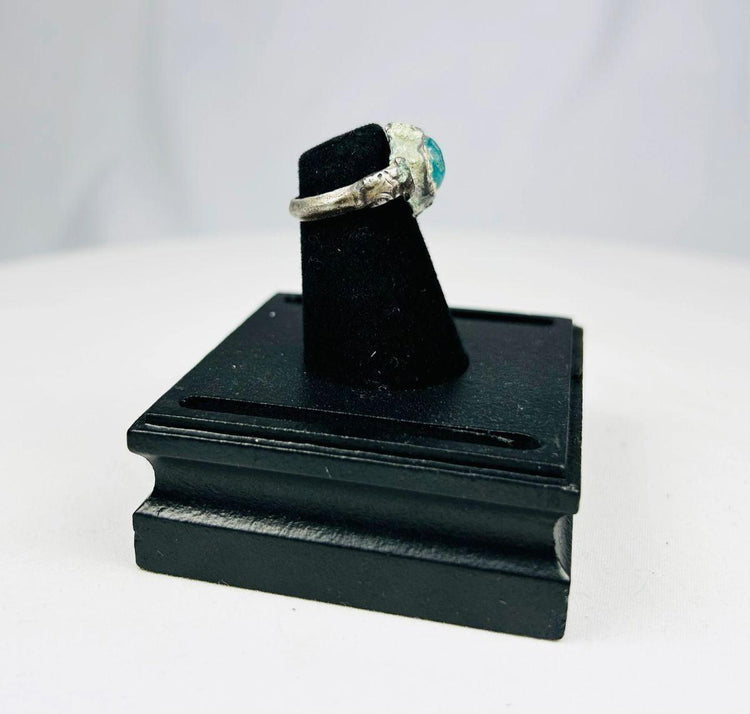
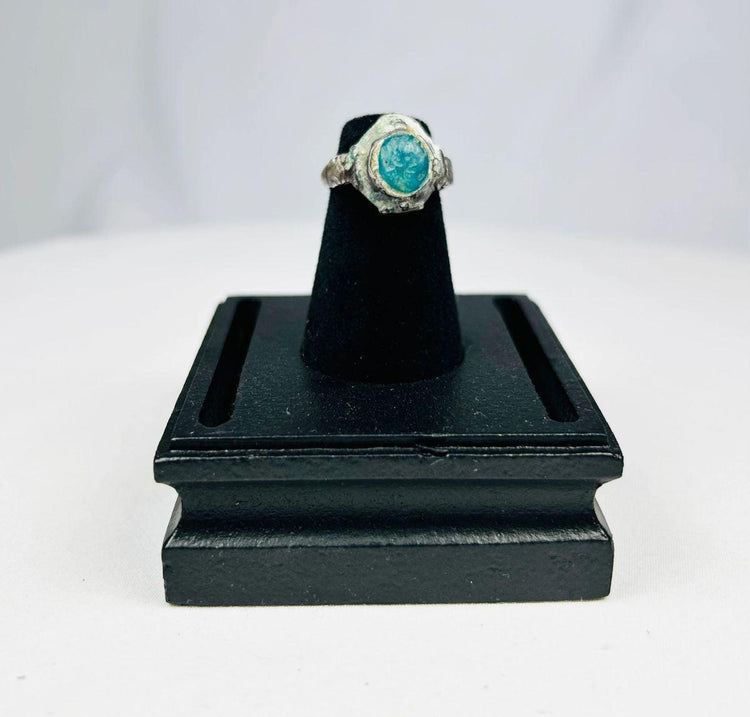
Anillo de plata con piedra turquesa y motivos grabados | Circa I milenio a. C.
- Precio habitual
- $600.00
- Precio de venta
- $600.00
- Precio habitual
No se pudo cargar la disponibilidad de retiro


Anillo de plata con piedra turquesa y motivos grabados | Circa I milenio a. C.
Descripción
Más
Menos
Contexto histórico y origen
Región: Antiguo Cercano Oriente o Mediterráneo
Material: Plata con incrustaciones de turquesa
Periodo: 1er milenio a. C.
Descripción
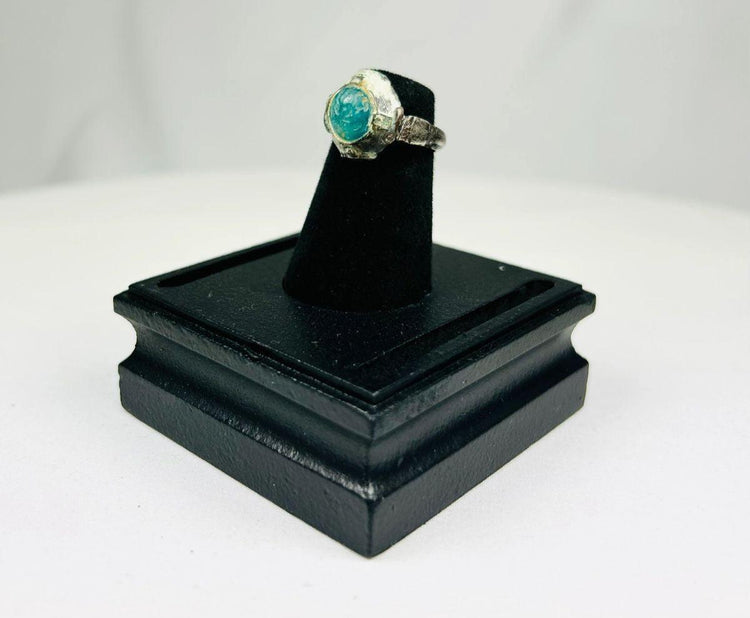
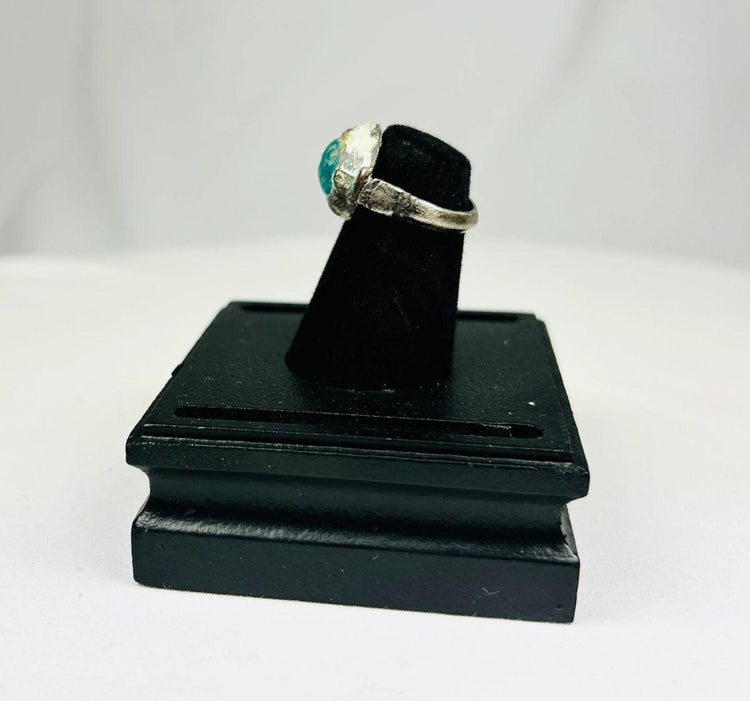
Este extraordinario anillo antiguo de plata presenta un caballo rampante finamente grabado con un jinete montado, complementado por una vibrante piedra turquesa engastada en un bisel elevado. Los caballos tuvieron una inmensa importancia cultural en las sociedades antiguas, simbolizando nobleza, fuerza y protección divina. La turquesa añade brillantez estética y simbolismo protector, lo que convierte a este anillo no solo en un adorno personal, sino también en un talismán de estatus y poder.
Características
- Motivo intrincadamente grabado de caballo rampante y jinete
- Bisel prominente engastado con turquesa natural
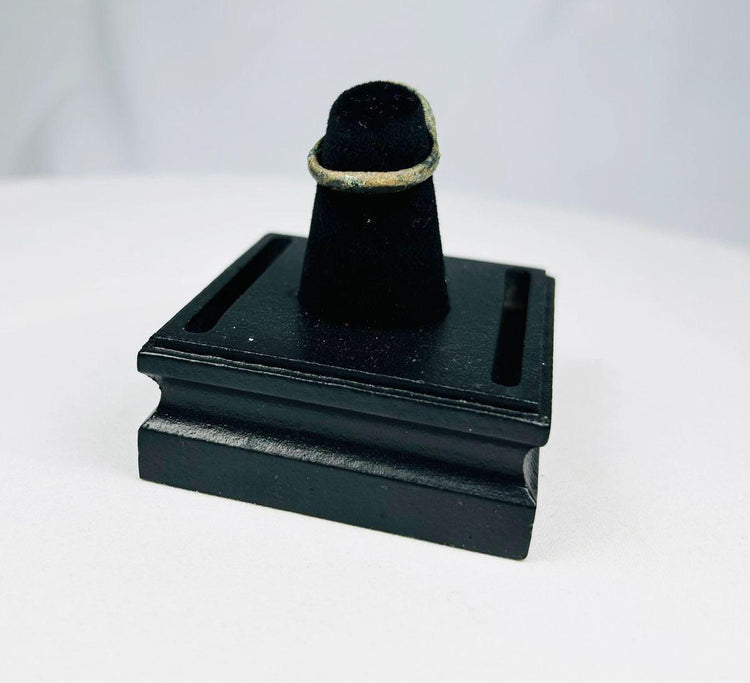
- Anillo de plata con pátina envejecida, que refleja siglos de uso
- Fina artesanía que muestra las tradiciones antiguas de la metalurgia
Significado cultural
Tanto en el Cercano Oriente como en el mundo mediterráneo, los caballos eran venerados por su papel en la guerra, el comercio y la ceremonia. Las joyas que representaban imágenes ecuestres a menudo denotaban un alto estatus social, asociación militar o protección espiritual. La turquesa era especialmente valorada en la antigüedad, creyéndose que traía buena fortuna, curación y favor divino. Juntos, estos elementos sugieren que el anillo pudo haber pertenecido a una figura importante, posiblemente un guerrero o un noble.
Condición
Excelente condición antigua con pátina natural en la banda de plata. La piedra turquesa permanece firmemente engastada con una coloración vibrante, mientras que el diseño grabado del caballo y el jinete es claramente visible. El desgaste superficial menor es consistente con la edad y el uso, lo que añade a su autenticidad.
Dimensiones (aproximadas)
Talla del anillo: 7 US
Edad (aproximada)
2.025-3.025 años de antigüedad
Más información
Explore la Historia y significado cultural de la turquesa
Explore nuestra Colección de anillos antiguos
Descripción
Contexto histórico y origen
Región: Antiguo Cercano Oriente o Mediterráneo
Material: Plata con incrustaciones de turquesa
Periodo: 1er milenio a. C.
Descripción
Este extraordinario anillo antiguo de plata presenta un caballo rampante finamente grabado con un jinete montado, complementado por una vibrante piedra turquesa engastada en un bisel elevado. Los caballos tuvieron una inmensa importancia cultural en las sociedades antiguas, simbolizando nobleza, fuerza y protección divina. La turquesa añade brillantez estética y simbolismo protector, lo que convierte a este anillo no solo en un adorno personal, sino también en un talismán de estatus y poder.
Características
- Motivo intrincadamente grabado de caballo rampante y jinete
- Bisel prominente engastado con turquesa natural
- Anillo de plata con pátina envejecida, que refleja siglos de uso
- Fina artesanía que muestra las tradiciones antiguas de la metalurgia
Significado cultural
Tanto en el Cercano Oriente como en el mundo mediterráneo, los caballos eran venerados por su papel en la guerra, el comercio y la ceremonia. Las joyas que representaban imágenes ecuestres a menudo denotaban un alto estatus social, asociación militar o protección espiritual. La turquesa era especialmente valorada en la antigüedad, creyéndose que traía buena fortuna, curación y favor divino. Juntos, estos elementos sugieren que el anillo pudo haber pertenecido a una figura importante, posiblemente un guerrero o un noble.
Condición
Excelente condición antigua con pátina natural en la banda de plata. La piedra turquesa permanece firmemente engastada con una coloración vibrante, mientras que el diseño grabado del caballo y el jinete es claramente visible. El desgaste superficial menor es consistente con la edad y el uso, lo que añade a su autenticidad.
Dimensiones (aproximadas)
Talla del anillo: 7 US
Edad (aproximada)
2.025-3.025 años de antigüedad
Más información
Explore la Historia y significado cultural de la turquesa
Explore nuestra Colección de anillos antiguos
También te puede interesar
