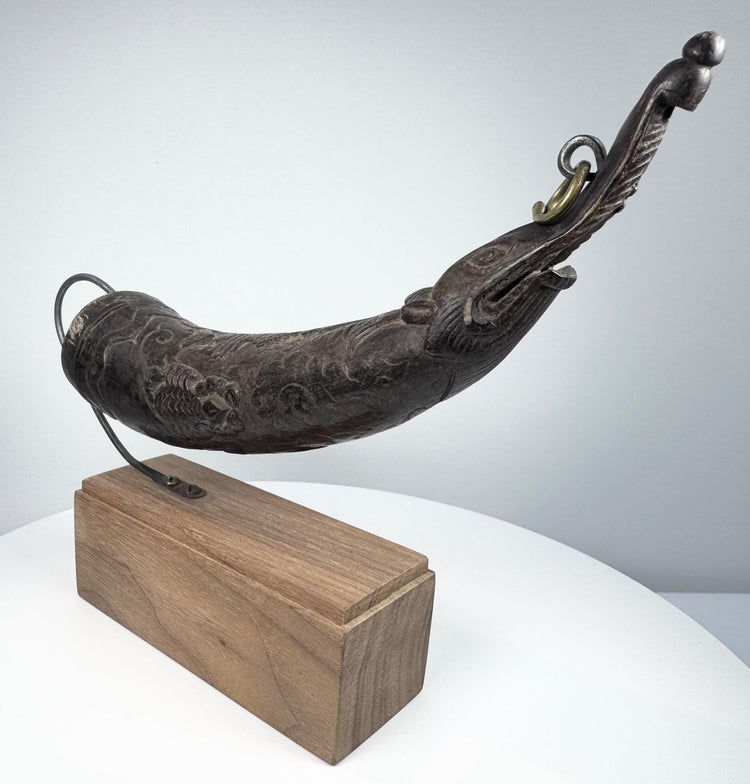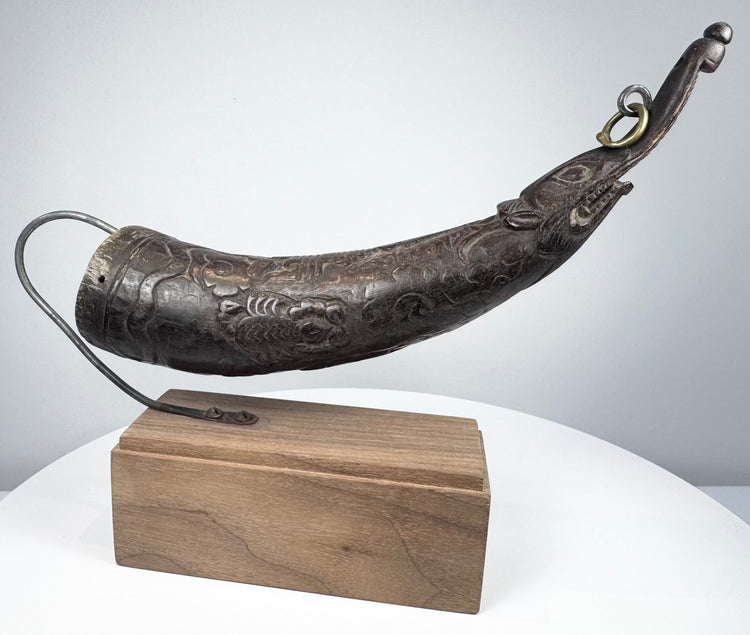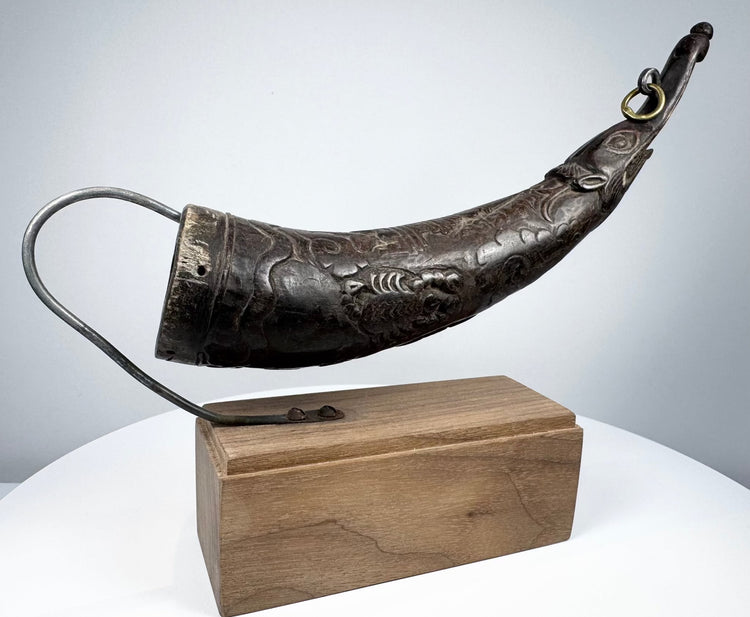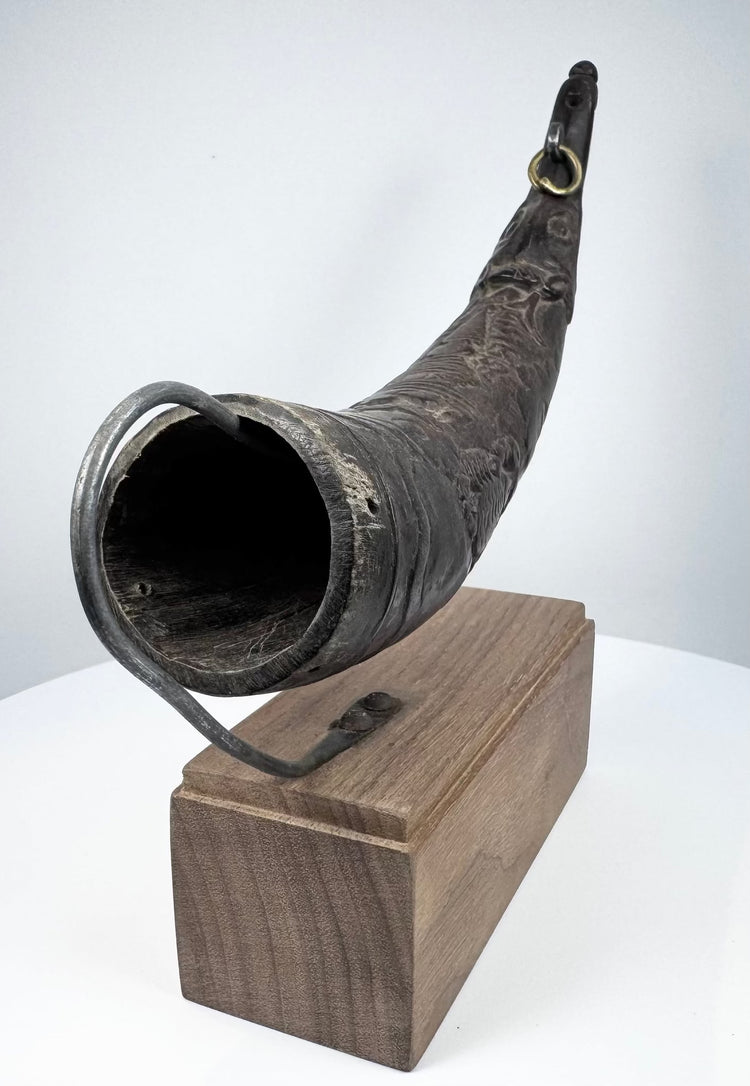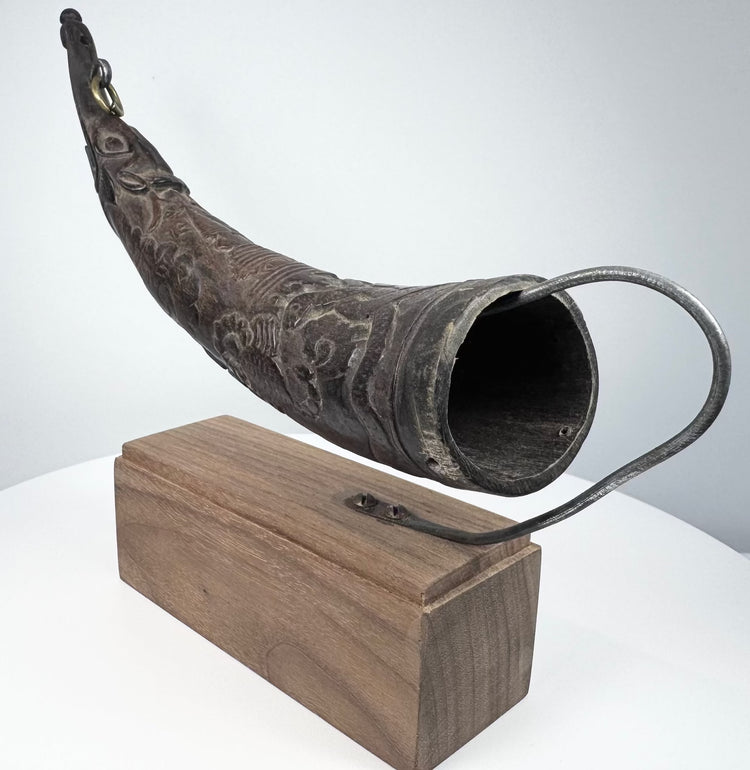
Implemento ritual budista tibetano | Dispensador de semillas de cuerno tallado | Circa siglo XVIII-XIX

Historial de procedencia y propiedad

Anteriormente manejada por Heung Antiques Gallery, Toronto, Ontario, Canadá. La pieza fue posteriormente ofrecida por Waddington’s Auctioneers & Appraisers, Toronto, en su subasta de arte asiáticoel 6 de abril de 2023, como Lote 342, antes de pasar a una colección privada en Toronto, Ontario, Canadá.

Precio habitual
$950.00
Precio de venta
$950.00
Precio habitual
Envío calculado al finalizar la compra.

This is a one-of-a-kind historical object. Once sold, this exact piece will not be restocked.

Questions before acquiring? Additional photographs, condition details, documentation, shipping information or a private viewing are available upon request.
Tibetan bronze ritual powder horn with engraved decorative motifs, curved shape, mounted on a wooden display stand, 19th century.
Rotating 360-degree view of an antique Tibetan carved ritual horn, showing its curved form, makara tip, decorative carvings, and aged patina.
Antique Tibetan carved ritual horn from the Himalayan region, 18th–19th century, with elongated curved form and rich aged patina.
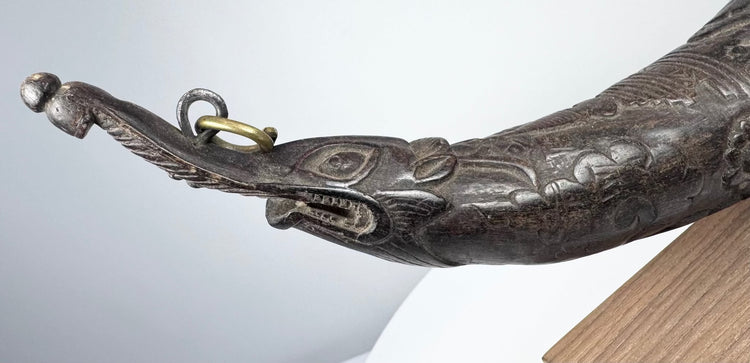
Tibetan Buddhist ritual horn carved from horn, featuring a makara-form tip and decorative carved details along the body.
Side view of an 18th–19th century Tibetan ritual horn used in fire-offering ceremonies to dispense mustard seeds.
Carved Tibetan ceremonial horn with curved body, dark natural patina, and symbolic makara head at the tip.
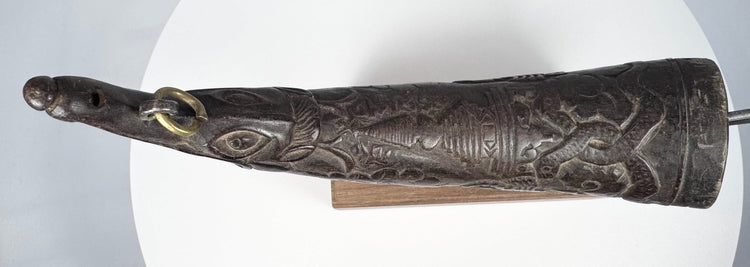
Historic Himalayan ritual horn from Tibet showing intricate surface carving, elongated snout, and ceremonial craftsmanship.
Angled view of a Tibetan carved horn ritual implement with decorative body motifs and opening for ritual use.
Close view of an antique Tibetan Buddhist horn displaying its curved profile, carved details, and natural aged surface.
Tibetan mustard-seed ritual horn with makara finial, carved horn body, and traditional 18th–19th century form.
Front opening of an antique Tibetan ceremonial horn showing the hollow carved interior and curved mouthpiece end.
Authentic Tibetan ritual horn from the Himalayan region, carved with symbolic details and used in purification ceremonies.
Video showcasing an 18th–19th century Tibetan carved horn ritual implement traditionally used in Buddhist ceremonies.
  • Tibetan bronze ritual powder horn with engraved decorative motifs, curved shape, mounted on a wooden display stand, 19th century.
  • Rotating 360-degree view of an antique Tibetan carved ritual horn, showing its curved form, makara tip, decorative carvings, and aged patina.
  • Antique Tibetan carved ritual horn from the Himalayan region, 18th–19th century, with elongated curved form and rich aged patina.
  • Tibetan Buddhist ritual horn carved from horn, featuring a makara-form tip and decorative carved details along the body.
  • Side view of an 18th–19th century Tibetan ritual horn used in fire-offering ceremonies to dispense mustard seeds.
  • Carved Tibetan ceremonial horn with curved body, dark natural patina, and symbolic makara head at the tip.
  • Historic Himalayan ritual horn from Tibet showing intricate surface carving, elongated snout, and ceremonial craftsmanship.
  • Angled view of a Tibetan carved horn ritual implement with decorative body motifs and opening for ritual use.
  • Close view of an antique Tibetan Buddhist horn displaying its curved profile, carved details, and natural aged surface.
  • Tibetan mustard-seed ritual horn with makara finial, carved horn body, and traditional 18th–19th century form.
  • Front opening of an antique Tibetan ceremonial horn showing the hollow carved interior and curved mouthpiece end.
  • Authentic Tibetan ritual horn from the Himalayan region, carved with symbolic details and used in purification ceremonies.
  • Video showcasing an 18th–19th century Tibetan carved horn ritual implement traditionally used in Buddhist ceremonies.
Tibetan bronze ritual powder horn with engraved decorative motifs, curved shape, mounted on a wooden display stand, 19th century.
Rotating 360-degree view of an antique Tibetan carved ritual horn, showing its curved form, makara tip, decorative carvings, and aged patina.
Antique Tibetan carved ritual horn from the Himalayan region, 18th–19th century, with elongated curved form and rich aged patina.
Tibetan Buddhist ritual horn carved from horn, featuring a makara-form tip and decorative carved details along the body.
Side view of an 18th–19th century Tibetan ritual horn used in fire-offering ceremonies to dispense mustard seeds.
Carved Tibetan ceremonial horn with curved body, dark natural patina, and symbolic makara head at the tip.
Historic Himalayan ritual horn from Tibet showing intricate surface carving, elongated snout, and ceremonial craftsmanship.
Angled view of a Tibetan carved horn ritual implement with decorative body motifs and opening for ritual use.
Close view of an antique Tibetan Buddhist horn displaying its curved profile, carved details, and natural aged surface.
Tibetan mustard-seed ritual horn with makara finial, carved horn body, and traditional 18th–19th century form.
Front opening of an antique Tibetan ceremonial horn showing the hollow carved interior and curved mouthpiece end.
Authentic Tibetan ritual horn from the Himalayan region, carved with symbolic details and used in purification ceremonies.
Video showcasing an 18th–19th century Tibetan carved horn ritual implement traditionally used in Buddhist ceremonies.
Authenticity and secure checkout guarantee

Implemento ritual budista tibetano | Dispensador de semillas de cuerno tallado | Circa siglo XVIII-XIX

Descripción

Contexto histórico y origen

Región: Tíbet, región del Himalaya
Material: Cuerno tallado
Período: Siglos XVIII-XIX (forma tradicional)

Descripción

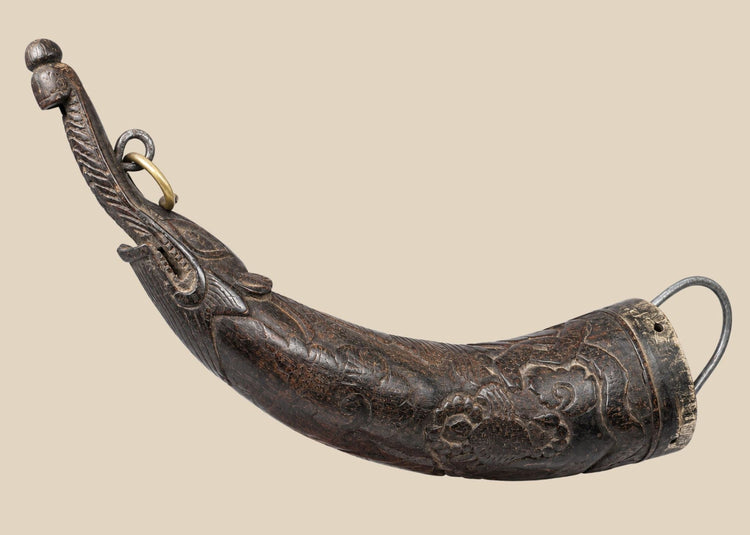
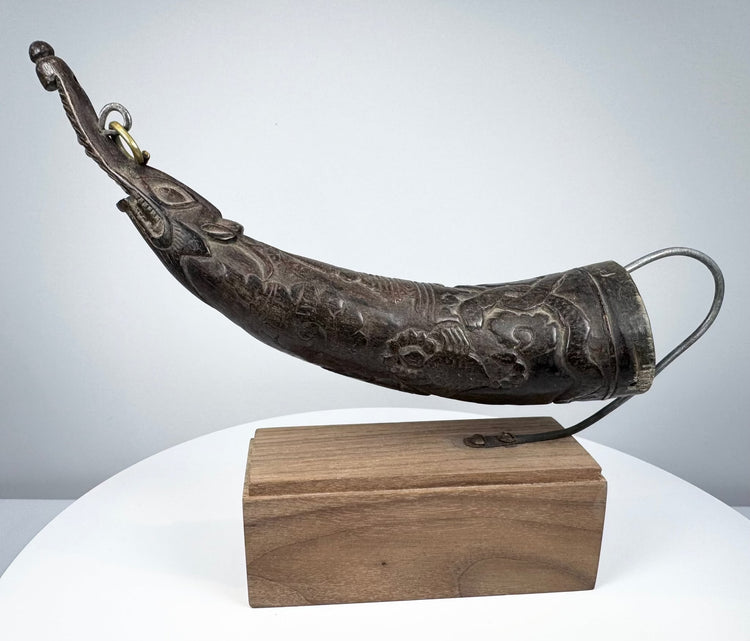
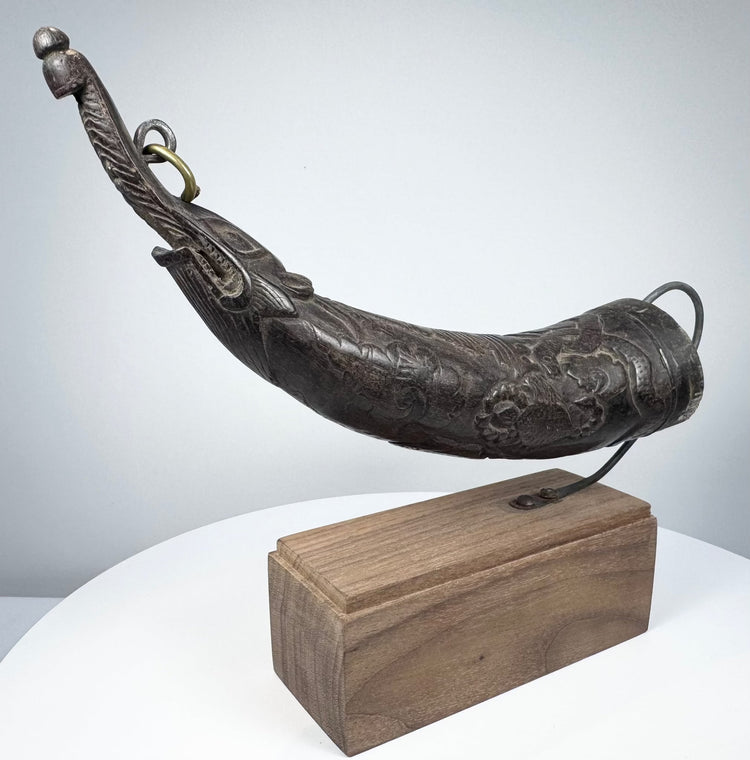
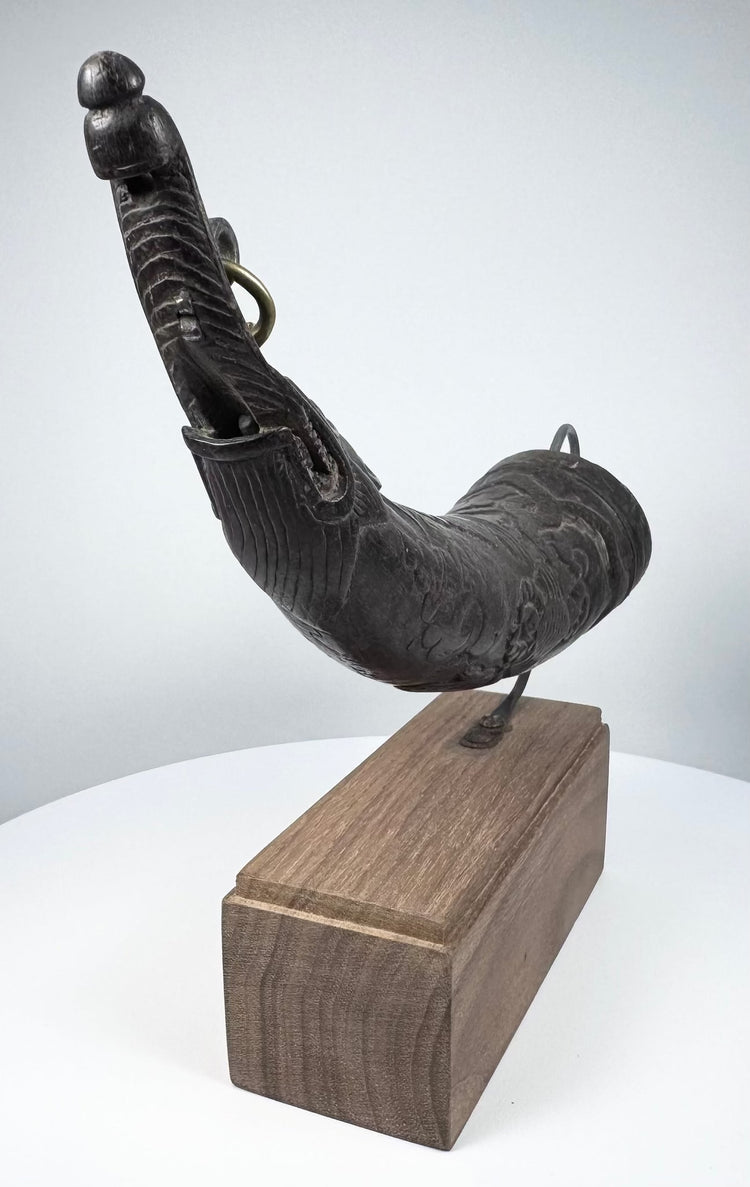
Este cuerno ritual tibetano intrincadamente tallado se usaba tradicionalmente en las ceremonias monásticas de ofrenda de fuego para dispensar semillas de mostaza, simbolizando la purificación y la eliminación de obstáculos espirituales. El implemento refleja tanto las prácticas devocionales como la refinada artesanía asociada con los objetos rituales budistas tibetanos. Su forma alargada y sus tallas simbólicas ilustran la integración del significado sagrado con el trabajo artesanal.

Características

- Implemento ritual de cuerno tallado utilizado en la práctica ceremonial

- Abertura diseñada para dispensar semillas de mostaza durante los rituales de fuego

- Punta tallada en forma de makara (criatura mítica similar a un dragón)

- Hocico alargado que permite la liberación controlada de semillas

- Tallas decorativas adicionales a lo largo del cuerpo

Significado cultural

En el budismo tibetano, las semillas de mostaza se utilizan en ritos de purificación destinados a eliminar fuerzas negativas y obstáculos espirituales. Durante las ceremonias de ofrenda de fuego, los practicantes recitan mantras mientras arrojan las semillas a los braseros rituales, destruyendo simbólicamente las impurezas. El makara, una criatura mitológica protectora de la tradición india y del Himalaya, aparece con frecuencia en los implementos rituales sagrados como un símbolo guardián. Objetos como este reflejan tanto el simbolismo esotérico como las tradiciones artísticas de la vida religiosa tibetana.

Condición

Bien conservado con intrincados detalles tallados intactos. La pátina superficial natural consistente con la edad realza tanto la autenticidad como el carácter visual.

Dimensiones (aproximadas)

Longitud: 7.5 pulg.

Edad (aproximada)

125–325 años

Procedencia 

Anteriormente manejado por Heung Antiques Gallery, Toronto, Ontario, Canadá. La pieza fue posteriormente ofrecida por Waddington’s Auctioneers & Appraisers, Toronto, en su subasta de Arte Asiático el 6 de abril de 2023, como Lote 342, antes de pasar a una colección privada en Toronto, Ontario, Canadá.

Aprende más

Estudie un cuerno ritual tibetano comparable en la colección del Museo Penn

Explore nuestra Colección de Reliquias y Objetos Rituales Tibetanos

Descripción

Contexto histórico y origen

Región: Tíbet, región del Himalaya
Material: Cuerno tallado
Período: Siglos XVIII-XIX (forma tradicional)

Descripción

Este cuerno ritual tibetano intrincadamente tallado se usaba tradicionalmente en las ceremonias monásticas de ofrenda de fuego para dispensar semillas de mostaza, simbolizando la purificación y la eliminación de obstáculos espirituales. El implemento refleja tanto las prácticas devocionales como la refinada artesanía asociada con los objetos rituales budistas tibetanos. Su forma alargada y sus tallas simbólicas ilustran la integración del significado sagrado con el trabajo artesanal.

Características

- Implemento ritual de cuerno tallado utilizado en la práctica ceremonial

- Abertura diseñada para dispensar semillas de mostaza durante los rituales de fuego

- Punta tallada en forma de makara (criatura mítica similar a un dragón)

- Hocico alargado que permite la liberación controlada de semillas

- Tallas decorativas adicionales a lo largo del cuerpo

Significado cultural

En el budismo tibetano, las semillas de mostaza se utilizan en ritos de purificación destinados a eliminar fuerzas negativas y obstáculos espirituales. Durante las ceremonias de ofrenda de fuego, los practicantes recitan mantras mientras arrojan las semillas a los braseros rituales, destruyendo simbólicamente las impurezas. El makara, una criatura mitológica protectora de la tradición india y del Himalaya, aparece con frecuencia en los implementos rituales sagrados como un símbolo guardián. Objetos como este reflejan tanto el simbolismo esotérico como las tradiciones artísticas de la vida religiosa tibetana.

Condición

Bien conservado con intrincados detalles tallados intactos. La pátina superficial natural consistente con la edad realza tanto la autenticidad como el carácter visual.

Dimensiones (aproximadas)

Longitud: 7.5 pulg.

Edad (aproximada)

125–325 años

Procedencia 

Anteriormente manejado por Heung Antiques Gallery, Toronto, Ontario, Canadá. La pieza fue posteriormente ofrecida por Waddington’s Auctioneers & Appraisers, Toronto, en su subasta de Arte Asiático el 6 de abril de 2023, como Lote 342, antes de pasar a una colección privada en Toronto, Ontario, Canadá.

Aprende más

Estudie un cuerno ritual tibetano comparable en la colección del Museo Penn

Explore nuestra Colección de Reliquias y Objetos Rituales Tibetanos

También te puede interesar