
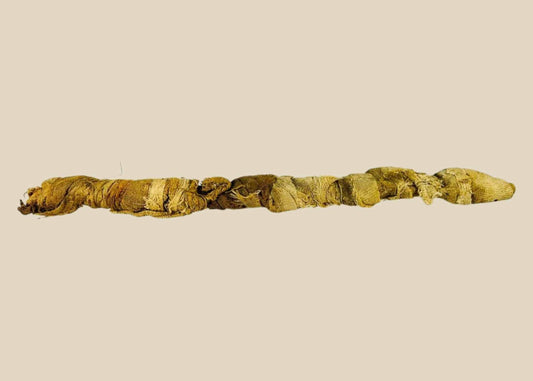

Une momie égyptienne est un corps conservé créé par embaumement, séchage, enveloppement et préparation rituelle de l'enterrement. Contrairement aux corps naturellement conservés par le sable du désert ou le climat sec, les momies égyptiennes étaient intentionnellement préparées par les embaumeurs dans le cadre d'une tradition funéraire sacrée.
Les anciens Égyptiens croyaient que le corps devait rester intact après la mort. Ils pensaient que l'âme dépendait du corps conservé comme demeure dans l'au-delà. Si le corps se décomposait ou était endommagé, le voyage spirituel de la personne pouvait être perturbé. Cette croyance a fait de la momification l'une des pratiques les plus importantes de la religion égyptienne ancienne.
Aujourd'hui, les collectionneurs et les historiens peuvent explorer des artefacts connexes à travers la Collection de momies et d'artefacts égyptiens anciens et des vestiges historiques conservés dans la Collection de restes humains et d'artefacts anatomiques.
Points clés à retenir
- Les momies égyptiennes étaient conservées par un processus de momification religieux et technique.
- Une véritable momie égyptienne peut révéler des détails sur la santé ancienne, l'alimentation, l'embaumement et les coutumes funéraires.
- Les rituels funéraires égyptiens préparaient le défunt à la vie éternelle dans l'au-delà.
- Les sarcophages protégeaient la momie physiquement et spirituellement.
- Les vases canopes conservaient les organes internes retirés pendant l'embaumement.
- Les masques funéraires représentaient l'identité éternelle du défunt.
- Les artefacts de momies restent précieux car ils préservent des liens directs avec la culture mortuaire de l'Égypte ancienne.
Comment fonctionnait le processus de momification ?

Le processus de momification consistait à retirer l'humidité du corps, à préserver les organes clés, à envelopper les restes dans du lin et à placer la momie dans un cercueil ou un sarcophage pour l'au-delà.
Le processus comprenait généralement :
- La purification du corps avec des huiles, du vin de palme ou de l'eau sacrée. Cette étape purifiait le défunt avant le voyage vers l'au-delà.
- Le retrait des organes internes car ils se décomposaient rapidement. Cela aidait à ralentir la décomposition et à protéger la forme extérieure du corps.
- Le placement des organes dans des vases canopes, en particulier le foie, les poumons, l'estomac et les intestins. Ces vases protégeaient les organes afin que le défunt puisse rester complet dans l'au-delà.
- Le cœur était laissé à l'intérieur du corps, car on croyait qu'il contenait la moralité et l'identité. Le cœur était également central au jugement final de l'âme.
- Le séchage du corps avec du natron, un sel naturel utilisé pour éliminer l'humidité. C'était l'étape de conservation la plus importante car l'humidité causait la décomposition.
- L'enveloppement du corps dans du lin, souvent avec des amulettes protectrices. Le lin protégeait le corps, tandis que les amulettes protégeaient le défunt des dangers spirituels.
- Le placement de la momie à l'intérieur de cercueils ou d'un sarcophage pour l'inhumation. Le cercueil ou le sarcophage protégeait physiquement la momie et l'entourait de symboles sacrés.
Ensemble, ces étapes montrent comment les anciens Égyptiens combinaient la conservation pratique avec une profonde croyance religieuse. Le résultat était une momie soigneusement protégée, préparée à survivre physiquement et spirituellement pendant des milliers d'années.
Pourquoi les rituels funéraires égyptiens étaient-ils importants ?

Le rituel funéraire égyptien était important parce que les anciens Égyptiens croyaient que la mort n'était pas la fin de l'existence. Au lieu de cela, la mort était une transition de la vie terrestre vers la vie éternelle. Des rituels funéraires appropriés aidaient le défunt à accomplir cette transition en toute sécurité.
Les rituels funéraires comprenaient souvent :
- Des prières sacrées
- L'enveloppement de lin
- Des amulettes protectrices
- Des offrandes de nourriture et de boisson
- Des textes funéraires
- Des peintures de tombes
- Des reliques funéraires
- Le placement à l'intérieur d'un sarcophage décoré
L'une des cérémonies les plus importantes était le rituel de l'ouverture de la bouche. On croyait que cette cérémonie restaurait les sens du défunt, lui permettant de respirer, de parler, de manger et de voir dans l'au-delà. Elle montre à quel point les Égyptiens associaient le corps conservé à la survie spirituelle.
Des reliques funéraires étaient également placées à l'intérieur des tombes pour soutenir le défunt. Ces objets pouvaient inclure des bijoux, des statues, des outils, des récipients alimentaires, des armes et des symboles religieux. Le type et la qualité de la relique funéraire reflétaient souvent la position sociale et la richesse de la personne enterrée.
Quel rôle le sarcophage jouait-il ?

Un sarcophage était le contenant protecteur externe qui contenait la momie. Il remplissait une fonction à la fois physique et spirituelle. Physiquement, il protégeait le corps des dommages. Spirituellement, il entourait le défunt de symboles religieux, d'inscriptions et d'images de dieux.
Les sarcophages étaient souvent décorés de hiéroglyphes et de scènes de la mythologie égyptienne. Ces décorations n'étaient pas seulement artistiques. Elles agissaient comme des textes protecteurs et des prières visuelles. De nombreux sarcophages incluaient des images de divinités telles qu'Osiris, Anubis, Isis ou Nephtys, qui étaient liées à la mort, à la protection et à la renaissance.
Pour les individus riches ou royaux, le sarcophage pouvait être extrêmement élaboré. Certains étaient sculptés dans la pierre, tandis que d'autres étaient faits de bois et peints de couleurs vives. Le sarcophage aidait à transformer la tombe en un espace sacré où le défunt pouvait en toute sécurité commencer le voyage vers l'éternité.
Des exemples survivants tels que ces Fragments de sarcophage polychrome égyptien ancien aident à illustrer le riche symbolisme et le savoir-faire associés aux traditions funéraires égyptiennes. Fabriqués en lin et en gesso avec des traces de décoration peinte originale, ces fragments préservent l'imagerie protectrice et l'art funéraire qui entouraient autrefois le défunt à l'intérieur de chambres funéraires élaborées.

Explorez cet artefact : Fragments de sarcophage polychrome égyptien ancien.
Pourquoi les masques funéraires étaient-ils utilisés ?

Un masque funéraire représentait le visage éternel du défunt. Il aidait à préserver l'identité après la mort et symbolisait la transformation en une forme immortelle. Les Égyptiens croyaient que l'identité était essentielle dans l'au-delà, de sorte que le visage et le nom du défunt devaient être protégés.
Les masques funéraires montraient souvent des traits idéalisés plutôt que des portraits exacts. Cela reflétait l'idée égyptienne selon laquelle les morts devaient apparaître parfaits, jeunes et spirituellement transformés. Les masques pouvaient également inclure des symboles divins, des colliers décoratifs, des perruques et des couleurs associées à la renaissance et à la protection.
L'exemple le plus célèbre est le masque funéraire doré de Toutankhamon. Cependant, les masques funéraires n'étaient pas limités aux rois. Les nobles et les individus riches utilisaient également des masques peints faits de cartonnage, de lin, de plâtre ou de bois.
Un exemple connexe d'œuvre d'art funéraire égyptienne est ce Fragment de cartonnage polychrome égyptien ancien avec imagerie funéraire d'Anubis, qui reflète l'imagerie religieuse souvent associée à l'inhumation et à la protection.

Explorez cet artefact : Fragment de cartonnage polychrome égyptien ancien avec imagerie funéraire d'Anubis.
Qu'est-ce qu'un vase canope ?

Un vase canope est un récipient cérémoniel utilisé pour stocker les organes retirés pendant la momification. Ces vases étaient une partie importante du système funéraire car les Égyptiens croyaient que les organes avaient besoin de protection pour l'au-delà.
Les quatre principaux organes conservés dans des vases canopes étaient le foie, les poumons, l'estomac et les intestins. Chaque vase était lié à l'un des quatre fils d'Horus, des divinités protectrices qui gardaient les organes. Ces dieux étaient souvent représentés par différents couvercles de vases, y compris des têtes humaines, de babouin, de chacal et de faucon.
Les vases canopes montrent à quel point les Égyptiens traitaient le corps avec soin. Même si les organes étaient retirés pour la conservation, ils n'étaient pas considérés comme insignifiants. Ils étaient protégés, stockés et placés près de la momie afin que le défunt puisse être complet dans l'au-delà.
Des pièces survivantes telles que ce Couvercle de vase canope égyptien ancien en calcaire aident à montrer comment les vases canopes combinaient la conservation pratique avec la protection sacrée. Dans le cadre du système funéraire, ce couvercle reflète la croyance égyptienne selon laquelle chaque organe avait besoin d'une protection divine pour que le défunt puisse rester complet dans l'au-delà.

Explorez cet artefact : Couvercle de vase canope égyptien ancien en calcaire.
Qu'est-ce qui rend une vraie momie égyptienne précieuse pour l'archéologie ?

Une vraie momie égyptienne est précieuse car elle est à la fois un corps conservé et un document historique. Contrairement aux documents écrits, les restes momifiés contiennent des preuves biologiques qui peuvent être étudiées directement.
Les chercheurs modernes peuvent examiner les momies en utilisant des scanners CT, des rayons X, l'analyse ADN, la datation au radiocarbone et des tests chimiques. Ces méthodes permettent aux scientifiques d'étudier les corps anciens sans les déballer ni les endommager.
Les momies peuvent révéler des signes de maladie, de blessure, de santé dentaire, de nutrition et de matériaux d'embaumement. Elles peuvent également montrer des différences entre les classes sociales. Les individus plus riches recevaient souvent un embaumement plus complexe et des biens funéraires plus opulents, tandis que des inhumations plus simples pouvaient révéler des coutumes plus modestes.
Grâce à cela, les momies égyptiennes aident les archéologues à comprendre non seulement les rois et les élites, mais aussi les schémas plus larges de la vie égyptienne ancienne.
Pourquoi les artefacts de momies sont-ils collectionnables aujourd'hui ?
Un artefact de momie est collectionnable car il préserve un lien direct avec la culture funéraire de l'Égypte ancienne. Ces artefacts sont significatifs non seulement parce qu'ils sont anciens, mais parce qu'ils faisaient partie d'un système spirituel centré sur la mort, la protection et la renaissance.
Les collectionneurs apprécient souvent les artefacts de momies tels que les fragments de cartonnage, les enveloppements de lin, les masques funéraires, les fragments de vases canopes, les pièces de sarcophage et les reliques funéraires. Chaque objet peut révéler quelque chose sur les matériaux anciens, le style artistique, le symbolisme religieux et la pratique funéraire.
Même les objets fragmentés peuvent être historiquement importants. Un petit morceau de cartonnage peint peut montrer l'image d'un dieu protecteur. Un fragment de lin peut préserver des preuves de techniques d'enveloppement. Une relique funéraire peut refléter les croyances ou l'identité de la personne enterrée avec elle.
Les artefacts de momies authentiques aident les collectionneurs, les musées et les historiens à préserver et à étudier la culture matérielle de l'Égypte ancienne.
Conclusion
Les momies égyptiennes comptent parmi les symboles les plus puissants du monde antique. Elles représentent une civilisation profondément axée sur la mort, l'éternité, l'identité et la protection spirituelle. Grâce au processus de momification, les anciens Égyptiens ont créé un moyen de préserver le corps et de préparer l'âme à l'au-delà.
Des objets tels que le sarcophage, le masque funéraire, le vase canope et la relique funéraire n'étaient pas simplement décoratifs. Ils étaient des éléments essentiels d'un système de croyance plus vaste conçu pour protéger le défunt et le guider vers la vie éternelle.
Aujourd'hui, les restes momifiés et les artefacts de momies continuent de façonner l'archéologie, les collections de musées et la collection privée. Ils offrent une rare opportunité d'étudier la médecine, la religion, l'artisanat et les traditions funéraires de l'Égypte ancienne à travers des preuves physiques survivantes.


