

Amulette pendentif égyptienne ancienne en faïence représentant une figure divine | Basse époque – Époque ptolémaïque | Vers 664-30 av. J.-C.
- Prix habituel
- $1,000.00
- Prix soldé
- $1,000.00
- Prix habituel
Impossible de charger la disponibilité du service de retrait


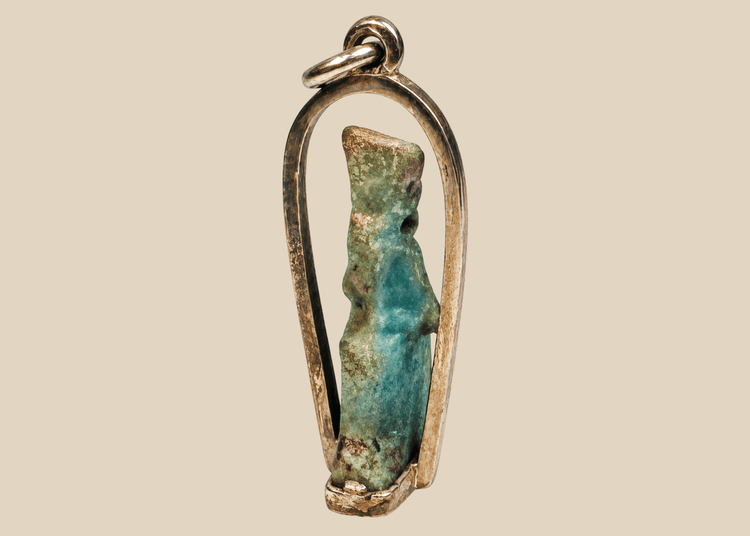


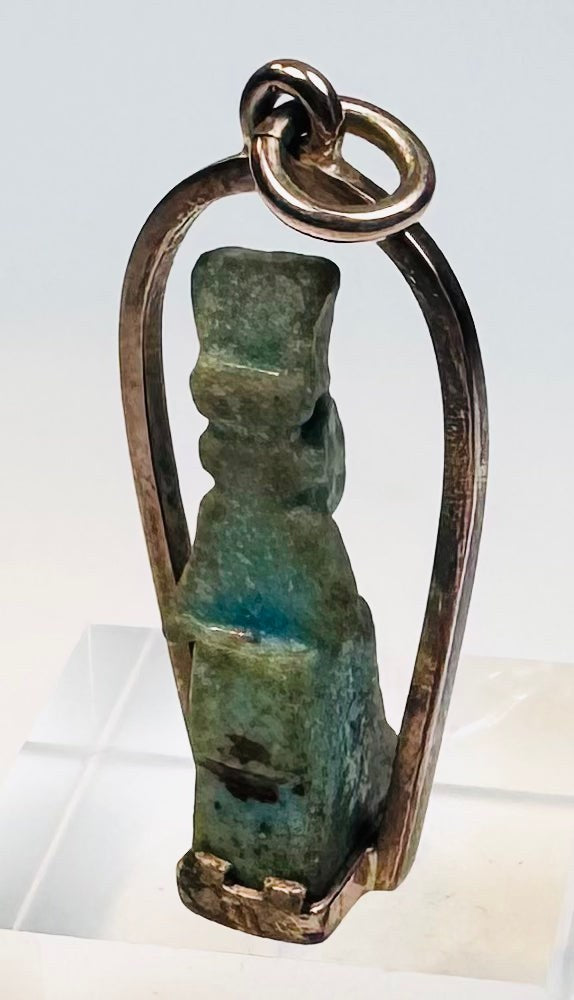
Amulette pendentif égyptienne ancienne en faïence représentant une figure divine | Basse époque – Époque ptolémaïque | Vers 664-30 av. J.-C.
Description
Plus
Moins
Contexte historique et origine
Région : Égypte ancienne
Matériau : Faïence bleu-vert montée dans un pendentif en or plus récent
Période : Basse époque – Période ptolémaïque, vers 664-30 av. J.-C.
Description
Cette ancienne amulette égyptienne est sculptée sous la forme d'une figure divine stylisée debout, réalisée en faïence bleu-vert, un matériau très prisé dans toute l'Égypte ancienne pour son association symbolique avec la fertilité, la renaissance et les eaux vivifiantes du Nil. Bien que l'identité précise de la figure reste incertaine en raison de siècles d'usure et d'intempéries, le profil conservé suggère une représentation d'une divinité ou d'une figure funéraire protectrice, possiblement associée au vaste corpus d'amulettes divines et momiformes produites pendant les périodes de la Basse Époque et ptolémaïque.
La figure présente un corps simplifié et colonnaire surmonté d'une coiffe ou d'une couronne distinctive, avec des bras en bas-relief le long des côtés. Des traces de la glaçure turquoise-bleue d'origine restent visibles sur la surface, tandis que des zones d'incrustations minérales et d'usure liée à l'âge attestent de l'ancienneté considérable de l'objet. Une perforation traversant latéralement la tête servait probablement de point de suspension d'origine, indiquant que l'amulette était destinée à être portée ou incorporée dans des parures funéraires.
À un certain moment de l'ère moderne, l'ancienne amulette a été soigneusement montée dans un cadre de pendentif en or personnalisé, transformant l'objet archéologique en un bijou portable tout en préservant l'intégrité de la figurine en faïence d'origine. Les amulettes de ce type étaient largement utilisées dans la vie quotidienne et dans les contextes funéraires, servant de talismans destinés à invoquer la protection divine et à assurer un passage sûr dans l'au-delà.
Caractéristiques
- Représente une figure divine ou funéraire stylisée debout
- Sculpté dans de la faïence émaillée bleu-vert
- Datant probablement de la Basse époque – Période ptolémaïque, vers 664-30 av. J.-C.
- Conserve des traces de glaçure turquoise d'origine
- Perforation de suspension d'origine visible à travers la partie supérieure de la figure
- Monté dans un pendentif en or plus tardif
- Présente une patine étendue liée à l'âge et des concrétions minérales
Signification culturelle
Les amulettes en faïence ont joué un rôle central dans les traditions religieuses et funéraires de l'Égypte ancienne pendant plus de trois millénaires. Produites sous la forme de dieux, d'animaux sacrés et de symboles protecteurs, elles étaient censées exploiter le pouvoir divin et offrir une protection spirituelle à leurs propriétaires. La coloration bleu-vert vibrante de la faïence égyptienne symbolisait la régénération, la fertilité et la vie éternelle, rendant de tels objets particulièrement appropriés pour les ensembles funéraires.
Bien que l'identité précise de cette figure ne puisse être établie de manière définitive, des amulettes représentant des divinités telles qu'Horus, Osiris, Ptah, Râ-Horakhty et d'autres divinités protectrices ont été largement produites pendant les périodes de la Basse Époque et ptolémaïque.
Condition
L'amulette est intacte et présente une usure normale, compatible avec son âge considérable. La surface présente des pertes d'émail éparses, des dépôts minéraux et des zones d'altération. Les détails originaux se sont estompés avec le temps, rendant difficile une identification précise de la figure. L'objet a été monté dans un pendentif en or plus récent, qui reste sécurisé.
Dimensions (approximatives)
Hauteur : 2,22 cm
Âge (approximatif)
2 000 à 2 700 ans
Provenance
Anciennement partie d'une collection privée de Portland, Maine, États-Unis, spécialisée dans les artefacts égyptiens. La collection a été constituée sur de nombreuses années, avec un accent particulier sur les amulettes égyptiennes antiques, les objets funéraires, les œuvres en faïence et les petites antiquités.
En savoir plus
Explorez le symbolisme religieux et le rôle protecteur des amulettes de l'Égypte ancienne sur The Metropolitan Museum of Art.
Parcourez notre Collection de momies et d'artefacts de l'Égypte ancienne.
Description
Contexte historique et origine
Région : Égypte ancienne
Matériau : Faïence bleu-vert montée dans un pendentif en or plus récent
Période : Basse époque – Période ptolémaïque, vers 664-30 av. J.-C.
Description
Cette ancienne amulette égyptienne est sculptée sous la forme d'une figure divine stylisée debout, réalisée en faïence bleu-vert, un matériau très prisé dans toute l'Égypte ancienne pour son association symbolique avec la fertilité, la renaissance et les eaux vivifiantes du Nil. Bien que l'identité précise de la figure reste incertaine en raison de siècles d'usure et d'intempéries, le profil conservé suggère une représentation d'une divinité ou d'une figure funéraire protectrice, possiblement associée au vaste corpus d'amulettes divines et momiformes produites pendant les périodes de la Basse Époque et ptolémaïque.
La figure présente un corps simplifié et colonnaire surmonté d'une coiffe ou d'une couronne distinctive, avec des bras en bas-relief le long des côtés. Des traces de la glaçure turquoise-bleue d'origine restent visibles sur la surface, tandis que des zones d'incrustations minérales et d'usure liée à l'âge attestent de l'ancienneté considérable de l'objet. Une perforation traversant latéralement la tête servait probablement de point de suspension d'origine, indiquant que l'amulette était destinée à être portée ou incorporée dans des parures funéraires.
À un certain moment de l'ère moderne, l'ancienne amulette a été soigneusement montée dans un cadre de pendentif en or personnalisé, transformant l'objet archéologique en un bijou portable tout en préservant l'intégrité de la figurine en faïence d'origine. Les amulettes de ce type étaient largement utilisées dans la vie quotidienne et dans les contextes funéraires, servant de talismans destinés à invoquer la protection divine et à assurer un passage sûr dans l'au-delà.
Caractéristiques
- Représente une figure divine ou funéraire stylisée debout
- Sculpté dans de la faïence émaillée bleu-vert
- Datant probablement de la Basse époque – Période ptolémaïque, vers 664-30 av. J.-C.
- Conserve des traces de glaçure turquoise d'origine
- Perforation de suspension d'origine visible à travers la partie supérieure de la figure
- Monté dans un pendentif en or plus tardif
- Présente une patine étendue liée à l'âge et des concrétions minérales
Signification culturelle
Les amulettes en faïence ont joué un rôle central dans les traditions religieuses et funéraires de l'Égypte ancienne pendant plus de trois millénaires. Produites sous la forme de dieux, d'animaux sacrés et de symboles protecteurs, elles étaient censées exploiter le pouvoir divin et offrir une protection spirituelle à leurs propriétaires. La coloration bleu-vert vibrante de la faïence égyptienne symbolisait la régénération, la fertilité et la vie éternelle, rendant de tels objets particulièrement appropriés pour les ensembles funéraires.
Bien que l'identité précise de cette figure ne puisse être établie de manière définitive, des amulettes représentant des divinités telles qu'Horus, Osiris, Ptah, Râ-Horakhty et d'autres divinités protectrices ont été largement produites pendant les périodes de la Basse Époque et ptolémaïque.
Condition
L'amulette est intacte et présente une usure normale, compatible avec son âge considérable. La surface présente des pertes d'émail éparses, des dépôts minéraux et des zones d'altération. Les détails originaux se sont estompés avec le temps, rendant difficile une identification précise de la figure. L'objet a été monté dans un pendentif en or plus récent, qui reste sécurisé.
Dimensions (approximatives)
Hauteur : 2,22 cm
Âge (approximatif)
2 000 à 2 700 ans
Provenance
Anciennement partie d'une collection privée de Portland, Maine, États-Unis, spécialisée dans les artefacts égyptiens. La collection a été constituée sur de nombreuses années, avec un accent particulier sur les amulettes égyptiennes antiques, les objets funéraires, les œuvres en faïence et les petites antiquités.
En savoir plus
Explorez le symbolisme religieux et le rôle protecteur des amulettes de l'Égypte ancienne sur The Metropolitan Museum of Art.
Parcourez notre Collection de momies et d'artefacts de l'Égypte ancienne.
Vous aimerez peut-être aussi
