
Grec Ancien | Figurine votive de cheval géométrique | Circa VIIIe siècle av. J.-C.
- Prix habituel
- $750.00
- Prix soldé
- $750.00
- Prix habituel
Impossible de charger la disponibilité du service de retrait


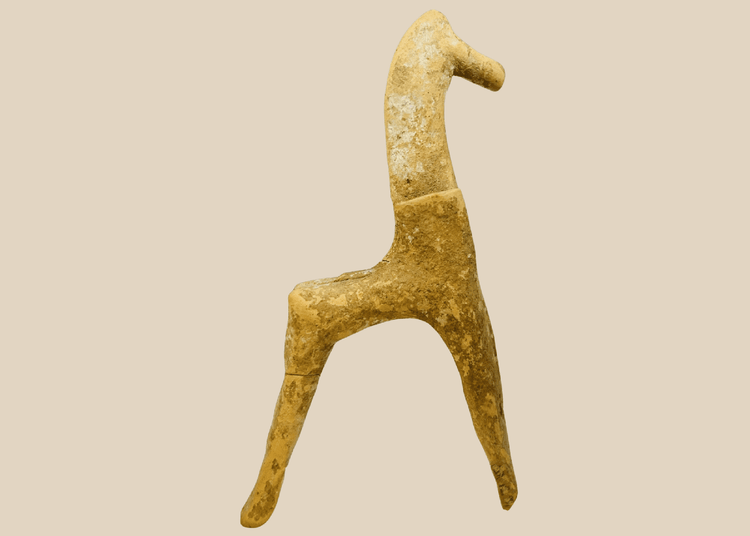
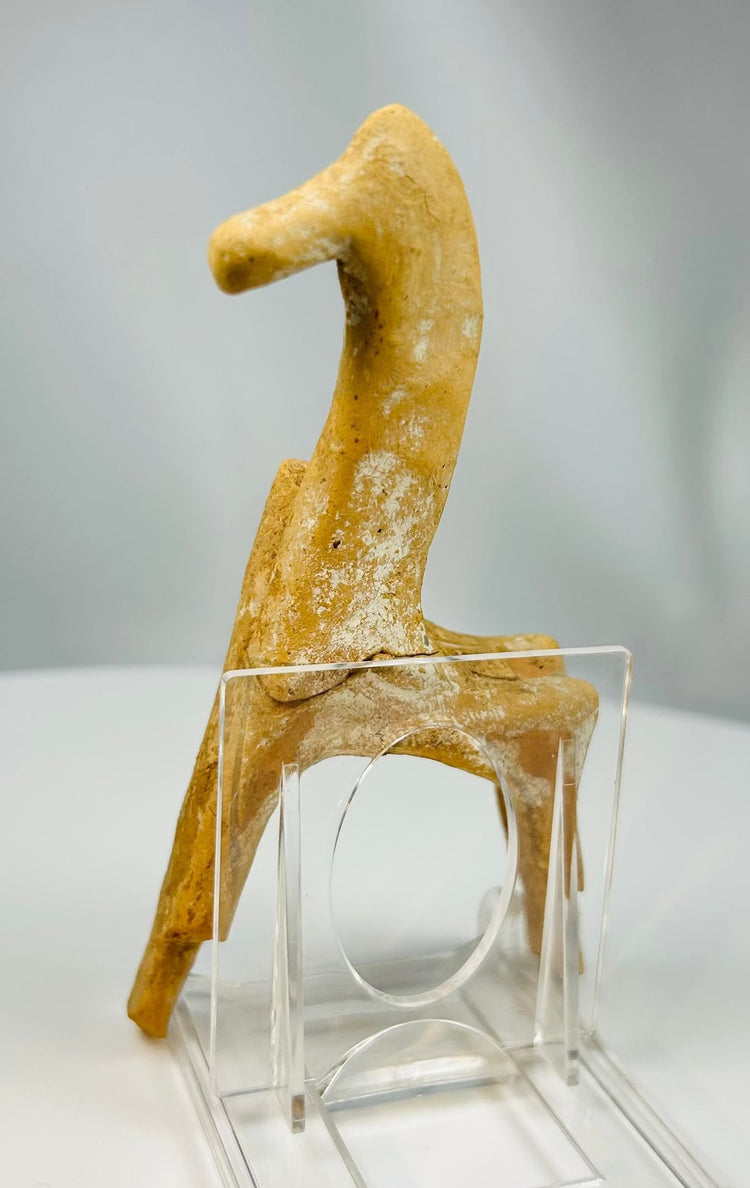
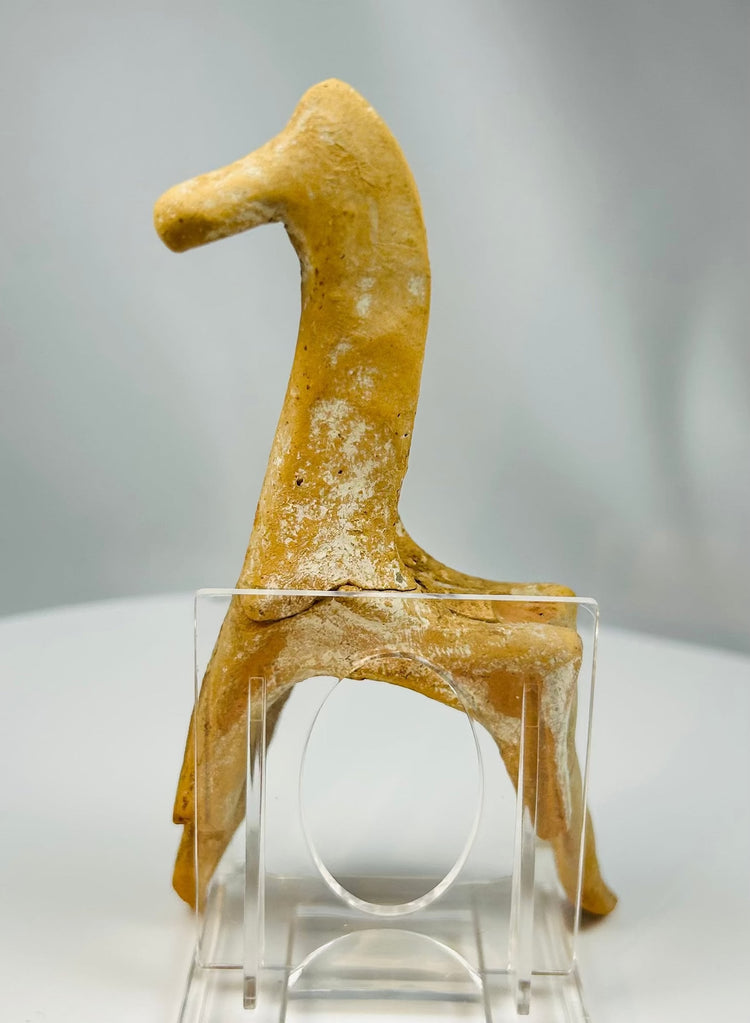
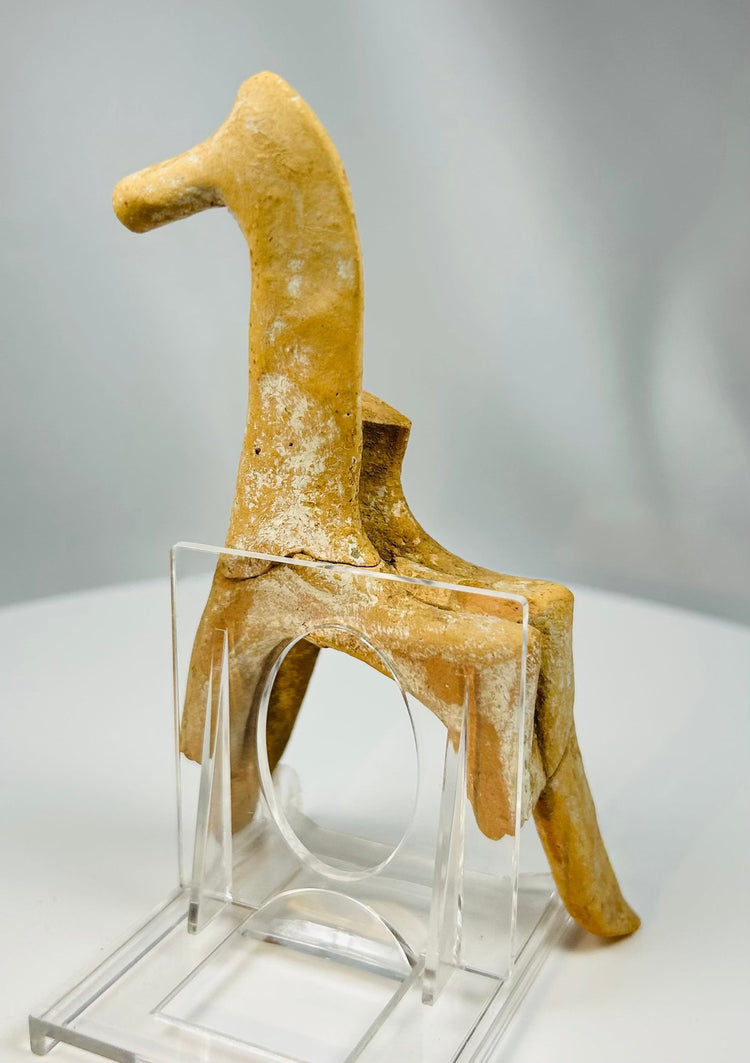
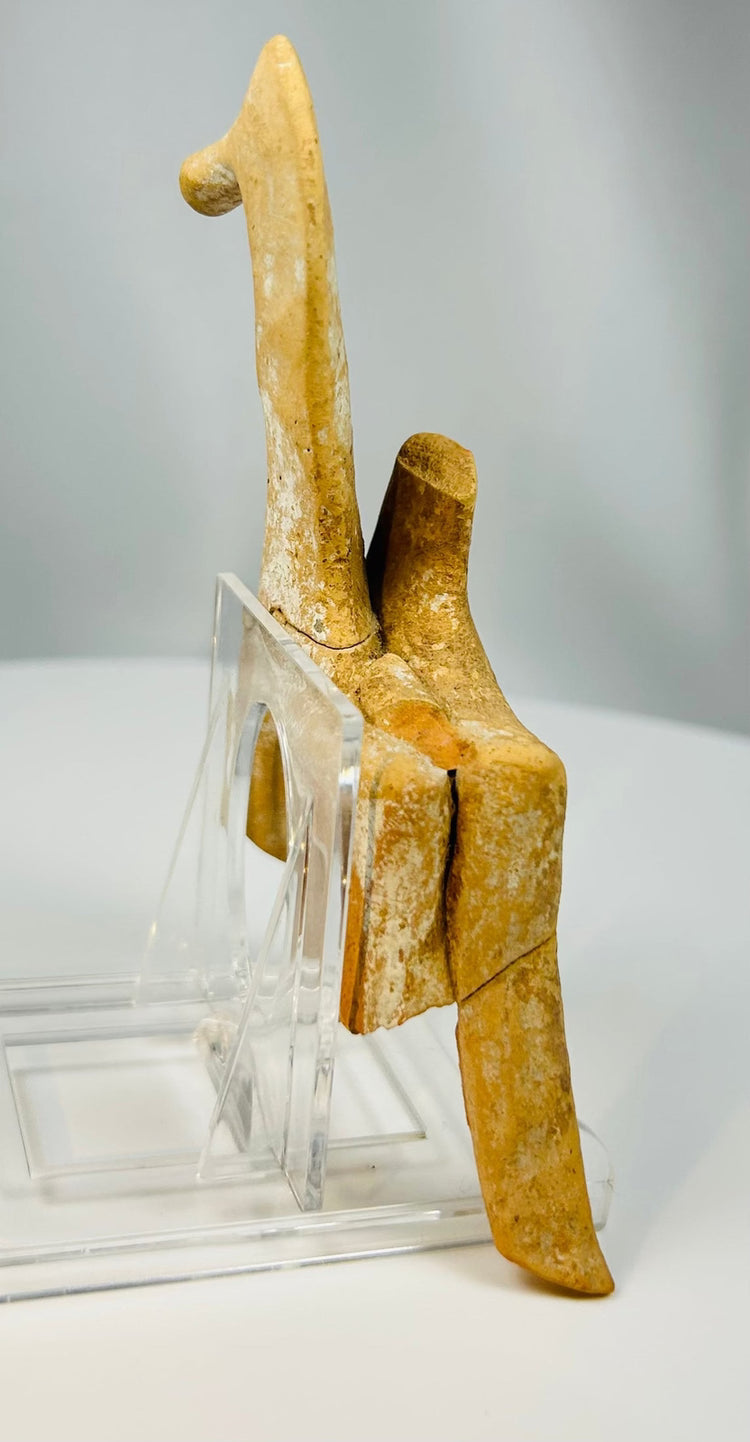
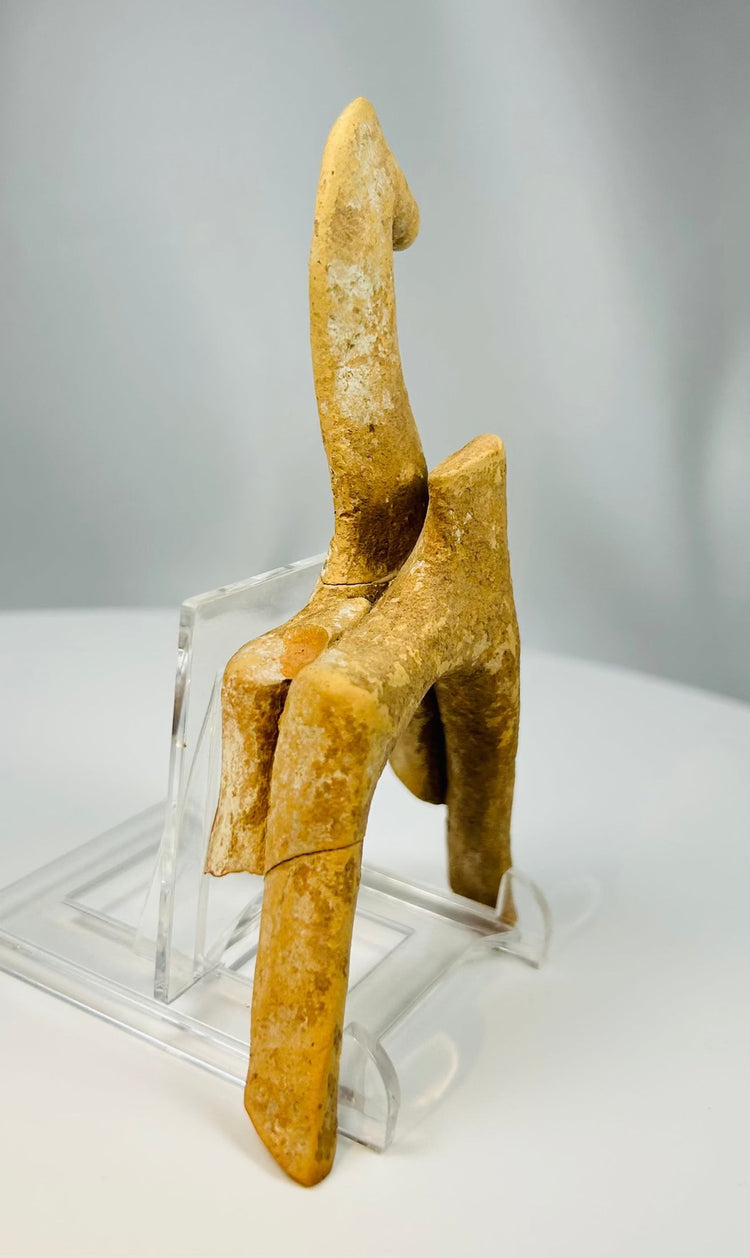
Grec Ancien | Figurine votive de cheval géométrique | Circa VIIIe siècle av. J.-C.
Description
Plus
Moins
Contexte historique et origine
Région : Béotie, Grèce antique
Matériau : Terre cuite
Période : Période géométrique à archaïque grecque, vers le 8e siècle av. J.-C.
Description
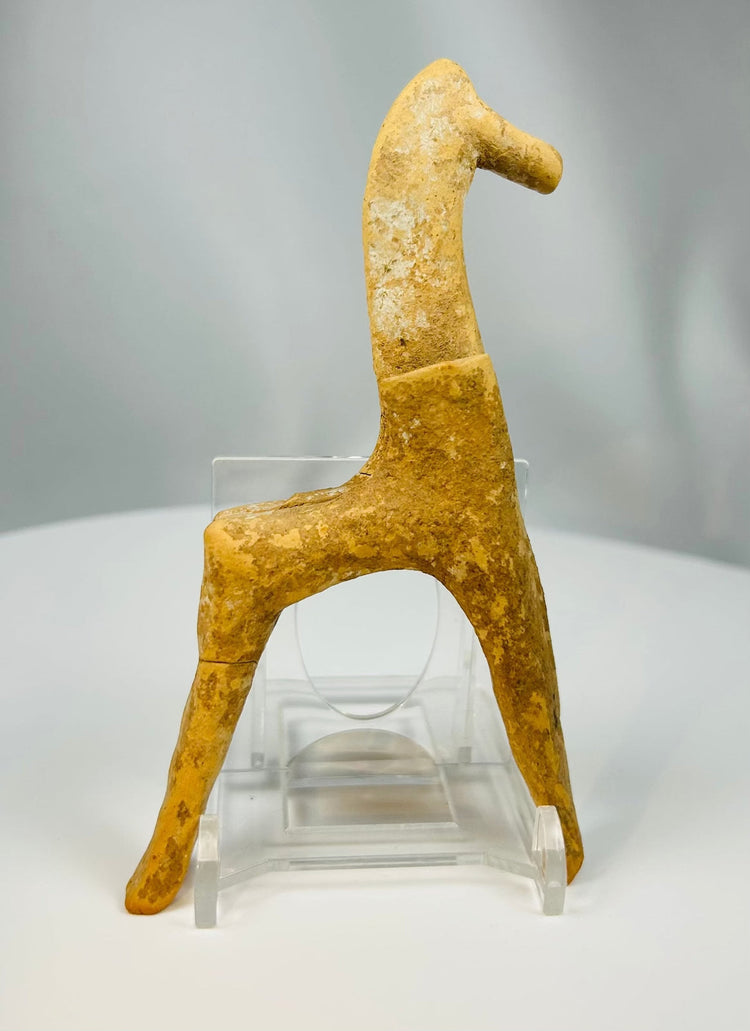
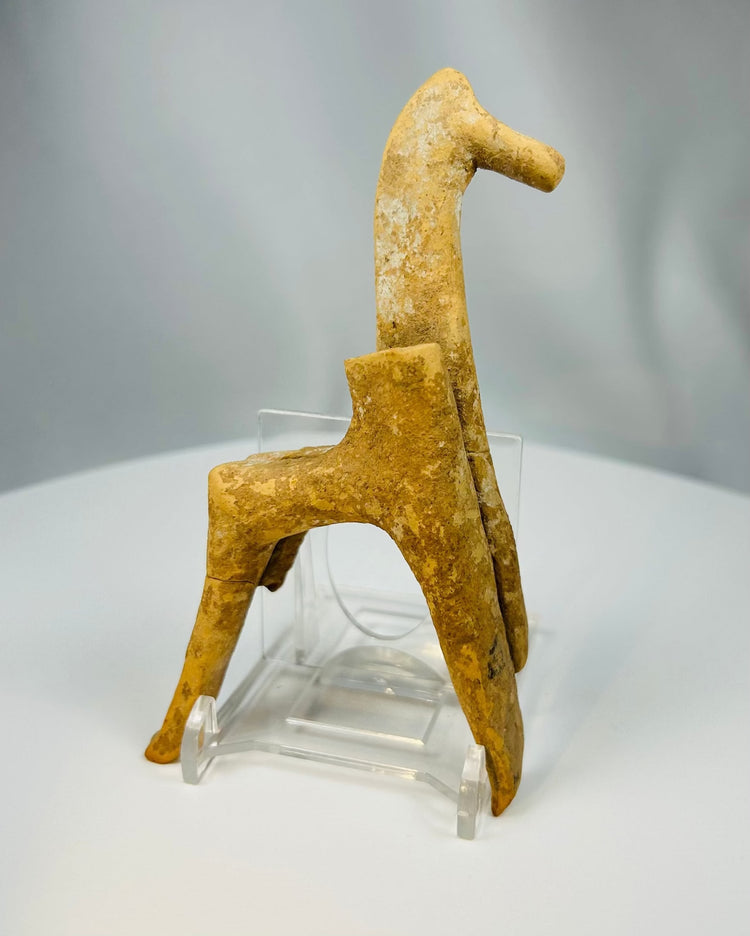
Cette saisissante figurine de cheval grec ancien est sculptée en terre cuite dans le style stylisé très reconnaissable, caractéristique de la sculpture votive béotienne primitive. La figurine présente le cou allongé, la structure corporelle simplifiée et les pattes cylindriques typiques des offrandes de chevaux produites tout au long des périodes géométrique et archaïque grecques.
Les figurines de chevaux en terre cuite étaient couramment dédiées dans les sanctuaires comme offrandes aux dieux, symbolisant la richesse, le prestige et la force martiale. Dans la société grecque primitive, la possession de chevaux était étroitement associée au statut aristocratique et au pouvoir des élites guerrières. De nombreuses figurines de ce type supportaient à l'origine une figurine de cavalier représentant un noble cavalier ou un guerrier.
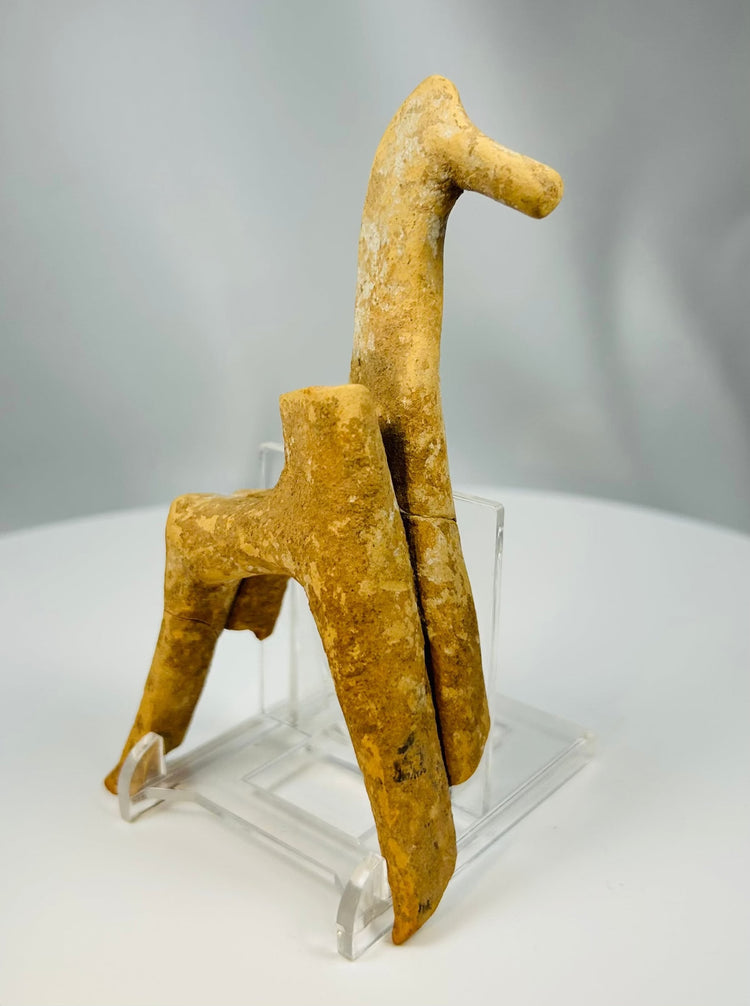
Cet exemple survit dans un état fragmentaire mais visuellement saisissant, préservant le cou droit distinctif et la forme corporelle angulaire qui définissent cette classe de sculpture votive grecque primitive. La surface chaude en terre cuite présente des dépôts minéraux naturels et une patine d'enfouissement cohérente avec une grande antiquité.
Caractéristiques
- Authentique figurine de cheval béotienne grecque antique
- Cou allongé classique et forme corporelle géométrique stylisée
- Caractéristique des premières sculptures votives grecques de chevaux
- Probablement accompagnée à l'origine d'une figurine de cavalier
- Surface chaude en terre cuite avec patine d'enfouissement naturelle
Signification culturelle
L'imagerie du cheval revêtait une forte importance culturelle et symbolique dans la société grecque antique, en particulier dans des régions telles que la Béotie où les traditions équestres étaient étroitement liées à l'identité aristocratique et à la culture guerrière. Les figurines de chevaux en terre cuite étaient fréquemment dédiées dans les temples et les sanctuaires comme offrandes dévotionnelles à des divinités telles qu'Athéna, Poséidon et Héra.
Ces sculptures représentent certaines des premières formes d'art figuratif grec et illustrent la transition de l'abstraction géométrique vers une représentation de plus en plus naturaliste dans l'Antiquité classique.
État
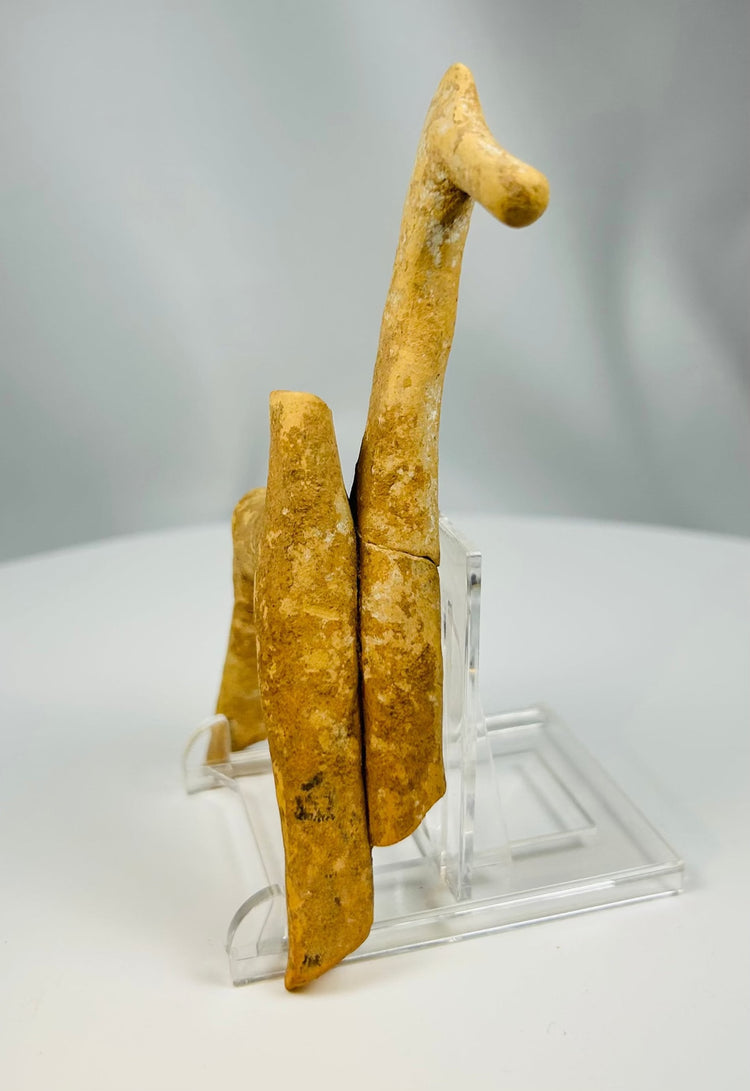
État fragmentaire avec une usure ancienne visible et des dépôts de surface compatibles avec l'âge et l'enfouissement. La figurine présente des réparations et des pertes historiques, y compris l'absence de la figurine de cavalier originale et de parties de la sculpture. Structurellement stable et montée pour l'exposition.
Dimensions (approximatives)
Hauteur : 4,5 po
Largeur : 2,5 po
Profondeur : 1 po
Âge (approximatif)
2 000 à 2 800 ans
En savoir plus
Découvrez l'histoire des figurines votives de chevaux et cavaliers de la Grèce antique
Parcourez notre collection d'artefacts grecs et romains
Description
Contexte historique et origine
Région : Béotie, Grèce antique
Matériau : Terre cuite
Période : Période géométrique à archaïque grecque, vers le 8e siècle av. J.-C.
Description
Cette saisissante figurine de cheval grec ancien est sculptée en terre cuite dans le style stylisé très reconnaissable, caractéristique de la sculpture votive béotienne primitive. La figurine présente le cou allongé, la structure corporelle simplifiée et les pattes cylindriques typiques des offrandes de chevaux produites tout au long des périodes géométrique et archaïque grecques.
Les figurines de chevaux en terre cuite étaient couramment dédiées dans les sanctuaires comme offrandes aux dieux, symbolisant la richesse, le prestige et la force martiale. Dans la société grecque primitive, la possession de chevaux était étroitement associée au statut aristocratique et au pouvoir des élites guerrières. De nombreuses figurines de ce type supportaient à l'origine une figurine de cavalier représentant un noble cavalier ou un guerrier.
Cet exemple survit dans un état fragmentaire mais visuellement saisissant, préservant le cou droit distinctif et la forme corporelle angulaire qui définissent cette classe de sculpture votive grecque primitive. La surface chaude en terre cuite présente des dépôts minéraux naturels et une patine d'enfouissement cohérente avec une grande antiquité.
Caractéristiques
- Authentique figurine de cheval béotienne grecque antique
- Cou allongé classique et forme corporelle géométrique stylisée
- Caractéristique des premières sculptures votives grecques de chevaux
- Probablement accompagnée à l'origine d'une figurine de cavalier
- Surface chaude en terre cuite avec patine d'enfouissement naturelle
Signification culturelle
L'imagerie du cheval revêtait une forte importance culturelle et symbolique dans la société grecque antique, en particulier dans des régions telles que la Béotie où les traditions équestres étaient étroitement liées à l'identité aristocratique et à la culture guerrière. Les figurines de chevaux en terre cuite étaient fréquemment dédiées dans les temples et les sanctuaires comme offrandes dévotionnelles à des divinités telles qu'Athéna, Poséidon et Héra.
Ces sculptures représentent certaines des premières formes d'art figuratif grec et illustrent la transition de l'abstraction géométrique vers une représentation de plus en plus naturaliste dans l'Antiquité classique.
État
État fragmentaire avec une usure ancienne visible et des dépôts de surface compatibles avec l'âge et l'enfouissement. La figurine présente des réparations et des pertes historiques, y compris l'absence de la figurine de cavalier originale et de parties de la sculpture. Structurellement stable et montée pour l'exposition.
Dimensions (approximatives)
Hauteur : 4,5 po
Largeur : 2,5 po
Profondeur : 1 po
Âge (approximatif)
2 000 à 2 800 ans
En savoir plus
Découvrez l'histoire des figurines votives de chevaux et cavaliers de la Grèce antique
Parcourez notre collection d'artefacts grecs et romains
Vous aimerez peut-être aussi
