


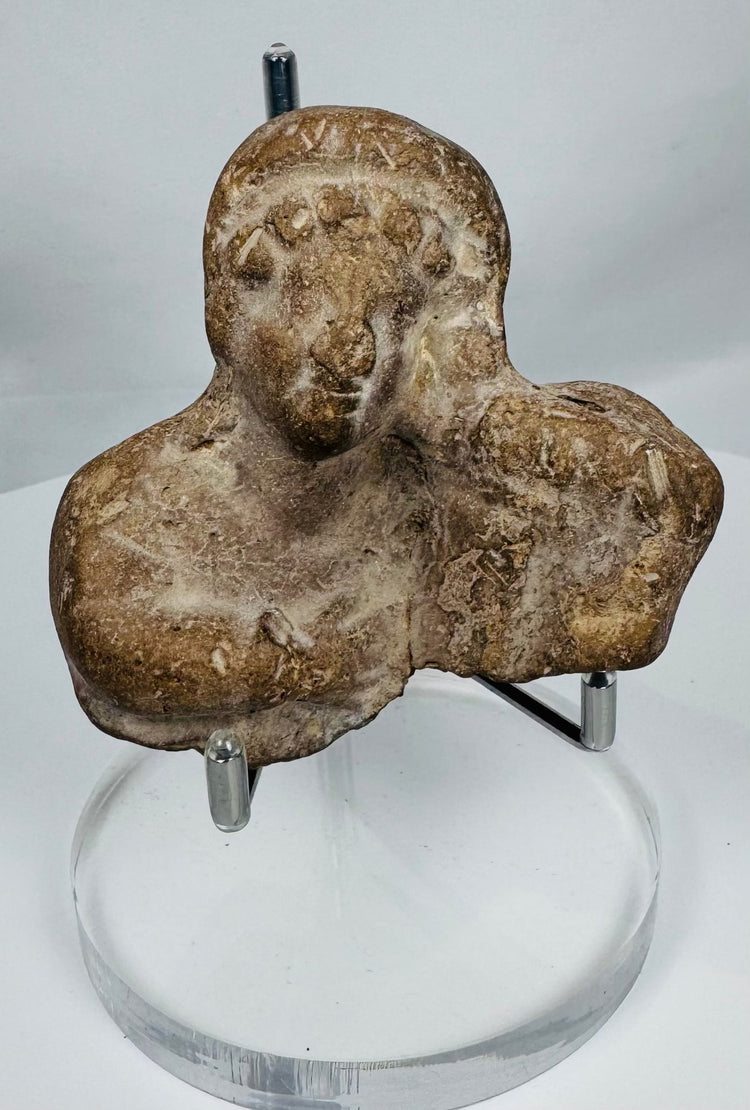
Fragment de bust figuratif en terre cuite de la Méditerranée ancienne | Période hellénistique-romaine | Vers 300 av. J.-C. – 200 apr. J.-C.
- Prix habituel
- $450.00
- Prix soldé
- $450.00
- Prix habituel
Impossible de charger la disponibilité du service de retrait




Fragment de bust figuratif en terre cuite de la Méditerranée ancienne | Période hellénistique-romaine | Vers 300 av. J.-C. – 200 apr. J.-C.
Description
Plus
Moins
Contexte historique et origine
Culture: Méditerranée classique, probablement hellénistique ou romaine provinciale
Région: Monde méditerranéen
Matériau: Terre cuite
Période: Vers le IIIe siècle av. J.-C. – IIe siècle apr. J.-C. (attribution incertaine)
Description
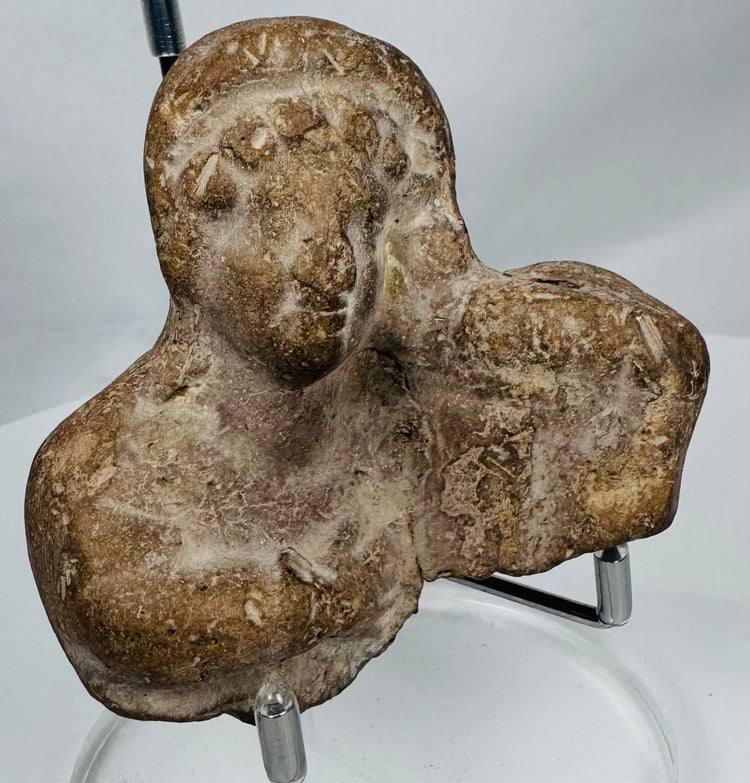
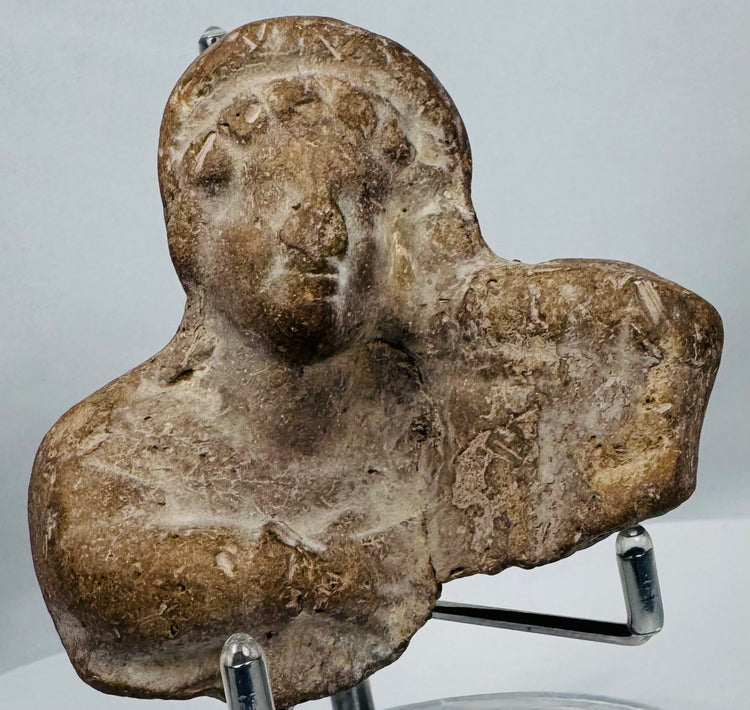
Ce fragment figuratif en terre cuite antique représente la partie supérieure d'une figure humaine rendue dans un style classique stylisé. Le buste conservé présente un visage rond aux traits doucement modelés, des yeux en amande, un nez proéminent et une coiffe, un voile ou une capuche encadrant la tête. Les épaules et le haut du torse sont intacts, tandis que la moitié inférieure de la figure a été perdue dans l'Antiquité.
Le modelé simplifié de la figure et son expression faciale sereine sont caractéristiques de nombreuses figurines en terre cuite produites dans les mondes hellénistique et romain. De telles figures représentaient couramment des fidèles, des serviteurs, des divinités ou des figures symboliques et étaient souvent utilisées dans les sanctuaires domestiques, les tombes et les contextes religieux.
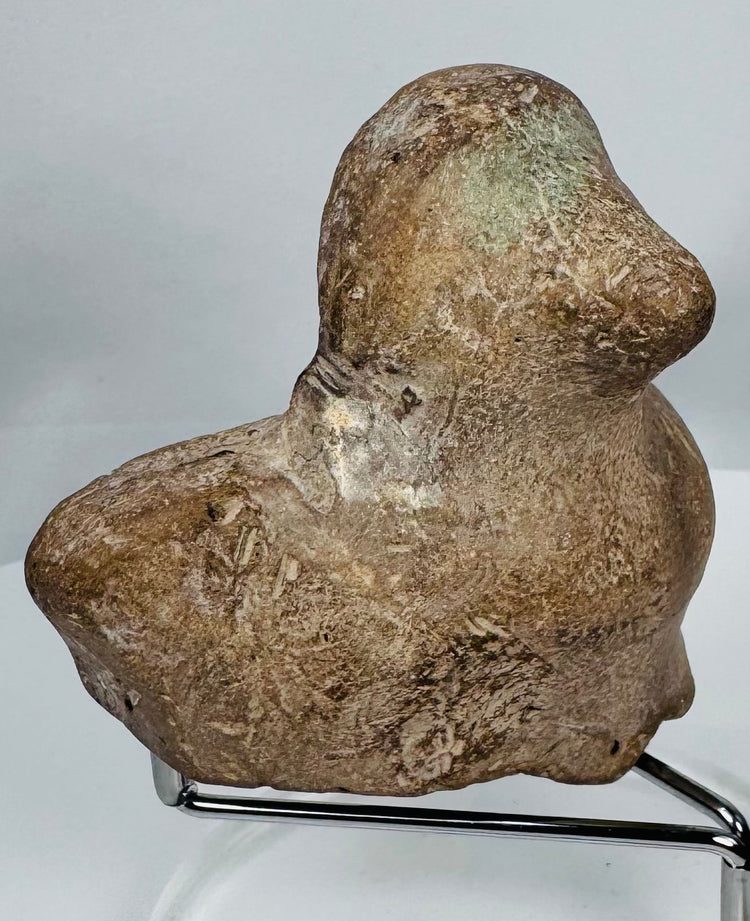
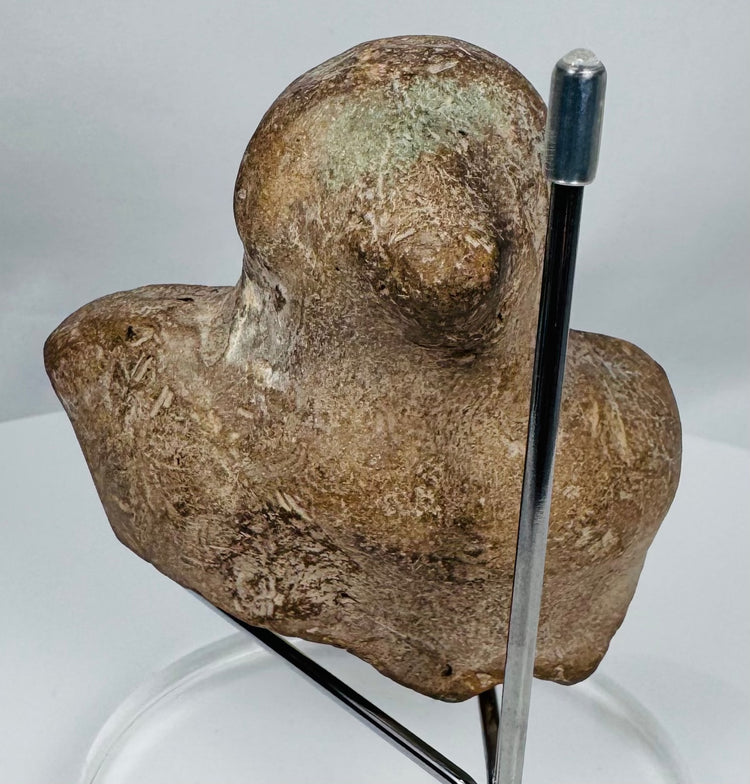
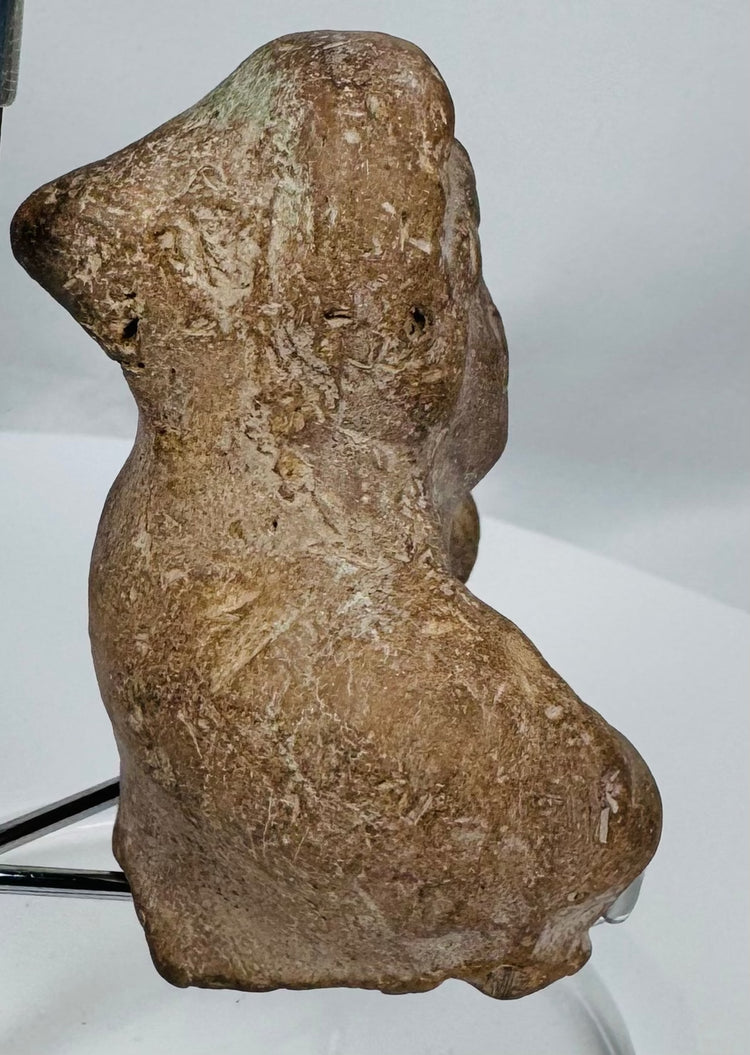
Le revers reste creux, indiquant une fabrication au moule, une technique de production céramique largement répandue dans la Méditerranée classique. L'altération de la surface et les accrétions minérales accumulées au fil des siècles contribuent à l'aspect archéologique et à l'authenticité de l'artefact.
Caractéristiques
- Fragment de buste figuratif antique en terre cuite
- Fabrication creuse au moule
- Traits faciaux classiques stylisés
- Coiffe ou capuche encadrant la tête
- Patine de surface archéologique et altération
Signification culturelle
Les figurines en terre cuite figuraient parmi les formes d'expression artistique les plus répandues dans le monde classique. Produites en grand nombre pendant les périodes grecque et romaine, elles servaient à des fins de dévotion, funéraires, décoratives et symboliques.
Des exemples fragmentaires comme celui-ci donnent un aperçu des anciennes traditions sculpturales et des pratiques religieuses quotidiennes. Le traitement simplifié mais expressif du visage reflète les conventions artistiques durables qui se sont répandues dans la Méditerranée pendant les époques hellénistique et romaine.
État
État fragmentaire ancien. La moitié inférieure de la figure est manquante. Petit trou présent dans l'épaule. Piqûres de surface, dépôts minéraux, altération et pertes mineures partout. Aucun pigment survivant visible.
Dimensions (approximatives)
Hauteur: 7,6 cm
Largeur: 7,6 cm
Profondeur: 5 cm
Âge (approximatif)
1 800 à 2 300 ans
Provenance
D'une collection privée à Saint Paul, Minnesota, États-Unis. Fait partie d'une collection établie de longue date d'artefacts archéologiques et d'antiquités rassemblés sur plusieurs décennies.
En savoir plus
Voir une figurine en terre cuite antique comparable dans la collection du Metropolitan Museum of Art
Parcourir notre collection d'artefacts romains et grecs antiques
Description
Contexte historique et origine
Culture: Méditerranée classique, probablement hellénistique ou romaine provinciale
Région: Monde méditerranéen
Matériau: Terre cuite
Période: Vers le IIIe siècle av. J.-C. – IIe siècle apr. J.-C. (attribution incertaine)
Description
Ce fragment figuratif en terre cuite antique représente la partie supérieure d'une figure humaine rendue dans un style classique stylisé. Le buste conservé présente un visage rond aux traits doucement modelés, des yeux en amande, un nez proéminent et une coiffe, un voile ou une capuche encadrant la tête. Les épaules et le haut du torse sont intacts, tandis que la moitié inférieure de la figure a été perdue dans l'Antiquité.
Le modelé simplifié de la figure et son expression faciale sereine sont caractéristiques de nombreuses figurines en terre cuite produites dans les mondes hellénistique et romain. De telles figures représentaient couramment des fidèles, des serviteurs, des divinités ou des figures symboliques et étaient souvent utilisées dans les sanctuaires domestiques, les tombes et les contextes religieux.
Le revers reste creux, indiquant une fabrication au moule, une technique de production céramique largement répandue dans la Méditerranée classique. L'altération de la surface et les accrétions minérales accumulées au fil des siècles contribuent à l'aspect archéologique et à l'authenticité de l'artefact.
Caractéristiques
- Fragment de buste figuratif antique en terre cuite
- Fabrication creuse au moule
- Traits faciaux classiques stylisés
- Coiffe ou capuche encadrant la tête
- Patine de surface archéologique et altération
Signification culturelle
Les figurines en terre cuite figuraient parmi les formes d'expression artistique les plus répandues dans le monde classique. Produites en grand nombre pendant les périodes grecque et romaine, elles servaient à des fins de dévotion, funéraires, décoratives et symboliques.
Des exemples fragmentaires comme celui-ci donnent un aperçu des anciennes traditions sculpturales et des pratiques religieuses quotidiennes. Le traitement simplifié mais expressif du visage reflète les conventions artistiques durables qui se sont répandues dans la Méditerranée pendant les époques hellénistique et romaine.
État
État fragmentaire ancien. La moitié inférieure de la figure est manquante. Petit trou présent dans l'épaule. Piqûres de surface, dépôts minéraux, altération et pertes mineures partout. Aucun pigment survivant visible.
Dimensions (approximatives)
Hauteur: 7,6 cm
Largeur: 7,6 cm
Profondeur: 5 cm
Âge (approximatif)
1 800 à 2 300 ans
Provenance
D'une collection privée à Saint Paul, Minnesota, États-Unis. Fait partie d'une collection établie de longue date d'artefacts archéologiques et d'antiquités rassemblés sur plusieurs décennies.
En savoir plus
Voir une figurine en terre cuite antique comparable dans la collection du Metropolitan Museum of Art
Parcourir notre collection d'artefacts romains et grecs antiques
Vous aimerez peut-être aussi
