

Bol de service ancien précolombien en poterie | Récipient en terre cuite à effet de nuage de fumée | Circa 500 AEC–1200 EC
- Prix habituel
- $500.00
- Prix soldé
- $500.00
- Prix habituel
Impossible de charger la disponibilité du service de retrait


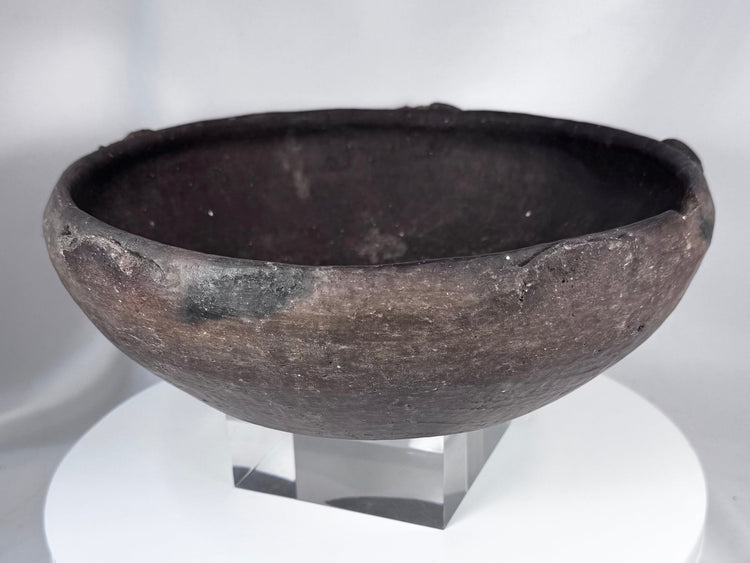
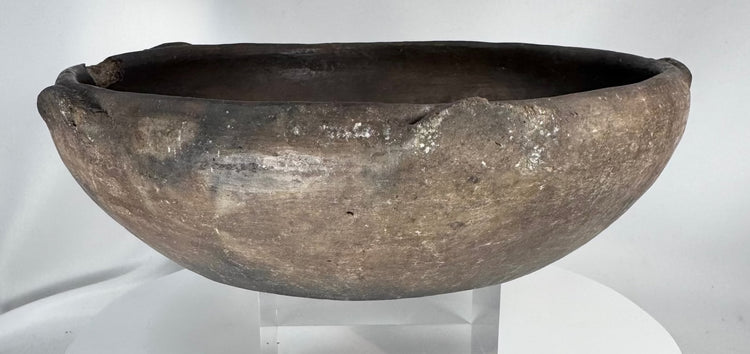
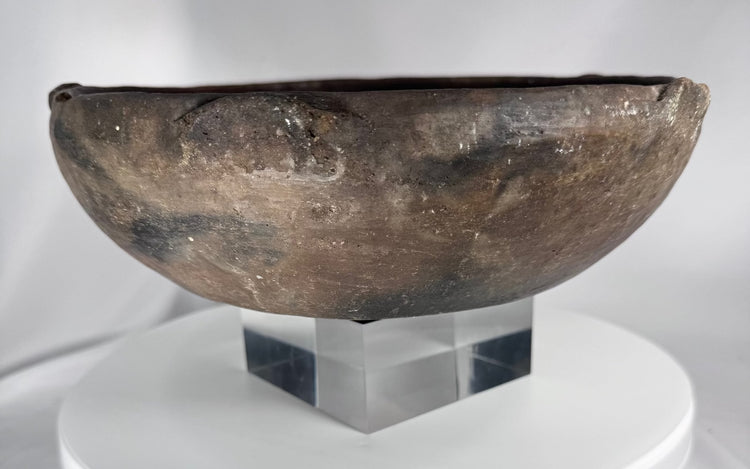
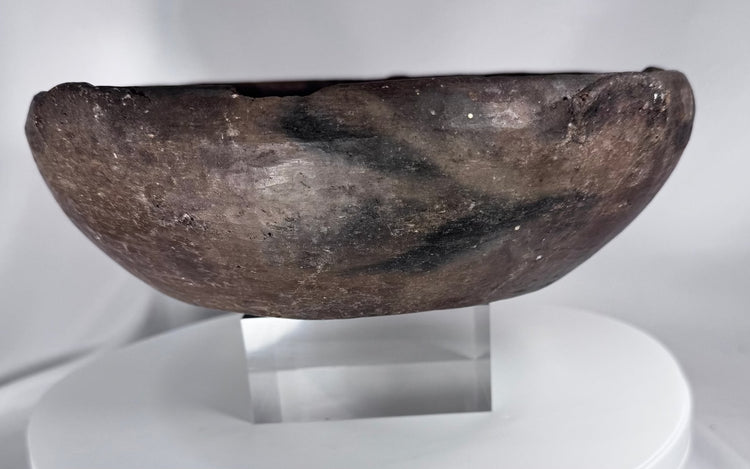
Bol de service ancien précolombien en poterie | Récipient en terre cuite à effet de nuage de fumée | Circa 500 AEC–1200 EC
Description
Plus
Moins
Contexte historique et origine
Région : Probablement Amérique centrale ou du Sud précolombienne
Matériau : Terre cuite/faïence façonnée à la main
Période : Environ 500 avant J.-C. – 1200 après J.-C.
Description
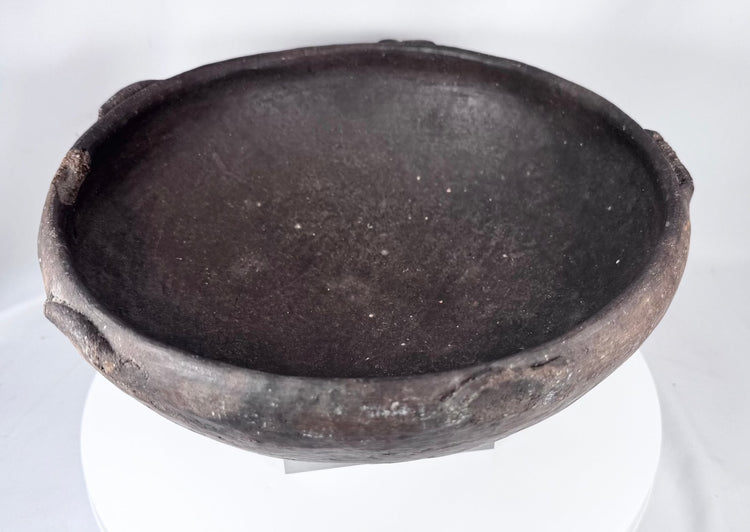
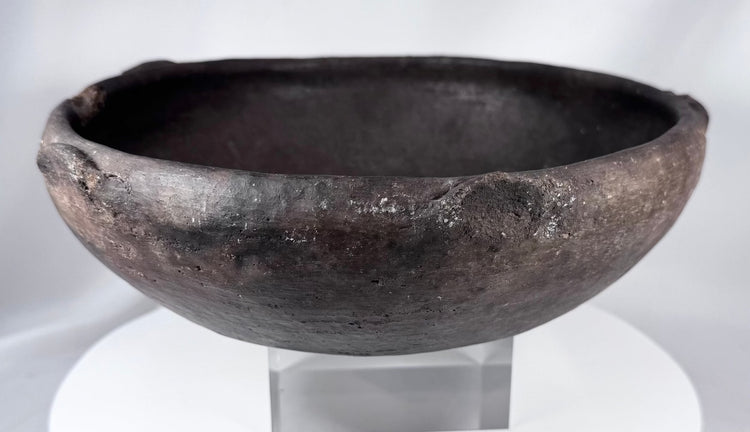
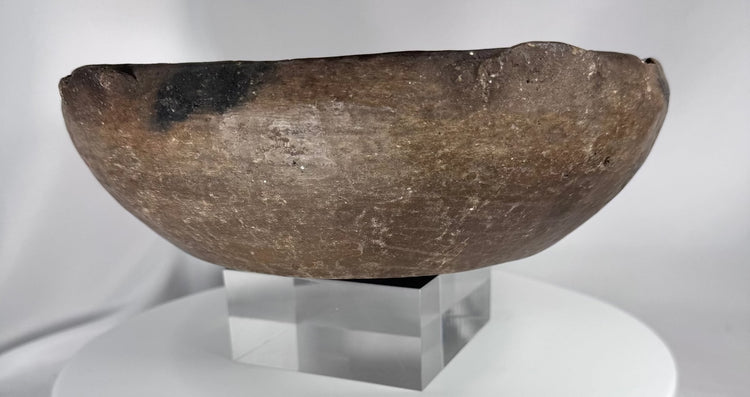
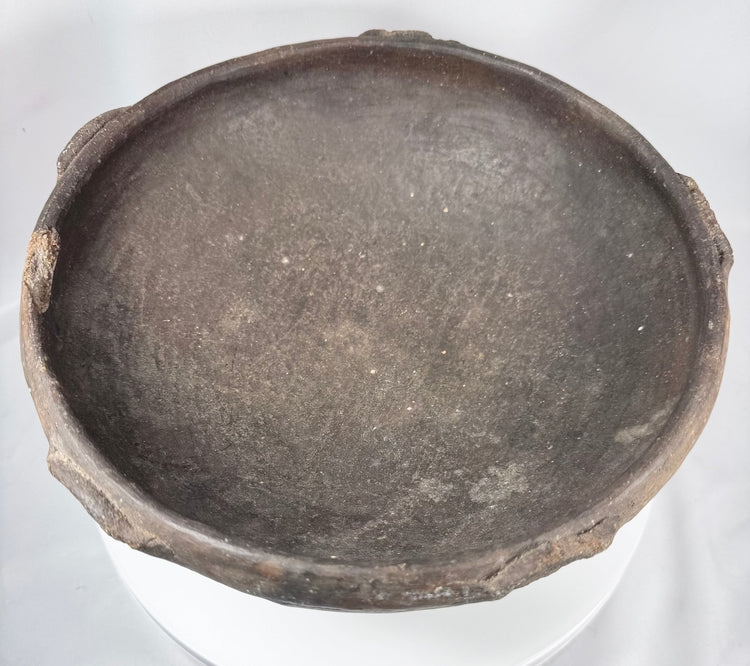
Ce grand bol en poterie précolombienne présente une forme sobre mais très évocatrice, caractéristique des anciennes traditions céramiques utilitaires et cérémonielles des Amériques. Le récipient se compose d'un large corps hémisphérique avec une surface sombre nuancée par le feu et d'une série de saillies ou de tenons espacés uniformément sur le bord, ajoutant à la fois un rythme visuel et une signification fonctionnelle possible à la pièce.
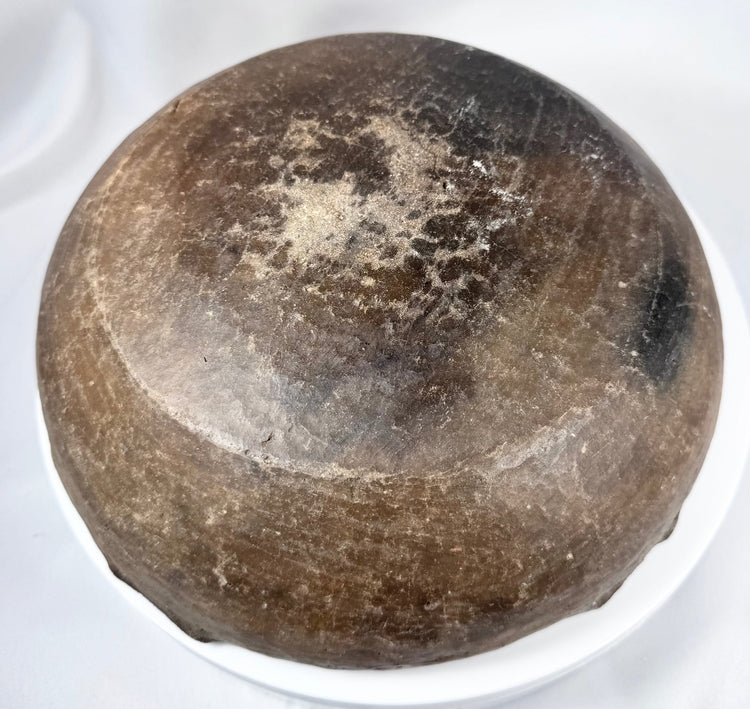
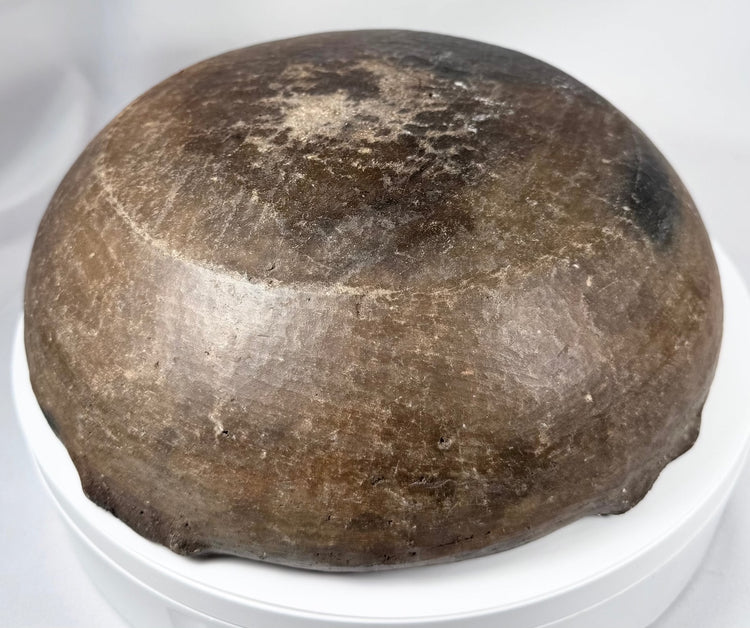
La surface très polie présente une coloration charbon foncé, marron et minérale, créée par des conditions de cuisson irrégulières et des siècles de vieillissement. La silhouette simple mais imposante du bol reflète les traditions céramiques sophistiquées des cultures précolombiennes, où la poterie fonctionnelle était souvent produite avec un équilibre remarquable et des proportions raffinées malgré un embellissement décoratif minimal.
Plusieurs protubérances nodulaires en relief positionnées autour du bord ont pu servir de points d'appui, de dispositifs de suspension ou d'éléments décoratifs symboliques. Le bord épaissi et le corps substantiel suggèrent que le récipient était destiné à un usage répété, éventuellement associé à la préparation des aliments, au service communautaire, au stockage ou à une activité cérémonielle.
Le dessous conserve des marques de finition à la main visibles et des irrégularités authentiques associées aux anciennes techniques de poterie construites par bobines. Les surfaces intérieures et extérieures assombries rehaussent encore l'apparence archéologique et la présence du récipient.
Caractéristiques
- Grand bol en poterie hémisphérique
- Construction en faïence façonnée à la main
- Surface sombre nuancée par le feu et minéralisée
- Protubérances en relief sur le bord
- Profil sculptural fort et présence visuelle
- Irrégularités authentiques de finition à la main
- Construction du bord épaissie et renforcée
- Excellent exemple de l'artisanat céramique utilitaire ancien
Importance culturelle
Les récipients en céramique faisaient partie intégrante de la vie quotidienne et cérémonielle dans toutes les civilisations précolombiennes. Des bols de ce type étaient couramment utilisés pour la préparation des aliments, le service, le stockage et les offrandes rituelles. La forme sobre et la construction durable soulignent la fonctionnalité tout en reflétant les sensibilités esthétiques et les compétences techniques des anciens artisans céramistes.
État
Présente une usure liée à l'âge, une abrasion de surface, des dépôts minéraux, des irrégularités de cuisson, des pertes de bord, de petits éclats, des piqûres éparses et une altération de surface stable, conformes à l'âge et à l'excavation archéologique. Globalement bien conservé avec une surface vieillie impressionnante et une forte présentation visuelle.
Dimensions (Approximatives)
Diamètre : 26,7 cm
Hauteur : 8,9 cm
Âge (Approximatif)
800-2 500 ans
Résumé de la provenance
D'une collection privée à Philadelphie, Pennsylvanie, États-Unis.
En savoir plus
Découvrez le rôle des récipients en céramique dans la vie quotidienne et cérémonielle des anciennes civilisations américaines sur Britannica
Voir notre Collection d'artefacts précolombiens anciens
Description
Contexte historique et origine
Région : Probablement Amérique centrale ou du Sud précolombienne
Matériau : Terre cuite/faïence façonnée à la main
Période : Environ 500 avant J.-C. – 1200 après J.-C.
Description
Ce grand bol en poterie précolombienne présente une forme sobre mais très évocatrice, caractéristique des anciennes traditions céramiques utilitaires et cérémonielles des Amériques. Le récipient se compose d'un large corps hémisphérique avec une surface sombre nuancée par le feu et d'une série de saillies ou de tenons espacés uniformément sur le bord, ajoutant à la fois un rythme visuel et une signification fonctionnelle possible à la pièce.
La surface très polie présente une coloration charbon foncé, marron et minérale, créée par des conditions de cuisson irrégulières et des siècles de vieillissement. La silhouette simple mais imposante du bol reflète les traditions céramiques sophistiquées des cultures précolombiennes, où la poterie fonctionnelle était souvent produite avec un équilibre remarquable et des proportions raffinées malgré un embellissement décoratif minimal.
Plusieurs protubérances nodulaires en relief positionnées autour du bord ont pu servir de points d'appui, de dispositifs de suspension ou d'éléments décoratifs symboliques. Le bord épaissi et le corps substantiel suggèrent que le récipient était destiné à un usage répété, éventuellement associé à la préparation des aliments, au service communautaire, au stockage ou à une activité cérémonielle.
Le dessous conserve des marques de finition à la main visibles et des irrégularités authentiques associées aux anciennes techniques de poterie construites par bobines. Les surfaces intérieures et extérieures assombries rehaussent encore l'apparence archéologique et la présence du récipient.
Caractéristiques
- Grand bol en poterie hémisphérique
- Construction en faïence façonnée à la main
- Surface sombre nuancée par le feu et minéralisée
- Protubérances en relief sur le bord
- Profil sculptural fort et présence visuelle
- Irrégularités authentiques de finition à la main
- Construction du bord épaissie et renforcée
- Excellent exemple de l'artisanat céramique utilitaire ancien
Importance culturelle
Les récipients en céramique faisaient partie intégrante de la vie quotidienne et cérémonielle dans toutes les civilisations précolombiennes. Des bols de ce type étaient couramment utilisés pour la préparation des aliments, le service, le stockage et les offrandes rituelles. La forme sobre et la construction durable soulignent la fonctionnalité tout en reflétant les sensibilités esthétiques et les compétences techniques des anciens artisans céramistes.
État
Présente une usure liée à l'âge, une abrasion de surface, des dépôts minéraux, des irrégularités de cuisson, des pertes de bord, de petits éclats, des piqûres éparses et une altération de surface stable, conformes à l'âge et à l'excavation archéologique. Globalement bien conservé avec une surface vieillie impressionnante et une forte présentation visuelle.
Dimensions (Approximatives)
Diamètre : 26,7 cm
Hauteur : 8,9 cm
Âge (Approximatif)
800-2 500 ans
Résumé de la provenance
D'une collection privée à Philadelphie, Pennsylvanie, États-Unis.
En savoir plus
Découvrez le rôle des récipients en céramique dans la vie quotidienne et cérémonielle des anciennes civilisations américaines sur Britannica
Voir notre Collection d'artefacts précolombiens anciens
Vous aimerez peut-être aussi
