

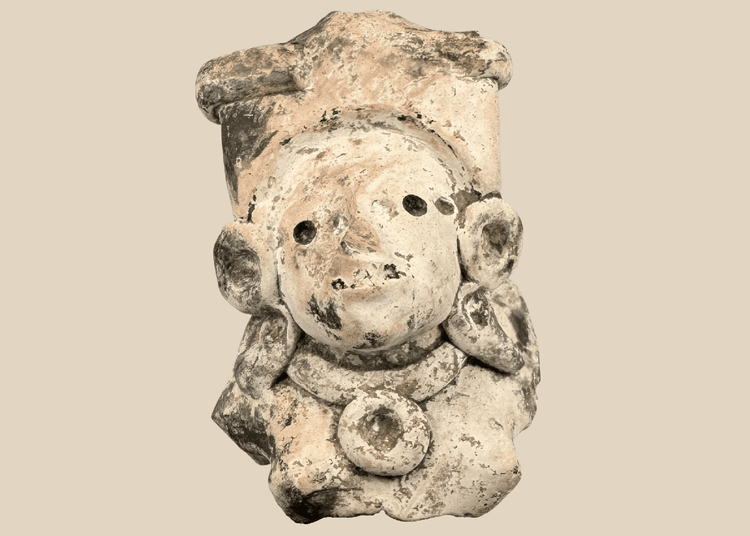
Fragment d'une figurine en terre cuite précolombienne représentant un noble | Mésoamérique | Vers 300 av. J.-C. – 600 apr. J.-C.
- Prix habituel
- $400.00
- Prix soldé
- $400.00
- Prix habituel
Impossible de charger la disponibilité du service de retrait


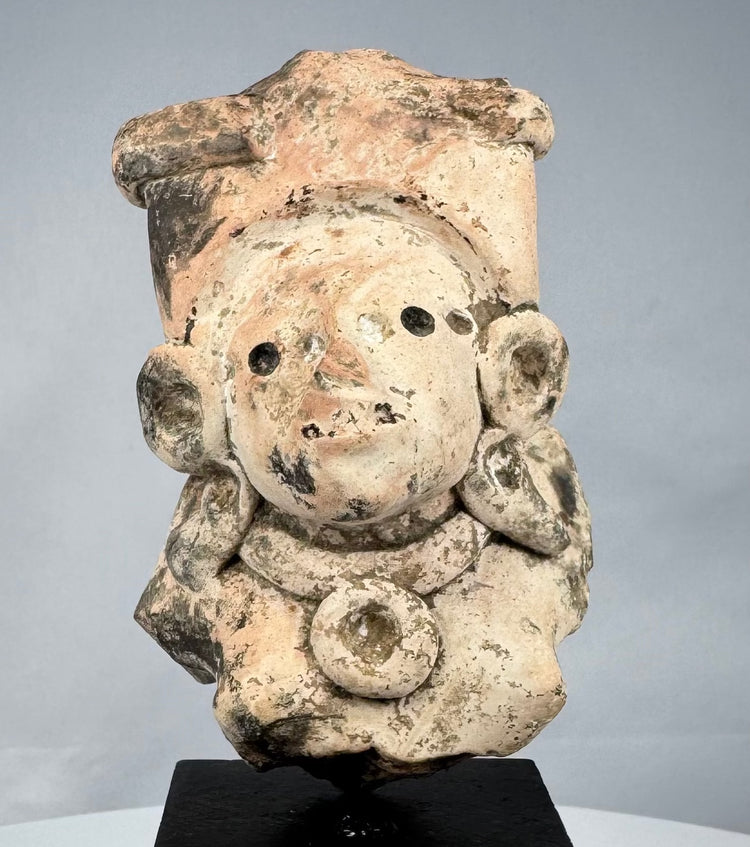
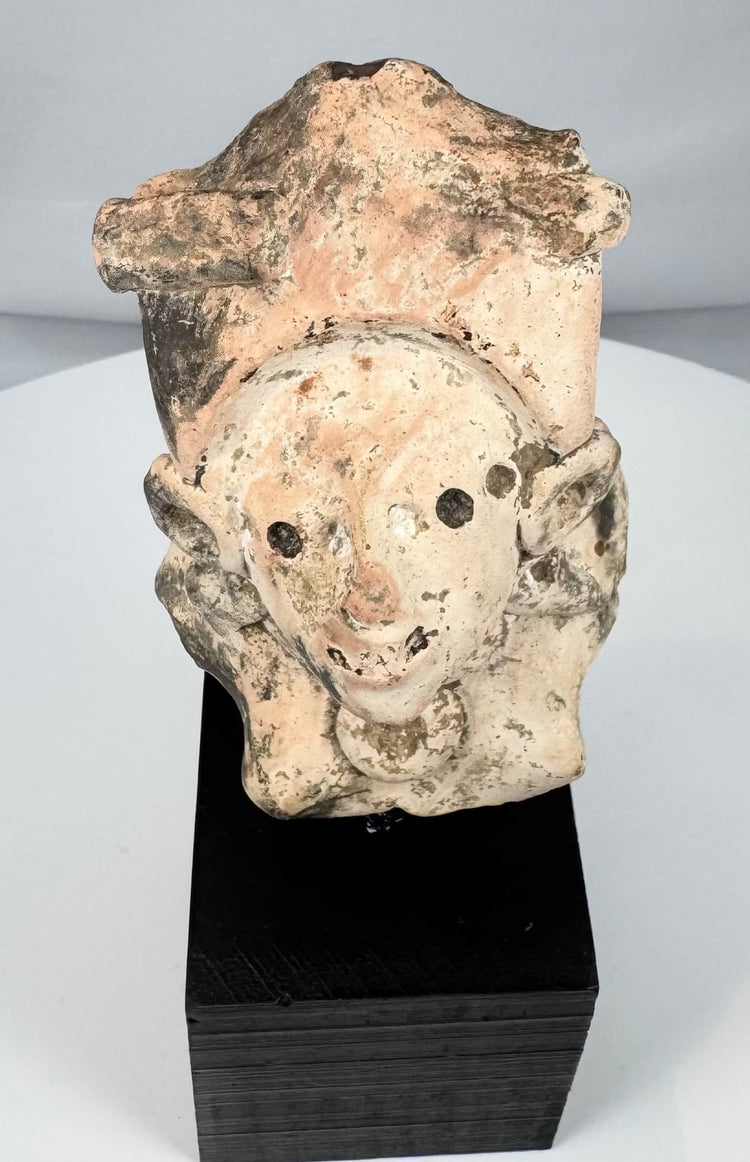
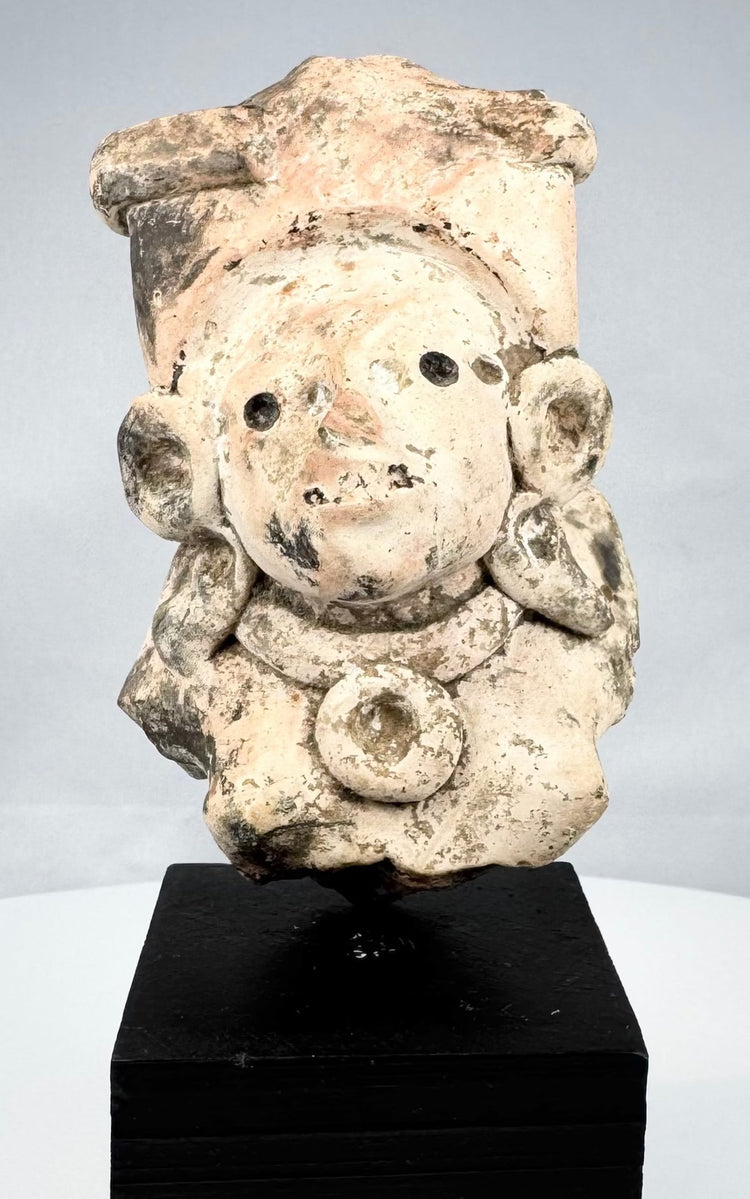
Fragment d'une figurine en terre cuite précolombienne représentant un noble | Mésoamérique | Vers 300 av. J.-C. – 600 apr. J.-C.
Description
Plus
Moins
Contexte historique et origine
Région : Mésoamérique, probablement Veracruz ou région de la côte du Golfe, Mexique
Matériau : Terre cuite modelée à la main avec des traces de dépôts minéraux et d'incrustations terreuses
Période : Période précolombienne tardive, vers 300 av. J.-C. – 600 ap. J.-C.
Description
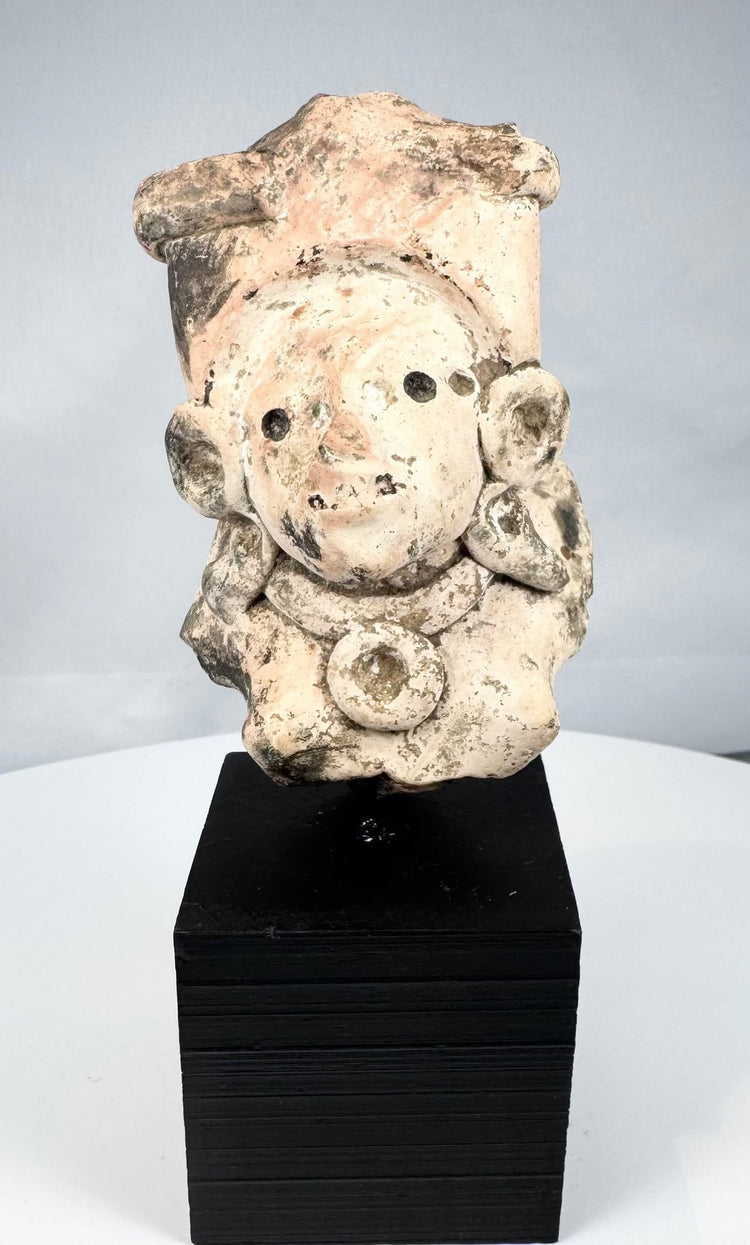
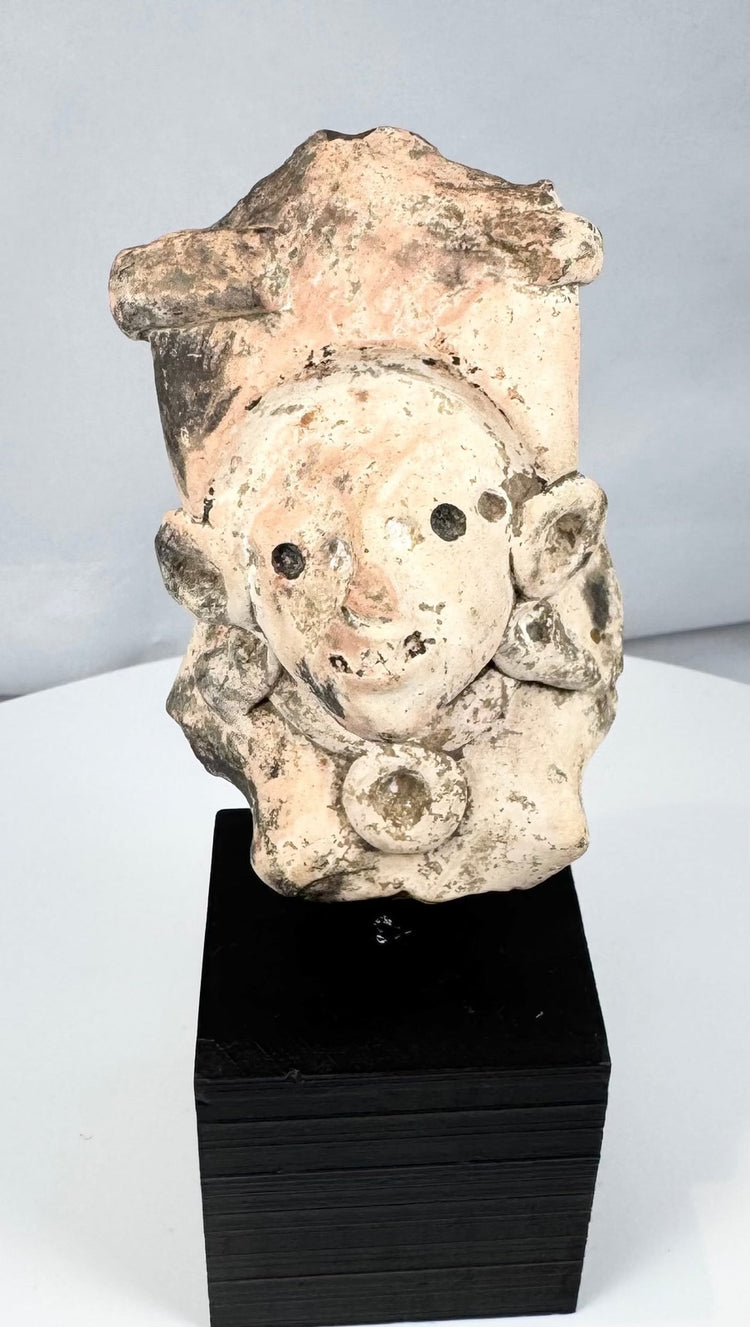
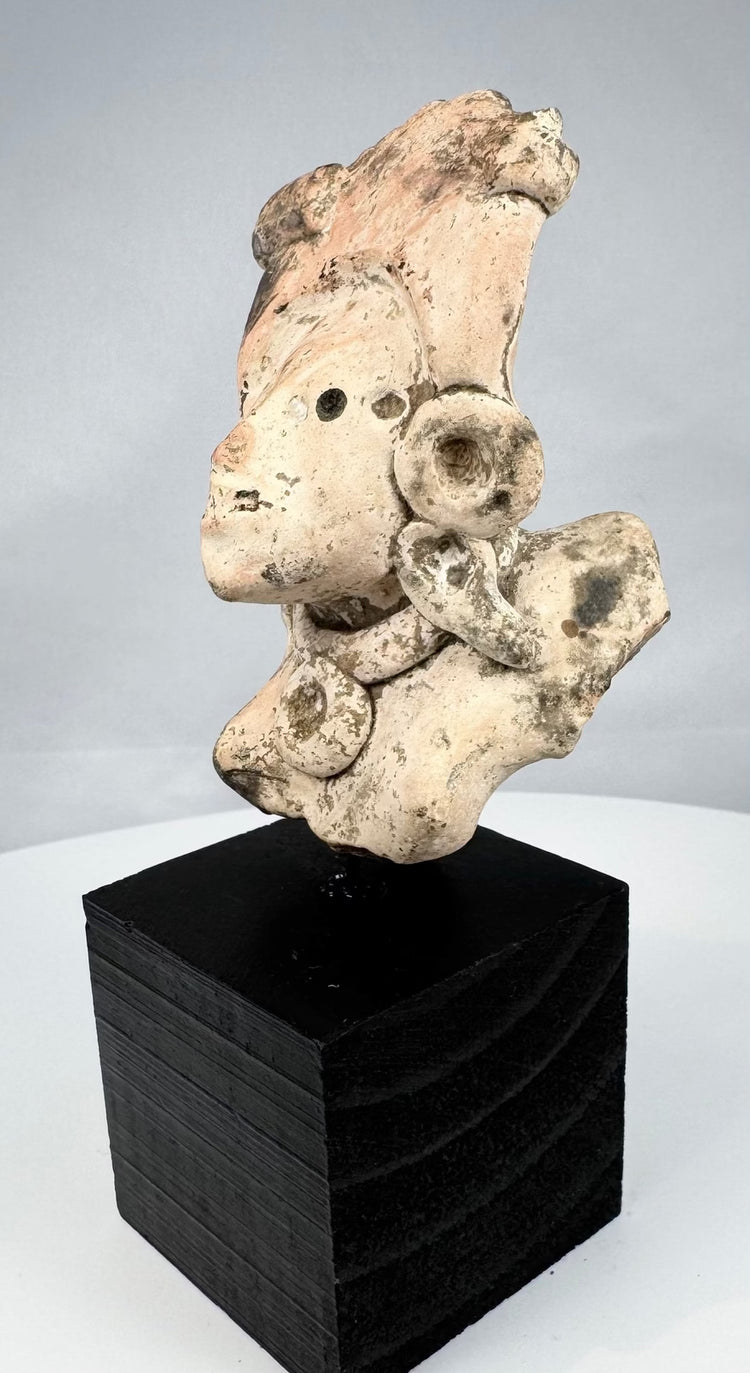
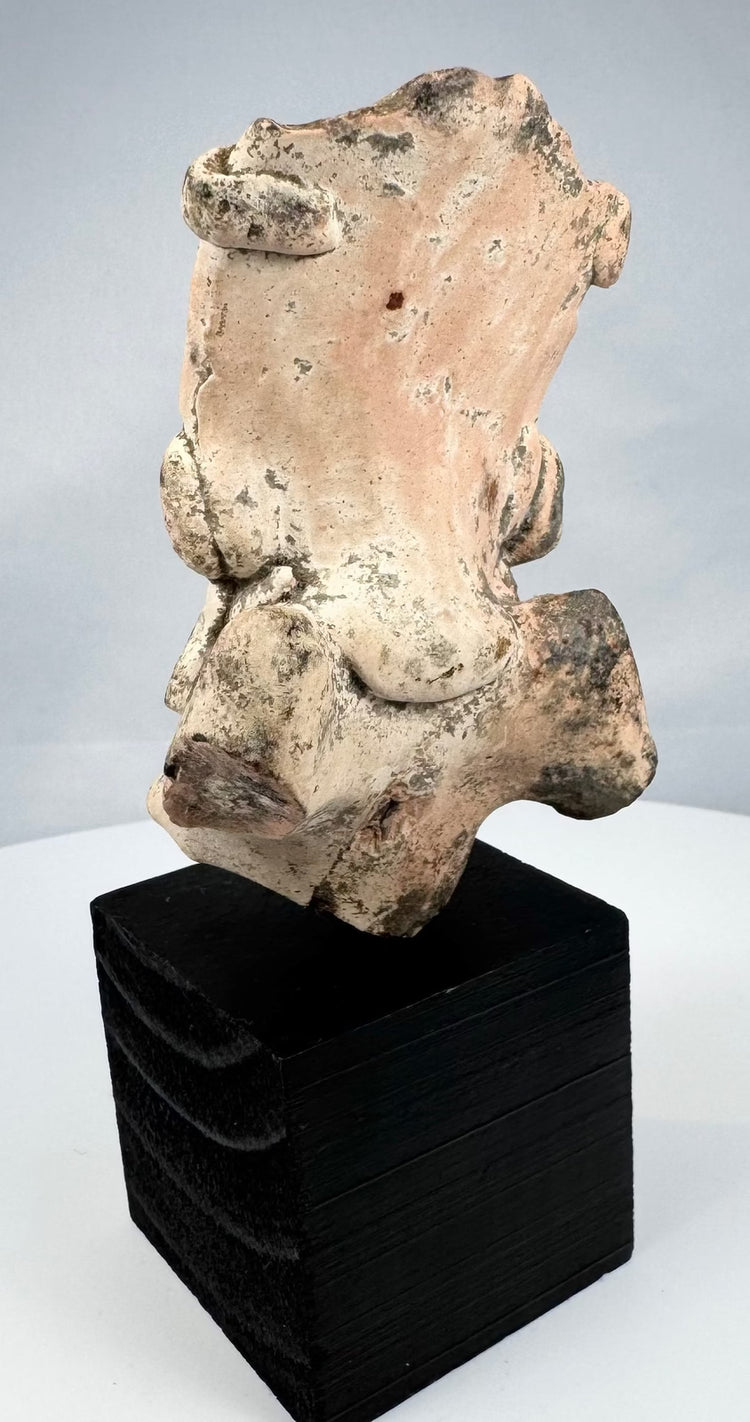
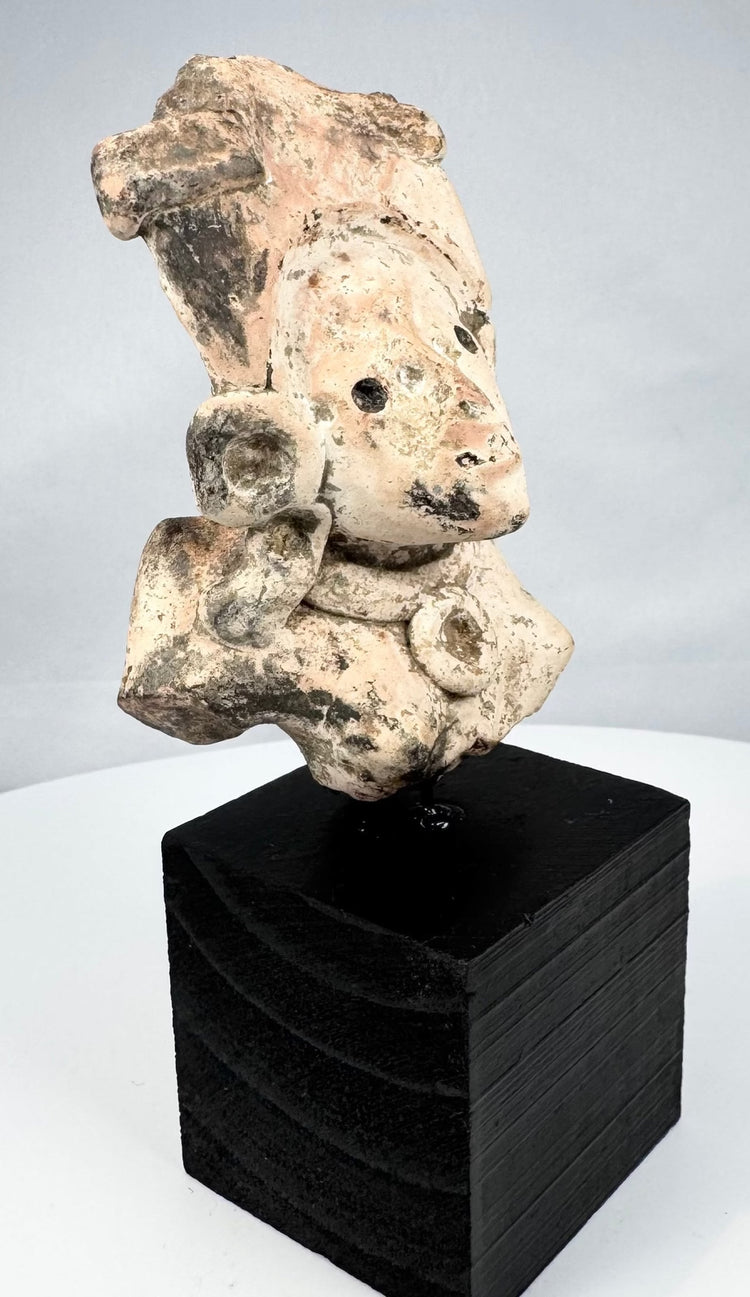
Cet intrigant fragment de figurine en terre cuite précolombienne représente la partie supérieure survivante d'une sculpture cérémonielle ou funéraire plus grande de l'ancienne Mésoamérique. Le fragment représente une figure humaine stylisée avec un visage arrondi, des yeux perforés, des boucles d'oreilles proéminentes et une coiffe ou une coiffure élaborée s'élevant au-dessus de la tête. La figure est également ornée de larges ornements circulaires autour du cou et des épaules, éléments qui indiquaient probablement un rang social, une signification rituelle ou un statut ancestral.
Réalisée dans un style très abstrait mais expressif, la sculpture présente de nombreuses caractéristiques artistiques associées aux traditions mésoaméricaines anciennes, en particulier celles de la côte du Golfe et des régions voisines. Les traits faciaux simplifiés, les grands ornements d'oreille et l'imposante coiffe suggèrent que la figure complète faisait autrefois partie d'un assemblage cérémoniel, d'une offrande funéraire ou d'une décoration architecturale. Des fragments de terre cuite similaires avec des boucles d'oreilles et des insignes élaborés sont connus des anciennes cultures mexicaines, où une telle imagerie était étroitement liée à l'identité rituelle et à l'autorité religieuse.
Caractéristiques
- Visage humain stylisé avec des yeux perforés et des traits arrondis
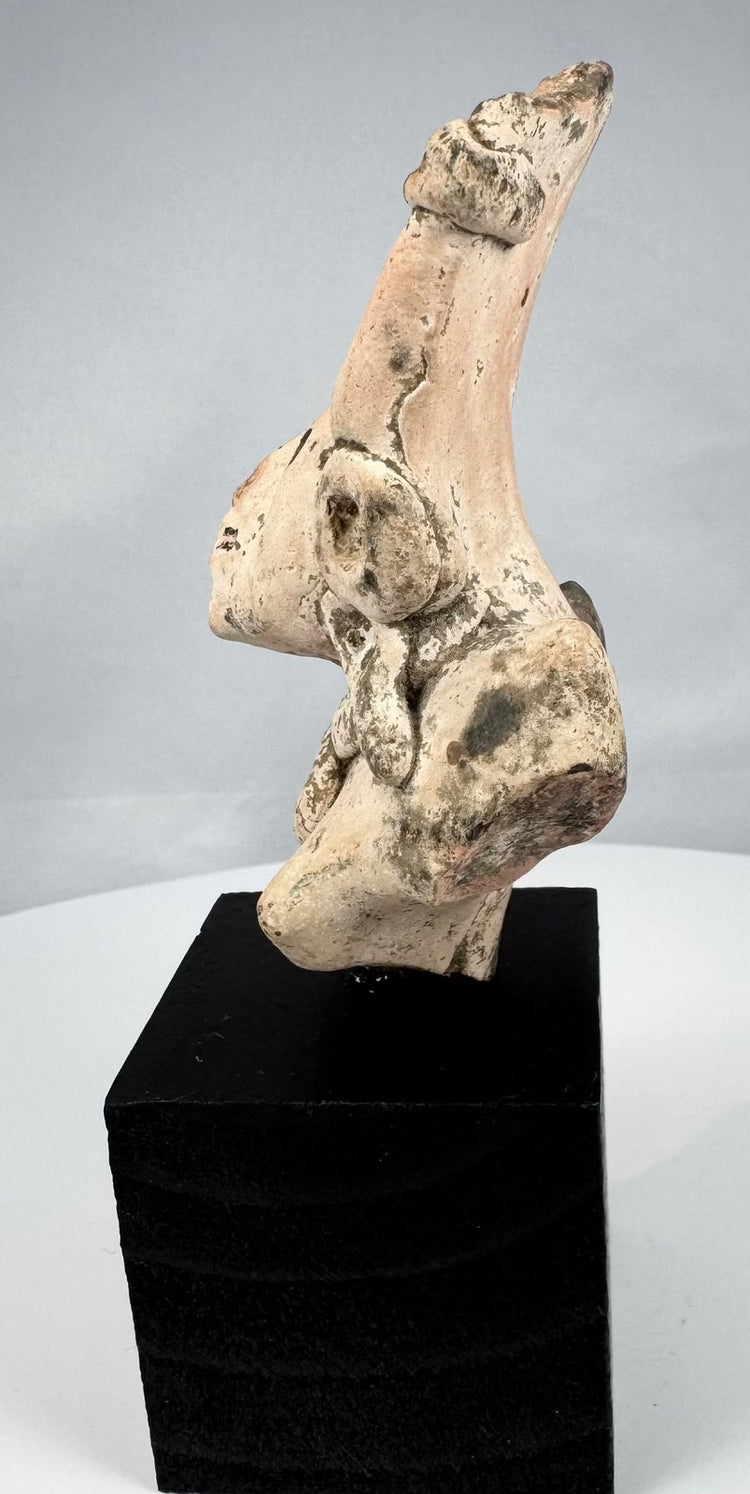
- Coiffe ou coiffure cérémonielle élaborée
- Grandes boucles d'oreilles circulaires et ornements de cou
- Belle patine archéologique et dépôts minéraux
- Monté sur un socle de présentation personnalisé
- Probablement issu d'une sculpture cérémonielle ou funéraire plus grande
Signification culturelle
Les sculptures en terre cuite occupaient une place importante dans les traditions cérémonielles et funéraires de l'ancienne Mésoamérique, où elles servaient d'offrandes, de représentations ancestrales et de symboles d'identité sociale. Les coiffes et boucles d'oreilles élaborées signifiaient fréquemment le statut, la lignée ou l'autorité religieuse, tandis que les programmes sculpturaux plus vastes renforçaient la mémoire culturelle et la pratique rituelle. Des fragments tels que celui-ci fournissent un aperçu précieux des traditions artistiques et des croyances spirituelles des civilisations de l'ancien Mexique.
État
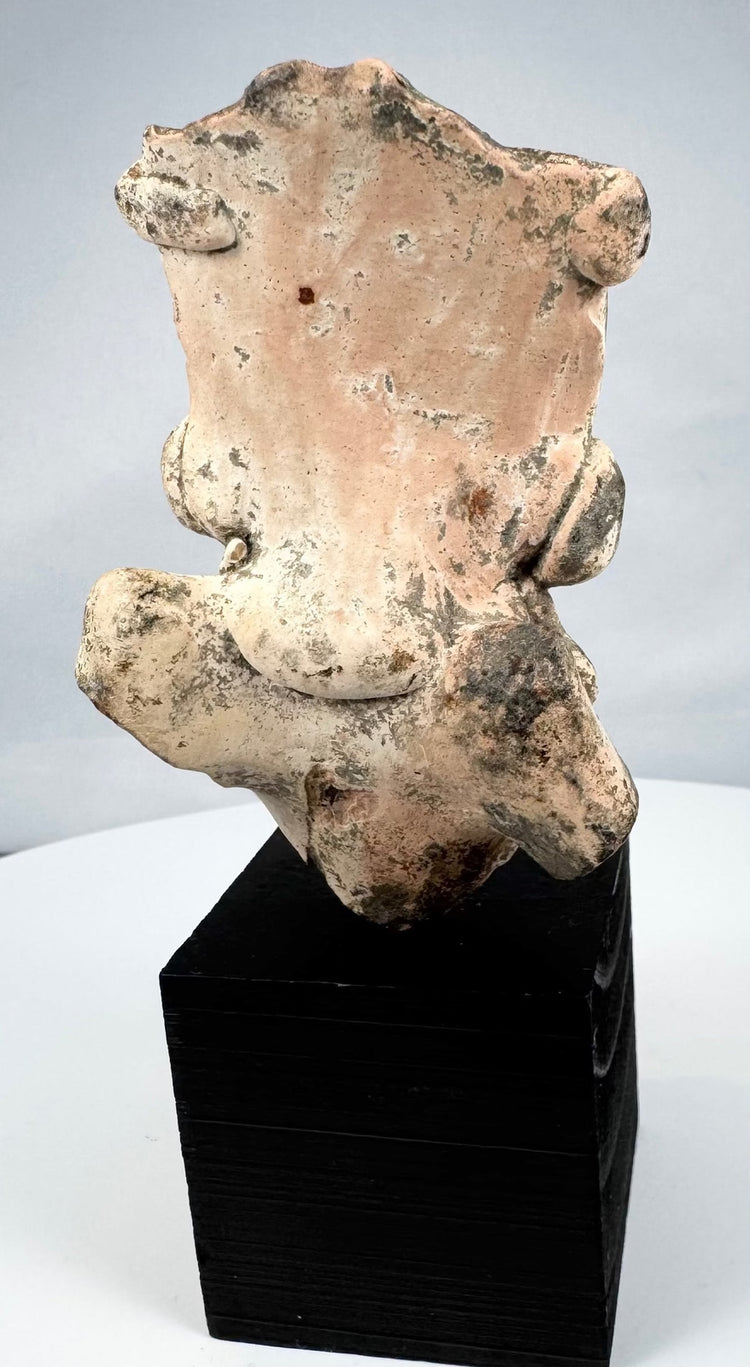
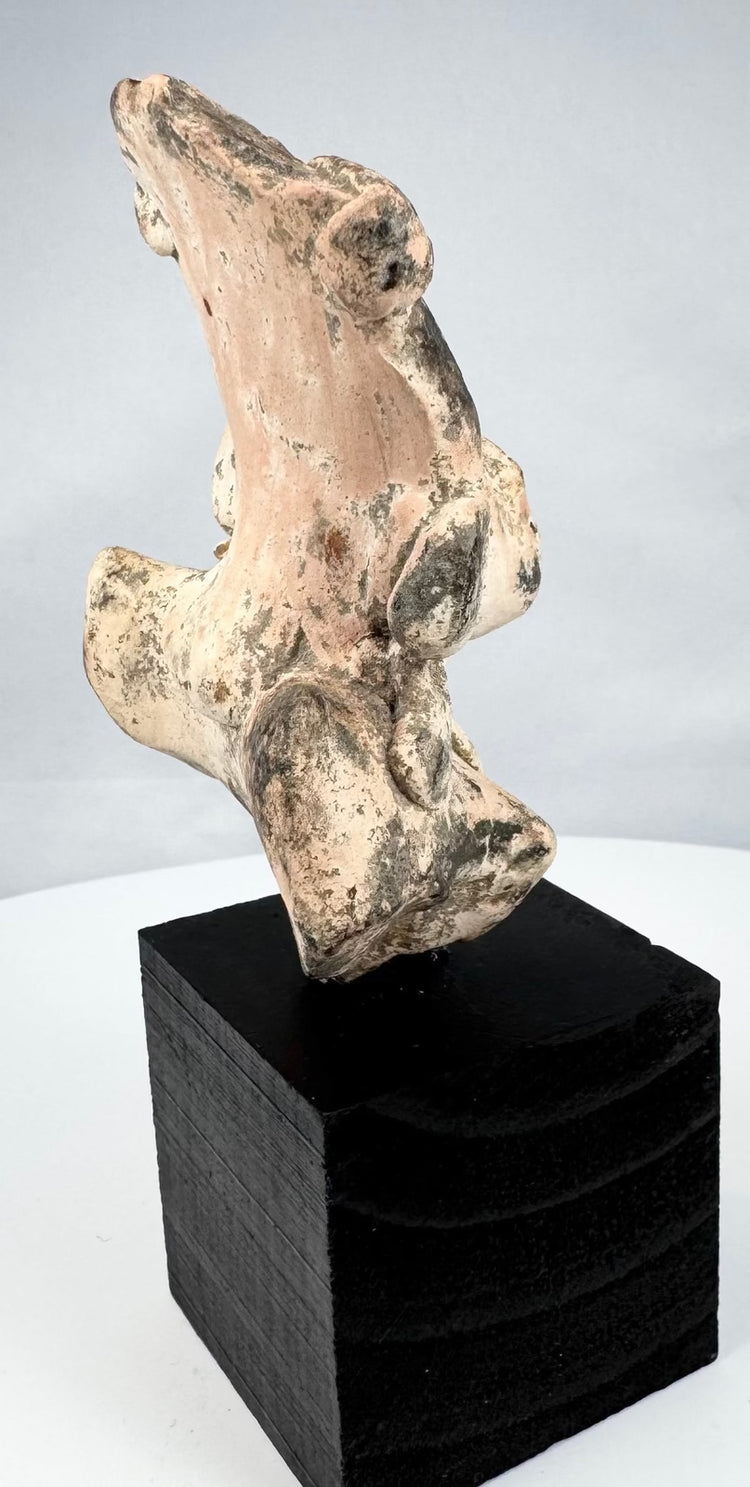
État fragmentaire comme on peut s'y attendre pour un objet archéologique de cet âge. Des pertes par rapport à la sculpture originale sont présentes partout, y compris au revers et dans les sections inférieures. L'altération de surface, les dépôts minéraux, les abrasions et les zones d'incrustation conformes à l'âge et à l'enfouissement sont visibles partout. Monté pour un affichage stable.
Dimensions (approximatives)
Hauteur : 6,25 po
Largeur : 2 po
Profondeur : 2 po
Âge (approximatif)
1 400 – 2 300 ans
Provenance
Anciennement partie d'une collection privée de St. Paul, Minnesota, États-Unis, spécialisée dans l'art et les antiquités précolombiens. Constituée sur de nombreuses années, la collection se concentrait principalement sur les objets en céramique et en terre cuite des anciennes cultures de Mésoamérique et d'Amérique du Sud, avec un accent particulier sur les fragments sculpturaux, les objets rituels et les artefacts archéologiques.
En savoir plus
Explorez le symbolisme des boucles d'oreilles et de l'identité cérémonielle via le Seattle Art Museum
Découvrez notre Collection d'artefacts et de reliques précolombiens anciens
Description
Contexte historique et origine
Région : Mésoamérique, probablement Veracruz ou région de la côte du Golfe, Mexique
Matériau : Terre cuite modelée à la main avec des traces de dépôts minéraux et d'incrustations terreuses
Période : Période précolombienne tardive, vers 300 av. J.-C. – 600 ap. J.-C.
Description
Cet intrigant fragment de figurine en terre cuite précolombienne représente la partie supérieure survivante d'une sculpture cérémonielle ou funéraire plus grande de l'ancienne Mésoamérique. Le fragment représente une figure humaine stylisée avec un visage arrondi, des yeux perforés, des boucles d'oreilles proéminentes et une coiffe ou une coiffure élaborée s'élevant au-dessus de la tête. La figure est également ornée de larges ornements circulaires autour du cou et des épaules, éléments qui indiquaient probablement un rang social, une signification rituelle ou un statut ancestral.
Réalisée dans un style très abstrait mais expressif, la sculpture présente de nombreuses caractéristiques artistiques associées aux traditions mésoaméricaines anciennes, en particulier celles de la côte du Golfe et des régions voisines. Les traits faciaux simplifiés, les grands ornements d'oreille et l'imposante coiffe suggèrent que la figure complète faisait autrefois partie d'un assemblage cérémoniel, d'une offrande funéraire ou d'une décoration architecturale. Des fragments de terre cuite similaires avec des boucles d'oreilles et des insignes élaborés sont connus des anciennes cultures mexicaines, où une telle imagerie était étroitement liée à l'identité rituelle et à l'autorité religieuse.
Caractéristiques
- Visage humain stylisé avec des yeux perforés et des traits arrondis
- Coiffe ou coiffure cérémonielle élaborée
- Grandes boucles d'oreilles circulaires et ornements de cou
- Belle patine archéologique et dépôts minéraux
- Monté sur un socle de présentation personnalisé
- Probablement issu d'une sculpture cérémonielle ou funéraire plus grande
Signification culturelle
Les sculptures en terre cuite occupaient une place importante dans les traditions cérémonielles et funéraires de l'ancienne Mésoamérique, où elles servaient d'offrandes, de représentations ancestrales et de symboles d'identité sociale. Les coiffes et boucles d'oreilles élaborées signifiaient fréquemment le statut, la lignée ou l'autorité religieuse, tandis que les programmes sculpturaux plus vastes renforçaient la mémoire culturelle et la pratique rituelle. Des fragments tels que celui-ci fournissent un aperçu précieux des traditions artistiques et des croyances spirituelles des civilisations de l'ancien Mexique.
État
État fragmentaire comme on peut s'y attendre pour un objet archéologique de cet âge. Des pertes par rapport à la sculpture originale sont présentes partout, y compris au revers et dans les sections inférieures. L'altération de surface, les dépôts minéraux, les abrasions et les zones d'incrustation conformes à l'âge et à l'enfouissement sont visibles partout. Monté pour un affichage stable.
Dimensions (approximatives)
Hauteur : 6,25 po
Largeur : 2 po
Profondeur : 2 po
Âge (approximatif)
1 400 – 2 300 ans
Provenance
Anciennement partie d'une collection privée de St. Paul, Minnesota, États-Unis, spécialisée dans l'art et les antiquités précolombiens. Constituée sur de nombreuses années, la collection se concentrait principalement sur les objets en céramique et en terre cuite des anciennes cultures de Mésoamérique et d'Amérique du Sud, avec un accent particulier sur les fragments sculpturaux, les objets rituels et les artefacts archéologiques.
En savoir plus
Explorez le symbolisme des boucles d'oreilles et de l'identité cérémonielle via le Seattle Art Museum
Découvrez notre Collection d'artefacts et de reliques précolombiens anciens
Vous aimerez peut-être aussi
