

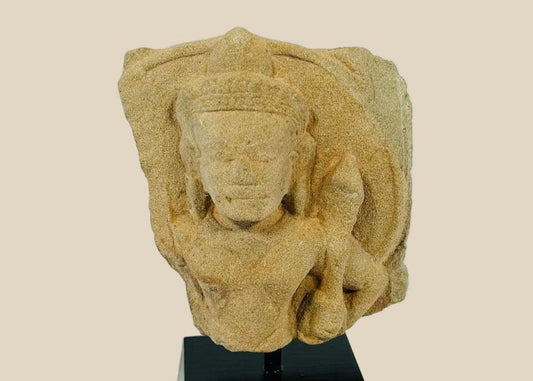

Ancient Terracotta Theater Mask Fragment | Hellenistic / Roman Period | Circa 2nd Century BCE – 2nd Century CE
- Prix habituel
- $500.00
- Prix soldé
- $500.00
- Prix habituel
Impossible de charger la disponibilité du service de retrait


Ancient Terracotta Theater Mask Fragment | Hellenistic / Roman Period | Circa 2nd Century BCE – 2nd Century CE
Description
Plus
Moins
Historical Context & Origin
Region: Mediterranean World (Greco-Roman)
Material: Terracotta (Fired Clay)
Period: Hellenistic to Roman Period, circa 2nd century BCE – 2nd century CE
Description
This intriguing ancient terracotta fragment preserves part of a stylized Greco-Roman theatrical mask, rendered with expressive facial features characteristic of classical dramatic art. The surviving section displays a prominent nose, deeply modeled eye socket, and exaggerated open mouth—elements commonly associated with masks used in ancient theatrical traditions.
Terracotta masks such as this were widely produced throughout the Mediterranean during the Hellenistic and Roman periods. They served multiple purposes, including theatrical props, decorative architectural ornaments, votive objects, or symbolic representations associated with the theater and the cult of Dionysus, the patron deity of drama.
The piece shows clear evidence of mold-made construction, a technique commonly employed in ancient ceramic workshops to produce theatrical masks and decorative relief elements. Its expressive sculptural modeling reflects the exaggerated emotional style characteristic of ancient dramatic performance.
Features
- Authentic ancient terracotta theatrical mask fragment
- Likely Hellenistic or Roman decorative or theatrical element
- Mold-formed ceramic with expressive sculptural modeling
- Surviving features include eye, nose, mouth, and cheek details
- Mounted on a custom display stand for presentation
- A compelling fragment of ancient Mediterranean theatrical culture
Cultural Significance
Masks played a central role in ancient Greek and Roman theatrical performance. Actors wore large, expressive masks that amplified emotional expression and helped audiences identify dramatic characters from a distance. Terracotta versions were also produced as decorative objects, votive offerings, and architectural embellishments in homes, theaters, and sanctuaries throughout the Mediterranean world.
Fragments such as this provide insight into the visual culture of ancient drama and the enduring influence of theatrical traditions associated with Dionysian worship and classical storytelling.
Condition
Fragmentary condition consistent with archaeological terracotta artifacts of antiquity. Surface wear, mineral deposits, and losses consistent with age. Mounted on a modern display stand for stability and display.
Dimensions (Approximate)
Height: 5.25 in
Width: 3.25 in
Length: 2.25 in
Age (Approximate)
1,800 – 2,200 years old
Learn More
Discover the history and symbolism of Ancient Roman Theater Masks and Classical Dramatic Performance
Browse our curated Roman & Greek Artifacts Collection
Description
Historical Context & Origin
Region: Mediterranean World (Greco-Roman)
Material: Terracotta (Fired Clay)
Period: Hellenistic to Roman Period, circa 2nd century BCE – 2nd century CE
Description
This intriguing ancient terracotta fragment preserves part of a stylized Greco-Roman theatrical mask, rendered with expressive facial features characteristic of classical dramatic art. The surviving section displays a prominent nose, deeply modeled eye socket, and exaggerated open mouth—elements commonly associated with masks used in ancient theatrical traditions.
Terracotta masks such as this were widely produced throughout the Mediterranean during the Hellenistic and Roman periods. They served multiple purposes, including theatrical props, decorative architectural ornaments, votive objects, or symbolic representations associated with the theater and the cult of Dionysus, the patron deity of drama.
The piece shows clear evidence of mold-made construction, a technique commonly employed in ancient ceramic workshops to produce theatrical masks and decorative relief elements. Its expressive sculptural modeling reflects the exaggerated emotional style characteristic of ancient dramatic performance.
Features
- Authentic ancient terracotta theatrical mask fragment
- Likely Hellenistic or Roman decorative or theatrical element
- Mold-formed ceramic with expressive sculptural modeling
- Surviving features include eye, nose, mouth, and cheek details
- Mounted on a custom display stand for presentation
- A compelling fragment of ancient Mediterranean theatrical culture
Cultural Significance
Masks played a central role in ancient Greek and Roman theatrical performance. Actors wore large, expressive masks that amplified emotional expression and helped audiences identify dramatic characters from a distance. Terracotta versions were also produced as decorative objects, votive offerings, and architectural embellishments in homes, theaters, and sanctuaries throughout the Mediterranean world.
Fragments such as this provide insight into the visual culture of ancient drama and the enduring influence of theatrical traditions associated with Dionysian worship and classical storytelling.
Condition
Fragmentary condition consistent with archaeological terracotta artifacts of antiquity. Surface wear, mineral deposits, and losses consistent with age. Mounted on a modern display stand for stability and display.
Dimensions (Approximate)
Height: 5.25 in
Width: 3.25 in
Length: 2.25 in
Age (Approximate)
1,800 – 2,200 years old
Learn More
Discover the history and symbolism of Ancient Roman Theater Masks and Classical Dramatic Performance
Browse our curated Roman & Greek Artifacts Collection
Vous aimerez peut-être aussi
