

Vase tripode à têtes d'animaux de l'ancien Mexique occidental | Culture Colima | Vers 300 av. J.-C. – 300 apr. J.-C.
- Prix habituel
- $450.00
- Prix soldé
- $450.00
- Prix habituel
Impossible de charger la disponibilité du service de retrait


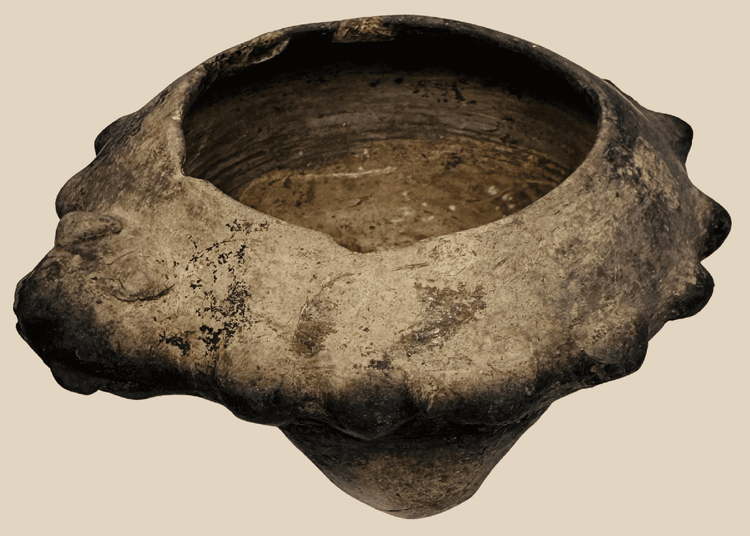
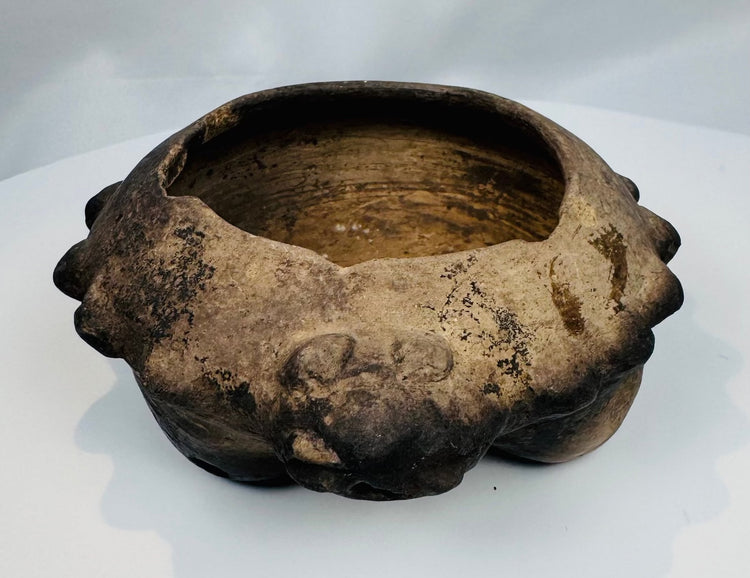
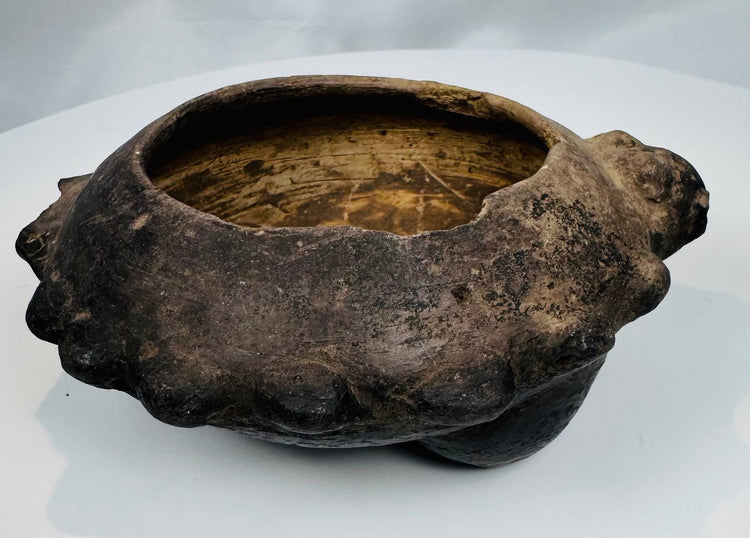
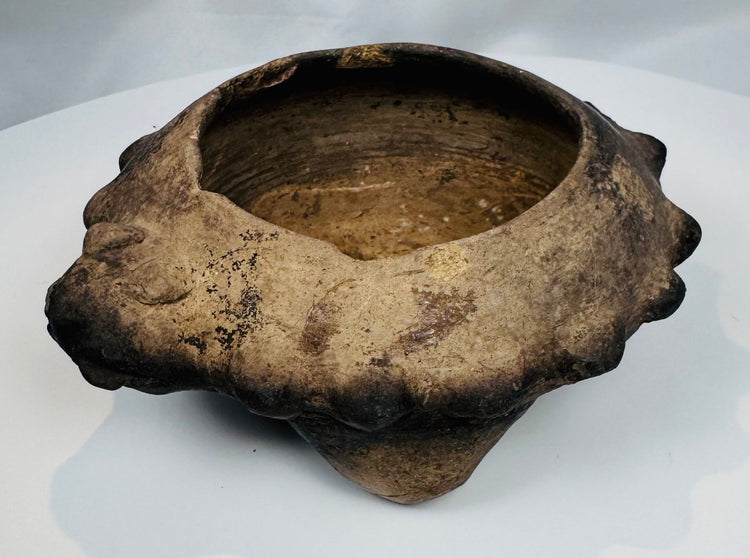
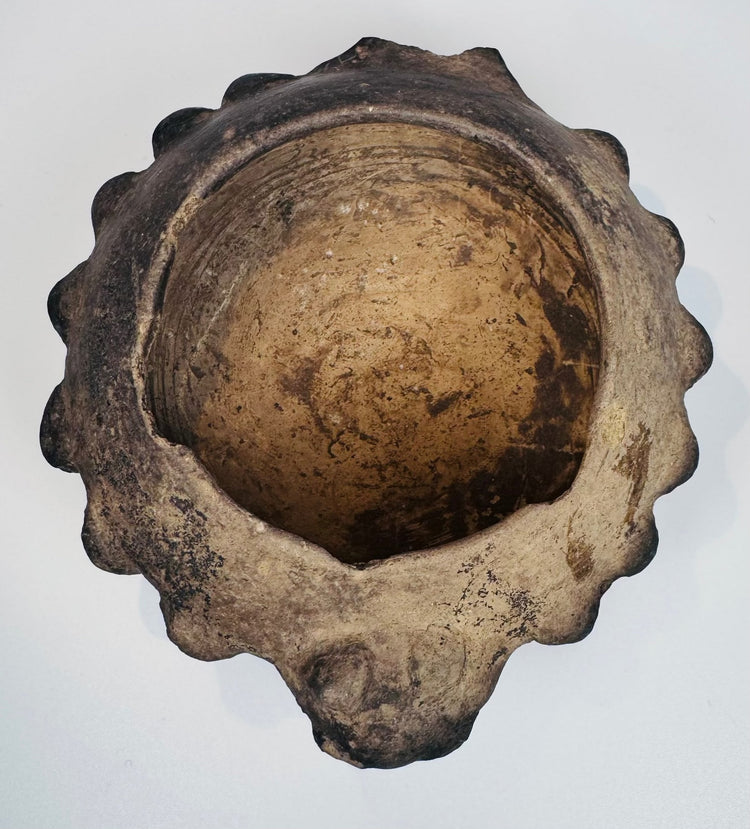
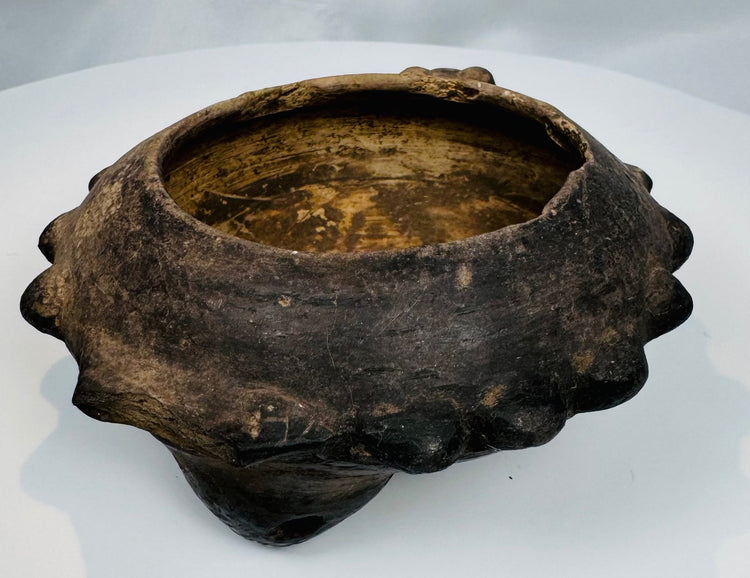
Vase tripode à têtes d'animaux de l'ancien Mexique occidental | Culture Colima | Vers 300 av. J.-C. – 300 apr. J.-C.
Description
Plus
Moins
Contexte historique et origine
Région : Ouest du Mexique (Colima / Jalisco / Nayarit)
Matériau : Terre cuite
Période : Fin de la période précolombienne, vers 300 avant notre ère – 300 de notre ère
Description
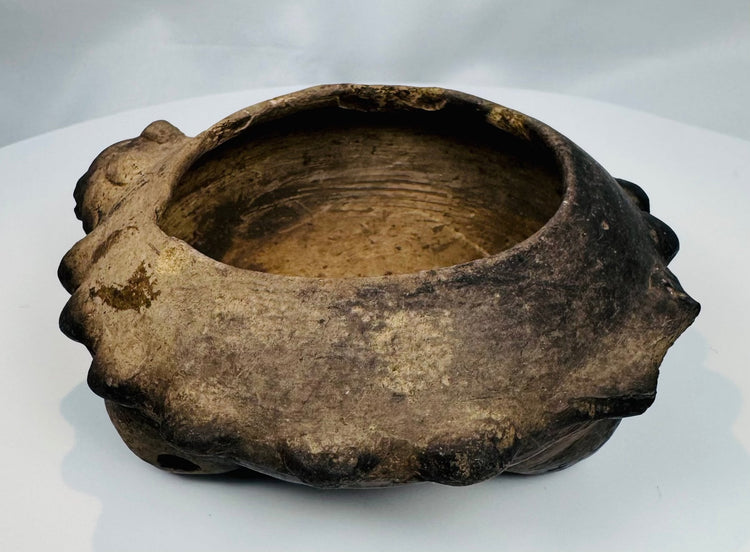
Ce rare récipient tripode précolombien en terre cuite présente un bol circulaire profond soutenu par trois pieds tripodes creux et orné de multiples têtes zoomorphes sculptées faisant saillie du bord. Le récipient présente un corps en argile de couleur chamois chaud avec de vastes zones de surface assombries résultant d'anciennes techniques de cuisson, de conditions d'enfouissement et d'une patine liée à l'âge.
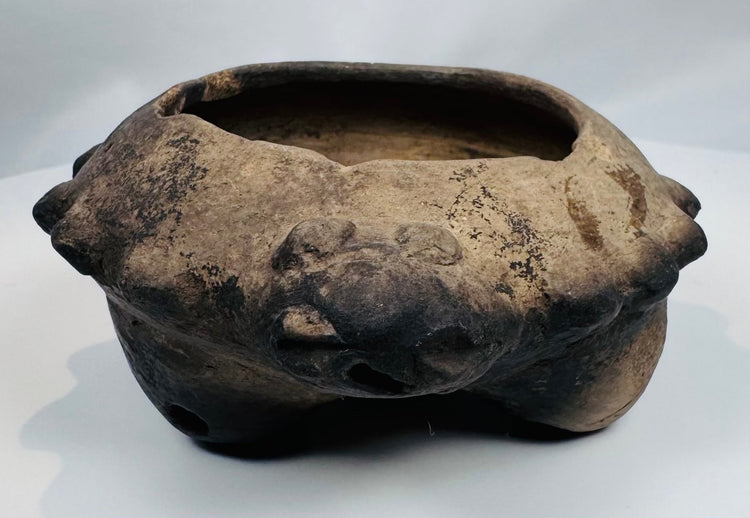
Les têtes modelées présentent des traits faciaux stylisés avec des museaux arrondis, des yeux en creux et des ouvertures perforées, représentant probablement un animal sacré associé au rituel, à la fertilité ou au symbolisme ancestral. De tels récipients ont été produits dans tout l'ouest du Mexique, en particulier au sein des traditions céramiques de Colima, Jalisco et Nayarit, où l'imagerie animale jouait un rôle important dans les contextes funéraires et cérémoniels.
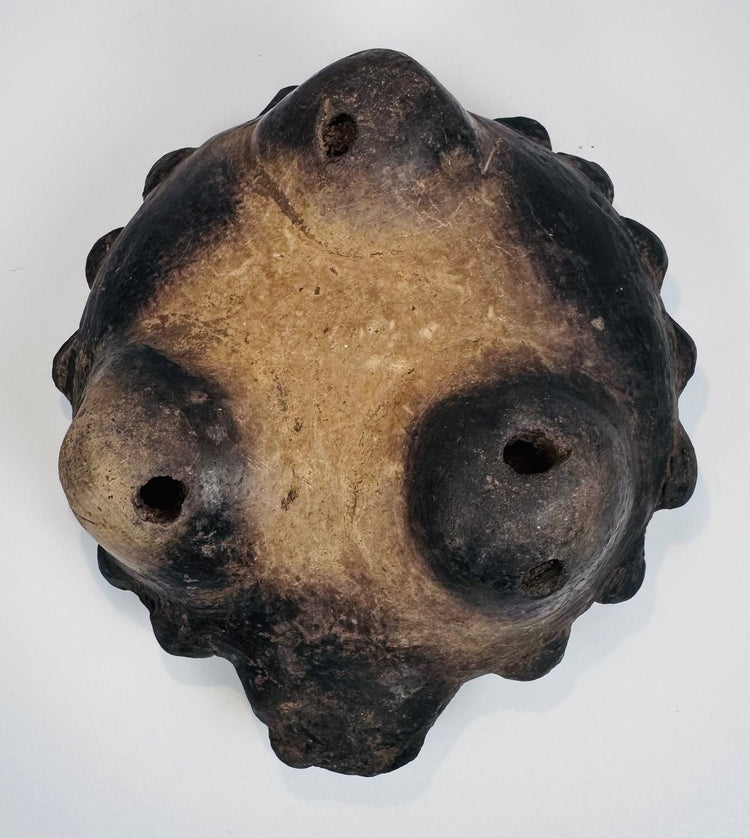
Les supports tripodes creux auraient assuré la stabilité tout en réduisant le poids total, une caractéristique de l'ingénierie céramique précolombienne sophistiquée. Les récipients de ce type ont pu servir de contenants d'offrandes, de récipients de présentation de nourriture, de brûle-encens ou d'objets cérémoniels placés dans des tombes dans le cadre d'assemblages funéraires d'élite.
Caractéristiques
- Authentique récipient tripode précolombien de l'ouest du Mexique
- Plusieurs têtes zoomorphes modelées autour du bord
- Construction de support tripode creux
- Céramique en terre cuite formée à la main
- Patine archéologique attrayante et usure liée à l'âge
- Forme de bol profond adaptée à un usage rituel ou domestique
- Belle pièce d'exposition représentant l'ancien artisanat mésoaméricain
- Ancienne étiquette d'inventaire de collection présente
Signification culturelle
Les cultures de l'ouest du Mexique ont produit certaines des traditions céramiques les plus distinctives des Amériques anciennes. Les potiers créaient fréquemment des récipients incorporant des animaux considérés comme ayant une signification spirituelle, notamment des chiens, des félins, des oiseaux et d'autres créatures associées à la fertilité, à la protection et à l'au-delà.
Les récipients tripodes comme celui-ci étaient souvent déposés dans des tombes à puits aux côtés de figurines et d'objets cérémoniels, remplissant à la fois des fonctions pratiques et symboliques. Leur survie offre un aperçu précieux des traditions artistiques et spirituelles des anciennes sociétés mésoaméricaines il y a plus de deux mille ans.
Condition
Bon état archéologique. Usure de surface, dépôts minéraux, variations de cuisson, abrasions et pertes mineures conformes à l'âge et à l'enfouissement. Aucune restauration majeure observée. Présente exceptionnellement bien pour l'exposition.
Dimensions (approximatives)
Hauteur : 5 cm
Diamètre : 12,5 cm
Âge (approximatif)
1 700 à 2 300 ans
Provenance
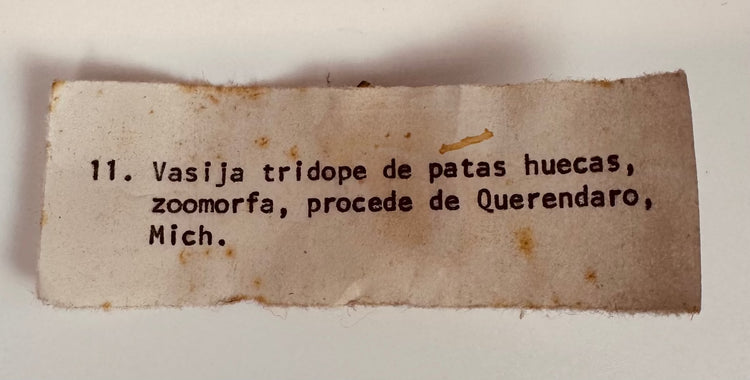
D'une collection privée à Saint Paul, Minnesota, États-Unis. Accompagné d'une ancienne étiquette de collection identifiant le récipient comme un "récipient tripode zoomorphe à pieds creux" de Queréndaro, Michoacán, Mexique. La pièce faisait partie d'une collection d'artefacts précolombiens et archéologiques assemblée au fil de nombreuses années.
En savoir plus
Découvrez les peuples autochtones de Colima et de l'ouest du Mexique
Parcourez notre collection de céramiques et poteries anciennes
Description
Contexte historique et origine
Région : Ouest du Mexique (Colima / Jalisco / Nayarit)
Matériau : Terre cuite
Période : Fin de la période précolombienne, vers 300 avant notre ère – 300 de notre ère
Description
Ce rare récipient tripode précolombien en terre cuite présente un bol circulaire profond soutenu par trois pieds tripodes creux et orné de multiples têtes zoomorphes sculptées faisant saillie du bord. Le récipient présente un corps en argile de couleur chamois chaud avec de vastes zones de surface assombries résultant d'anciennes techniques de cuisson, de conditions d'enfouissement et d'une patine liée à l'âge.
Les têtes modelées présentent des traits faciaux stylisés avec des museaux arrondis, des yeux en creux et des ouvertures perforées, représentant probablement un animal sacré associé au rituel, à la fertilité ou au symbolisme ancestral. De tels récipients ont été produits dans tout l'ouest du Mexique, en particulier au sein des traditions céramiques de Colima, Jalisco et Nayarit, où l'imagerie animale jouait un rôle important dans les contextes funéraires et cérémoniels.
Les supports tripodes creux auraient assuré la stabilité tout en réduisant le poids total, une caractéristique de l'ingénierie céramique précolombienne sophistiquée. Les récipients de ce type ont pu servir de contenants d'offrandes, de récipients de présentation de nourriture, de brûle-encens ou d'objets cérémoniels placés dans des tombes dans le cadre d'assemblages funéraires d'élite.
Caractéristiques
- Authentique récipient tripode précolombien de l'ouest du Mexique
- Plusieurs têtes zoomorphes modelées autour du bord
- Construction de support tripode creux
- Céramique en terre cuite formée à la main
- Patine archéologique attrayante et usure liée à l'âge
- Forme de bol profond adaptée à un usage rituel ou domestique
- Belle pièce d'exposition représentant l'ancien artisanat mésoaméricain
- Ancienne étiquette d'inventaire de collection présente
Signification culturelle
Les cultures de l'ouest du Mexique ont produit certaines des traditions céramiques les plus distinctives des Amériques anciennes. Les potiers créaient fréquemment des récipients incorporant des animaux considérés comme ayant une signification spirituelle, notamment des chiens, des félins, des oiseaux et d'autres créatures associées à la fertilité, à la protection et à l'au-delà.
Les récipients tripodes comme celui-ci étaient souvent déposés dans des tombes à puits aux côtés de figurines et d'objets cérémoniels, remplissant à la fois des fonctions pratiques et symboliques. Leur survie offre un aperçu précieux des traditions artistiques et spirituelles des anciennes sociétés mésoaméricaines il y a plus de deux mille ans.
Condition
Bon état archéologique. Usure de surface, dépôts minéraux, variations de cuisson, abrasions et pertes mineures conformes à l'âge et à l'enfouissement. Aucune restauration majeure observée. Présente exceptionnellement bien pour l'exposition.
Dimensions (approximatives)
Hauteur : 5 cm
Diamètre : 12,5 cm
Âge (approximatif)
1 700 à 2 300 ans
Provenance
D'une collection privée à Saint Paul, Minnesota, États-Unis. Accompagné d'une ancienne étiquette de collection identifiant le récipient comme un "récipient tripode zoomorphe à pieds creux" de Queréndaro, Michoacán, Mexique. La pièce faisait partie d'une collection d'artefacts précolombiens et archéologiques assemblée au fil de nombreuses années.
En savoir plus
Découvrez les peuples autochtones de Colima et de l'ouest du Mexique
Parcourez notre collection de céramiques et poteries anciennes
Vous aimerez peut-être aussi
