
Lampe à huile byzantine en terre cuite à décor anthropomorphe | Vers le Ve-VIIe siècle apr. J.-C.
- Prix habituel
- $300.00
- Prix soldé
- $300.00
- Prix habituel
Impossible de charger la disponibilité du service de retrait


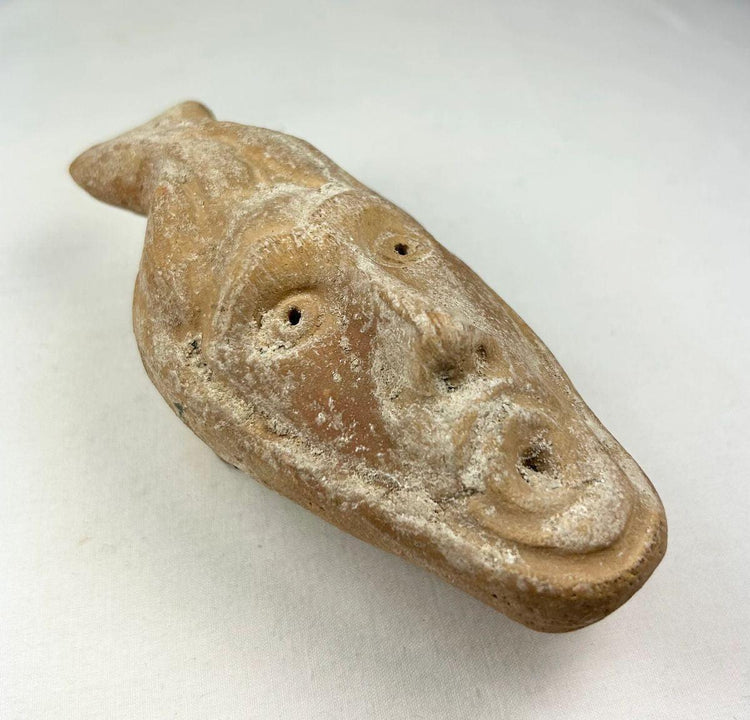
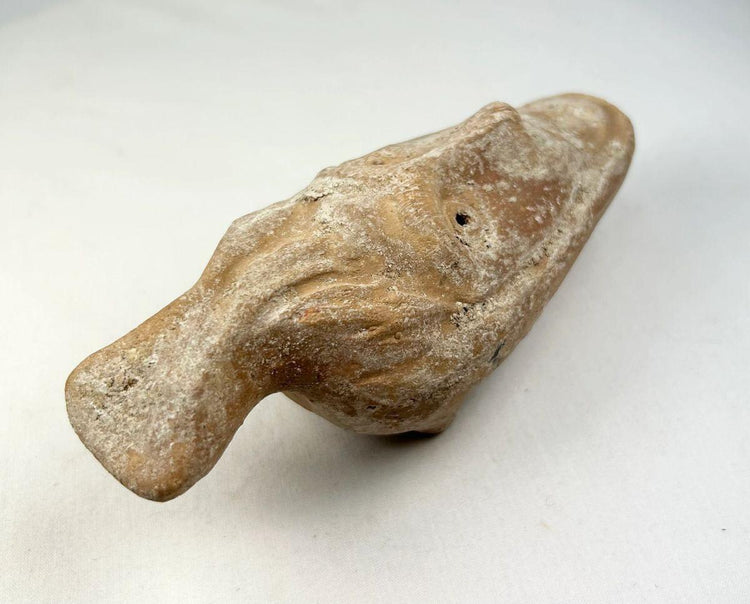
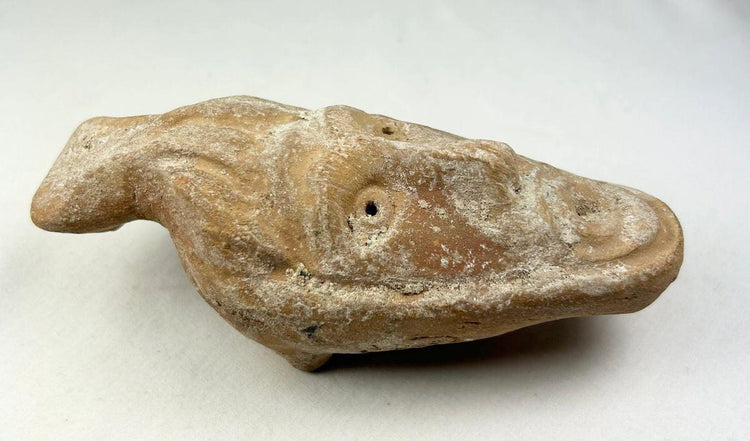
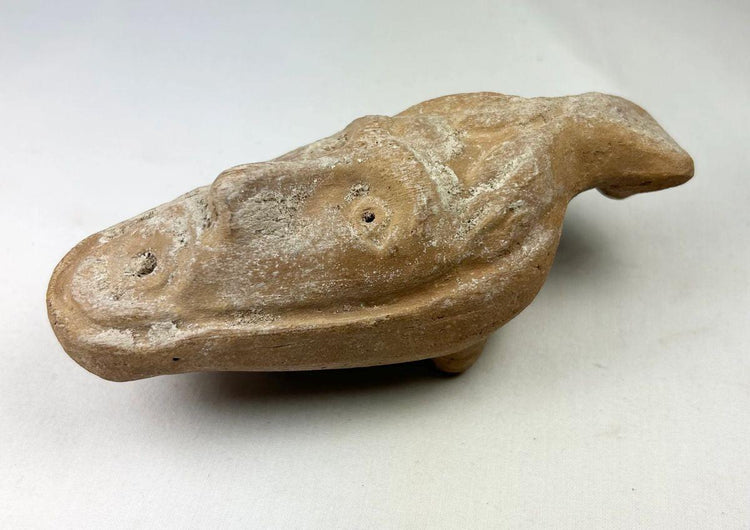
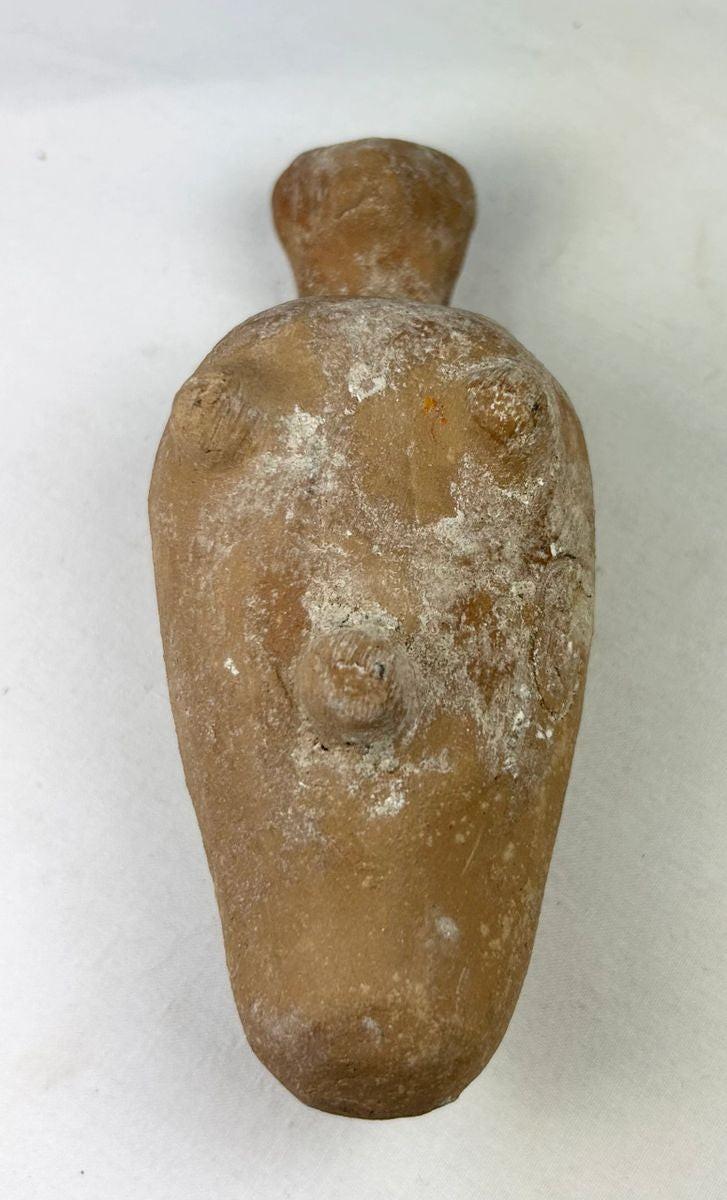
Lampe à huile byzantine en terre cuite à décor anthropomorphe | Vers le Ve-VIIe siècle apr. J.-C.
Description
Plus
Moins
Contexte historique et origine
Région : Méditerranée orientale
Matériau : Terre cuite (argile)
Période : Probablement l'ère byzantine, 5e-7e siècle de notre ère
Description
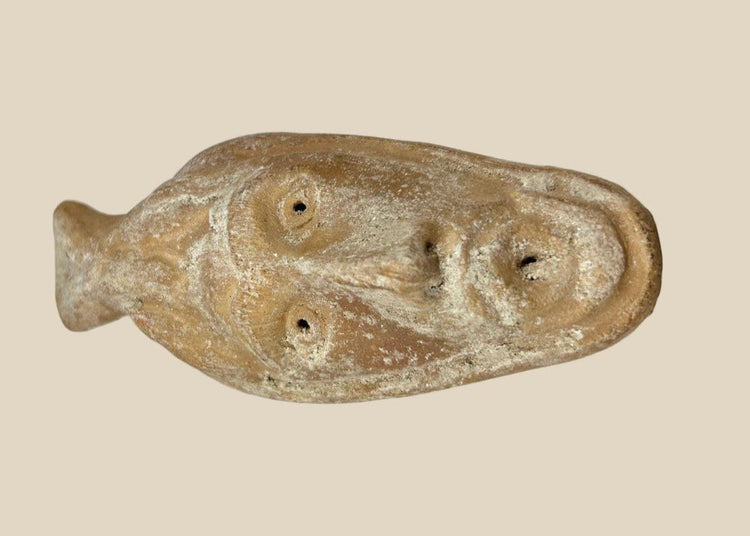
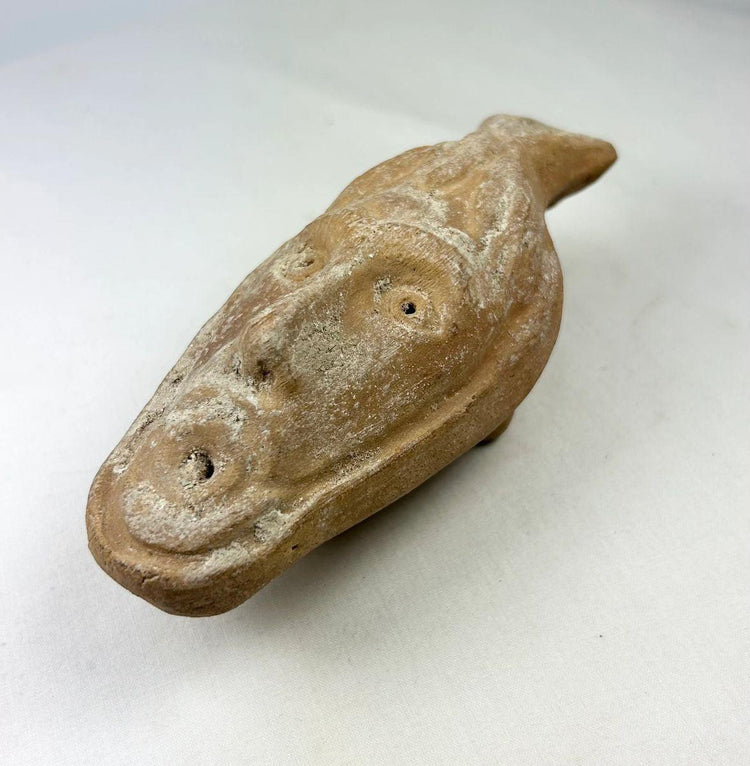
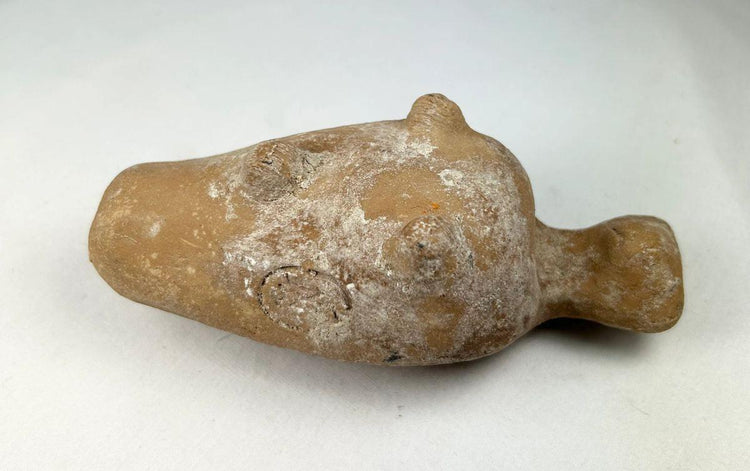
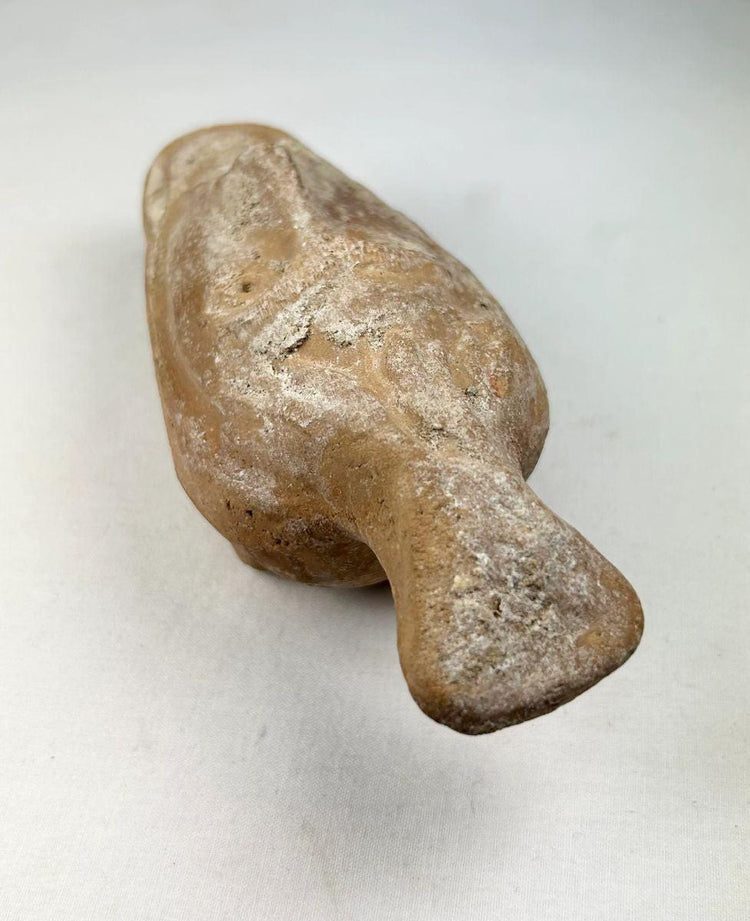
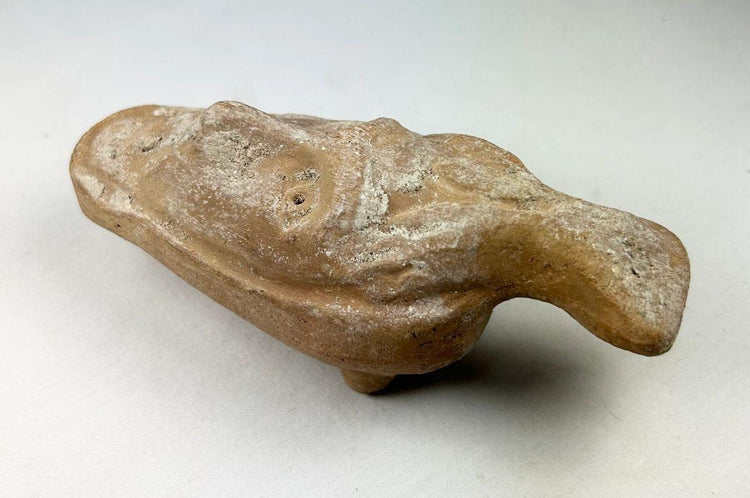
Cette lampe à huile inhabituelle en terre cuite est moulée sous la forme d'un visage humain stylisé. Les traits exagérés - sourcils arqués, yeux profondément enfoncés, nez prononcé et bouche ouverte - sont rendus en haut-relief, donnant à l'objet une présence obsédante, presque théâtrale. Les perçages aux yeux et à la bouche suggèrent à la fois une utilisation symbolique et fonctionnelle, tandis que le bec de remplissage supérieur est conforme à la conception traditionnelle des lampes à huile. La lampe repose sur trois petits pieds en forme de moignons, ce qui ajoute à sa forme organique et tactile. Son rare design anthropomorphe peut indiquer une utilisation rituelle ou apotropaïque en plus d'une simple illumination.
Caractéristiques
- Moulée en forme de visage humain avec une expression exagérée
- Trou de mèche à la bouche, trou de remplissage à la couronne
- Trois petits pieds formant la base
- Dépôts de terre naturels et altération de surface
- Aucune réparation ou restauration visible
Signification culturelle
Les lampes à huile étaient indispensables dans la vie quotidienne et spirituelle à travers l'Empire byzantin. Le rendu anthropomorphique de cet exemple suggère des liens avec les croyances populaires et le symbolisme chrétien primitif, où la lumière était considérée comme à la fois pratique et divine. De telles pièces ont pu servir d'objets protecteurs pour la maison ou d'outils rituels imprégnés de signification spirituelle.
État
Bon état avec des concrétions minérales et une usure de surface. Légères piqûres conformes à l'âge. Aucune fissure ni restauration moderne détectée.
Dimensions (approximatives)
Longueur : 12,7 cm
Largeur : 6,9 cm
Hauteur : 5,1 cm
Âge (approximatif)
1 400-1 600 ans
Provenance
D'une collection privée à Montréal, Québec, Canada.
En savoir plus
Découvrez l'histoire des anciennes lampes à huile au Milwaukee Public Museum
Parcourez notre Collection de lampes à huile anciennes
Description
Contexte historique et origine
Région : Méditerranée orientale
Matériau : Terre cuite (argile)
Période : Probablement l'ère byzantine, 5e-7e siècle de notre ère
Description
Cette lampe à huile inhabituelle en terre cuite est moulée sous la forme d'un visage humain stylisé. Les traits exagérés - sourcils arqués, yeux profondément enfoncés, nez prononcé et bouche ouverte - sont rendus en haut-relief, donnant à l'objet une présence obsédante, presque théâtrale. Les perçages aux yeux et à la bouche suggèrent à la fois une utilisation symbolique et fonctionnelle, tandis que le bec de remplissage supérieur est conforme à la conception traditionnelle des lampes à huile. La lampe repose sur trois petits pieds en forme de moignons, ce qui ajoute à sa forme organique et tactile. Son rare design anthropomorphe peut indiquer une utilisation rituelle ou apotropaïque en plus d'une simple illumination.
Caractéristiques
- Moulée en forme de visage humain avec une expression exagérée
- Trou de mèche à la bouche, trou de remplissage à la couronne
- Trois petits pieds formant la base
- Dépôts de terre naturels et altération de surface
- Aucune réparation ou restauration visible
Signification culturelle
Les lampes à huile étaient indispensables dans la vie quotidienne et spirituelle à travers l'Empire byzantin. Le rendu anthropomorphique de cet exemple suggère des liens avec les croyances populaires et le symbolisme chrétien primitif, où la lumière était considérée comme à la fois pratique et divine. De telles pièces ont pu servir d'objets protecteurs pour la maison ou d'outils rituels imprégnés de signification spirituelle.
État
Bon état avec des concrétions minérales et une usure de surface. Légères piqûres conformes à l'âge. Aucune fissure ni restauration moderne détectée.
Dimensions (approximatives)
Longueur : 12,7 cm
Largeur : 6,9 cm
Hauteur : 5,1 cm
Âge (approximatif)
1 400-1 600 ans
Provenance
D'une collection privée à Montréal, Québec, Canada.
En savoir plus
Découvrez l'histoire des anciennes lampes à huile au Milwaukee Public Museum
Parcourez notre Collection de lampes à huile anciennes
Vous aimerez peut-être aussi
